Page 4752 of 6179
1 4.750 4.751 4.752 4.753 4.754 6.179

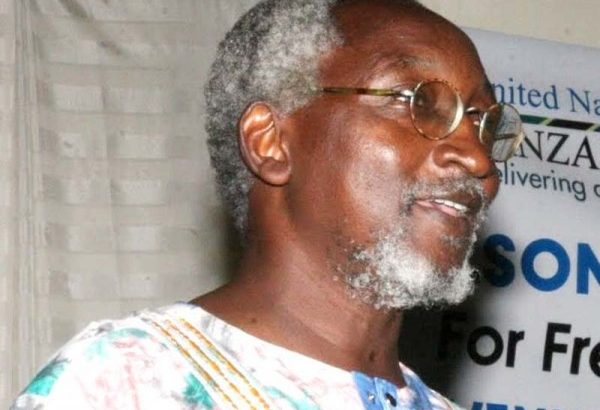
El futuro de la historia de la UNESCO

Europa/Francia/Noviembre de 2016/Fuente: UNESCO
Cuándo, hora local: Viernes, 4 noviembre 2016 –

10:00am11:30am
Dónde: Francia, Paris
Tipo de evento: Evento especial

Hace 70 años, el 4 de noviembre de 1946, entró en vigor la Constitución de la UNESCO tras la ratificación del 20º Estado Miembro.  Para celebrar esta fecha, la UNESCO presenta tres libros sobre la historia de la Organización publicados en el último año:

“From Ideas to Actions. 70 Years of UNESCO (De las ideas a la acción, 70 años de la UNESCO). Ediciones UNESCO, 2015.

“A History of UNESCO. Global Actions and Impact”.(Una historia de la UNESCO, acciones mundiales e impacto). Editado por Poul Duedahl. Palgrave Macmillan, Londres, 2016.

“Patrimoines mutilés – ces trésors de l’Humanité défigurés par la folie des hommes” (Patrimonios mutilados, esos tesoros de la humanidad desfigurados por la locura de los hombres ) Mounir Bouchenaki, Ediciones Erick Bonnier, 2016.

La Directora General abrirá la sesión de presentación de los libros y a continuación habrá una serie de intervenciones cortas sobre cómo la historia de la UNESCO puede contribuir y alimentar el futuro.

Las prioridades actuales de los programas de la UNESCO tienen su eco en la historia. La historia de la UNESCO no es simplemente una cuestión institucional, es también la historia del mundo en el que las ideas y acciones de la UNESCO han emergido y dentro del cual son hoy en día esenciales para el futuro.

Los detalles del programa, en esta página.

Fuente: http://es.unesco.org/events/futuro-historia-unesco

Imagen de archivo

Comparte este contenido:

Sudáfrica: The fight for free education and the lessons of the student movement

África/Sudáfrica/Noviembre de 2016/Autor: Ben Morken/Fuente: Marxist

RESUMEN: Esencialmente, la lucha de los jóvenes de hoy refleja la crisis del sistema capitalista que no puede ofrecer ningún camino para las masas. La lucha amarga es un punto de inflexión para la sociedad sudafricana, que ha visto surgir durante la última década las contradicciones de clase. Los estudiantes y la intelligentsia son un barómetro sensible del estado de ánimo en la sociedad y sus luchas hoy son una anticipación de lo que está por venir. Demuestran que hay una cólera y una frustración profundas en la situación actual.

Essentially, the struggle of the youth today reflects the crisis of the capitalist system which cannot offer any way forward for the masses. The bitter struggle is a turning point for South African society which has seen class contradictions rising over the past decade. The students and intelligentsia are a sensitive barometer of the mood in society and their struggles today are an anticipation of what is to come. They show that there is deep anger and frustration at the current state of affairs.

A crisis of the regime

Starting off as a movement against tuition fees and for free education, the movement has gone way beyond these immediate issues. The violent crackdown and the arrogance of the government has politicised and radicalised the movement. The intensity and sweep of the protests, in turn, have captured the attention of all classes. As the situation unfolds on a daily basis, the government seems increasingly paralysed and does not know how to proceed. The ground is shifting beneath its feet and it wields no authority over the movement.

This inability to rule in the old way is a signal of an approaching revolutionary crisis. The traditional support base has grown disillusioned with the ANC which has been presiding over all the cuts and attacks against the workers and the youth since taking power in 1994. This is reflected in the violent crackdown of the government against the movement. It shows the increasing inability of the ANC to exercise its traditional function for the ruling class of holding back the mass movement. The bourgeoisie on the other hand, does not have an alternative to the ANC. This has plunged it into a profound crisis.

Consumed by infighting, the government is completely out of touch with the situation. This is evident in its latest attempt to “resolve” the crisis. President Zuma created a task team which initially consisted of ministers of the Security Cluster – Defense, Justice, Police, Correctional Services and State Security. This speaks volumes of the government’s approach to the protests. Zuma has belatedly included the ministers of Finance, Communication, Housing and Social Development after a call by the ANC. But this only adds to the inept and clumsy manner in which the government is handling the issue.

The militarisation of the campuses is actually having the opposite effect of its intended purpose, because it only pours fuel on the fire. The ruling class is split and lacks the necessary internal cohesion to respond effectively. The regime is in a deep crisis, which has been caused by the rising tide of the class struggle. The student movement is exacerbating this crisis.

Social origins

The student protests themselves have their roots in the upsurge of the class struggle of the recent period. It is part of a broader process, which has taken place over the last few years, in which the masses have again and again taken to the road of mass struggle in search of solutions to the social and economic crisis they face. Over the last decade there have been waves of mass struggle which have taken various shapes and forms. These struggles, especially in the period between 2009-2012, saw an explosion of strikes which battered the political landscape and ushered in a period of political realignment.

The capitalist policies carried out by the African National Congress and the militant response by the workers resulted in the former mass liberation movement beginning to fracture along class lines. The turning point was the Marikana massacre which saw the ANC responsible for apartheid era atrocities against striking poor black workers. Huge class contradictions have since emerged between the ANC leadership which has the joined the ranks of the ruling class, and the working class masses that supported it for decades. The crisis in the Tripartite Alliance, the splits in the trade union movement, the emergence of forces to the left to the ANC, as well as a number of community based organisations, are products of this process.The student protests are the latest phase in this line of development.

On the one hand we the leadership of the ANC and its allies, which have joined the capitalist club, mostly backed by the older generation of the former liberation movement. On the other hand, we have the new generation of youth that is bearing the brunt of the capitalist crisis and the consequences of  the 1994 “transition”. The outcome of those negotiations between the leaders of the black elite and the traditional white capitalist class resulted in a deal in which the ANC leaders were allowed to form the government while the economy was kept in the hands of the capitalists. What we are currently witnessing are the natural consequences of that deal.

Under capitalism, the great wealth which is created by the South African working class is appropriated by the capitalists. An anarchic and crisis ridden system which relentlessly pursues profits for the few cannot be reconciled with the basic material needs of the masses. This is a generation disillusioned with the results of capitalists democracy, which has not given them much aside from a prospect of a life of unemployment and constant attacks on living standards. And now they are fighting back.

A new generation of fighters

Protests over tuition fees are not a new phenomenon. As part of the general upsurge in the class struggle, they have been ongoing at the poorer black universities for a number of years.  These protests were largely left to fester so long as they were confined to universities such as TUT, UWC, CPUT and Fort Hare. But with the current upheaval at Wits, UCT, Rhodes, etc, the protests have spread to the middle class. This is an indication of the deteriorating material conditions of the masses.

The most militant layer of the protests consists of the so-called “born free” generation, i.e, those born after 1994. This fresh layer of youth is unshackled from the politics of the liberation era and only know the convulsive period we live in now. Outraged by the effects of the crisis of capitalism and galvanised by the local and international fightback by the masses, the youth have taken to the road of struggle.

Thrown into the cauldron, the fresh layers show enormous militancy and heroism but the lack of experience also places many obstacles before the movement. In the initial stages it is only natural that the movement goes through a period of confusion. But in order to succeed and to take the struggle to a higher level it necessary to overcome these weaknesses.

In their fight against the state for free education, the students have shown enormous bravery and sacrifice. The scenes of daily battles at all the universities across the country show the determination and revolutionary zeal of the youth. But the demands of the students have not been met despite a month of intense struggle. This shows that courage and determination alone are not sufficient to win. Had this been the case, capitalism would have been overthrown decades ago. What is needed is a correct programme, correct tactics and a truly fighting leadership.

The student leaders

When the student protests erupted in October 2015 they immediately took the form of a mass movement. The key reason for this was the intervention of the South African Students Congress (SASCO) which was involved from the beginning and provided an important national framework for the movement. Within a week, students began to mobilise not only on their own campuses but also between universities. This mobilisation was then coordinated at a national level. Marches and mass demonstrations were held on consecutive days in Cape Town, Johannesburg and Pretoria to protest at parliament, Luthuli House and at the Union Buildings respectively.

The mass character of the movement came as a shock to the government. Within two weeks the size and increasing militancy of the movement forced the government to announce a freeze in tuition fees in a desperate attempt to put a lid on the protests. This is an important lesson. It was the scale of the protests and the threat it posed to the system that forced the government to retreat.

This year, however, the SASCO leadership has scandalously declined to support and organise the students. On many campuses some SASCO leaders have even spoken against the students and have protected the government. This goes against the whole purpose of SASCO, which was set up by the students to represent them and to fight for good quality and free education. Together with another traditional organisation, the South African Union of Students (SAOS), the SASCO leaders are often seen as being in cahoots with the government. Many of the student leaders are seen as using the movement as a stepping stone to advancing their own political careers.

It is clear that the aim of the concessions to the movement last year was purely to buy time for the government. But while the government was preparing a counterattack over the past year the student leaders at some universities began to shut the movement down. The mass based character and vital coordination between universities was broken and replaced by an atomised movement wherein the numerous demands were fought on a campus-by-campus basis. This false dichotomy which was created between local and national demands led to the atomisation of the movement.

Over the past year, universities across the country have become a hotbed of activity. Protests against a lack of accommodation, financial exclusion, the curriculum, institutional culture and outsourcing of university workers cropped up at almost all universities. But everywhere it lacked the mass character and necessary coordination of last year. Instead of linking up the demands centrally and waging a national struggle against the government and the system as a whole, the movement began to fracture into its different tendencies. The consequence of this was that when the movement erupted again it lacked the nationally coordinated struggle of last year.

This has had very serious consequences for the movement. The actions – or rather, the inaction – of the student leaders has only assisted the government in tiring out and isolating the students. This could lead to the defeat of the movement. Apart from exceptional cases such as at Wits University, the protests have by-passed the official Student Representative Councils at universities.

Organisation

This is a healthy reaction towards the actions of the student leaders, but it does not solve the problems of the movement. The solution to bad leadership is to find better, committed and selfless leaders. The only way to ensure this is to make the leadership structures as democratic and accountable as possible with the right to recall of any leader who fails to carry out the mandates of the students in an acceptable way.

The pitfalls of the atomising of the movement have been apparent. Instead of speaking with one voice, the fractured movements began to speak past each other. This has made the protests more disjointed and the demands less clear. The government and the hostile media have used this incoherence to distort and misrepresent the demands of the students.

The lack of a national and mass based movement also led to the isolation of different groups from the broader student body. Meanwhile the smaller core of the movement, which was radicalised under the crackdown, began to employ tactics such as the burning of libraries, stoning of cars, and other similar actions. This provided the perfect pretext to the state to further isolate student leaders and crack down on the protests. The disconnection between the advanced layers of the students and the wider student base only serves to isolate and fracture the movement, making it easier for the state to clamp down on the protests. This could open the road for a counter-attack by the ruling class.

The lack of national organisations and mass oriented tactics is a clear weakness which the movement must attempt to overcome. It is not possible to fight the centralised capitalist state machine with disunity and disorganisation. The way forward is to build on the best methods of the movement last year: democratic mass student assemblies where everyone is allowed to speak freely and give their opinion. Only in this way can the movement build the necessary momentum and draw in the necessary forces to proceed. These assemblies should choose delegates to a national student congress where all the demands could be taken up on a central basis. The only way to proceed is with maximum unity and organisation. All methods of disunity and atomisation will only mean that it will be easier to isolate the individual groups of protesters and thereby weaken the movement as a whole.

A political struggle

The lack of a national coordination also leads to a political weakness. While the demand for the abolition of university fees is still at the centre of the struggle, this does not exhaust the question of a programme.

Of course, the movement is not uniform but contradictory. The specific conditions and demands vary from one campus to another. The conditions and dynamics at Wits, Rhodes, Stellenbosch and UCT are different from the traditionally black universities like TUT, CPUT, UWC, VUT, etc. This in itself is not a problem. The different layers of society always come to revolutionary conclusions on the basis of their own concrete situations. The key is, however, is to link up the struggles by generalising the local and individual demands into a programme which can unify the struggles on a national scale and draw in new layers. The more localised the coordination of the movement remains, the harder it is to develop such a programme.

While the movement was initially sparked by the raising of tuition fees, the demands have gradually expanded to areas such as as tuition funding for poorer students, reduction of the university managers’ incomes, an end to outsourcing, raising government funding for higher education, cancellation of student debt as well as racial inequality issues. But these demands are not centralised and also don’t quite reflect the real stage at which the movement is at. The violent crackdown of the police and the coordinated efforts of the bourgeoisie to crush the movement has pushed the movement far beyond the initial aims and demands towards a direct struggle against the Zuma government. The demand for the fall of the Security Cluster and the Minister of Education would help focus the movement and would find a wide echo amongst wide layers of the working class. But the demands of the movement, insofar as they exist, mainly reflect the initial phases of the movement.

The working class

While the youth can play an important part in the class struggle, they cannot directly influence economy or the key levers of power in society. As we have stated above, the student protests are part of the broader class struggle, which in turn is a result of the crisis of capitalism. Due to their role in the large scale production process, the workers are central to any action to fight the capitalist system. The limitations of the movement to purely a student strike can be seen in the current protests. While they have succeeded in disrupting the normal functioning of the universities, they have had no effect on the functioning of the economy. The mines, banks, supermarkets and factories are all running normally. It is therefore crucial for the student movement to find ways of linking up with broader layers of the workers and the poor.

Last year, the movement led straight to a campaign against outsourcing at the universities. This instinctive turn of the students toward the working class was a huge step forward. Significant victories were won at a number of universities. It is necessary expand this method, broaden the scope of the campaign and raise the level of the movement.

The student struggle must be linked up with the struggles of the working class as a whole by developing a systematic approach to the workers. Firstly, the main demands of the workers, including an end to labour brokers, a living wage and an end to service delivery cuts, should be a key part of the students’ programme. This should be accompanied by student delegations being sent to all the big factories and big enterprises to appeal to the workers.

A revolutionary leadership

Those who oppose the struggle of the youth on the grounds that they do not have a clear programme should explain where such a programme should come from. It is a fact that of all the organisations which were built to represent the South African masses, none of them has managed to serve their purpose in this struggle.

The ANC leadership which dominates the government has been the main perpetrator of attacks against the youth and the working class in the past period. All of its infighting factions are completely out of touch with the daily day life of the masses. The “Communists” have also joined the government as cabinet ministers and are complicit in the relentless assault on the material conditions of the workers and students. The General Secretary of the “Communist” party as a Cabinet  Minister of Higher Education is actively fighting against the demand for free education! The distance between the mass of youth and the youth wings of organisations such as the ANC Youth League has grown into an abyss.

The EFF leaders have been the only ones to support the movement, but Julius Malema has been seen as using the movement for his own narrow means. His recent flirtations with capitalist elements from the DA and the Mantashe wing of the ANC as well as his watered down programme for the latest local elections has undermined the EFF amongst the most advanced youth.

The trade unions have also not tried to link up the struggles of workers and students. The right wing leaders of COSATU participated in a low-key march on 14 October to the Chamber of Mines. But they have not provided a clear programme to take the movement forward. In fact, the march was reduced to simply “appealing” to the mining bosses to provide funds toward higher education! This was a classic example of the COSATU office bearers taking the steam out of the situation and effectively trying to demobilise the students. As for the left wing of the trade union movement – in particular NUMSA –  it has only given the minimum of support. Although it has supported the students in words, it has not done anything to help the movement overcome its weaknesses in practice. It has also not mobilised in anyway against the violent crackdown of the security forces and the apartheid era tactics used by the state.

For the past three years, NUMSA has talked about setting up a socialist party. Should this materialise, it would change the whole political landscape. Its leaders are missing a golden opportunity. The conditions for launching a fighting party of the working class are extremely favourable. The presence of the most radical layers of the youth on the streets is clear confirmation of this. The South African masses are taking to the road of struggle, but they do not have a revolutionary leadership to unify their struggles and aim them at the real cause of all of their problems – the capitalist system.

Fight for Socialism

Since 1994 enrolments at universities have more than doubled. In order to offer loans to poor students, the National Students Financial Aid Scheme (NSFAS) was established. Since then NSFAS has provided assistance to more than 1.4 million. But while the enrolment at universities has grown exponentially, funding to higher education has decreased as the government has tried to cap a growing budget deficit. In the period from 2000 to 2012 state funding for higher education declined in real terms by 1.1% of GDP. The proportion of GDP spent on higher education in 2015 has dropped to 0.7% which is low by international standards. And in order to mitigate the shortfall, universities have increased tuition fees.

At the same time, the burden on students increased from 24% to 31%. At the end of 2012 student debt increased from R2.6 billion to R3.4 billion. The NSFAS also ran into a crisis. The crisis of youth unemployment and the inability to pay back the loans meant that outstanding debt to NSFAS has grown to nearly R20 billion. Youth unemployment increased to 55% which means that many new graduates could not be absorbed into the labour market. The so-called “skills shortage” which is needed in the economy is therefore the result of the workings of capitalism. Enormous human potential goes to waste because the system cannot make optimal use of it. So what started out as initiatives to reform the system have run into the laws of the capitalist system. The crisis has once again exposed the limits of reformism.

The demands of the students and of the working class are in direct conflict with the private ownership of the means of production. All the wealth of society is in the hands of a small minority, the capitalist class. Yet all this wealth is created by the working class. It is therefore a prime necessity for the working class to put an end to this state of affairs by taking the ownership of the economy out of the hands of the capitalist class. The Freedom Charter states: “The People must share in the country’s wealth! The mineral wealth beneath the soil, the banks and monopoly industries shall be transferred to the ownership of the people as a whole!” Only by expropriating the capitalists will it be possible to put the huge resources of the country to use for the whole of society and not the privilege of the few.

Fuente: https://www.marxist.com/south-africa-the-fight-for-free-education-and-the-lessons-of-the-student-movement.htm

Comparte este contenido:

Perú: Este viernes 4 distribuirán 17 toneladas de alimentos a escuelas nativas

América del Sur/Perú/Noviembre de 2016/Fuente: RPP Noticias

Desde las primeras horas de la mañana de este viernes 4 se iniciarán las labores de traslado aéreo y luego distribución de las raciones alimenticias que el Programa Nacional de Alimentación Escolar Qali Warma, destina para las instituciones educativas ubicadas en las comunidades nativas más alejadas de las provincias de Bagua y Condorcanqui en la región Amazonas.

“Esta entrega se realiza de forma bimensual por vía aérea gracias al trabajo intersectorial entre el MIDIS y el Ministerio de Defensa, facilita el traslado seguro de los productos que tiempo atrás demoraban hasta una semana en llegar a cada plantel de esta parte de la región por su lejanía e inaccesibilidad” explica a RPP Noticias el jefe de la Unidad Territorial Amazonas, Mauricio Tang Toledano

El funcionario indicó que son 16.17 toneladas de alimentos repartidas en 47 instituciones educativas de los niveles inicial primaria y secundaria, que benefician a dos mil 593 usuarios de las comunidades de Pampa Entsa, Shaim y Wishim en el distrito El Cenepa, provincia de Condorcanqui y Wayampiak en el distrito de Imaza, provincia de Bagua.

“Cabe precisar que en este 2016 se sobrepasó la meta de atención programada para Amazonas por el programa social del MIDIS al atender a 104 mil 511 niños y niñas de 2 mil 452 escuelas beneficiarias” indicó Tang.

Fuente: http://rpp.pe/peru/amazonas/este-viernes-4-inician-ultima-entrega-de-productos-a-escuelas-nativas-awajum-noticia-1007300

Comparte este contenido:

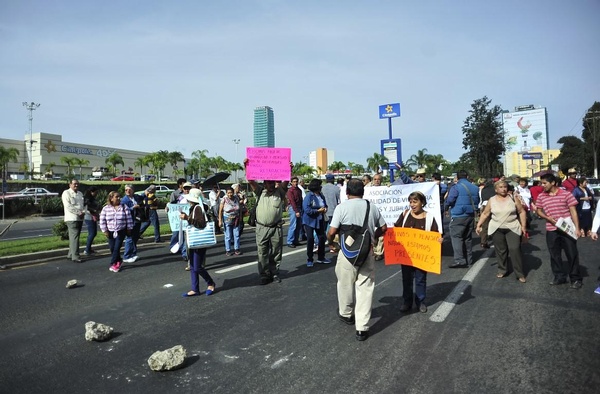
Canadian universities students demonstrate for free education

América del Norte/Canadá/Noviembre de 2016/Fuente: Xinhua

RESUMEN: Miles de estudiantes de 54 universidades y partidarios canadienses se reunieron el miércoles para manifestarse en 36 ciudades de todo el país para recibir educación gratuita, según un comunicado de prensa de la Federación Canadiense de Estudiantes el miércoles. «Hoy los estudiantes están tomando medidas porque sabemos que la educación es un derecho», dijo Bilan Arte, presidente nacional de la Federación Canadiense de Estudiantes en Ottawa. «Tenemos una visión de la educación postsecundaria donde nuestros colegios y universidades están completamente financiados, donde todos los trabajadores del campus reciben un pago justo y donde los estudiantes pueden concentrarse en aprender sin la carga de la deuda estudiantil. Sin gastos de matrícula «, agregó.

Thousands of students from 54 Canadian universities and supporters Wednesday rallied to demonstrate in 36 cities across the country for free education, according to a news release by the Canadian Federation of Students Wednesday .

«Today students are taking action because we know that education is a right,» said Bilan Arte, national chairperson of the Canadian Federation of Students in Ottawa.

«We have a vision of post-secondary education where our colleges and universities are fully funded, where all campus workers are paid fairly, and where students can focus on learning without the burden of student debt. Our vision of post-secondary education is one without tuition fees, » he added.

Today’s actions are part of a broader campaign launched in June 2016 for free post-secondary education for all students, including graduate students and international students and marks the first time since 2012 students have organized a national Day of Action.

Students are calling on both federal and provincial governments to immediately take steps to eliminate tuition fees, address mounting student debt and increase funding for Indigenous students through the Post-Secondary Student Support Program.

Decades of underfunding have resulted in significant tuition fee increases, with few exceptions, across the country. At present, undergraduate students pay an average of 6,373 Canadian dollars (one Canadian about 0.75 U.S. dollars) while graduate students pay an average of 6,703 Canadian dollars.

International students pay much higher fees, often up to 3.7 times that of domestic students. International undergraduate students pay an average of 23,589 Canadian dollars while international graduate students pay an average of 15,009 Canadian dollars. Underfunding has also led to larger class sizes, a reliance on contract instructors, and a shift to corporate funding.

The Canadian Federation of Students is Canada’s oldest and largest students’ union, uniting more than 650,000 college and university students.

From 2001-2014, revenues from tuition fees at colleges more than doubled, up 214 percent,; and from 2000-2015, revenues from tuition fees at universities nearly tripled,a 268 percent increase, according to Statistics Canada.

The Postsecondary Student Support Program was created to help Indigenous Nations fund post-secondary students, but due to a 2 percent funding cap that has been in place for 20 years the number of students funded through the program has steadily declined by 18.3 percent since 1997 despite First Nations Population growth of 29 percent.

In 2016-17 the federal government expects to write off 187 million dollars in student loans that have defaulted, according to Canada Student Loans Program.

Fuente: http://news.xinhuanet.com/english/2016-11/03/c_135801471.htm

Comparte este contenido:

Colombia: 9.438 menores, a colegios públicos

América del Sur/Colombia/Noviembre de 2016/Fuente: El Tiempo

De los 22 colegios privados que en el pasado tuvieron contratos del programa ‘Ampliación de cobertura’ y que el año entrante no continuarán ofreciendo el servicio por no reunir estándares de calidad, quedaron 9.438 estudiantes pendientes por trasladar a instituciones educativas públicas.

Esta reubicación, como lo indicó la secretaria de Educación de Cali, Luz Elena Azcárate, corresponde a un plan para que todos estos alumnos inicien el año lectivo del 2017 sin problemas.

El Sindicato Único de Trabajadores de la Educación del Valle (Sutev) espera que esta promesa se haga efectiva porque este año “hubo fallas con otros traslados”.

“Atendiendo a las directrices del decreto 1851 del Ministerio de Educación Nacional, la Secretaría de Educación de Cali implementa la reubicación de 9.438 estudiantes”, dijo Azcárate. “Para la vigencia 2017, los 22 colegios no serán vinculados, tras haber obtenido una evaluación menor a 30 en el percentil en el índice de calidad”.

La funcionaria añadió que “este proceso se ha venido realizado teniendo en cuenta la ubicación georreferencial del establecimiento educativo, y la especialidad del colegio de origen y de destino, además de identificar si existe parentesco entre estudiantes para reubicarlos en un solo establecimiento”

Anotó que habrá transporte para menores de 12 años, tarjeta MÍO a mayores de 12 y alimentación a los estudiantes.
Según Azcárate, los padres serán informados de la asignación del cupo en el plantel respectivo.

Fuente: http://www.eltiempo.com/colombia/cali/colegios-publicos-de-cali/16741986

Comparte este contenido:

Venezuela: En Trujillo 125 instituciones educativas fueron rehabilitadas con Plan Cayapa

América del Sur/Venezuela/Noviembre de 2016/Fuente: AVN

Por seis semanas consecutivas se llevó a cabo el Plan Cayapa en el estado Trujillo, a través del cual se rehabilitaron 125 instituciones de los 20 municipios de la entidad andina, que requerían trabajos menores.

La autoridad única de Educación en el estado, Laidely Grimán, señaló este martes que este plan fue todo éxito debido a que acataron la convocatoria no sólo las instituciones del Gobierno estadal y Nacional a las que fue encomendada la labor, sino también padres, docentes, las Organizaciones Bolivarianas Estudiantiles y el Partido Socialista Unido de Venezuela.

«De estas instituciones intervenidas 120 fueron por la Gobernación del estado y cinco por la Gran Misión Barrio Nuevo, Barrio Tricolor. Fueron jornadas que se llevaron a cabo durante seis semanas con mucho éxito porque logramos una alta participación en cada institución», dijo.

Recordó que con los trabajos ejecutados con el Plan Cayapa abordaron la recuperación de instalaciones eléctricas, salas sanitarias, pintura, puertas y ventanas, entre otros detalles menores.

Grimán señaló que está previsto adelantar una jornada de recuperación de mesas sillas, para lo cual desarrollarán un diagnóstico en cada institución a fin de determinar la necesidad que tiene cada una en este particular.

«Cada promotor de Gobierno de Calle y director de gobierno debe hacer los diagnósticos en las escuelas de cada parroquia para conocer la necesidad y adelantar este plan de recuperación de mesas sillas», expresó la titular estadal de Educación.

Fuente: http://www.avn.info.ve/contenido/trujillo-125-instituciones-educativas-fueron-rehabilitadas-plan-cayapa

Comparte este contenido:

Argentina: Descuidar el ambiente tiene un alto costo

América del Sur/Argentina/Noviembre de 2016/Fuente: Diario Norte

Un reciente informe del Banco Mundial sobre la situación del ambiente en la Argentina advierte que el país perdió en los últimos años más del 12 por ciento de sus áreas forestales, lo que equivale a perder un bosque del tamaño de una cancha de futbol cada minuto. El trabajo del organismo internacional, titulado “Análisis Ambiental del País”, señala que la fuerte expansión de la agricultura a escala industrial ha sido la principal responsable de la pérdida de árboles en las últimas décadas.

El estudio observa, por otra parte, que otro de los desafíos que enfrenta el país en materia ambiental es mejorar las medidas de prevención y el control de las inundaciones. Según el análisis, estos fenómenos representan el 60 por ciento de los desastres naturales y el 95 por ciento de los daños económicos a nivel nacional y afectan a miles de argentinos de todas las regiones. La contaminación del aire, que supera el umbral recomendado por la Organización Mundial de la Salud en tres de los conglomerados urbanos más grandes del país: Buenos Aires, Córdoba y Mendoza, también figura en la lista de problemas a resolver. En este caso, la contaminación proviene principalmente de las emisiones de gases de los vehículos, cuya cantidad se ha sextuplicado en los últimos 25 años. La lista de desafíos a enfrentar incluye también a los problemas relacionados con la gestión de residuos, ya que los basurales a cielo abierto siguen siendo la modalidad más habitual de eliminar los residuos y el reciclaje es aún limitado. Según el informe, en el país cada año se desperdician 38 kilogramos de alimentos por persona que se convierten en una fuente importante de emisiones de gases de efecto invernadero. A todo esto debe sumarse el drama de la contaminación del agua, en un país en el que solamente el 65 por ciento de las aguas residuales se recolecta y únicamente el 12 por ciento se trata antes de volver a los ríos o mares, según el informe del Banco Mundial. Las aguas superficiales, es decir aquellas que provienen de lluvias, manantiales o fuentes subterráneas, son la principal fuente para consumo en el país, pero queda expuesta a la contaminación.

Uno de los datos más relevantes que arroja el informe advierte que los desastres ambientales le cuestan al país un 8 por ciento de su PBI, lo que equivale a lo que ingresa por exportaciones, es decir unos 56 mil millones de dólares por año. El informe observa que, a pesar de la seriedad del problema, el gasto público ambiental representa apenas un 0,4 por ciento del PBI, cifra que ubica a la Argentina por debajo de otros países de la región como México y Chile que destinan un porcentaje mayor a la protección de ecosistemas, prevención y control de inundaciones y suministro de agua, entre otras tareas relacionadas con el cuidado del ambiente.

Respecto de la minería, el estudio del Banco Mundial sostiene que el sector tiene una gestión deficiente del medio ambiente así como de una aplicación insuficiente de las reglas correspondientes, lo que dejó un legado de subproductos dañinos, residuos y cierres de minas difíciles. En este sentido, vale recordar el nuevo derrame de cianuro que se produjo en septiembre pasado en la mina Veladero que explota la empresa Barrick Gold en la cordillera sanjuanina y que fue reconocido por la propia minera.

El desafío que tiene por delante el país pasa por encontrar una fórmula que permita conciliar el desarrollo con manejo sustentable del ambiente que minimice los impactos negativos sobre el mismo, teniendo en cuenta que el descuido del lugar donde vivimos tiene un efecto directo sobre la calidad de vida de la comunidad y que, además, las serias consecuencias de la degradación ambiental no se distribuyen de manera equitativa entre todos los sectores de la población sino que afecta en mayor medida a los grupos más postergados y vulnerables de la sociedad.

Fuente: http://www.diarionorte.com/article/144527/descuidar-el-ambiente-tiene-un-alto-costo

Imagen: http://elblogverde.com/el-medio-ambiente/

Comparte este contenido:
Page 4752 of 6179
1 4.750 4.751 4.752 4.753 4.754 6.179