Page 883 of 6178
1 881 882 883 884 885 6.178

Bolivia: Estudiantes del sur vuelven a pasar clases semipresenciales por alto costo del internet

Estudiantes del sur vuelven a pasar clases semipresenciales por alto costo del internet

Cochabamba
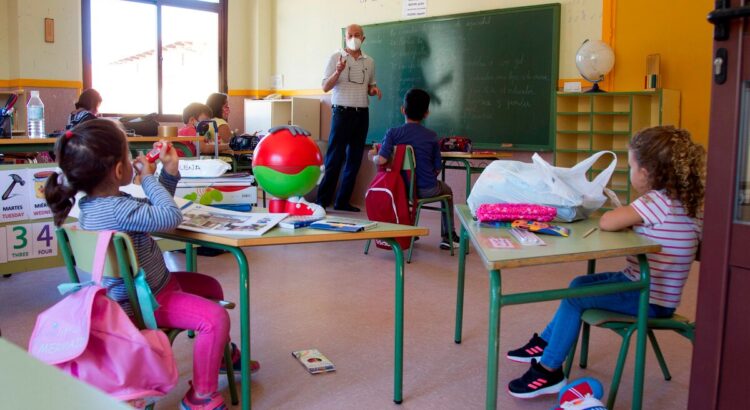
En varias unidades educativas de la zona sur de la ciudad de Cochabamba los estudiantes retornaron a pasar clases semipresenciales pese a las prohibiciones por la pandemia, porque la cobertura de internet no es óptima  y los costos para la educación virtual son elevados.
Las clases semipresenciales consisten en turnos. Un día pasa el 50 por ciento de estudiantes y el resto al día siguiente para evitar las aglomeraciones. En tanto, los profesores dictan clases de una o dos horas.

El representante de la Red 26, Omar Velasco, afirmó que los padres de familia determinaron llevar a sus hijos a pasar clases en aula y pagar una cuota para adquirir insumos de bioseguridad  para prevenir la Covid-19.

En cada establecimiento, profesores y regentes verifican que cada estudiante use barbijo, una botella  pequeña de alcohol y se los desinfecte para que accedan a los ambientes.

Entre las unidades educativas que volvieron a la modalidad semipresencial están: Bolivia- Holanda, Bolivia Nueva Panamericana y Antonio Díaz.

Fuente de la Información: https://www.lostiempos.com/actualidad/cochabamba/20210209/estudiantes-del-sur-vuelven-pasar-clases-semipresenciales-alto-costo

Comparte este contenido:

Israel: un actor importante en la militarización del mundo

Israel: un actor importante en la militarización del mundo

Israel es un importante distribuidor internacional de tecnologías y estrategias militares. Los datos del SIPRI (Instituto Internacional de Estocolmo para la Investigación de la Paz) entre 2015 y 2019 muestran que Israel fue el octavo mayor exportador de armas del mundo y que sus ventas mundiales aumentaron un 77 % (Estados Unidos + 23 %, Rusia -18 %, Canadá + 33 %). Jeff Halper, en su investigación crítica sobre las armas militares avanzadas de Israel, escribe que a Israel «le va bien» debido a su indispensable especialización en armas, estrategia y vigilancia mundiales.

El alcance mundial de Israel implica ahora la militarización de la policía con la venta de tecnologías de vigilancia, armas y estrategias de control de multitudes y disturbios. Gaza es un laboratorio y un escaparate para las armas y métodos probados en combate de Israel para controlar poblaciones civiles altamente concentradas a medida que la población mundial se urbaniza cada vez más y se concentra en barrios marginales urbanos. El Cuerpo de Ingenieros del Ejército de los EE. UU. construyó el Centro de Entrenamiento de Guerra Urbana en el Negev, donde Estados Unidos e Israel se entrenan para atacar en áreas densamente pobladas. Las tecnologías y estrategias de defensa perimetral israelíes se aplican a núcleos financieros, distritos gubernamentales y centros de reuniones, embajadas y depósitos de combustible en todo el mundo.

La guerra sin fin contra el terrorismo es una mina de oro política y económica para Israel, que conduce a acuerdos bilaterales y multilaterales – en los campos de la ciencia, la tecnología, la defensa y la seguridad – y a asociaciones e inversiones industriales con los principales fabricantes de sistemas de armas / seguridad / vigilancia. La práctica israelí de librar una guerra total contra Gaza, es decir, contra la población civil altamente concentrada de Gaza, sirve como laboratorio y escaparate para el armamento y el comercio militar de Israel.

El alcance mundial de Israel también implica controles fronterizos, vigilancia, monitoreo y control de la migración. Al final de la Guerra Fría, había quince fronteras amuralladas; hoy en día, hay 77. Muchas fronteras amuralladas recientes están equipadas con tecnologías de seguridad y pacificación compradas a Israel. Al usar esta tecnología,  cada vez es más común que las y los refugiados sean monitoreados y detenidos mucho antes de llegar a los cruces fronterizos. La Agencia de las Naciones Unidas para los Refugiados (ACNUR) estimó que a mediados de 2020, 80 millones de personas, algo sin precedentes, habían sido desplazadas por la fuerza, un número que se ha duplicado en la última década.

Armas nucleares

Israel sigue una política de secreto y ambigüedad con respecto a sus armas nucleares. Israel nunca ha firmado el Tratado de No Proliferación. Por lo tanto, a diferencia de Irán e Iraq, Israel no es inspeccionado ni regulado por el Organismo Internacional de Energía Atómica (OIEA). Las reuniones internacionales oficiales previstas para crear una zona libre de armas nucleares en Oriente Medio incluyen a todas las naciones árabes, pero no a Israel, el único país con armas nucleares en Oriente Medio.

Según estimaciones actuales, Israel tiene entre 100 y 300 ojivas nucleares, desplegables por tierra, aire o mar. Los misiles tierra-tierra de largo alcance israelíes Jericó I, II y III tienen una capacidad nuclear y un alcance de hasta 7800 km.

Actualmente, las armas nucleares de Israel apuntan a Irán. A pesar de la falta de pruebas, los líderes israelíes desde el final de la Guerra Fría han advertido repetidamente al público israelí, a Estados Unidos y a la ONU de que Irán está a punto de producir armas nucleares. La repetida advertencia de Israel de que «todas las opciones están sobre la mesa» viola una opinión de la Corte Internacional de Justicia de que incluso la amenaza del uso de armas nucleares es una violación del derecho internacional. Los asesinatos de científicos nucleares iraníes por parte de Israel, el más reciente en noviembre de 2020, también pueden estar vinculados a la estrategia militar de Israel en Gaza y Líbano en la que Israel utiliza secuestros y asesinatos para provocar una reacción, y luego lanza un ataque de represalia masiva en nombre de la legítima defensa, como si Israel fuera la víctima.

Israel y todos los países de la OTAN se han negado hasta ahora a firmar el Tratado sobre la Prohibición de las Armas Nucleares, que entra en vigor el 22 de enero de 2021.

Judith Deutsch, extractos de un texto publicado en Socialist Project 21 de enero de 2021. http://alter.quebec/israel-an-important-player-in-the-militarization-of-the-world/

http://www.europe-solidaire.org/spip.php?article56641

Traducción: Faustino Eguberri para viento sur

Fuente de la Información: https://vientosur.info/israel-un-actor-importante-en-la-militarizacion-del-mundo/

Comparte este contenido:

China’s space probe Tianwen-1 snaps its first image of Mars as it heads towards the planet to study its soil

China’s space probe Tianwen-1 snaps its first image of Mars as it heads towards the planet to study its soil

China’s Tianwen-1 probe has sent back its first image of Mars, the national space agency said, as the mission prepares to touch down on the planet later this year.

The spacecraft, which was launched in July around the same time as a rival US mission, is expected to enter an orbit of Mars around February 10.

The black-and-white photo released late on Friday by the China National Space Administration (CNSA) showed geological features including the Schiaparelli crater and the Valles Marineris, a vast stretch of canyons on the Martian surface.

The photo was taken about 2.2 million kilometres from Mars, according to CNSA, which said the spacecraft was now 1.1 million km from the planet.

The robotic craft ignited one of its engines to «make an orbital correction» Friday and was expected to slow down before being «captured by Martian gravity» around February 10, the agency said.

China could set world record with inaugural mission

The spacecraft, which was launched in July around the same time as a rival US mission, is expected to enter an orbit of Mars around February 10.

The black-and-white photo released late on Friday by the China National Space Administration (CNSA) showed geological features including the Schiaparelli crater and the Valles Marineris, a vast stretch of canyons on the Martian surface.

The photo was taken about 2.2 million kilometres from Mars, according to CNSA, which said the spacecraft was now 1.1 million km from the planet.

The robotic craft ignited one of its engines to «make an orbital correction» Friday and was expected to slow down before being «captured by Martian gravity» around February 10, the agency said.

China could set world record with inaugural mission

After watching the US and the Soviet Union lead the way during the Cold War, China has poured billions of dollars into its military-led space programme.

It has made huge strides in the past decade, sending a human into space in 2003.

China has laid the groundwork to assemble a space station by 2022 and gain a permanent foothold in Earth’s orbit.

But Mars has proved a challenging target so far, with most missions sent by the US, Russia, Europe, Japan and India to the planet since 1960 ending in failure.

If successful, the Tianwen-1 will make China the first country to orbit, land and deploy a rover in its inaugural mission to Mars.

That would further boost China’s space credentials, after it last year became the first nation to bring back samples from the moon since the 1970s.

Probe’s systems in ‘good condition’

A Long March-5 rocket is seen at the Wenchang Space Launch Centre with a Chinese flag in front.

Tianwen-1 is not China’s first attempt to reach Mars.

A previous mission with Russia in 2011 ended prematurely as the launch failed — the Russian spacecraft carrying the probe failed to exit Earth’s orbit and disintegrated over the Pacific Ocean.

China has already sent two rovers to the Moon.

With the second, China became the first country to make a successful soft landing on the far side.

All systems on the Tianwen-1 probe are in «good condition,» CNSA said.

ABC/Wires


Fuente de la Información: https://www.abc.net.au/news/2021-02-07/china-space-probe-sends-back-its-first-image-of-mars/13129512

Comparte este contenido:

Want a law that helps teachers teach reading? Here’s what educators say they need.

Want a law that helps teachers teach reading? Here’s what educators say they need.

As a teacher or reading specialist for more than 20 years, Kim Geer has seen her share of state education laws and policies.

“It’s like every year something new comes along,” said Geer, a teacher at T.C. Henderson Elementary School of Science and Technology. “If we need to do something different, OK, that’s fine. But just help us to do it.”

Many elementary school teachers across the state feel the same way. With the General Assembly expected to consider reading legislation this session, we spoke with educators to find out what help they need.

“I think in creating any sort of legislation or policy, we have to make sure that we are bringing our teachers to the table, to have our teachers have a role in any sort of changes,” said Mariah Morris, the 2019 North Carolina Teacher of the Year and an advisor to the State Board of Education.

“We must design with them and not for them in this process. Because nobody [else] has to walk the walk of leading a classroom through the myriad of different needs in that room, alongside making any sort of pedagogical shift or cultural change,” she said.

Here are five takeaways from our conversations with educators.

Make training transformational, not burdensome

For starters, training should start when teachers are focused on knowledge-building — while they are in college, training to become teachers. We wrote more about that here.

It also means focusing on teacher leadership and empowerment. Morris has two ideas for doing this. First, bring back master’s pay to encourage teachers to get master’s degrees in reading. Second, reimagine teacher training.

Districts moving toward instruction based on the scientific research are doing a lot of training and professional development for teachers. Sometimes they pull teachers out of classrooms during the day, pay stipends to have them train on weekends, or send select teachers for training and then ask them to train others.

Morris said the state will get more buy-in if it pairs training with enrichment opportunities, like micro-credentials. Two of the restart schools in her district — Moore County Schools, where she is now innovation and special projects coordinator — have moved beyond training to create a three-tiered teacher leadership opportunity.

First, the North Carolina Center for the Advancement of Teaching provides some teachers and teacher assistants with virtual training in the science of reading. These teachers and teacher assistants receive a literacy badge.

After the training, the educators take a Canvas course the district built that reinforces the research and includes videos covering best practices. Finally, district coaches help these educators implement the learning in their classrooms.

Legislation requiring research-based instruction would get more teacher support if it includes these types of leadership opportunities, Morris said.

“Thinking about how we frame [professional development] so it’s not just sit and get,” she said. “It’s not, OK, there’s a reading law and we’re going to provide this webinar and then go do it. That’s not going to reach our teachers because, partly, it’s not respecting them.”

Help districts with curricula and materials

Joy Cantey is the director of literacy for Guilford County Schools. That district has taken steps for about four years to align instruction with the scientific research.

One of the main steps to achieving that, she says, is having a strong, evidence-based curriculum. Guilford is the third-largest district in the state and has resources at the central office to vet curricula. Not every district does, she said.

“Districts need support with selecting curriculum,” Cantey said. “All students across the state need a viable curriculum that they’re using. Teachers who don’t have a curriculum are left to just search the internet. The state needs to fund a curriculum. Districts can certainly have choice, and it doesn’t need to be the same curriculum in every single district, but there needs to be some funding for districts to adopt a comprehensive curriculum for literacy.”

She wants to see the state provide a list of approved curricula or create a rubric of essential components that a district’s curriculum must include.

The latter was a recommendation to the State Board of Education from the literacy task force it convened last year. Cantey was a member of that task force and said often that training teachers in the science of reading without providing them evidence-based curriculum creates disconnect and frustration.

Teachers also need funding and help selecting evidence-based materials for their classrooms.

Geer, for instance, is incorporating more decodable texts in her teaching. Her curriculum comes with some, but she needs more.

“I understand the premise of needing a decodable text,” she said. “So, (if) we’re going to do this, we need some good stuff.”

Provide instructional coaching and interventionists 

While Cantey emphasizes the importance of curricula and programs, she points out that none is perfect.

“So we have to build capacity in educators, because the educators need to be smarter than the resource,” she said.

This means teachers, in addition to training and strong curriculum, need coaching.

Teachers say any law that changes instruction methods should include coaching supports.

“I can watch all the videos and stuff that you throw at me, and I do, but I would rather have a person, whether it’s outside or the instructional coach who lives here, come into the room and let me watch,” Geer said. “Model some lessons and show me.”

Morris said she wants legislators to recognize the difference between instructional coaches and interventionists. Instructional coaches, she said, work with teachers to build their capacity. Interventionists work with students.

“Our state needs to fund them both if we want to move the needle on reading instruction,” she said. “Unfortunately, we don’t have state funding for a lot of these positions, and a lot of districts are forced to only have coaches or interventionists at Title I schools. That’s a huge blind spot in our goal to move the needle on reading instruction.

“Because you can have the best crafted law or policy, but if we don’t have boots on the ground and personnel who are able to help make that shift, it’s not going to happen.”

Help with classroom size and personnel

The scientific research supports differentiating instruction for students depending on their decoding or oral language needs, but class sizes are an issue.

This year, state law mandates that K-3 class sizes average 18 students. But the law limiting class sizes did not include funding for teachers and teacher assistants.

In some classes, this means teachers are teaching first- and second-graders. Geer, for example, took on three first-graders in her second-grade classroom to keep the average numbers in other first-grade classrooms balanced.

The impact on fourth- and fifth-grade class sizes is stark, with 30 or more students in some classes.

“Nothing magical happens to a child who is struggling with reading when they cross the threshold to grade four,” Morris said. “And, unfortunately, those class sizes have ballooned.”

A related concern is lack of assistance in classrooms. Susan King is a first-grade teacher at Lakeshore Elementary School in Iredell-Statesville Schools. She said that when she began teaching, she had a teacher aide several times a week for an hour or more per day. Now, the assistance she gets is a fraction of that.

“I have taught over 20 years, and I have less help now than I have ever had,” King said. “They are asking us to do all of this intensive reading instruction, but it works best in small groups. If you work with 6-year-olds, you cannot leave them unattended while you go work with other groups. They have to be managed. And so it’s great [to see] the need for teaching reading through the science of reading, but if we have 20 kids in our class and no assistant, we can’t do it with our hands tied behind our backs.”

Provide testing and assessments that align with expectations

Teachers worry about disharmony between how leaders want them to teach and how they assess teacher performance. They also worry about whether the assessments they use will test on what the state expects them to teach.

The testing inconsistencies begin before teachers enter the classroom. For licensure, teachers in the state have to pass a North Carolina Foundations of Reading exam. This exam tests teacher candidates on cueing students to predict words, a strategy that isn’t supported by the scientific research.

At Lenoir-Rhyne University, the college of education builds its elementary education literacy program around the scientific research. Monica Campbell, the coordinator of its elementary education program, says she still has to cover cueing for the pre-licensure exam, even though she tells her teacher candidates to forget the lesson after the exam.

“It shouldn’t be on that exam,” Campbell said. “If we are on board with the science, that can’t be on there.”

Campbell said she is part of a task force re-examining pre-licensure exams and hopes this will change.

The issue in the classroom has been more complicated. Assessments such as mCLASS and Istation were in the news a lot the last couple years, but much of the discussion was about how assessments were procured, not how well they perform.

In the classroom, some teachers say they aren’t happy with either assessment.

Carrie Norris, curriculum director in Transylvania County Schools, recalled that many teachers in her district were disappointed switching to Istation because they liked mCLASS. But training on the science of reading has changed that attitude some.

“I know we hated for mCLASS to go away,” Norris said to a group of instructional coaches, “but what did we care about the most at the end of the assessment?”

Almost in unison, the coaches said, “That level.”

They were referring to a level that mCLASS would assign a student after the assessment, at which point that student’s teacher would recommend books at that level for the student to read. These are called leveled readers.

Reading class in most elementary schools include whole-group instruction followed by small-group blocks. During small groups, there is disparity among the types of books kids are reading. Two common types are leveled readers and decodable texts.

Leveled readers are prevalent in reading classrooms where whole-language approaches are used, and they are included in balanced literacy curricula. In Transylvania County Schools, many teachers are now replacing these with decodable and knowledge-rich texts.

Haley Dawson, a first-grade teacher in TCS, appreciates that Istation breaks student proficiency across five fundamentals — phonics, phonological awareness, fluency, vocabulary, and comprehension — but she and other teachers say they still worry about Istation.

They worry about accuracy. For instance, they see students who are guessing words perform better than students who are sounding out phonemes, just because the guessers are finishing quicker. They also worry about screen time.

But their biggest concern: Some of what is being assessed isn’t what they believe they are asked to teach. There should be consistency there, they say. They add that state-mandated testing should also reflect what happens in a classroom with science-aligned instruction.

“To get ultimate, ultimate, ultimate buy-in — because there are a lot of teachers who teach to the test — if the test matches what the science says, then if you are someone who teaches to the test, you’ll be teaching the science,” Dawson said.


Editor’s note: Mariah Morris is on the Board of Directors for EducationNC.


Fuente de la Información: https://www.ednc.org/law-teachers-help-teach-reading-educators-need-coaching-curriculum-leadership-class-size/

Comparte este contenido:

Bahamas: One man found dead and another killed in under 24 hours

One man found dead and another killed in under 24 hours

NASSAU, BAHAMAS — One man was found dead on Monday and another was shot to death just hours later, according to police.

In the first incident, around 4pm on Monday, police were called to a track road east of Golden Isles Road, off of Cowpen Road, where they found a man’s unresponsive body in bushes.

The victim was pronounced dead by Emergency Medical Services when they arrived on the scene. An autopsy will be performed to determine the cause of death; however, police are classifying it as a homicide as the victim reportedly had injuries to the head.

In the second incident, sometime after 11pm on Monday, police were alerted to a shooting incident on Lincoln Boulevard, in the area of Homestead Avenue. When first responders arrived at the scene, they found a man who appeared to have been shot in the face.

The man was taken to the hospital but police said he later succumbed to his injuries.

Neither victim’s identity has been released and investigations into both matters are ongoing.

Fuente de la Información: https://ewnews.com/one-man-found-dead-and-another-killed-in-under-24-hours


Comparte este contenido:

Malawi: Resurgence of killings and abductions of persons with albinism spells a dangerous escalation

Malawi: Resurgence of killings and abductions of persons with albinism spells a dangerous escalation

The resurgence of killings and abduction of persons with albinism in Malawi, with the attempted abduction of a 12-year-old and the killing of 26-year-old last week, shows  a dangerous escalation for the safety of this vulnerable group, Amnesty International and the Association of Persons with Albinism said today.

The latest attempted abduction of a 12-year-old girl and the missing body of Saidi Dyton are a chilling reminder of how life has become dangerous for persons with albinism in Malawi,

A 12-year-old girl with albinism narrowly survived abduction by two unknown assailants who  broke into her home in Machinga district on 3 February, while the body of Saidi Dyton is still missing following the arrest of three suspects who confessed to his killing on 27 January.


“The latest attempted abduction of a 12-year-old girl and the missing body of Saidi are a chilling reminder of how life has become dangerous for persons with albinism in Malawi,” said Muleya Mwananyanda, Amnesty International’s Deputy Director for Southern Africa.

“People with albinism are simply not safe in Malawi, whether in their homes or on the street. These attacks are fuelled by a culture of impunity which has been gone on for past related crimes. Malawian authorities must swiftly move to bring suspected perpetrators of these latest crimes to justice in fair trials.”

People with albinism are simply not safe in Malawi, whether in their homes or on the street. These attacks are fuelled by a culture of impunity which has been gone on for past related crimes

In the past four months alone, there have been seven recorded attacks against people with albinism in the country, ranging from killings, tampering of graves, attempted abductions and physical violence. Amnesty International has consistently called for thorough and transparent investigations into these crimes, and accountability for the murders of people with albinism. Cases of attacks on this vulnerable group remain largely unresolved.

The number of reported crimes against people with albinism in Malawi is estimated at approximately 170 cases, including more than 20 murders since November 2014.

The government of Malawi has an obligation under domestic and international human rights law to protect people with albinism and ensure justice to the victims of the attacks and killings

“The government of Malawi has an obligation under domestic and international human rights law to protect people with albinism and ensure justice to the victims of the attacks and killings,” said Menard Zacharia, Executive Director of the Association of Persons with Albinism.

“Authorities must intensify their investigations to finalise all outstanding cases, including apprehending the fourth suspect in Saidi’s case and find his body.”

Fuente de la Información: https://www.amnesty.org/en/latest/news/2021/02/malawi-resurgence-of-killings-and-abductions-of-persons-with-albinism-spells-a-dangerous-escalation/


Comparte este contenido:

Teen gives up college savings to help her mom pay rent

Teen gives up college savings to help her mom pay rent

An 18-year-old who was saving her own money to cover college expenses is giving up the funds to help her mother pay back rent.

Carmona said her mother, Martha Zepeda, lost her job three months ago and has been unable to pay the $800 per month in rent for their home.

«She works in the Port of Houston, and people work so close together, and the jobs died down [during COVID-19],» Carmona told «Good Morning America.» «She was really worried how she was going to get back on her feet.»

Carmona said she completed a six-week cervical cancer research internship at Rice University in the summer of 2018, and she earned a $1,000 stipend.

PHOTO: Alondra Carmona of Houston, Texasis pictured with her mom, Martha Zepeda, and sisters, Claudia Perez, 35 and Briceyda Zepeda, 21.

She saved that money in preparation for college, she said, and earned more from working a part-time job at Chipotle.

On Sunday, her mother was locked out of their home for not paying rent, so Carmona gave her the $1,800 in college savings to put toward the $2,000 she owes.

PHOTO: Alondra Carmona, 18, a senior at Yes Prep East End in Houston, Texas, was recently accepted to Barnard College-- an elite Ivy League liberal arts college for women located in New York City.

Carmona and her mom have been currently staying with her sister, Claudia Perez, 35, Carmona said.

The teen said she gave the money to her mom as a thank you for caring for her and her sisters, Perez and Briceyda Zepeda, 21.

«She’s always been a single parent and would work nights when I was little,» Carmona said. «My sisters and I would stay home alone … it was really hard, but she made sacrifices for us to have a better life.»

PHOTO: 
Alondra Carmona, 18, a senior at Yes Prep East End in Houston, Texas, was recently accepted to Barnard College-- an elite Ivy League liberal arts college for women located in New York City. Seen in this photo is Alondra's acceptance letter.

«She’s also wanted me to have a better education, and I got accepted to my dream school all because of her,» she added.

Carmona said Barnard gave her a $60,000 financial aid package, and she plans to come up with the difference she owes for room and board.

Since giving up her savings to help with rent, Carmona launched a GoFundMe page to help cover costs during the time she’ll be enrolled at Barnard.

«Some of the money I’ll use to help my mom pay [more] rent,» Carmona said of the crowdfunding. «And I’m so grateful to Barnard for helping me so much. They really are such an amazing school.»

Carmona will be majoring in neuroscience and minoring in Latin American studies. She hopes to become a neurosurgeon, she said.

PHOTO: Alondra Carmona, 18, a senior at Yes Prep East End in Houston, Texas, was recently accepted to Barnard College in New York. Here, Alondra is seen when she was a child dressed up as a doctor.

«I know this is her lifelong dream, and she used to dress up as a doctor when she was little,» her mom, Martha Zepeda told «GMA» through a translator. «I’m really happy and proud.»

Zepeda said she will soon be looking for other work. Carmona is hopeful they will return home soon.

Fuente de la Información: https://abcnews.go.com/GMA/Family/teen-college-savings-mom-pay-rent/story?id=75779643&cid=clicksource_4380645_16_post_hero_card_hed

Comparte este contenido:
Page 883 of 6178
1 881 882 883 884 885 6.178