Page 180 of 622
1 178 179 180 181 182 622

Education in Nigeria: Overcoming Mass Displacement

Africa/Nigeria/By Kathryn Quelle/Source: www.borgenmagazine.com.

Boko Haram is a militant group in northern Nigeria that wants to institute Islamic law. The group also operates in Chad, Niger and Cameroon, but it originated in Nigeria in the late 1990s. The ongoing Boko Haram insurgency officially started in 2009, and since then militants have killed at least 20,000 people. The violent attacks have also displaced about two million Nigerians, with little chance of them being able to return home in the near future.

Mass internal displacement has a large impact on a country’s economy as well as its resources and living conditions. Displacement also greatly affects education. An estimated 952,029 Nigerian children have been displaced with little or no access to education because of the Boko Haram violence. At one point, the U.S. Embassy in Nigeria reported that only 28 percent of primary age children attended school in Borno state in northern Nigeria, as opposed to 97 percent in most parts of southern Nigeria.

In the local Hausa dialect, Boko Haram means “Western education is forbidden” and the quality of education in Nigeria will suffer if the group succeeds in their goals. In 2016, Human Rights Watch reported that Boko Haram had deliberately killed more than 600 teachers. Attacks in northern Nigeria have also destroyed more than 900 schools and forced at least 1,500 to close.

In combination with local NGOs, the U.S. Agency for International Development (USAID) launched the three-year Education Crisis Response (ECR) program in 2014 to address the fractured system of education in Nigeria. According to USAID, the program’s goal was to “expand access to quality and protective non-formal education and alternative education opportunities for out-of-school children, ages 6 to 17.”

Results in the Classroom

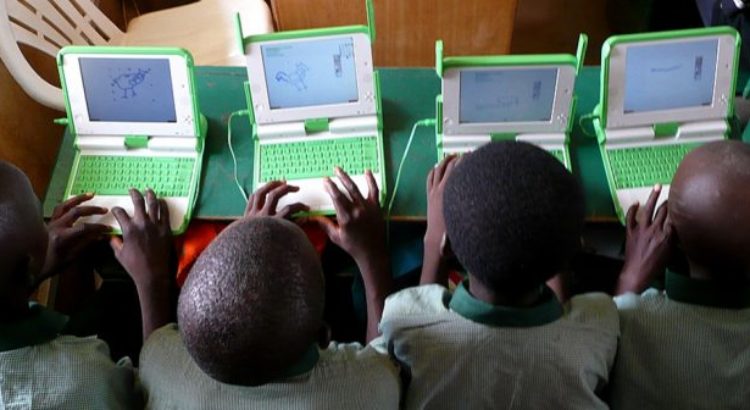
During ECR’s tenure in Nigeria, USAID partner Creative Associates International established more than 1,400 non-formal learning centers and more than 700 formal schools. Creative reached more than 80,000 children, 23 percent more than its target of 65,000. USAID’s final report found that 47 percent of the children reached by the program had never attended school before.

When ECR was launched, USAID performed a baseline assessment. The agency found that 64 percent of the children scored at zero level for Hausa and 50 percent scored at zero level for English, meaning the children could not even recognize letters from the languages. After three years, USAID’s endline assessment found that 49 percent could read Hausa and 37 percent could read English, showing significant improvement.

Besides substantially raising literacy rates in both Hausa and English, ECR also addressed mathematical knowledge. At the beginning of the program, 40 percent of children could not recognize the numbers 1-9. At the end, the same percentage were able to perform basic mathematic functions.

Beyond the Classroom

Beyond simply improving education in Nigeria, the learning centers set up by the program also provide meals and help students get to and from school. For example, ECR established 12 non-formal education centers specifically for children with physical disabilities, and the program distributed wheelchairs and crutches to the students. These 12 centers enrolled 539 children over three years and, in addition to basic knowledge and skills, the centers taught children vocational skills that they can utilize even after the program has ended.

The ECR program also focused on children’s psychosocial development. Many of the children in the program were displaced due to attacks on their homes and villages, leaving them traumatized. USAID recognized that children have a hard time learning when their fears and traumas are not addressed, and it trained facilitators on how to teach children sensitively.

Facilitators encouraged positive, interactive student-teacher relations and used group exercises to encourage children to make friends and interact with each other. Within local communities, organizations also encouraged spreading messages of peace. ECR director Ayo Oladini said, “We make sure that we don’t create any more trauma, either for these children or within the community where they live.”

Ensuring the Continued Success of Education in Nigeria

Throughout its tenure, ECR was supported by Nigeria’s state and federal governments. Officials helped determine which communities to focus efforts in, developed training manuals and sat in on classes. Every learning center established also had two local government education officials assigned to mentor teachers.

Nigeria’s government further demonstrated their commitment to education and ensuring ECR’s continued success by implementing transition plans worth $287,709 in its 2017 budget. The budget has been used to establish 100 more non-formal learning centers following ECR’s model and train more than 8,000 formal school teachers in conflict-sensitive education. At the end of the three years, five Nigerian state governments separately promised to replicate ECR’s non-formal education model.

In addition to government support, ECR mainstreamed 30,154 children who passed its end-of-program exam into formal schools to ensure the children’s continued success. ECR also provided them with additional free scholastic materials. Even though the ECR program has ended, the program has re-established quality education in Nigeria and helped a lot of kids get back to school.

Source of the notice: http://www.borgenmagazine.com/school-fees-in-africa/
Comparte este contenido:

Se l’Africa fosse un bar Siyanda Mohutsiwa e la storia di un tweet

Di Nora Cavaccini

Con qualche anno di ritardo, mi sono imbattuta nella figura di Siyanda Mohutsiwa, una giovane blogger e scrittrice del Botswana. Vorrei precisare che non sono un’esperta, e nemmeno lontanamente una conoscitrice, della complessa realtà storica e culturale dell’Africa, e che mi sono imbattuta in lei seguendo quel modo bulimico e trasversale tipico di Internet, per il quale, a partire da una curiosità, si finisce di link in link ad arrivare a tutt’altra meta di quella che ci si era prefissi.
Ad ogni modo.
Siyanda Mohutsiwa è diventata nota nel 2015 postando un tweet che, come vedremo in seguito, ha generato un hashtag divenuto virale in tutta l’Africa e non solo. L’eco di questo tweet ha infatti raggiunto molte testate internazionali eppure non se ne è mai parlato in nessun giornale, trafiletto o rivista italiana.
Mi sembrava dunque interessante ripercorrere alcune tappe di questa vicenda, sia perché offre punti di vista interessanti sul modo in cui una piattaforma digitale può essere utilizzata, sia perché Siyanda Mohutsiwa – con i suoi soli 25 anni – è una mente brillante, sia perché, e soprattutto, nel nostro immaginario dell’Africa prevale spesso l’idea di un paese problematico e lontano, con l’emergenza dei rifugiati e della fame da un lato, o dei safari con gli animali esotici dall’altro, quando vi si guarda con interesse turistico.
L’attuale diversità del continente e le speranze politiche della gioventù africana, sono invece appena visibili. E forse non sono la sola a saperne ben poco…

Come Siyanda Mohutsiwa stessa avrà a spiegare durante una conferenza TED ad Amsterdam, tutto è nato con una domanda sul Sud Africa, e a seguito delle continue allusioni di questo paese alla necessità di costruire un’era “post-razziale” dopo i devastanti decenni dell’Apartheid.
In realtà, è bene dirlo subito, Siyanda non proviene dal Sud Africa.
Suo padre è originario del Botswana, un Paese dell’Africa del Sud, democratico e con politiche sociali molto progressiste, e sua madre, invece, è del Regno dello Swaziland, una nazione molto piccola, sempre dell’Africa meridionale, ultima monarchia assoluta rimasta nel continente.
Nata e cresciuta in quest’ultima, come bambina che parlava fluentemente la lingua Swati “e basta”, Siyanda approda in Botswana in età scolare, inserita in una nuova casa e in un’identità culturale che non comprende affatto, incapace anche di capire la lingua che la circonda. Per di più, fa il suo ingresso nel sistema scolastico privato africano, il cui unico scopo, dice, era “quello di toglierti via la tua africanità”.
In questo limbo, dove, sue parole, “appartenevo a due posti contemporaneamente ma non mi sentivo parte integrante di nessuno dei due, e allo stesso tempo mi sentivo parte di tutto ciò che c’era intorno”, Siyanda si forma, studia la letteratura, la politica, la filosofia africana, e nella costruzione della sua identità, comincia a essere ossessionata dall’idea di una cultura africana condivisa. Il mezzo che le permette di approfondire davvero questa sua ossessione arriva nel 2011, ed è  Twitter.
Con una connessione che comincia a farsi più accessibile ed economica per tutti, e con una piattaforma che permette – pur nel limite di 140 caratteri – di esprimere la creatività senza confini e restrizioni, Siyanda si affaccia al mondo, scoprendo persone del Sudafrica, del Ghana, della Nigeria, in un continente immenso e diversificato in cui pure non tutti, ma tanti ragazzi come lei, si chiedono cosa significhi essere un giovane africano oggi.

“Mi sono resa conto di cosa stava accadendo. Mi sono resa conto di essere in mezzo a qualcosa di straordinario, perché, per la prima volta, i giovani africani potevano parlare del futuro del continente in diretta, senza restrizioni dovute ai confini, alla finanza, ai governi”.

È in una giornata estiva del 2015, che Siyanda posta dunque questo tweet:

Fuente: http://www.yanezmagazine.com/ifafricawasabar-siyanda-mohutsiwa/

Comparte este contenido:

Ghana: Los sindicatos denuncian los planes de dar dinero recaudado de los impuestos a empresas de educación con ánimo de lucro

Africa/Ghana/PrensaIE

“Dada la escasez de recursos, es lamentable que el Education Outcome Fund (EOF) for Africa and Middle East tenga planeado transferir fondos de contribuyentes destinados al bienestar de los/las niños/as a inversores privados que buscan beneficiarse de la educación”.

Es la postura de las organizaciones miembros de la IE, GNAT, NAGRAT y TEWU, que se reunieron para evaluar su plan para la campaña nacional cuyo objetivo es frenar e invertir la comercialización de la educación en Ghana.

La reunión de evaluación y planificación, que forma parte de la respuesta mundial de la IE a la creciente comercialización y privatización de la educación, culminó en la presentación de un comunicado al ministro de Educación en un acto público al que asistieron representantes de los tres sindicatos y organizaciones de la sociedad civil.

En el comunicado se señala una «profunda preocupación ante la noticia del establecimiento de un nuevo fondo mundial para la educación (Education Outcomes Fund for Africa and Middle East)» que se centrará en actores no estatales.

Además, indica que «contribuirá a la comercialización y la mercantilización de la educación, legitimará la obtención de beneficios en la prestación de servicios educativos y minará los esfuerzos destinados a fortalecer y ampliar el suministro de una educación gratuita inclusiva y equitativa de calidad para todos/as en consonancia con el Objetivo de Desarrollo Sostenible 4.

Dada la escasez de recursos, es lamentable que el EOF tenga planeado transferir fondos de contribuyentes destinados al bienestar de los/las niños/as a inversores privados que buscan beneficiarse de la educación.

La promoción por parte del EOF de modelos escolares como escuelas subvencionadas/APP y que cobran tasas, las denominadas escuelas privadas ‘de bajo coste’, ignora el creciente número de datos empíricos que muestran que la privatización no mejora el acceso a la educación ni los resultados académicos, sino que agrava la desigualdad y la segregación negando a todos/as los/las niños/as el derecho a la educación de calidad”.

El comunicado concluye pidiendo al Gobierno de Ghana y a la comunidad internacional que demuestren su compromiso con el ODS4 de cumplir su obligación de garantizar el suministro de una educación pública de calidad y gratuita para todos/as.

Se puede leer la versión completa del comunicado aquí.

La IE agradece a la Friedrich Ebert Stiftung (FES) el apoyo brindado para la organización de este acto.

Fuente: https://www.ei-ie.org/spa/detail/15949/ghana-los-sindicatos-denuncian-los-planes-de-dar-dinero-recaudado-de-los-impuestos-a-empresas-de-educaci%C3%B3n-con-%C3%A1nimo-de-lucro

Comparte este contenido:

Ethiopia Begins the Harmony of Peace through Collaboration of Politics, Education, Religion and Civil Society

Africa/Ethiopia/11.09.18/Source: www.borkena.com.

Political and social representatives in Africa and Middle East were gathered to discuss international cooperation for peacebuilding through a series of events held in Addis Ababa, Ethiopia including the “Ethiopia Peace Conference” on August 15 with education experts and civil society, the “Addis Ababa Summit” with political leaders from Africa and the Middle East and the “Open Dialogue with Religious Leaders” on August 16.

On August 15, government, educator and youth sought a way to reconciliation for peace at the ‘Ethiopia Peace Conference’ held in the United Nations Economic Commission for Africa (UN ECA) located in Addis Ababa, Ethiopia. At this event, attended by former President of Ethiopia Negasso Gidada, representatives of 10 universities, state minister of education and 700 university students, the DPCW Advocacy Signing Ceremony was held to invent cooperative peacebuilding with the participation of people from every field of society.

Mrs. Dagmawit Moges, Deputy Mayor of Addis Ababa’s municipal government who addressed a speech saying ” Addis Ababa city administration has a deep conviction that the launching of peace education in the Universities could help promote harmony among students regardless of their nationalities, cultural background and religions.” at the event, emphasize about the necessity of peace education and also says that the City Administration pledges to extend every support necessary to institutions engaged in the implementation of this peace education project. In addition, the eleven university presidents and representatives who attended the event laid the foundation for peace education in Ethiopia by signing an MOU to agree on peace education at their universities.

The Chairman of the Heavenly Culture, World Peace, Restoration of Light(HWPL) who visited Ethiopia following a peace tour to the United Nations in May, says “We should also write a letter to the president to support the Implementation of international laws for the cessation of war. It says that the people have all the power of the state. That’s why the president has no reason to refuse what the people want.”. And the Chairman presented a role of civil society for peace and urged them to join peace activities.

In the ‘Open Dialogue with Religious Leaders’, “No religion teaches fighting or killing each other. In order to resolve the religious conflicts, we all must know the Scriptures, and I hope that we can show first from the Ethiopian Protestant Church by Open Dialogue with Religious Leaders.”

In addition, about 50 pastors who participated in a pre-seminar and signed the Pledge for the Regular Operation of Open Dialogue in Ethiopia had time to deliver it to Mr. Lee, Chairman of HWPL. They signed that religious leaders should lead in creating a peaceful environment through holding a regular event for different religious groups starting December this year.

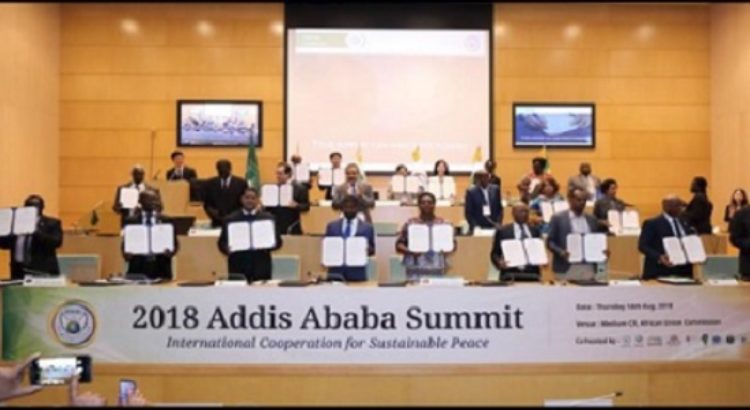
At the “Addis Ababa Summit” held in Medium CR, African Union Commission and co-hosted by international organizations including, Inter-African Committee on Traditional Practices(IAC), International Law Association(ILA) Egyptian Branch and HWPL, politicians from Africa and the Middle East discussed the need for the international law for peace to bring out stability in the regions and promote peace-related projects at each continental level.

RT. Hon. Rebecca A. Kadaga, Speaker of the Parliament of Uganda stressed the role of political leaders for realization of peace. “DPCW draws upon the principles of peace expressed through the ages through which the people of the world expressed their desire for global peace and called upon world leaders to put aside their vested interests that stand in the way of world peace and harmony. ”

With this, prominent leaders had the time to sign on the Signature in Support of the Declaration of Peace and Cessation of War(DPCW).

Before these events in Ethiopia, official declaration of support for the DPCW by heads of African countries such as Eswatini and Republic of Seychelles was followed.

The DPCW deals with the international cooperation to institutionalize and culturally develop peace and cessation of war through the cooperation of world legal experts by HWPL. In this Declaration of Peace and Cessation of War covers the develop friendly relations between nations, prohibit the use of the forces, respect of the international law, foster religious freedom, and spread a culture of peace.

Over 15th to 16th days, HWPL had the time to sign for the support of DPCW with participants from all walks of life. DPCW was created by international law experts for building the peace world without the war. During the two-day peace tour, participants at each event pledged to support and urge the DPCW for sustainable peace.

The Chairman Lee of HWPL, who held the summit with Ethiopian leaders during the 29th Peace Tour, emphasized the importance of peace movement to work as one in which each stratum came together, saying “If there is an answer to peace, then any family of the global village born in this era should become a messenger of peace, ending war and making sustainable peace a legacy for future generations..”

Source of the notice: https://www.borkena.com/2018/08/20/ethiopia-begins-the-harmony-of-peace-through-collaboration-of-politics-education-religion-and-civil-society-press-release/

Comparte este contenido:

150 millones de adolescentes son víctimas de bullying: UNICEF

Redacción: El Horizonte

El organismo indicó que el flagelo tiene efectos negativos en el aprendizaje y el bienestar de los estudiantes

El fondo de Naciones Unidas para la Infancia (Unicef) reveló que la mitad de estudiantes de entre 13 y 15 años de edad en el mundo sufren violencia por parte de sus compañeros dentro o fuera de la escuela.

En el informe, divulgado este jueves, el organismo indicó que eso significa que unos 150 millones de adolescentes en el mundo afirmaron haber sido acosados o haber sido presas de bullying, en el último mes. Además, indicaron haber participado en una pelea física durante el último año.

El documento titulado «Una lección diaria: Alto a la violencia en las escuelas» estableció que ese flagelo tiene efectos negativos en el aprendizaje y el bienestar de los estudiantes en países ricos y pobres por igual.

«La educación es la clave para construir sociedades pacíficas, y sin embargo, para millones de niños en todo el mundo la escuela en sí no es segura», declaró la directora ejecutiva de Unicef, Henrietta Fore.

Resaltó que todos los días se enfrentan a múltiples peligros, que incluyen peleas, presión para unirse a pandillas, intimidación o bullying tanto en persona como en línea, disciplina violenta, acoso sexual y violencia armada.

Unicef aseguró que en 39 países industrializados, tres de cada 10 estudiantes admiten que acosan a compañeros.

En 2017 se reportaron 396 ataques documentados o verificados en escuelas del Congo; 26 en escuelas en Sudán del Sur; 67 ataques en Siria; y 20 ataques en Yemen.

Se alertó que la violencia que involucra armas en las escuelas, como cuchillos y pistolas, siguen cobrando vidas. En México, se especificó, que el siete por ciento de los jóvenes y el cinco por ciento de las jóvenes de preparatoria informaron haber sufrido insultos sexuales de sus compañeros de clase en el último año, de acuerdo con una encuesta realizada en 2013.

Asimismo, un porcentaje menor de estudiantes de preparatoria de México reportó haber sido forzado a tener un «comportamiento sexual», durante el último año.

Fuente: http://www.elhorizonte.mx/internacional/150-millones-de-adolescentes-son-victimas-de-bullying-unicef/2291531

Comparte este contenido:

Nigeria: Conferencia de donantes para la región del Lago Chad consigue más 2000 millones de dólares

África/Nigeria/10.09.18/Fuente: news.un.org.

Más de 10 millones de personas precisan asistencia humanitaria y protección en una zona que comprende el noreste de Nigeria y zonas de Níger, Chad y Camerún, afectada por la violencia, el hambre y los desplazamientos masivos.

Los donantes que asistieron a la Conferencia de Alto Nivel sobre la Región del Lago Chad, una zona que padece una gran crisis humanitaria, anunciaron este martes compromisos por un valor de 2170 millones de dólares que servirán para respaldar iniciativas en Camerún, Chad, Níger y Nigeria.

Además de este apoyo, tres instituciones financieras multilaterales -el Banco Africano de Desarrollo,  el Banco Islámico de Desarrollo y el Banco Mundial– anunciaron préstamos en condiciones favorables por valor de 467 millones de dólares.

La conferencia, que se ha celebrado durante dos días en Berlín, contó con la participación de más de setenta países, organizaciones internacionales y representantes de la sociedad civil.

Más de 17 millones de personas en el noreste de Nigeria y en partes de Camerún, Chad y Níger se enfrentan a una compleja crisis originada por la pobreza extrema, el cambio climático y los conflictos violentos.

La crisis ha provocado el desplazamiento interno de 2,4 millones de personas, la destrucción de los medios de subsistencia, la violación de los derechos humanos y la interrupción de los servicios de salud, educación y otros servicios básicos.

Los objetivos del evento fueron conseguir asistencia humanitaria, la protección de civiles, la prevención de crisis y la estabilidad de esas cuatro naciones, la resiliencia y el desarrollo sostenible.

El administrador del Programa de las Naciones Unidas para el Desarrollo (PNUD), Achim Steiner, indicó que las donaciones y préstamos concedidos representan “un fuerte apoyo a nuestra nueva forma de trabajar juntos que incluye tanto las necesidades humanitarias como las causas a largo plazo de la crisis”. De este modo, añadió,  la  “respuesta representa una oportunidad para invertir en un futuro donde las crisis son menos probables y las naciones más resistentes”.

Durante la jornada inaugural, el coordinador de la ayuda humanitaria de la ONU, Mark Lowcock, recordaba que más de 10 millones de personas precisan asistencia y protección en la región del Lago Chad.

“La violencia, el hambre, el desplazamiento y el miedo son las duras realidades de su vida cotidiana, pero hoy tenemos un mejor acceso a muchas comunidades que hace un año», destacaba.

La educación, otro factor en riesgo

Por su parte, UNICEF anunciaba al inicio de la conferencia que los conflictos en curso, el desplazamiento y el temor a los ataques contra las escuelas ponen en peligro la educación de más de 3,5 millones de niños en la cuenca del Lago Chad.

El Fondo de la ONU para la Infancia advirtió que hay casi 1000 escuelas cerradas o que no están operativas debido a la violencia o los disturbios en el noreste de Nigeria, Chad, Camerún y Níger.

El director de programas de emergencia de UNICEF, Manuel Fontaine, recordó que la educación ayuda a salvar vidas en lugares inseguros y, además, «les proporciona las habilidades necesarias para construir un futuro mejor para ellos y sus familias, y contribuir a conseguir comunidades pacíficas y prósperas”. Sin embargo, con demasiada frecuencia “se carece de fondos humanitarios para  educación en situaciones de emergencia».

La Conferencia de Alto Nivel sobre la Región del lago Chad se celebró este año por segunda vez. La primera edición tuvo lugar en Oslo en el mes de febrero de 2017 y consiguió compromisos de 650 millones de dólares.

Fuente de la noticia: https://news.un.org/es/story/2018/09/1440932

Comparte este contenido:
Page 180 of 622
1 178 179 180 181 182 622