Page 214 of 622
1 212 213 214 215 216 622

UNICEF: How inclusive education works for children with disabilities in Rwanda

Inclusive education is a form of teaching that uses physical accessibility, individual education plans, toys and teaching aids to support children with disabilities. Find out how it’s changing the shape of one boy’s future in Rwanda.

Africa/Rwanda/PrensaUNICEF/By Veronica Houser

Resumen: Cuando Olivier, de 11 años, era apenas un bebé, su padre se preocupó cuando notó que su hijo pequeño se estaba desarrollando a un ritmo más lento que sus seis hermanos y hermanas. «Ni siquiera podía orinar», dice Innocent Ntawimenya, el padre de Olivier. «Me pregunté, ¿podría incluso crecer?»Cuando  era un niño pequeño, Olivier tenía habilidades motoras débiles y no podía sostener ni siquiera objetos pequeños. A pesar de que estaba inscrito en la escuela de su ciudad en el sur de Ruanda, no se relacionó con otros niños y tenía muy pocos amigos. «Los otros niños solían llamar a Olivier nombres abusivos. Le dijeron que era estúpido «, dice Inocente con voz temblorosa. Para evitar la intimidación, Inocencio y su esposa comenzaron a acompañar a Olivier a donde quiera que fuera. Un maestro ayuda a los estudiantes en uno de los salones de Ruhango Catholique. El programa de educación inclusiva brinda capacitación a los maestros para que puedan incorporar herramientas para niños con discapacidades en sus lecciones diarias. Los maestros de Ruhango Catholique también están capacitados en la enseñanza «centrada en el alumno», donde los niños aprenden a través de actividades prácticas y trabajo en grupo, y mediante el autodescubrimiento. Esta forma de enseñanza permite a los niños como Olivier aprender de y con otros niños, así como a sus maestros. En la clase de hoy, los niños sostienen dos dedos con el pulgar entre ellos para indicar la letra «K» en el alfabeto de la Lengua de Señas inglesa. Mientras el maestro de Olivier se mueve por la sala haciendo preguntas, los estudiantes saltan emocionados, con las manos en el aire, gritando: «¡Maestro, por favor, a mí!»


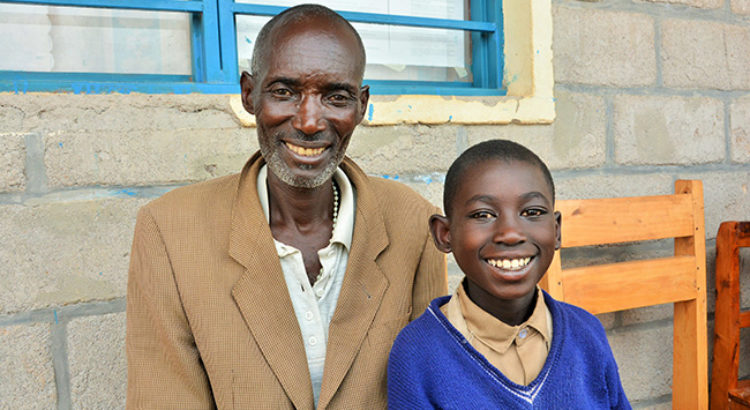
When 11-year-old Olivier was a just a baby, his father became concerned when he noticed his young son was developing at a slower pace than his six brothers and sisters.

“He was not even able to urinate,” says Innocent Ntawimenya, Olivier’s father. “I asked myself, would he even be able to grow?”

As a young child, Olivier had weak motor skills and couldn’t hold even small objects. Although he was enrolled in school in their town in southern Rwanda, he didn’t engage with other children and had very few friends.

“The other children used to call Olivier abusive names. They told him he was stupid,” says Innocent with a trembling voice. To avoid the bullying, Innocent and his wife began to accompany Olivier wherever he went.


Innocent knew that Olivier needed a change. He and his wife decided to enrol him at G.S. Ruhango Catholique, a UNICEF-supported school that promotes inclusive education for children with disabilities. The school has been rehabilitated with ramps, wider pathways and door frames, and disability-friendly toilets. Students with learning impairments are taught in an integrated classroom alongside other students.
Learning from each other

Teachers at Ruhango Catholique are also trained in ‘student-centred’ teaching, where children learn through hands-on activities and group work, and through self-discovery. This way of teaching empowers children like Olivier to learn from and with other children, as well as their teachers.

In today’s class, children hold up two fingers with their thumb between to indicate the letter ‘K’ in the English Sign Language alphabet. As Olivier’s teacher moves around the room asking questions, students jump excitedly, their hands in the air, shouting, “Teacher, please, me!”


Inclusive schools also involve parents through resource rooms, where they learn to make learning and teaching aids from locally available materials.
Getting parents involved

“I like visiting my son’s school,” Innocent says. “I like spending time in the resource room with other parents, making things to help Olivier and other students learn.”  He uses the materials to reinforce Oliver’s education at home, so he can continue to develop outside the classroom.

Now in his second year of primary school, Olivier has shown vast improvement. Innocent smiles proudly, reporting that Olivier can now count to 1,000, and his motor skills have improved so much that he can even lift a 5-liter jerry can.

“He loves sports, especially football,” says Innocent. “He is now willing to play with others, and the other children no longer treat him badly.” He beams as Olivier comes to join him after his class, sitting on his lap while he embraces him.

Innocent looks down at his hands, speaking slowly and deliberately.

“I can see that Olivier will continue to progress throughout his life, and I am so grateful. I never thought such improvement could be achieved so quickly.”

The 2015 Study on Children with Disabilities and their Right to Education: Republic of Rwanda noted that there is no incentive for schools to accept children with disabilities, and there is a lack of awareness about the learning barriers they face. UNICEF Rwanda supports the Government to implement the national Inclusive Education Policy in all 30 districts, and to address sociocultural barriers which impede educational access, learning and completion for children with disabilities.

Fuente: https://www.unicef.org/infobycountry/rwanda_102776.html
Comparte este contenido:

La unión africana llama a alianzas continentales para desarrollar sector científico

África/Ruanda/07 de Abril de 2018/cnctv.icrt.cu

La Unión Africana (UA) enfatizó hoy en la importancia de las alianzas continentales para el desarrollo de la ciencia y la tecnología en cada país.

La UA describió además a la ciencia como un “asunto muy serio”, con motivo de la presentación en la sede oficial del bloque comunitario aquí en Addis Abeba de un resumen de los resultados del recién celebrado Next Einstein Forum (NEF), en Kigali, Ruanda.

Un texto difundido por la organización reseñó además las declaraciones de su presidente pro témpore y jefe de Estado ruandés, Paul Kagame, quien apuntó que África es la que perdería si no apoyara el sector en beneficio del pueblo.

Así, la UA aprovechó la exhortación de Kagame para instar una vez más a los gobiernos africanos a aumentar las asignaciones presupuestarias en educación, salud y agricultura, ya que son los pilares clave de la transformación científico-técnica de África.

“La educación y la ciencia deberían ser centrales en nuestra vida cotidiana si queremos hacer los avances que nos hemos propuesto en los próximos 50 años”, apuntó la Unión.

Ya Kagame apuntó en la conclusión del Foro que África no debería perderse ninguna futura revolución de desarrollo en todo el mundo.

“No hay duda de que África tiene la intención de aprovechar este momento. La ciencia tiene un lugar, lo admitamos o no”, refirió el titular.

De ahí que la UA resaltó que las inversiones en educación superior para cursos de información, comunicación, tecnología y ciencia no deberían realizarse a expensas de las artes y las humanidades.

Lo mejor, en opinión de la organización panafricana, es realizarlas en la misma medida con el objetivo de reducir los desequilibrios en el mercado laboral y los requisitos de la industria y ayudar así a impulsar la economía de África.

Fuente: http://www.cnctv.icrt.cu/2018/04/01/ua-llama-alianzas-continentales-desarrollar-sector-cientifico/

Comparte este contenido:

Kenya University Students Protest Against Lecturers’ Strike

Kenya/April 07, 2018/ Allafrica

Resumen: Estudiantes universitarios protestaron el miércoles en Nairobi contra la huelga de profesores que ha paralizado el aprendizaje durante más de un mes. Los estudiantes de varias universidades públicas acusaron al Ministerio de Educación de no abordar la crisis actual.

Students from various public universities have accused the education ministry of failing to address the crisis with striking lecturers, saying it is having a negative impact on their studies and causing them to graduate late.

University students on Wednesday protested in Nairobi against the lecturers’ strike that has paralysed learning for over a month.

The students from various public universities accused the Education ministry of failure to address the ongoing crisis.

Kenyatta University student Peter Evans said many of them were unable to graduate in time due to the strike and demanded that the government address the issue to prevent further agony.

«We are tired of staying in the university without learning. We want to go back to class,» Mr Evans.

GRADUATION

Another student, Mr Dennis Kipsigei, from the University of Nairobi, said they ended up staying in the institutions longer than they should.

«A degree course that is supposed to take only four years is now taking over six years, which is unacceptable. We want the Education ministry to look into the plight of students,» he urged.

Education Cabinet Secretary Amina Mohamed said she had not commented on the matter due to lack of accurate data on the staff of the public universities across the country.

«Now I can say with a measure of comfort that we have received 80 per cent of the data. We are going to assess it in collaboration with an inter-ministerial committee that is looking into the demands being raised and forge the way forward,» she said.

EMPLOYEES

However, Ms Mohamed reminded the lecturers that they were in contempt of court by failing to go back to work.

 The government has said it will use the data to make a counter-offer to the lecturers and other staff estimated to be 27,000.

The staff, who belong to the Universities Academic Staff Union (Uasu), the Kenya Universities Staff Union and the Kenya Union of Domestic, Hotels, Educational Institutions, Hospital and Allied Workers, challenged the Ms Mohamed to explain why the ministry did not have an accurate record of the public universities’ workers.

Uasu Secretary-General Constantine Wasonga said the Ms Mohamed had failed in her mandate if the ministry could not give the exact number of the employees.

«How can she not know the number of employees in the universities? This shows that the ministry has not been doing its work properly,» said Dr Wasonga.

MEETING

As the protests continued, Deputy President William Ruto was holding a meeting with officials from the Education ministry and the Treasury.

Treasury Cabinet Secretary Henry Rotich and Basic Education Principal Secretary Belio Kipsang attended the meeting.

However, Ms Mohamed was at Mary Hill Girls High School in Kiambu County for the prize-giving day.

«Held discussion with officials of the ministries of Education and National Treasury, Nairobi,» Mr Ruto tweeted.

His spokesman, Mr David Mugonyi, later told the Nation the discussions between the DP and the officials were on secondary and tertiary education.

Fuente: http://allafrica.com/stories/201804050182.html

Comparte este contenido:

Africa: Science academy launches two new mobility funds

Africa/universityworldnews

Resumen: Dos nuevos fondos de movilidad han sido lanzados por la Academia Africana de Ciencias (AAS), con el objetivo de alentar a los investigadores africanos a trabajar juntos y con sus homólogos indios para abordar mejor los desafíos de salud y desarrollo.  Tanto el Plan de movilidad de la ciencia y el lenguaje África como el Fondo de movilidad África-India se implementarán a través de la Alianza para Acelerar la Excelencia en la Ciencia en África (AESA), una iniciativa fundada por AAS en asociación con la Agencia NEPAD. Son apoyados por Wellcome, el Instituto Pasteur y, en el caso del fondo África-India, la Alianza India. Juntos, los fondos tienen un valor de US $ 500,000 y su objetivo es llegar a 100 investigadores en África y la India.  Durante cinco años, el Programa de movilidad científica y lingüística ofrecerá subsidios de viaje a investigadores francófonos y anglófonos africanos involucrados en la ciencia biomédica y la salud pública de «relevancia» para las necesidades sanitarias nacionales, regionales o mundiales.


All reader responses posted on this site are those of the reader ONLY and NOT those of University World News or Higher Education Web Publishing, their associated trademarks, websites and services. University World News or Higher Education Web Publishing does not necessarily endorse, support, sanction, encourage, verify or agree with any comments, opinions or statements or other content provided by readers.

Two new mobility funds have been launched by the African Academy of Sciences (AAS), aimed at encouraging African researchers to work together and with their Indian counterparts to better address health and development challenges.

Both the Science and Language Mobility Scheme Africa and the Africa-India Mobility Fund are to be implemented through the Alliance for Accelerating Excellence in Science in Africa (AESA), an initiative founded by AAS in partnership with the NEPAD Agency. They are supported by Wellcome, the Pasteur Institute and, in the case of the Africa-India fund, the India Alliance. Together, the funds are worth US$500,000 and aim to reach 100 researchers in Africa and India.

Over five years the Science and Language Mobility Scheme will offer travel grants to Francophone and Anglophone African researchers involved in biomedical science and public health of ‘relevance’ to national, regional or global health needs.

According to an AESA press release, Africans tend to collaborate more with counterparts in the United States or Europe than with researchers on the continent, as researchers from Anglo- and Francophone countries are limited by language, culture and political barriers.

Citing a 2010 report by Thomson Reuters which found that none of the continent’s six stronger research nations – Algeria, Egypt, Kenya, Nigeria, South Africa and Tunisia – had an African country among its top five collaborating countries, the statement said a lack of collaboration resulted in “missed opportunities for sharing knowledge as with the Ebola outbreak in West Africa, where the lack of intra-Africa collaboration meant researchers in this region could not benefit from knowledge and capacities available in Uganda and the Democratic Republic of the Congo, which had previously experienced outbreaks of the disease”.

According to AAS Community and Public Engagement Manager Lillian Mutengu who will manage the scheme, researchers needing to overcome language barriers and to build their linguistic skills and capabilities will be funded to undertake short language courses in either French or English.

“While applications that involve existing collaborations will be considered, applications from new collaborations, young and early-career researchers ,postdoctoral researchers not in an established academic post, and a diverse range of applicants, particularly female, are strongly encouraged,” the statement added.

The second fund, known as the Africa-India Mobility Fund (AIMF), is a two-year programme designed to offer opportunities to researchers from Africa and India for short visits in either direction to explore scientific collaboration.

The initiative aims to encourage South-South collaborations and learning in recognition of the fact that Africa and India face similar challenges in health and sociopolitical issues.

Applications broadly focused on infectious and non-communicable diseases of relevance to local, national or global health will be accepted every month. The scope of the collaborative opportunity may include but is not limited to HIV/AIDS, TB, dengue, malaria, vector-borne diseases, parasitic infections, emerging infections, cancer, diabetes, hypertension, health systems research, antimicrobial resistance, drug development, microbiome and general biomedical sciences.

The AIMF is funded to the tune of US$200,000 for two years and is expected to cover approximately 40 scientists, according to Evelyn Namubiru-Mwaura, AAS strategy and policy manager who will head the fund.

She said India has seen major technological advances that include the manufacture of generic drugs and was one of the world’s leading filers of patents, which provided a valuable learning opportunity for African scientists. Africa, on the other hand, provides a conducive environment for research due to its high disease burden, genetic diversity, and fairly well developed capacities for clinical trials.

“With the AIMF, we hope to exploit this relationship and contribute to building a highly skilled science technology and innovative workforce and thereby advance knowledge economies and ensure more people live healthy, productive lives,” she said.

Fuente: http://www.universityworldnews.com/article.php?story=20180330115457887

Comparte este contenido:

Angola cerrará universidades ilegales en 2019

África/Angola/05 Abril 2018/Fuente: Prensa Latina

La ministra de Educación Superior, Ciencia, Tecnología e Innovación Maria Sambo afirmó hoy que en 2019 cerrarán todas las universidades que funcionan ilegalmente dada la amenaza para la sociedad.
Al término de una estancia en la meseta central, Sambo dijo que los centros serán clausurados por encontrarse al margen de la ley, una medida que también aplicarán a aquellos que fueron autorizadas para determinados cursos y ofrecen otros.

Sambo se abstuvo de mencionar cuántas instituciones se encuentran en esa situación, aunque aconsejó a sus gestores resolver tal situación durante este año, pues en definitiva, dijo, los más perjudicados serán los estudiantes que no podrán homologar sus estudios.

En Angola están reconocidas 24 universidades públicas y 48 privadas.

Fuente: http://prensa-latina.cu/index.php?o=rn&id=163843&SEO=angola-cerrara-universidades-ilegales-en-2019
Comparte este contenido:

¿Es el TDAH una epidemia?

Por: lavanguardia.com/ Alejandra Sánchez Mateos/ 04-04-2018 
El psicoanalista, José Ramón Ubieto, asegura que hay un sobre diagnóstico de este trastorno.

Habla demasiado, no para de hacer ruiditos y de moverse, es extremadamente impulsivo, tiene problemas para concentrarse y antes de terminar una cosa ya está empezado otra…en el colegio te han dicho que va más allá de ser nervioso o un ‘terremoto’. Malas noticias: su diagnóstico es TDAH, puede que tenga que medicarse para llevar una vida normal.

Según la Federación Española de Asociaciones de Ayuda al Déficit de Atención e Hiperactividad (FEAADAH), el Trastorno por Déficit de Atención e Hiperactividad (TDAH) es una patología psiquiátrica que padece entre un 2 y un 5% de la población infantil. Es crónico, se suele revelar antes de los siete años y estiman que el 80% de los niños que lo padecen seguirán teniendo problemas durante la adolescencia, mientras que del 30 al 65% también durante su vida adulta.

Sin embargo, José Ramón Ubieto, psicoanalista, profesor de la UOC (Universitat Oberta de Catalunya) y autor de Niñ@s hiper (2018), afirma que “hemos hecho del TDAH una epidemia, ya que hay un sobrediagnóstico de este trastorno”.

Asegura que entre los años 2000 y 2012 el número de casos diagnosticados en España se ha multiplicado por treinta, con más de 250.000 menores –un 3% de los niños y un 7% de los adolescentes (de doce a quince años)– tomando psicoestimulantes. “La situación en Estados Unidos es aún más alarmante: en la última década los casos han aumentado un 53% y el TDAH se sitúa como el segundo diagnóstico más frecuente a largo plazo (muy cerca del primero, el asma)”, sentencia en su libro.

Una patología psiquiátrica que padece entre un 2 y un 5% de la población infantil”

FEDERACIÓN ESPAÑOLA DE ASOCIACIONES DE AYUDA AL DÉFICIT DE ATENCIÓN E HIPERACTIVIDAD (FEAADAH)

Esta avalancha de diagnósticos da lugar a que se medique de manera abusiva, tal y como señala el experto. A pesar de que en otros países, como Francia y Suecia, la prescripción de fármacos es prácticamente nula. Ubieto considera que las pastillas son una solución o guía de actuación que tiene un ‘efecto sedante’ de la angustia, tanto para los profesionales, como para niños y padres, aunque cuando no ofrece los resultados esperados surge un sentimiento de culpabilidad.

La teoría que conecta la carrera espacial y el TDAH

En FEAADAH explican que su aparición está vinculada a una producción insuficiente de los neurotransmisores dopamina y noradrenalina, sustancias químicas necesarias para una correcta comunicación entre las neuronas. Asimismo, este déficit genera problemas en los circuitos reguladores de varias zonas del cerebro: el córtex prefrontal –ayuda a ejecutar o planificar una acción (desde su inicio hasta su conclusión), corrige errores y evita las distracciones, cuando se está llevando a cabo dicha acción–, el cuerpo calloso –conecta ambos hemisferios y coordina sus funciones– y los ganglios basales –coordina o filtra la información para controlar los impulsos–. También incluyen factores biológicos (genéticos, prenatales y perinatales) y psicosociales.

No obstante, Ubieto lo describe como “una etiqueta diagnóstica que encubre malestares muy diversos, algunos relacionados con la agitación propia –y no patológica– de la infancia y la adolescencia, mientras que otros reactivos a situaciones del ambiente (abusos sexuales, duelos migratorios o familiares, violencia…) y en último lugar, debidos a dificultades psicológicas o problemas médicos”.

El psicoanalista relaciona el ‘invento’ de esta etiqueta y el aumento de los casos con el fracaso de los EE.UU. en la carrera espacial durante la Guerra Fría: “Ante el avance del Sputnik –primer satélite artificial de la historia lanzado por la Unión Soviética en 1957– los americanos concluyeron que sus alumnos no atendían ni se concentraban lo suficiente. Lo que antes tenía otros nombres –disfunción cerebral mínima– pasó a llamarse TDAH. Asimismo, el éxito de este “falso nombre” lo atribuye a los beneficios obtenidos por la industria farmacéutica. Por su parte, la FEAADAH cataloga la versión de que este trastorno es un invento de la psiquiatría norteamericana para vender medicación como mito, entre otros muchos.

Entre los años 2000 y 2012 el número de casos diagnosticados en España se ha multiplicado por treinta, con más de 250.000 menores tomando psicoestimulantes”

Además, Ubieto indica que en la propia Guía de Práctica Clínica sobre el Trastorno por Déficit de Atención con Hiperactividad (TDAH) en Niños y Adolescentes (GPCTDAH) del Ministerio de Sanidad hay numerosos desacuerdos respecto al diagnóstico y tratamiento: “Existe controversia sobre los criterios que se deben emplear para su diagnóstico, que suele utilizar escalas cuestionarios (Conners) con un alto grado de subjetividad. Muchas veces la diferencia entre un niño movido o un niño con dificultades psicológicas depende del grado de tolerancia de los adultos que lo rodean”.

Tanto en la FEAADAH como en el portal tdahytu.es, advierten que no todo lo que parece es TDAH, pues muchos niños pueden presentar características similares a las que indican dentro de la hiperactividad, la falta de atención y la impulsividad. Si se cumplen una serie de síntomas, pasadas unas pruebas evaluadas por un especialista, se determinará si el niño sufre o no el trastorno.

Los efectos secundarios de los fármacos

Por lo general, el tratamiento suele ser multimodal, es decir, se combina una serie de medicamentos prescritos por un especialista con una terapia psicológica conductual y psicoeducacional. Para Ubieto estos psicoestimulantes (metilfenidato) mejoran a corto plazo la atención y focalización del alumno en sus tareas, aunque considera que causarían este mismo efecto en cualquiera que tomase anfetaminas.

Explica que a medio y largo plazo estos efectos de mejora desaparecen, como ya comprobó el estudio más conocido (MTA), tras un seguimiento longitudinal de años de aquellos niños que tomaban por un tiempo estos estimulantes, al mismo tiempo que descubrió que experimentaban una perdida de peso y crecimiento. “No es por casualidad que se inventaran como sustancias adelgazantes, además de que también implican riesgos cardiovasculares y arteriales. Pero quizás el efecto secundario más nocivo es la ‘desresponsabilización’, al considerar que todo lo que el paciente haga es cosa de su bioquímica cerebral y no por su propia responsabilidad”, concluye.

Estos psicoestimulantes (metilfenidato) mejoran a corto plazo la atención y focalización del alumno en sus tareas, aunque considera que causarían este mismo efecto en cualquiera que tomase anfetaminas”

JOSÉ RAMÓN UBIETO

Psicoanalista, profesor de la UOC (Universitat Oberta de Catalunya) y autor de Niñ@s hiper (2018)

Como alternativa asegura que la terapia primero debe centrarse en la educación, destacando la escuela como lugar de detección del problema para buscar estrategias de cambio, y cuando esto no sea posible pensar en otras intervenciones, sin descartar la medicación cuando esté justificada. Ubieto afirma que la Agencia de Calidad Sanitaria de Catalunya en un informe de 2017, en sus prácticas evaluadoras y partiendo de los datos oficiales, constata que hay un sobrediagnóstico y que la medicación es la respuesta más frecuente y la primera opción.

Según el experto, esto contradice todas las recomendaciones de las guías oficiales de práctica clínica que apuestan por un tratamiento multimodal, que incluye otros abordajes –educativo, familiar, psicológico–, además del farmacológico al que nunca sitúan como el primer recurso. Premisa con la que coincide el estudio de 2015Medicalización de la infancia en el campo del TDAH –del Instituto de Educación de la University College London y la División de Psicología Educativa e Infantil de la Sociedad Británica de Psicología–, donde constatan que la medicación se considera el tratamiento predominante, a pesar de que las guías NICE recomienden antes la implementación de intervenciones psicológicas.

Para finalizar, Ubieta considera que esta ‘epidemia’, que está alcanzando también a los adultos –un estudio holandés situó su prevalencia alrededor del 3% en la tercera edad–, “exonera al sujeto de su responsabilidad, le otorga un sentido más tranquilizador a aspectos de su cotidianidad (presentes, pasados y futuros), pues está en la línea actual neurocentrista de reducir nuestra condición de sujetos al cerebro, como si él lo explicase todo”.

*Fuente: http://www.lavanguardia.com/vivo/20180403/442119490962/es-tdah-una-epidemia.html

Comparte este contenido:

Ghana: Make girl child education priority for gender parity – Parents urged

Ghana/Source: https://www.myjoyonline.com

Parents have been urged to place more value on girl child education to help the country achieve gender equality.

According to the Director of Programmes and Projects of civil society organization, Youth Without Borders (YWB), Richard Appau, society also needs to do more to give females the right environment to flourish.

“Women must be empowered and inspired to take the necessary steps in the socio-economic development of their children,” he said.

He was speaking at the maiden edition of the Mafi Zongo Electoral Area Women Rising Summit in the Central Tongu District of the Volta Region.

The event was on the theme: ‘The Role of the 21st Century Women in the Growth and Development of Society.’

The programme brought together over 500 women, chiefs and elders in the district for mentoring.

The summit sought to connect the women to carefully selected mentors from academia and industry to empower and inspire them to take the necessary steps to properly develop their children.

Assembly Member of the Mafi Zongo Electoral Area Julius Karl D. Fieve encouraged mothers to invest more in their children to ensure their adequate development.

He said, “I have come to realize that, beyond infrastructure and social amenities, the only way, we could transform our communities and create a sustainable future for ourselves is through strategic investment in the education of the children of our communities.”

A lecturer at the Ho Technical University, Edem Nerissa Lawrencia Anku, admonished the women to have a vision for their children and play their part in the growth of society.

“You must endeavour to provide all the needs of your children. You have to draw more closely to them so as to be able to understand them,” she said.

Speaking on behalf of the women who participated in the event, Jane Duhoe said they would take the experiences shared by the mentors very serious.

She said, “we were really inspired today for action. We can assure the mentors and organizers of our resolve to push for the development of our children.”


Source:

https://www.myjoyonline.com/lifestyle/2018/March-29th/refrain-from-using-cane-to-discipline-children-medical-doctor-advises-parent.php


Comparte este contenido:
Page 214 of 622
1 212 213 214 215 216 622