Page 249 of 622
1 247 248 249 250 251 622

Education authorities school matric pupils for last time

Sudáfrica / 29 de noviembre de 2017 / Por: NASHIRA DAVIDS / Fuente: https://www.timeslive.co.za/

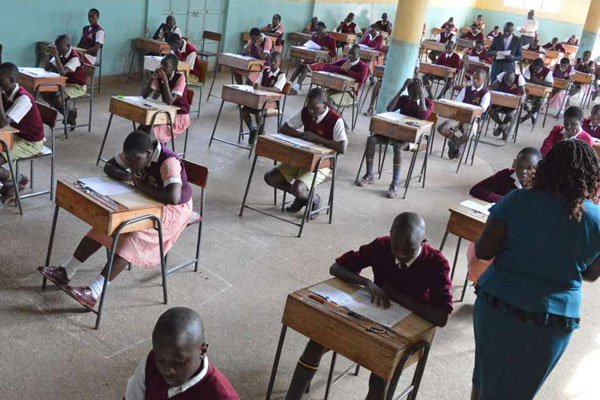
There will be a collective sigh of relief from the majority of matric pupils in Western Cape this week‚ when they write their final examination.

According to the education department‚ 54‚777 will write English on Tuesday‚ and a few will still have to write Design and Agricultural Management Practices on Wednesday.

Then the celebrations will start – but authorities in the province have warned those going to matric rage parties to be careful. According to a joint statement by Education MEC Debbie Schaffer and Transport MEC Donald Grant‚ youngsters are likely to be letting their hair down in Hermanus and Plettenberg Bay. “Matric candidates have worked very hard to get to this point in their lives‚ and while they deserve to celebrate‚ we appeal to them to do so responsibly‚” the statement read.

“We encourage all candidates who will be participating in ‘matric rage parties’ to exercise moderation‚ and to use additional registered car services and public transport services that are available when travelling between venues‚ if they drink alcohol.”

According to Plett Tourism‚ “thousands” are expected to attend the seven-day celebration. Last year‚ pupils were conned into paying for accommodation that did not exist. This year on its website‚ the tourism authority warned that they should verify the accommodation they paid for “actually exists”.

“Plett Tourism cannot be held responsible for any fraudulent bookings‚” the website said.

Fuente noticia: https://www.timeslive.co.za/news/south-africa/2017-11-27-education-authorities-school-matric-pupils-for-last-time/

Comparte este contenido:

Togo: los sindicatos de la educación unen sus fuerzas para mejorar las condiciones de vida y de trabajo de los docentes.

África/Togo/28.11.2017/Autor y Fuente: https://www.ei-ie.org

Los docentes de educación primaria y secundaria del sector público han emprendido una huelga de tres días para obtener mejores condiciones de vida y de trabajo por parte del gobierno de Togo.

Las federaciones de sindicatos de docentes que forman parte del Marco de Consulta Permanente (Cadre Permanent de Concertation-CPC) y la Coordinación de Sindicatos de Docentes de Togo (Coordination Syndicale des Enseignants du Togo-CSET) convocaron una huelga del 13 al 15 de noviembre. Las dos afiliadas a la Internacional de la Educación (IE) en Togo: la Fédération Nationale des Syndicats de l’Education du Togo (FENASYET) y la Fédération des Syndicats de l’Education Nationale (FESEN) son miembros de las confederaciones sindicales que han convocado la huelga.

Los docentes han lamentado el hecho de que las autoridades públicas no hayan cumplido las promesas que habían realizado y aplicado las medidas necesarias para el año escolar.

El ministro de la Función Pública, del Trabajo y de las Reformas Administrativas, Gilbert Bawara, no ha sugerido una solución a las reivindicaciones de los docentes, alegando que detrás de ciertas reivindicaciones que respaldan la huelga él percibía una especie de «confusión y de amalgama entre activismo y medidas sindicales y políticas».

Por consiguiente, el personal docente ha decidido intensificar sus esfuerzos para obtener resultados satisfactorios.

El objetivo de la huelga de tres días consistía en obtener «una copia del estatuto especial entregada al jefe del Gobierno; entablar negociaciones para establecer el porcentaje correspondiente a las primas y subvenciones e incorporar la subvención fija de 20 000 francos CFA (30 Euros) a los sueldos básicos de los docentes que son remunerados con arreglo a la subvención estatal para educación religiosa.

Otras reivindicaciones del personal docente comprendieron la revisión del trato de los 1 045 docentes confesionales que son remunerados con fondos del presupuesto adicional de la subvención, la redacción y la firma de un acuerdo de colaboración entre el Gobierno y el sector educativo confesional tan pronto como resulte posible, y el organización de un examen de ingreso especial para los docentes voluntarios del sector público para que se conviertan en docentes empleados por el Estado.

Fuente: https://www.ei-ie.org/spa/detail/15548/togo-los-sindicatos-de-la-educaci%C3%B3n-unen-sus-fuerzas-para-mejorar-las-condiciones-de-vida-y-de-trabajo-de-los-docentes

Imagen: https://www.ei-ie.org/resources/views/admin/medias/timthumb.php?src=https://www.ei-ie.org/media_gallery/original_34f50.jpg&w=1200&h=530&zc=1

Comparte este contenido:

Ghana: Education experts call for partnership between industry and academia

Ghana/November 28, 2017/ Source: http://citifmonline.com

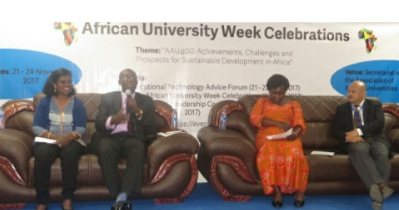
Experts in education at a high level panel discussion organised by the Association of African Universities (AAU), have called for strong partnership between industry and academia, to accelerate Ghana’s socioeconomic development.

The panelists said such a collaboration will enable universities get funding from industry, whereas industry gets the needed research from universities.

They expressed the hope that a strong collaboration between industry and universities, will also help prepare graduates adequately with the requisite skills for employment by industry.

The panelists included Professor Nicholas N. N. Nsowah-Nuamah, President, Regent University College of Science and Technology; Dr Eva Esther Shalin, the Associate Dean, Students Affairs and Collaboration, BlueCrest University College (GH) Limited; Mr Rizwan Ahmad, the Director, IPMC; and Mrs Eva Hazel, the Director of Tertiary Education, Ministry of Education.

The panel discussion forms part of the AAU week celebration on the theme “AAU@50: Achievements and Prospects for Sustainable Development in Africa”.

It was attended by participants from the Regent University College of Science and Technology, Bluecrest University College, University of Energy and Natural Resources and Koforidua Technical University.

Others are University of Professional Studies, Accra, Knutsford University College, IMPC, Accra Institute of Technology, Ghana Institute of Journalism, Anglican University College of Technology and Wisconsin International University College.

Prof Nsowah-Nuamah said in designing the syllabus for various schools, there is the need for universities to find out from industries whether the programmes they intend to run are in line with their needs.

He said in addition, the inputs of other stakeholders should be sought before the new programmes take off.

He urged the Government to come out with a new policy that would make industrial attachment compulsory for all tertiary education students; stating that at the moment, it was only the Technical Universities and the Polytechnics which were implementing such a policy.

Dr. Shalin urged industries to open their doors to the universities; adding that universities must be innovative and proactive.

She advised students to have mentors and be mindful that research was about global networking.

Mr. Ahmad called for a holistic approach in addressing the needs of education and industry.

Mrs. Hazel said the Ministry of Education was developing a new policy that would ensure that the syllabi of educational institutions, right from the kindergarten to the tertiary level, are related to industry.

She said the syllabi of educational institutions would be structured in such way that it would give people employable skills.

She said the Ministry would be coming out with a new policy to ensure that students actually benefit from industrial attachments.

Professor Etienne Ehouan Ehile, the Secretary-General of the AAU, reiterated the AAU’s commitment to partner with the right institutions in improving the quality of higher education in Africa, as demanded by its mandate.

“The AUU is further playing a key role in promoting and sustaining best practices across higher education institutions on the continent,” he said.

Source:

http://citifmonline.com/2017/11/26/education-experts-call-for-partnership-between-industry-and-academia/

Comparte este contenido:

Africa: Let Them Learn – Education for Girls Is Key to End Gender Violence

África/Noviembre de 2017/Fuente: ALL Africa

Resumen:  Las mujeres con educación secundaria tienen un poder de negociación significativamente mayor sobre los recursos dentro del matrimonio, y una mayor opción sobre la edad para contraer matrimonio

Las espantosas revelaciones que salieron de Hollywood en los últimos meses han centrado la atención en la persistencia de los abusos en diversas formas contra las mujeres, un tema que está generalizado en todo el mundo, no solo en los estudios cinematográficos y los estudios.

Más de una de cada tres mujeres ha experimentado alguna forma de violencia de género en su vida.

Se estima que 120 millones de niñas en todo el mundo han sido víctimas de violación; 200 millones han sido sometidos a mutilación genital femenina (MGF); y casi 750 millones de mujeres y niñas vivas hoy se casaron antes de cumplir 18 años.

Women with a secondary education have significantly greater bargaining power over resources within marriage, and greater choice over the age of marriage

The awful revelations flowing out of Hollywood over recent months have focused minds on the persistence of abuse in varying forms against women – an issue that is pervasive globally, not just in film sets and studios.

More than one in three women have experienced some form of gender violence in their lifetime.

An estimated 120 million girls worldwide have experienced rape; 200 million have undergone female genital mutilation (FGM); and almost 750 million women and girls alive today were married before their 18th birthday.

Comparte este contenido:

Huelga de maestros en El Líbano

Líbano/Noviembre de 2017/Fuente: Prensa Latina

El Sindicato de Maestros de Escuelas Privadas libaneses convocó para mañana y pasado una huelga en demanda de mejoras salariales.
La organización exige la aplicación de una ley aprobada que contiene un aumento de sueldos para los docentes del sector público.

Mañana, un grupo realizará un plantón frente a las oficinas del sindicato en esta capital y el miércoles prevén una manifestación ante el Ministerio de Educación.

El líder de la Asociación de Maestros de Escuelas Privadas en El Líbano, Rudolf Abboud, recabó en reiteradas ocasiones paros laborales en demanda de la implementación de la Ley 46 sobre la escala salarial.

Un reporte de la estatal Agencia Nacional de Noticias estatal informó que la próxima huelga sería la décima en reclamo de mejores sueldos para los maestros.

Si bien la Ley 46 se aplica solo a las instituciones públicas, la lógica común dicta que un aumento de ese tipo debe abarcar a todos los docentes.

Los propietarios de escuelas privadas prometieron aumentar la matrícula en casi 30 por ciento para proporcionarles a los maestros su correspondiente incremento salarial. Sin embargo, se registra una oposición generalizada a un alza de la matrícula.

Integrantes de los Comités de Padres, con prerrogativas para aprobar y supervisar los presupuestos escolares, salieron anoche a las calles, en muestra de solidaridad con el sindicato de maestros y en contra de cualquier aumento de tarifas.

La Ley 515, establecida en 1996, otorga a los comités de padres la responsabilidad de aprobar y vigilar los presupuestos escolares, y dice que cuando aumentan los salarios de los maestros, la matrícula también lo hace.

Fuente: http://prensa-latina.cu/index.php?o=rn&id=134527&SEO=huelga-de-maestros-en-el-libano
Imagen de archivo
Comparte este contenido:

Kenya to Spend U.S.$50 Million to Stop Third Lecturers’ Strike

Kenya/November 27, 2017/Allafrica

Resumen: Kenia gastará u $ s 50 millones para detener la tercera huelga de profesores.

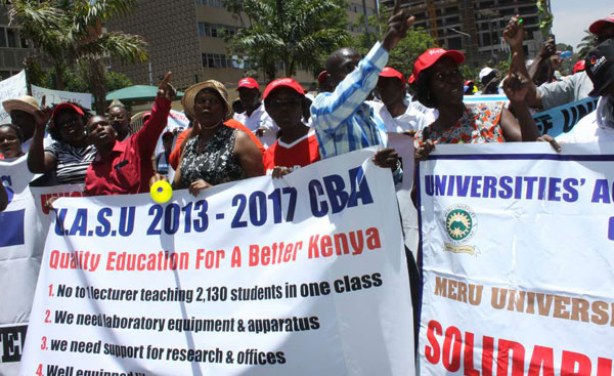
The government is spending Sh5.2 billion in the current fiscal year in a bid to resolve the current strike by lecturers in public universities – the third in a year.

The sum was authorized by the National Treasury in a letter dated November 6 in which the ministry’s Principal Secretary Kamau Thugge allowed the State Department for University Education to spend the money on enhanced salaries of public universities staff, pending the regularization of the same in supplementary estimates for the 2017/18 Financial Year.

«To avert the ongoing strike by universities staff approval has been granted to the State Department for University Education to spend Sh5,286,708,183 under Article 223 of the Constitution to enable payment of the enhanced salaries and allowance,» the letter which the Education Ministry acknowledged receipt on Tuesday reads.

The authorization is in response to a request for an additional Sh7.7 billion to cater for salaries of public university staff under the 2013-2017 Collective Bargaining Agreement within the 2017/18 Financial Year.

Under the 2013-2017 CBA inked on March 13, the government awarded lectures 17.5 and 3.9 per cent increment on basic salary and house allowance respectively following a strike that lasted 44 days.

The CBA negotiated between three universities workers unions – University Academic Staff Union (UASU), Kenya University Staff Union (KUSU) and the Kenya Union of Domestic, Hotels, Education Institutions, Hospitals and Allied (KUDHEA) workers – and the Inter-Public Universities Consultative Council Forum (IPUCCF) was valued at Sh10 billion.

The Sh10 billion was released in two phases – Sh4.8 billion being wired to universities in June during the 2016/17 Financial Year with the remaining Sh5.2 billion being disbursed under the current Financial Year.

Pending the release of the second instalment, lectures in public universities under UASU declared yet another strike in June demanding for the full implementation of the 2013-2017 CBA.

The protracted dispute was reignited on November 1 when UASU Secretary General Constantine Wasonga called for yet another strike accusing public universities and IPUCCF of negating new salary structures and reverting to old rates.

Wasonga demanded that the enhanced pay rates be retained failing which learning in institutions of higher learning will remain paralyzed.

UASU has since insisted that dons will only resume duty if the 2013-2017 CBA is fully implemented and a CBA for the 2017-2021 phase is negotiated.

Following the hard-line position by the union Education Cabinet Secretary Fred Matiangi told universities to forthwith cease hiring staff on a permanent and pensionable basis, a move UASU has vehemently opposed.

«University employees should now be hired on contract basis. This business of hiring every university worker even those working in the kitchen should come to an end,» Matiangi told university managers who included Vice Chancellors during a meeting at the Kenya School of Monetary Studies on Wednesday last week.

«The proposal to introduce contract-based employment in universities will start in the next financial year, the time has come when we must reflect on how to run universities,» he announced during the meeting.

The three strikes have had a negative impact on this year’s learning calendar in public universities, the initial 54-day-strike having significantly eaten into time allocated for the January-April semester.

Already, some public universities have closed midway the September- December semester owing to the ongoing strike.

Fuente: http://allafrica.com/stories/201711240046.html

Comparte este contenido:

Angola: Ministra alienta profesores a crear estrategias para mejoría del trabajo

Angola / 26 de noviembre de 2017 / Autor: Redacción / Fuente: ANGOP

La ministra de la Educación, María Cándida Teixeira, motivó los profesores y educadores a crear estrategias y métodos de trabajo que permitan mejorar el sistema de enseñanza y aprendizaje.

La responsable que hablaba el miércoles,  en Luanda, en el acto central del Día del Educador,  realizado bajo el lema “capacitar el profesor es garantizar una educación de calidad para todos” dijo que los métodos deben ser en los dominios de los contenidos, con aspectos formativos y más amplios sobre los valores morales y ciudadanía.

Para tal, explicó, el ministerio apuesta en la formación de los técnicos que debe ser entendida como uno de los imperativos para la valoración del docente y la  mejoría  de la enseñanza primaria y secundaria,  así como de otros niveles en todo el país.

La dirigente afirmó que se debe cuidar cada vez de la formación de los  profesores,  de la calificación de sus tutores, así como de los orientadores para evitarse que entren en el sector personas sin perfil deseado.

Según la ministra, la valoración de los profesores depende de los cambios en varias áreas de actuación, siendo que cada  uno a su nivel debe hacer lo máximo que puede y juntos mejorar la calidad de enseñanza.

Explica que la carrera docente presupone que en el ingreso del concurso se  prioricen a los profesionales con perfiles adecuados, por  niveles, clases y disciplinas, cada uno encuadrado segundo su formación.

Fuente de la Noticia:

https://www.angop.ao/angola/es_es/noticias/educacao/2017/10/47/Ministra-alienta-profesores-crear-estrategias-para-mejoria-del-trabajo,1bbf9247-b726-4aca-a6ba-3be458664b96.html

Comparte este contenido:
Page 249 of 622
1 247 248 249 250 251 622