Page 279 of 621
1 277 278 279 280 281 621

África/Whose record is it anyway? Musical ‘crate digging’ across Africa

África/Nigeria/Septiembre del 2017/Noticias/https://theconversation.com/

Legendary UK Radio DJ, the late John Peel used to play Zimbabwe’s The Bhundu Boys on his shows. A lot. Throughout the mid-80s, their jit-jivewould appear alongside Mancunians The Fall’s post-punk and Einstürzende Neubauten’s German industrial noise.

If Peel liked a band, he really championed them. And he really loved The Bhundu Boys. Peel was in tears the first time he saw them play live. The Bhundu Boys got their name from young guerrillas who supported the liberation army that fought for Zimbabwean independence. Between 1981 and 1984 they had four number ones on the local hit parade.

Touring the UK in 1986, they became stars of a new “World Music” scene. The term had been dreamt up by DJs like Charlie Gillett

The Bhundus didn’t feature on this tape but they became stalwarts of a scene in the UK that included African stars like Nigerian Sunny Adé, Zimbabwean Thomas Mapfumo and Youssou N’Dour from Senegal. This “scene” lies on a continuum of Western consumption of African music from 1960s’ exotica to the contemporary trend for African reissue vinyl and its attendant compilation culture.

This continuum has been lying on the margins of Western music consumption since the early 1960s, when Herb Alpert’s Tijuana Brass Sounds brought (what was marketed as) the music of Mexico to urban American and the UK. Arguably the first of many Western producers/musicians to export sounds and rework them for a domestic market, exotica was an early example of the culture of listening to music from “somewhere else”.

As producers, musicians and labels have had more access to old vinyl and to new digital technology, the opportunities of reissues and compilations have proliferated. And so the sounds of Ethiopian jazz, of Nigeria in the 1970s and of Mali’s Griot culture have become staples in a reinvigorated “World Music” culture reliant on reissue and compilation.


Nigeria’s King Sunny Ade & His African Beats performing ‘Me Le Se’.

Addiction, compulsion, obscurity and desire pepper this continuum, which has, at its centre, discomforting tensions around neo-colonialism and control. A fascinating podcast by the radio programme Afropop Worldwide has suggested that the latest urge to buy up African vinyl and to compile generically and geographically determined compilations is yet one more (white) western scramble for Africa. Are reissue labels like StrutAnalog Africa and Luaka Bop guilty of such a scramble? Or does this story have a number of different plot lines, not all of them hitched to neo-colonial narratives?

Space-disco musician

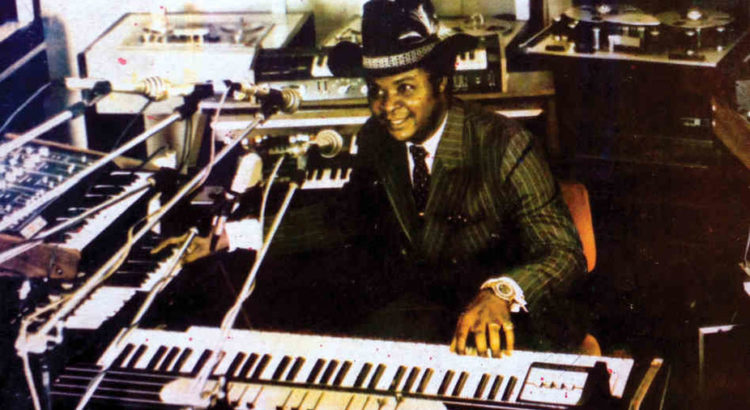
The trend in reissues manifested for me in the face of Nigerian space-disco musician, William Onyeabor, which appeared on my Twitter timeline a couple of years ago. Everyone I followed was raving about him. I clicked, listened and downloaded. Then I saw a documentaryabout him and wrote an academic piece that riffed off the idea of “raiders”. I linked the craze for Onyeabor to the phenomenon around the film “Searching for Sugarman”, which focused on the “missing” 70s folk rocker, Sixto Rodriguez.

Fuente:

https://theconversation.com/whose-record-is-it-anyway-musical-crate-digging-across-africa-83458

Imagen https://lh3.googleusercontent.com/7w5_2s_kXk-PdvGF84M0xIFCSx2f93LYaoqfG_ILc69h4LLqKesR9LCqEFQVD8pAJ6tShA=s85

Comparte este contenido:

The Liberian Government’s school privatisation program exposed

Africa/Liberia/PrensaIE

Resumen: Una copia filtrada del informe gubernamental encargado de investigar el programa de Escuelas de Colaboración para Liberia ha concluido que no puede funcionar «con presupuestos sostenibles y niveles de personal y sin efectos secundarios negativos en otras escuelas». El borrador confidencial del borrador, publicado en una publicación de Liberia , también encontró que el primer año de las escuelas de asociación para Liberia (PSL) «no era tan rentable como otros programas en países en desarrollo evaluados». El costo a largo plazo del programa «sigue siendo alto en comparación con los programas que producen efectos comparables en otros lugares», entre ellos Ghana y Kenya. «La subcontratación de nuestro deber más sagrado a compañías de educación sin fines de lucro como Bridge ha sido expuesto como un experimento privado muy costoso», dijo Fred van Leeuwen, secretario general de Educación Internacional (EI).

En enero de 2016, en un movimiento polémico, el Gobierno de Liberia anunció su intención de externalizar su sistema de educación primaria y preescolar a un actor corporativo con fines de lucro con sede en Estados Unidos, Bridge International Academies (BIA). Tras una considerable oposición a esta medida sin precedentes, el Gobierno concibió el programa PSL, en el que ocho actores operarían 93 escuelas en el primer año. El Ministerio de Educación, bajo la dirección del Ministro de Educación, George Werner, decidió aumentar el número de escuelas a 202 en el proceso, a pesar de que el PSL estaría sujeto a una evaluación rigurosa a través de un ensayo controlado aleatorio (RCT) el segundo año del proyecto. «Las conclusiones negativas de este informe pueden explicar la prisa del ministro para ampliar el programa de privatización, más que duplicarlo, seis meses en el» juicio «y antes de la publicación del informe contrario a las garantías de que no lo haría», dijo Mary Mulbah, Presidenta de la Asociación Nacional de Docentes de Liberia (NTAL). El informe muestra que cualquier mejora en los resultados de los estudiantes se logró gracias al aumento de la financiación entre 100 y 2.000 por ciento más que las escuelas públicas, incluyendo un 37 por ciento más de maestros.


A leaked copy of the Government commissioned report investigating the Partnership Schools for Liberia programme has concluded that it cannot work “with sustainable budgets and staffing levels, and without negative side effects on other schools.”

The confidential draft summary, released in a Liberian publication, also found that the first year of the Partnership Schools for Liberia (PSL) “was not as cost-effective as other programs in developing countries evaluated”. The long-term cost of the programme “remains high compared to programs yielding comparable effects elsewhere”, including Ghana and Kenya.

“Outsourcing our most sacred duty to unaccountable for-profit education companies like Bridge has been exposed as a very costly private experiment” said Fred van Leeuwen, General secretary, Education International (EI).

In January 2016, in a controversial move, the Government of Liberia announced its intention to outsource its primary and pre-primary education system to a US-based for-profit corporate actor, Bridge International Academies (BIA). Following considerable opposition to this unprecedented move the Government conceived the PSL program, where eight actors would operate 93 schools in the first year.

Despite claiming that PSL would be subject to a rigorous evaluation through a Randomized Control Trial (RCT), six months into the trial, the Ministry of Education, under the leadership of Education Minister George Werner, decided to increase the number of schools to 202 in the project’s second year.

“The negative findings of this report may explain the minister’s rush to expand the privatisation program, by more than doubling it, six months into the ‘trial’ and prior to the release of the report contrary to assurances that he would not do so” said Mary Mulbah, President of the National Teachers Association of Liberia (NTAL).

The report shows that any improvements in student outcomes were achieved on the back of increased funding ranging between 100 to 2,000 percent more than public schools, including 37 percent more teachers.

“What is most disturbing is that in many instances the improved student outcomes were achieved by pushing out students from schools on the “trial” denying children access to their local schools. In some cases this has  resulted in children being left out of school” added Mulbah.

Bridge International Academies, the government’s preferred private operator, is the subject of particular criticism in the report.

As one of eight actors participating in the pilot program, Bridge International Academies was desperate to show that its model for school management is the future of education. Unfortunately for Bridge, the facts and figures are in and it doesn’t look good for the company bankrolled by the likes of Pearson, the World Bank, DfID, Bill Gates and Facebook’s Mark Zuckerberg.

The report, detailing the progress of the PSL, pulls few punches when taking a closer look at Bridge’s financial operations, behaviour and lack of sustainability.

Under the PSL, the Liberian Government matches its investment per pupil, which is currently $50 USD, and hands it over to the private contractor to independently manage its public schools to see if this model presents a sustainable method to improving its education system. However, when it comes to Bridge the numbers just don’t add up.

According to the report, Bridge has spent an average of $1,052 USD per pupil, shattering any possibility that its own financial model is sustainable. With its billionaire funders footing the bill, Bridge has gone to any length to try and convince the public that it has the answer to quality education.  Yet, compared to other providers, student gains at Bridge managed schools were not as cost effective.

Bridge also saw a decrease in enrolments. When it came to ensuring education for all students, Bridge found a way to skirt the rules. Not having to abide by the same contractual obligations as the other pilot participants, Bridge quickly moved to cap class sizes in its schools, pushing out thousands of students. In addition to pushing out students, Bridge also purged 74 percent of existing teachers from classrooms.

This behaviour, all under the supervision of Education Minister Werner, reveals the desperate unethical measures that Bridge is prepared to undertake in order to sell its failed ideology to unsuspecting students, parents and business partners.

The government report vindicates the demand of National Teachers’ Association of Liberia (NTAL) and civil society organisations that the government immediately abandon the PSL program.

The study has shown that Liberia must look within to improve its education system rather than selling it off to highest bidder who does not have free, quality public education at its core. If sustainability and a quality education system that serves all children is the goal, then Minister Werner and Bridge have failed its most important test.

Fuente: https://www.ei-ie.org/en/detail/15334/the-liberian-governments-school-privatisation-program-exposed
Comparte este contenido:

Millions of children miss school because of war and drought in East Africa

Africa/Septiembre de 2017/Fuente: Norwegian Refugee Council

Resumen: Decidimos huir de Burundi porque había guerra. Echo de menos la escuela donde estaba estudiando en Burundi. Tenía suficientes materiales: zapatos y ropa, bolígrafos, goma de borrar y una bolsa de escuela «, dice Nyongere, de diez años, en el campamento de refugiados de Nduta, en Tanzania. Pero este año no tiene escuela para asistir. Con la guerra y la sequía golpeando a varios países del este de África, millones de niños como Nyongere que huyeron de sus hogares están abarrotados en los campamentos con pocas escuelas, y poca oportunidad para una educación. La falta de educación para los niños desplazados podría crear una generación perdida», dice Gabriella Waaijman, Directora Regional del Consejo Noruego para los Refugiados. «Mañana es el Día Internacional de la Alfabetización, y los niños tienen derecho a ir a la escuela. La educación puede salvar la vida de los niños durante las emergencias. Las escuelas proporcionan a los niños un lugar seguro, construyen estructuras sociales protectoras, enseñan conocimientos esenciales para la supervivencia y salvaguardan el futuro de los niños y las comunidades.

“We decided to flee Burundi because there was war. I miss the school where I was studying in Burundi. I had enough materials: shoes and clothes, pens, eraser and a school bag,” says ten-year-old Nyongere at Nduta refugee camp in Tanzania. But this year he has no school to attend.

With war and drought hitting several East African countries, millions of children like Nyongere that fled their homes are crammed into camps with few schools, and little chance for an education.

“The lack of education for displaced children could create a lost generation,” says Gabriella Waaijman, Regional Director for the Norwegian Refugee Council. “Tomorrow is International Literacy Day, and children have the right to go to school. Education can save children’s lives during emergencies. Schools provide children a secure location, they build protective social structures, they teach essential knowledge for survival, and they safeguard the futures of children and communities.”

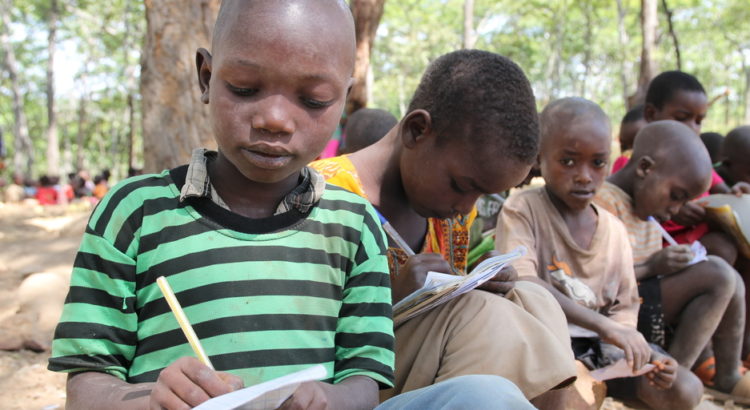
Many children remain stuck in refugee camps for years, wishing that they could go to school. In the Kigoma district camps in Tanzania, some classes are held under trees, and the number of students in each class can be as high as 200. About half of 318,000 Burundian and Congolese refugees in Tanzania living in refugee camps are children. Only 65 percent of primary, and three percent of secondary students are in school.

In South Sudan 2.2 million children are out of school due to conflict in several regions. The country has the highest proportion of children out of school globally, with over 70% of children not getting an education. Over one third of all schools have been damaged or destroyed during the conflict.

In Somalia, over two decades of conflict meant that access to basic education was among the world’s lowest. This was worsened by the current drought which caused 766,000 people to flee their homes, imperilling the little but hard-won progress in education. 1.7 million children of school age are not in school, and 30 percent of children complete four years of schooling without learning basic elementary skills.

In Uganda, there are now over one million refugees from South Sudan, and more than half are children. 40% of 6-13 year olds are not enrolled in primary school; and 80% of secondary school-aged young people are not enrolled in secondary education. Each teacher has up to 128 children in their class.
In Kenya, 588,000 school age children need emergency education assistance due to the drought crisis. Over 1,200 schools do not have access to safe drinking water. Only seven percent of funding needs for emergency education have been met.

With the East African drought crisis, education receives far less funding than other emergency programmes. Out of the $970 million in funding committed to the drought crisis in Ethiopia, Kenya, and Somalia, only $16.5 million is for education projects, only 1.7 percent of total funds. Education funding for other crises in the region is also far below the need. The international aid community agreed in 2015 that four percent of humanitarian aid should go to education, but that target has not been reached for any country in the region. Among areas of humanitarian need, education is funded the least. This leaves a huge funding shortfall.

Education is lifesaving for displaced children. School attendance can keep children from joining armed groups. Lifesaving awareness on landmines and unexploded bombs can be taught in school. Without hygiene knowledge that children can learn in school, some refugee children can die of disease. Schools for refugees often provide lunches, reducing child malnutrition and vulnerability to disease.

“Everyone agrees on the importance of education, especially for children affected by conflict. Therefore, it is incomprehensible and unjustifiable that so little funding is provided for education for children in emergencies,” said Waaijman.

With more children fleeing their homes and with little humanitarian funding for schools, East Africa faces an education crisis. The Norwegian Refugee Council calls on the international community and donors to live up to commitments they made previously, asking them to ensure that education plays its role in alleviating humanitarian crises. More funding should be committed for the education response for the multiple crises in East Africa.

Fuente: https://www.nrc.no/news/2017/millions-of-children-miss-school-due-to-war-and-drought-in-east-africa/

Comparte este contenido:

Altos índices de violencia contra mujer sudafricana, confirma estudio

Sudáfrica/07 septiembre 2017/Fuente: Prensa Latina

Pese al avance democrático en Sudáfrica en las últimas dos décadas y los numerosos programas en favor de la mujer, la violencia de género se mantiene con altas tasas y especialistas recomiendan hoy tomar urgente medidas adicionales para frenarla.
Un reporte del Centro para el Estudio de la Violencia y la Reconciliación (CSVT, por sus siglas en inglés) con respaldo de Oxfam Sudáfrica ofrece detalles de este fenómeno que padecen una cada cinco sudafricanas mayores de 18 años y una cada tres féminas de edades similares que viven en entornos de mayor pobreza.

Esas estadísticas realizadas por el Muestreo Demográfico y de Salud de Sudáfrica en 2016 son respaldadas por el Consejo de Investigación Médica, que en 2009 reportó que tres mujeres mueren cada día en este país en las manos de sus esposos, amantes o novios.

Bajo el título Violencia contra la mujer en Sudáfrica, un país en crisis, el documento de 80 páginas aborda los distintos ángulos de este serio problema que provoca una tasa de femicidio cinco veces más alta que la del mundo.

También Sudáfrica se destaca por índices superiores de violencia sexual.

Este panorama ocurre en un país que cuenta con fuertes legislaciones y políticas alineadas con las convenciones internacionales de protección a la mujer y de promoción de sus derechos, y con numerosas organizaciones de la sociedad civil que ofrecen servicios esenciales al sector femenino de la población.

‘No obstante, pese a las miles de protecciones legales e intervenciones del Estado y de asociados no estatales, Sudáfrica continúa experimentando extremadamente altas tasas de violencia. Esto eleva las preocupaciones sobre la seguridad humana vinculada a las mujeres en particular y al país en su conjunto’.

Sobre el tema, el informe agrega que esta situación hace preguntarse por qué la violencia contra las mujeres persiste en Sudáfrica y qué es necesario hacer para frenarla.

Al investigar el asunto, los especialistas confirmaron que las sobrevivientes de la violencia la experimentaron varias veces a lo largo de su vida.

Señalaron que estos actos están vinculados con relaciones de poder y se alimentan de vulnerabilidades, incluyendo discapacidades, dependencia económica, inequidades sobre bases de identidad y circunstancias personales de mujeres y niños.

Es por esta razón, que los estudiosos consideran que las estrategias para enfrentar esa violencia deben estar vinculadas intrínsecamente con alcanzar la igualdad de género de manera más generalizada y con la educación sobre el tema desde edades tempranas.

Dijeron que esa educación de niños y niñas para promover relaciones respetuosas y la igualdad de género es muy importante porque es mucho más fácil cambiar actitudes y comportamientos en la niñez y la juventud que en la adultez.

Otro aspecto que abordan para enfrentar esta violencia es incrementar el empoderamiento de la mujer a través del fortalecimiento de sus actitudes empresariales y los derechos laborales, promover el acceso universal a la educación y ofrecerles financiamiento y control de esos recursos.

En esta batalla contra la violencia infligida a las mujeres por sus compañeros íntimos sugieren incorporar una amplia participación de la comunidad, que deberá usar recursos ya existentes como se hizo en Liberia, en particular en áreas rurales donde las féminas carecen de recursos adecuados.

Al analizar el fenómeno, los expertos constataron que la violencia y negligencia de los padres tienen gran influencia en la formación de masculinidades violentas, por lo que es necesario aplicar estrategias de prevención para impulsar una crianza saludable, con lo cual se requiere apoyo comunitario, de las escuelas y de la prensa.

El estudio recuerda notorios casos de violaciones y asesinatos de jóvenes en este país, donde se reportan asaltos sexuales de ancianas -entre ellas una de 86 años- y de niños, el más terrible el de un bebé de nueve meses por el amante de la madre.

Fuente noticia: http://www.prensa-latina.cu/index.php?o=rn&id=113237&SEO=altos-indices-de-violencia-contra-mujer-sudafricana-confirma-estudio

Fuente imagen: http://www.guiaongs.org/wp-content/uploads/2017/05/mujer-maltratada-destacada-354×451.jpg

Comparte este contenido:

Kenia: 170,000 teachers to be trained on new curriculum

Kenia / 06 de septiembre de 2017 / Por: OUMA WANZALA / Fuente: http://www.nation.co.ke/

More than 170,000 teachers who will oversee the implementation of the new curriculum in January will be trained in two month’s time.

Kenya Institute of Curriculum Development (KICD) Director Julius Jwan said the teachers will be trained in November and December.

Those to be trained are teachers handling nursery, and Class One to Three as the government embarks on competency-based curriculum.

“This term, based on our evaluation report, we cast the net wider to accommodate more teachers because so far, the feedback on the new curriculum is positive,” said Dr Jwan.

Dr Jwan revealed that printing of teacher’s guides, handbooks and pupils’ workbooks has been finalised. The workbooks will also be distribution to pupils with special needs.

SUPPORT MATERIALS

“The curriculum support materials will enrich teaching and learning. A teacher will facilitate learning by focusing more on what learners can perform and not just what they can remember,” he said.

The new system developed to replace the discredited 8-4-4 will fully be rolled out in Form Four by 2023.

Senior Deputy Director for Curriculum and Research Services Jacqueline Onyango said the curriculum designs that have been developed are comprehensive after they were revised to include emerging issues meant to improve learning.

“The curriculum designs provide suggested learning activities, teaching methodology, assessment, resources and time required to cover various topics, thus giving guidance for planning of lessons,” Ms Onyango said.

CURRICULUM DESIGNS

“The methodology of undertaking the activities, resources required and the time the activities will take must be clear in the curriculum designs,” she added.

The new curriculum emphasises on the 21st century skills that enhance graduates to acquire competence that will enable them to create jobs even as they seek to be employed. Piloting of the curriculum was concluded last term and took place in 470 schools.

According to the director, in 2019, the system will be rolled out in Standard Four to Six and in 2020, it will cover Standard Seven, Eight and Form One.

In 2021, it will be extended to Form Two while in the following year, it will cover Form Three.

Fuente noticia: http://www.nation.co.ke/news/education/170-000-teachers-to-be-trained-on-new-curriculum/2643604-4081548-s8mmidz/index.html

Comparte este contenido:

Kenia: Raila Odinga’s call for postponement of exams met with criticism

Kenia / 06 de septiembre de 2017 / Fuente: http://www.nation.co.ke

National Super Alliance leader Raila Odinga wants national examinations to be postponed for two weeks to allow for the repeat presidential election.

According to the opposition coalition’s presidential flagbearer, there is nothing wrong in adjusting the exam timetable to enable “an important national exercise like an election” to be conducted.

He said pushing the exam dates forward would not “make the students die”.

SCHOOL CALENDAR
He spoke at the Wilson Airport before leading his team to a campaign in Kisii.

Education Cabinet Secretary Fred Matiang’i has cautioned that the repeat election could disrupt the school calendar for next year.

Dr Matiang’i said programmes such as the selection of Form One students and the rollout of free secondary education are among activities that could be disrupted.

EXAM DATES
The minister proposed October 17 as a more convenient date for the poll.

The Independent Electoral and Boundaries Commission later announced the election will be held on that date.

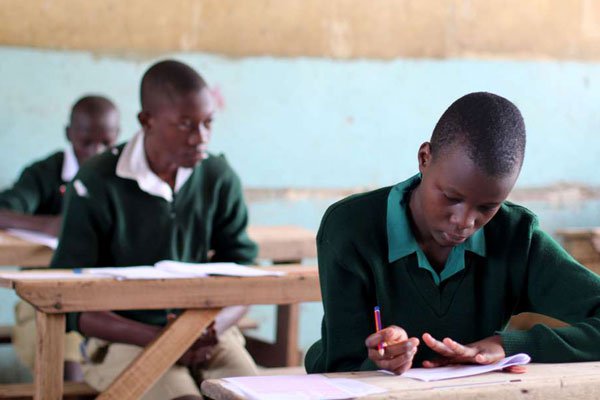
The Kenya Certificate of Secondary Education (KCSE) exam will start on November 6 and end on November 29.

The Kenya Certificate of Primary Education exam will start on October 31 and end on November 2.

KCSE candidates will start sitting their practical tests on October 23.

Schools will close by October 29.

LEARNERS
On Tuesday, Mr Odinga’s proposal drew criticism from Murang’a Woman Rep Sabina Chege, Elimu Yetu Coalition, the National Parents Association (NPA) and the Kenya Private Schools Association (KPSA).

Ms Chege termed the remarks disrespectful to Kenyan children.

“I want to tell Mr Odinga that education matters should not be politicised or trivialised.

«The administration of exams requires time,” Ms Chege, who served in the last Parliament as Education Committee chairperson, said.

CRITICISM
Elimu Yetu national coordinator Muthoni Ouko said exams are equally important to the more than 1.6 million children who will be sitting them.

NPA chairman Nicholas Maiyo said: “We are against the latest calls by the political class that the national exams be put off by two weeks. We consider this proposal untenable.”

KPSA chief executive officer Peter Ndoro said: “If the political class believes in consultation, any matter concerning the child should be subjected to the same process.”

Fuente noticia: http://www.nation.co.ke/news/Raila-wants-exams-postponed-by-two-weeks/1056-4084190-kvw2m4/index.html

Comparte este contenido:

Colaboración científica entre China y Africa alcanza nuevo nivel

África / www.spanish.peopledaily.com / 6 de Septiembre de 2017

China ha dado prioridad a la asociación estratégica con los países africanos en ciencia, tecnología e innovaciones para abordar los desafíos ecológicos y socioeconómicos que enfrenta el continente, indicaron hoy funcionarios.

Cao Jinghua, director general del Buró de Cooperación Internacional de la Academia de Ciencias de China, dijo que la educación, la ciencia, la tecnología y la cultura siguen siendo los pilares clave de la diplomacia de Beijing con los países africanos.

«Apoyamos la formación de jóvenes científicos africanos en ámbitos que abarcan el medio ambiente, la agricultura, la salud y el manejo de aguas. Su conocimiento y destrezas son requeridos para promover el desarrollo en sus países natales», dijo Cao.

Cao hizo los comentarios al margen de una conferencia sobre clima, ecosistemas y fuentes de sustento realizada en Nairobi, a la que asistieron decenas de científicos de China y Africa.

En el foro, científicos africanos y chinos aportaron ideas sobre nuevas estrategias para promover el crecimiento verde y el desarrollo sostenible en el continente.

Cao dijo que la Academia de Ciencias de China, la cual patrocinó de forma conjunta el foro de diálogo, está lista para apoyar la nueva generación de científicos africanos para que mejoren sus habilidad técnicas y su ventaja innovadora.

«Hemos reclutado más de 250 estudiantes africanos que realizan estudios de posgrado en ciencias naturales en China. Africa necesita en abundancia talentos científicos que impulsen su agenda de desarrollo sostenible», comentó Cao.

Cao señaló que una iniciativa de colaboración entre la Academia de Ciencias de China e institutos de investigación africanos ha abordado la falta de habilidades en disciplinas críticas como medicina, ingeniería y agricultura.

La colaboración chino-africana en ciencia y tecnología forma parte de la iniciativa de la Franja y la Ruta que busca redefinir la diplomacia y desarrollo mundiales.

Feng Feng, director general del Buró de Cooperación Internacional de la Fundación Nacional de Ciencias Naturales de China, dijo que Beijing no dejará de apoyar la agenda verde de Africa.

«Hemos invertido enormes recursos para apoyar la construcción de capacidades y la investigación en diversas áreas, como cambio climático, conservación de ecosistemas y manejo de químicos y residuos sólidos en toda Africa», dijo Feng.

Feng añadió que los científicos africanos pueden aprender lecciones de sus homólogos chinos, cuya habilidad para aprovechar innovaciones locales en respuesta a los desafíos ecológicos y de salud está bien documentada.

Fuente;http://spanish.peopledaily.com.cn/n3/2017/0905/c92121-9264688.html

Comparte este contenido:
Page 279 of 621
1 277 278 279 280 281 621