Page 281 of 621
1 279 280 281 282 283 621

El poder de una compresa en Kenia: un millón de adolescentes deja el colegio al no tener acceso a ellas

Kenia / 3 de septiembre de 2017 / Autor: EFE / Fuente: Eco Diario

Casi un millón de adolescentes deja de ir al colegio en Kenia cuando tienen el periodo ante la falta de acceso a compresas y a la higiene personal. Su vulnerabilidad crece al no poder comprender qué le pasa a su cuerpo, que se convierte en un tema tabú, y el 60% acaba abandonando la escuela secundaria.

En Kenia, como en otros lugares del mundo, el viaje de las niñas a la adolescencia es un momento difícil. Pero las inseguridades y preocupaciones a las que se enfrentan se intensifican en muchos países africanos ante la casi inexistente educación sobre salud reproductiva.

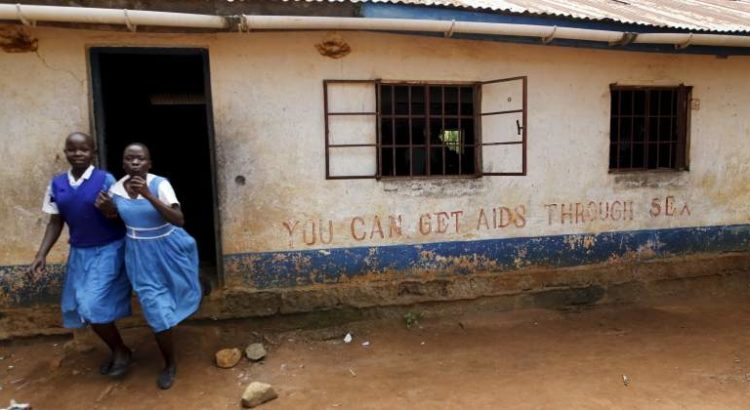
Para las kenianas, el momento de convertirse en mujeres implica, en la mayoría de los casos, abandonar la escuela y, en consecuencia, sus perspectivas de futuro. Tienen que dejar de ir a clase porque allí no suelen tener acceso a aseos limpios y privados, por lo que no pueden lavarse adecuadamente durante la menstruación.

Además, como las compresas están fuera del alcance del 65 % de las kenianas por su alto coste, muchas tienen que recurrir a otros remedios -telas, hojas o papel- que les pueden provocar infecciones y múltiples inseguridades que les impiden llevar una vida normal.

Esto provoca que casi un millón de niñas se ausenten hasta seis semanas en la escuela, mientras que el 60 % terminan abandonando por esta razón. Algo tan sencillo como una compresa puede transformar a una sociedad entera, permitiendo a las menores continuar con naturalidad su vida, asistiendo a clase junto al resto de sus compañeros y soñar, como ellos, en convertirse en doctoras, ingenieras o profesoras.

La organización Zana ha puesto en marcha diferentes programas -de los que ya se han beneficiado unas 30.000 niñas de entre 11 y 14 años- para mejorar la educación sexual y romper el tabú de la menstruación, que sigue envuelta de estigmas sociales como la vergüenza y la culpa.

«Creemos que la menstruación debe ser celebrada, no ser una vergüenza», reivindican desde Zana, que espera que algún día la gestión de la salud menstrual se reconozca como un derecho para todas las mujeres y niñas en todo el mundo.

Compresas gratuitas

Aunque el objetivo a largo plazo es educar sobre educación sexual y reproductiva -una de cada cuatro niñas desconocen que se pueden quedar embarazadas al tener el periodo- el reparto de compresas gratuitas supone el primer paso para romper el tabú sobre la menstruación.

«Pero las donaciones (de compresas) no son suficiente», explica a Efe la directora general de la citada organización, Megan Mukuria, que insiste en que es necesario cambiar la mentalidad de la sociedad e introducir en el mercado compresas de mayor calidad y más asequibles que permitan una solución duradera.

Por eso, han lanzado una nueva marca de estos productos que ya venden en diferentes asentamientos informales de Nairobi a unos 7 chelines la unidad (menos de un céntimo de euro) que son accesibles para las familias en Kenia, donde el 46 % de la población vive por debajo de la línea de pobreza.

«Estoy muy feliz y agradecida de recibir compresas que me hacen sentir valiosa. Sentí como si me hubieran dado millones de dólares», dice la joven Wambui.

El acceso a la educación para las menores no es solo una cuestión de derechos e igualdad de género, sino también una cuestión económica, porque el crecimiento de los países se contrae si se excluye a las mujeres del mundo laboral.

Según el Banco Mundial, si todas las niñas en Kenia finalizaran la escuela secundaria, habría un aumento del 46 % en el PIB del país a lo largo de su vida. Sin conocimiento sobre su salud reproductiva, las niñas son más vulnerables a enfermedades, embarazos no planificados, matrimonios prematuros forzados o a la mutilación genital femenina.

Las autoridades cada vez son más conscientes de ello, y prueba de ello es que el Gobierno de Kenia prometió -durante la pasada campaña electoral- repartir productos higiénicos gratuitos ente todas las escolares del país.

Fuente de la Noticia:

http://ecodiario.eleconomista.es/africa/noticias/8581726/09/17/El-poder-de-una-compresa-en-Kenia-un-millon-de-adolescentes-deja-el-colegio-por-la-falta-de-acceso.html

Comparte este contenido:

Concluye en Zimbabwe conferencia internacional sobre educación

África/Zimbawe/02 Septiembre 2017/Fuente: Prensa Latina

La III Conferencia Internacional sobre Educación concluye hoy en esta capital con llamados a conseguir una enseñanza sostenible que aborde los problemas de la actualidad y prepare a las jóvenes para enfrentar el futuro.
El encuentro fue inaugurado la víspera por el presidente Robert Mugabe, quien dijo que el nuevo currículo para la enseñanza en su país fomenta la actividad empresarial y ofrece un entrenamiento que inculca habilidades para los educandos a todos los niveles.

Mugabe, quien anunció una ayuda gubernamental de nueve millones de dólares para fortalecer esos esfuerzos, expresó que este tipo de educación es importante porque transforma ideas innovadoras en productos y servicios económicos.

En esta conferencia participa una delegación cubana encabezada por la ministra de Educación, Ena Elsa Velázquez, quien se entrevistó con el ministro de Educación Primaria y Secundaria de Zimbabwe, Lazarus Dokora.

Fuentes oficiales indicaron que en esta reunión, a la que asistieron directivos de esa cartera, Velázquez y Dokora trataron sobre los vínculos de colaboración existentes entre ambas entidades y las nuevas vías para ampliarlos.

La ministra cubana, acompañada por Silvia Navarro, directora del Instituto de Investigaciones Pedagógicas de Cuba, y por el embajador Elio Savón, recibió elogios por el trabajo de especialistas de su país que recientemente asesoraron a Zimbabwe para establecer el Centro para Investigaciones, Innovación y Desarrollo de la Educación.

Durante esta reunión internacional, la jefa de la delegación cubana ofreció una conferencia especializada.

Según se informó se espera que las dos partes suscriban un acuerdo de cooperación que incluiría la enseñanza artística, educación preescolar, ciencias, educación física y deportes.

Hasta el momento unos tres mil 200 jóvenes de esta nación de África Austral se han graduado en Cuba como profesores en asignaturas de ciencias.

Para dar continuidad a esta cooperación, fue inaugurada en la ciudad de Bindura la Universidad de Ciencias de la Educación, donde laboran profesores cubanos de primer nivel.

Zimbabue figura entre los Estados de África con más baja tasa de analfabetismo.

Durante su estancia en esta nación, la funcionaria cubana sostuvo un encuentro con una representación de los colaboradores cubanos que prestan sus servicios en este país, a quienes explicó los pasos dados en la educación en Cuba.

Fuente: http://www.prensa-latina.cu/index.php?o=rn&id=112143&SEO=concluye-en-zimbabwe-conferencia-internacional-sobre-educacion
Comparte este contenido:

Has South Africa’s labour movement become a middle class movement?

Africa/ Septiembre del 2107/

Noticias/https://theconversation.com/


Do South African trade unions still represent the working class?

The South African labour landscape has undergone massive changes in the past few years that have left the country’s trade union movement almost unrecognisable from yesteryear.

The Congress of South African Trade Unions, still the country’s largest trade union federation, has been bleeding members for a while and has been shaken to the core by the exit of the National Union of Metal Workers of South Africa. This exit has led to a new formation, the South African Federation of Trade Unions. Both labour federations still claim to represent the interests of the working class.

Something else, perhaps more fundamental has been changing within South Africa’s trade union movement. The membership base has shifted significantly from one dominated by unskilled and semiskilled workers to one that shows bias towards skilled and professional workers. This is captured in a series of surveys undertaken between 1994 and 2014, before the National Union of Metal Workers’s exit.

The data shows that less than 1% of members within the trade union movement classified themselves as professional in early years of democracy. The picture had changed radically by 2008 with 20% of the respondents classifying themselves as professional. It would therefore seem that South Africa’s trade union federation had become a home for middle class civil servants, rather than a working class federation.

The evolution

A group of labour scholars has been conducting surveys of Congress of South African Trade Unions members before every parliamentary election since 1994. The intention of the survey, titled Taking Democracy Seriously, was to study the impact of union democracy on parliamentary democracy.

The data set (drawn from five surveys, with the last conducted in 2014 just before National Union of Metal Workers of South Africa was expelled) tell us much more than just what union members’ attitudes towards democracy is. It paints a complex picture of who trade unions actually represent.

At its high point, the federation had a membership of 2.2 million. This was the result of three waves of unionisation.

The first wave of members comprised of workers who were organised into the initial manufacturing unions that resulted from the militancy of the 1973 strikes.

The second wave started in 1985 with the National Union of Mineworkers – the first to organise black miners and what was to become the largest union in the country – joining the Federation of South African Trade Unions in 1985.

The third wave came with the public sector unions that emerged after 1990. This wave benefited from the Labour Relations Act of 1995 which brought public sector employees under the same dispensation as the private sector in terms of collective bargaining and organisational rights.

In the early years of democracy public sector unions were so marginal to the federation and debates in labour studies that the researchers did not even include any unions from the public sector.

The professional factor

From 1994 union members were asked to classify themselves as being professional, clerical, supervisors, skilled, semi-skilled, or unskilled. Less than 1% classified themselves as professional in 1994, 1998 and 2004.

The data reflects a major shift in the last two surveys conducted after the inclusion of public sector unions in the sample. 20% of respondents classified themselves as professional in 2008, and 19% in 2014. This constituted a fifth of federation membership base, certainly a massive shift from the early 1990s.

Those members who classified themselves as clerical remained more or less constant, with those classifying themselves as supervisors increasing slightly from 4% in 1994 to 6% in 2014.

What is interesting though, is an increase of those who classify themselves as skilled increasing from 21% in 1994 to 37% in 2014. Those who classify themselves as unskilled declined from 30% in 1994 to a mere 8% in 2014, almost equal to the members who are supervisors.

This means that while 60% of the federation was made of semi-skilled and unskilled workers in 1994, by 2014 roughly 60% classified themselves as either skilled or professional, a complete inversion.

Loss of unskilled members

What explains this major transformation in the federation’s membership composition? We explored three possible explanations.

The entry of public sector unions, representing civil servants like teachers and nurses, into the federation is a major factor. This is confirmed when one breaks down the levels of skill by whether members belong to private sector or public sector unions for the 2014 survey.

The data shows that 78% of union members who classify themselves as professionals is from public sector unions. The unskilled and semiskilled members tend to come from private sector unions.

Its clear that the increase in the number of professionals within the federation was mainly a result of the entry of public sector unions. But this factor does not provide enough of an explanation for the decline in the percentage of unskilled members. We have to look elsewhere for this.

The data suggests that the post-apartheid era facilitated upgrading of skills within the federation. The proportion of members who had Grades 5-7 declined from 15% in 1994 to a mere 2% in 2014. Those with Grades 8-10 declined from 44% in 1994 to 11% in 2014.

Members with Grades 11-12 increased from 31% in 1994 to 45% in 2014 and members with technical diplomas increased from 3% in 1994 to 20% in 2014. Those with university degrees rose from less than 1% in 1994 to 17% in 2014.

Almost 40% of the trade union members in our sample have tertiary qualifications in the form of technical diplomas or university degrees. But the skills upgrade explanation also leaves a bit of a puzzle.

Does the fact that these trade union members now have higher levels of formal qualifications mean that a much smaller proportion of the work in South Africa’s economy is now done by skilled rather than unskilled workers? The labour market data more generally does not support this assumption. We have to look elsewhere for additional explanations.

A significant portion of South Africa’s unskilled manual labour is no longer performed by trade union members. This is due to the rise of non-permanent employment through subcontracting, casual labour, or informal forms of employment.

This means that as the trade union movement was gaining skilled and professional members it was bleeding unskilled manual workers. This leaves the question: has South Africa’s labour movement become a middle class movement, rather than one that primarily represents the working class?

Fuente: https://theconversation.com/has-south-africas-labour-movement-become-a-middle-class-movement-82629

Imagen: https://lh3.googleusercontent.com/llIO1_ZVPe1P9j-rtW0UAcl7EgXBqhQt-lEyHVYcnwqP8jK2pSpAKIJennl1You9amXa=s85

Comparte este contenido:

Los niños de las camisetas rotas

Por: www.lavanguardia.com/Xavier Aldekoa/01-09-2017

La violencia de los yihadistas ha dejado miles de huérfanos y de niños que durante su huida se separaron de sus padres

El zoo de Maiduguri es un lugar de respiro sucio. Los fines de semana, familias, grupos de amigos y parejas adolescentes compran por 50 nairas (doce céntimos de euro) un rato de emoción y paz entre jaulas de leones y fosos de elefantes. El zoológico ha tenido tiempos mejores. Durante los peores días de la guerra con los yihadistas de Boko Haram, el recinto estuvo semiabandonado y los cuidadores sacrificaron a otros animales para alimentar a los felinos y los cocodrilos. La jaula más sucia es la de los babuinos, nada más entrar. Uno de los monos ha aprendido a hacer una cabriola y no para de saltar sobre sí mismo entre montañas de botellas de plástico y basura.

Después de cada pirueta, alarga la pata entre los barrotes y la gente, divertida, le tira cosas. No tarda en agruparse una multitud frente a la jaula. Entre las piernas de los curiosos, se escurren tres niños vestidos con harapos y uno de ellos, animado por el jolgorio, se acerca e intenta tocar al animal. Un guardia le echa una bronca de impresión. “Son huérfanos y viven en la calle, en la entrada les dejan pasar para que se entretengan”, comenta Bitar, un vecino asiduo al parque de animales. En las calles de Maiduguri hay cientos de niños de camisetas rotas como ellos. Según las autoridades, hay más de 52.000 huérfanos sólo en el estado de Borno, aunque admiten que la cifra real podrían ser perfectamente el doble. Nadie lo sabe. El conflicto descarnado entre el Gobierno nigeriano y Boko Haram, que ya ha dejado 35.000 muertos en siete años, ha provocado una ola de niños perdidos, que han quedado huérfanos o que durante su huida desesperada (los yihadistas suelen atacar las aldeas de madrugada) se separaron de sus familias y no les han vuelto a ver.

Hay más de 52.000 menores perdidos tan sólo en el estado nigeriano de Borno

Además de la camiseta descosida, Umar Isa tiene roto el pantalón. Tiene la entrepierna abierta y, cuando se sienta y como no lleva calzoncillos, se tapa con las manos para que no se le vea demasiado. Pero se le ve. Habla tan bajito, y está tan acongojado, que hay que empezar por preguntas amables, que no traigan demasiado pasado.

Su deporte preferido, dice entre susurros, es el fútbol e ir en bici, pero no sabe quién es Messi ni Cristiano Ronaldo. Su mejor amigo, aquí se despierta más, se llama Rawana y a los dos les gustaría ser soldados cuando crezcan. Y Umar directamente sonríe al confesar su perdición: los caramelos de sandía Freely.

NIGERIA
NIGERIA (Josep Ramos)

De repente, Umar empieza a recordar y abre la herida sin anestesia. “Empezaron a disparar y una bala le dio a mi mamá”. Vivía en Kwata, un pueblo del noreste de Nigeria y a él y a su padre les dio tiempo a escapar porque durante el ataque de Boko Haram los dos estaban trabajando el campo. Los yihadistas no le dejaron tiempo
para llorarla. Durante el funeral, al día siguiente, los barbudos regresaron y con ellos los disparos. “Dejamos a mi mamá allí, sin enterrar”, señala.

Umar se tapa la cara con las manos y se hunde en una silla de plástico azul cuando se cansa de preguntas. En realidad, el resumen de su vida, de su última vida al menos, está estampado en su camiseta gris. En ella hay dibujado un monstruo de color verde junto a un lema que parece una broma de mal gusto. “Run for your life”. Corre por tu vida. Es lo que Umar lleva haciendo desde hace meses.

El zoológico de Maiguri ha tenido tiempos mejores. Durante los peores días de la guerra con los yihadistas de Boko Haram, el recinto estuvo semiabandonado

La huida con su padre le llevó por diferentes pueblos, pero tarde o temprano los yihadistas volvían a atacar y ellos a escapar. Bosso, Daban Masari, Malam Fatori… Umar enumera bajito, casi silbando, las aldeas donde se instalaron y donde los extremistas volvían a golpear. Su vida y la de su padre se convirtió en una huida eterna, aunque juntos. Hasta llegar a Charkari. Y aquí la voz de Umar se quiebra: volvían de comprar en el mercado y cuando sonaron los tiros, todo el mundo echó a correr. Se separaron. Desde entonces, no sabe dónde está.

A Umar lo llevó un tío lejano a la ciudad porque había oído hablar de un programa de acogida para huérfanos y niños perdidos. Coordinado por la oenegé italiana Coopi y por Unicef, selecciona a familias locales que acojan a los niños y les integren en sus hogares hasta que son adultos o, si tienen suerte, hasta lograr reunirles con algún
familiar.

Umar dice que su hermana huyó a Diffa, en Níger, y querría ir con ella. O con su padre, si aparece. Pero no será fácil. Primero hay que comprobar que realmente sea así y hablar con el familiar para ver si quiere y puede hacerse cargo del menor. Sólo entonces empieza el largo proceso de reunificación.

Para Muntala Hatuna, no hay prisa. Él acogió a Umar en su casa de Damaturu, donde nos recibe para explicar sus motivos. “Soy musulmán y nuestra religión dice que debemos ayudarnos. Cuando puedo, le compramos ropa”. Pero no es a menudo. El patio de su casa, con paredes de adobe desconchadas y techos y puertas de uralita, avisa de que nadie lleva una vida de excesos aquí. Aunque las oenegés les dan mantas, enseres de higiene personal y algo de comida y dinero para gastos —tres pagos de 3.000 nairas (siete euros), dice Hatuna—, el sacrificio sólo se sostiene por la solidaridad de las familias de acogida.

Por una bondad parecida, Amina Abatcha soporta la pena. Ella es la otra cara del drama de los niños perdidos. Vivía en Dikwa, también en el noreste, cuando su hijo mayor, de quince años, desapareció durante un ataque de Boko Haram. En las calles de la localidad aún duermen las cicatrices de aquellos días: esqueletos de coches calcinados y torres de teléfono derribadas. No hay conexión telefónica desde hace meses.

Amina no sabe nada de su hijo perdido, pero insiste convencida en que lo secuestraron, que no está muerto. “Rezo cada día para que el ejército de Nigeria lo rescate”, dice. Mientras espera, ayuda a los que sí son libres. Se ha presentado voluntaria como cocinera para los recién llegados: grupos de personas, normalmente mujeres y niños, que o bien llegan por su propio pie a Dikwa huyendo de la violencia tras varios días de travesía o bien han sido llevados allí por los militares, después de haber limpiado alguna zona bajo control de la banda yihadista.

Esa mañana Amina ha tenido mucho trabajo. Han llegado más de doscientas personas y ha preparado para ellos dos ollas de hierro enormes de arroz con alubias. Cuando reparten la comida en platos planos, decenas de personas se colocan alrededor y comen con las manos y una ansia imposible de disimular. Tienen mucha hambre. Amina les observa comer desde la distancia; tan quieta y con la mirada fija, que parece estar dejando volar la imaginación. Pero se seca el sudor y guarda silencio. Cuando le pregunto, dice que no pensaba en nada.

*Fuente: http://www.lavanguardia.com/internacional/20170815/43574151881/dominios-boko-haram-ninos-camisetas-rotas.html

Comparte este contenido:

ÁfricaThreatened languages and how people relate to them: a Cameroon case study

äfrica /Septiembre del 2017/Noticias/https://theconversation.com/

The world is going through an unprecedented period of language endangerment. Some experts predict that half of the world’s languages will disappear within a century, with urbanisation and the increasing use of major world languages diminishing smaller languages’ chances of survival.

The death of a language can be a significant loss for speaker communities who view their language as a key part of their heritage. This has led to revitalisation efforts, especially in parts of the world dominated by settler societies, such as Australia, Canada and the US. But the link between language and identity can differ greatly from community to community and is especially complex in societies dominated by multilingualism.

Since 2004 I have been working with my colleague Pierpaolo Di Carloand other collaborators to understand the language dynamics of a region of Cameroon known as Lower Fungom. Cameroon is one of the most linguistically diverse countries in the world. Around 300 languages are spoken by its approximately 20 million people. These include colonial languages such as English and French as well as hundreds of local languages.

Lower Fungom in Cameroon.

Lower Fungom is especially remarkable for its degree of linguistic diversity. In an area of around 100 square kilometres, roughly the size of the city of Paris, nine local languages are spoken by 12,000 people.

The languages of Lower Fungom, like so many others, are endangered. The ways that people use these languages are also endangered. Multilingualism is woven into the fabric of Lower Fungom society, as it is in much of Africa. What is especially remarkable is the sheer number of languages spoken by each individual in Lower Fungom. A survey conducted by Angiachi Esene Agwara, a Cameroonian collaborator, found there to be no monolinguals in Lower Fungom. The average adult is able to speak or understand around five to six different languages. Most are learned without any formal schooling and are acquired through family relationships, friendships or for work.

Shift to major languages

All over the world, the dominant trend is for small speaker communities to shift to major languages such as English, Spanish, or Chinese. But in Lower Fungom, individuals are actively learning both local languages as well as socioeconomically powerful ones.

We have been investigating what motivates people to become multilingual in Lower Fungom. From a Western perspective, a striking finding is that languages are not strongly connected to “deep” identities, such as ethnicity. In a country like France, speaking the French language is an integral part of what it means to be French. In countries like Australia and the US, immigrants are expected to master English if they want to become citizens of their new countries.

A panoramic view of Lower Fungom, where most villages are located on top of relatively steep hills. Pierpaolo Di Carlo

In Lower Fungom, we found something different. Each village is viewed locally as having its own “language”. A linguist might classify some of these languages as “dialects”, but, for those living in Lower Fungom, a distinct way of talking is a key marker of an independent village.

Villages are an important part of local life and the means through which individuals can access resources, such as food and shelter, and achieve personal security. Speaking a language is the clearest way for an individual to signal that they are part of a village community and that they should be allowed access to its resources. Being multilingual is a kind of insurance policy. The more languages a person speaks, the greater variety of resources they can claim access to.

Language saves man from drowning

Sometimes the connection between speaking a language and personal security is quite direct. A Cameroonian collaborator, Nelson Tsong Tsonghongei, working on the language of the Mbuk village, found close to Lower Fungom, collected a story about a man drowning in a river in the Mbuk area.

The man was not from Mbuk, but he knew the language of the village. He shouted for help in the Mbuk language and people from the village came to rescue him. After he was rescued, they were surprised to find out that was not from Mbuk. If he had shouted in Cameroonian Pidgin English, he almost certainly would have been understood, but people may not have come to help him.

Other times the connection between language and identity is more subtle. The fragment of a conversation given below, collected by another Cameroonian collaborator, Rachel Ojong, has been translated into English. It originally took place in two Lower Fungom languages, Buu and Missong.

There are two men speaking, one senior (S) and one junior (J). The senior man is from the Buu village. The junior man is from the Missong village, but his mother is from Buu. The Buu language dominates the conversation. This is because the junior man is showing deference to the seniority of the man from Buu.

Senior Man: Did you come up to Fang? I heard that you were chased away there.

Junior Man: Chased away? It was not me, it was Manto.

The senior man is accusing the junior man of some wrongdoing in a nearby village. The junior man first protests in Buu, but he then changes his language and speaks for one turn in Missong. This irritates the senior man, who ends the conversation immediately after.

S: So where did you go?

J: I reached here and saw you in this bar. (Language changes to Missong.)

S: You are still a child.

The junior man has switched his language to send a signal that he is no longer accepting the senior man’s authority: He should not be treated as a junior man from Buu, but as someone from another village entirely. This can be seen as a kind of codeswitching, with a very specific social meaning embedded within the local culture.

Dance of the Mndong ‘juju’ in the village of Ngun. Each village is characterised by having a distinctive set of ‘jujus’, where a juju is to be understood as a group owning exclusive rights on a mask and its associated dances, instruments, and songs.Pierpaolo Di Carlo

If we want to understand the full scale of the world’s linguistic diversity, we should be thinking not only about languages, but also how speakers relate to their languages.


Fuente: https://theconversation.com/threatened-languages-and-how-people-relate-to-them-a-cameroon-case-study-82395

Imagen: https://lh3.googleusercontent.com/NEQxvUhHYd6YCRWAcVHTu13tVGmf6xMuflQn9X3akCEJzDpxfPNkv1dJhlElnjflCmqt84s=s85

Comparte este contenido:

Sudan: How South Sudan’s universities have survived civil war and independence

África/Sudan/Septiembre del 2017/Noticias/https://theconversation.com/

After almost half a century of conflict, South Sudan attained its independence from Sudan in July 2011. One of the challenges it faces as a new country is a small and troubled higher education system.

Sudan’s three oldest public universities – Juba, Bahr el Ghazal and Upper Nile – all have their origins in southern Sudan. In the late 1980s they were relocated to Khartoum in the north. This was ostensibly done to protect students and faculty from the war. It also allowed the regime to execute the war away from the scrutiny of intellectuals. In exile the universities flourished, acquiring additional property and staff.

After the comprehensive peace agreement between the Sudan People’s Liberation Movement (SPLM) and the government of Sudan in January 2005, the return of the universities became one of the priorities of the Government of the Southern Sudan. In late 2010 the institutions were moved back south.

But the return was rancorous. The universities left behind some of their most valuable assets – experienced academics, buildings, libraries and laboratory equipment. Infrastructure was taken over by the University of Bahri in Khartoum North.

In the south, universities struggled to reestablish themselves. They needed to resettle students, recruit staff and acquire new facilities and equipment. Issues of physical infrastructure and severe staff shortages trouble the university system.

Recently renewed conflict between factions of the ruling SPLM has exacerbated the problems. The hostilities in the Upper Nile region have drastically reduced oil production, which accounts for 98% of South Sudan’s GDP. This plus the plunge in global oil prices placed serious constraints on state funding of higher education.

Still, South Sudan has five functioning public universities: the three cited above, as well as Dr John Garang Memorial University of Science and Technology and Rumbek University. Together they educate nearly 20,000 students. That is only 0.16% of the population of about 12 million. The proportion is the lowest in the region.

The resilience of South Sudan’s higher education system is due mainly to dedicated staff, institutional partnerships and supportive governance.

Dedicated staff

South Sudanese universities lost many of their staff in the 2010 move south. Juba, with 66% of the students, lost 77% of its staff – leaving it with only 137 staff members in total. Similarly large numbers of Upper Nile and Bahr el Ghazal University staff remained in Khartoum. A World Bank report in 2012, which I used for my research but which is not available online, found that only 721 faculty were employed at the southern universities. Since then staff numbers have improved. For example, Juba’s staff increased from 291 in 2014 to 574 in early 2016. Today South Sudan has a moderate student to lecturer ratio of 28:1.

The real problem is qualifications. Most faculty are under qualified. According to the same World Bank survey only 86 of all academics in South Sudan held PhDs in 2012. Only 36 faculty were full professors, while 62 were associate professors, 76 assistant professors, 242 lecturers, and 262 teaching assistants.

This is still the most educated workforce in the country. Rigorous recruitment procedures insulate the universities from the corrupt practices in the civil service. More importantly, the dedication of the academic staff to the institution is exemplary.

While universities work to overcome the staff shortage, they depend on part-time lecturers. According to Professor John Akec and Professor Samson S. Wassara, the Vice Chancellors of Juba and Bahr el Ghazal, 31% of Juba and 60% of Bahr el Ghazal lecturers were part-timers.

Productive partnerships

The universities have developed staff development programmes with each other and internationally.

In early 2011, Juba agreed to a three-year venture with the Virginia Polytechnic and Virginia State University to train staff.

Juba also signed a memorandum of understanding (MoU) with the Open University of Tanzania in August 2015 to promote distance learning.

Bahr el Ghazal entered a similar arrangement with Makerere University in Uganda and the University of Oslo in Norway. A&M University in Texas and the State University of New York signed an MoU with John Garang Memorial University in June 2010.

Some South Sudanese academics are pursuing postgraduate studies at Makerere University, the University of Zambia and the University of Zimbabwe.

Professors in other universities also supervise some of Juba’s graduate students.

Universities share the meagre facilities they have. Juba and Bahr el Ghazal, which were least affected by the conflict, support their colleagues in John Garang, Rumbek and particularly Upper Nile. The latter has moved to Juba because of insecurity in Malakal.

Supportive governance

The Ministry of Higher Education has supported the tertiary institutions through its challenges.

In addition to organising the international staff development programmes, the Ministry has improved university staff pay and given the vice-chancellors a voice in making policy.

Some of the senior officials in the ministry have an academic background. They ensure that the views of universities are taken seriously.

The vice-chancellors also draw on their connections and political insight to access resources. Members of university councils are often influential ministers or parliamentarians. In South Sudan, informality tends to yield better results than bureaucracy.

Fuente: https://theconversation.com/how-south-sudans-universities-have-survived-civil-war-and-independence-80095

Imagen: https://lh3.googleusercontent.com/WHOdLa6dZ0OUH9ZU-xlWRxScx16zvtQK2dgAi8KRwPd-Al-bIDaUCpTd8tqObak7On_bk_Q=s85


Comparte este contenido:

Ghana: Free Education, Here are what students will benefit from Nana Addo’s free SHS

Africa/Ghana/pulse.com.gh

Resumen: La presidenta Nana Addo Dankwa Akufo-Addo dice que la implementación de su promesa de campaña para proveer educación pública gratuita de escuela secundaria (SHS) comenzará a partir del año académico 2017/2018. Según él, está comprometido, «sin ningún tipo de equívoco, sin ninguna reserva, sin ninguna duda, para llevar a Ghana a la etapa en que la educación pública de secundaria será gratuita para cada niño ghaneso».
jugar- La educación pública gratuita de SHS, dijo, estaba dirigida a la construcción de una población educada para el rápido desarrollo nacional y el progreso.


President Nana Addo Dankwa Akufo-Addo says the implementation of its campaign promise to provide free public senior high school (SHS) education will begin from the 2017/2018 academic year.

According to him, he is committed, «without any equivocation, without any reservation, without any doubt, to take Ghana to the stage where public Senior High School education will be free for every Ghanaian child.»

The free public SHS education, he said, was aimed at building an educated populace for speedy national development and progress. «By free SHS, we mean that in addition to tuition, which is already free, there will be no admission fees, no library fees, no science centre fees, no computer laboratory fees, no examination fees, no utility fees. There will be free textbooks, free boarding and free meals and day students will get a meal at school for free.

«Free SHS will also cover agricultural, vocational and technical institutions at the high school level,» Nana Addo said.

Speaking as the Special Guest of Honour at the 60th Anniversary celebration of Okuapeman School Saturday, February 11, 2017, he said the government had a well thought-out plan that involved the building of new public and cluster SHSs to give more meaning to free public SHS education.

Free SHS was a major campaign promise of the New Patriotic Party (NPP) in the 2012 and 2016 general elections.

Fuente: http://www.pulse.com.gh/communities/student/free-education-here-are-what-students-will-benefit-from-nana-addos-free-shs-id6213030.html

Comparte este contenido:
Page 281 of 621
1 279 280 281 282 283 621