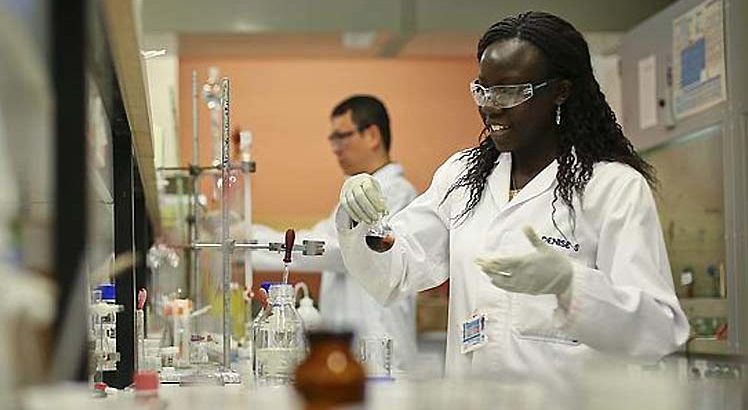
Autoridades sudafricanas exhortaron hoy a crear más oportunidades para que los jóvenes encaren los desafíos socioeconómicos que enfrenta esta nación, aunque precisaron que se han logrado numerosos avances en ciencia y tecnología reconocidos a nivel mundial.
El ministro Naledi Pandor dijo a una conferencia en esta capital sobre Jóvenes en Ciencia, Tecnología e Innovación, que Sudáfrica y África en general dependen de un mayor respaldo para el desarrollo de talentosos científicos y empresarios que pueden solucionar problemas de la actualidad.
El titular de Ciencia y Tecnología apuntó que Sudáfrica se encuentra en un camino correcto porque ha alcanzado logros e innovaciones de las que se siente orgullosa, entre las cuales nombró herramientas para la recolección, corte y almacenamiento de alimentos, medicinas tradicionales, aparatos médicos y helicópteros de ataque.
Se refirió también a que este país del cono sur africano tiene algunas de las mejores condiciones para la energía solar a nivel mundial y suficiente potencial eólico para responder a las necesidades energéticas.
A juicio de Pandor, estos momentos de un crecimiento sin precedentes en numerosos sectores tecnológicos, particularmente en telefonía móvil e información, son ideales para que los jóvenes sudafricanos desarrollen soluciones que puedan dar respuesta a un amplio rango de retos.
Tenemos que lograr que más alumnos estudien matemáticas y ciencias, subrayó el Ministro, quien recordó que el Departamento de Ciencia y Tecnología Indaba ofrece programas para crear conciencia sobre el valor de estas especialidades y su papel en asegurar la prosperidad nacional y el desarrollo sostenible.
Sobre tema abundó que ese Departamento ha creado 34 nuevos centros científicos en la última década que han propiciado la participación de la comunidad en iniciativas en educación superior y programas sociales de responsabilidad social.
En esta reunión, el presidente del Consejo Sudafricano de la Juventud, Thulani Tshefuta, exhortó a respaldar a los novatos en cualquiera de las innovaciones en las que participen, sobre la base de que la ciencia y la tecnología deben ser explotadas en su totalidad.
Más de 300 jóvenes de todo el país participan en esta reunión de dos días que concluye hoy.
La escuela Jeppe Park Primary abrió en enero de 2016 en una de comunidades más desatendidas de Johannesburgo.
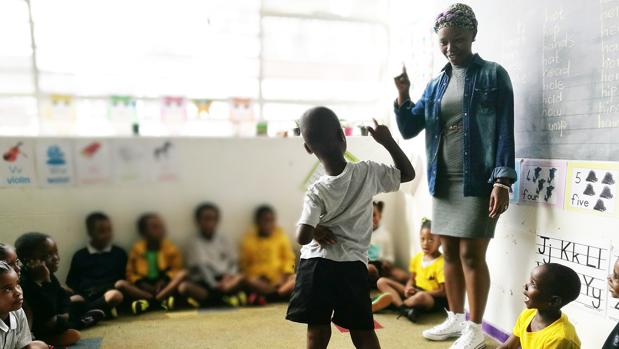
“El otro día me contaron una anécdota: esta es una comunidad conflictiva y hay un traficante de drogas en la esquina. Uno de los nuestros se acerca a él y le comenta que esto es una escuela, que quizá no debería trapichear aquí. El hombre se excusa diciendo que tiene que vender drogas para poder mandar a su hijo al colegio”, lo cuenta Melanie Smuts, CEO y fundadora de Streetlight Schools, al diario ABC. En esta dura realidad de una de las comunidades más desatendidas de Johannesburgo (Jeppestown), dos emprendedoras -un tanto soñadoras- han creado una escuela puntera, sin ánimo de lucro, low-cost y con enseñanza de calidad basada en dos de los mejores sistemas educativos del mundo (el neozelandés y el finlandés). El modelo se centra en la investigación, la colaboración, la exploración, la relevancia y el uso de la tecnología para enseñar y aprender.
Un rayo de esperanza para los más necesitados
Streetlight Schools nace en 2013 con el objetivo de ofrecer educación de calidad a aquellos que más lo necesitan. Por eso su primera escuela, Jeppe Park Primary, se encuentra en este barrio marginal. Su directora de estudios, Heidi L. Augestad, nos cuenta cómo se gestó la idea: “Me di cuenta que tanto aquí como en Noruega (su país natal), rebajamos las expectativas cuando se trata de personas pobres. No hay inversión porque la gente pobre ‘no lo necesita’ y eso mismo se extrapola a la educación”. Esta experimentada profesora opina que, precisamente estos, son los que más necesitan una educación de calidad, con una buena metodología y con muy buenos profesores. Poco le importa que sus alumnos vengan sin ningún tipo de experiencia académica ni de entrenamiento social. “Algunos no habían cogido nunca un lápiz (literalmente), ni habían hecho nunca un dibujo, ni hablaban inglés” añade Smuts mientras muestra, orgullosa, las redacciones de sus alumnos colgadas en la pared.
“En áreas pobres se construyen escuelas en contenedores, y no se invierte en patios de recreo. En este barrio viven tantos niños como en el centro de la ciudad y aquí no hay ningún patio para ellos”, se queja Augestad. Esta escuela, que sí dispone de una zona de recreo, está ubicada en una antigua fábrica de zapatos abandonada, como tantos otros edificios, tras el fin del Apairtheid. Un grupo de arquitectos e interioristas han convertido un espacio totalmente diáfano en un lugar único e innovador, low-cost y sostenible usando materiales reciclados y reutilizando elementos que han ido rescatando del mismo barrio. De hecho, se trata de la primera escuela del país eco-friendly en conseguir la distinción Green Star SA.
Los alumnos de la escuela Jeppe Park Primary en su recreo, tras la valla otros niños jugando al fútbol en el parque.– Alba Amorós
Según Smuts, una escuela tiene que ser parte de la comunidad a la que sirve: tiene que saber qué preocupa a las familias, tiene que conocer sus limitaciones y sus posibilidades. Estas instalaciones escolares, los uniformes, la alimentación, los servicios sociales y el multilingüismo están diseñados para trabajar dentro del marco de Jeppestown.
Un cambio radical en el aprendizaje
En Jeppe Park Primary, reconocida como escuela desde enero de 2016 y que ya cuenta con 130 alumnos, se desvinculan del sistema educativo clásico y precario de Sudáfrica, con maestros desbordados y poco formados que dependen del aprendizaje mecánico y de estilos de enseñanza tradicionales. Un sistema que favorece que muchos estudiantes no estén cumpliendo con los estándares globales de alfabetización. “Entre el 60-70% de los alumnos de la escuela pública no son capaces de leer ni de contar”, dice Smuts. Y continúa: “los sistemas de educación tradicionales son muy jerárquicos, incluso autoritarios y matan, en muchos casos, la curiosidad y la creatividad del alumno.”
Para Smuts la educación debe ser flexible, responsable, sensible, debe ser creativa y crítica. “Es mucho más que un trabajo académico, se trata de cómo eres como persona, tiene que basarse en tus valores y habilidades, en cómo ves el mundo y como te involucras. Tiene que ser relevante”. Por eso su sistema no se basa en un profesor diciendo a los chicos qué hacer y cómo hacerlo si no que se trata de un profesor guiando al alumno para que se abra al mundo y entienda su rol en él.
“Entre el 60-70% de los estudiantes que están en la escuela pública no son capaces de leer ni de contar”Melanie Smuts
“El objetivo de este proyecto es demostrar que se puede diseñar un sistema moderno, exitoso e innovador usando los mismos recursos que el resto de escuelas y pretende demostrar también las grandes cosas que se pueden hacer en este país”, cuenta la abogada.
¿Qué es el método Workshop?
La metodología Workshop (taller) pone el foco en el contexto y al alumno, en el centro. Es un modelo estandarizado con una estructura básica de lecciones que facilita el aprendizaje minimizando el tiempo de instrucción del profesor y maximizando el tiempo dedicado al aprendizaje activo por parte del alumno. “Este método se basa en desarrollar habilidades sociales y motivar al alumno a que quiera aprender,” apunta la directora.
Una clase de 45 minutos de este modelo de trabajo tiene la siguiente estructura: hay una apertura con una duración de unos 2 minutos en la que se introduce el tema del día, después hay una pequeña lección por parte del profesor de unos 10-12 minutos donde éste debe asegurarse de que todo el mundo haya entendido los conceptos presentados. Para estas dos fases los alumnos se sientan en círculo. A continuación, los estudiantes tienen unos 20-25 minutos para trabajar individualmente o en grupo con los materiales aportados y los conceptos aprendidos. Cuando terminan, vuelven al círculo para presentar las conclusiones (5 minutos).
La relación, por tanto, entre el profesorado y el alumnado es de cooperación. “Facilitar este tipo de aprendizajes en los que el alumno trabaja la mayor parte del tiempo de manera independiente es un reto. Por eso una parte importante de mi trabajo es la gestión del profesorado y el dotarles de mecanismos y herramientas para que puedan llevar a cabo su trabajo de manera satisfactoria”, explica Augestad.
Actualmente la escuela cuenta con 130 alumnos (y una larga lista de espera) y nueve profesores de los cuales cuatro de ellos están altamente cualificados y los otros cinco son tutores a los que están formando para que puedan dar la misma educación de calidad que los primeros. Todos ellos igual de comprometidos según la jefa de estudios.
“Una buena escuela debe encontrar el equilibrio entre el aprendizaje de las habilidades básicas (leer, escribir y contar) y desarrollar la curiosidad a través del aprendizaje colaborativo, basado en proyectos y la instrucción”, explica la docente. La tecnología y el arte tiene mucho peso en este sistema.
Otra herramienta básica de trabajo es el uso del lenguaje positivo. Esto es evitar palabras como “no”, “fracaso” u órdenes como “siéntate” para corregir comportamientos inadecuados. “Debemos ser muy conscientes de cómo hablamos y como les miramos, tenemos que ser modelos a seguir, tenemos que ser amables, inclusivos y seguros”, explica Augestad. Un ejemplo de ello es cómo se saludan. “No basta con un simple ‘hola’, se trata de mirar a los ojos, de escuchar lo que el otro tiene que decir, es sonreír y dar un abrazo”. Se trata de cómo lidian con el comportamiento conflictivo, como celebran los buenos intentos, como afrontan el fracaso para convertirlo en algo constructivo. Todo esto forma parte del desarrollo de habilidades sociales y personales que es la base para un programa académico.
Balance exitoso
Melanie y Heidi creen haber encontrado una receta para desarrollar una buena educación basándose en la práctica. “Creo que en un país donde hay tan poca esperanza y en el que tan pocas cosas funcionan…conseguir lo que hemos logrado en solo un año y medio es esperanzador, demuestra que solo con un poco de visión y compromiso hay suficiente talento y recursos para cambiar una comunidad tan complicada como esta”, declara la fundadora de Streetlight Schools.
“Muchos alumnos llegan perdidos y, en tan solo un semestre, se han desbloqueado para convertirse en seres totalmente capaces, receptivos y comprometidos. Nosotros solo hemos dejado salir su potencial”, declara la directora de estudios a ABC. Y es que para que haya un progreso académico deben gestionar también las dificultades y retos que los alumnos traen a clase cada día: familias rotas, problemas sociales, violencia, crimen, desempleo. Los niños de Jeppestown están totalmente expuestos. «Parte de nuestro trabajo es intentar que se diviertan, que aprendan y que sean niños en definitiva,” concluye Augestad.
Uno de cada cuatro menores en el mundo «no puede disfrutar de su infancia» por el matrimonio precoz, el trabajo infantil o el desplazamiento forzoso, denuncia Save The Children
«Cuando mi padre decidió casarme, me rompió el corazón. Nadie me preguntó ni se preocupó», relata una menor afgana obligada a contraer matrimonio.
Ahlam, Kamal, Majerah, Tawa, Yassira, Juan y Saida son niños que han dejado «demasiado pronto» de ser niños. El matrimonio forzado, el trabajo infantil, el hambre, los embarazos precoces, el abandono de la escuela o la violencia truncan cada año la infancia de muchos menores en el mundo, según el informe Infancias robadas elaborado por Save The Children.
En el estudio, la organización analiza cómo estos factores han creado «una crisis global para la infancia de enormes proporciones». A pesar de los avances, las cifras aún se cuentan por millones: s e estima que uno de cada cuatro niños en el mundo, al menos 700 millones, «no puede disfrutar» de su niñez por alguna de estas situaciones.
La causa última, casi siempre, es la misma: la pobreza. La investigación, que clasifica a 172 países en función del impacto de estos factores en la infancia, revela la brecha existente entre los países ricos y los países empobrecidos e n un ranking encabezado por Noruega y con Níger en el último puesto.
Ahlam, desplazada en Irak
La historia de Ahlam es la de dos huidas. La primera, cuando el ISIS tomó el control su ciudad, Baiji, al norte de Irak. La segunda, cuando el grupo terrorista llegó dos años después a Hawija, de donde tuvo que volver a escapar junto a su familia. «Caminamos siete horas durante la noche por las montañas. Íbamos por la carretera y se producían explosiones. Había minas que explotaban. Las vimos», recuerda Ahlam, de 12 años, en un testimonio recogido por Save The Children.
Ahora vive en un campo de desplazados en Qayyara, al sur de Mosul. «Allí dejé mis juguetes, mi escuela… Lo tenía todo. Aquí no tengo juguetes. Prefiero volver a casa. Hace mucho que no vemos nuestra casa. También tenía un columpio. Teníamos un televisor en casa. Solía ver dibujos animados», comenta la menor, que ahora cursa quinto curso y quiere ser «ingeniera o médica» de mayor.
Casi 17 millones de niños y niñas como Ahlam se convierten en desplazados en sus países. Otros 11 millones son refugiados y solicitantes de asilo. En total, uno de cada 80 niños ha abandonado su hogar. El informe denuncia que en «demasiados casos» los menores migrantes son detenidos, lo que tiene «unos efectos demoledores en su desarrollo».
Irak es uno de los países donde los niños «sufren más por los conflictos», según la ONG, junto a Siria, Sudán del Sur, Somalia, República Centroafricana, Colombia, Afganistán, Yemen, Sudán y Eritrea.
Kamal, forzado a trabajar en India
Kamal se vio obligado a abandonar la escuela a los 11 años debido a la pobreza. Su padre es adicto, y Kamal creció en un ambiente violento donde el abuso físico y verbal eran comunes. NILESH NIKADE/SAVE THE CHILDREN
Empujado por la pobreza y forzado por sus padres, Kamal, de India, tuvo que dejar la escuela a los 11 años y ponerse a trabajar en un restaurante de carretera. Pasó dos años cocinando, limpiando y sirviendo mesas para ganar los únicos ingresos que entraban en su casa, 73 dólares al mes.
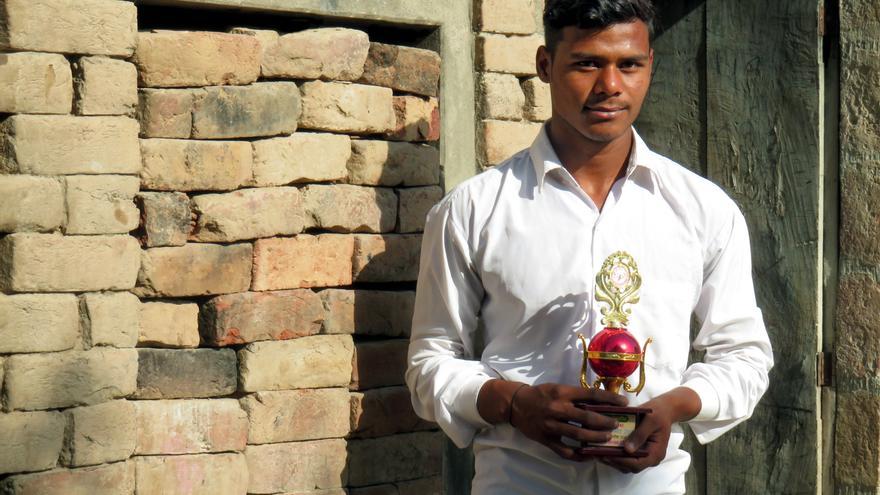
Tras varios obstáculos y la negativa de sus padres, Kamal pudo matricularse de nuevo en el colegio con el apoyo de una ONG local y Save The Children. Ahora tiene 14 años y ha empezado a ganar carreras de atletismo. «Yo trabajaba, nunca pensé que podría volver a estudiar o representar a mi distrito en competiciones deportivas», dice el adolescente.
Cerca de 168 millones de menores en el mundo son forzados a trabajar para mantener a sus familias, según la investigación. La mitad, 85 millones, lo hace con trabajos peligrosos como la pesca en aguas profundas, las fábricas textiles, la recogida de algodón, la minería o la construcción. Las tasas nacionales más altas de trabajo infantil se encuentran en países del África subsahariana como Camerún, (el 47% de los niños), Somalia (49%), Guinea-Bissau (51%), Benín (53%) y Malí (56%).
Majerah, obligada a casarse en Afganistán
El sueño de Majerah de convertirse en médica se «hizo añicos» cuando la obligaron a contraer matrimonio y abandonar sus estudios. Tenía 14 años. «Cuando mi padre decidió casarme, me rompió el corazón. Nadie me preguntó ni se preocupó», lamenta la joven, que vive con su marido, que es 10 años mayor que ella y «la ha golpeado en varias ocasiones».
También vive con su familia política, quienes «la tratan como a una esclava» y la menosprecian «porque no ha sido capaz de tener un hijo», según la ONG. «Ya no me siento viva. No se puede vivir sin esperanzas y sueños», lamenta Majerah, que ahora tiene 17 años.
El matrimonio precoz tiene «consecuencias devastadoras» para la vida de las niñas, según Save The Children, que calcula que 40 millones de menores de entre 15 y 19 años están casadas o viven en pareja. Cada año, cuatro millones de niñas menores de 15 años contraen matrimonio.
«Es un problema mundial que trasciende países, culturas, religiones y etnias», concluye la ONG. África subsahariana y Asia meridional presentan las mayores cifras con países como Sudán del Sur (40% de niñas de entre 15 y 19 años casadas) y Bangladesh (44%), aunque también varía por regiones en función de sus índices de pobreza.
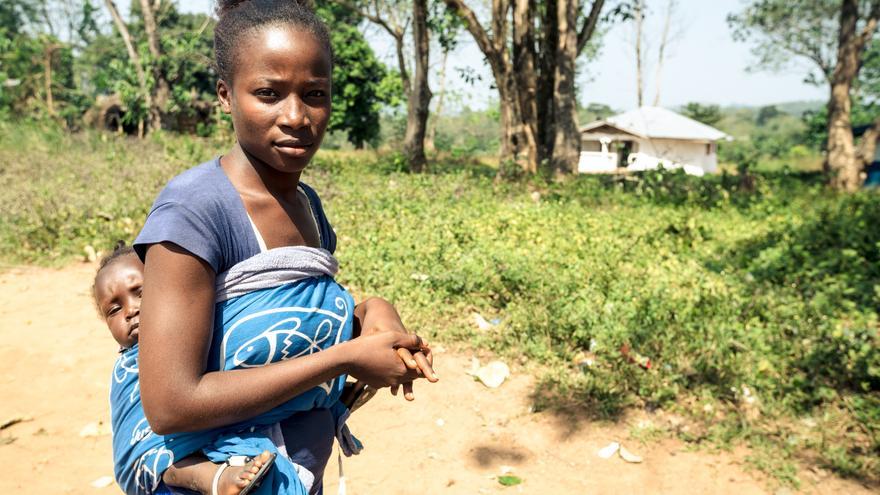
Tawa, madre adolescente en Sierra Leona
Tawa *, de 17 años, se quedó embarazada de su hija Mary *, 10 meses, en el final del brote de Ebola.MICHAEL DUFF/SAVE THE CHILDREN
Cuando el brote de ébola estaba llegando a su fin en Sierra Leona, Tawa se quedó embarazada de un joven con el que tuvo relaciones una sola vez. Al enterarse, el chico huyó a Liberia y Tawa no ha vuelto a saber nada de él. Durante el embarazo, tuvo que enfrentarse a los comentarios y las burlas de sus vecinos. Ahora tiene 17 años y una hija, Mary, de 10 meses.
«Estoy muy estresada, cuando mi hija se pone enferma, incluso me cuesta trabajo encontrar el dinero para llevarla al hospital. Es difícil hasta obtener alimento que darle», explica la joven.
Se estima que cada dos segundos, una menor da a luz en el mundo. Cada año, 17 millones de menores tienen un hijo. Un millón de ellas no llega a los 15 años. Las complicaciones en el embarazo y el parto son «la segunda causa de muerte» de la adolescentes en el mundo, alerta Save The Children. Siete países concentran la mitad de todos estos embarazos: Bangladesh, Brasil, República Democrática del Congo, Etiopía, India, Nigeria y Estados Unidos.
Juan perdió a su primo en El Salvador
«Era como mi hermano». Así recuerda Juan, un salvadoreño de 13 años, a su primo, asesinado por las bandas el año pasado. «Llegué a casa y me encontré a mi hermano y a otra prima llorando. Sentí algo extraño, la cabeza me daba vueltas. Le pregunté a mi prima qué pasaba y no me respondió, seguía llorando. Me dijo ‘Le han matado’. Sentí que mi corazón se partía por la mitad», relata.
«He soñado con él tres veces. En el sueño me abraza y me dice que siempre estará conmigo. Hace la maleta, se da un baño y me dice que se va a hacer un largo viaje del que no volverá. Me desperté del sueño y quería compartir mi tristeza. Decidí que nunca me autolesionaría como hacen otros cuando tienen problemas, porque pienso que no es bueno» añade el menor, que recibe terapia psicológica de la ONG.
«Sufrir, presenciar o temer la violencia no debería formar parte del crecimiento», sentencia el estudio, que revela que más de 75.000 niños y niñas menores de 20 años fueron asesinados en 2015. El Salvador, forma parte de los cinco países con mayores tasas de homicidio infantil junto a Honduras, Venezuela, Colombia y Brasil.
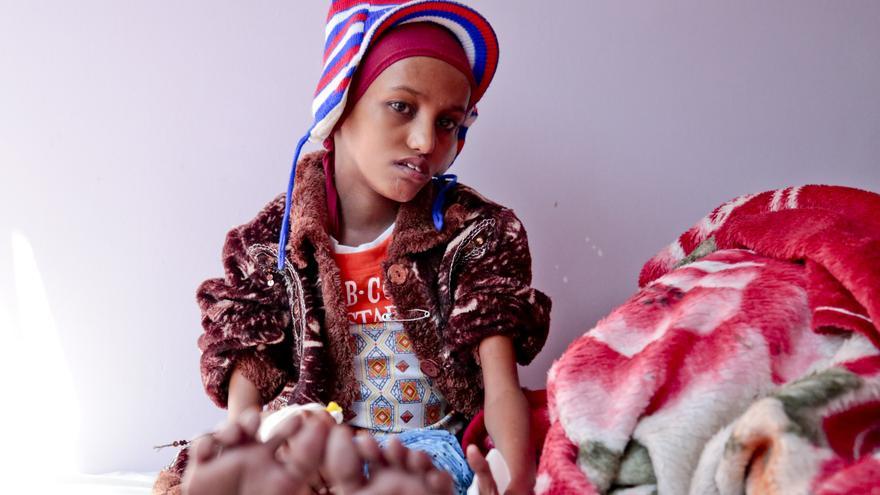
Saida padece desnutrición en Yemen
Saida, que está recibiendo tratamiento en el hospital Al-Sabeen de Save the Children en Sana, tiene 18 años pero se parece más a una niña de ocho años. SAVE THE CHILDREN
Pasar hambre ha marcado para siempre la vida de Saida. Sufrió desnutrición de pequeña y, como consecuencia, tuvo retrasos en su crecimiento: no pudo desarrollar todo su potencial, ni mental y físico. A sus 18 años, Saida parece que tiene ocho. Según la ONG, aunque su alimentación mejoró, tras el estallido de la guerra en Yemen ha vuelto a caer en la desnutrición y está siendo tratada en Saná.
En Yemen, el 47% de los niños sufre retrasos en su crecimiento como consecuencia del hambre. Que un bebé no obtenga nutrientes suficientes durante sus primeros 1.000 días de vida es «en gran medida irreversible», según Save The Children, que denuncia que los niños que sufren estos retrasos –156 millones de menores de cinco años en total– «afrontan una vida de oportunidades perdidas en cuanto a educación y trabajo».
Yassira abandonó la escuela en Níger
Yassira, de 11 años, tuvo que dejar los estudios para ayudar económicamente a sus padres. Atrás dejó su escuela, y a sus amigos. «Ahora van por delante de mí. Me han dejado atrás», apunta la pequeña. Con el apoyo de la ONG, su madre se ha unido a un grupo de agricultoras y Yassira ha vuelto a la escuela en febrero. «Mi asignatura favorita es la lectura, cuando sea mayor quiero ser profesora», dice.
En África subsahariana las escuelas «suelen estar demasiado lejos y las familias son demasiado pobres como para sostener la educación de sus hijos», explica el informe. En el mundo, hay más de 263 millones de niños y niñas fuera del sistema educativo.
Amina perdió a dos hijos en Nigeria
En una aldea del noreste de Nigeria vive Amina, que ha perdido a dos de sus cuatro hijos por enfermedades «tratables» y «evitables», según la ONG. Su primer hijo, de seis meses, murió en 2009.
«No sé por qué murió, pero sufría diarrea severa y estaba muy desnutrido. No tenía ni idea de cómo ayudarle porque en nuestra aldea no hay centro médico, hospital o enfermería. Me sentí muy triste cuando murió. En segundo lugar tuve una niña, que hace cuatro años que murió», dice.
El estudio revela que cada día mueren 16.000 niños antes de cumplir cinco años por causas que se pueden «evitar» y «tratar» como los nacimientos prematuros, la neumonía, las complicaciones en el parto y la diarrea.
—
(*) Algunos de los nombres utilizados son ficticios para preservar la identidad de los menores.
Reseña: La Unión Nacional de Maestros de Uganda (UNATU) ha condenado en las «acusaciones más duras» las denuncias contra el último propietario de las Escuelas y Colegios de San Lorenzo, el Profesor Lawrence Mukiibi, a quien se le señala de ser padre de varios niños con sus propios estudiantes.
The Uganda National Teacher’s Union (UNATU) has condemned in the ‘strongest terms’ allegations against the late proprietor of St Lawrence Schools and Colleges, Prof Lawrence Mukiibi that he fathered several children with his own students.
UNATU secretary general, James Tweheyo, says it is unethical and professionally wrong for teachers to lead into temptation students placed under their care and protection.
Since his death, there has been wide spread condemnation against Prof Mukiibi, who succumbed to cardiac arrest last week. While the rumours of having sexual relations with his students have been around for some time, they gained even more credence upon his death when several young mothers and former students showed up at the burial with babies they claimed were Mukiibi’s.
«I will says that as an institution, that it is wrong for somebody entrusted with the responsibility of taking care of children to be the one to lead them into temptation. That is a very a clear position. It is wrong, it is not ethical, it is not professional, it is even religiously wrong. So, we condemn it to the highest level of it», Tweheyo said.
Tweheyo says if it is indeed true that the late Prof Mukiibi fathered children with learners placed under his care, his behaviour should be condemned with the contempt it deserves.
«The other day, the newspapers and everybody have been hyping Prof Mukiibi. But let me tell you, Mukiibi could have had his better side, but if it is true that he fathered all those children, from the learners he was supposed to take care of, it is wrong, it is ethically wrong, it is morally wrong, it is professionally wrong and it is wrong. We should condemn it and probably pray to God to forgive him», he said.
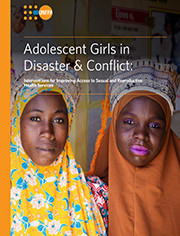
Interventions for Improving Access to Sexual and Reproductive Health Services
No. of pages: 88
Publication date:August 2016
Author: UNFPA
Publisher: UNFPA
Resumen: Millones de niñas y adolescentes necesitan ayuda humanitaria. Una crisis agrava su vulnerabilidad a la violencia de género, el embarazo no deseado, la infección por el VIH, la muerte materna y la discapacidad, el matrimonio forzoso y temprano, la violación, la trata y la explotación y el abuso sexual. En las emergencias, las niñas adolescentes necesitan una programación adaptada para aumentar su acceso a los servicios de salud sexual y reproductiva, incluida la planificación familiar, y protegerlos de la violencia de género. Desde espacios seguros hasta clínicas móviles hasta la participación de los jóvenes, el FNUAP utiliza diferentes enfoques para llegar a las adolescentes desplazadas, desarraigadas y afectadas por la crisis en un momento crítico en sus vidas jóvenes. Esta publicación presenta nuevos estudios de casos sobre el acceso de las niñas adolescentes en situaciones humanitarias a través de programas en Malawi, Myanmar, Nepal, Nigeria, Pakistán, Filipinas y Somalia.
Millions of adolescent girls are in need of humanitarian assistance. A crisis heightens their vulnerability to gender-based violence, unwanted pregnancy, HIV infection, maternal death and disability, early and forced marriage, rape, trafficking, and sexual exploitation and abuse. In emergencies, adolescent girls need tailored programming to increase their access to sexual and reproductive health services, including family planning, and to protect them from gender-based violence.
From safe spaces to mobile clinics to youth participation, UNFPA uses different approaches to reach displaced, uprooted and crisis-affected adolescent girls at a critical time in their young lives. This publication features new case studies on reaching adolescent girls in humanitarian situations from programmes in Malawi, Myanmar, Nepal, Nigeria, Pakistan, the Philippines and Somalia.
Malí/Junio de 2017/Autores: Gioia Forster y Christoph Sator/Fuente: El Litoral
Los niños se sumergen a entre 40 y 50 metros de profundidad en las minas. Allí, munidos de herramientas básicas, buscan oro. Los menores desconocen si efectivamente el metal precioso se encuentra en los baldes colmados de barro que se elevan hasta alcanzar la luz del día.
Al final de la jornada, recibirán por ese duro trabajo un miserable sueldo y, a veces, ni siquiera eso. Así describe Patrick Rose, del Fondo de Naciones Unidas para la Infancia Unicef, las condiciones en las minas de oro irregulares en Kéniéba, en el sudoeste de Mali.
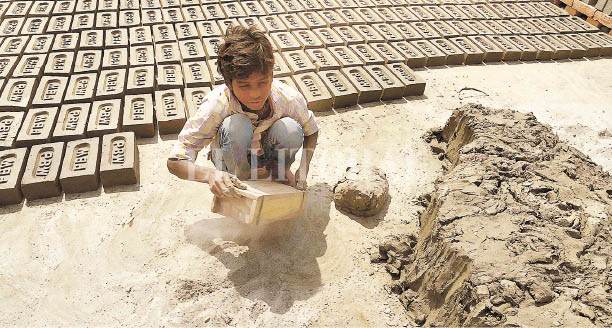
En todo el mundo, hay aproximadamente 168 millones de niños que trabajan. Y muchos de ellos lo hacen en regiones asoladas por conflictos y catástrofes.
La Organización Internacional del Trabajo (OIT) lanzó el Día Mundial contra el Trabajo Infantil en 2002 para concentrar la atención en la magnitud global de este problema y en las medidas para erradicarlo.
La zona en el sudoeste de Mali, cerca de las fronteras con Senegal y Guinea, en África occidental, es terreno abonado para la explotación de niños, mientras el gobierno hace poco por impedirlo.
La extracción legítima de oro de empresas internacionales en la región produjo “la fiebre del oro” entre la población local, explica Rose. La gente cava minas ilegales, frecuentemente no más que agujeros en el suelo, en los que día a día se sumergen miles de niños.
Las minas de oro en Mali o las fosas en el Congo muestran de manera especialmente dramática cuáles trabajos frecuentemente peligrosos son efectuados por menores. El trabajo infantil muchas veces puede ser dañino o incluso mortal. Pero sobre todo aleja a los menores de la educación, lo que los condena “a una vida en la pobreza”, según alerta Unicef.
Una gran parte de los alrededor de 168 millones de niños que trabajan vive en Asia. Según las cifras más recientes de la OIT, allí más de 78 millones de niños entre cinco y 17 años colaboran periódicamente con el sustento de sus familias. Venden mercancías en la calle, recogen algodón en los campos o bien fabrican ladrillos.
La industria textil depara grandes problemas al respecto en Asia: en Bangladesh, pero también crecientemente en Myanmar, los niños se encargan de coser ropa barata para su exportación.
H&M y otras grandes marcas de ropa dieron a conocer que buscan actuar expresamente contra el trabajo infantil. Pero esto representa un gran desafío. Porque, por ejemplo, se ha propagado el hábito de concurrir a la cita laboral con papeles de parientes de mayor edad.
En África -más que en otras regiones del mundo-, los conflictos y catástrofes son responsables de las altas tasas de empleo infantil, según explica Insaf Nizam, de la OIT.
Casi 18 millones de personas se encontraban huyendo a fines de 2016 en África, según datos de Naciones Unidas. “Donde siempre resultan desplazadas personas, se produce una repentina subida del trabajo infantil”, analiza el experto en crisis.
Los refugiados no suelen contar con derecho a trabajar en los países de acogida, por lo que envían a sus niños a obtener dinero. Las autoridades suelen hacer más la vista gorda en el caso del trabajo infantil que en el de los mayores.
“Los desplazamientos masivos de personas como se producen actualmente en África no se veían desde hace años”, dice Nizam. Solamente a causa de la guerra civil en Sudán del Sur, unos 3,8 millones de personas decidieron huir.
Y aunque los desplazados puedan trabajar, la elevada pobreza y una falta de posibilidades educativas para los niños muchas veces generan que los menores deban prestar apoyo financiero a sus familias, expresa Nizam. Los niños se desempeñan en prácticamente todas las áreas del mercado laboral informal, desde la agricultura hasta la minería.
Además, en el marco de los conflictos, suele desplomarse el marco legal, mientras diversos grupos imponen su propia ley, señala el experto de la OIT. Los niños suelen ser reclutados por las partes en conflicto, ya sea como espías, portadores de equipaje, trabajadores o soldados.
Sin embargo, desde el punto de vista de las Naciones Unidas, se han producido avances. Entre 2000 y 2012 retrocedió en casi 78 millones de dólares la cifra de los niños que trabajan, indica Nizam, quien de todas maneras aclaró que aún queda mucho por hacer.
En este contexto, reclama que se facilite el acceso de los refugiados al mercado laboral, a la vez que la educación desempeñe un mayor papel en la ayuda a los migrantes. Y advierte: “Sobre todo en África, el trabajo infantil seguirá siendo un problema gigantesco”.
África/Nigeria/11 Junio 2011/Fuente; /Autor: Habibu Umar Aminun
Resumen: Los resultados de un estudio sobre Gestión de Higiene menstrual (MHM) han demostrado que cuando las colegialas menstrúan en Nigeria se enfrentan a muchos retos, que afectan a su capacidad para gestionar su situación y condición de una manera digna e higiénica. También reveló que la disponibilidad y adecuación de las instalaciones de lavado (Higiene Agua, Saneamiento e) y el flujo de información sobre MHM y el acceso a los materiales para el manejo higiénico de la menstruación todo impactado en la experiencia de la menstruación de las niñas.
Katsina — Findings from a recent study on Menstrual Hygiene Management (MHM) have shown that menstruating schoolgirls in Nigeria face many challenges, which affect their ability to manage their situation and condition in a dignified and hygienic way.
It also revealed that availability and adequacy of WASH (Water, Sanitation and Hygiene) facilities and flow of Information on MHM and access to materials for hygienic management of menstruation all impacted on girls’ experience of menstruation.
Participants believe that menstruation is a secret and an unclean experience, which should be shrouded in secrecy and if spoken of, must be done in whispers. They expressed fear that used menstrual products could be used for rituals, which could cause harm to menstruating girls.
Menstrual Hygiene Management findings show that WASH facilities in most schools are inadequate for menstrual management as only 41.7 per cent of toilets have functional locks while only 25 per cent of the schools have hand washing basins and soap. Most of the toilets/latrines are in a state of disrepair: they are dirty, with broken doors and poor ventilation.
The ratio of latrine compartment to students was 1:297 for girls and 1:1216 for boys compared to a global recommended latrine to student ratio of 1:25 and 1:50 for girls and boys respectively (UNICEF 2011).
The overall average ratio of toilets/latrine in the urban schools for girls was 1:214 and for boys 1:374, while the ratio was 1:168 and 1:272 for girls and boys respectively in rural schools. None of the schools assessed met the World Health Organisation standard of pupil to toilet ratio.
Water for hand washing and cleaning up by girls was inadequate as only 50 per cent of the schools had functional water source in the school premises. Disturbed by this revelation, this year’s MHM Day had the theme: ‘Education About Menstruation Changes Everything’, which intends to create awareness and change attitudes about the increasing agonies and pains female students go through when their menstrual period starts.
Many female students have missed classes and are stigmatised, while many become the subject of discussion and shame, especially from their male colleagues; thereby casting them in bad light on an issue that is a natural cycle of life.
It has been established that girls lacked knowledge about puberty and menstruation as most girls have no prior knowledge about menstruation before menarche (first menstrual bleeding).
The report noted that even after experiencing their first menstrual cycle, information about menstruation comes mostly from mothers, older siblings and peers. There are inconsistencies in the subjects that address menstruation, as well as information shared in schools.
Teachers, especially those in co-educational schools are uncomfortable about teaching menstruation and menstrual hygiene. To this end, this year’s event intends to change this perception by using the media and education which have been identified as the major effective tools to address challenges faced by school girls and young women.
Speaking on menstrual issues at a one-day meeting with media practitioners in Katsina, the National Coordinator, WINS4Girls Nigeria Project, Professor Nkadi Onyegegbu, stressed that menstrual hygiene had remained a taboo in many settings, with poor knowledge and misconceptions being depicted as a great challenge, coupled with lack of access to available facilities.
She said that in recent years, a solid body of evidence had revealed that the discriminatory nature of many school environments had made menstruating girls unable to adequately manage their menses with safety, dignity and privacy.
The university don said in recognition of the positive impact on girls’ education, initiatives around the world were addressing adolescent girls’ menstrual hygiene management (MHM) needs in coordination with ongoing efforts to improve water, sanitation and hygiene (WASH) facilities and services in schools.
«The need to provide education on menstrual hygiene, so that girls and women feel confident and are empowered to make informed decisions about how they can manage their menstruation, has become quite critical,» she said.
This was in addition to breaking the ‘culture of silence’, secrecy, taboos, restrictions, myths, beliefs, misconceptions and traditional practices through talks in forms of seminars, workshops and conferences.
These avenues can be exploited by organisations, women in science in schools, media houses, communities and religious organisations to create awareness on MHM issues by providing factual information
According to her, girls should be given practical information about the management of their menses and not feel ashamed, afraid, or uncomfortable about the psycho-social challenges such as unpreparedness for menarche, fear, embarrassment, shame, stains, leaks and odour, fear of their menstrual material falling out, teasing, stigma and restrictions.
She noted that their physical challenges included abdominal cramps, headache, dizziness, nausea and vomiting, loss of appetite and increase in body temperature.
«Since girls and young women lack support systems from the following: family, friends, community members, school staff, then women in science should take up this role in assisting the school girl and young women in their various communities.»
She believed that promoting menstruation education for boys, girls, men, teachers, health workers, and stakeholders in education such as principals, head teachers, teachers, and other professionals could help break negative social norms and provide accurate information and support for everyone.
«MHM is complex and needs to be addressed holistically and in context as a package of services that include voice and space to talk about the issue to increase awareness amongst men, women, boys and girls; it would also create an avenue to provide adequate water, privacy and facilities for washing and disposal of menstrual materials when used,» she said.
Fuente de la noticia: https://www.dailytrust.com.ng/news/home-front/agonies-of-a-menstruating-school-girl/201161.html
OtrasVocesenEducacion.org existe gracias al esfuerzo voluntario e independiente de un pequeño grupo de docentes que decidimos soñar con un espacio abierto de intercambio y debate.
¡Ayúdanos a mantener abiertas las puertas de esta aula!



 Users Today : 173
 Total Users : 35502313
 Views Today : 263
 Total views : 3628158