Page 336 of 622
1 334 335 336 337 338 622

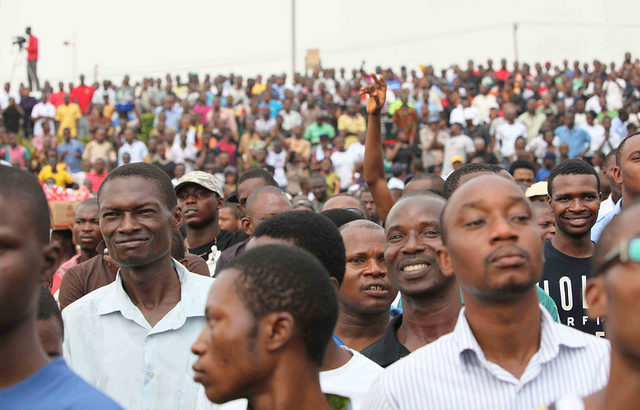
Ethiopia: Higher Learning Institutions in Sustaining Growth

Resumen:  La nueva política de educación planteada para transformar la nación. Estableciendo el lugar que merece la educación para la vida económica y social general del país, se presentan los resultados hasta el momento.

Twenty years ago Ethiopia was a country at the verge of disintegration and absolute poverty.

For that reason, as a remedial action the then Transnational Government was aiming at bringing much-needed peace, ensuring stability, cultivating democracy and fighting out abject poverty.

Mindful of the role of education in transforming the overall economic, political and social life of the country, it was before amending the constitution the government drafted the education policy. Previously, the educational policy was not given due attention for no apparent reasons. But the new education policy was planned to transform the nation. Seeing the role of education for the overall economic and social life of the country, the then Transnational Government brought into play the new approach.

When the policy came into existence, it placed focal attention on primary schools as compared to higher learning institutions. At that time, Ethiopian education was centuries old. But, surprisingly the primary school education coverage was confined to 19 per cent. It was after the establishment of primary schools on strong foundations more secondary and higher learning institutions came to the scene.

Lately, the 7th high educational Institutes Intentional Conference was held at Jigjiga town. On the event, several researchers and scholars had presented papers concerning the quality of education in Ethiopian higher learning institutions.

Having appreciated higher educational institutions’ roles to the ongoing socio-economic growth of the country, the conference has spotlighted quality gaps in education. During the two-day long conference, Jigjiga University President Dr. Abdulaziz Ibrahim said that «Our country is on the path of continuous economic growth. But, in the efforts to sustain the growth, quality education plays irreplaceable role.»

Capitalizing the importance of education for the overall growth of the country, the government is working ceaselessly to further increase the accessibility of education to all citizens by establishing additional universities.

«Jigjiga University is one of the higher educational institutions established ten years ago with a mission to address basic needs of the community. So far, the University has contributed a great share for the development of the country churning out thousands of competent graduates.»

Dr. Abdulaziz noted that the university has been playing a pivotal role in the socio economic development of the community through various research activities that have a tangible impact on the community.

According to him, if properly used the researches have a significant role in sharing ideas among scholars and researchers to further speed up the economic development of the country and to fill gaps identified in the educational sector. It has a key role in improving the quality of education which is a challenge for any form of economic growth, he added.

Adviser of the Ministry of Education, Yibeltal Ayalew on the occasion said that education is key for sustainable development. According to him, higher educational institutions are responsible to producing skilled manpower based on the economic need of the country.

Higher institutions have three core responsibilities namely seeing to the teaching-learning process, rendering community service and conducting researches. Currently, in Ethiopia, higher educational institutions are working to address the social and economic needs of the country.

Indeed, higher education has contributed a great role in transforming country’s socio-economic and political life. However, it does not mean that the road was smooth. Traditionally, higher learning institutions were working targeting training and research. The two must not be the sole targets of higher learning institutions.

Every research has to play a role in the socio-economic life of a particular society. If a research could not serve the country or community it would be quite meaningless. If the research fails to support poor Ethiopian farmers, it would be a wastage of resource and time.

The role of high learning institutions must be churning out manpower that will breathe life in the agricultural and industrial sector. What is more, they should be centres of excellence that will produce skilled man power. They as well must serve places where multiculturalism and democratization are promoted.

The motive behind increasing the number of universities is not not for the sake of political consumption or to compete with other countries but to address the basic needs of the nation. What is more, the country is not building Universities to increase the number of graduates that speak English language but to produce a critically thinking and responsible citizens.

It is already known that, the country had been wallowing under decades of civil war and undemocratic governance. This has adversely impacted the quality of education which in turn resulted in economic and social turmoil in the nation. However, on the wake of the new education policy, tangible results are taking shape throughout the country. This does not mean that the educational quality of the country is absolutely perfect. It could have its own shortfalls. But, it is contributing a huge role for the birth of new Ethiopia.

The current socio-economic developmental leap of the country is among the blessings of our education. In this regard, all university lecturers, researchers and others have played their due role.

Currently, several public universities are operating throughout the country and additional universities are in the pipeline. The expansion of universities have brought urbanization. Places that were hardly inhabited by people have became urban areas. What is more, such universities contribute to equity, cohesion and democratization. Above all things, our universes have contributed for the economic growth of the country.

The increasing in number of skilled man power has contributed for the consecutive economic growth of the nation. The universities have played a significant role in combating drought and supporting the growing economy. They have played a significant role for the success of MDGs and others. Higher education have also played a significant role in combating poverty.

Here, it must be emphasized that whenever one talks about higher educational institutions one has to also think the issue of quality learning and education processes. Our universities have already conducted seven conferences on quality. The past seven conferences have identified several challenges to the high education institutions. If these conferences are centres for discussion without solutions their exertion would be wastage of time and resources. In this regard, universities are duty bound to focus on tangible results. They have to be centres of excellence. They have to work for change.

Fuente de la noticia: http://allafrica.com/stories/201705050813.html

Fuente de la imagen: http://www.geeskaafrika.com/wp-content/uploads/2016/08/gondar-1.jpg

Comparte este contenido:

Nigeria: Children’s Education, Everybody’s Responsibility- Educationist

África/Mayo de 2017/Fuente: NTA

Resumen: Un educador, Sr. Dare Owoyemi, ha dicho que la educación de los niños no debe quedar en manos solo de los maestros, afirmando que es responsabilidad de todos en la sociedad. Owoyemi, que es el Propietario de  Best Foundation Nursery y Primary School, Fate, Ilorin, hizo la observación en Ilorin el viernes mientras hablaba con la Agencia de Noticias de Nigeria (NAN). El propietario, sin embargo, identificó a los maestros, padres, gobierno, líderes religiosos y los medios de comunicación como actores con roles cruciales en la educación de los niños. «Los padres no deben dejar la educación de sus hijos solo a los maestros. Los niños necesitan una estrecha vigilancia para llegar a la cima, porque la caridad comienza en casa. «Los lectores son líderes, por lo tanto, los padres deben inculcar la cultura de la lectura en sus hijos y también enseñarles la moral de la vida», dijo.

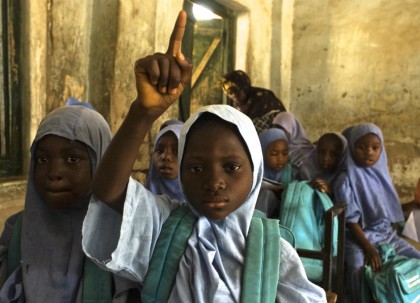
An educationist, Mr Dare Owoyemi, has said Children education should not be left in the hands of teachers alone saying that it is the responsibility of everybody in the society.

Owoyemi, who is the Proprietor, Best Foundation Nursery and Primary School, Fate, Ilorin, made the remark in Ilorin on Friday while speaking with the News Agency of Nigeria (NAN).

The proprietor, however,  identified teachers, parents, government, religious leaders and the media as stakeholders with crucial roles to play in children’s education.

“Parents must not leave their children’s education to the teachers alone. Children need a close watch to get to the top, because charity begins at home.

“Readers are leaders, therefore, parents should inculcate reading culture in their children and as well teach them the morals of life,” he said.

Owoyemi also said that education was essential to the survival of a nation, adding that no child should be left behind.

He urged parents to keep an eagle eye on their children and inculcate in them discipline and hard work for a better future. (NAN)

Fuente: http://www.nta.ng/news/education/20170505-childrens-education-everybodys-responsibility-educationist/


Comparte este contenido:

La OCDE publicó cuáles son los países con mayor índice de acoso escolar

Internacional / www.cnnchile.com / 4 de Mayo de 2017

El 2 de mayo es el Día Internacional contra el Acoso Escolar, un problema que afecta de forma frecuente al 8,9% de los alumnos adolescentes en los países que integran la Organización para la Cooperación y el Desarrollo Económico (OCDE).

En su informe ‘El bienestar de los estudiantes’, dentro de la evaluación PISA 2015, presentado el pasado mes de abril, la OCDE presenta un capítulo sobre acoso escolar o bullying, basado en los reportes de los propios estudiantes.

El 8,9% de los alumnos en los países de la OCDE dijo sufrir bullying de manera «frecuente». Ese porcentaje es mayor en países como Estados Unidos (10%) o México (10,1%).

Los países de la región miembros de la OCDE con los peores resultados en este capítulo son República Dominicana (12,2%) y Costa Rica (10,9%).

En tanto, Perú, Colombia y Chile tienen resultados mejores a la media de la OCDE. En Perú, el 6,1% de los alumnos reconoció sufrir acoso frecuentemente. La cifra se situó en el 7,6% para Colombia y 7,9% para Chile.

También España se sitúa por debajo de la media, con el 6%.

Fuente: http://www.cnnchile.com/noticia/2017/05/02/la-ocde-publico-cuales-son-los-paises-con-mayor-indice-de-acoso-escolar

Comparte este contenido:

CLADE: Sindicatos piden al Banco Mundial que cese las inversiones en escuelas privadas de bajo costo

CLADE/06 de mayo de 2017/

Dirigentes sindicales y defensores de la educación se unieron el 21 de abril ante el Banco Mundial en protesta por su continuo apoyo a las agencias de educación con fines de lucro en general, y en concreto a Bridge International Academies (BIA).

En una carta conjunta a Jim Yong Kim, presidente del Banco Mundial, los dirigentes de varios sindicatos de profesores internacionales y sindicatos mundiales solicitaron al Banco Mundial para que cese inmediatamente su apoyo a escuelas privadas de bajo costo como BIA. En la misma señalan que el acceso a la educación es un derecho humano fundamental y no debe basarse en la capacidad de pago de una familia.

Al apoyar la expansión de la educación privada de bajo costo y otras prácticas competitivas, el Banco Mundial contribuye a que un gran número de los/as niños/as más vulnerables del mundo no tengan esperanza de una educación de calidad, y creemos que una educación pública de alta calidad debe ser reconocida como un bien público y que la educación es una responsabilidad primordial de los gobiernos y no de las empresas y los empresarios.

“Debemos recordar al banco cuáles deben ser sus prioridades: apoyar la educación pública, no privatizar las escuelas que crean unos cuantos ganadores a expensas de millones de niños”, expresó Lorretta Johnson, secretaria-tesorera de la AFT.

Afirman que el apoyo continuo del Banco Mundial a BIA es imposible de entender a la luz de las recientes decisiones judiciales que confirman la mala trayectoria de Bridge.

Fuente de la Noticia:

http://privatizacion.campanaderechoeducacion.org/sindicatos-piden-al-banco-mundial-que-cese-las-inversiones-en-escuelas-privadas-de-bajo-costo/

Comparte este contenido:

Unicef advierte falta de fondos en República Centroafricana

África/6 Mayo 2017/UNICEF

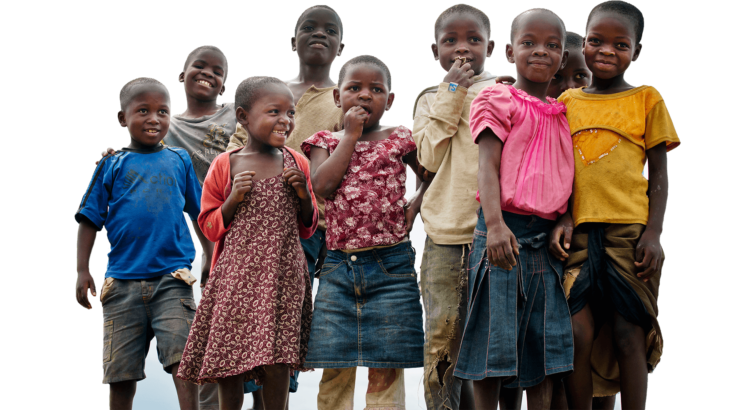
El Fondo de Naciones Unidas para la Infancia (Unicef) advirtió hoy que enfrenta un déficit de financiamiento de 32 millones de dólares para la asistencia humanitaria en la República Centroafricana.

En una declaración, la agencia especializada precisó que el año pasado la falta de recursos fue superior al 40 por ciento en el país, sumido en un conflicto interno desde diciembre de 2013.

De acuerdo con el Fondo, como resultado de este escenario, más de un millón de niños están amenazados en su vida futura.

Pese a algunos progresos en materia de seguridad, la violencia sigue presente en la República Centroafricana, donde continúan desplazadas de sus casas 890 mil personas, mientras dos millones 200 mil necesitan ayuda, la mitad de ellas niñas.

No podemos permitir que la crisis en esa nación africana caiga en el olvido, sin el apoyo financiero requerido será imposible garantizar a los niños centroafricanos la salud y la educación, señaló la representante de la agencia Christina Muhigana.

Muhigana alertó que los focos de violencia y los desplazamientos tienen un fuerte impacto en los menores de edad.

En la República Centroafricana casi la mitad de los niños sufren desnutrición, uno de cada siete morirá antes de cumplir los cinco años y un tercio está fuera de las aulas, lamentó.

Unicef instó a la comunidad de donantes a aportar los recursos solicitados para la atención humanitaria.

Fuente: http://prensa-latina.cu/index.php?o=rn&id=83583&SEO=unicef-advierte-falta-de-fondos-en-republica-centroafricana
Comparte este contenido:

No nuclear energy option for South Africa – for now at least

África/Sur África/Mayo del 2017/Noticias/https://theconversation.com/

A South African court has ruled that critical aspects of the country’s nuclear procurement process are illegal and unconstitutional. The outcome is a significant setback for a network of entities that had been aggressively promoting a 9.6 GW nuclear expansion programme in the face of popular opposition.

Over the past four weeks controversy over the proposed nuclear build has reached new highs. This was sparked by a major cabinet reshuffle in which President Jacob Zuma ousted both his finance and energy ministers, replacing them with individuals regarded as pro-nuclear.

The reshuffle prompted some of the largest and most diverse street protests since the dawn of the country’s democracy in 1994. While many factors contributed to the outpouring of public anger against the president, the nuclear question was a common motif in the protests.

Opposition to the nuclear expansion programme centred on two points: the first was its prohibitive costs – some estimates put it at R 1 trillion which is roughly equivalent to the government’s total annual tax revenue.

The second is that it has become contaminated by allegations of corruption, with evidence pointing to politically connected groups and individuals benefiting handsomely from it.

Back to the drawing board

The court’s ruling in effect means that the planners will have to go back to the drawing board.

The case in the Western Cape High Court was brought by two civil society organisations, Earthlife Africa and the Southern African Faith Communities’ Environmental Institute (SAFCEI).

The most far reaching aspects of the judgment were that it overturned ministerial proclamations made in 2013 and 2016 that enabled the development of 9.6 GW of nuclear power. It furthermore invalidated the intergovernmental nuclear collaboration agreements South Africa had signed with Russia, the US and South Korea.

The court’s ruling on the promulgations was damning and unambiguous.

South Africa’s Electricity Regulation Act requires the Minister of Energy to promulgate any energy generating capacity expansion through the National Energy Regulator of South Africa (NERSA). The regulator is required to vet the proclamation to ensure that it is in the public interest.

The Minister of Energy issued two promulgations to establish 9.6 GW of nuclear energy generation. The first one was concluded in 2013 but only made public two years later. The second one, which delegated the nuclear procurement to the state electricity utility Eskom, whose leadership is strongly pro-nuclear, was hurriedly and stealthily implemented in 2016 on the eve of the first sitting of Western Cape High Court on the matter.

Neither of these proclamations allowed a public participation process.

The court ruled that both promulgations were illegal and unconstitutional. It found that the regulator had failed to carry out its mandate because it had endorsed the minister’s directives uncritically and hurriedly. In doing so it had not allowed public input nor had it considered the necessity of the nuclear build or the consequences of its delegation to Eskom.

The court was equally clear on the collaboration agreements. Unlike the relatively vague agreements concluded with the US and South Korea, the Russian agreement had a great deal more detail in it. It specifically committed South Africa to build nuclear power plants using Russian technology, set out a timeframe and placed specific liabilities on South Africa.

South Africa’s constitution stipulates that international agreements that will have a substantive impact on the country must be approved by parliament. The agreement with Russia clearly falls into this category and therefore needed to be submitted to parliament for debate and approval.

The judge was unequivocal that by slipping the Russian agreement through parliament as a routine matter for noting, the former Energy Minister Joemat-Petterssen had committed a gross error. In his judgment he said:

It follows that the Minister’s decision to table the agreement in terms of section 231(3) was, at the very least, irrational. At best the minister appears to have either failed to apply her mind to the requirements of sec 231(2) in relation to the contents of the Russian IGA or at worst to have deliberately bypassed its provisions for an ulterior and unlawful purpose.

This could open the door for further action against the minister as well as Zuma, who, according to the court papers, instructed her to sign the Russian agreement.

The US agreement was concluded in 1995 and the South Korean agreement in 2010. But they were only presented to parliament in 2015. The court declared them invalid in view of the inexplicable time delay.

The medium and long term impact

A judicial appeal is widely expected. But it’s unlikely that the government will succeed in overturning the essence of the judgement. And an appeals process will delay any legitimate future nuclear power procurement.

Any attempt to re-initiate a nuclear build would have to start from scratch. Based on the judgement it can safely be assumed that the regulator can only endorse nuclear expansion if it can demonstrate that it’s necessary and that it’s a better solution to any other energy option.

But given the prevalent suspicion around the nuclear expansion, the regulator will be hard pressed to show that the nuclear option is in the public interest.

It is therefore unlikely that any nuclear development will succeed in the foreseeable future.

Fuente:

https://theconversation.com/no-nuclear-energy-option-for-south-africa-for-now-at-least-76751

Fuente Imagen:

https://lh3.googleusercontent.com/PP4Cgk0ScGUgAyeWQwdViuf3SOCwGUNgmFFnjGxceWf2yqw42RcXM-xkdJxRPrOyq2TTTA=s85

Comparte este contenido:

Propuestas para las políticas de adaptación al cambio climático

Mayo del 2017/Ecologístas en accción /https://www.ecologistasenaccion.org/

Alianza por el Clima [1], en la que participa Ecologistas en Acción, presenta sus propuestas para la parte de adaptación en la ley de Cambio Climático en España. Esta ley se está diseñando a través de un proceso que insistimos en que debería ser participativo e inclusivo. Dicho proceso debe ser transparente y equilibrado, y garantizar que la voz de todos los agentes sociales esté suficientemente representada y se recojan las aspiraciones e inquietudes de todos ellos.

La adaptación es clave porque ya estamos sufriendo los impactos del cambio climático. La Ley de Cambio Climático y Transición Energética deberá contemplar el marco legislativo adecuado para fomentar medidas encaminadas a la adaptación de los distintos sectores; transporte, agua, industria y energía, edificación, biodiversidad, agricultura, finanzas… a la realidad del cambio climático.
Particularmente Alianza por el Clima propone implementar medidas como:

  • Actualizar el Plan Nacional de Adaptación al Cambio Climático y desarrollar planes o programas más específicos para ciertos ámbitos (salud humana, zonas costeras, sector agrario, sector turístico, de concienciación social ante el riesgo de emergencias y catástrofes…)
  • Destinar suficientes recursos a las medidas de adaptación.
  • Considerar la adaptación en todas las políticas sectoriales (urbanismo, turismo, agricultura, forestal…)
  • Mejorar la coordinación de todas las administraciones para desarrollar estas políticas.
  • Articular la participación ciudadana y de los sectores concernidos para diseñar y aplicar las políticas de adaptación.

Constatamos que el cambio climático es una realidad en España, y además somos uno de los países más vulnerables dentro de nuestro entorno, por lo que estas medidas son urgentes y necesarias.

El trabajo realizado para la elaboración del documento nos ha llevado a una serie de conclusiones:

  • Invertir en adaptación ahorra dinero. Efectivamente, las medidas de adaptación evitan en muchos casos daños que tienen un coste económico, social y ambiental, muy elevado.
  • Es necesario un análisis sectorial para diseñar medidas de apoyo y reforma de los sectores más afectados.
  • Estamos ante un desafío complejo y multisectorial. Es necesario tomar medidas en varios frentes a la vez para obtener resultados apreciables.
  • Es necesario poner especial atención a la coherencia de políticas, precisamente por el carácter multisectorial y transversal que supone el cambio climático.

El cambio climático afecta más a las personas en situación de pobreza, a los emigrantes y a la población infantil y amenaza el rico patrimonio natural de nuestro país. Es por tanto un problema social, ambiental y económico. Las organizaciones de Alianza Por el Clima reclamamos una ley de Cambio Climático que sea capaz de dinamizar la sociedad española, a través de los incentivos adecuados para adaptarnos a esta nueva realidad.

El cambio climático es una amenaza para los derechos humanos. Los derechos a la salud, al medio ambiente, al agua y a la alimentación están comprometidos. El cambio climático nos exige reformas que no deben dejar a nadie atrás, y deben ser coherentes con nuestro compromiso con las generaciones futuras.

Fuente:

https://www.ecologistasenaccion.org/article34223.html

Fuente imagen:

https://lh3.googleusercontent.com/1qLv8hEVj4A57J-L25Oqm3HbLLjG6wD7e326a5Cv6THvMcYKD6LVV8RmT5T0Il18kTT5aw=s85

Comparte este contenido:
Page 336 of 622
1 334 335 336 337 338 622