Page 445 of 622
1 443 444 445 446 447 622

HRW: Brindar refugio genuino a la población desplazada en el mundo

Estados Unidos/Septiembre de 2016/hrw.org

Asumir un compromiso con la reubicación y la ayuda en Cumbres Globales sobre Refugiados

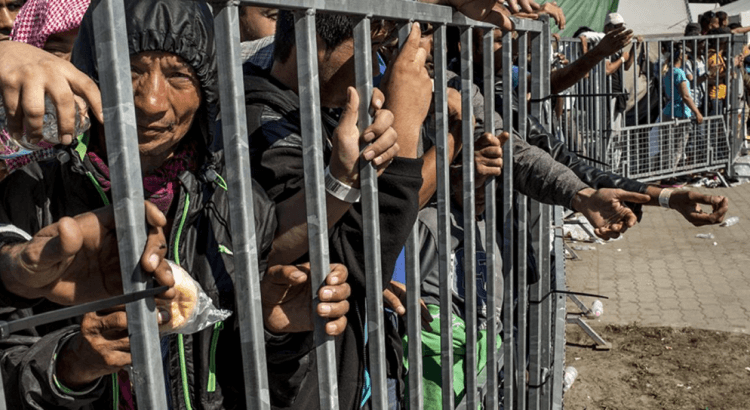
La crisis masiva de refugiados exige una respuesta global sin precedentes, señaló hoy Human Rights Watch. En dos cumbres que se celebrarán el 19 y el 20 de septiembre de 2016 en las Naciones Unidas, los líderes mundiales deberían adoptar medidas audaces para repartir la responsabilidad por los millones de personas desplazadas debido a violencia, represión y persecución.

Los líderes se reunirán en Nueva York para analizar la posibilidad de brindar mayor asistencia a los países donde primero llegan los refugiados, en un momento en que esas naciones están al límite de sus capacidades. La situación ha puesto en jaque el principio fundamental de la protección de los refugiados, que es la prohibición de la devolución, es decir, no obligar a los refugiados a regresar por la fuerza a sitios donde podrían ser perseguidos o sufrir otras graves amenazas. Estas personas huyen de contextos de violencia en Afganistán, Birmania, la República Democrática del Congo, Eritrea, Honduras, Irak, Somalia y Siria, entre otros.

“Están en juego millones de vidas”, sostuvo Kenneth Roth, director ejecutivo de Human Rights Watch. “No se trata solamente de asegurar más dinero o mayores cupos de reasentamiento, sino también de fortalecer los principios legales de protección de refugiados, que están más en riesgo que nunca”.

Este año, Human Rights Watch ha documentado instancias en que guardias fronterizos turcos dispararon y obligaron a retroceder a civiles que aparentemente pedían asilo; la negativa de Jordania a permitir el ingreso de solicitantes de asilo sirios o brindarles asistencia en su frontera; el anuncio de Kenia de que cerrará el campamento de refugiados más grande del mundo en noviembre y obligará a los somalíes a regresar a su país, a pesar de los posibles peligros que enfrentan allí; y los actos de Paquistán e Irán para hostigar y excluir de los registros a refugiados afganos, y para coaccionarlos con el fin de que regresen a un país en conflicto.

La Asamblea General de la ONU ha convocado a la cumbre del 19 de septiembre “con el finde unir a los países en torno a un enfoque más humanitario y coordinado” en materia de refugiados. La declaración final, cuya versión preliminar ya se ha redactado, hadesperdiciado una oportunidad de ampliar el alcance de la protección y reduce la expectativa de que haya nuevos compromisos concretos. No obstante, reivindica los derechos de los refugiados y exige que la responsabilidad por esta cuestión se distribuya de manera más equitativa. Debido a la magnitud de la crisis de refugiados y el rebrote populista en muchas regiones del mundo, esta reivindicación debería servir de base para la acción colectiva, apuntó Human Rights Watch.

El 20 de septiembre, el presidente de EE. UU. Barack Obama auspiciará una “Cumbre de Líderes” para incrementar los compromisos sobre asistencia, aceptación de refugiados y oportunidades laborales y educativas para estas personas. Se espera que los gobiernos asuman compromisos concretos para cumplir las metas de duplicar la cantidad de cupos de reasentamiento y otras admisiones, incrementar el volumen de asistencia en un 30 por ciento, escolarizar a 1 millón más de niños refugiados y reconocer a 1 millón más de adultos refugiados el derecho a trabajar. Aunque los participantes no han sido anunciados, se espera que asistan entre 30 y 35 países. Canadá, Etiopía, Alemania, Suecia y Jordania se sumarán a Estados Unidos como cofacilitadores.

Promover la asistencia humanitaria a los países de primera llegada
La gran mayoría de los 21,3 millones de refugiados del mundo se encuentran en el sur global, donde con frecuencia están expuestos a nuevos peligros, discriminación y abandono. Human Rights Watch exhortó a países de primera llegada como Turquía, el Líbano,Jordania, Tailandia, Kenia, Irán y Pakistán a adoptar propuestas para ofrecer a los refugiados un mayor acceso a trabajo y educación.

Las naciones más ricas del mundo en general no han ayudado a los países que están en primera línea a afrontar la crisis de desplazados. Al 9 de septiembre, se habían cubierto un 39 por ciento de los llamamientos de asistencia de la ONU. Los niveles más bajos de financiamiento se registraban en África, donde el llamamiento para los refugiados procedentes de Sudán del Sur se situaba en el 19 por ciento. La planes regionales de respuesta a refugiados para Yemen y Siria alcanzaban un financiamiento del 22 y el 49 por ciento.

Incrementar el número de reasentamientos en otros países
Aunque el reasentamiento desde los países de primera llegada es clave para ayudar a los refugiados a reconstruir sus vidas y aliviar la situación de los países receptores, la solidaridad internacional brilla por su ausencia. En 2015, la agencia de la ONU para los refugiados facilitó el reasentamiento de 81.000 de los  960.000 refugiados que se proyectaba que necesitarían ser reubicados a nivel global. La agencia calculó que más de 1,1 millón de refugiados necesitarían ser reasentados durante 2016, pero previó que los países solamente ofrecerían 170.000 lugares. Durante una reunión de alto nivel de la ONU celebrada en marzo, los representantes de 92 países se comprometieron únicamente a un leve incremento en el cupo de reubicaciones para refugiados sirios.

En la Unión Europea, la llegada por vía marítima durante 2015 de más de 1 millón de solicitantes de asilo y migrantes —y las más de 3.700 muertes en el mar— pusieron en evidencia la necesidad de establecer vías seguras y lícitas para el desplazamiento de refugiados, como las reubicaciones. Sin embargo, numerosos países de la UE, como Austria,Bulgaria y Hungría, centran su estrategia principalmente en prevenir las llegadas espontáneas, desviar responsabilidades a tercero y provocar una regresión de los derechos de refugiados.

Un plan europeo de 2015 para reubicar a 22.500 refugiados procedentes de otras regiones durante un lapso de dos años ha conseguido reubicar solamente a 8.268 de estas personas, según cifras de julio de 2016. La mayoría de los países de la UE tuvieron resultados inferiores a los esperados, y 10 directamente no reubicaron a ninguna persona en el marco del plan.

Terminar con sistemas abusivos y acuerdos con graves falencias
En marzo, la UE concluyó un acuerdo con Turquía para permitir el regreso a ese país de casi todos los solicitantes de asilo, sobre la base del endeble argumento de que Turquía es un país seguro para el asilo, cuando en realidad está al borde de la desintegración. Australia transfiere de manera forzada a todos los solicitantes de asilo que llegan por vía marítima acentros de procesamiento extraterritoriales, donde estas personas sufren abusos, un trato inhumano y abandono.

La UE y Australia deberían renunciar a estas políticas abusivas. Los países de la UE deberían adoptar sin demora una propuesta de marco permanente de reubicación con metas más ambiciosas y un compromiso claro de cumplimiento, destacó Human Rights Watch. Deberían compartir de manera justa la responsabilidad por los solicitantes de asilo que lleguen espontáneamente, y ayudar a mitigar las presiones sobre Grecia e Italia.

Los gobiernos también frustran la posibilidad de asilo al cerrar campamentos, como KeniaTailandia, y al detener a solicitantes de asilo, como ocurre en Australia, Grecia, Italia,México y Estados Unidos.

Si bien en muchos aspectos EE. UU. ha estado a la delantera en la reubicación de refugiados y la respuesta a los llamamientos de ayuda humanitaria de la ONU, ha actuado con suma lentitud y escasa generosidad en la recepción de refugiados sirios. Y ha mostrado considerables puntos débiles, como sus políticas sobre fronteras para menores y otras personas que huyen de la violencia de pandillas en América Central, y el uso de México como filtro para evitar que lleguen a la frontera estadounidense.

El gobierno de Obama cumplió su meta de aceptar a 10.000 refugiados sirios durante este año fiscal, aun con la oposición de más de la mitad de los gobernadores del país y sin que el Congreso asignara fondos de reasentamiento; sin embargo, Estados Unidos tiene capacidad para reubicar a una cantidad de personas muchas veces superior. Debería comprometerse a cumplir los objetivos de la Cumbre de Líderes, lo cual implicaría duplicar el total de 85.000 refugiados acogidos este año a 170.000.

Varios otros países con capacidad para recibir a muchos más refugiados, como Brasil, Japón y Corea del Sur, han tenido una contribución bochornosamente pobre. Japón admitió a 19 refugiados en 2015, Corea del Sur solamente a 42 (además de los ciudadanos norcoreanos) y Brasil apenas a 6.

Rusia no recibe a refugiados reubicados. Los Estados del Golfo no responden a los llamamientos de reubicación de la ONU, aunque Arabia Saudita afirma que ha suspendido la deportación de cientos de miles de sirios que excedieron el plazo previsto para las visas de visitante. La mayoría de los Estados del Golfo, salvo Kuwait, también han respondido insuficientemente a los llamamientos de la ONU relativos a refugiados sirios, conforme se indica en un análisis de Oxfam.

“Cada país tiene una responsabilidad moral de asegurar los derechos y la dignidad de las personas que se ven obligadas a huir de su hogar”, observó Roth. “Cuando más de 20 millones de personas dependen de un esfuerzo internacional genuino para resolver su difícil situación, no basta con efectuar declaraciones grandilocuentes”.

Fuente: https://www.hrw.org/es/news/2016/09/13/brindar-refugio-genuino-la-poblacion-desplazada-en-el-mundo

Comparte este contenido:

Africa: How Smart Initiative Will Improve Student Performance in Schools

África/Septiembre de 2016/ Allafrica

Resumen:  Hicimos un estudio de mercado a través de entrevistas a maestros, las administraciones escolares y los padres. Todos ellos estaban muy emocionados de tener este software, una herramienta eficaz, ya que está mejorando la vida de los estudiantes, dice .

«We did a market survey and interviewed teachers, school administrations and parents. All of them were very excited to have such a tool being effective, as it was improving the student’s lives,» he says.

Resultado de imagen para Africa: How Smart Initiative Will Improve Student Performance in Schools

The software compiles all course reports and sends an SMS to the parents every day after school hours to keep the parents updated and helps schools to communicate with parents, even for those who cannot access internet.

He says parents will be able to focus on the ability of their children to study well if they receive daily reports on their performance and discipline.

«A child can’t succeed if he is absent or late, he can’t succeed if he is sick, absent minded or sleepy in class, and doesn’t have access to basic hygiene needs. Our main target is to have a smart kid as early as possible as well as have a future generation with values.»

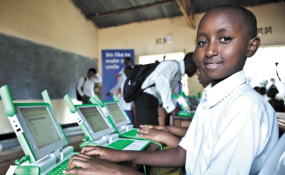
«The teacher will simply use it to update his report after each class, where all his students will be evaluated on 5 indicators; attendance, performance, behavior, health, and hygiene. We provide a laptop in every classroom for the teachers and we train them on the use of the software,» he says.

The project pilot phase will start at Lycée Notre Dame de Citeaux with over 750 students through the last quarter of the 2016 academic year.

The pilot phase is intended to help adjust the software for better use by the teachers and enable them have better interaction with parents.

«Once we are through, we will implement the project from January 2017 in 20 schools per month, providing a solution to over 600 classrooms per month which means 18, 000 students added every month,» Kasasira explains.

«For parents without mobile phones, we link them with different operators in Rwanda so as to use this opportunity. We also encourage them to develop strategies so that they can reach those clients.»

«We can contribute by pointing the names of parents in need of cell phones. To receive the message, there is no need for internet, it’s a rural oriented project,» he says.

Rwanda’s school dropout rate

Statistics from the Ministry of Education indicate that the overall, school dropout rate decreased by more than a half as it went down from 10.5 per cent the previous year countrywide.

«School dropout is still an issue although we constantly have intervention of local leadership. After some research, we didn’t find any ICT oriented solution in Rwanda or abroad. This is how we decided to create our own platform,» Karasira says.

He (Karasira) and his partner Victor Nkindi, came up with the idea to brainstorm about a solution to improve school attendance by simply using a rural oriented desktop application for the teacher.

A vision to make Rwanda a database hub for Africa

Part of Smart Africa’s agenda, is to use ICT oriented solutions in the education system to improve social development and access to ICT. This is why ‘Smart initiative’ was endorsed by African leaders when it was presented to them during the recent African Union Summit in Kigali, a month after it was initiated.

 «All institutions in charge of education can have our support and use generated data to take decisions. It is our wish to have a Rwandan product being successful in Rwanda, Africa and all over the world,» Karasira says.

With Rwanda being at the centre stage of its development-with many projects underway to turn the country into an ICT hub in the region, the system provides real time data to be used by government institutions as data measurement for development in the Smart Africa agenda.

«We are using this system in Rwanda and very soon in Africa. We want to cover Africa within 3 years, this is our own vision 2020, if only entrepreneurs in Rwanda would think big, and share our vision with the rest of the world,» Karasira says.

In Europe, the initiative is already present in Greece and the software is already being adapted in the countries. It has also already gained solicitations from across Africa where the solution is being implemented in six countries namely; Zimbabwe, DR Congo, Gabon, Gambia and Uganda where Karasira is currently doing the project pilot phase.

«Once we are able to generate metrics on a district or province’s school evolution through a quarter or a semester, we can identify the need on time but most importantly, the data we generate, will allow Rwanda to become a real database hub in education for the entire Africa,» he says.

 Fuente: http://allafrica.com/stories/201609120809.html
Fuente de la Imagen: https://www.google.co.ve/search?q=Africa:+How+Smart+Initiative+Will+Improve+Student+Performance+in+Schools&espv=2&biw=1024&bih=494&site=webhp&source=lnms&tbm=isch&sa=X&ved=0ahUKEwjL66OKpo3PAhVE7R4KHS1DD2UQ_AUIBygC#imgrc=5kMx7fh75rbIYM%3A
Comparte este contenido:

Sudáfrica: Five significant findings Human Rights Commission’s

África/Sudáfrica/Septiembre de 2016/Fuente: Mail & Guardian

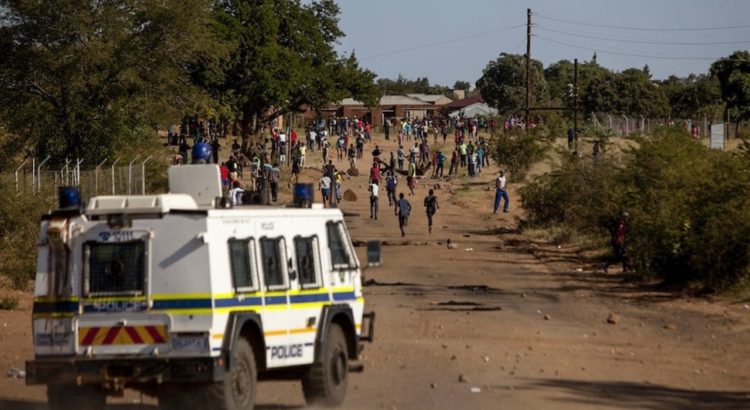
RESUMEN: La Comisión de Derechos Humanos de Sudáfrica (SAHRC) ha publicado su informe sobre los impactos de acción de protesta sobre el derecho a la educación básica. Con la dura tarea de equilibrar el derecho a la protesta, junto con el derecho del estudiante a la educación básica, la SAHRC llegó a conclusiones significativas sobre la base de las audiencias con diversas partes interesadas. El informe fue elaborado después de que la SAHRC armó un panel que escuchó a presentaciones realizadas por el departamento de educación básica, el Servicio de Policía de Sudáfrica (SAPS), y las organizaciones no gubernamentales tales como la educación básica para todos, una organización voluntaria en Limpopo. Las audiencias se produjo a raíz de las protestas en Vuwani, Limpopo a principios de este año, cuando se prendió fuego a un número de escuelas.

The South African Human Rights Commission (SAHRC) has released its report on how protest action impacts the right to basic education. With the tough task of balancing the right to protest along with a student’s right to basic education, the SAHRC made significant findings based on hearings with various stakeholders.

The report was compiled after the SAHRC put together a panel who listened to submissions made by the department of basic education, the South African Police Service (SAPS), and non-governmental organisations such as Basic Education For All, a voluntary organisation in Limpopo. The hearings came about in the aftermath of the protests in Vuwani, Limpopo earlier this year when a number of schools were torched.

Some of the key findings mimic what happened in Vuwani such as how, in many cases, protesters are not centering their protest on education.

1. Most protests have nothing to do with education


The SAHRC found that although schools and access to schools may be affected by protest action, education is often not the point of the protests. In South Africa, there are least 13 000 protests in a year which involve a rage of issues including water, electricity, proper sanitation services, housing and unemployment.

The commission finds that the right to a basic education is affected by protest-related action arising from causes that in most cases may be unrelated to the provision of basic education. Protesters who deny access to education are violating the right to a basic education of the affected pupils,” the report said.

2. Schools get burned because leaders don’t listen


More than 8 million South Africans are without jobs. In their presentation to the commission, Basic Education For All said the Limpopo government had failed to address deep-rooted community concerns and the “matter was left to fester”. In the report, the SAHRC finds that adequate responses from leadership are not a problem unique to Limpopo.

“The investigative hearing noted that the challenges of unemployment and poverty that face South Africa have created high levels of frustration among young people. The extent of frustration does not appear to be sufficiently recognised by people in all levels of leadership,” the report said.

“The panel identified a growing sense of despair, frustration and discontent that is in part a result of people not being able to experience the changes promised by the democratic transition.”

3. Protesters haven’t experienced the better life basic education promises


In its report, the hearings noted that people don’t always deliberately target schools, but they do it because government responds quicker when schools are affected. Those who don’t target schools – but who may affect protests by disrupting transport services or access routes – may have less sympathy for basic education because they have not witnessed a change in their own lives.

“It appears that the disregard for the right to a basic education may also be based on a view that education is not necessarily a guarantee of a better life. This is a view expressed particularly by some who live in conditions of poverty, unemployment and joblessness,” the report said.

Thus, the report concluded that the right to basic education isn’t always respected. The education department, in its submission to the panel, recommended that guidelines for greater awareness around the importance of basic education be developed and implemented.

4. Authorities like the education department and the SAPS are slow to respond

The report indicates that both the SAPS and the basic education department aren’t always prepared for protests and there is no uniform policy in place to mitigate the effects of protests on pupils and schools. The education department admitted that it had been “surprised” by the incidents in Vuwani.

“The department of basic education was overwhelmed by the situation and did not imagine that so many schools would be affected. The department is seeking expert assistance from outside it to help identify alternative solutions and interventions,” the report said.

The SAPS, in its submission at the hearing, gave a detailed response which included that measures had been taken to protect schools in the aftermath of Vuwani. However, the SAPS said they are under-resourcedand are struggling to manage public order when there are at least 13 000 protests a year. The SAPS resources include 28 units with 4 227 members, and there are 25 720 schools around the country. There is currently a three-year plan in place to increase Public Order Policing (POP) units and the members in these units.

The SAPS have been heavily criticised for the violent manner with which they have responded to protests in the past, but the report gave a reminder as to what the mandate of POP units in the SAPs is.

“The role of POP is to manage protest. POP is not supposed to suppress the rights of people who protest but rather to ensure that protests do not interfere with the realisation of other people’s rights,” the report stated.

5. The impact on pupils


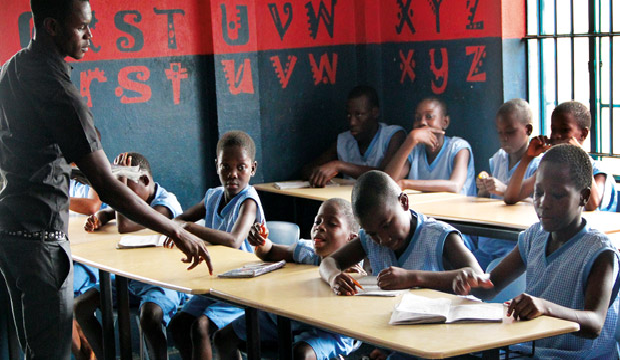
The report found that most pupils affected by protests are poor and are relying on an education system that does not provide them with the best quality education. As such, they are deeply affected when exam time is near.

“Most of the schools targeted in protest-related actions are located in the most marginalised sections of society where conditions at schools and the attendance of pupils are already precarious,” the report stated.

Teachers too have a harder time performing their jobs and in some cases, pupils are roped in to protests to achieve the political objective of older protesters.

The report did, however, fail to get much insight from pupils themselves. Many of the submissions were made by government departments, community leaders and other institutions. People who protest were also largely excluded from the hearings, which meant that much of the insight gathered on why schools become enmeshed in protest action is not told directly from people who protest at schools.

Among one of its key recommendations was that the education department develop a National Public Protest Response Team that will include relevant departments to establish early warning systems and provide clarity on the roles and policy of each department when protests take place.

The report is set to be tabled in Parliament so that the recommendations can be implemented.

Fuente: http://mg.co.za/article/2016-09-15-five-significant-findings-from-the-south-african-human-rights-commissions-educationprotestreport
Comparte este contenido:

Ghana: Deputy Minister appointment for TVET unnecessary

África/Ghana/Septiembre de 2016/Fuente: All Africa

RESUMEN: VIAM Africa hace una reflexión sobre las políticas de  la educación describiendo como en los planes del gobierno no hace falta nombrar un secretario de estado para hacerse cargo de la Educación Técnica y Formación Profesional (EFTP) en Ghana. El grupo de expertos también insiste para establecer un colegio de educación para capacitar a los maestros para la educación infantil. En un documento de cinco páginas se manisfetaron los aspectos más destacados del presidente para las elecciones de 2016, VIAM África afirma que el viceministro actual de la educación responsable de la educación superior puede, sin ningún problema, llevar a cabo una supervisión transparente de la enseñanza técnica en Ghana. El grupo de expertos cree que, si se toma su sugerencia,  salvará  una cierta cantidad de recursos del país.

VIAM Africa, a policy think tank on education has described as needless government’s plans to appoint a deputy minister to take charge of Technical and Vocational Educational Training (TVET) in Ghana.

The think tank also insists, plans by government to establish a college of education to train teachers for early childhood education can only be superfluous.

In a five page reaction to the president’s manifesto highlights for the 2016 election, VIAM Africa maintains the current deputy minister of education responsible for tertiary education can, without any problem, undertake a seamless supervision of technical education in Ghana.

The think tank believes, their suggestion, if taken will save the country some amount of resources.

VIAM Africa argued that appointing a seperate deputy minister for Technical education will «further segregate TVET from general/grammar type secondary school and would not in any way solve the problems at the TVET subsector.»

President John Mahama on Tuesday gave a two hour highlight on the yet to be launched NDC manifesto during which he touched on many sectors of the country’s development agenda.

Education was among the prominent issues highlighted by the president with a flurry of promises.

Amongst the promises include the plans to provide students at the basic and secondary level tablets on which to read their text books.

The president also promised to appoint a deputy minister in charge of technical and vocational educational training and to build a brand new College of Education to train new teachers for early childhood education in Ghana.

But VIAM Africa does not understand why government plans to build a new institution when there are existing institutions doing same.

«The establishment of a college of education (CoE) responsible for training teachers in early childhood education is superfluous. This will just increase government expenditure on our scarce resources. Currently, the University of Cape Coast and the University of Education, Winneba run programmes in Early Childhood education to train teachers for the early grades,» VIAM Africa said.

The think tank would rather government upgrades the curriculumM in the existing institutions to conform to modern trends in training at that level.

VIAM Africa, said despite the strides made in education over time there has been a misalignment of the government policies and the general development aspirations.

«Although the government has made significant progress in the education sector, most of the policy targets and interventions appear to lack clarity and focus, uncoordinated and do not align with neither our long to medium term development aspirations nor the UN’s sustainable development goal four (SDG 4) of promoting inclusive and equitable quality education and lifelong learning opportunities for all,» VIAM Africa suggested.

Fuente: http://www.myjoyonline.com/news/2016/September-14th/manifesto-watch-deputy-minister-appointment-for-tevt-unnecessary-viam-africa.php


Comparte este contenido:

Nigeria: Obasanjo – Open Varsity Graduates Should Attend Law School

África/Nigeria/18 Septiembre 2016/Fuente: /Autor:

Resumen: El ex presidente Olusegun Obasanjo ha pedido al gobierno federal revisar la decisión del Consejo de Educación Legal (CLE) de detener los licenciados en derecho de la Universidad Nacional Abierta de Nigeria para  ser admitido en la Escuela de Derecho de Nigeria.

Former President Olusegun Obasanjo has called on the federal government to review the decision of the Council of Legal Education (CLE) stopping law graduates of the National Open University of Nigeria (NOUN) from being admitted into the Nigerian Law School.

Obasanjo made the remarks when the Vice-Chancellor of NOUN, Professor Abdalla Uba Adamu, visit him in his house in Abeokuta, Ogun State, the varsity’s spokesman, Ibrahim Sheme said in a statement yesterday.

The former president, who last year graduated with a degree in Theology from NOUN, said there was every reason to believe that graduates from the institution should attend the law school.

«When they told me about law people, I said who are the early lawyers? They sat at home and read and they ate their dinner… And then they qualified. We know, we were there with most of them in the 1950s,» he said.

He described the recent appointment of Prof Adamu’s as VC as putting a «square peg in a square hole.»

He thanked the NOUN management for naming the university’s newly established Good Governance and Development Research Centre after him.

He also accepted NOUN’s invitation to present a lecture on the topic, «Leadership and Challenges of Development in Nigeria: the Way Forward» as part of the activities to mark his birthday in March.

In his remarks, the vice-chancellor said some of the steps he took in developing the university system included the renaming of schools into faculties and introducing the election of deans and heads of department, as innovative.

Fuente de la noticia: http://www.dailytrust.com.ng/news/general/obasanjo-open-varsity-graduates-should-attend-law-school/162704.html

Fuente de la imagen: http://images.dailytrust.com.ng/cms/gall_content/2016/9/2016_9$large_PAGE_7.jpg

Comparte este contenido:

Liberia: UL Releases ‘Comprehensive’ 2016/17 Academic Calendar

África/Liberia/18 Septiembre 2016/Fuente: liberianobserver/Autor: tjohnson

Resumen: Autoridades de la Universidad de Liberia (UL) ha emitido un comunicado detallando calendario académico de la institución para 2016/2017. De acuerdo con el calendario,  los estudiantes comenzarán el lunes 26 de septiembre y se extendera hasta el lunes, 10 de octubre.

Authorities of the University of Liberia (UL) have issued a release detailing the institution’s academic calendar for 2016/2017.

According to the calendar, registration for old, returning and transferred students will begin on Monday, September 26 and run through Monday, October 10.

Classes will officially begin on Monday, October 17.

Freshmen orientation will take place between October 10 and 17, while their registration will be from October 10 to 24.

“The first term/semester mid-term examination will begin on November 28, and run through December 3,” the release said.

In line with the schedule, the 2016 college-based commencement convocation will begin on Wednesday December 7, and end on Tuesday December 13. It will be closely followed by a joint commencement convocation on Wednesday, December 14, for all six graduate and professional schools.

This year’s Christmas and New Year’s break, according the UL schedule, will begin on Thursday, December 22, 2016, and end on Tuesday, January 3, 2017.

Classes for first semester will resume immediately upon returning from the break to be followed by final examinations which will be administered between February 27 and March 11, 2017.

Results of the 2016 UL entrance and placement examination that was administered on Saturday, August 13, will be published on September 30, according to the academic calendar.

Successful candidates will thereafter begin to enroll officially in the university for the first semester of the 2016/2017 academic year.

The UL second semester registration will begin on March 20, 2017, and run through April 8, 2017. Classes will thereafter begin on April 10, while the ADD and DROP Period will run from April 17 and end on April 22, 2017.

Registration for the 2017 UL entrance and placement examination for all undergraduate candidates will begin on May 16 and end on June 30, 2017. The 2017 entrance examination will be administered on Saturday, August 5.

Meanwhile the A. M. Dogliotti College of Medicine will administer its admissions test on June 19, 2017 while the School of Pharmacy and the Louis Arthur Grimes School of Law will subsequently administer their entrance tests on Saturday, June 24, respectively.

Following that, the 2016/2017 second term/semester mid-term examination will be administered between May 29 and June 3, 2017.

Thereafter, all lectures for the semester will end on July 22, 2017, while final examination will begin on August 1, and end on August 14, 2017.

As a result of this notification, all students are strongly advised to register on time and avoid disruption of any aspect of the schedule. Any change to this schedule will be duly communicated, the release from the University states.


Fuente de la noticia: http://www.liberianobserver.com/news/ul-releases-%E2%80%98comprehensive%E2%80%99-201617-academic-calendar
Fuente de la imagen: http://www.liberianobserver.com/sites/default/files/styles/large/public/field/image/UL_3.jpg?itok=76rXaXyQ
Comparte este contenido:

El año 2016 va camino de convertirse en el más caliente de la historia de la Tierra

18 Septiembre 2016/Fuente:20minutos/Autor:EFE

La Organización Meteorológica Mundial (OMM) advirtió este viernes de que 2016 está en camino de convertirse en el año más caliente que se haya registrado en la historia, con temperaturas extremadamente altas. «Hemos sido testigos de un prolongado periodo de extraordinario calor y todo indica que esto se convertirá en la nueva norma», sostuvo el secretario general de la OMM, Petteri Taalas, al apuntar que se han observado niveles inusualmente altos de concentración de dióxido de carbono y se han roto récords de temperatura.

Esta situación y el calentamiento de los océanos ha acelerado el blanqueamiento de los arrecifes de corales, recordó. La temporada excepcionalmente larga de calentamiento global continuó en agosto «La temporada excepcionalmente larga de calentamiento global continuó en agosto, que fue el más caliente en registros tanto en la superficie terrestre como en los océanos», agregó la portavoz de la OMM, Claire Nullis, basándose en datos de la NASA y del Centro Europeo para las Previsiones Meteorológicas a Mediano Plazo.

Además, según los últimos datos, la superficie de hielo en el Ártico alcanzó su mínima extensión durante el verano (boreal) el pasado día 10 de septiembre, con lo que fue la segunda más reducida desde hace 37 años, cuando empezaron los registros por satélite.

Esa superficie es comparable con la observada en el mismo periodo de 2007. La extensión de hielo en el Ártico fue de 4,14 millones de kilómetros cuadrados y se cree que la principal razón para que la situación no fuese dramática tiene que ver con que el verano en esa parte del mundo fue fresco, nublado y con tormentas regulares. «Históricamente, esas condiciones meteorológicas desaceleran la pérdida de hielo durante el verano, pero en lo esencial estaremos sólo un peldaño por debajo del récord», indicó Nullis.

La menor superficie de hielo ártico data del 17 de septiembre de 2012, cuando disminuyó hasta los 3,39 millones de kilómetros cuadrados.

Fuente de la noticia: http://www.20minutos.es/noticia/2839106/0/2016-convertirse-ano-mas-caliente-historia/#xtor=AD-15&xts=467263

Fuente de la imagen: http://img.kaloo.ga/thumb?url=http%3A%2F%2Fcdn.20m.es%2Fimg2%2Frecortes%2F2016%2F05%2F26%2F288542-944-944.jpg&md5val=ffed612c194605dfd9e944670bb194e4&key=a8d7c4df764a21315b3645d83d30e28e13704fc6&method=fill&size=1080×1080

Comparte este contenido:
Page 445 of 622
1 443 444 445 446 447 622