Page 444 of 622
1 442 443 444 445 446 622

Consejos para evitar los incendios forestales

América del Norte/ Sur/Central/Oceanía/Asia/África/Septiembre 2016/http://www.ecologistasenaccion.org/

Por: Ecologistas en acción
«Sin fuego no hay incendios»

  1. No enciendas fuego en el campo, ni para quemar rastrojos o pastos, ni para utilizar barbacoas o fogatas, (ni tan siquiera en las áreas recreativas habilitadas a tal efecto). En la época de alto riesgo de incendios, del 1 de junio al 1 de noviembre, cualquier chispa o llama, por pequeña que sea, puede dar lugar a un desastre.
  2. No arrojes al suelo cerillas, colillas, cigarros u objetos en combustión, ni tampoco papeles, plásticos, vidrios o cualquier tipo de residuo o material combustible susceptible de originar un incendio. Lo mejor: es no fumar en el campo.
  3. En los terrenos forestales no utilices desbrozadoras, motosierras, grupo de soldadura, amoladora o radial.
  4. A las personas cuya vivienda se encuentre ubicada o circundada por terrenos agrícolas o forestales, se les recomienda que no pongan setos de especies que arden con facilidad (arizónicas, cipreses, etc), y que no construyan barbacoas en los límites de la finca, o al menos, que nunca las utilicen los días de viento. Igualmente, se debe solicitar a la comunidad de vecinos la elaboración de un plan de autodefensa (instalación de hidrantes en las calles, mantener las calles y caminos aledaños despejados de vehículos y de vegetación, construcción de depósitos de agua, etc). Deposita la basura y los restos de poda en los contenedores o vertederos habilitados, nunca te deshagas de ellos amontonándolos junto a la vivienda o quemándolos.
  5. En épocas de riesgo de incendios, del 1 de junio al 1 de noviembre, para adentrarse en el monte es conveniente conocer bien el terreno, las vías de comunicación, caminos alternativos y procurar caminar siempre por zonas de gran visibilidad. Si vas a practicar senderismo, en especial en compañía de mayores y niños, procura no salirte de los circuitos señalizados.
  6. Comunica a las autoridades públicas los vertederos o puntos de vertidos ilegales que encuentres en terrenos forestales o próximos a ello. Suelen ser una causa habitual de aparición de incendios forestales.
  7. No pretendas llegar en coche o vehículo motorizado a todas partes, el contacto del tubo de escape con matorrales secos podría provocar un incendio. Del 1 de junio al 1 de noviembre, para evitar incendios no utilices el vehículo. En zonas forestales estaciona el coche en aparcamientos habilitados, o, al menos, en zonas totalmente despejadas de pastos o matorral.
  8. Si ves un incendio avisa lo antes posible al 112, teléfono de emergencia, o al 062 teléfono de la Guardia Civil. Indica en tu aviso el camino más adecuado para llegar, teniendo en cuenta hacia donde avanza el fuego. Es recomendable, además, conocer los servicios de emergencia locales y como contactar con ellos.
  9. Las personas que se encuentren cerca de un incendio, deben intentar ir a un claro donde el fuego no les pueda alcanzar, tratando de alejarse por las zonas laterales del incendio y más desprovistas de vegetación; si circulan en coche deben cerrar las ventanillas e intentar dirigirse a una zona fuera de peligro. No debes dirigirte hacia barrancos u hondonadas, ni intentar escapar ladera arriba cuando el fuego ascienda por ella. Recuerda que un cambio en la dirección del viento puede hacer que el fuego te rodee. Por tanto, ve siempre en sentido contrario a la dirección del viento.
  10. Las personas que participan en labores de extinción no deben trabajar aisladas, deben estar coordinados y siempre a las órdenes de las autoridades competentes. Recuerda que si fueses requerido por las Autoridades públicas para colaborar en la extinción de un fuego, tienes el deber legal de colaborar.


Fuente:

http://www.ecologistasenaccion.org/article5547.html

Fuente imagen:

https://lh3.googleusercontent.com/IlJHxNmOeMc-aNPG4POLSW-_-T9rMMCkqI9B1w_A4yV444nuCf7n7ZfZAeWKLpzNiEyH5Q=s85


Comparte este contenido:

Nigeria: Okpewho – Scribal Lord of Orature

Nigeria/ Septiembre de 2016/Allafrica

Resumen: Isidore Okpewho, profesor de la Universidad Estatal de Nueva York en Binghamton desde 1991 y Presidente de la Sociedad Internacional para las literaturas orales de África ( Isola ),  reconocido en todo el mundo como un virtuoso entre las figuras de autoridad en la investigación, la práctica y la enseñanza de la literatura oral.

It is truly sad news that Isidore Okpewho, unforgettably warm-hearted, civilized, accommodating and a gentleman without humbug, has passed on at the age of 74. A professor at the State University of New York at Binghamton since 1991, and a President of the International Society for the Oral Literatures of Africa (ISOLA), he is acclaimed, across the world, as a virtuoso performer among authoritative figures in the research, practice and teaching of oral literature. After a First Class Honours degree in Classics from the University of Ibadan, he began his career in publishing at Longmans Nigeria where, as an unpublished poet seeking outlet, I first met him.

Affable, and genuinely serious-minded, Isidore left publishing for the University of Denvers, USA, to get his PhD which he capped with a D.Litt at the University of London. He returned to publishing at Longman publishers but pulled back to Academia, teaching for fourteen years at the University of Ibadan, his alma mater, before returning to the United States where his academic career had started sixteen years earlier at the University of New York at Buffalo (1974-76). A year at Havard University in (1990-91) convinced him to remain in the United States at a time when Nigerian academics under military dictatorship were being sacked for teaching what they were not paid to teach, and were being paid pittance for a take-home that could not take them home.

As a creative writer, novelist, poet and literary critic, Isidore Okpewho made reaching for perfection a great reason for being around in any genre or discipline. Always with an inter-disciplinary focus, he refused to follow the herd. Once he made a commitment, he ploughed his own furrow and refused to be distracted by praise or rebuke. Formidable in every sense, his intellectual prowess always had an intimidating edge that he never flaunted even when lesser mortals over-rated themselves. His output as a writer, a veritable master of cultural literacy, has had few parallels. He was the kind of scholar that other long-standing professors would say: when I grow up, I want to be like him.

This was the result of his outstanding performance in two seminal, paradigm-changing works of scholarship The Epic in Africa: Toward a Poetics of the Oral Performance (1979) and Myth in Africa: A Study of Its Aesthetic and Cultural Relevance (1983) which gave him not just a head start as a master in the study of oral literature but a special vantage as an interrogator and formulator of theories of knowledge and humanistic studies that primed Africa as a centre of civilization in her own right. The works dredged the commonality of human reflexes at the base of aesthetic production between different races and nationalities. Given his knowledge of ancient Greek and Roman Culture, there was a solid substructure upon which he built a highly universalist temper. In a lot of ways, it explains his grasp and forthright engagement of the grand theories of modernist and post-modernist scholarship and consequently, his concern with the interconnectivity of narratives of knowledge systems which proves his quintessential mark as a scholar.

 Generally, not being a nativist, Isidore Okpewho stood with African civilization without allowing multiple, incongruous, moralities to influence his reception and judgement of other climes. As a classicist, with deep immersion in ancient civilizations, he knew how not to let the bragging propensities that go with all cultural geographies, especially imperial ones, to lay exclusive claims to human values that cut across cultural boundaries. Particularly, in The Epic in Africa, he uncovered for serious engagement the reality that the oral and scribal cultures of the world share common principles of poetic composition in too many respects to warrant the parochial necessity to privilege one civilization above the other. His Myth in Africa re-drew the map of scholarship in relation to received Western notions that distanced Africa from other cultures on the question of mythologies and mythmaking in general. Based on fieldwork in various parts of Nigeria, especially in the Igbo and Ijaw parts of the Benin Delta, and drawing on researches in other parts of Africa, he formulated an aesthetics theory which invoked performance in the arts as plausible transformers of the way societies behave or change modalities of action.

For an Urhobo whose mother was Asaba, it may well be said that he had to have a keen appreciation of cultural diversities and their interactions as the grit of his vocation. I recall interviewing him about this in Morocco, during an African Literature Association (ALA) conference on his book, Once Upon A Kingdom, which deals with the relationship between the Benin Kingdom and their cultural siblings on the West of the Niger. Even where we differed, I thoroughly enjoyed the ease with which he could immerse himself in local cultures and then link them to universal themes such as the incipient rise and rise of ethnic nationalism. It was after Once Upon a Kingdom that he began to dredge the racial memory of African Americans, addressing and seeking redress for collective psychologies of grandchildren who, in their sub-conscious, were living through ferments in ancestral Africa that even their fathers could not intuit, but they had to resolve before they could tackle the civil rights issues of their day.

Racial memory, as he has threshed it, is not just about what happened to the enslaved through the Middle Passage, the gore after the landing, and the blithe summer of the freeborn without a memory of slavery. This came out quite well in his novel, Call Me By My Rightful Name in which he literally romped through ancient Ekiti dialect of the Yoruba language and Culture with an effortless pitch that told of the harrowing dislocation which slavery wreaked on both sides of the Atlantic; right into the civil rights movements of O we shall overcome. On this score, it is quite a treat to follow his deep historical and anthropological insights, in full fictional flight, as depicted in this novel. The point, so creatively and poignantly woven into Call Me By My Rightful Name, is that even those in the new world whose parents had no physical contact with Africa could be so implicated in what happened in Africa before Trans-Atlantic enslavement. It simply calls for the tie between homeland and Diaspora to be studiously kept alive in order to have clear perspectives on how to go in a divided world.

The beauty of it is that Okpewho’s novels and general literary creativity, while benefitting from so many diverse associations, maintain simple, absorbing touches of empathy. This is evenhandedly displayed in the Victims, dealing with the question of polygamy, The Last Duty, on the travails of the civil war outside Biafra, and his penultimate, Tides, which deploys a superb epistolary form to unearth threats of environmental biocide and political insipidity in the face of sheer homicide in Nigeria’s Niger Delta. The novels, with truly folkloric zeal, read like conversations between friends celebrating the resilience of the individual spirit in times of collective disorientation. We meet an author who is at home with the innocence of childhood and the rueful world of the grown up in equally hapless situations.

 Never to be down-graded is that Isidore Okpewho was, first and foremost, a teacher. On this counterpane, his ground setter for the study of Oral literature was his 1992 book, African Oral Literature: Background, Character, and Continuity (Indiana University Presss). Quite an ambitious take, after it, was the elevating concern that yielded the grand collaboration with Ali Mazrui and Carol Boyce Davies in editing the path-breaking and incomparable book The African Diaspora: African Origins and New World Identities (Indiana University Press, (1999). Consequently, the great pull of Isidore Okpewho’s scholarship into the 21st Century was building up and assessing the dimensions and directions of linkages between Africa and the African Diaspora. It added a twist to his academic interests and a broadening of those interests to accommodate Africans outside Africa in terms of their interaction with the continent.

May I note that, sad as it is to miss him, I am more like wanting to raise a shout for a man who was dogged in always doing things so right that whatever one remembers of him brings out vintage heartiness. He was a classicist and anthropologist, always able to put his knowledge of ancient and modern times to good account without being fazed by the new-fangled theories of modernism and post-modernism. Forever on top of aesthetic seepages and values that help in configuring national and cross-national identities, he gave the arts their due not as passive but active elements in how people perceive social and cultural spaces. For him, it was ever about knowledge and its shared valuation.

As G.G. Darah reminded us in his tribute, Isidore Okpewho’s passing away hits home with Hampate Ba’s appreciation of how it is like a whole library burnt down when an old man dies. It is a tragedy spelt at the level of the knowledge industry. This is especially the case when one considers that the critical mass of intellect that was driven out of the country in the eighties into the nineties, is thinning out, and continues to haunt us with sheer opportunity costs and, worst of all, terminal cases of loss.

Fuente: http://allafrica.com/stories/201609161095.html
Comparte este contenido:

África: el código de comunicación descentralización en curso

África/Madagscar/Septiembre 2016/Noticias/http://www.madagascar-tribune.com/

Resumen:

Señalan que en  Mahajanga, hay conciencia sobre los peligros del nuevo código de comunicación,  organizado por el Movimiento para la Libertad de Expresión  en Toamasina, donde continuarán explicando todo lo relacionado con las limitaciones comunicacionales del código , a solicitud  de los ciudadanos  en una reunión  en contra del código draconiano   de ya que este atenta contra la libertad de expresión   que se llevará acabo en la ciudad de Toamasina.

Code de la communication

Décentralisation en cours


Après la capitale et Mahajanga, la sensibilisation sur la dangerosité du nouveau code de la communication organisée par le Mouvement pour la liberté d’expression va se poursuivre à Toamasina. Aussi, une explication mais surtout une séance de pétition des citoyens contre ce code liberticide va avoir lieur incessamment dans la ville de Toamasina.

Les pétitions dans la capitale et Mahajanga ont connu un franc succès selon les organisateurs d’où la décision de poursuivre la lutte. Surtout dans la mesure où le code de communication concerne tout Madagascar mais pas seulement Antananarivo et tous les citoyens sont privés de liberté par ce code mais pas seulement les journalistes. L’objectif du mouvement pour la liberté d’expression consiste à faire pression sur les autorités pour ne pas appliquer ce code liberticide.

Notons que la décentralisation des mouvements est la tendance du moment. Les politiciens à travers la plateforme des opposants Malagasy mivondrona ho an’ny fanorenana sont en train de mettre en place des cellules dans les provinces et localités aussi.

Fuente:

http://www.madagascar-tribune.com/Decentralisation-en-cours,22482.html

Fuente imagen:

https://lh3.googleusercontent.com/MdSdkCJSRTc9tPveGygdybtxDtFB_szmvHLufxvq4WL9WD6ymFcThFAoWPM2aNSzbbXC=s85


Comparte este contenido:

Botswana: Innovation Necessary for Sustainable Development

Botswana/Septiembre de 2016/Allafrica

Resumen: El secretario permanente en el Ministerio de Educación y Desarrollo de Habilidades,  Dr. Teófilo Mooko, estaba abriendo oficialmente la Asociación Internacional de Ciencia y Tecnología para el Desarrollo ( IASTED ) celebrada en Gaborone recientemente.

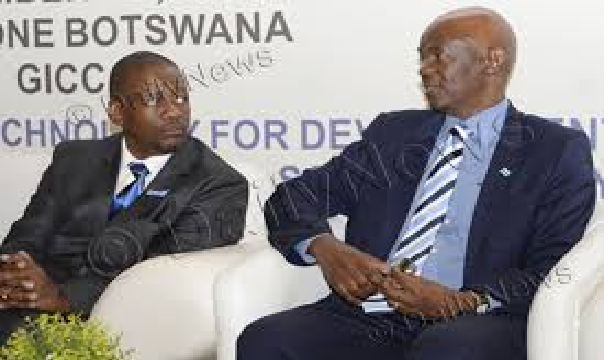
Permanent secretary in the Ministry of Education and Skills Development, Dr Theophilus Mooko, strides have been made to develp the country to where it is now.

He was officially opening the International Association of Science and Technology for Development (IASTED) conference in Gaborone recently

He implored researchers to come up with innovative ideas that would develop sustainable development goals and said academics, researchers and practitioners should come up with ground breaking innovations that would help to interact effectively with the environment.

He said scientific research should help improve people’s lives saying through int eraction and interrogation of issues, the association had to contend with, they should be able to make progress.

Dr Mooko said Botswana was focusing on developing policies that enabled an environment for researchers to thrive and do well in their field.

Fuente: http://allafrica.com/stories/201609070790.html

Comparte este contenido:

South Africa: UCT Suspends Classes As Student Protests Spread

South Africa/Septiembre de 2016/ Allafrica

Resumen: La Universidad de Ciudad del Cabo suspendió las clases y conferencias el viernes debido a las protestas de los estudiantes. » Las clases y conferencias han sido suspendidos temporalmente para viernes por la tarde con el fin de evaluar la situación y poner en práctica medidas de seguridad adicionales en el campus. Las conferencias y clases se reanudarán el lunes por la mañana» dijo de UCT Kylie Hatton en un comunicado.

The University of Cape Town suspended classes and lectures on Friday due to student protests.

«Classes and lectures have been temporarily suspended for Friday afternoon in order to assess the situation and implement additional security measures on campus. Lectures and classes will resume on Monday morning,» UCT’s Kylie Hatton said in a statement.

The libraries and the 24/7 study area were closed.

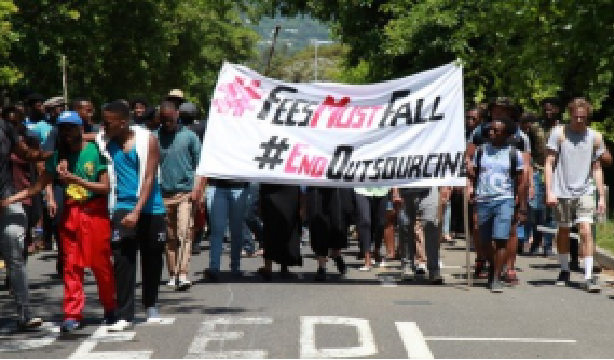
Students began protesting on Thursday, calling for the university to reinstate students who had been suspended, interdicted, or expelled following the «fees must fall» protests.

 The students moved between campuses on Friday, singing, and calling for an end to lectures.

On Thursday, they gave UCT 48 hours to respond to their demands, or they would shut down the institution.

«We recognise the right to engage in legitimate and peaceful protest and urge protesters to respect the rights of other members of the campus community to attend classes and arrive at work,» the university said earlier on Friday.

Fuente: http://allafrica.com/stories/201609160727.html

Comparte este contenido:

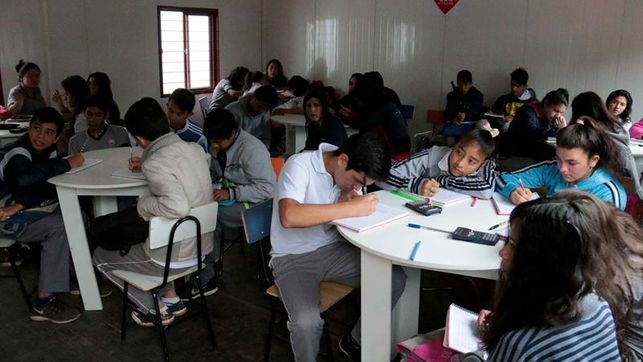
Más que un colegio

Por: Misiones Salesianas

Tras el verano, como cada año, llega la vuelta al cole. Una rutina para muchas familias, pero no para todos los niños y niñas. En el mundo, 59 millones de niños y niñas en edad de ir al colegio no lo hacen y, según alerta Naciones Unidas, si la tendencia no se revierte, dos de cada cinco de esos niños y niñas no pisarán un aula en su vida. Es cierto que las cifras de acceso a la educación básica han ido mejorando año tras año, pero la realidad es que mientras haya niños privados del derecho a la educación, no podemos bajar la guardia ni un segundo.

Dos de las graves amenazas con las que se encuentra la educación son los conflictos y las guerras en las que el mundo está inmerso hoy. Más de 24 millones de niños, niñas y adolescentes no pueden acudir a las escuelas para formarse debido al conflicto en sus países. Sudán del Sur, Siria, Afganistán, Níger… son lugares donde ir a la escuela puede suponer jugarse la vida.

Millones de niños y niñas necesitan una escuela integradora que los prepare para el futuro. Que consiga desarrollar las capacidades de cada uno y los convierta en jóvenes llenos de oportunidades y agentes de cambio de un mundo injusto.

La educación de los niños, niñas y jóvenes más desfavorecidos es el punto clave para el desarrollo, para luchar contra la pobreza y mejorar la calidad de vida de millones de personas.

Ir al colegio es más que recibir educación y conocimientos, es tener la oportunidad de desarrollarse como personas, de ser ciudadanos de provecho y de conseguir un futuro esperanzador. Los misioneros salesianos se esfuerzan cada día en los más de 130 países en los que están presentes para que el derecho a la educación sea una realidad para todos los niños y niñas del planeta.

TÚ PUEDES CAMBIAR EL FUTURO
DE MILLONES DE NIÑOS, NIÑAS Y JÓVENES

Fuente: http://www.misionessalesianas.org/especiales/2016/mas-que-un-colegio-0109/

Comparte este contenido:

Ethiopia: University Expanding Training Programmes

Ethiopía/Septiembre de 2016/Allafrica

Resumen: La universidad METU está trabajando estrechamente con la universidad Wollega de Jimma, Ethiopía, para fortalecer sus programas de postgrado. La Universidad METU anunció que iba a recibir estudiantes en cinco nuevos programas de grado y de posgrado este año académico.

The university is working closely with Wollega and Jimma universities to strengthen its postgraduate programmes

The Metu University announced that it would receive students in five new undergraduate and postgraduate programmes this academic year.

University Academic Affairs Vice-President Waqgari Megersa said that the newly programmes include three postgraduate programmes while the remaining in undergraduate programme.

According to him, Accounting and Finance, Business Administration and Public Health are the post graduate whereas as Agro-business, Value Chain Management and Eco-tourism fields are undergraduate programmes.

 The Vice-President Waqgari said the University is working closely with Wollega and Jimma universities to share experience and strengthen its postgraduate programmes.

He noted that the postgraduate programmes will be given in extension and distance education programmes while the undergraduate in regular programmes.

He added that the University has equipped through laboratory and e-library for the newly opened fields to enrol 120 and 140 students in under and postgraduate programmes respectively.

Currently, Metu University is training around 7,000 students in 36 undergraduate programmes, according to a report filed by ENA.

Fuente:  http://allafrica.com/stories/201609120809.html
Comparte este contenido:
Page 444 of 622
1 442 443 444 445 446 622