Page 446 of 622
1 444 445 446 447 448 622

Sudáfrica: Education Department Will Likely Miss School Infrastructure Deadline

África/Sudáfrica/17 de Septiembre de 2016/Autora: Diana Mellow/Fuente: All Africa

RESUMEN: El Departamento de Educación Básica dice que es poco probable que todas las escuelas públicas en África del Sur  reunan las normas y estándares mínimos en la infraestructura educativa para la fecha límite del 29 de noviembre. En 2013, el Ministro de Educación Básica, Angie Motshekga, publicó el conjunto vinculante de las normas mínimas que todos los sistemas escolares provinciales de Sudáfrica que debian trabajar. El documento requiere que todas las escuelas públicas en Sudáfrica tengan acceso a agua, electricidad, instalaciones sanitarias portátiles, personal de seguridad y conexión a internet. También limita el tamaño de clase a 40 alumnos o menos. Las normas mínimas  requieren que todas las escuelas tengan bibliotecas, laboratorios de ciencias, y  áreas de educación física. Las escuelas para los estudiantes de educación especial deben ser plenamente accesibles para las sillas de ruedas en virtud de las disposiciones. La política se produjo después de una campaña por el movimiento social, la Igualdad de Educación.

The Department of Basic Education says it is unlikely that all public schools in South Africa will meet the Minimum Norms and Standards for School Infrastructure by the November 29 deadline.

In 2013, the Minister of Basic Education, Angie Motshekga, published the legally binding set of minimum standards which all provincial school systems in South Africa must work toward. The document requires that every public school in South Africa have access to water, electricity, ablution facilities, security personnel, and internet. It also limits class size to 40 learners or less. The Minimum Norms and Standards require all schools to have libraries, science laboratories, and areas for physical education. Schools for special education learners must be fully accessible for wheelchairs under the provisions. The policy came about following a campaign by education social movement Equal Education.

After it was agreed that the policy would be legally binding, the national department began the Accelerated Schools Infrastructure Delivery Initiative (ASIDI) to help schools meet the new requirements and to rebuild schools constructed from harmful materials. 170 schools have since been constructed out of a targeted 510, according to the department’s records. 126 of these new schools are in the Eastern Cape. ASIDI is also working on securing water access in this region, though 55 schools still do not have clean, running water, the department said.

Albert Gumbo, head of communications for ASIDI, said most of the delays have arisen during construction in the Eastern Cape. Contractors often perform poorly and take longer than expected. Inclement weather and unpaved roads make construction difficult. ASIDI also goes through «rationalization exercises» in which the organisation negotiates with several small communities to decide the best site for a new provincial school. 215 school sites were identified using this method.

The Department of Basic Education has called the 29 November deadline «an ambitious target considering the need.»

Equal Education says the Department of Basic Education will likely break the law this November. The organisation was deeply critical of the department on Twitter this afternoon. According to General Secretary of the organisation, Tshepo Mostepe, «The impact will be dire [on learners]. People are being denied basic dignity and rights, basic sanitation.»

Equal Education said that if the department does not meet its November deadline, the advocacy group can release private information about contractors and officials who are benefiting disproportionately from ASIDI programs. The organisation also plans to mobilise South Africans on the issue this November.

Fuente: http://allafrica.com/stories/201609151285.html

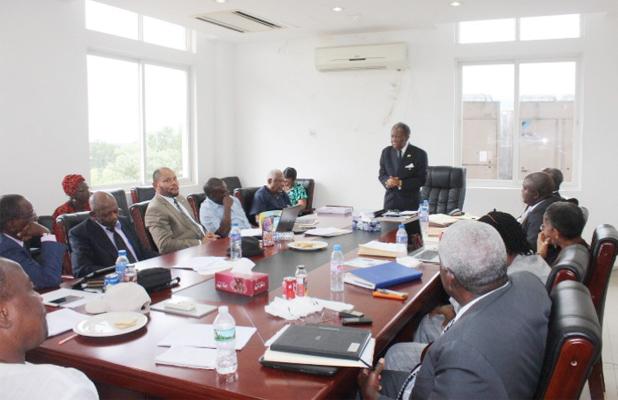
Fuente de la imagen: https://africaupclose.wilsoncenter.org/highlight-of-the-week-meeting-about-educational-bridge-between-brazil-and-africa/


Comparte este contenido:

Cerca de 660 millones de personas tienen papiloma humano

América del Norte/México/ Ciudad de México/La Jornada

La coordinadora del Capítulo de Adolescencia del Colegio Mexicano de Especialistas en Ginecología y Obstetricia, Josefina Lara Plascencia, dijo que de acuerdo con organismos internacionales, en todo el mundo unos 660 millones de personas pueden estar infectadas con el virus del papiloma humano (VPH).

Anualmente, abundó, entre 500 mil y un millón de personas se contagian de verrugas genitales y los tipos 9 y 11 son responsables de 90 por ciento de éstas, mientras que los 16 y 18 son los principales que causan el cáncer de cuello de útero, vagina y vulva.

La infección por VPH y las verrugas genitales se transmite con una pareja infectada por contacto directo de piel a piel, al tener contacto sexual vía oral, vaginal o anal, y si bien el uso del condón reduce el riesgo de transmisión, no lo elimina por completo.

La especialista mencionó que actualmente existen tratamientos para eliminarlas, ya sea con medicamentos o mediante cirugía. Sin embargo, al ser una enfermedad recurrente las lesiones tienden a reaparecer después del tratamiento ya que el virus que las causa permanece en el organismo. La única manera que se conoce en la actualidad para prevenir este tipo de infecciones es la vacunación contra el VPH.

En México hay dos vacunas disponibles que previenen la infección de VPH, ambas actúan contra los principales tipos de virus.

Fuente: http://www.jornada.unam.mx/ultimas/2016/09/15/cerca-de-660-millones-de-personas-tienen-papiloma-humano

Comparte este contenido:

Las jóvenes negras se levantan contra las normas racistas en las escuelas sudafricanas

Por: Diego Sacchi

El reclamo de una joven de 13 años ha despertado un movimiento contra los reglamentos racistas en las escuelas. Otra muestra del surgimiento de una juventud que lucha por sus derechos en Sudáfrica.

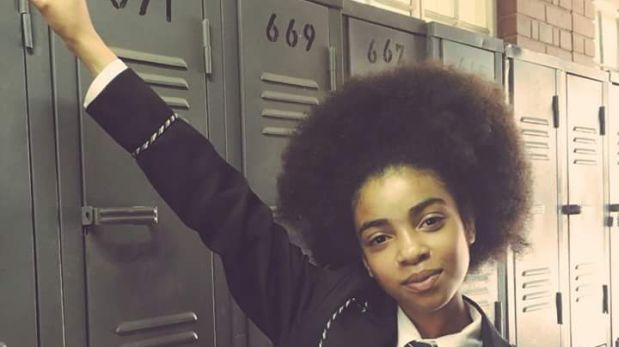
Zulaikha tiene 13 años, estudia en una escuela de Pretoria y luce orgullosa su peinado afro. El querer seguir usando su peinado la ha transformado en la abanderada de una lucha que se extiende en la capital sudafricana y que ya logró el apoyo de estudiantes, docentes y padres de varias escuelas de la ciudad ¿El motivo? Los reglamentos de varias instituciones educativas sudafricanas mantienen preceptos de la época en que el Apartheid era ley en ese país y algunos profesores del instituto Pretoria High School Girls (que en sus orígenes era una institución solo para estudiantes blancas) les obligan a alisarse el pelo al entender que su cabello natural está «desaseado» y es inapropiado.

Zulaikha y sus compañeras se han rebelado contra las regulaciones que por ejemplo dicen «Todos los peinados deben ser conservadores, pulcros y acordes con el uniforme del colegio. No se permitirán estilos excéntricos». Para ella y sus compañeras su peinado representa un orgullo que se remonta a lo largo de la historia como una reivindicación de su identidad negra y que durante los años del Apartheid sufría los intentos de las autoridades colonialistas de amoldar el cabello a los cánones europeos.

Malaika Maoh Eyoh, una estudiante de 17 años de la misma institución relato a the Guardian como sus profesores le decían que su peinado afro “distraía a otros alumnos para aprender en clase”. Malaika es una más de las cientos de estudiantes que se manifestaron frente a la escuela rechazando la imposición de alisarse el pelo. Como ella cientos de jóvenes se han comenzado a manifestar en varias ciudades del país contra las reglas racista que no solo dictan el corte del pelo “inapropiado” sino que también ha prohibido utilizar lenguas locales africanas para hablar entre ellas.

Una nueva juventud que se levanta contra el racismo

Estas movilizaciones de las estudiantes de las escuelas medias han sido precedidas por luchas y manifestaciones en las universidades. El movimiento estudiantil ha protagonizado en los últimos meses numerosas manifestaciones en las universidades sudafricanas, en las que piden «descolonizar» la educación y acabar con la discriminación que muchos jóvenes negros denuncian sufrir en el ámbito educativo.

El movimiento de los estudiantes universitarios que surgió bajo las consignas #FeesMustFall contra las cuotas que deben pagar para poder estudiar, y #RhodesMustFall en reclamo contra los símbolos colonialistas que se mantienen en las universidades, obtuvo varias conquistas durante el 2015.

Esos primeros triunfos hicieron despertar la bronca y la lucha estudiantil. Las desesperadas condiciones de alojamiento de los estudiantes, negros que fue la chispa que ha reavivado el movimiento. Algunos de ellos viven en secreto en las aulas y duermen en las bibliotecas o los pasillos de las instituciones. Los estudiantes negros, al igual que aquellos que vinieron antes que ellos en la década de 1980, están desesperados por el alojamiento.

Al igual que las universidades, los mejores colegios en Sudáfrica fueron creados para el uso de la minoría blanca. El fin del Apartheid y la posibilidad de que los estudiantes negros accedan a esas instituciones no cambio el carácter racista y discriminatorio que imperaba. Si durante años la simple posibilidad de estudiar en esas instituciones para miles de estudiantes negros era una conquista, una nueva juventud nacida tras la caída del régimen racista ha comenzado a cuestionar el lagado colonialista que quedó en pie.

La crisis del “sueño igualitario” post Apartheid

Las promesas de una republica multirracial, de la igualdad de oportunidades para millones de negros oprimidos por una minoría blanca se han ido esfumando y tras años de crecimiento económico, no ha cambiado las trazas económicas, sociales y culturales fundamentales del régimen del Apartheid. Esta situación es vivida día a día por millones de negros que ven al racismo como moneda corriente y lleva a que casi un cuarto de siglo después de la caída del Apartheid las jóvenes negras deban luchar por sus derechos elementales.

Para toda una nueva generación de trabajadores y estudiantes ya no alcanza con el recuerdo de la caída del Apartheid. La ausencia de derechos básicos y acceso a la salud, educación o condiciones de vida digna para millones, que había prometido resolver el CNA tras la caída del régimen racista, contrasta brutalmente con la transformación en empresarios y políticos millonarios en base a la corrupción y los negocios estatales de los principales dirigentes de este partido.

Es la falta de cambios estructurales para la vida de millones y la imposibilidad de resolverlas por parte de las direcciones políticas y sindicales históricas, transformadas en gerentes de los mandatos de las multinacionales, donde reside la fuente de las anteriores y futuras irrupciones del movimiento obrero y estudiantil, cada vez más frecuentes, en Sudáfrica.

Fuente: http://www.laizquierdadiario.com.uy/Las-jovenes-negras-se-levantan-contra-las-normas-racistas-en-las-escuelas-sudafricanas?id_rubrique=5441

Comparte este contenido:

UNESCO report on TVET, higher education and innovation presented to Government of Namibia

África/Namibia/17 Septiembre 2016/Fuente: UNESCO

UNESCO presented a report on the Situational Assessment of Technical and Vocational Education and Training (TVET), Higher Education and Innovation in Namibia, to the Government of Namibia in Windhoek on 12 September, 2016.

The report, which was presented to the Minister of Higher Education, Training and Innovation Dr Itah Kandji-Murangi, includes policy recommendations based on findings from a mission to Namibia led by Dr Borhene Chakroun, Chief of Section of Youth, Literacy and Skills in Paris.

It is the result of continuous collaboration between experts assembled by UNESCO and Namibian stakeholders in the areas of TVET, higher education and innovation.

At the ceremony, Regional Director of the UNESCO Regional Office for Southern Africa in Harare, Zimbabwe, Professor Hubert Gijzen, applauded the mission and its stakeholders for their efforts. He said the report recognised the challenges, opportunities and strategic directions in the specific context of Namibia and aligned with Namibia’s 2016-2020 development action plan towards Prosperity for All.

Receiving the report Dr Kandji-Murangi promised that the ministry would use if as the basis for developing a work-plan and ensuring the implementation of the policy recommendations.

Comparte este contenido:

Alfabetización alcanza 81 por ciento de angoleños mayores de 15 años

África/Angola/17 Septiembre 2016/Fuente: Prensa Latina
La tasa de alfabetización en Angola alcanzará el 81 por ciento entre la población mayor de 15 años a finales de 2016, anunció el ministro de Educación Pinda Simão, citado  por medios periodísticos.

Teniendo como base datos del Censo de Población y Vivienda de 2014 y la cifra de personas que saben leer y escribir desde el 2015, Simão cree que el país puede cumplir con el Plan Nacional de Desarrollo de la Educación 2015/2025, respecto a la Agenda 2030, cuyo objetivo es erradicar el analfabetismo.

Reveló que entre 2014 y 2015 aproximadamente un millón 470 mil angoleños fueron instruidos, por los se cuenta con más de 10 millones 400 mil ciudadanos que saben leer y escribir.

Lo anterior correspondería ahora a una tasa del 76 por ciento de alfabetización.

Según estadísticas, otras 560 mil personas están siendo alfabetizadas en 2016, por lo que el canon debería subir hasta 81 por ciento a finales del ejercicio en curso.

Para Pinda, la alfabetización se concibió como un instrumento para potenciar a los individuos, a las familias y a la sociedad.

Refirió que hace 40 años el primer presidente de Angola, Agostinho Neto, en la fábrica de Textang II hizo una clara demostración de la preocupación gubernamental por luchar contra el analfabetismo y elevar el nivel general de educación de la población.

Desde entonces, los esfuerzos entre el Gobierno, la sociedad civil y el sector privado no cesan y pese a limitaciones causadas por conflictos armados y otros de orden económico y financiero, resultó posible reducir la tasa de analfabetismo de 85 por ciento en 1975 a menos del 34 en 2014, según el Censo de ese año.

‘En reconocimiento de este esfuerzo, Angola ha recibido varios premios y menciones honrosas de la Unesco y otras organizaciones internacionales, un factor que debe llenar de orgullo todos los angoleños’, afirmó el ministro.

Cerca del 20 por ciento de los hombres y 40 de las mujeres mayores de 15 años de edad aún no saben leer y escribir, lo que contribuye a empeorar los principales problemas a los que se enfrenta la sociedad angoleña: la pobreza y el comportamiento deplorable.

Recientemente el académico cubano Alfredo Díaz, asesor consultor del Ministerio angoleño de Educación, confirmó que predomina en la alfabetización nacional el método de enseñanza Yo, sí puedo, programa educacional de la isla caribeña.

Tal método se aplica desde el 2012 hasta la fecha, bajo coordinación de 42 asesores cubanos.

El plan se aplica en las 18 provincias del país y en solo 13 semanas la persona mayor de 15 años y hasta 65, aprende a leer y a escribir.

Díaz adelantó que este procedimiento debe terminar en el 2025, de manera que por calendario se alfabeticen aproximadamente de medio millón a un millón de iletrados.

El Gobierno angoleño quiere que el 85 por ciento de la población angolana se registre alfabetizada para el 2025, subrayó el pedagogo cubano, pero en el 2017 desea tener resultados alentadores y competitivos dentro de los Objetivos de Desarrollo del Milenio de las Naciones Unidas.

Fuente: http://www.prensa-latina.cu/index.php?o=rn&id=26090&SEO=alfabetizacion-alcanza-81-por-ciento-de-angolenos-mayores-de-15-anos
Comparte este contenido:

Liberia: Some Operators Tipped to Transform Sector Have Limited Achievements in ‘Messy’ Arena

África/Liberia/16 de Septiembre de 2016/Autor: Rodney D. Sieh/Fuente: Front Page Africa

RESUMEN: Liberia esta en medio de lo que algunos desearían, en una importante transformación de la educación, entre el  éxito o el fracaso, entre nadar o hundirse en el dilema de las carreras  contra el tiempo para rescatar lo que muchos, incluyendo a la presidenta Ellen Johnson-Sirleaf, han concluido como un escenario un tanto desordenado, humedeciendo las esperanzas de decenas de niños pequeños que se encuentran en las esquinas de las calles al lado del tráfico durante el horario escolar. El gobierno a través del Ministerio de Educación recientemente tomó la controvertida decisión de externalizar el sector de los operadores privados en lo que el Ministro George Werner anuncio con bombo y platillo como una oportunidad para que los niños aprendan. «Todos los niños merecen una gran educación – una que le permita seguir sus sueños y lograr su potencial. Y sin embargo, en Liberia estamos fallandole demasiado a nuestros hijos. Nuestros profesores, nuestras escuelas y nuestro sistema todos se enfrentan a desafíos profundos en incorporarlos. Por desgracia, es en las comunidades más pobres, donde los retos son mayores.»

Liberia is in the midst of what some hope would be a major education transformation, a make or break, sink or swim dilemma racing against time to rescue what many including President Ellen Johnson-Sirleaf have concluded is a somewhat messy arena, dampening the hopes of scores of young children found on the street corners and traffic sideways during school hours.

The government through the ministry of Education recently took the controversial decision to outsource the sector to private operators in what Minister George Werner trumpeted as an opportunity for children to learn.

“Every child deserves a great education – one that allows her to follow her dreams and achieve her potential. And yet in Liberia we are failing too many of our children. Our teachers, our schools and our system all face deep and embedded challenges. Unfortunately, it is in the poorest communities where those challenges are greatest.”

Werner’s gamble hopes to improve on the disturbing statistics that out of 1.5 million children enrolled in primary school, some 42 percent of primary age children remain out of school.

While Werner and the government have labeled the dilemma “an injustice that needs to be addressed, many remain unsure that the outsourcing of the sector to private operators is the best approach to buck the trend holding back Liberia’s future generation from derail.

At a recent Cabinet meeting, the Ellen Johnson-Sirleaf led government was briefed on the status of the Partnership Schools for Liberia (PSL) undertaken by the Ministry of Education in concert with private operators targeting some 185 schools in 13 counties across the country.

Much of the attention was initially pointed at Bridge International Academies, the sole partner announced by the MoE when the outsourcing plan was initially announced. The school trumpets itself as the most polarizing chain of private schools in Africa.

The partnership includes 185 schools, 92 randomly chosen as PSL schools and 93 forming a comparison group. The partnership would enable the following eight private operators to run, manage and operate selected schools.

The MoE has broken down the distribution as follows: BRAC – 20; Bridge International Academies– 23; Liberian Youth Network, LIYONET – 14; More than Me – 6; Omega – 19; Rising – 5; Stella Maris – 4 schools; Street Child – 12 schools.

Over the past few weeks, FrontPageAfrica has been dissecting the partners and made some rather peculiar discovery, that a lot the operators have very limited exposure to Liberia terrain.

Bridge International Academies

SCHOOLS ALLOCATED: 23

THEIR PITCH: BIA trumpets itself as the world’s largest education innovation company serving the 700 million families who live on less than $2 USD per day. “We strive to provide the highest quality education product to the more than 100,000 students who attend Bridge’s more than 400 nursery and primary schools across emerging markets in Africa and (soon to open) in Asia.”

BIA pitches itself as a data-driven and technology-enabled using smartphones, tablets, and “closed loop” Learning Lab to monitor teacher and student performance in real time and says it constantly reviews and revises to ensure that it offers a world class education that will prepare students for the 21st century. Outside of the classroom, BIA works with governments and civil society organizations to create customized teacher training modules, English Language Learning curricula, and “pop up” schools for refugees and other vulnerable populations.

THE MISSING LINK: BIA took a hit recently when the Ugandan government announced that it would shut down all schools operated by Bridge. Janet Museveni, Uganda’s minister of education and sports, announced last month that the government will close the 63 for-profit nursery and primary schools run by Bridge International in the country after deciding they fell short of standards on education, hygiene and sanitation.

In a statement to parliament, Museveni said that in Uganda the material used by Bridge “could not promote teacher-pupil interaction” and that the poor hygiene standards “put the life and safety of school children in danger”.

Bridge International has been funded by the World Bank, the UK’s Department for International Development, Bill Gates and others.

Like Liberia and Kenya, Uganda had turned to private providers to fill the gaps in infrastructure, teaching and other resources which have opened up under its universal primary and secondary education programmes.

In May 2015, over 100 organizations signed a statement critical of the privatization of education in Kenya and Uganda, which slammed Bridge International specifically for delivering poor quality education for too high a fee.

In its defense, Bridge International said it was sincerely concerned over Museveni’s statement to the Ugandan parliament, which it said threatened to force 12,000 children out of their schools and 800 Ugandans out of work.

“We are waiting to receive the report [into Bridge schools in Uganda] to review the ministry’s concerns,” said Michael Kaddu, head of corporate and public affairs for Bridge International Academies in Uganda.

“We have been working closely with the ministry to put the needs of the children first and come to a speedy resolution of any issues made known to us.

EXPECTATIONS: Despite the controversy, Bridge says recent results point to gains by its pupils in standard deviation on core reading skills, standard deviation on Math compared to their peers in neighboring schools, based on USAID-designed exams administered by an independent monitoring and Evaluation Company – this translated into over 250 additional days of learning.

LIYONET

SCHOOLS ALLOCATED: 14

THEIR PITCH: The Liberian Youth Network (LIYONET), is a registered non-governmental, non-political and non-for-profit organization committed to promoting children and youth participation in sustainable development and good leadership leading to bringing up a generation of children and young people who are responsible citizens of Liberia, through provision of socio-economic empowerment, integration, access to basic services (education and information), self-reliance, gender mainstreaming and civil and constitutional rights of communities-residents and vulnerable persons.

THE MISSING LINK: Until the partnership announcement very little information was available regarding the network. FrontPageAfrica has been unable to trace any previous engagement in education. The network has no website or record or trail of its work to education or working with kids.

EXPECTATIONS: LIYONNET has been allocated schools in Bong and Sinoe counties respectively, notably in the Fuamah, Panta-Kpaai and Zota Districts in Bong and the Tarjuwon District in Sinoe. With very little experience in education, the jury is out on how much reach and impact the organization will have on transforming education for the rural and mostly-poor constituents.

BANGLADESH RURAL ADVANCEMENT COMMITTEE (BRAC LIBERIA)

SCHOOLS ALLOCATED: 20

THEIR PITCH: BRAC launched operations in Liberia in 2008 and has been working for a better future for Liberians with programmes in microfinance, agriculture, poultry and livestock, health, and Empowerment and Livelihoods of Adolescents; programmes that benefit more than half a million people.

THE MISSING LINK: While much of the attention was focused on Bridge, many were puzzled as to how the organization got its foot in the door of Liberia’s education outsource – particularly when it has not demonstrated experience in the area in Liberia.

Ironically, the organization which has been in Liberia since 2008 did not prioritize education as it had in next door Sierra Leone, Uganda, South Sudan, Philippines, Haiti and Afghanistan.

More importantly, an internal BRAC report on its schools in Bangladesh found that students found much of the course work difficult, in part because the BRAC methodology which equates learning with memorization. Moreover, according to the report, many of the children found the materials completely new. It is unclear how BRAC intends to adapt its model to suit Liberia’s pressing needs.

The report concluded that the strict discipline and rigid lines of authority found throughout BRAC and its programs — can be discomfiting to western sensibilities.

“This characteristic of BRAC’s program functions as a two-edged sword. On the positive side, BRAC has succeeded in setting basic standards for its schools, including the number, age, and sex of students; the size, shape, and decorations of classrooms; the teacher and students arriving and leaving at the right time; and the holding of regular meetings of the parent and school committees.”

EXPECTATIONS: The organization trumpets its primary schools’ operations in Bangladesh where it has been non-formal education to disadvantaged and out-of-school children, particularly girls. It will be interesting to see how it performs in Liberia where it has made no inroads in education.

Where BRAC could come in handy is if it can put some of the experiences trumpeted from its work in Bangladesh where it has prepared students to sit for the government Shomaponi Examination, the equivalent of the WAEC. BRAC primary schools are free, and include textbooks, notebooks, and other educational materials.

There are currently over 22,000 BRAC primary schools operating throughout the world. Liberia expects a lot and BRAC must prove it has earned its stripes. Under the partnership, BRAC has been allocated schools in Lofa and Nimba counties, in Foya, Kolahun, Zorzor, Voinjama, Saclapea and Gbehlay Geh.

OMEGA (Ghana)

SCHOOLS ALLOCATED: 19

THEIR PITCH: Founded by Ken & Lisa Donkoh, and James Tooley in 2008, and backed by Pearson’s Affordable Learning Fund, Omega Schools is a social enterprise on a mission to deliver quality education at the lowest cost on a grand scale.

The model has proven to be extremely attractive to parents, enabling its schools to be full within 10 days of opening. Currently the chain has 38 schools educating over 20,000 students and seeking to double that number in a year.

 In Ghana, Omega Schools has responded to need for low-income schools with an innovative Pay-As-You-Learn model – a chain of low cost private schools with specialized curriculum, assessment, technology and management modules that are benefiting the poor and empowering aspirations of low income families and their communities.

THE MISSING LINK: While Omega has been given high marks for its work in Ghana, it is entering unfamiliar territory in a rural Liberia setting lacking stable electricity and in some cases, very limited internet facilities.

But more importantly, a working Paper by author Curtis Riep suggests that the Omega Chain of Private Schools in Ghana which claims to bring education to the poorest is instead delivering a high-burden cost for access.

Riep finds that Omega Schools’ impact on access is «negligible,» quality of education suffers as expenditures are driven down, and the cost of these schools actually represents a high percentage of household income.

He concludes that this model of privatization represents a «for-profiteering» endeavor, exploiting the poorest members of Ghanaian society and their basic right to education.

EXPECTATIONS: Omega has been assigned schools in Bong, Margibi, Montserrado and Nimba counties respectively. Omega is expected to improve performances in Salala, Suacoco, Zota, Gibi, Marshall, Greater Monrovia, Buu-Yao, Gbehlay-Geh and Saclepea.

 If Omega can do a quarter of what it has on paper in Ghana, the areas benefiting from its program could see vast improvements. Located in Kasoa, on the outskirts of Accra has been hailed for its all-inclusive and no-hidden-fee model.

MORE THAN ME ACADEMY (US-Liberia)

SCHOOLS ALLOCATED: 6

THEIR PITCH: The academy uses education as a catalyst for transformative social change for every girl in Liberia.

MISSING LINK: Bolstered by heavy international media attention at the height of Ebola, the academy was asked by the MoE to replicate its model and add capacity to the ministry to meet their priorities. While the academy says it remains committed to maintaining a center of excellence by scaling its successes into pilot government schools across the country, results so far has not been convincing.

The Academy was in 2014 dogged by allegations of rape when its recruiter was accused of having sexual relations with ten students, ages 12 to 16.

In court documents, the students claimed that the recruiter took advantage of the school’s free education program to use them as sex slaves. The stain from that episode continues to raise questions over MTN’s ability to transcend the larger realities of Liberia’s education dilemma.

EXPECTATIONS: MTM has been allocated six schools in Bomi, Montserrado and Gbarpolu with emphasis in the Klay, West Bank, Senjeh, Bopolu and Dewoin districts. Many are unsure whether MTN with only one school to its credit in less than five years has enough pedigree to now be ranked amongst the top-carrying partners selected for the partnership.

RISING ACADEMY (Sierra Leone)

SCHOOLS ALLOCATED: 5

THEIR PITCH: The academy created by a group of Canadian and British entrepreneurs to address Sierra Leone’s education dilemma, uses simple pillars: teach strong values, select and train teachers carefully, make the student the protagonist of the classroom, develop well-crafted and engaging class plans and create a feedback culture.

In Sierra Leone, the school charges a flat fee, with no extra charges, of 25,000 Leones (US$3.5) per week, with a possibility of a scholarship for students that cannot afford this rate.

“The wage bill is kept low by paying teachers the average salary of state schools—but with the benefit of guaranteeing on-time payment which is already a huge competitive advantage,” according to Francisco Guarisse, who has spent some time working with Rising.

Rising has grown from 1 school and 80 students to 8 schools and more than 1000 students. The academy made its mark at the height of the deadly Ebola virus outbreak by continuing to provide education despite schools being closed during the epidemic as teachers provided daily Ebola prevention and literacy classes.

The academy says it remains committed to rigorous, transparent, independent evaluation. What sets Rising apart is its partnership with Oxford University which monitors its performance. The academy says its students develop excellent literacy, numeracy and spoken English, as the foundation for success in further study, work and day-to-day life.

MISSING LINK: According to a baseline report dubbed a longitudinal Study of learning, progression, and personal growth in Sierra Leone, the Students in the Rising Academy Network achieved in mathematics an average scale Score of 475 Compared to those in other private schools (matched. In age and circumstance) who achieve an average score of 458 And those in government funded schools who achieve an average score of 450.

The report noted that only 5% Of Rising Academy Network Students achieved the benchmark at the start of the study (before Teaching began). 62% performed very poorly.

The scale of the challenge to improve mathematics outcomes is clear and the study will monitor the migration of students out of low performance bands as a measure of equity in performance standards. Students in the Rising Academy Network Achieve an average scale score of 193 compared to those in other private schools (matched

EXPECTATIONS: Rising has been allocated schools in Bomi and Montserrado Counties and will be expected to mirror its successes in Sierra Leone to parts of Liberia where basic education remains a challenge in Suehn Mecca, West Bank, Dewoin.

Around 1,300 schools were destroyed during the Civil War that lasted from 1991 to 2002. The academy has thrived under similar conditions like Liberia, in Sierra Leone where two thirds of children were out of school due to the war, it has made inroads.

STREET CHILD

SCHOOLS ALLOCATED: 12

THEIR PITCH: The UK registered charity helps to create opportunities through education for some of the most vulnerable children in the world. It expanded its reach to Liberia in 2008 looking to help out-of-school children, many of whom are living full-time on the streets, and offer them the chance to improve their lives by going to school and reuniting them with their families.

The charity says it works with communities to construct basic schools and promote the importance of education and identify members of the community to undertake distance teacher training.

The project has grown over the past 3and a half years to support almost 400 teachers and has a presence in a total of 127 communities across Sierra Leone. As a result, Street Child has now created first ever access to education for over 17,000 children in rural communities.

MISSING LINK: While the charity is doing some good for needy kids in Liberia, it’s education model remains suspect in the absence of a track record of deliverables toward education in Liberia.  

EXPECTATIONS: The charity has been allocated schools in Grand Cape Mount, Margibi and Montserado Counties with particular emphasis in Todee, Tewor, Tallah Tomb, Gibi, Marshall and Garwula districts.

Beyond the charitable aspects of looking out for the poor and needy, SC will be required to show Liberians that it deserves the twelve schools under its watch and is capable of bringing out the best of the kids and improving scores.

STELLA MARIS

SCHOOLS ALLOCATED: 4

THEIR PITCH: Stella Maris Polytechnic (SMP) is one of the successful institutions under the highly-rated Catholic schools’ system. Founded in 1988, the school is owned and operated by the Roman Catholic Archdiocese of Monrovia with approximately 2,000 students.

The school is recognized by Liberia’s National Commission on Higher Education as an approved baccalaureate granting school of higher learning, and is a member of the Association of African Universities.

The school traces its history back to the Arthur Barclay Vocational Institute that had its roots in a donation of land to the church in 1972. Eventually the planned school was renamed as the Arthur Barclay Technical Institute and first held classes in February 1979.

Catholic leaders then considered starting a Catholic college beginning in 1985, which eventually led to the establishment of Don Bosco Polytechnic.  That school included Arthur Barclay Technical Institute which then became the Arthur Barclay Technical Institute.

Stella Maris Polytechnic elementary school supports those who are in need in the wider community in Liberia.

MISSING LINK: Catholic schools in Liberia have a strong track record of discipline and academic performance but impact has been slowed due to funding issues in recent years. Nevertheless, the schools under the catholic umbrella remain a vibrant contributor to Liberia’s post-war resurgence.

EXPECTATION: The catholic-backed institution has been allocated schools in Dorbor and Trehn districts in Grand Kru and Karleway 2 and Sodoken districts in Maryland. Many expect that the model that has worked in the past will continue here despite insurmountable odds.

THE VERDICT

Werner may have been right in his conclusion that “Change is not easy” as he heralded his argument that the public system alone cannot address Liberia’s pressing education challenges singlehandedly.

According to Werner: “We have some great public schools in Liberia but we have far too few of them. And we already have a diverse set of school operators from government and non-government sectors in our education system.

We must work together and draw on the best of both sectors if we are to achieve the results we want to see. While the government will always remain responsible for ensuring every child’s right to education, we need to work far more collaboratively with others to strengthen our public schooling sector. This must happen fast.  We cannot risk failing another generation of children.”

Despite Werner’s lament, the jury is still out on the effectiveness of low-cost private schools. Various reports and assessments have been mixed regarding the level of impact on disadvantaged and poverty-stricken environments.

The bottom line is many remain unsure that these low-cost private schools work for communities at the bottom of the economic barrel, particularly in some communities in Liberia lacking electricity, internet access and the high-tech model a lot of the schools are trumpeting as part of the successes in other countries.

In the coming months, evaluation and testimony from students and families experimenting Liberia’s venture into the model could prove to be a deciding factor as to how far this could go in helping Liberia fix its messy education system.

Expectations are high but accomplishing much in so little time could prove to be a daunting dilemma for the Liberian experiment

Some experts project two years as an ideal time to begin growing and seeing which operators can pull it off and work in the most difficult and remote districts.

It will be critical to see how the monitory and evaluation of this partnership would be enforced or regulated. If privatization is on the table, some observers say, it would have been key to look at successful school systems operating in Liberia to either participate in the PSL program or obtain license learned from their model to replicate in the flailing public school system.

Also, questions are being raised as to how the MoE came up with the criteria for allotting schools per organization with some of the partners accepted having no or limited track record of education work in Liberia being allotted larger number of schools compared to others who have.

What many agree on is that reforming Liberia’s education system is a work in progress and a process likely to take a long time as private operators — for-profit companies and charitable organizations — embark on a quest to take charge of 120 government primary schools, in a one-year pilot project that could make or break Liberia’s venture into a nationwide charter school system.

Fuente: http://www.frontpageafricaonline.com/index.php/politics/1983-dissecting-liberia-s-education-partners-some-operators-tipped-to-transform-education-sector-have-very-limited-record-of-achievements-accomplishments-in-messy-arena

Comparte este contenido:

Sudáfrica: Parliament Praises Basic Education for Grade 12 Examinations Readiness

África/Sudáfrica/16 de Septiembre de 2016/Fuente: All Africa

RESUMEN: El Comité de Educación Básica alabó hoy al Departamento de Educación Básica (DBE)  por su buena disposición y preparación para este año en los exámenes del Grado 12. El Comité fue informado por el departamento, en esta medida. La Presidenta del Comité,  Sra Nomalungelo Gina, dijo en su discurso de clausura: «Ahora tenemos una idea más clara de nuestro sistema ya que se está moviendo en la dirección correcta y es la de una mejora. Esperamos esforzarnos hacia un sistema perfecto…» El Comité escuchó que el departamento y los departamentos de educación provinciales están ocupados con la «Campaña Último Empujón». Esto incluyó clases estructuradas de revisión, clases de estudio de la tarde, y múltiples oportunidades para que los estudiantes progresaran, clases de radio, clínicas, clases de gramática WhatsApp y Escuelas de primavera.

Basic Education Portfolio Committee praises department for matric examinations readiness

The Portfolio Committee on Basic Education praised the Department of Basic Education (DBE) today for its readiness and preparedness for this year’s Grade 12 examinations.

The Committee received a briefing from the department to this extent. Committee Chairperson, Ms Nomalungelo Gina, said in her closing remarks: «Now we have a clearer picture. Our system is moving in the right direction, one of improvement. We hope to strive towards a perfect system.»

The Committee heard that the department and provincial education departments are busy with the «Last Push Campaign». This included structured revision classes, afternoon study classes, and multiple opportunities for progressed learners, radio lessons, grammar clinics, WhatsApp lessons and Spring Schools.

«We are quietly but cautiously optimistic about the improvement of results,» said Suren Govender, Chief Director: Curriculum Implementation and Monitoring at the DBE. He further said they are encouraged by the improvements in the Eastern Cape and KwaZulu-Natal where resource limitations are being addressed, and printing and transport contracts are now in place.

«Limpopo is showing some signs of improvement but still needs intensive support with top management prioritising exams.»

The Committee heard registration of centres and candidates has been completed and final verification of the data is currently underway. Question papers have been set and externally moderated. There are 827 324 candidates enrolled for examinations, 677 141 registered full-time and 150 183 part-time candidates, 9 000 more than in 2015.

KwaZulu-Natal and Gauteng have the largest enrolments again with 169 769 and 112 069 respectively. Enrolment showed an increase in the uptake of Mathematics, with a decline in Mathematical Literacy.

The Committee heard that measures have been put in place to complement normal teaching and learning programmes to bring about improvements in performance since 2014. The Committee expressed concern about extra classes being offered outside of the normal school time. «We need to focus on ‘Time on Task’. We do not want extra classes to become the norm as the curriculum should be dealt with within normal school time,» said Ms Gina.

Mr Govender agreed and said the department does not support or encourage this phenomenon. It should merely be a temporary measure. It cannot be institutionalised.

«However, some schools will not be able to improve without it. Teacher shortages exist and some schools have to make use of the teachers of other schools.»

The Committee further heard that all storage points across the country will be audited to ensure they comply with the minimum security standards. Storage points that do not comply will not be allowed to store question papers. The examinations will commence on 26 October and conclude on 29 November.

Ms Gina said the Committee will now monitor the issues on the ground, especially when it goes on oversight in provinces.

The Committee further received a briefing on the Southern and Eastern African Consortium for Monitoring Educational Quality (SACMEQ). The Committee expressed its pleasure at the advances made in this regard. South African learners are tested and compared to at least 15 other countries on the continent.

The Committee heard that across all SACMEQ countries, there was a notable improvement in the overall reading and mathematics scores of learners. Against the SACMEQ centre point of 500 (established in SACMEQ 11), learners in South Africa for the first time achieved a mean score above the centre point with 558 in reading and 587 in mathematics. «This really gladdens our hearts. It shows that the department is really putting in the effort.»

Fuente: http://allafrica.com/stories/201609140828.html

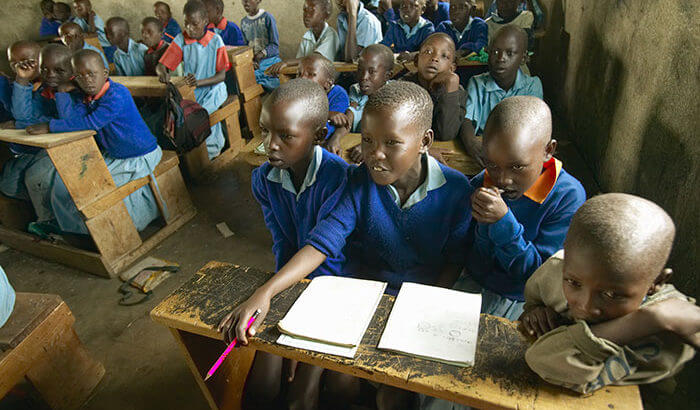
Fuente de la imagen: http://www.thisissierraleone.com/africas-educational-dilemma-local-versus-international-content/

Comparte este contenido:
Page 446 of 622
1 444 445 446 447 448 622