Saltar al contenido principal
Page 45 of 622
1 43 44 45 46 47 622

La comunidad LGTBIQ busca su espacio en Costa de Marfil, uno de los 22 países en África donde la homosexualidad es legal

Aún lejos de ser un paraíso para las mujeres lesbianas, bisexuales y ‘queer’, este país es un pequeño oasis dentro del continente. Tres de ellas cuentan cómo proliferan las iniciativas.

Costa de Marfil es considerado el paraíso de África del Oeste y África francófona para la comunidad LGTBIQ. Es uno de los países africanos donde la homosexualidad no está prohibida (de 55 territorios de África solo en 22 se reconoce su legalidad) y cuyo Código Penal, que castigaba los actos públicos homosexuales, fue modificado por la presión social. En el país existen varias asociaciones para el colectivo y proliferan los espacios, eventos y bares para ellos.

En los años sesenta y setenta, el crecimiento económico que vivió Costa de Marfil creó un contexto más abierto que permitió un florecimiento de la comunidad. No existía represión policial ni estigmatización pública. Pero no fue hasta los inicios del siglo XXI cuando empezó a surgir un movimiento político que defendía a las minorías sexuales, siempre muy ligado al colectivo de pacientes de VIH. En 2003 nace la primera organización llamada Arc-En-Ciel Plus y en 2010 Alternative Côte d’Ivoire. Aunque las mujeres son la estructura esencial del tejido asociativo, siguen luchando de una manera invisible. Ellas han tenido que buscarse sus propios espacios, actividades y lugares de lucha política para marcar su presencia, todavía bajo un contexto en el que viven más felices si son discretas.

Una asociación para ellas

Monique Kouman tiene 38 años y es la presidenta de Woman African Freedom (WAF), la única asociación para mujeres de la comunidad lesbianas, bisexuales y queer actualmente activa en Costa de Marfil. En su vida profesional es matrona, pero dedica su tiempo libre a crear talleres y actividades para el colectivo.

“En Costa de Marfil hay varias asociaciones que luchan por los derechos LGTBIQ, pero los programas de esas asociaciones no tenían en cuenta la realidad de las mujeres. Por ello en mayo de 2019 decidí crear junto a otras compañeras la WAF, para hablar de nuestros problemas y, sobre todo, para dar soluciones concretas a situaciones que vivimos como mujeres”, comenta. “Hoy en día no hay una ley que criminalice la homosexualidad, pero tampoco una que la proteja. Por lo tanto, la homofobia es algo con lo que vivimos día a día”.

Kouman lleva cinco años con su pareja, con la que convive, aunque únicamente sus amistades más cercanas lo saben. La familia posiblemente lo intuye, pero prefieren no hablar de ello. La importancia de la familia tradicional africana sigue siendo un componente esencial para la estructura social y, por lo tanto, una mujer cuya pareja no es un hombre, no termina de encajar. Esta activista tiene hijos, como la gran parte de las mujeres marfileñas LGTBIQ, que aceptan sin cuestionarlo la orientación de su madre. “La mayoría de las lesbianas ocultan su sexualidad, así que tener hijos con hombres les sirve un poco de tapadera”. También funciona como alternativa a una costosa, y muchas veces inaccesible, inseminación artificial.

El deporte para crear vínculos

Nicou Flore ha cumplido 32 años y vive en Yopougon, un barrio humilde de Abiyán. Todos los domingos se reúne con un grupo de chicas LGTBIQ para jugar al fútbol, y aunque no lo hacen mal, parece que el deporte es solo una excusa para verse, charlar y pasarlo bien. “Creé el equipo porque nos permitía reunirnos y compartir esa sororidad que existe en nuestra comunidad. Como no hay muchos espacios para nosotras, tenemos que ir creándolos”, explica.

En Abiyán existen tres bares para las personas LGTBIQ, pero la mayoría de quienes acuden son hombres. Y aunque a través de las asociaciones se crean talleres o actividades que permiten algún tipo de espacio para discutir y fomentar el cambio social, siguen siendo poco activas.
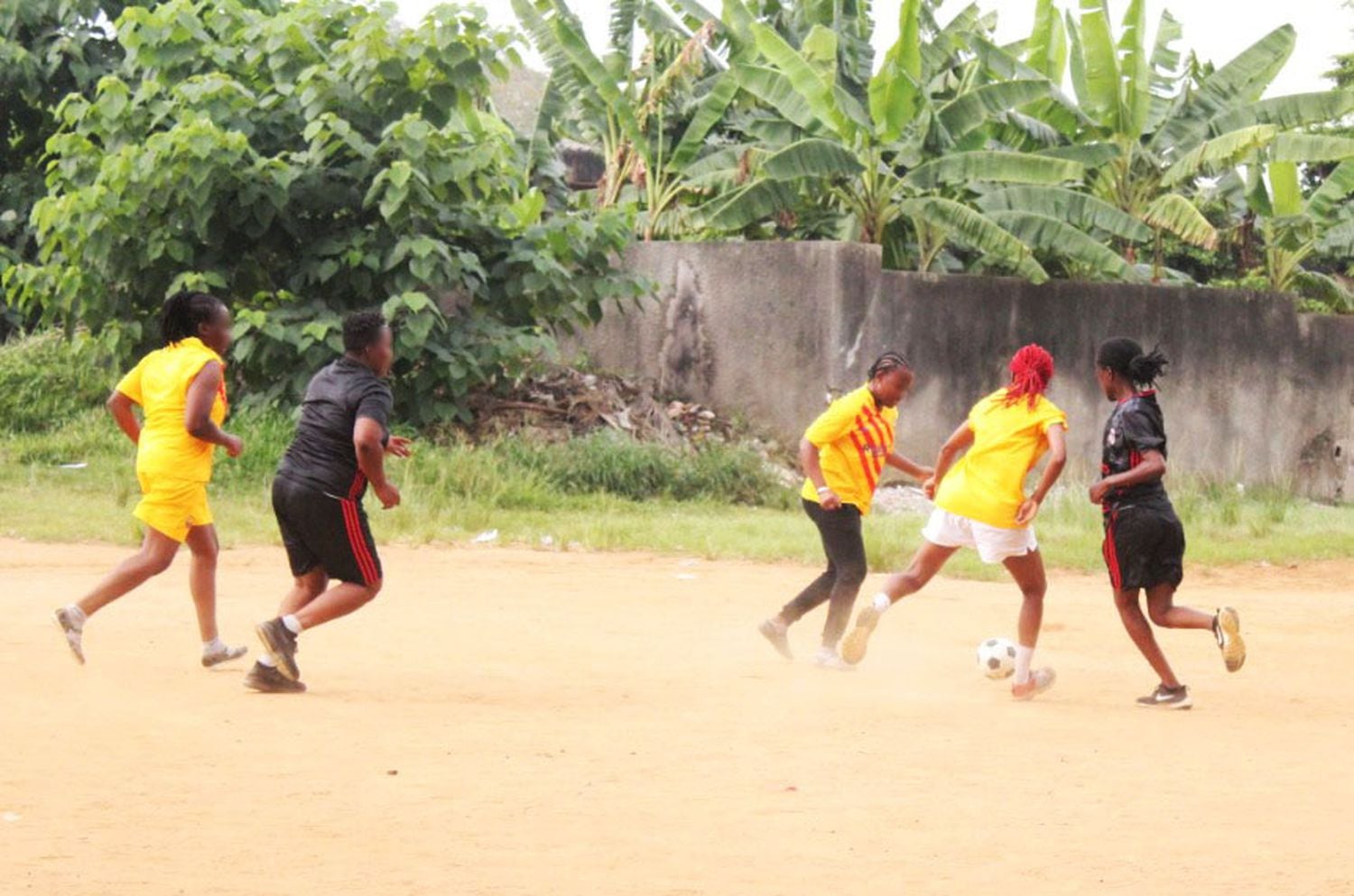
El equipo de fútbol creado por Nicou Flore juega en Abiyán.
El equipo de fútbol creado por Nicou Flore juega en Abiyán.MARÍA APARICIO

Flore se define como “él”, o como dirían en Costa de Marfil, es una yossi. Los términos yossi toussou  denominan cada uno de los géneros tradicionales. Yossi es la lesbiana que sigue los patrones clásicos masculinos: pelo corto, ropa de chico… Y la persona que debe sostener financieramente a su pareja. La toussou, por su parte, se rige por las características tradicionales de lo femenino: pelo largo, tacones y la persona encargada de las tareas domésticas. “Estos roles del modelo heteropatriarcal están en todos los niveles: en el trabajo, en la casa, e incluso en las relaciones sexuales, ya que algunas yossi no se desnudan ni se dejan tocar durante el sexo”, asegura Monique Kouman.

Flore tiene pareja, aunque desde hace poco, y no vive con ella. La falta de reconocimiento jurídico de las uniones de mujeres hace difícil la estabilidad. La presión social y, sobre todo familiar, complican los vínculos a largo plazo, por lo que muchas mujeres LGTBIQ mantienen relaciones esporádicas constantes.

Un medio digital para tener referentes

Lynn Attemene tiene 28 años y su voz puede ser escuchada a través de los podcasts que emite EmmaLInfos, el único medio de información para mujeres lesbianas, bisexuales y queer del África del Oeste, creado por Emma Onekekou. Desde su plataforma publican artículos, vídeos y programas radiofónicos sobre educación sexual, activismo LGTBIQ o feminismo, centrados siempre en los intereses y problemáticas de la sociedad africana.

Lynn Attemene es la voz de los podcasts de EmmaLInfoS.
Lynn Attemene es la voz de los podcasts de EmmaLInfoS.MARÍA APARICIO

“Cuando estaba creciendo tenía muchas preguntas sobre sexualidad, así que tenía que ir a asociaciones para informarme o buscar en grupos privados de Facebook. Hoy queremos que este medio sirva para compartir abiertamente experiencias y conocimientos para la comunidad LGTBIQ africana” afirma Attemene.


Sin muchos referentes públicos, las mujeres marfileñas encuentran sus espacios discretamente. La locutora es de las pocas mujeres completamente fuera del armario en la familia, en el trabajo y con los amigos. “Desde que me acepté a mí misma como lesbiana no me da ninguna vergüenza decirlo”, afirma. La única dificultad con la que se encontró fue demostrar a su familia, que aún no queriendo tener a un hombre como pareja, podría ser una mujer feliz y vivir libremente. “Hice todo lo posible para ser independiente y demostrar a los míos que ser homosexual no significaba estar maldita o ser una fracasada”.

Costa de Marfil, aún lejos de ser un paraíso para las mujeres LGTBIQ sí es un pequeño oasis dentro del continente. “La atmósfera es tranquila. Aunque aún tengamos que ser prudentes, se nota que tenemos más confianza en nosotras y estamos dispuestas a cambiar las cosas”, concluye Attemene.

Fuente: https://elpais.com/planeta-futuro/2021-03-11/la-comunidad-lgtbiq-busca-su-espacio-en-costa-de-marfil-uno-de-los-22-paises-en-africa-donde-la-homosexualidad-es-legal.html
Comparte este contenido:

Kenya: National exams to be held with strict adherence to Covid-19 protocol

Africa/Kenya/19-03-2021/Author: Haniel Mengistu/Source: www.kbc.co.ke

It’s all systems go for the nationwide Kenya Certificate of Primary Education (KCPE) and Kenya Certificate of Secondary Education (KCSE) examinations next week.

The countrywide school exams were cancelled in 2020 due to the Covid-19 pandemic which has disrupted the whole academic year.

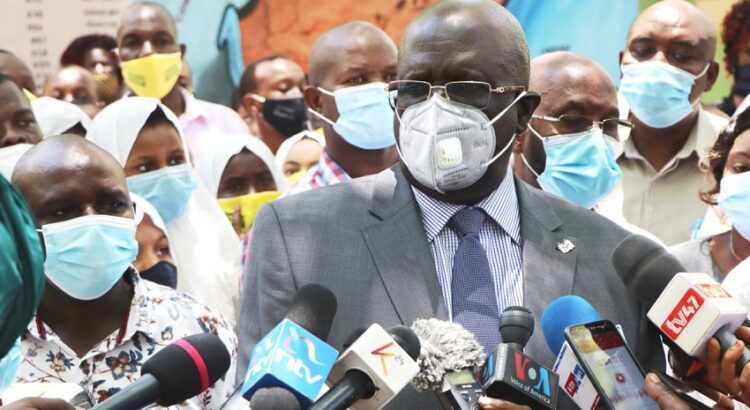
The Cabinet Secretary for Education Professor George Magoha noted that the national exams will be held with strict adherence to the novel coronavirus (Covid-19) protocols approved by the Ministry of Health.

Speaking in Mombasa Prof. Magoha announced that special arrangements are in place to ensure the safety and security of candidates, supervisors, invigilators and security personnel during the examinations scheduled to kick off on Monday next week.

Prof. Magoha allayed fears during the school exams saying the government is going ahead with the examinations amid the Covid-19 pandemic as it has put watertight Covid-19 special arrangements in place.

“The national exams will be held with strict adherence to Covid-19 guidelines” he said.

The CS cautioned the candidates to avoid exam malpractices which can destroy their bright future.

He said that cheating in the examinations was an unhealthy trend that candidates should shun and strive to excel by ‘doing genuine work’.

Prof. Magoha said cases of examination cheating, leakages and impersonations and other forms of irregularities would not be entertained and urged candidates not to look for ‘shortcuts in their academic endeavor’.

The CS cautioned the candidates to avoid exam malpractices which can destroy their bright future.

“Migori and Kisii counties are the headquarters of exam cheating and I can assure you that we have put the two regions on our radar” he said accompanied by his Chief Administrative Secretary Hassan Noor Hassan and Principal Secretary in charge of Vocational and Technical Training Dr. Margret Mwakima.

He said the ministry of education has received intelligence reports that unscrupulous candidates were planning to write on their facemasks and directed that all facemasks will be subjected to thorough security before one accesses the examination halls.

Source and Image: https://www.kbc.co.ke/national-exams-to-be-held-with-strict-adherence-to-covid-19-protocol/

Comparte este contenido:

Uganda: Museveni does not know when he will be vaccinated

Museveni does not know when he will be vaccinated

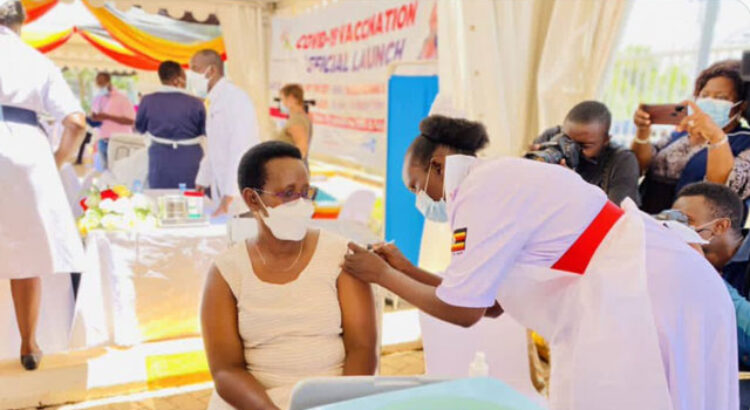
The Permanent secretary Ministry of Health Dr Diana Atwine was among the first Ugandans vaccinated. The President is still waiting for advice on the best option. PHOTO @brianmixologist

Kampala, Uganda | THE INDEPENDENT | President Yoweri Kaguta Museveni says he is still undecided on which, of the COVID-19 vaccines, he will use to protect himself against coronavirus. He disclosed this in a nationwide televised address from State House on Sunday evening.

Museveni, who is 75 years of age, said that his ‘people’ are still studying, which of the vaccines will be effective for him.

His remarks follow the commencement of the COVID-19 vaccination exercise in the country using the AstraZeneca COVID-19 vaccine.

“First of all, I am quiet careful and well protected by the system here. Secondly, I am also looking at which of the vaccines should I go for… Johnson & Johnson, the Chinese, the Russian? Ours, a Ugandan one, will also come later, but maybe it will be used in the future,” Museveni said, as he explained why, he says, he has not been vaccinated yet.

In most African countries and others around the world, top leaders have been among the first people to receive the COVID-19 jab to give confidence to the population amid the several fears, myths, and misconceptions surrounding the vaccine.

Last week, many people expected the president to launch the vaccination exercise. However, the exercise was launched by Health Minister Dr Jane Ruth Aceng, who also volunteered to get the first jab. There has been widespread speculation that president Museveni and members of his inner circle had secretly taken the jab, long before vaccines arrived in Uganda.
But Museveni dismissed the rumour and even threatened to sue the local newspaper that carried the story to bankruptcy unless they apologies to him. In his address, Museveni said that in addition to considering which vaccine to use, he decided to delay his vaccination to give health workers who are at high risk the first chance.
“Janet and I did not get vaccinated because we wanted to give priority to health workers who are more at risk,” he said.  The Health Ministry decided that the first batch of vaccines should go to people at most risk of contracting the virus including health workers, teachers and security officers.

According to the health ministry, over 1215 people mostly health workers have so far received the COVID-19 jab. The Health Ministry says it selected AstraZeneca because it is cheaper compared to other vaccines and can easily be stored. Each vaccine jab costs US$ 4 and the vaccine needs to be stored between 2 and 8 degrees Celsius.

Although Museveni is still undecided on which vaccine to use, he says that country will procure more of Oxford/AstraZeneca from India. The country had ordered 18 million doses of the vaccine.  The use of the AstraZeneca vaccine has however sparked debate elsewhere.

Several countries, including DRC – Uganda’s neighbour in the West, have suspended the use of the vaccine as a precautionary measure or banned its use after recording adverse reactions among some users. In some countries, some people are claimed to have developed clots after using the vaccines. Museveni said that a year after COVID-19 broke out in the country; Uganda seems to be doing fairly well as far as battling the virus is concerned.

He attributes the success to the cooperation by the citizenry.

Available statistics indicate that 40,581 people have been infected by the deadly virus. Of these 12,313 people have recovered while 334 others succumbed to the disease. Apparently, 24 people are still admitted to hospitals.

Fuente de la Información: https://www.independent.co.ug/museveni-does-not-know-when-he-will-be-vaccinated/

Comparte este contenido:

Etiopía: Ethiopia: Women Army Members Cherish Political, Military Leaderships in Adwa Victory

Ethiopia: Women Army Members Cherish Political, Military Leaderships in Adwa Victory

Ethiopians had been fighting just wars to defend their country’s independence against successive foreign aggressions. The fight against Italian invaders is a peculiar example in this regard.

The very first decisive victory of a black African power, Adwa, is an important event in the shared memory of the entire African population. It demonstrated the spirit of unity, love and friendship among Ethiopians and has shown the genuine role of women.

The victory of Adwa has been highly attributed to the arduous efforts of Ethiopia’s sons and daughters in all circumstances. The victory is undoubtedly the pride of Ethiopia as well as Africa as it has contributed a lot to the freedom and independence of all black people.

This is not out of the blue as a number of African counties, which were under the severe yoke of oppression of colonizers, had declared their independence following the victory of Adwa–he remarkable footsteps of Ethiopia.

This write would like to jot down the words of women army members about Adwa Victory, their contribution to all national sovereignty aspects and experiences they drawn from foremothers.

The first woman named Brigadier General Shewaye Haile spoke of the role of women in the army in relation to the double responsibility they have shouldered.

«Women played the leading role behind the victory of Adwa in preparing food and water, providing medical care for the wounded and following the solders shouldering the slogan of «freedom or death,» she cited.

She said that women are ready all the time to safeguard the sovereignty of their country and the wellbeing of fellow citizens of the nation. «It goes without saying that wars of all sorts bring destruction to human and material wealth.

Of course, the degree of devastation varies depending on the nature of the wars, areas of fighting, arms used, duration of fighting, etc. obviously, the internal wars and defensive wars against successive foreign aggressors have left their multi-dimensional impact on the social, cultural, economic and political life of the Ethiopian society.

Even though they did not take a vanguard position in major combats, the Ethiopian women had their share of the burden of wars,» she said.

According to Brigadier General Shewaye, prominent women of the royalty ones such as Empress Taitu had been reported to have played decisive roles in military affairs such as tactically advising leaders, provoking and ending wars as well as leading their army into battles.

She added that the number of such women for which we have documentation is very small, but the role they played was tremendous. Such women actively involved themselves in power struggle, promotions and demotions of officials, securing power and wealth for themselves and their relatives, using their position in relation to emperors or during their guardian roles.

According to Shewaye, unity and fraternity matter the most in overcoming and being victorious over any enmity of the country. The victory of Adwa has been the clear manifestation of Ethiopians bravery, unity and courageous move all the time and at any circumstance particularly when it comes to the sovereignty of their respected nation.

«We all have to start thinking about the contribution we have made for our country saying ‘What did I do for my country? Basically, all citizens of the country have to move in unison and in a sense of fraternity to be victorious over any challenging facing the nation. Especially they young generation has to develop sense of patriotism, sense belongingness, unity, love, respecting one another, among others,» said Brigadier General Shewaye.

As to her, the army is a segment of the society that has shouldered a responsibility of prioritizing the nation and the population. Not only has Adwa been a lifetime emblem of Ethiopia but it has also been that of the whole continent of Africa.

Lieutenant Colonel Emamir Ayalew on her part said women are farsighted, clever and committed to discharge any responsibility imposed upon them, are not in a position to violate others rights and get people well respected. When it comes to a woman soldier the responsibility becomes double even tripled since they have started thinking about their country, their pole and themselves including family members.

The other female army member from whom this writer has taken words is Colonel Huluagersh Dires. Women who participated in the battle of Adwa and came up with a shining victory have been, continue to be, our role models and we have been shaped with their courageous spirit, gallant gesture and sympathetic approach.

«We are real ambassadors of our country apart from being a lifetime savior of it from external and internal aggressors. We have drawn a range of lessons from Adwa.

For example, our foremothers had fought courageously and advised army officials in a proper manner and strategic fighting of course along with a number of patriots to help the nation garner the shinning victory of which generation after generation has to be proud,» she said.

On the other hand, she stated our country is the first one in deploying women army members in peacekeeping missions in various counties of the world. Be that as it may, we are always successful in effectively meeting our mission because we all the time march with strong winning spirit, bravery, patriotic move and full responsibility.

Customarily, she said, wars were mainly fought by men. Various factors, such as biological and social, mitigated the degree of the involvement of women in war in traditional societies. However, these factors did not exclude women from warfare.

Above all, in a country such as Ethiopia, the role of women was quite significant. In peacetime, for example, women glorified valor and patriotism through their reverence for brave warriors. Hence, both in women and men aspects, the role Ethiopia has been playing in peeking and warfare is always internationally commemorated.

«For instance, I took part in Northern Sudan–Darfur–and were effectively discharging all what we had been given as a mission. When anyone first is recruited to be a soldier, their prime task should be telling themselves that their prime priority has to be their country and their citizens.

The other female army member from whom this writer has taken words is Colonel Huluagersh Dires. Women who participated in the battle of Adwa and came up with a shining victory have been, continue to be, our role models and we have been shaped with their courageous spirit, gallant gesture and sympathetic approach. «We are real ambassadors of our country apart from being a lifetime savior of it from external and internal aggressors. We have drawn a range of lessons from Adwa.

For example, our foremothers had fought courageously and advised army officials in a proper manner and strategic fighting of course along with a number of patriots to help the nation garner the shinning victory of which generation after generation has to be proud,» she said.

On the other hand, she stated our country is the first one in deploying women army members in peacekeeping missions in various counties of the world. Be that as it may, we are always successful in effectively meeting our mission because we all the time march with strong winning spirit, bravery, patriotic move and full responsibility.

Customarily, she said, wars were mainly fought by men. Various factors, such as biological and social, mitigated the degree of the involvement of women in war in traditional societies. However, these factors did not exclude women from warfare.

Above all, in a country such as Ethiopia, the role of women was quite significant. In peacetime, for example, women glorified valor and patriotism through their reverence for brave warriors. Hence, both in women and men aspects, the role Ethiopia has been playing in peeking and warfare is always internationally commemorated.

«For instance, I took part in Northern Sudan–Darfur–and were effectively discharging all what we had been given as a mission. When anyone first is recruited to be a soldier, their prime task should be telling themselves that their prime priority has to be their country and their citizens.

The other female army member from whom this writer has taken words is Colonel Huluagersh Dires. Women who participated in the battle of Adwa and came up with a shining victory have been, continue to be, our role models and we have been shaped with their courageous spirit, gallant gesture and sympathetic approach.

«We are real ambassadors of our country apart from being a lifetime savior of it from external and internal aggressors. We have drawn a range of lessons from Adwa.

For example, our foremothers had fought courageously and advised army officials in a proper manner and strategic fighting of course along with a number of patriots to help the nation garner the shinning victory of which generation after generation has to be proud,» she said.

On the other hand, she stated our country is the first one in deploying women army members in peacekeeping missions in various counties of the world. Be that as it may, we are always successful in effectively meeting our mission because we all the time march with strong winning spirit, bravery, patriotic move and full responsibility.

Customarily, she said, wars were mainly fought by men. Various factors, such as biological and social, mitigated the degree of the involvement of women in war in traditional societies. However, these factors did not exclude women from warfare.

Above all, in a country such as Ethiopia, the role of women was quite significant. In peacetime, for example, women glorified valor and patriotism through their reverence for brave warriors. Hence, both in women and men aspects, the role Ethiopia has been playing in peeking and warfare is always internationally commemorated.

«For instance, I took part in Northern Sudan–Darfur–and were effectively discharging all what we had been given as a mission. When anyone first is recruited to be a soldier, their prime task should be telling themselves that their prime priority has to be their country and their citizens.

.Responding to the question how can all citizens of the country produce a patriotic generation whom they would always like to work for the country and people in connection with your disciple, Colonel Huluagersh said, «Being an army member for women doesn’t hinder themselves from contributing what is expected of them for their beloved nation–Ethiopia. When we raise children, we are always telling them to be productive, civic minded, responsible, confidently condemn lying, theft and sense of violating others rights.»

In a nutshell, successive wars fought in the country left a lasting negative impact on its economic development by eliminating the most productive elements of the country, causing physical destruction of property, moral deterioration and social insecurity, as well as encouraging banditry.

Hence, war history of the country has to be well altered and all its citizens have to consolidate unity as well as spirit of cooperation to confidently overcome all potential challenges baffling the country. «Just like their men-folk, Ethiopian women were ready to sacrifice themselves to prevent colonialists from sneaking into their country, thus forcing their children to live in servitude,»Huluagersh underlined.

Fuente de la Información: https://allafrica.com/stories/202103130087.html

Comparte este contenido:

Egipto: States break silence to condemn Egypt’s abuses at UN rights body

States break silence to condemn Egypt’s abuses at UN rights body

Non-governmental organizations (NGOs) from around the world expressed their strong support today for a joint declaration by UN member states condemning the human rights situation in Egypt which was delivered at the UN Human Rights Council.  In the declaration governments expressed “deep concern” for widespread human rights violations committed with impunity by the Egyptian authorities.

The joint declaration, signed by 31 states and delivered by Finland at the Council’s 46th session highlighted “restrictions on freedom of expression and the right to peaceful assembly, the constrained space for civil society and political opposition.” It also condemned the use of counter-terrorism laws to punish peaceful critics.

“The 12 March declaration ends years of a lack of collective action at the UN Human Rights Council on Egypt, despite the sharply deteriorating human rights situation in the country,” said Bahey Hassan, Director of the Cairo Institute for Human Rights Studies. “Countries should continue to make it clear to the Egyptian government that it will no longer have a carte blanche to arbitrarily imprison, torture or violate the right to life or unlawfully kill people.”

More than  100  NGOs from around the world wrote to UN member states in early 2021, warning that the Egyptian government is attempting to “annihilate” human rights organizations and eradicate the human rights movement in the country through  sustained, widespread, and systematic attacks.

The organizations had asked UN member states to adopt a resolution establishing a monitoring and reporting mechanism on Egypt. The declaration delivered on 12 March is a significant step and should be followed up by concrete action toward achieving this goal, the organizations said. The declaration was on the Council’s agenda under Item 4, which provides a space to raise concerns about grave and systematic human rights violations, including country-specific situations.

The last joint declaration on the human rights situation in Egypt at the Human Rights Council was delivered by Iceland and co-signed by 26 countries in March 2014.

Since that time the human rights situation in Egypt has deteriorated dramatically. The Egyptian authorities have virtually obliterated almost all space for free expression, peaceful assembly, and association. Under President Abdel Fattah al-Sisi’s rule security forces, with the complicity of prosecutors and judges, have arrested, detained or prosecuted thousands, including hundreds of human rights defenders, religious  minoritties rights activists, peaceful  protestrs, journalists, academics, artists, politicians an lawyears.

Many have been forcibly disappeared, tortured or  otherwise ill-treated, and detained for months or years in inhumane conditions without trial.  Those detained are regularly held on the basis of unfounded terrorism-related charges. If referred to trial individuals are often  convicted in grossly unfair proceedings before military courts and through mass trials.  Many have been sentenced to death and executed after unfair trials that have relied on statements likely obtained through torture.  The authorities have also used morality and debauchery laws to arrest and detain women influencers, sexual violence survivors and witnesses, and LGBTI individuals and activists.

«Today’s declaration sends a clear message to the Egyptian authorities that the world will no longer turn a blind eye to their relentless campaign to crush peaceful dissent.»

«Today’s declaration sends a clear message to the Egyptian authorities that the world will no longer turn a blind eye to their relentless campaign to crush peaceful dissent. he authorities must take urgent action to comply with their obligations under international law, starting by releasing the thousands of men and women arbitrarily detained, protecting those in custody from torture and other ill-treatment, and ending the crackdown on peaceful activism, » said Kevin Whelan, Amnesty International representative to the UN in Geneva.

In the 12 March joint declaration governments called for “accountability and an immediate end of impunity” for abuses.  Governments also called on Egypt to cease “abuses of due process,” the excessive use of “extended pre-trial detention,” and “the practice of adding detainees to new cases with similar charges after the legal limit for pre-trial detention has expired.”

Governments that have joined the declaration, led by Finland, include: Australia, Austria, Belgium, Bosnia and Herzegovina, Bulgaria, Canada, Costa Rica, Czech Republic, Denmark, Estonia, France, Germany, Iceland, Ireland, Italy, Latvia, Liechtenstein, Lithuania, Luxembourg, Montenegro, the Netherlands, New Zealand, Norway, Slovenia, Spain, Sweden, Switzerland, the United Kingdom, and the United States of America. Other governments can join the declaration until two weeks after the end of the current Human Rights Council session.

“Bringing the human rights situation in Egypt to the attention of the Human Rights Council and properly addressing these abuses is of fundamental importance to ensure Egypt’s long-term stability and the dignity of its people,” said John Fisher, Geneva Director at Human Rights Watch.

The Co-signing organizations to this statement include:

Amnesty International, Arab Network for Knowledge and Human Rights (ANKH), The Cairo Institute for Human Rights Studies (CIHRS), Committee for Justice, Democracy for the Arab World Now (DAWN), DIGNITY – Danish Institute Against Torture, EuroMed Rights, The Freedom Initiative, Human Rights Watch (HRW), humanrights.ch, International Federation for Human Rights (FIDH), The International Commission of Jurists (ICJ), International Service for Human Rights (ISHR), MENA Rights Group, Minority Rights Group International, The Project on Middle East Democracy (POMED), Réseau des Organisations de la Société Civile pour l’Observation et le Suivi des Elections en Guinée, People in Need,  Robert F. Kennedy Human Rights, Tunisian Coalition to Abolish the Death Penalty.

Fuente de la Información: https://www.amnesty.org/en/latest/news/2021/03/states-break-silence-to-condemn-egypts-abuses-at-un-rights-body/


Comparte este contenido:

Sudáfrica: Wits University students suspended, but not for partaking in fiery protests

Wits University students suspended, but not for partaking in fiery protests

Johannesburg – Wits University has suspended and charged five students for disrupting exams and violating Covid-19 regulations.

The university said the suspension of the five students had nothing to do with the protests that took place in the streets of Johannesburg this week. Students have blockaded traffic and burnt tyres on the streets of Johannesburg.

A government official, Mthokozisi Ntumba, 35, was shot dead, allegedly by a police rubber bullet, during the student’s protests. He had just left a clinic when he was shot.

The students were protesting against the university, calling for it to allow financially excluded students to be registered despite owing fees.

Wits University spokesperson Shirona Patel said two students were suspended for disrupting an exam and tearing up exam papers on February 8.

She said three other students were suspended and charged for violating Covid-19 regulations in February.

“Two students disrupted an examination on the 8th of March and tore up examination scripts. On the 9th of March they were issued with notices to appear before an inquiry which was held on the 10th of March, which the students did not attend.

“One of the students claimed that he did not receive these notices and he has been given another opportunity to appear before a university official today (March 12), to make his case. “The two students were suspended pending a disciplinary hearing which will take place in due course, in line with the university’s rules, policies and procedures,” said Patel.

On the remaining three students, Patel said they had breached Covid-19 regulations on February 23 and 24, this year.

“None of these suspensions or charges relate to protests that happened this week. I can confirm that these students stayed in residence last night,” said Patel.

Meanwhile, she said the university had held eight meetings with the student representative council (SRC) since January in a bid to iron out issues.

“In the last seven days we have reached out to the SRC leadership repeatedly. They agreed to meet on three occasions, including at 8.30am (Wednesday) and at 8pm last night (Thursday). “They did not pitch for these meetings.

“Wits management remains willing to engage with students to try to resolve these issues,” she said.

IOL

Fuente de la Información: https://www.iol.co.za/news/south-africa/gauteng/wits-university-students-suspended-but-not-for-partaking-in-fiery-protests-1b44b0c9-be3e-411b-8c85-2a80bc55dbfa


Comparte este contenido:

Nigeria Gunmen Abduct Dozens of Students in College Raid

Nigeria Gunmen Abduct Dozens of Students in College Raid

KANO, NIGERIA – Gunmen raided a college in northwestern Nigeria and kidnapped 39 students, government officials and parents said Friday, in the latest mass abduction targeting a school.

The abductors stormed the Federal College of Forestry Mechanization in Mando, Kaduna state, around 9:30 p.m. (2030 GMT) Thursday, shooting indiscriminately before taking students.

The Kaduna college was said to have some 300 male and female students, mostly aged 17 and older, at the time of the attack.

Map of Mando, in Kaduna state, Nigeria

Kaduna state commissioner for internal security Samuel Aruwan said 39 of the students were missing while the army was able to rescue 180 people after a battle with the gunmen.

«Further checks in the wake of the attack by armed bandits … indicate that 39 students are currently unaccounted for,» including 23 females and 16 males, Aruwan said in a statement late Friday.

He had initially said 30 students were unaccounted for.

Aruwan said the state government «is maintaining close communication with the management of the college as efforts are sustained by security agencies toward the tracking of the missing students.»

The commissioner said some of the rescued students were injured during the operation and were being treated at a military hospital.

Appeal to the government

Police and military personnel stood guard around the college at the outskirts of Kaduna city on Friday afternoon as anxious parents and families waited for news. A fighter jet flew overhead.

People are seen at the broken perimeter fence through which gunmen gained access the male and female hostels at the Federal…

Government officials said the students were found to be missing after a headcount at the college, and parents said they had been taken by the gunmen.

«We have confirmed from her colleagues our daughter Sera is with the abductors,» Helen Sunday told reporters, tears rolling down her face. «I appeal to the government to help rescue our children.»

«It is unacceptable for parents to send their children to school only to be kidnapped by criminal elements,» said Denis John, who said his brother was among those taken.

Heavily armed gangs in northwest and central Nigeria have stepped up attacks in recent years, kidnapping for ransom, raping and pillaging.

The bandits have recently turned their focus to schools where they kidnap students or schoolchildren for ransom. Thursday’s attack was at least the fourth since December.

Mass kidnappings in the northwest are complicating security challenges facing President Muhammadu Buhari’s forces who are also battling a more than decade-long Islamist insurgency in the northeast.

Late night gunfire

Residents near the Kaduna college also heard repeated gunshots in the area late Thursday.

«We kept hearing gunshots that we ignored as shooting drills from the Nigeria Defense Academy, which is a stone’s throw from the forestry college,» said Mustapha Aliyu, who lives in the area.

«It was only when we came out for the morning prayers in the mosque that we learned it was gunmen who took away students from the college,» he said.

The area is notorious for banditry and armed robbery, especially along the highway linking the city with the airport.

The gangs are largely driven by financial motives and have no known ideological leanings. Victims are often released shortly after negotiations though officials always deny any ransom payments.

Last Saturday, criminal gangs known locally as bandits broke into the staff quarters of the nearby Kaduna airport, abducting 12 people, according to airport officials.

On February 27, gunmen abducted 279 schoolgirls in nearby Zamfara state.

And a week earlier, gunmen seized 42 people, including 27 students from an all-boys boarding school in central Niger state.

In December, hundreds of schoolboys were seized in Katsina, Buhari’s home state, while he was on a visit.

The U.S. has condemned the recent attacks on schools.

«Frankly, we’re disgusted by this pattern of mass abductions of school kids. I can think of nothing more abhorrent,» said Michael Gonzales, deputy assistant secretary at the U.S. State Department’s Bureau of African Affairs, at a press briefing.

He said the U.S. «is ready to provide appropriate support to the Nigerian government if requested to do so.»

Fuente de la Información: https://www.voanews.com/africa/nigeria-gunmen-abduct-dozens-students-college-raid


Comparte este contenido:
Page 45 of 622
1 43 44 45 46 47 622
OtrasVocesenEducacion.org