Page 499 of 622
1 497 498 499 500 501 622

South Africa: Basic education improves infrastructure

África/SouthAfrica/17 Julio 2016/Fuente y Autor:southafrica

Resumen: El sector de la educación básica ha logrado avances significativos en la mejora del estado de la infraestructura en el país, según el Departamento de Educación Básica. El departamento dijo que particularmente se han hecho progresos en la prestación de servicios básicos, nuevas escuelas y la rehabilitación de los activos existentes.

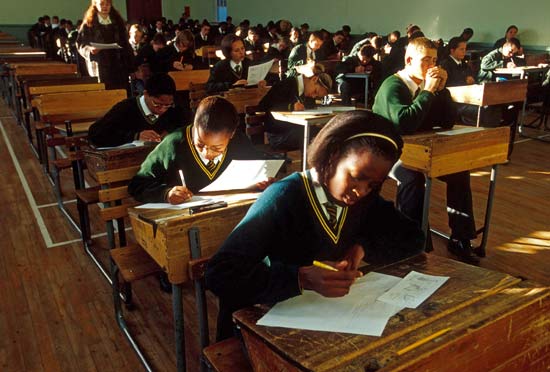
Pretoria — The basic education sector has made significant progress in improving the state of infrastructure in the country, says the Department of Basic Education.

The department on Thursday said progress has particularly been made in the provision of basic services, new schools and rehabilitation of existing assets.

«The sector has built 684 schools from the period 2009/10 to 2015/16 and an additional 343 schools are planned for the period 2016/17 to 2018/19. The improved expenditure on infrastructure budgets and the number of completed projects in the last financial year is a clear indication of this progress,» said the department.

The department said the routine maintenance of school facilities in South Africa is generally not at an acceptable level, resulting in further deterioration over time. It said the neglect exposes learners to danger and costs the State more over time, as the conditions of buildings deteriorate and have to be replaced.

«To this effect, the sector is strengthening the maintenance of schools by ring fencing funds for the sole use of maintaining education facilities across the country and address the culture of neglecting the maintenance of our schools.

«The recruitment and appointment of built environment specialists in the provincial education infrastructure units to provide the technical expertise necessary to manage a programme of this magnitude is also yielding positive results, as there is significant improvement in the management and monitoring of the infrastructure portfolio,» said the department.

A normal functioning society, according to the department, is one in which the State ensures a stable environment through laws and proper governance, where the citizens have jobs or businesses that help improve the standard of living for all on a continuous basis and the people are free to marry, raise their children and ensure that mankind thrives.

«This, more or less, is the life that we all should aspire to. Of course, building a nation requires skills and know-how. Improving year after year means that the nation is learning new things, so that the quality of lives of its citizens improves and the nation is able to trade with other nations and remains competitive.

«This life is possible for all South Africans. All that is required is one simple thing: education. In modern times, everything rises and falls on education and the delivery thereof is made much easier when the facilities are available.

«At the Department of Basic Education, we have two programmes whose sole focus is to provide the facilities that will help us all get an education,» said the department.

Accelerated Schools Delivery Initiative

The department said the objective of the Accelerated Schools Delivery Initiative (ASIDI) is to replace all schools built from inappropriate material and to provide basic services of water, sanitation and electricity to those schools that previously had none.

«When the State looks and makes money available for this kind of work, it is paying a dividend of democracy to the people who live in the country. The struggle that the majority of our people participated in so well and with so much sacrifice was aimed at ensuring that our children would get a better education than the Bantu education that our parents received,» said the department.

Through ASIDI alone, the department has built and delivered 163 state-of-the-art schools since the programme’s inception in 2011.

«Government employs a full team of experts, who work to design and deliver these schools that give our children science labs, computer labs, nutrition centres, rain water harvesting tanks, decent sanitation, administration blocks with staff rooms and offices for educators and dedicated Grade R centres that allow us to lay the right foundation for our children to have the best possible chances for success.

«Over and above this, the initiative has provided water to 596 schools, sanitation to 414 schools and electricity to 307 schools that previously had none. This is an investment in the future of South Africa.

«The ASIDI Programme will continue to restore the dignity of rural education with the official handovers of Ntsu Secondary and Bethlehem Combined Schools in Bethlehem, Free State on 18 July 2016,» said the department.

Fuente de la noticia: http://southafrica.shafaqna.com/EN/ZA/641725

Fuente de la imagen:http://www.thesouthafrican.com/wp-content/uploads/2012/04/education-exam.jpg

Comparte este contenido:

Unesco designó a cuatro sitios como Patrimonio Mundial

17 Julio 2016/Fuente y Autor: quepasabulletin

Recientemente, tras la realización de la reunión 40 del organismo en la ciudad turca de Estambul, la Organización de las Naciones Unidas para la Educación, la Ciencia y la Cultura (Unesco por sus siglas en inglés) dio a conocer los nueve sitios que ha añadido la lista del Patrimonio Mundial. El paisaje cultural de arte rupestre de Zuojiang Huashan, en China, que tiene ilustraciones que datan del siglo V a.C.al siglo II de nuestra era común.

Este paisaje cultural es hasta ahora el único testimonio que se posee de esa cultura. El sitio arqueológico Nalanda Mahavihara, en el noroeste de la India, y que está integrado por vestigios arqueológicos del siglo III a.C. A los vestigios arquitectónicos de estupas, santuarios y edificios monacales («viharas») destinados a albergar y educar a los profesos, se suman importantes obras de arte realizadas en estuco, piedra y metales.

En cuanto a las ruinas de Nalanda, en el este de India, acogieron antiguamente una gran universidad budista. Por otro lado, el antiguo sistema de riego iraní de Qanat, se erige como una muestra avanzada de destreza humana a través de acuíferos que desde los valles permiten el riego a través de túneles subterráneos. Los once qanats que componen este sitio y representan este sistema comprenden también zonas de reposo para los trabajadores, depósitos de agua y molinos hidráulicos. Asimismo fue agregado el centro ceremonial Nan Madol, una serie de pequeñas islas artificiales conectadas por canales y construidas entre 1200 y 1500, ubicado en los Estados Federados de Micronesia.

Este sitio ha sido inscrito simultáneamente en la Lista del Patrimonio Mundial en Peligro debido a las amenazas que pesan sobre él, en particular el enlodamiento de las vías navegables, que propicia el crecimiento incontrolado de manglares y fragiliza las construcciones.


Fuente de la noticia:http://quepasabulletin.com/2016/07/16/unesco-design-a-cuatro-sitios-como-patrimonio-mundial/

Fuente de la imagen: http://cdn2.img.mundo.sputniknews.com/images/103490/60/1034906079.jpg

Comparte este contenido:

Tanzania: Teachers get computer knowledge

África/Tanzania/17 Julio 2016/Fuente:Dailynews /Autor: Hazla Omar

Resumen: Un total de 200 profesores de primaria y secundaria en la región de Arusha recibiran cursos adaptados a la medida Tecnología de Información y Comunicación (TIC) para dotarlos de conocimientos informáticos para las habilidades de tutoría.

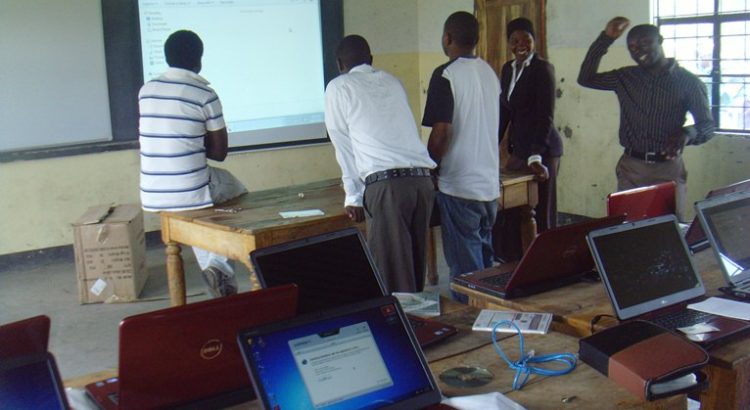
Arusha — A total of 200 primary and secondary school teachers in Arusha Region have been given special and tailor-made Information and Communication Technology (ICT) to equip them with computer knowledge for added tutoring skills.

The training sessions conducted at the Arusha Technical College (ATC) were organized by a Korean firm known as ‘E3Empower.’ The initiative aims at reaching out to 100 primary and 100 secondary school teachers in education institutions operating in Arusha Urban and Arusha Rural districts for two weeks.

The Chief Executive Officer for E3Empower, Ms Ji-Young Rhee, said: «This training is vital because many schools in Tanzania have been receiving computers from friends and development partners abroad.

«But once the sets of equipment get delivered here, they just end up locked in stores because teachers, pupils and students lacked the knowledge to operate them,» she said.

Ms Ji-Young Rhee added that, once school managements realize the importance of computer skills among their teachers, then they will not wait for donations but are likely to procure them for their respective institutions.

According to the CEO, the E3Empower has also set up long-term training bases at Edmund Rice and Elishama Secondary Schools here, where they are conducting a two-year programme, training students in the institutions on many computer skills including basic knowledge, maintenance and digital programming.

She said all developed countries such as the United States and Korea, have included computer skills and knowledge in their curriculum right from early grades and thus their children and youths grow up with the skills inculcated in their brains.

In this case, handling the machines becomes an automatic thing, regardless of the situation they happen to be in. On her part, Mwalimu Zena Athuman, a female teacher from Magereza Primary School in Kisongo area, said computer skills will help them store their school information and pupils’ records digitally on the computers.

They can also use them for planning work and lessons as well as using them to surf the web and source for new teaching materials. Another teacher, Mr Michael Sarungi, an

IT specialist from Arusha Modern School in Arusha, who was hired to help direct others during the training, said he was surprised by how little the local teachers knew about computers.

«Many schools in Tanzania have computer classes but these are applied in theory due to lack of equipment and gets even more challenging when the teachers themselves have no idea how the machines operate,» he said.

Fuente de la noticia: http://dailynews.co.tz/index.php/home-news/51563-teachers-get-computer-knowledge

Fuente de la imagen: http://4.bp.blogspot.com/–zvf606iIOw/T_K8yAxzZ6I/AAAAAAAAAJ4/71tscadTgKA/s1600/SNV31930.JPG

Comparte este contenido:

Uganda: Striking students should pay costs

África/Uganda/17 Julio 2016/Fuente y Autor: Monitor

Resumen: El portavoz de la universidad, la señora Amelia Kiggundu, dijo que aquellos que habían perdido los exámenes sería retomar los trabajos con el pago de la multa y los que no pagan no presentarse a los exámenes cuando el año académico se cierra el círculo. Del mismo modo, la administración de Lango College, en el distrito de Lira impuso una multa de Shs52,000 por estudiante, cuando el 15 de junio, los estudiantes quemaron la camioneta de la escuela y actos de vandalismo propiedad de la escuela sobre la mala alimentación.

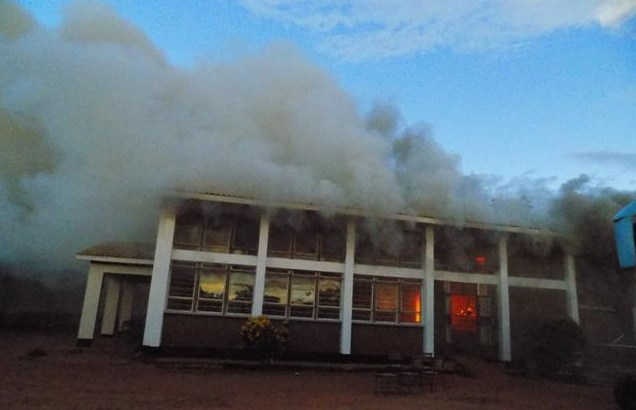
In May, the management of Gulu University suspended, for three weeks, more than 1,000 students from the Faculty of Education and Humanities over a strike that resulted in the burning down of the university’s main hall.

The students – mostly in their first and second academic years – had been angered by the delay of release of their previous semester exams; yet another set of exams awaited them just a week away.

Gulu University Vice Chancellor, Prof Jack Nyeko Pen-Mogi, condemned the students’ actions, saying they shouldn’t have directed their anger on a building; sending a heap of decades-long history into ashes.

Yesterday, this newspaper reported that a total of 279 Education students missed their final exams over failure to pay a fine of Shs200,000 slapped against them as punishment for torching the building two months ago.

What does this mean? The university spokesperson, Ms Amelia Kiggundu, said those that had missed the exams would retake the papers upon paying the fine and those that do not pay would not sit the exams when the academic year comes full circle.

Likewise, the administration of Lango College in Lira District imposed a fine of Shs52,000 per student when on June 15, students burnt down the school pick-up truck and vandalised school property over poor feeding.

Whereas the students are right in demanding fair and right treatment, the choice to burn down and vandalise property is unacceptable. And their choices have consequences.

Nabumali High School in eastern Uganda is still struggling to regain its feet after students on October 11, 2004 set the school ablaze, burning the administration block staff quarters, library and the dining hall, purportedly over lack of water. The decision, therefore, to fine the students and stick to their guns by turning away defaulters from exam rooms – brutal as it is – is the right tool in stemming off a likely repeat of that kind of strike.

The call now goes to the doorsteps of other institutions of learning. For instance, whereas students of Makerere University are clever enough not to destroy property on campus during strikes; they throw away all aspects of modesty as soon as they hit the nearby suburbs of Kikoni.

Makerere and other institutions should pick a leaf from Gulu University by liaising with authorities of nearby suburbs and value property destroyed during such strikes and pass the costs to students.

The law allows peaceful demonstrations, but when they become violent, it should not become business as usual. You cannot have your cake and eat it!

The issue: Cost of strikes

Our view: Makerere and other institutions should pick a leaf from Gulu University by liaising with authorities of nearby suburbs and value property destroyed during such strikes and pass the costs to students.

Fuente de la noticia: http://www.monitor.co.ug/OpEd/Editorial/Striking-students-should-pay-costs/-/689360/3284386/-/a92rib/-/index.html

Fuente de la imagen: http://www.chimpreports.com/wp-content/uploads/2016/06/gulu8.png

Comparte este contenido:

Kenya: From school meals recipient to presidential fellow

África/Kenya/17 Julio 2016/Fuente:Wfp /Autor:Salma Bahramy

Resumen: Cada año, cerca de 50.000 personas que aplican a la Beca Mandela Washington – el programa insignia de la Iniciativa de jóvenes líderes africanos del presidente estadounidense, Barack Obama, la cuál permite a los jóvenes a través de cursos académicos, la formación de liderazgo y trabajo en red. Los solicitantes fueron un total de 1.000 destacados líderes jóvenes de África subsahariana son seleccionados para recibir capacitación para el desarrollo profesional en varias universidades en los EE.UU.

Salma Bahramy — Each year, nearly 50,000 people apply to the Mandela Washington Fellowship – the flagship program of U.S. President Barack Obama’s Young African Leaders Initiative that empowers young people through academic coursework, leadership training, and networking. Out of the applicants, 1,000 outstanding young leaders from Sub-Saharan Africa are selected to receive professional development training at various universities across the U.S.

One such young person is 28-year-old Peter Mumo. This month, Peter will leave Nairobi, Kenya, for Des Moines, Iowa, to take part in a six-week business and entrepreneurship training hosted by Drake University. Following the academic component of the fellowship, Peter and the rest of the fellows will visit Washington for a three-day summit featuring a town hall with President Obama. Peter will have the opportunity to learn from and engage with U.S. leaders from the public, private, and non-profit sectors.

But Peter’s life didn’t start out so promising. He grew up in Makueni County, an impoverished area in eastern Kenya, where drought and subsequent hunger plagued him and his family. Erratic rainfall resulting in crop failures created a dire situation for Peter’s family. They lacked food, clothing, adequate shelter, and access to clean water, among other things.

«Going to school on an empty stomach was the norm for me. I would get sick often. Playing with other kids wasn’t enjoyable for me because I was always emaciated. My siblings and friends were not spared either,» says Peter.

Years of hunger affected Peter’s immune system and his ability to learn in class. Normal childhood illnesses would routinely land Peter in hospitals. Concentrating on school lessons proved virtually impossible on an empty stomach.

But one year, when Peter was nine, things took a turn for the better when WFP introduced its school meals program. Peter and his classmates began receiving breakfast meals and snacks to take home. Peter’s health began to improve and knowing he’d have a meal waiting for him at school allowed him to focus on his studies. Over the years, Peter shot to the top of his class and eventually earned an engineering degree from Moi University in Eldoret, Kenya.

After graduation, Peter began working in the agricultural industry in Nairobi where he learned of the challenges faced by many of the country’s farmers. While agriculture is the most important economic activity in Kenya, only about 20% of the land is suitable for farming. Improving resilience to climate change and using technology to improve farming systems would help make Kenya’s agricultural sector more viable.

Peter decided to join those fixing the gaps in Kenya’s agricultural sector. He spearheaded programs that improved water harvesting and storage systems so farmers could have water reserves when rainfall was low. He developed an information support service to help connect farmers across Kenya to optimize productivity. Peter is currently developing a web-based application that will improve access to these services.

«When I was in need someone stepped up and made a significant difference not just for me, but for my entire community. I never dreamed that I’d be in a position to help others one day,» says Peter.

The Mandela Fellows are selected for their accomplishments in promoting innovation and positive change in their organizations, institutions, communities, and countries. For Peter Mumo, this is just the beginning.

Fuente de la noticia: https://www.wfp.org/stories/school-meals-recipient-presidential-fellow-0

Fuente de la imagen: https://www.wfp.org/sites/default/files/images/2016/peterclassmates4_0.png

Comparte este contenido:

Nigeria: Edo to recruit 10,000 teachers into civil service – subeb chair

África/Nigeria/17 Julio 2016/Fuente: /Autor: Simon Ebegbulem

Resumen: Más de 10.000 profesores pronto serán reclutados en los servicios del Gobierno del Estado de Edo para hacer frente a la escasez de maestros en algunas áreas del gobierno local del estado, esto lo dijo el príncipe Esteban Alao presidente del estado de educación básica universal.

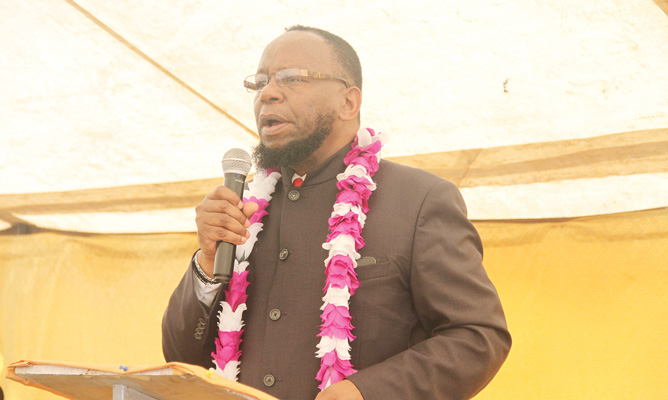
Over 10,000 teachers will soon be recruited into the services of the Edo State Government to address the paucity of teachers in some local government areas of the state, Prince Stephen Alao, chairman of the state Universal Basic Education, SUBEB, has said.

The SUBEB boss who disclosed this to Vanguard, yesterday, said that contracts were currently being awarded for the construction of more schools in the state, adding that over N500 million had been paid to various contractors with a view to facilitate the projects.

Explaining that the government decided to embark on construction of more schools and recruitment of more teachers in the schools due to the influx of pupils into public schools, Alao said that «majority of the people of Edo State, their children attend public schools as a result of the massive school renovation we embarked on.

«Most of our primary schools are now well equipped. Teachers are no longer teaching under the trees. In SUBEB, we are awarding contracts now for more schools to be renovated and the governor was very particular, that there must be a primary school project in the 192 wards in Edo State. This agency has played its role to complement the efforts of the governor at driving quality education delivery in Edo State.»

Fuente de la noticia: http://www.vanguardngr.com/2016/07/edo-recruit-10000-teachers-civil-service-subeb-chair/

Fuente de la imagen: http://d19lga30codh7.cloudfront.net/wp-content/uploads/2013/11/Oshiomhole1.jpg

Comparte este contenido:

Libros: El Gen Egoista, del autor Richard Dawkins

África/Kenia/julio del 2016/Reseña/www.elresumen.com

Resumen:

«Somos máquinas de supervivencia, autómatas programados a ciegas con el fin de perpetuar la existencia de los egoístas genes que albergamos en nuestras células». Así de rotundo es el comienzo del libro en el que el etólogo Richard Dawkins popularizó la teoría de que los genes son las verdaderas «unidades» centrales de la evolución, en vez de los individuos como los animales o las plantas. De esto hace ya casi treinta años, pues el libro se publicó en 1976.

Según Dawkins, los genes primigenios nos crearon a las personas y los animales, quienes somos en realidad meras «máquinas de transmisión». Como máquinas podemos funcionar mejor o peor en nuestro entorno y de este modo continuar la cadena (garantizar la supervivencia y reproducción de los genes) a lo largo del tiempo, o perecer en una selección evolutiva.

En su momento fue una forma de ver las cosas al revés sobre muchas ideas tradicionales sobre la evolución centrada en los individuos o las especies (por no hablar respecto a las ideas religiosas al respecto), pero actualmente hay cierto consenso en la comunidad científica sobre que esta idea es la que probablemente más se acerca a la realidad.

Nombre completo: Richard Dawkins

Lugar de nacimiento: Nairobi, Kenia

Fecha de nacimiento: 26 de marzo de 1941

Géneros literarios: Ciencia / Divulgación Científica

 Fuente:http://www.elresumen.com/libros/el_gen_egoista.htm

Fuente imagen http://cdn.slidesharecdn.com/ss_thumbnails/elgenegoista-130320214608-phpapp01-thumbnail-4.jpg?cb=1363816012

Comparte este contenido:
Page 499 of 622
1 497 498 499 500 501 622