Page 84 of 622
1 82 83 84 85 86 622

How a team of scientists studying drought helped build the world’s leading famine prediction model

The Indian Ocean seemed ready to hit Africa with a one-two punch. It was September 2019, and the waters off the Horn of Africa were ominously hot. Every few years, natural swings in the ocean can lead to such a warming, drastically altering weather on land—and setting the stage for flooding rains in East Africa. But at the same time, a second ocean shift was brewing. An unusually cold pool of water threatened to park itself south of Madagascar, leading to equally extreme, but opposite, weather farther south on the continent: drought.

Half a world away, at the Climate Hazards Center (CHC) of the University of California, Santa Barbara (UCSB), researchers took notice. Climate models, fed by the shifting ocean data, pointed to a troubling conclusion: By year’s end, that cold pool would suppress evaporation that would otherwise fuel rains across southern Africa. If the prediction held, rains would fizzle across southern Madagascar, Zambia, and Mozambique at the beginning of the growing season in January, the hungriest time of year. Zimbabwe, already crippled by inflation and food shortages, seemed particularly at risk. “We were looking at a really bad drought,” says Chris Funk, a CHC climate scientist. It was a warning of famine.

The CHC team, led by Funk and geographer Greg Husak, practice what they call “humanitarian earth system science.” Working with partners funded by the U.S. Agency for International Development (USAID), they have refined their forecasts over 20 years from basic weather monitoring to a sophisticated fusion of climate science, agronomy, and economics that can warn of drought and subsequent famines months before they arise. Their tools feed into planning at aid agencies around the world, including USAID, where they are the foundation of the agency’s Famine Early Warning Systems Network (FEWS NET), which guides the deployment of $4 billion in annual food aid. Increasingly, African governments are adopting the tools to forecast their own vulnerabilities. “They’ve been absolutely key” to improving the speed and accuracy of drought prediction, says Inbal Becker-Reshef, a geographer at the University of Maryland, College Park, who coordinates a monthly effort to compare drought warnings for nations at risk of famine. “Every single group we work with is using their data.”

The forecasts are needed more than ever. From 2015 to 2019, the global number of people at risk of famine rose 80% to some 85 million—more than the population of Germany. Wars in Yemen, Syria, and Sudan are the biggest driver of the spike. Global warming, and the droughts and storms it encourages, also plays a role. The pace and severity of storms and droughts in Africa seem to be increasing, Funk says. “Both extremes are going to get more intense.”

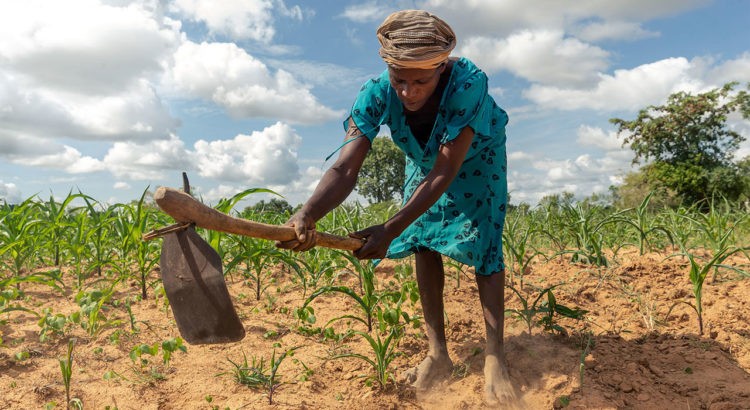
The consequences of drought can be catastrophic, but it is hard to detect. Unlike temperature, rainfall is spotty and local, heavily influenced by terrain. Three important clues that drought is coming—low accumulated rainfall, a lack of soil moisture, and high air temperatures—are difficult to measure from space. Satellites can see when green fields turn brown, but that often comes too late to inform a large-scale aid response. In Africa, researchers cannot rely on data from ground stations, either. Zimbabwe, for example, only has a few weather stations, and sometimes those don’t even measure rainfall. This “reporting crisis” is pervasive across the continent; over the past 30 years, the number of stations with usable public data has dropped by 80% to only 600 or so.

Forecasting drought months into the future is even harder. Weather forecasts stretch out only a few weeks. Moving beyond that requires an understanding of large-scale climate patterns that influence weather over months or years. The banner example is the El Niño–Southern Oscillation, a pattern of winds and surface temperatures in the tropical Pacific Ocean that shifts every few years, altering global weather in myriad ways. Weather in Africa is influenced by other oscillations, including the two Indian Ocean shifts CHC was watching, known as the Indian Ocean Dipole and the Subtropical Indian Ocean Dipole. But the “teleconnections” between the ocean and distant weather patterns are poorly understood, and aid agencies can be leery of relying on them for long-term drought predictions. They want evidence from real-time monitoring that drought is on the way.

Double trouble

Two ocean climate patterns have aided predictions of floods and drought across Africa. A swing in the Indian Ocean Dipole pushed warm waters off East Africa, boosting rains there last winter. A shift in the Subtropical Indian Ocean Dipole left a cold pool south of Madagascar, suppressing rains across southern Africa.
TANZANIATANZANIATANZANIAMADAGASCARMADAGASCARMADAGASCARWarm blobWarm blobWarm blobBoosts rain over East AfricaBoosts rain over East AfricaBoosts rain over East AfricaSuppresses rain in southern AfricaSuppresses rain in southern AfricaSuppresses rain in southern AfricaCold blobCold blobCold blobSOUTH AFRICASOUTH AFRICASOUTH AFRICABOTSWANABOTSWANABOTSWANAZAMBIAZAMBIAZAMBIAANGOLAANGOLAANGOLAZIMBABWEZIMBABWEZIMBABWEDEMOCRATIC REPUBLIC OFTHE CONGODEMOCRATIC REPUBLIC OFTHE CONGODEMOCRATIC REPUBLIC OFTHE CONGOMOZAMBIQUEMOZAMBIQUEMOZAMBIQUEKENYAKENYAKENYASOMALIASOMALIASOMALIAETHIOPIAETHIOPIAETHIOPIAUGANDAUGANDAUGANDANAMIBIANAMIBIANAMIBIA0000IndianOceanRainfall anomalies Oct. 2019–Feb. 2020–100 mm100
(MAP) N. DESAI/SCIENCE; (DATA) CHRIS FUNK/CLIMATE HAZARDS CENTER

The growing season in southern Africa was still months away when CHC noticed the signs of trouble—plenty of time for it and its partners, including a team of food security analysts in Washington, D.C., to refine their predictions and validate them with local observations. The fieldwork would be led by Tamuka Magadzire, a CHC agroclimatologist based in Botswana whose analysis had shown that conditions in Zimbabwe were already ripe for famine: The previous harvest was weak, shriveled by the lowest rainfall since the early 1980s. The currency was essentially fictional, and the country’s poorest had to devote 85% of their income to food. On visits in the past few years, Magadzire brought along maize for his friends and family. “It’s just been really bad in terms of long dry spells,” he says.

A perfect storm was looming. Through the fall of 2019, Funk and his colleagues at FEWS NET sent a series of escalating warnings to senior officials at USAID. No one wanted to repeat what had happened a decade earlier, elsewhere in Africa. The group’s forecasting record lent credibility to their warnings. But whether their call would be heeded this time would also depend on the strength of the evidence for an impending drought, political will in the United States and elsewhere—and a pandemic that had yet to rear its head.

CHC BEGAN with a dream. In 1995, Funk was a smart but directionless consultant working in Chicago for the credit card company Discover; he mined databases of personal information to identify consumers to target with ads. “It was, basically, working for the dark side,” he says. In the dream, he was standing with friends in Lake Michigan, smoking and drinking beer, when he felt the lake tug on his legs. Turning, he saw a tidal wave coming to inundate the city. But his first impulse was to rush to the office and buy stock options. “This dream really freaked me out,” he says. “What kind of person sees the city is going to be destroyed and wants to sell options?” Funk, from an Indiana farm town, recalled how struck he was as a child by Live Aid, the 1985 charity concert for Ethiopia. He needed to make a change. He wanted to make a difference. He quit.

Funk wound up studying geography at UCSB in a group that focused on statistical climatology. He met Husak, another geography graduate student, and James Verdin, a visiting remote-sensing scientist from the U.S. Geological Survey (USGS). The three of them witnessed the record El Niño of 1997–98, in which warm waters from the western Pacific sloshed eastward toward Peru, triggering long-range atmospheric shifts that brought punishing rains to their California campus. El Niños also seemed to suppress rains in southern Africa, so Verdin, who now heads FEWS NET, worked with Funk to see whether greenness measures of maize fell in southern Africa during the 1997–98 event. “It was kind of mixed results,” Verdin says, “but we got it published.”

Verdin encouraged FEWS NET to sponsor Funk’s and Husak’s studies. By the time the next El Niño came, in 2002, the UCSB team had compiled scattered rainfall records dating back to 1961 to quantify how El Niño events dried up water resources across southern Africa. USAID used the resulting map and report to respond quickly after the 2002 El Niño, sending some $300 million in food aid. It was the first time the agency incorporated climate forecasts into its food aid, Funk says, and it relieved some of the ensuing famine. “And we’re still basically doing the same thing, better, smarter, faster.”

Funk went to work for USGS, but he remains affiliated with UCSB, where he serves as resident provocateur while Husak steers CHC’s growing staff. Funk’s churning mind keeps them busy, Husak says. “We lift up a lot of rocks and see what’s going on underneath them.”

Chris Funk found his calling with drought prediction at the Climate Hazards Center.

AMELIE FUNK

In the 2000s, one of those rocks led Funk back to Africa to study a different teleconnection. He and Alemu Asfaw Manni, a FEWS NET analyst in Ethiopia, gathered historical rainfall data across the country’s highlands, where the soil is fertile but rain so scarce that some crops need months to germinate. Most climate models showed East Africa would get wetter with climate change. But since the early 1990s, the team found, the highlands’ long rainy season had gone into a steep decline. “This was a holy moly moment,” Funk says. The trend, dubbed the “East African climate paradox,” has held true to this day.

The explanation seems to lie in the ocean. Weather records indicated that many droughts in East Africa seemed to strike during strong La Niñas, El Niño’s opposite number, when the western tropical Pacific heats up while the eastern Pacific cools. The UCSB team didn’t understand the connection, but by August 2010, another La Niña was brewing in the Pacific. FEWS NET warned that rains across the Horn of Africa, including Ethiopia and Somalia, would be late, weak, and erratic.

Politicians and donors largely ignored the alarm. La Niña’s threat was poorly understood, different aid groups were issuing disparate warnings, and a degree of crisis fatigue had set in about Somalia, which had been in turmoil for years. But over the next 9 months, the rains failed as predicted. Food prices tripled and malnutrition grew rampant.

In mid-2011, the United Nations finally declared a famine, and USAID ultimately delivered more than 300,000 tons of wheat, high-energy biscuits, and other staples. But the aid came too late and didn’t reach enough people. Within the next year, the famine killed 260,000 people in Somalia alone. Half of them were children under the age of 5. As a damning U.N. report later put it: “The suffering played out like a drama without witnesses.”

“It was really, really bad.” Verdin sits in his austere, modern USAID office in Washington, D.C., reflecting on the Somali crisis, now nearly a decade ago. There were extenuating circumstances. Al-Shabaab, the Islamist militant group, was ascendant, and humanitarian groups feared that if their aid ended up in the wrong hands, the U.S. government might have prosecuted them, he says.

The famine warnings had been accurate—but they had also seemed insufficient. The UCSB team “didn’t convey the information as effectively as we could,” Funk says. The loss of weather stations meant their rainfall measures were getting worse, and most satellite-based estimates lacked the detail to show how dry specific crop-growing regions were getting. And their explanation of why La Niña was a threat seemed far too abstract. “You’re asking somebody to open up their wallet and spend millions,” Funk says. “They’re not just going to do it because you say, ‘Our standardized precipitation forecast is −1.2.’”

THE FAMINE FORECASTERS needed better data. In 2015, those dreams came true when CHC released a tool called CHIRPS (which stands for Climate Hazards Center Infrared Precipitation with Station Data). It was the culmination of years of work compiling local rainfall records across Africa and folding in satellite data. Since the late 1970s, a coalition of European countries has maintained geostationary weather satellites over Europe and Africa. Among other things, the satellites measure the temperature of clouds by the infrared light they emit. When the temperature of clouds high in the atmosphere drops below −38°C, it is likely raining lower down. By using this record to fill in rainfall between ground stations, CHIRPS assembled a continentwide rain database stretching back to 1980.

CHIRPS not only provides the historical data for climate researchers to study teleconnections, but it also collects the contemporary data for near–real-time monitoring of rainfall. “It’s quite a step forward,” says Felix Rembold, a drought forecaster at the European Union’s Joint Research Centre. It’s also in constant development: Pete Peterson, the CHC coding guru who has spearheaded CHIRPS, often woos local agencies to fill gaps in station coverage. For example, Ethiopia shares data from 50 government stations with CHC—even though its agricultural and meteorological agencies won’t share their data with each other.

The data find their way back to Africa as CHC-affiliated field scientists train African agencies on using CHC products. For example, Kenya’s Regional Centre for Mapping of Resources for Development has begun to serve up CHIRPS data to help local users forecast rains. Ideally, Funk and company hope to slip into the background, as Magadzire and his peers weave the CHC tools into the fabric of African drought response. Magadzire has had lucrative job offers, but the challenge is too compelling, he says. “My heart is in the improvement of conditions in Africa.”

Zimbabwe, crippled by inflation and weak harvests, needed food aid in 2019. This year could be far worse.

GUILLEM SARTORIO/AFP VIA GETTY IMAGES

The long-term rainfall history in CHIRPS has enabled CHC researchers to refine their understanding of the La Niña teleconnection. By comparing global weather records and the predictions of climate models to the CHIRPS records, they have discovered the importance of the “western V,” an arc of hot Pacific water that can appear during a La Niña event. Shaped like a less-than sign, it angles from Indonesia northeast toward Hawaii and southeast toward the Pitcairn Islands, and it forms as La Niña pens warm waters in the western Pacific.

It has far-reaching consequences. As water temperatures spike, energetic evaporation saturates low-level winds flowing west from the cool eastern Pacific. The moist winds dump their water over Indonesia—the wet get wetter. The winds, now high and dry, continue their march west across the Indian Ocean and drop down over East Africa, preventing the intrusion of nearby moist ocean air and breaking up rain clouds. Global warming is strengthening these effects, causing them to linger even after a La Niña fades. And it appears that because of the ongoing ocean warming, they can happen without a La Niña at all, Funk says.

Armed with this new understanding, Funk in May 2016 found himself at USAID headquarters. A strong El Niño had just waned, and sea surface temperature trends suggested La Niña would follow. If it did form, he warned, FEWS NET’s food analysts should prepare for sequential droughts in East Africa. A set of new seasonal climate forecasts from the National Oceanic and Atmospheric Administration echoed Funk’s drought warnings. CHIRPS revealed that the October-December rains had failed. And, seeking to amplify their voices, FEWS NET and its peers at the United Nations and in Europe issued a joint alert, warning of potential famine.

By December of that year, food aid for half a million Somalis arrived. The next month, 1 million; by February 2017, 2 million. Thanks to the shipments and the many improvements East Africans had made in their own safety net, food prices didn’t spike when the rains failed again. The warnings had worked.

FOUR YEARS LATER, a different teleconnection is playing out, but the picture across Africa is equally grim. In February, in a small UCSB conference room, CHC climate scientist Laura Harrison pulled up a map of Africa. Although there was no El Niño or La Niña to influence events, the two Indian Ocean oscillations she and her colleagues had been watching were going strong.

The blob of hot water off the coast of Somalia turned out to be as hot as it’s ever been, a half-degree warmer than a similar state in 1997. CHC had been right to forecast extensive rains in the Horn of Africa: Moist winds from the blob fueled drenching storms. The resulting flooding and landslides ruined 73,000 hectares of crops and killed more than 350 people. The storms also saturated arid regions, feeding lush growth that lured an unpredicted hazard to the region: a locust invasion. Hundreds of billions of locusts have chewed through rich farmland in Ethiopia’s Rift Valley, while stripping pastures in Kenya and Somalia.

The blob of cold water south of Madagascar was doing the opposite. Just as the team expected, it had dried up rains across southern Africa. On Harrison’s screen, CHIRPS data showed a red blob of anomalous dryness across Zimbabwe—rainfall was running 80% below average for the season. Short-term forecasts called for some rain, but it looked like it would come too late, Harrison said. “The crop has failed in a lot of those areas.”

On the phone from Botswana, Magadzire agreed. He had spent the day training people to use FEWS NET products, and his visiting Zimbabwean students reported lines for maize that lasted hours. To buy it, farmers were selling emaciated cows for a fraction of their value. “There is actually a huge shortage,” he said. In a few days, after the team hashed out its evidence, he’d argue the same to the FEWS NET social scientists who would integrate the data with economic and security analysis.

At the end of the month, FEWS NET staff compared their monitoring with that of their peers at the United Nations and Europe. The combined forecasts would go into the Crop Monitor for Early Warning, a monthly update provided by the University of Maryland that the G-20 group of rich nations began several years ago to unify famine warnings. Already, in response to previous reports, USAID had more than doubled its food aid to Zimbabwe, to $86 million. But even this increase may not be enough.

On 2 April, FEWS NET sent out a rare alert, stating crisis conditions were likely in southern Africa from April to August. Maize supplies would be short, with prices 10 times their normal level. By that time, another danger had arrived: the coronavirus pandemic. The resulting lockdowns in Zimbabwe and its neighbors could exacerbate risks for the neediest, putting them out of work and unable to afford maize. By the end of this year, FEWS NET warned, Zimbabwe could find itself in emergency conditions—one step away from famine.

Reflecting on his time at CHC, Funk is proud of his team and how it has tried to lessen the toll of famines. But he is clear-eyed about a problem that isn’t going away—and may be getting worse, for reasons other than natural cycles. For the past 5 years, during a time of global economic growth, famine threats were still rising, Funk points out. Now, the coronavirus pandemic has the world teetering on recession. He worries that climate change will only exacerbate the inevitable conflicts over stressed croplands. “At the end of the day,” Funk says, “humanitarian crises are caused by humans.”

Fuente: https://www.sciencemag.org/news/2020/04/how-team-scientists-studying-drought-helped-build-world-s-leading-famine-prediction


Comparte este contenido:

Apoyo a la igualdad de género se extiende por el globo, según nuevo estudio

Noticia/lavanguardia.com

El apoyo a la igualdad de género se ha extendido por casi todo el globo, según afirma un nuevo estudio publicado este jueves por el Pew Research Center que indica que el 94 % de los encuestados en 34 países considera importante que mujeres y hombres tengan los mismos derechos.

Sin embargo, mientras este trabajo muestra que gran parte del mundo ha empezado a abrazar la idea de la igualdad de género, al menos cuatro de cada díez encuestados por nación consideran que los hombres tienen más oportunidades en general.

Y es que el 54 % de los preguntados consideran que es más difícil para las mujeres que para los hombres obtener un trabajo muy bien pagado y el 44 % opina que les es más complicado llegar a liderar en sus comunidades.

El Pew Research Center señala que en algunos países los encuestados son más proclives a considerar que los hombres deberían tener más derecho a trabajar que las mujeres durante tiempos de crisis; como en Nigeria, donde el 63 % de las mujeres y el 78 % de los hombres están de acuerdo con esta afirmación, mientras que en India el 76 % de las mujeres y el 81 % entre hombres preguntados apoyan esta discriminación.

En este sentido, el estudio recoge que en 30 de las 34 naciones representadas en el estudio, aquellos con menos educación tienden a creer que los hombres tienen más derecho a trabajar que las mujeres.

Por ejemplo, un mínimo de seis de cada diez encuestados con menos estudios de Turquía, Líbano, Kenia, Eslovaquia, Sudáfrica y Corea del Sur apoyaban esta tesis, mientras que entre los ciudadanos de estos países con más estudios, la mitad o menos estaban de acuerdo con la idea.

Pese al optimismo general, el estudio indica que en muchos países las mujeres dan más importancia a la igualdad de género que los hombres, que ellas ven con menos esperanza la posibilidad de que puedan lograr la igualdad en el futuro, y es más probable que digan que los hombres tienen mejores vidas

El estudio se ha realizado encuestando a 100 ciudadanos de cada uno de los siguientes países: Canadá, EE.UU., México, Brasil, Argentina, Túnez, Nigeria, Kenia, Sudáfrica, Líbano, Israel, India, Australia, Indonesia, Filipinas, Corea del Sur, Japón, Francia, España, Alemania, Reino Unido, Italia, Países Bajos, Suecia, Polonia, Rusia,República Checa, Hungría, Lituania, Eslovaquia, Ucrania, Bulgaria, Grecia y Turquía.

El margen de error varía dependiendo de las encuestas en cada país, y va del 1,9 % de India al 5,1 de Kenia o el 5,2 % de Vietnam.

Fuente: https://www.lavanguardia.com/vida/20200430/48848731814/apoyo-a-la-igualdad-de-genero-se-extiende-por-el-globo-segun-nuevo-estudio.html

Comparte este contenido:

Mundo: Universidad de Antioquia, CLACSO y OVE invitan al conversatorio virtual «Posiciones docentes frente a la pandemia»

Mundo/03-05-2020/Autor(a) y Fuente: Universidad de Antioquia, CLACSO

La Universidad de Antioquia, CLACSO y OVE, invitan en el marco del Ciclo internacional de conversatorios virtuales «Educación y humanidad en tiempos de pandemia: perspectivas multisituadas» al cuarto conversatorio denominado «Posiciones docentes frente a la pandemia» este martes 05 de mayo del año en curso a las 10:00 am (Hora Colombia).

En donde tendremos las intervenciones de les siguientes panelistas:

  • Luis Bonilla-Molina (Venezuela) del Centro Internacional Miranda.
  • Pablo Imen (Argentina) del Centro Cultural de la Cooperación.
  • Gabriela Walder (Paraguay) de la Red por el Derecho a la Educación.

Moderadoras:

  • Bibiana Escobar (Colombia) de la Universidad de Antioquia.
  • Alexandra Agudelo (Colombia) de UNAULA.

Para ello se requiere entrar al siguiente link y registrarse:

https://udearroba.zoom.us/webinar/register/WN_3vnUazT3TNCmnPHDcmAI6A


Fuente e Imagen: Universidad de Antioquia, CLACSO y Colaboradorxs de OVE.

Comparte este contenido:

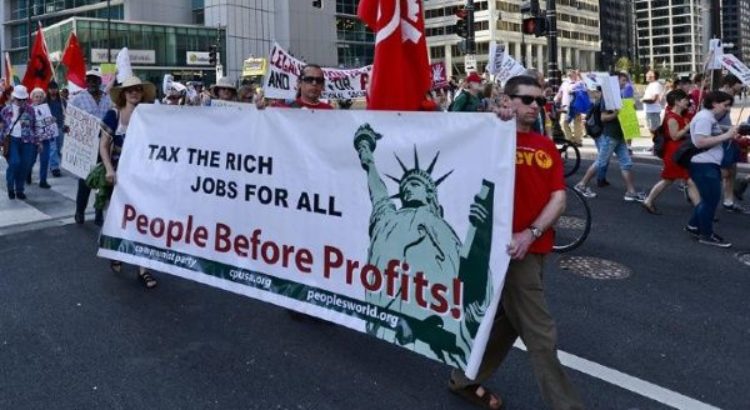
Mundo: ¿Cómo afrontan los trabajadores el capitalismo tras Covid-19?

Mundo/03-05-2020/Autor(a) y Fuente: www.telesurtv.net

Millones de desempleados se contabilizan en el mundo, cuando los efectos económicos de la pandemia de coronavirus apenas empiezan.

La emergencia sanitaria provocada por el nuevo coronavirus, que causa la enfermedad conocida como Covid-19, ha generado una crisis económica que, según expertos, puede ser más profunda que la registrada entre 2007 y 2009. No pocos analistas la comparan con los efectos de la Gran Depresión de la década de 1930.

Sólo en Estados Unidos, unos 30 millones de trabajadores habían perdido sus empleos hasta finales de abril, de acuerdo con cifras del Departamento del Trabajo de EE.UU. Millones de desempleados más se contabilizan en el mundo, cuando los efectos económicos de la pandemia apenas empiezan.

#Mov18Oct@axelmarinkovicy

La historia del 1° mayo, comienza en Chicago (1886), con huelga general, represión y cárcel de 105 obreros, 8 condenados, 5 asesinados en la horca. El 1° de Mayo se establecerá desde ese momento como un día de combate de los trabajadores y su derecho a la historia.

Ver imagen en Twitter
33 personas están hablando de esto

La economía y la etapa post pandemia

Los pronósticos de los expertos indican que la regresión económica incidirá, en primer orden, en la clase trabajadora. La reducción del consumo de bienes y servicios disminuirá proporcionalmente los niveles de producción.

Ello conllevaría la pérdida de millones de empleos. De acuerdo con un informe de la Organización Internacional del Trabajo (OIT), alrededor de 300 millones de empleos pueden perderse por la pandemia.

Los especialistas precisan que la primera medida para reducir gastos serían los recortes de personal. Boeing, por ejemplo, anunció el miércoles pasado que, como efecto de la crisis originada por la pandemia, planea recortar en 10 por ciento su plantilla, lo que representaría unos 16.000 empleos. Airbus también prevé reducir en forma temporal el número de sus empleados.

Otras de las medidas que pronostican los especialistas son reducciones de salarios, la exigencia de más horas laboradas por igual salario, los recortes a servicios públicos y la disminución o suspensión de beneficios laborales.

Un ejemplo de ello fue el paro convocado el pasado 22 de abril por trabajadores de empresas de reparto a domicilio, como Glovo, Rappi y PedidosYa, en reclamo de un aumento salarial del 100 por ciento y para denunciar su precariedad laboral en el sector, agravada por la crisis del coronavirus.

¿Cómo enfrenta la clase trabajadora esta realidad?

En el blog titulado Los trabajadores vs. la covid-19, publicado en teleSUR, el investigador mexicano Adalberto Santana subrayó que este año el Día Internacional de los Trabajadores «se conmemora en un escenario complejo y contradictorio».

Recordó que a pocos meses del triunfo de la revolución bolchevique en la Rusia zarista en 1918, que fue el primer triunfo social y político de la clase obrera, se desató la pandemia de la mal llamada “Gripe Española”. En esa ocasión murieron alrededor de 50 millones de persona por el virus, puntualizó.

Santana indicó que en este año, «si bien la clase obrera en el mundo conmemora una de sus fechas más emblemáticas como es el primero de mayo, también es cierto que la coyuntura actual reviste una serie de características casi inéditas».

Piedad Córdoba ✊🏽

@piedadcordoba

A ver si entiendo:

– Cuando hay utilidades son para el empresario.

– Pero ¿cuándo hay pérdidas entonces que las compartan los trabajadores?

Presidente Duque:
Subsidien nóminas de mipymes, no reduzcan salarios a los trabajadores, así salvan empleos y reactivan economía.

570 personas están hablando de esto
El panorama, observó el analista, está marcado por la crisis económica, el desempleo, la parálisis de la producción global y el consumo. «Será este primero de mayo de 2020 un momento de terror para la sobrevivencia del empleo», expresó.

«Sin embargo, también será un momento de toma de conciencia de los sectores obreros y del conjunto de todos los trabajadores que ellos son los verdaderos productores de la riqueza y del bienestar de la sociedad», manifestó el miembro del Centro de Investigaciones sobre América Latina y el Caribe (Cialc) de la Unam.

Organizaciones laborales también hicieron hincapié en fomentar la solidaridad y la unidad ante esta coyuntura. La Federación Sindical Mundial (FSM), por ejemplo, convocó a la celebración del Día Internacional de los Trabajadores bajo el lema «¡Nadie solo!».

Fuente e Imagen: https://www.telesurtv.net/news/como-enfrentar-trabajadores-arremetida-capitalista-covid-20200430-0019.html

Comparte este contenido:

Kenya launches the Great Covid-19 innovation challenge

Africa/Kenya/03-05-2020/Author(a): Claire Wanja/Source: www.kbc.co.ke

Kenya through Konza Technopolis Development Authority (KoTDA), has partnered with the Association of Countrywide Innovation Hubs,private sector,academia,Non-Governmental Organizations and the United Nations Development Program(UNDP), to launch the Great Covid-19 Innovation Challenge.

Konza Technopolis has convened multiple stakeholders to co-create technology-based solutions, by harnessing the creativity and innovative capabilities of Kenyans and Africans towards the challenges emerging from COVID19.

Eng. John Tanui, the Chief Executive officer KoTDA, said that “KoTDA is honored to lead this Great Challenge, as the convener of the technology and innovation ecosystem in Kenya. It is at times of adversity as espoused by COVID-19, that innovators are called upon to step up to the challenge and offer solutions. The hackathon will focus on three thematic challenge areas of around COVID-19, namely, Health Systems Innovation, Food Systems Innovation and dignified work.”

On his part, Mr.Joe Mucheru, the Cabinet Secretary for ICT and Youth Affairs said that “the Ministry of ICT has in place, a national data center located and managed by KoTDA, that will offer a platform for hosting the applications emerging from the challenge. One envisioned product is a call center solution targeted at front line health workers to access information, provide feed-back and make prompt decisions on managing the pandemic.”

Mr. Philip Thigo, Senior Director for Africa at Arizona State University’s Thunderbird School of Global Management said that “this Challenge is a testament to the power of multi-stakeholder collaborations in harnessing the power of emerging technologies and its ability to proffer practical solutions to pressing developmental challenges. We welcome the Government’s commitment to innovation and offer our capabilities towards this effort as one of the Top 5 Universities best placed to solve the world’s biggest Challenges.”

“The pandemic has proved that local solutions to such a global challenge are critical to the country’s efforts to mitigate and flatten the curve. Through collaboration, partnership,co-creation of ideas and harnessing the skills of youth, Kenya stands, a chance of mitigating the effects of the pandemic. As an association, we are keen to work with the government through the Konza innovation ecosystem to find solutions that can help the country overcome the pandemic while at the same time provide companies with solutions to mitigate social and business impacts.”said David Ogiga, Chairman, Association of Countryside Innovation hubs.

Since the declaration of Covid -19 as a global pandemic, the world has moved with speed to find ways of mitigating the effects of the pandemic as well as provide solutions to communities who have had to change the way they live, learn and work.

The pandemic was first reported in Kenya on 13th March. Since then, the country has been going through unprecedented times driven by the need to Isolate and reduce the spread of the pandemic. This new social norm has adversely affected all sectors of our economy. This situation, therefore, calls for creative and effective solutions to ensure preservation of life and productivity of Kenyans and the world.

Globally, technology and innovation centers and hubs are at the forefront of developing solutions towards the COVID19 pandemic. KoTDA as one such center of excellence in Technology advancement has taken the initiative to partner with other like-minded institutions to advance solutions as a practical response to mitigating against the effects and impacts of the pandemic and building resiliency Post COVID.

KoTDA wishes to acknowledge the partnership and support of Huawei, Oracle, Infonet, Microsoft,UK-Kenya Tech Hubs, Arizona State University’s Thunderbird School of Global Management, Moi University, Machakos University,Dedan Kimathi University,Meru University, Strathmore University and Technical University of Kenya.

Konza Technopolis is a vision 2030 project whose objective is to position Kenya as knowledge-based economy and a preferred Science, Technology and Innovation destination.

Through building a vibrant innovation ecosystem, Konza Technopolis shall focus on key sectors of the economy, among them, Life Science, Engineering and ICT/ITES that will enhance local innovation, R&D, entrepreneurship and Technology enterprise formation culture.

Konza Technopolis Development Authority (KoTDA) will initiate programs that will support the generation of 17,000 direct jobs and 30,000 residents on completion of phase 1 and over 200,000 residents on its completion.

Source and Image: https://www.kbc.co.ke/kenya-launches-the-great-covid-19-innovation-challenge/

Comparte este contenido:

Kenia: El pueblo que vive sin identidad

África/Kenia/30 Abril 2020/elpais.com

La comunidad religiosa shona se estableció en Kenia hace más de medio siglo, pero no está reconocida por el Estado, por lo que no pueden acceder a sanidad, educación o emprender un negocio

Como aquel a quien diagnostican una enfermedad que siempre tuvo, pero desconocía, millones de personas en el mundo descubren un día que el país que sienten como suyo, allí donde nacieron, no los reconoce como ciudadanos. No importan sus vivencias o sus recuerdos, a ojos de la administración no son del país, no tienen identidad. Son apátridas. Jonathan Mwawa lo descubrió bien pronto, en el colegio. “Los otros niños e incluso los profesores nos llamaban ndoredi (marginado en kikuyu)”, recuerda este joven treintañero de la etnia shona, una de las no reconocidas en Kenia.

Mwawa es uno de los 4.000 shonas, aproximadamente, que viven en el país africano desde hace cinco décadas. Esta comunidad religiosa originaria de Zimbabue llegó aquí en los años sesenta, como misión de la Gospel of God Church, fundada en 1932. Por aquel entonces, Zimbabue se llamaba Rodesia del Sur y ambos países eran aún colonias británicas. Pero poco se identifican con esos primeros migrantes Jonathan o su madre Sarah, también nacida en el país. En el municipio de Kiambu, a casi una hora en coche por una carretera polvorienta y estrecha al norte de Nairobi, donde apenas hay espacio para los matatus (minibuses locales) y los coches que se cruzan, vive esta mujer de 50 años, con su marido y sus tres hijos pequeños. En su casa, rodeada de frondosos cultivos de café, té y maíz, construida de ladrillo y de una sola planta, comparten patio con los vecinos. “No podíamos permitirnos una vivienda así cuando yo era niño”, comenta el joven, que ya está emancipado y tiene su propia familia. “Antes las cosas estaban peor”, añade.

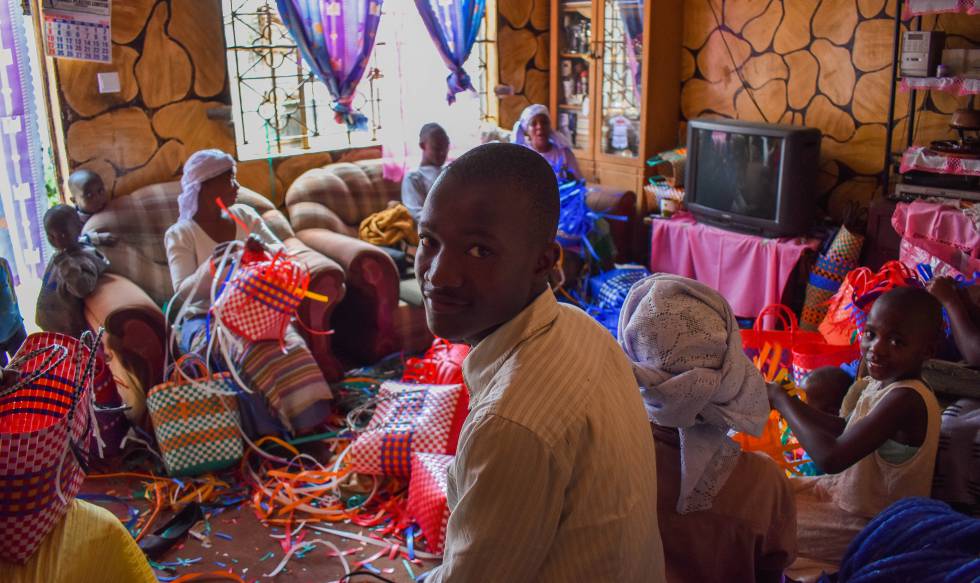
Como la mayoría de las mujeres shona, Sarah Mwawa se dedica a la cestería, mientras los hombres trabajan como carpinteros. Una norma dictada por el fundador de la iglesia marca que todas ellas vistan con largas faldas de colores claros. También envuelven su cabeza con un fular blanco. Con las cestas, Sarah consigue algunos ingresos pero lamenta no poder poner en marcha ninguna iniciativa. La falta de documentación es una barrera insalvable, no solo para impulsar un negocio, sino para acceder a la sanidad o a la educación.

La casa de Michael Tshuma, a las afueras de Nairobi.
La casa de Michael Tshuma, a las afueras de Nairobi. L. B.

Un problema con diferentes causas

Según Bénédicte Voos, funcionaria superior de Protección para los Apátridas en la oficina regional de Acnur, la agencia de la ONU para los refugiados, comunidades como la shona “no son reconocidas como nacionales por ningún Estado bajo su ley”. Varios son los factores que pueden dejar a una persona huérfana de nacionalidad. Por ejemplo, el conflicto entre las leyes de dos Estados. También puede darse una discriminación de género en la ley, como sucede en Somalia, y que solo los hombres puedan transmitir la nacionalidad, una norma que desprotege a los niños con padre desconocido o que se niega a reconocerlos. En el caso del pueblo shona, sin embargo, el problema tiene sus raíces en los procesos de independencia, que sacudieron la estructura social y administrativa de las antiguas colonias.

En África esta situación afecta sobre todo a personas “que nacieron en un país, han pasado allí toda su vida y sienten que pertenecen a él”, apunta Voos, en oposición a otros lugares del mundo, donde suele afectar más a migrantes o refugiados. Jonathan subraya con firmeza: “Esta no es nuestra tierra ancestral, pero nacimos aquí y aquí crecieron nuestros abuelos”. Su comunidad habla suajili e incluso kikuyu, la lengua local propia de la zona donde se instalaron los primeros shonas que migraron al país.

Cuando Kenia logró su independencia en 1963, se abrió una ventana de dos años para que los habitantes de todos los orígenes pudieran registrarse como ciudadanos: asiáticos, europeos o trabajadores migrantes de otras colonias africanas. Muy pocos lo hicieron. “En la práctica hubo algunas lagunas: no se llevó a cabo una campaña informativa exhaustiva e incluso aquellos que se enteraron no acababan de comprender qué suponía no registrarse”, apunta Walpurga Englbrecht, representante adjunta de Acnur en Kenia.

Los pocos que sí obtuvieron ese primer documento de identidad lo perdieron en 1978, cuando llegó al poder Daniel Arap Moi. El segundo presidente del país modificó la Ley de Registro de Personas, estableciendo la ascendencia keniana como condición indispensable para renovar el carné de identidad. La norma se aplicó de manera tácita, sin informar a la población del nuevo requerimiento. Así lo explica un estudio realizado por esta agencia de la ONU en 2018. Pero ningún shona podía demostrar tener padres o abuelos kenianos. El resultado de los fallos en el engranaje administrativo ha dejado en este país un número aproximado de 18.500 apátridas, entre los cuales, unos 3.500 son shona.

Sin documentos no hay derechos

A Sarah Mwawa, su segundo parto, cuando tenía 20 años, la pilló en la cárcel dónde la policía la trató «muy mal» mientras la trasladaban de urgencia a un hospital. Así recuerda la madre de Jonathan una de las varias detenciones que sufrió cuando era joven. ¿El motivo? No contar con ningún documento que demostrara que era keniana. Para muchos miembros del pueblo shona, el momento en el que son conscientes del problema de ser apátridas llega cuando les piden documentos para poder ser atendidos en la sanidad pública o cursar la educación secundaria.

A Michael Tshuma, otro joven de la comunidad, de 22 años, casi le costó dejar el colegio. Hasta hace dos años, en 2018, el sistema educativo keniano requería un certificado de nacimiento para presentarse a los exámenes finales de primaria y poder pasar a la secundaria (ahora, lo requiere ya de entrada para comenzar la primaria). Si el registro de nacimientos ya es de por sí bajo en la sociedad keniana —según los últimos datos oficiales de 2014, solo un 67% de los menores de cinco años están registrados— para los shonas resulta imposible, porque se necesita un carné de identidad de uno de los progenitores o de la misma persona, si ya es mayor de edad, para tramitarlo. “Pasé mucho tiempo en casa mientras buscábamos a alguien que nos ayudara. Mi madre llegó a pagar 15.000 chelines (unos 130 euros) en sobornos a funcionarios del registro”, revela el joven. Al final, un profesor se comprometió a conseguirles el documento a cambio de 3.500 chelines. “En tres días apareció con el certificado y así es como pude examinarme”.

No todos los miembros de esta comunidad son apátridas, sino inmigrantes. Durante los años siguientes a la independencia, otros shona regresaron al país. Como tantos otros kenianos, vivieron ajenos a la Administración durante muchos años. Es el caso de Nebili Dube, la madre de Tshuma. Ella tiene 60 años y llegó al país en los 90. Ahora, explica, “ya no tiene nada que ganar en Zimbabue, se siente más cómoda en Kenia”.

Sin embargo, a ojos de la ley de inmigración del país, que requiere un mínimo de siete años de residencia legal para conseguir la nacionalidad, su situación es complicada. “Si no ha regularizado su estado antes, entonces será muy difícil. Si se quedó ilegalmente, no cumple las condiciones y lo que hay que hacer es investigar las leyes del país de donde viene”, apunta Englbrecht. En este sentido, las autoridades kenianas se han mostrado cautelosas. Aunque el año pasado facilitaron certificados de nacimiento a 600 niños shonas, algo imprescindible para lograr su naturalización además de ser una obligación legal del gobierno, han hecho mucho hincapié hasta ahora en distinguir a los llegados antes de 1963 y después.

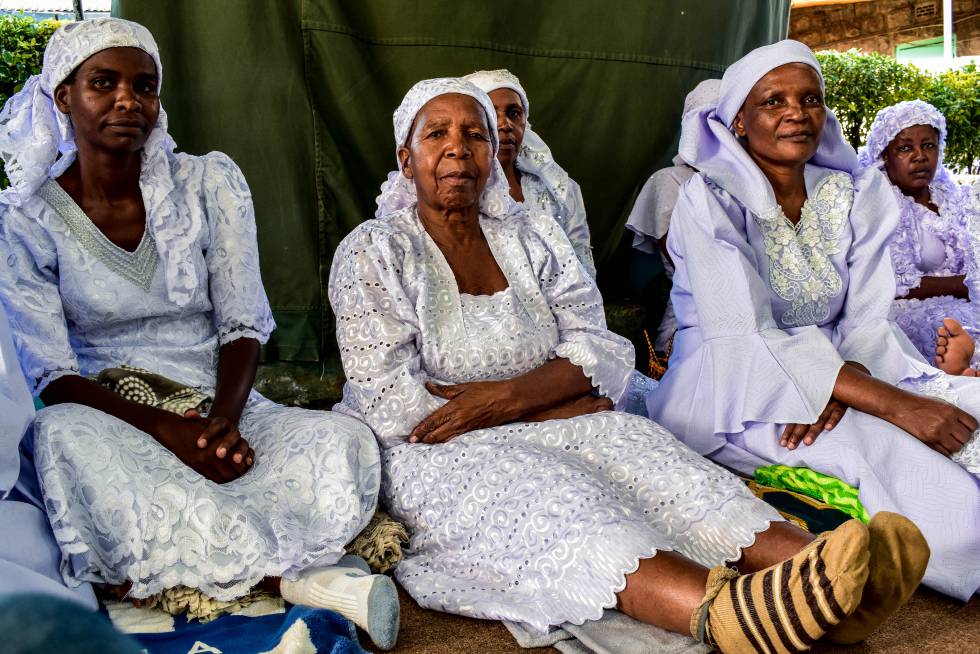
Una norma dictada por el fundador de la iglesia marca que todas las mujeres shona vistan con largas faldas de colores claros.
Una norma dictada por el fundador de la iglesia marca que todas las mujeres shona vistan con largas faldas de colores claros. L. B.

Para la comunidad, la decisión es urgente. Y los datos les dan la razón. Según un estudio socioeconómico que aún no ha sido publicado “está muy claro que la apatridia exacerba la pobreza”, afirma Wanja Munaita, funcionaria de Acnur. Jonathan Mwawa lo experimenta en su día a día: “No somos el tipo de gente que hace un presupuesto y compra comida para toda la semana. Vivimos día a día. Te despiertas y no sabes lo que comerás por la noche, pero tienes que salir”.

El informe, que compara datos de la comunidad con los de los ciudadanos kenianos que viven en las mismas zonas, muestra que “los shonas son al menos tres veces más pobres que el resto de kenianos en esa zona”, avanza la experta. También queda patente que, mientras los niveles de escolarización primaria son parecidos, el número de niños shonas que cursan secundaria es radicalmente más bajo. De momento, el Gobierno keniano se ha comprometido a resolver la situación durante este 2020. Quizás la hija de un año de Mwawa sí que pueda crecer sin la lacra de la apatridia. “No estoy preocupado porque yo crecí en la misma situación, así que para mí es normal, ¿sabes? Pero no lo es”.

Fuente e imagen tomadas de: https://elpais.com/elpais/2020/04/23/planeta_futuro/1587651376_444838.html

Comparte este contenido:

La canción más alegre del mundo y otros himnos desde África contra la covid-19

Reseñas/30 Abril 2020/Autora: Belén Hernández/elpais.com

La artista beninesa Angélique Kidjo versiona ‘Pata Pata’, la melodía que popularizó Miriam Makeba contra el ‘apartheid’ en Sudáfrica, para transmitir ahora información y esperanza sobre el coronavirus

Las canciones de resiliencia no han parado de sonar desde que la pandemia encerrara a más de media humanidad en sus casas. Al Resistiré y el Agapimú en los balcones de media España, al New York, New York de Frank Sinatra en la ciudad que nunca duerme, se ha unido un nuevo himno para transmitir esperanza y combatir el coronavirus: Pata Pata, una de las melodías africanas más internacionales de la historia, calificada por algunos como la canción «más desafiantemente alegre del mundo», y que ahora ha versionado Angélique Kidjo. Pero no es la única cantante del continente africano que ha querido sumarse a los sonidos contra la covid-19. Hay otros en Senegal, Uganda o Malawi.

Pata Pata significa, literalmente, Toca, toca en xhosa, una de las once lenguas oficiales de Sudáfrica. Sin cambiar los acordes ni las sílabas, pero sí la letra, la versión modificada y cantada por la artista Angélique Kidjo incluye estrofas como «¡Es hora de sentarse, de no tocarse! Quédate en casa y espera. Tenemos que lavarnos las manos, así que no ‘toca-toca’ (…) No te toques la cara y mantén la distancia, por favor».

Esta nueva versión de la canción más popular de Miriam Makeba, amiga y mentora de Angélique Kidjo, será de uso libre. Unicef ha animado a los ciudadanos a enviar vídeos, después de su lanzamiento el pasado 23 de abril, de ellos mismos bailándola y nombrando al perfil de Twitter de @UnicefAfrica o bien en las redes sociales Tik Tok e Instagram con las etiquetas #nopatapata y #healthyathome. Las mejores grabaciones se incluirán en un vídeo musical que se lanzará a mediados de mayo.

«Todos conocemos lo que hay que hacer, pero también sabemos cuánto sufren las comunidades. Pata Pata siempre ha estado ahí para las personas en momentos de lucha. Espero que lo esté una vez más. Y espero que, desde nuestro confinamiento, podamos volver a bailarla», ha explicado la cantante beninesa y también embajadora de Buena Voluntad de Unicef. Kidjo asegura que ha regrabado la canción para divulgar «información y esperanza» contra el coronavirus. Para la artista, además, la melodía tiene un significado especial, dado que su amigo, el icono del afrojazz Manu Dibango, murió a los 86 años a principios de abril por la covid-19: «Manu me inspiró. Miriam me inspiró. Y Pata Pata me dio esperanza».

Hace más de 50 años que la canción se convirtió en un éxito internacional, cuando Miriam Makeba la estrenara en el show de Ed Sullivan en 1967. Apodada Mama África, fue una cantante y compositora sudafricana, pero también una activista por los derechos humanos que trabajó por la erradicación del hambre, el sida y la violencia machista. Icono de la lucha contra el apartheid en Sudáfrica, en 1960 trató de volver a su país de origen desde Estados Unidos para el funeral de su madre, pero su pasaporte había sido revocado.

Makeba fue una de las primeras músicas africanas en recibir reconocimiento mundial, ganando un Grammy en 1965 y actuando por todo el mundo, desde Johannesburgo a Nueva York, Lagos o Londres. Intepretó su mayor exito, el citado Pata Pata, en el Festival de Viña del Mar en 1972 y se lo dedicó a Salvador Allende al grito de: «Viva la revolución chilena».

Youssou N’Dour y otras voces desde Senegal, Malawi y Uganda

En Senegal, uno de los países africanos que mejor está conteniendo la transmisión del virus, también han surgido voces que cantan para combatir la covid-19. Youssou N’Dour y otros 19 artistas senegaleses se han unido para cantar Daan Corona, una composición que busca concienciar a la población de la importancia de estar en casa, mantener la distancia social y lavarse las manos para no contagiarse. Los beneficios que recaude la canción irán destinados íntegramente al Ministerio de Sanidad de Senegal, según han informado los músicos implicados.

Desde Malawi, Lazarus Chigwandali, un músico y cantante albino que ha pasado de tocar en las calles de Lilongwe a actuar en grandes festivales, también compuso una canción sobre el coronavirus y la publicó el pasado 18 de abril, al tiempo que su país decretaba el confinamiento por 21 días.

A menudo, música, censura y activismo político van de la mano. Es el caso de la melodía contra el coronavirus que en Uganda lanzó el pasado 26 de marzo el cantante y opositor Bobi Wine, en la que advertía que de que «no hay que tomarse a la ligera» la enfermedad. «La mala noticia es que todo el mundo es una víctima potencial, pero la buena es que todo el mundo es una potencial solución», canta Wine.

Esta canción, que se titula Coronavirus Alert, fue censurada y prohibida por el Gobierno ugandés y no se puede escuchar en ninguna cadena nacional, a pesar de que su vídeo en Youtube ya tiene más de un millón de visualizaciones. El artista, de 38 años, Robert Kyagulanyi Ssentamu, es uno de los principales referentes políticos críticos al presidente Yoweri Museveni, de 75 años, y en el Gobierno desde hace 34. En una entrevista de EL PAÍS el pasado 1 de abril pedía que su canción se escuchara de nuevo en Uganda: «Le he pedido al Gobierno que deje la política a un lado por una vez y asuma que esto es una causa noble y necesaria. La gente tiene que oír el mensaje y como músico, esta es mi mejor manera de ayudar”.

Fuente e imagen tomadas de: https://elpais.com/elpais/2020/04/25/planeta_futuro/1587828111_614617.html

Comparte este contenido:
Page 84 of 622
1 82 83 84 85 86 622