Page 185 of 397
1 183 184 185 186 187 397

Trans and Open: Education Is Key to Making This a Sign of the Times

By Sarah Bartolome, Truthout

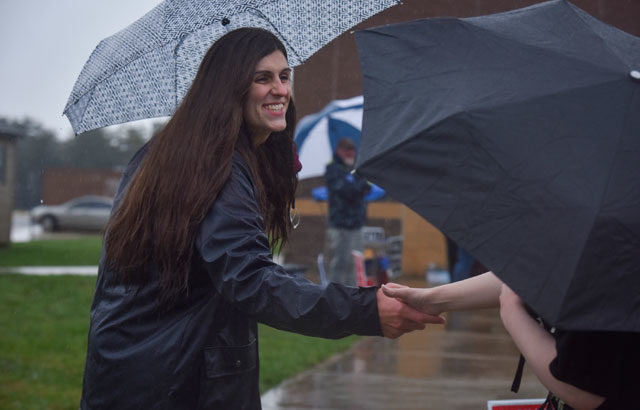
The recent elections were historic for the transgender community as Virginia’s Danica Roem is the first openly transgender person elected to a US state legislature. Andrea Jenkins, who won a seat on the Minneapolis City County, is the first openly trans person of color to ever hold public office in the United States.

Last year, Utah’s Misty Snow made history as one of the first openly transgender individuals to win a major-party nomination as the Democratic Senate candidate. Although her bid was unsuccessful, she is running for Congress, aiming for the 2018 primary.

The election of transgender citizens to public office is a huge win for the transgender community and marks another rise in visibility for trans-identified individuals in this country.

In addition to having trans voices represented in the political arena, openly trans individuals are also competing in the athletic arena. Nike spokesperson and duathlete in running and cycling, Chris Mosier, was the first openly transgender athlete to compete on a US national team in 2016. Harvard University swim team’s Schuyler Bailar, was the first openly transgender athlete to compete on a National Collegiate Athletic Association Division 1 men’s team.

In popular culture, television shows such as «Transparent» (renewed at the end of the summer for a fifth season), «Orange is the New Black,» «Nashville» and «Modern Family» have brought transgender actors and characters onto the small screens.

At a recent meeting of the American Society for Reproductive Medicine in San Antonio, Richard Paulson, Society president explained that advances in science would allow a trans woman to receive a donated, transplanted uterus and carry a child to term.

While transgender visibility is increasing, research by the National Center for Transgender Equality showcases the pervasive anti-transgender bias, verbal and physical assault and economic hardship experienced by many trans people in this country.

As a university educator, I understand that those of us in education stand at the front line, meeting our young people who may be navigating issues of gender identity. We are in a position to demonstrate to our trans-identified students that they are valued, accepted and protected members of our school communities. The challenges facing trans youth are significant and life threatening.

Trans-identified individuals have significantly higher rates of suicide attempts. While an estimated 4.6 percent of the general US population has reported a lifetime suicide attempt, a staggering 41 percent of trans or gender nonconforming individuals report attempting suicide, according to a recent report.

Anti-transgender violence is another significant threat and the Human Rights Campaign reported that in 2017 alone, at least 25 transgender people were murdered in the United States, the majority of whom were trans women of color.

Recently, two trans women of color were found dead, both victims of gunshot wounds. Stephanie Montez, murdered in Texas, and Candace Towns, murdered in Georgia, are the 24th and 25th known victims of fatal anti-trans violence this year. Both suffered the additional indignity of being misidentified by gender by police personnel and the media.

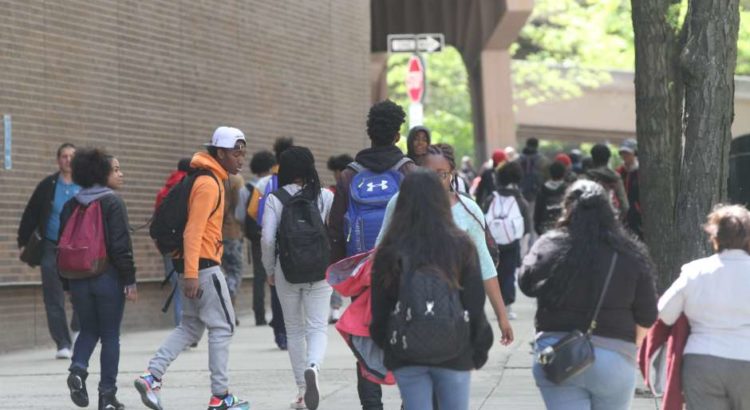
The estimated 150,000 transgender youth in the United States are also facing considerable challenges in US schools. Perhaps most troubling is the Gay, Lesbian and Straight Education Network’s report that schools are some of the most hostile environments for LGBT students. The report states that transgender and gender nonconforming students experience the highest rates of bullying, verbal and physical assault, as well as discriminatory practices.

Ash Whitaker, a male-identified transgender student in Kenosha, Wisconsin, suffered daily indignities as he was denied access to male restrooms at his high school and reportedly even presented with a green wristband to help staff ensure that he exclusively used a gender-neutral restroom in the school’s office.

Whitaker took the district to court, arguing that his rights were being violated under both the Fourteenth Amendment of the Constitution and under Title IX. Whitaker won his lawsuit and the subsequent appeal, a historic win, as it was the first time that an appeals court interpreted these laws to protect transgender individuals. This ruling was despite the current administration’s roll-back of President Barack Obama-era guidance advising all schools that Title IX regulations protect transgender students.

The Williams Institute also noted that suicide attempts were reported by more than 50 percent of trans-identified students who were harassed or bullied in school contexts and by 78 percent of those sexually assaulted in school. For the estimated 150,000 trans-identified youth in this country, the hostile environment is a significant challenge contributing to the elevated suicide risk among trans people.

Education and training can contribute to the creation of a more inclusive society that does not condone such injustice based on gender identities. Unfortunately, that is not always the case.

The transgender college students with whom I have interacted have described negative interactions with some professors, ranging from persistent misgendering and misnaming to denying them the ability to present their gender identity in course-related off-campus activities like student teaching.

In one especially disturbing case, a professor suggested a student «fade into the background, because some people are going to find this disgusting.»

These kinds of interactions may represent ignorance or lack of experience in working with trans youth, but also contribute to the hostile school climate plaguing the trans community.

School administrators and teachers must work to combat these disturbing trends. The moral imperative of supporting trans students is clear. This is a matter of life or death for the youth who deserve to be educated in a safe environment.

To be sure, some may not fully understand the issue of gender diversity and may struggle to find ways to support trans youth. The US public is split on the issue of public bathroom usage for transgender people. A 2016 Reuter’s poll found that 43 percent of respondents believed that transgender individuals should use the bathroom associated with their biological sex at birth.

Although transgender students make up a small percentage of school age children in this country, public schools are mandated by law to protect and serve all students. Some teachers may adopt the attitude that until they have a trans student, this issue does not concern them.

Yet, as trans youth find openly trans role models across a range of professional identities, the number of openly trans students enrolled in US public schools is likely to increase.

Rather than passively watch this public health crisis grow, teachers and administrators can be proactive in educating themselves about the issues facing trans youth and adopting inclusive school and classroom policies that provide opportunities for gender-diverse students to learn and thrive.

Recently organizations and coalitions for LGBT rights have issued guidance for school districts and teachers wishing to learn how to better support trans and gender nonconforming youth. «Schools in Transition: A Guide for Supporting Transgender Students in K-12 Schools» and the Gay, Lesbian and Straight Education Network’s «Model District Policy on Transgender and Gender Nonconforming Students» are two examples of best practices documents that provide educators and administrators with concrete guidance on how to best serve trans and gender nonconforming youth.

The Consortium of Higher Education LGBT Resource Professionals has issued a similar best practices document to help colleges and universities better support trans students on their campuses.

Gender Spectrum offers trainings on the topic of gender identity to schools and other organizations and Campus Pride offers its Safe Space Program trainings both in-person and online to help educators cultivate more inclusive classroom environments for all LGBT youth. The Trans Youth Equality Foundation also offers workshops on the needs of trans and gender nonconforming youth for student groups, educational institutions and other professional organizations.

Trans rights are human rights. As educators, we can model and inform all students the importance of understanding and valuing gender diversity. Even as we protect and honor trans students enrolled in education, we must also protect all trans people through education.


SARAH BARTOLOME

Sarah Bartolome is an assistant professor of Music Education at Northwestern University. She researches best practices in music education and the experiences of transgender musicians and is a Public Voices fellow through The OpEd Project.

Source:

http://www.truth-out.org/opinion/item/42631-trans-and-open-education-is-key-to-making-this-a-sign-of-the-times


Comparte este contenido:

Thinking Dangerously: The Role of Higher Education in Authoritarian Times

Dr. Henry Giroux

What happens to democracy when the president of the United States labels critical media outlets as «enemies of the people» and disparages the search for truth with the blanket term «fake news»? What happens to democracy when individuals and groups are demonized on the basis of their religion? What happens to a society when critical thinking becomes an object of contempt? What happens to a social order ruled by an economics of contempt that blames the poor for their condition and subjects them to a culture of shaming? What happens to a polity when it retreats into private silos and becomes indifferent to the use of language deployed in the service of a panicked rage — language that stokes anger but ignores issues that matter? What happens to a social order when it treats millions of undocumented immigrants as disposable, potential terrorists and «criminals»? What happens to a country when the presiding principles of its society are violence and ignorance?

What happens is that democracy withers and dies, both as an ideal and as a reality.

In the present moment, it becomes particularly important for educators and concerned citizens all over the world to protect and enlarge the critical formative educational cultures and public spheres that make democracy possible. Alternative newspapers, progressive media, screen culture, online media and other educational sites and spaces in which public pedagogies are produced constitute the political and educational elements of a vibrant, critical formative culture within a wide range of public spheres. Critical formative cultures are crucial in producing the knowledge, values, social relations and visions that help nurture and sustain the possibility to think critically, engage in political dissent, organize collectively and inhabit public spaces in which alternative and critical theories can be developed.

At the core of thinking dangerously is the recognition that education is central to politics and that a democracy cannot survive without informed citizens.

Authoritarian societies do more than censor; they punish those who engage in what might be called dangerous thinking. At the core of thinking dangerously is the recognition that education is central to politics and that a democracy cannot survive without informed citizens. Critical and dangerous thinking is the precondition for nurturing the ethical imagination that enables engaged citizens to learn how to govern rather than be governed. Thinking with courage is fundamental to a notion of civic literacy that views knowledge as central to the pursuit of economic and political justice. Such thinking incorporates a set of values that enables a polity to deal critically with the use and effects of power, particularly through a developed sense of compassion for others and the planet. Thinking dangerously is the basis for a formative and educational culture of questioning that takes seriously how imagination is key to the practice of freedom. Thinking dangerously is not only the cornerstone of critical agency and engaged citizenship, it’s also the foundation for a working democracy.

Education and the Struggle for Liberation

Any viable attempt at developing a democratic politics must begin to address the role of education and civic literacy as central to politics itself. Education is also vital to the creation of individuals capable of becoming critical social agents willing to struggle against injustices and develop the institutions that are crucial to the functioning of a substantive democracy. One way to begin such a project is to address the meaning and role of higher education (and education in general) as part of the broader struggle for freedom.

The reach of education extends from schools to diverse cultural apparatuses, such as the mainstream media, alternative screen cultures and the expanding digital screen culture. Far more than a teaching method, education is a moral and political practice actively involved not only in the production of knowledge, skills and values but also in the construction of identities, modes of identification, and forms of individual and social agency. Accordingly, education is at the heart of any understanding of politics and the ideological scaffolding of those framing mechanisms that mediate our everyday lives.

Across the globe, the forces of free-market fundamentalism are using the educational system to reproduce a culture of privatization, deregulation and commercialization while waging an assault on the historically guaranteed social provisions and civil rights provided by the welfare state, higher education, unions, reproductive rights and civil liberties. All the while, these forces are undercutting public faith in the defining institutions of democracy.

This grim reality was described by Axel Honneth in his book Pathologies of Reason as a «failed sociality» characteristic of an increasing number of societies in which democracy is waning — a failure in the power of the civic imagination, political will and open democracy. It is also part of a politics that strips the social of any democratic ideals and undermines any understanding of education as a public good and pedagogy as an empowering practice: a practice that can act directly upon the conditions that bear down on our lives in order to change them when necessary.

As Chandra Mohanty points out:

At its most ambitious, [critical] pedagogy is an attempt to get students to think critically about their place in relation to the knowledge they gain and to transform their world view fundamentally by taking the politics of knowledge seriously. It is a pedagogy that attempts to link knowledge, social responsibility, and collective struggle. And it does so by emphasizing the risks that education involves, the struggles for institutional change, and the strategies for challenging forms of domination and by creating more equitable and just public spheres within and outside of educational institutions.

At its core, critical pedagogy raises issues of how education might be understood as a moral and political practice, and not simply a technical one. At stake here is the issue of meaning and purpose in which educators put into place the pedagogical conditions for creating a public sphere of citizens who are able to exercise power over their own lives. Critical pedagogy is organized around the struggle over agency, values and social relations within diverse contexts, resources and histories. Its aim is producing students who can think critically, be considerate of others, take risks, think dangerously and imagine a future that extends and deepens what it means to be an engaged citizen capable of living in a substantive democracy.

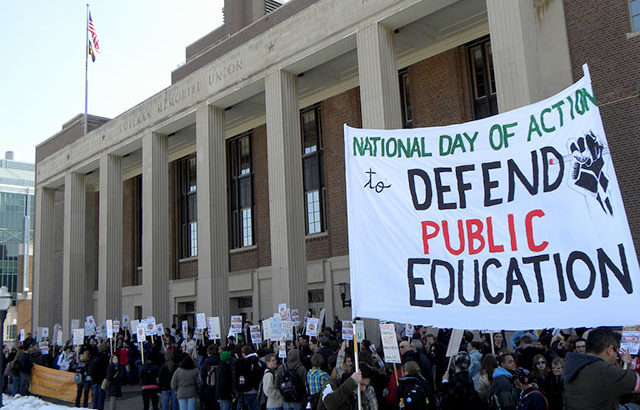
What work do educators have to do to create the economic, political and ethical conditions necessary to endow young people and the general public with the capacities to think, question, doubt, imagine the unimaginable and defend education as essential for inspiring and energizing the citizens necessary for the existence of a robust democracy? This is a particularly important issue at a time when higher education is being defunded and students are being punished with huge tuition hikes and financial debts, while being subjected to a pedagogy of repression that has taken hold under the banner of reactionary and oppressive educational reforms pushed by right-wing billionaires and hedge fund managers. Addressing education as a democratic public sphere is also crucial as a theoretical tool and political resource for fighting against neoliberal modes of governance that have reduced faculty all over the United States to adjuncts and part-time workers with few or no benefits. These workers bear the brunt of a labor process that is as exploitative as it is disempowering.

Educators Need a New Language for the Current Era

Given the crisis of education, agency and memory that haunts the current historical conjuncture, educators need a new language for addressing the changing contexts of a world in which an unprecedented convergence of resources — financial, cultural, political, economic, scientific, military and technological — is increasingly used to exercise powerful and diverse forms of control and domination. Such a language needs to be self-reflective and directive without being dogmatic, and needs to recognize that pedagogy is always political because it is connected to the acquisition of agency. In this instance, making the pedagogical more political means being vigilant about what Gary Olson and Lynn Worsham describe as «that very moment in which identities are being produced and groups are being constituted, or objects are being created.» At the same time it means educators need to be attentive to those practices in which critical modes of agency and particular identities are being denied.

In part, this suggests developing educational practices that not only inspire and energize people but are also capable of challenging the growing number of anti-democratic practices and policies under the global tyranny of casino capitalism. Such a vision demands that we imagine a life beyond a social order immersed in massive inequality, endless assaults on the environment, and the elevation of war and militarization to the highest and most sanctified national ideals. Under such circumstances, education becomes more than an obsession with accountability schemes and the bearer of an audit culture (a culture characterized by a call to be objective and an unbridled emphasis on empiricism). Audit cultures support conservative educational policies driven by market values and an unreflective immersion in the crude rationality of a data-obsessed market-driven society; as such, they are at odds with any viable notion of a democratically inspired education and critical pedagogy. In addition, viewing public and higher education as democratic public spheres necessitates rejecting the notion that they should be reduced to sites for training students for the workforce — a reductive vision now being imposed on public education by high-tech companies such as Facebook, Netflix and Google, which want to encourage what they call the entrepreneurial mission of education, which is code for collapsing education into training.

Education can all too easily become a form of symbolic and intellectual violence that assaults rather than educates. Examples of such violence can be seen in the forms of an audit culture and empirically-driven teaching that dominates higher education. These educational projects amount to pedagogies of repression and serve primarily to numb the mind and produce what might be called dead zones of the imagination. These are pedagogies that are largely disciplinary and have little regard for contexts, history, making knowledge meaningful, or expanding what it means for students to be critically engaged agents. Of course, the ongoing corporatization of the university is driven by modes of assessment that often undercut teacher autonomy and treat knowledge as a commodity and students as customers, imposing brutalizing structures of governance on higher education. Under such circumstances, education defaults on its democratic obligations and becomes a tool of control and powerlessness, thereby deadening the imagination.

The fundamental challenge facing educators within the current age of an emerging authoritarianism worldwide is to create those public spaces for students to address how knowledge is related to the power of both self-definition and social agency. In part, this suggests providing students with the skills, ideas, values and authority necessary for them not only to be well-informed and knowledgeable across a number of traditions and disciplines, but also to be able to invest in the reality of a substantive democracy. In this context, students learn to recognize anti-democratic forms of power. They also learn to fight deeply rooted injustices in a society and world founded on systemic economic, racial and gendered inequalities.

Education in this sense speaks to the recognition that any pedagogical practice presupposes some notion of the future, prioritizes some forms of identification over others and values some modes of knowing over others. (Think about how business schools are held in high esteem while schools of education are often disparaged.) Moreover, such an education does not offer guarantees. Instead, it recognizes that its own policies, ideology and values are grounded in particular modes of authority, values and ethical principles that must be constantly debated for the ways in which they both open up and close down democratic relations, values and identities.

The notion of a neutral, objective education is an oxymoron. Education and pedagogy do not exist outside of ideology, values and politics. Ethics, when it comes to education, demand an openness to the other, a willingness to engage a «politics of possibility» through a continual critical engagement with texts, images, events and other registers of meaning as they are transformed into pedagogical practices both within and outside of the classroom. Education is never innocent: It is always implicated in relations of power and specific visions of the present and future. This suggests the need for educators to rethink the cultural and ideological baggage they bring to each educational encounter. It also highlights the necessity of making educators ethically and politically accountable and self-reflective for the stories they produce, the claims they make upon public memory, and the images of the future they deem legitimate. Education in this sense is not an antidote to politics, nor is it a nostalgic yearning for a better time or for some «inconceivably alternative future.» Instead, it is what Terry Eagleton describes in his book The Idea of Culture as an «attempt to find a bridge between the present and future in those forces within the present which are potentially able to transform it.»

One of the most serious challenges facing administrators, faculty and students in colleges and universities is the task of developing a discourse of both critique and possibility. This means developing discourses and pedagogical practices that connect reading the word with reading the world, and doing so in ways that enhance the capacities of young people to be critical agents and engaged citizens.

Reviving the Social Imagination

Educators, students and others concerned about the fate of higher education need to mount a spirited attack against the managerial takeover of the university that began in the late 1970s with the emergence of a market-driven ideology, what can be called neoliberalism, which argues that market principles should govern not just the economy but all of social life, including education. Central to such a recognition is the need to struggle against a university system developed around the reduction in faculty and student power, the replacement of a culture of cooperation and collegiality with a shark-like culture of competition, the rise of an audit culture that has produced a very limited notion of regulation and evaluation, and the narrow and harmful view that students are clients and colleges «should operate more like private firms than public institutions, with an onus on income generation,» as Australian scholar Richard Hill puts it in his Arena article «Against the Neoliberal University.» In addition, there is an urgent need for guarantees of full-time employment and protections for faculty while viewing knowledge as a public asset and the university as a public good.

In any democratic society, education should be viewed as a right, not an entitlement. Educators need to produce a national conversation in which higher education can be defended as a public good.

With these issues in mind, let me conclude by pointing to six further considerations for change.

First, there is a need for what can be called a revival of the social imagination and the defense of the public good, especially in regard to higher education, in order to reclaim its egalitarian and democratic impulses. This revival would be part of a larger project to, as Stanley Aronowitz writes in Tikkun, «reinvent democracy in the wake of the evidence that, at the national level, there is no democracy — if by ‘democracy’ we mean effective popular participation in the crucial decisions affecting the community.» One step in this direction would be for young people, intellectuals, scholars and others to go on the offensive against what Gene R. Nichol has described as the conservative-led campaign «to end higher education’s democratizing influence on the nation.» Higher education should be harnessed neither to the demands of the warfare state nor to the instrumental needs of corporations. Clearly, in any democratic society, education should be viewed as a right, not an entitlement. Educators need to produce a national conversation in which higher education can be defended as a public good and the classroom as a site of engaged inquiry and critical thinking, a site that makes a claim on the radical imagination and builds a sense of civic courage. At the same time, the discourse on defining higher education as a democratic public sphere would provide the platform for moving on to the larger issue of developing a social movement in defense of public goods.

Second, I believe that educators need to consider defining pedagogy, if not education itself, as central to producing those democratic public spheres that foster an informed citizenry. Pedagogically, this points to modes of teaching and learning capable of enacting and sustaining a culture of questioning, and enabling the advancement of what Kristen Case calls «moments of classroom grace.» Moments of grace in this context are understood as moments that enable a classroom to become a place to think critically, ask troubling questions and take risks, even though that may mean transgressing established norms and bureaucratic procedures.

Pedagogies of classroom grace should provide the conditions for students and others to reflect critically on commonsense understandings of the world and begin to question their own sense of agency, relationships to others, and relationships to the larger world. This can be linked to broader pedagogical imperatives that ask why we have wars, massive inequality, and a surveillance state. There is also the issue of how everything has become commodified, along with the withering of a politics of translation that prevents the collapse of the public into the private. This is not merely a methodical consideration but also a moral and political practice because it presupposes the development of critically engaged students who can imagine a future in which justice, equality, freedom and democracy matter.

Such pedagogical practices are rich with possibilities for understanding the classroom as a space that ruptures, engages, unsettles and inspires. Education as democratic public space cannot exist under modes of governance dominated by a business model, especially one that subjects faculty to a Walmart model of labor relations designed «to reduce labor costs and to increase labor servility,» as Noam Chomsky writes. In the US, over 70 percent of faculty occupy nontenured and part-time positions, many without benefits and with salaries so low that they qualify for food stamps. Faculty need to be given more security, full-time jobs, autonomy and the support they need to function as professionals. While many other countries do not emulate this model of faculty servility, it is part of a neoliberal legacy that is increasingly gaining traction across the globe.

Third, educators need to develop a comprehensive educational program that would include teaching students how to live in a world marked by multiple overlapping modes of literacy extending from print to visual culture and screen cultures. What is crucial to recognize here is that it is not enough to teach students to be able to interrogate critically screen culture and other forms of aural, video and visual representation. They must also learn how to be cultural producers. This suggests developing alternative public spheres, such as online journals, television shows, newspapers, zines and any other platform in which different modes of representation can be developed. Such tasks can be done by mobilizing the technological resources and platforms that many students are already familiar with.

Teaching cultural production also means working with one foot in existing cultural apparatuses in order to promote unorthodox ideas and views that would challenge the affective and ideological spaces produced by the financial elite who control the commanding institutions of public pedagogy in North America. What is often lost by many educators and progressives is that popular culture is a powerful form of education for many young people, and yet it is rarely addressed as a serious source of knowledge. As Stanley Aronowitz has observed in his book Against Schooling, «theorists and researchers need to link their knowledge of popular culture, and culture in the anthropological sense — that is, everyday life, with the politics of education.»

Fourth, academics, students, community activists, young people and parents must engage in an ongoing struggle for the right of students to be given a free formidable and critical education not dominated by corporate values, and for young people to have a say in the shaping of their education and what it means to expand and deepen the practice of freedom and democracy. College and university education, if taken seriously as a public good, should be virtually tuition-free, at least for the poor, and utterly affordable for everyone else. This is not a radical demand; countries such as Germany, France, Norway, Finland and Brazil already provide this service for young people.

Accessibility to higher education is especially crucial at a time when young people have been left out of the discourse of democracy. They often lack jobs, a decent education, hope and any semblance of a future better than the one their parents inherited. Facing what Richard Sennett calls the «specter of uselessness,» they are a reminder of how finance capital has abandoned any viable vision of the future, including one that would support future generations. This is a mode of politics and capital that eats its own children and throws their fate to the vagaries of the market. The ecology of finance capital only believes in short-term investments because they provide quick returns. Under such circumstances, young people who need long-term investments are considered a liability.

Fifth, educators need to enable students to develop a comprehensive vision of society that extends beyond single issues. It is only through an understanding of the wider relations and connections of power that young people and others can overcome uninformed practice, isolated struggles, and modes of singular politics that become insular and self-sabotaging. In short, moving beyond a single-issue orientation means developing modes of analyses that connect the dots historically and relationally. It also means developing a more comprehensive vision of politics and change. The key here is the notion of translation — that is, the need to translate private troubles into broader public issues.

Sixth, another serious challenge facing educators who believe that colleges and universities should function as democratic public spheres is the task of developing a discourse of both critique and possibility, or what I have called a discourse of educated hope. In taking up this project, educators and others should attempt to create the conditions that give students the opportunity to become critical and engaged citizens who have the knowledge and courage to struggle in order to make desolation and cynicism unconvincing and hope practical. Critique is crucial to break the hold of commonsense assumptions that legitimate a wide range of injustices. But critique is not enough. Without a simultaneous discourse of hope, it can lead to an immobilizing despair or, even worse, a pernicious cynicism. Reason, justice and change cannot blossom without hope. Hope speaks to imagining a life beyond capitalism, and combines a realistic sense of limits with a lofty vision of demanding the impossible. Educated hope taps into our deepest experiences and longing for a life of dignity with others, a life in which it becomes possible to imagine a future that does not mimic the present. I am not referring to a romanticized and empty notion of hope, but to a notion of informed hope that faces the concrete obstacles and realities of domination but continues the ongoing task of what Andrew Benjamin describes as «holding the present open and thus unfinished.»

The discourse of possibility looks for productive solutions and is crucial in defending those public spheres in which civic values, public scholarship and social engagement allow for a more imaginative grasp of a future that takes seriously the demands of justice, equity and civic courage. Democracy should encourage, even require, a way of thinking critically about education — one that connects equity to excellence, learning to ethics, and agency to the imperatives of social responsibility and the public good.

History is open. It is time to think otherwise in order to act otherwise.

My friend, the late Howard Zinn, rightly insisted that hope is the willingness «to hold out, even in times of pessimism, the possibility of surprise.» To add to this eloquent plea, I would say that history is open. It is time to think otherwise in order to act otherwise, especially if as educators we want to imagine and fight for alternative futures and horizons of possibility.

Source:

http://www.truth-out.org/opinion/item/41058-thinking-dangerously-the-role-of-higher-education-in-authoritarian-times
Comparte este contenido:

¿Por qué luchamos? Experiencia de jóvenes en Naciones Unidas

Por: Amnistía Internacional

“En la India está penalizado darse un beso entre dos mujeres o entre dos hombres. Tenemos mucho por lo que luchar. Es fundamental salir a las calles y que el reclamo por la diversidad sexual y la no discriminación sume más voces. Igualmente la sociedad también tiene normas muy rígidas para parejas heterosexuales y las expresiones de deseo o de amor en lugares públicos no son muy comunes”. Pooja, activista de la India, revivía lo que allá es moneda corriente y acá, para las leyes argentinas, suena rudimentario. Si bien podemos leer estas historias en las redes, ser parte de un equipo de activistas que participó en el Foro de Alto Nivel Político de Naciones Unidas fue una oportunidad única para conocerlas de primera mano.

En junio quedé seleccionada entre un grupo de 500 jóvenes de todo el mundopara unirme a 4 jóvenes líderes de Kenia, Nigeria, Zimbabwe y la India*. Nuestra misión era lograr que, como jóvenes activistas por los derechos humanos, nuestras voces, preocupaciones y prioridades tengan un lugar en el Foro de Alto Nivel Político sobre Desarrollo Sostenible (HLPF-ONU) que se realizó del 11 al 19 de julio, en Nueva York.

Una vez en Nueva York pude conocer cómo trabajan otros y otras jóvenes que comparten el desafío de lograr el reconocimiento de nuestros derechos sexuales y reproductivosEn Kenia, Nairobi, por ejemplo, un joven facilita el acceso a Internet a través de un cyber para que otros puedan ir ahí a conectarse y sistematizar datos que recogen en comunidades. Son más de 300 jóvenes que caminan las comunidades para monitorear el nivel de implementación del Objetivo 5 que demanda lograr el empoderamiento de mujeres y niñas y la igualdad de género.

Otro día, entre sesiones, conocí a una joven activista de Nigeria que también trabaja a través de la educación en derechos humanos. Busca promover los derechos de las niñas a decidir sobre su cuerpo de forma libre y luchar contra el machismo en un país en el cual el matrimonio infantil y la mutilación genital femenina son unas de las principales violaciones de derechos humanos. Un gran desafío es buscar formas creativas de hablar estos temas entre niñas, niños y adolescentes para generar cambios culturales y sociales que respeten su dignidad y que involucren a todos y todas.

El cara a cara con jóvenes de todo el mundo me motivó a seguir trabajando para que otros puedan hablar libremente sobre sexualidad, puedan acceder a información sobre cuáles son sus derechos y puedan, además de ejercerlos, disfrutarlos. En la medida en que conocemos nuestros derechos, tenemos más poder para actuar por ellos. Estos Foros son una instancia en la cual podemos monitorear y dar seguimiento a la labor de los Estados para garantizar esos derechos a través de los Objetivos de Desarrollo Sostenible (comúnmente conocidos como ODS) y la Agenda 2030, acordados en diciembre de 2015.

Mi participación como joven activista fue como un curso acelerado en incidencia política ante Naciones Unidas: dos días previos al HLPF tuvimos talleres sobre el proceso de la Agenda 2030, el Foro y oportunidades de incidencia. Desde Amnistía Internacional pude dar un taller sobre campaña y activismo en el que fue muy valioso indagar sobre las experiencias e iniciativas en lugares tan distantes como Arabia Saudí, Alemania, Canadá y Uruguay. Luego, durante el Foro enfrenté los desafíos de conocer a actores relevantes: presentarte, tener claro para qué hablarle y cómo ese actor puede colaborar con tu estrategia eran preguntas claves antes de iniciar una charla. Sobre todo cuando un mismo edificio reunía a más de 2.500 personas para dar seguimiento a los ODS y revisar las estrategias para asegurar un desarrollo inclusivo.

No estás solo, no estás sola, súmate como joven activista al Grupo de Jóvenes de Amnistía Internacional Argentina para aprender más sobre tus derechos sexuales y reproductivos, defenderlos y actuar para que otros y otras jóvenes puedan ejercerlos libremente.

Fuente: https://www.amnesty.org/es/latest/news/2017/10/what-are-we-fighting-for-the-experience-of-young-people-at-the-united-nations/

Comparte este contenido:

«Se nos acaba el tiempo»: 15.000 científicos alertan del terrible destino de la humanidad»

Por: Portal Actualidad

En un artículo con más firmas que ninguno en la historia, científicos de todo el planeta advierten que las emisiones globales de CO2 aumentarán tras mantenerse estables los últimos tres años.

La ‘Advertencia de los científicos a la humanidad: segundo aviso‘, firmada por 15.372 hombres y mujeres de ciencia provenientes de 184 países y publicada este lunes en la revista ‘BioScience’, ha pasado a ser considerada como la señal de alarma que mayor respaldo mundial haya obenido en el mundo del saber un artículo de revista.

La deforestación, la pérdida de acceso al agua dulce, la extinción de especies y el crecimiento de la población humana son las principales causas de la preocupante situación en la que se encuentra la humanidad, se sostiene allí.

Los cambios más alarmantes

«Desde 1992, las emisiones de CO2 han subido un 62 % y la temperatura global se ha incrementado en 29 %, mientras que la abundancia de fauna de vertebrados ha caído un 29 %», resumió al diario Motherboard William Ripple, un ecologista de la Universidad Estatal de Oregón y coautor del artículo.

Durante los últimos 25 años se ha detectado una reducción de 26 % en la cantidad de agua dulce por habitante, un aumento del 75 % de áreas muertas en los océanos, y una pérdida de 120 millones de hectáreas de áreas forestales. «Estas son tendencias alarmantes. Necesitamos los medios proporcionados por la naturaleza para nuestra propia supervivencia«, dijo.

En contrapartida, se ha notado un tendencia positiva en la recuperación de la capa de ozono, gracias al protocolo de Montreal, suscrito en las Naciones Unidas en 1987.

El artículo recientemente difundido actualiza el original ‘Advertencia de los científicos a la humanidad’, publicado en 1992, hace 25 años. «Hicimos la actualización porque queríamos que el público supiera dónde nos encontramos hoy», afirmó Ripple.

Foto ilustrativa / pixabay.com

Lo que se avecina

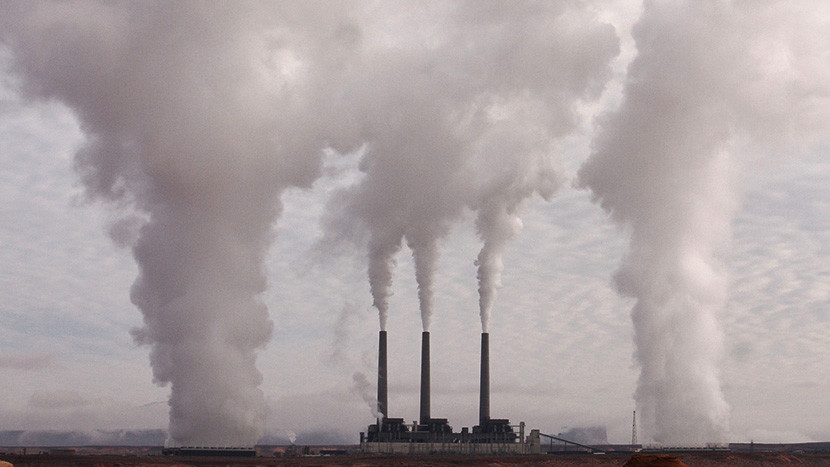
Los especialistas han advertido que es probable que las emisiones globales de CO2 aumenten luego de mantenerse estables durante los últimos tres años. Apenas ha habido énfasis en el cambio climático, dicen, e instan a la humanidad a dejar de usar combustibles fósiles.

«El cambio climático está aquí, es peligroso y está a punto de empeorar«, señaló Johan Rockström, director ejecutivo del Centro de Resilencia de Estocolmo, un instituto internacional para la ciencia de la sostenibilidad. Se estima que las emisiones de CO2 en Estados Unidos aumenten un 2,2 % en 2018. Las emisiones de China e India también siguen creciendo, aunque a un ritmo más lento que hace unos años.

«Pronto será demasiado tarde para cambiar el rumbo de nuestra trayectoria fallida, y se nos acaba el tiempo. Debemos reconocer en nuestra vida cotidiana y en nuestras instituciones de gobierno que la Tierra es nuestro único hogar», se lee en el artículo.

«Las emisiones de combustibles deben alcanzar su punto máximo pronto y llegar a cero para 2050», dijo Amy Luers, directora ejecutiva de Future Earth, una organización internacional de investigación cientifica de la sostenibilidad.

Cómo pararlo

El artículo enumera una serie de medidas posibles para detener las preocupantes tendencias ambientales, incluyendo la creación de más parques y reservas naturales, frenar el tráfico ilegal de animales, alimentarnos de dietas basadas en verduras, ampliar programas de planificación familiar y de educación para mujeres, y adoptar energías renovables y otras tecnologías «verdes».

«Trabajando juntos podemos hacer un gran progreso por el bien de la humanidad y del planeta», concluye el artículo.

Fuente: https://actualidad.rt.com/actualidad/255129-15000-cientificos-alertar-humanidad-alarmante-destino

Comparte este contenido:

Estados Unidos: California aprueba diez libros de texto inclusivos para alumnos de educación primaria

América del Norte/18 Noviembre 2017/Fuente: Universogay

California se convierte en el primer estado de los Estados Unidos que aprueba el uso de libros para alumnos de educación primaria que aluden explícitamente a las contribuciones políticas, sociales y económicas de personas que identifica como discapacitadas o pertenecientes al colectivo LGBT en base a la Ley de Educación Justa, aprobada en 2011.

La Junta de Educación de California aprueba «10 libros de texto de historia inclusivos» para alumnos de enseñanza primaria el pasado jueves, 9 de noviembre, rechazando dos libros de texto al no ser inclusivos en función de la Ley de Educación Justa de California, impulsada por el senador Mark Leno y aprobada en 2011. El estado dorado es el primero de los 50 que forman los Estados Unidos que aprueba la inclusión LGBT en la educación para luchar contra la discriminación.

El propósito de la Ley de Educación Justa es que las contribuciones políticas, sociales y económicas de aquellas personas con discapacidades o que se identifiquen como gays, lesbianas, bisexuales o transexuales sean reconocidas en los libros de texto de las escuelas públicas de California, así como que sean identificados como tales de manera explícita. Asimismo, protege que tanto la religión como la orientación sexual no sean presentadas de manera negativa.

En el año 2008, Mark Leno se convierte en el primer hombre abiertamente homosexual elegido para el senado de California. Sólo tres años después presenta al Anteproyecto de Historia LGBT que, como era de esperar, cuenta con la oposición de organizaciones que defienden la familia tradicional, como Candi Cushman, de Focus on the Family, que aseguraba que se trataba de un proyecto de ley innecesario dado que «California tiene algunas de las leyes más proactivas de la nación en este sentido ya en los libros», considerando «una locura promocionar» determinadas figuras en función de su ideología política, su orientación sexual o su identidad de género.

Al contrario, Rick Zbur, director de Equality California, celebra la llegada de libros de texto inclusivos, considerando que son «el próximo paso para que los estudiantes de California aprendan sobre las contribuciones de las personas LGBT (…). La aprobación de estos libros de texto significa que las escuelas de California ahora tendrán acceso a materiales aprobados que representan con exactitud a las personas LGBTQ». En la misma línea se manifiesta Renata Moreira, directora ejecutiva de Our Family Coalition, al afirmar que «los estudiantes LGBTQ, y aquellos con familias LGBTQ, finalmente podrán verse a sí mismos y nuestra historia reflejada con precisión en los libros de texto en California». Cincuenta y ocho de los proyectos de ley redactados por Leno se han convertido en ley, incluida la Ley de Cuidado de Salud Universal de California y el establecimiento oficial del Día de Harvey Milk en California.

Fuente: https://noticias.universogay.com/california-aprueba-diez-libros-de-texto-inclusivos-para-alumnos-de-educacion-primaria__15112017.html

Comparte este contenido:

Más estudiantes panameños en universidades de Estados Unidos

16 noviembre 2017/Fuente: La Estrella

Panamá es el segundo mayor remitente en Centroamérica de estudiantes extranjeros al país norteamericano. La licenciatura es el nivel más estudiado.

Unos 1,588 estudiantes panameños se encuentran estudiando en centros de educación superior de los Estados Unidos durante el año lectivo 2016-2017,  lo cual representa un aumento del 3.3% en comparación con el periodo 2015-2016.

Lo anterior es según la última versión del informe Open Doors [Puertas Abiertas], que posiciona a Panamá como el segundo mayor remitente de estudiantes extranjeros a Estados Unidos en Centroamérica, sólo detrás de Honduras, con 2,046 estudiantes.

Para el periodo actual, el 69% de los estudiantes panameños en Estados Unidos cursan licenciaturas; el 14% cursa estudios de posgrado; el 9% se encuentra realizando prácticas profesionales y el 8% realiza cursos de inglés no conducentes a la obtención de títulos.

Sobre las carreras, por lo general, los estudiantes panameños optan por derecho, contabilidad, biología y estudios ambientales. Los estados que más reciben estudiantes panameños son Texas, California, Nueva York, Arizona y Massachusetts.

“Estoy sumamente complacido de enterarme del aumento en el intercambio de estudiantes extranjeros entre Panamá y los Estados Unidos. A mi llegada, uno de los primeros temas que el presidente Varela y yo discutimos fue precisamente la creación de más oportunidades para que nuestros jóvenes intercambien experiencias”, expresó el embajador de Estados Unidos en Panamá, John D. Feeley.

“A través de loables iniciativas como ‘Panamá Bilingüe’, Panamá prepara su próxima generación de líderes por medio de la educación internacional. La Embajada de Estados Unidos en Panamá está deseosa de ayudar a encontrar oportunidades para facilitar la movilidad de los futuros líderes de Panamá, jóvenes que estudian en el extranjero, aprenden otras lenguas, otras culturas y que desarrollan contactos que a menudo los llevan a tener una carrera exitosa. Este informe es una muestra de que nuestros dos gobiernos mantienen ese compromiso y, en consecuencia, todos salimos ganando”, subrayó el diplomático.

El resultado actual refleja el mayor número de estudiantes universitarios panameños inscritos en centros de educación superior de Estados Unidos desde que el informe Open Doors se comenzó a publicar.

Sobre el Informe Open Doors’

El Informe ‘Open Doors’ es publicado por el Instituto de Educación Internacional (IIE, por sus siglas en inglés) desde su fundación en 1919. El mismo publica una encuesta estadística anual sobre estudiantes internacionales que cursan en Estados Unidos. A partir de 1972, el informe se publica en asociación con la Oficina de Asuntos Educativos y Culturales del Departamento de Estado de Estados Unidos.

El informe registra el número de estudiantes internacionales en universidades de Estados Unidos, así como estudiantes extranjeros inscritos en programas pre-académicos de enseñanza del idioma inglés.


Fuente: http://laestrella.com.pa/panama/nacional/estudiantes-panamenos-universidades-estados-unidos/24033253

Comparte este contenido:

Estados Unidos: NYC alcanza récord de graduados de escuela secundaria

Estados Unidos/16 noviembre 2017/Fuente: El Diario NY

La ciudad de Nueva York registró el más alto índice de estudiantes que terminaron la escuela secundaria y se enrolaron para continuar la universidad.

La canciller de Educación Carmen Fariña dio a conocer este miércoles el Informe de Calidad Escolar durante el periodo 2016-17 y reveló que el logro más trascendente es el índice de matriculación postsecundaria más alta jamás registrada en la ciudad.

El 57 % de los estudiantes de la Clase 2016 se inscribieron en un programa universitario, vocacional o de servicio público de dos o cuatro años después de la graduación, 2 puntos porcentuales más que el año anterior y hasta 6 puntos porcentuales tomando en cuenta la Clase de 2013.

La canciller de Educación junto al alcalde Bill de Blasio.

De acuerdo a una comunicación del Departamento de Educación (DOE), la Ciudad está aprovechando este progreso a través de la iniciativa Equidad y Excelencia para Todos que han impulsado el alcalde y la canciller, la que garantizará que para 2026, el 80 % de los estudiantes se gradúen a tiempo de secundaria y dos tercios de los graduados estén preparados para la universidad.

“Una mayor cantidad de nuestros graduados de escuelas públicas van a la universidad hoy más que nunca: eso es una gran noticia para nuestros graduados y sus familias, y para el futuro de nuestra ciudad. De esto se trata la iniciativa Equidad y Excelencia para Todos: asegurarnos de que todos nuestros niños, independientemente de su código postal, reciban la educación que necesitan para ingresar a la universidad, a sus carreras y prosperar”, dijo el alcalde Bill de Blasio.

De acuerdo al DOE, en general, las medidas de preparación para ingresar a la universidad mejoraron, incluyendo el porcentaje de los estudiantes en la promoción de 2017, que se graduaron de la escuela secundaria a tiempo y cumpliendo con los estándares de CUNY para la preparación universitaria en inglés y matemáticas, la misma que alcanzó el 46%, 9 puntos porcentuales más que el año anterior. Mientras tanto, entre los graduados, el porcentaje de estudiantes que cumplen con estos estándares aumentó al 62%.

La canciller Carmen Fariña destacó los logros de la iniciativa Equidad y Excelencia para Todos indicando que ésta es la responsable de la inscripción récord en las universidades e la causante de que los estudiantes vayan más temprano eligiendo el camino a la educación superior y las carreras.

“Desde 3-K hasta el 12º grado, estamos comprometidos a brindarles a nuestros estudiantes lo que necesitarán para tener éxito como adultos, y los padres son socios en ese trabajo”, dijo Fariña.

Según explicó la funcionaria, el aumento fue parcialmente impulsado por los cambios a los requisitos de remediación de matemáticas de CUNY y los Exámenes de Regentes de matemáticas del estado de Nueva York. Por ejemplo, dijo Fariña, en años anteriores, la preparación universitaria de CUNY podría ser demostrada por un estudiante que logró un puntaje particular en un examen Regente de matemáticas y completando un curso avanzado de matemáticas; a partir de 2017, los estudiantes pueden demostrar la preparación universitaria de CUNY y no requerir remediación en base a su puntaje de “Common Core Regents” sin el curso avanzado de matemáticas.

Además de los aumentos en la inscripción a la universidad y la preparación para la universidad, los resultados del Informe de Calidad Escolar 2016-17 para las escuelas primarias y secundarias también muestran mejoras en el rendimiento estudiantil:

En 2017, el 41 % de los estudiantes alcanzó los estándares de competencia en inglés, un 38 % más que el año anterior, mientras que el 38 % de los estudiantes alcanzó los estándares en matemáticas, un 36 % más que el año anterior.

Por cuarto año consecutivo, los resultados en inglés mejoraron en cada uno de los 32 distritos escolares de la ciudad en los cinco condados.

Fuente: https://eldiariony.com/2017/11/15/nyc-alcanza-record-de-graduados-de-escuela-secundaria/

Comparte este contenido:
Page 185 of 397
1 183 184 185 186 187 397