Page 189 of 396
1 187 188 189 190 191 396

EEUU: Altos costos impiden que alumnos calificados logren una educación superior

La mayoría de los californianos piensan que la asequibilidad es un gran problema en la educación superior pública, y muchos sostienen que los sistemas de la UC y Cal State, y los colegios comunitarios del estado, deberían hacer más para garantizar que todos los estudiantes tengan opciones de vivienda asequible, de acuerdo con una encuesta estatal anual publicada este jueves.

La mayoría de los californianos encuestados por el Instituto de Política Pública de California le otorgaron altas calificaciones a las instituciones por su calidad, pero más de tres cuartas partes creen que los estudiantes tienen que pedir prestado demasiado dinero para pagar un título universitario, y que los costos impiden que alumnos calificados y motivados logren una educación superior.

“Muchos dicen que el sistema de educación superior público va en la dirección equivocada y necesita cambiar. Las preocupaciones son en torno a la asequibilidad, el financiamiento y el gasto”, precisó Mark Baldassare, presidente del instituto no partidista que realizó el sondeo, con sede en San Francisco.

La vivienda estudiantil, en particular, fue un gran problema este año, remarcó Baldassare. “En respuesta a la crisis de vivienda del estado, los californianos quieren que los colegios y las universidades hagan más para asegurar que los estudiantes tengan opciones asequibles”, destacó.

La encuesta les preguntó a los californianos acerca de una variedad de temas, incluyendo la matrícula, la libertad de expresión y las políticas de inmigración.

Entre los hallazgos, se destacan:
• La mayoría de los encuestados (62%) dijeron que el nivel actual de fondos estatales para la educación superior no es suficiente, pero alrededor de un tercio (32%) también creen que las universidades gastan mucho dinero.
• Casi el 80% de los encuestados -que abarcan todos los partidos políticos, razas, etnias, ingresos y niveles de educación- están en contra de aumentar las cuotas estudiantiles.
• Los impuestos más altos para la educación superior son apoyados por el 57% de los demócratas, el 26% de los republicanos y el 40% de los independientes.
• Un poco más de la mitad (52%) no están satisfechos con la forma en que los funcionarios del campus manejan el tema de la libertad de expresión, y una sólida mayoría (64%) afirmó no estar satisfecha con la manera en que los funcionarios del campus accionan frente al acoso sexual.
• Casi dos tercios (63%) destacaron que en la próxima contienda para gobernador, las opiniones de los candidatos sobre la educación superior serán muy importantes para ellos.

El Instituto de Política Pública de California encuestó a 1,703 adultos de California, en inglés y español, del 8 al 17 de octubre. El margen de error de muestreo del sondeo fue de aproximadamente 3.3 puntos porcentuales.

Lea el informe completo aquí

http://www.latimes.com/local/education/la-essential-education-updates-southern-most-californians-rate-public-colleges-1509595068-htmlstory.htm

Comparte este contenido:

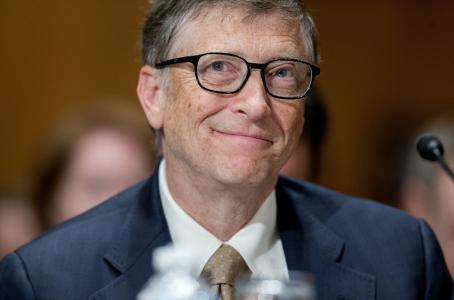
Bill Gates invertirá 1.7 mil mdd en la educación pública de EU

La inversión se hará en tres partes priorizando el desarrollo de nuevos planes de estudio, la creación de proyectos que sean innovadores y marquen la pauta en el sistema educativo de cara a los próximos 15 años y escuelas de educación especial.

América del Norte/EEU/elfinanciero.com.mx

El fundador de Microsoft dio a conocer sobre su inversión durante su discurso en el Council of the Great City Schools. Gates dijo que el plan es estandarizar los planes de estudio de las escuelas públicas, mejorar la calidad de la enseñanza, asistir a escuelas de educación especial y recopilar mejores datos para solucionar problemáticas del futuro.

“La educación es sin duda una de las áreas más desafiantes en las que invertimos” dijo Gates, “Estoy muy entusiasmado con el cambio en el enfoque de mi fundación en la asociación y ayuda a redes de escuelas”.

De dicha cantidad, el 60 por ciento se destinará al desarrollo de nuevos planes de estudio y redes de escuelas que trabajen juntas para identificar problemas y soluciones locales, dijo Gates. Aseguró que una gran parte de los problemas a atacar son los que afectan a escuelas segregadas por la raza de los niños y jóvenes que asisten a ellas.

Otro 25 por ciento se destinará a generar ‘Grandes apuestas’ que serán programas que podrían cambiar la educación pública en los próximos 10 a 15 años. Durante su discurso y con respecto a este tipo de programas, no hizo mención de alguna innovación específica.

El 15 por ciento final de dirigirá al sector de escuelas especiales que Gates cree que son vitales para ayudar a los niños con discapacidades de aprendizaje y capacidades especiales, con la intención de asegurarse de que la calidad de la educación que reciben sea de alto nivel.

«Nuestro papel es servir como un catalizador de buenas ideas impulsado por el mismo principio rector con el que comenzamos: todos los estudiantes, pero especialmente los estudiantes de bajos ingresos y los estudiantes de color, deben tener igual acceso a una educación de calidad”, dijo.

Fuente: http://www.elfinanciero.com.mx/tech/bill-gates-invertira-mil-mdd-en-la-educacion-publica-de-eu.html

Comparte este contenido:

Lanzan una nueva herramienta para crear juegos y usarlos en cursos en línea

The Training Arcade tiene tres características principales: una biblioteca de juegos, un editor en línea y tablas de clasificación y análisis de datos.

América del Norte/EEUU/ObservatorioITESMX

The eLearning Brothers y The Game Agency, dos compañías dedicadas a la gamificación y el aprendizaje interactivo, anunciaron el lanzamiento de The Training Arcade, una nueva herramienta que permite a los profesionales de la tecnología educativa crear juegos con rapidez y facilidad usando su propio contenido e incluirlos en sus programas en línea.

«The Training Arcade es una biblioteca de juegos divertidos e informales que se pueden personalizar rápidamente para reforzar el material educativo, evaluar la retención del conocimiento, medir la eficacia general de la enseñanza y mejorar los resultados del aprendizaje».

La nueva herramienta tiene tres características principales: una biblioteca de juegos diseñados para aumentar la retención del conocimiento; un editor en línea: un programa simple (no se necesitan habilidades de programación) que ayuda a exportar y compartir juegos; y tablas de clasificación y análisis de datos que proporcionan a los administradores de los juegos la capacidad de examinar los resultados obtenidos por los alumnos.

«Estamos muy contentos de asociarnos con eLearning Brothers para el lanzamiento de The Training Arcade, y no podríamos estar más emocionados de llevar nuestra experiencia de desarrollo de juegos a todo el mundo a precios accesibles», dijoJoseph McDonald, gerente y jefe de producción de The Game Agency.

Los juegos creados con la nueva herramienta se pueden modificar y personalizar para que coincidan con el estilo y las preferencias de cada institución o compañía.

“Ahora todos pueden crear juegos asombrosos que ocuparían un lugar destacado en cualquier tienda de aplicaciones debido a su naturaleza adictiva y divertida. La gente realmente disfruta estos juegos. Este es el futuro de la gamificación en el eLearning«, señaló Curtis Morley, ejecutivo de eLearning Brothers.

Fuente: https://observatorio.itesm.mx/edu-news/2017/10/30/lanzan-una-nueva-herramienta-para-crear-juegos-y-usarlos-en-cursos-en-lnea

Comparte este contenido:

Estados Unidos: New School expands outdoor education program

Watsonville / 01 de noviembre de 2017 / Fuente: https://register-pajaronian.com

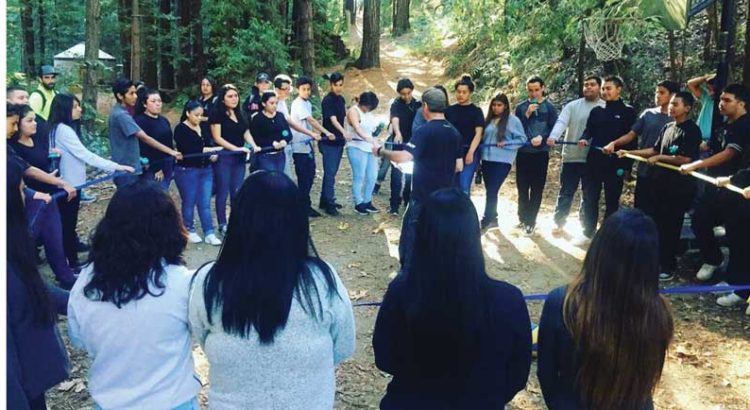
During the last school year, 15 students from New School Community Day School participated in the school’s first Outdoor Science and Character Development program.

The four-day program was so successful that the school expanded it this year to include all the school’s high schoolers and to run seven days.

The Environmental Outdoor Science and Character Development Program was created as a way to offer outdoor education to the students, but also to offer team-building and self-confidence-building activities.

It includes partners from the Watsonville Environmental Science Workshop and Growing Up Wild Adventure Camp, the City of Watsonville Public Works & Utilities Department and Watsonville Wetlands Watch.

It was funded by a Watsonville Rotary Community Grant.

The curriculum allows the teachers to apply Next Generation Science Standards to community projects, such as adopting Watsonville Slough.

“Today, I learned about trust,” said senior Sandy Aguado. “And we had a lot of fun.”

New School Intervention Teacher and 13-year Pajaro Valley Unified School District veteran Emily Halbig said that the program is ideal for students who rarely get to experience the natural areas that surround them.

“One student mentioned to me at the end of the day that his anxiety level had lowered and he was feeling much calmer and happier,” Halbig said.

“Today may have been my best day as a teacher,” she said of this year’s program.

Scheduled activities for the coming weeks include hiking above Eureka Canyon, scientific illustration, water testing, restoration and cleanup of Watsonville Slough, interpreting collected data and presentations of student findings.

The final day of the program will include the Cliffhanger High Ropes Course.

The program, which runs once a week, was created by teacher Bryan Love, along with Growing Up Wild, a Watsonville organization that connects young people to nature.

“The importance of our Outdoor Science & Character Development program is that it engages our student population with Next Generation Science Standards and pro-social skills practice through experiential learning activities,” Love said. “Now with our partnership with the City of Watsonville Public Works and Utilities, our students are able to directly apply the environmental awareness they gain through the program to our adoption practices in Watsonville Slough.”

•••

Fuente noticia: https://register-pajaronian.com/article/new-school-expands-outdoor-education-program

Comparte este contenido:

Estados Unidos: Maternal education: A matter of life and death for infants?

Estados Unidos / 01 de noviembre de 2017 / Por:  / Fuente: https://journalistsresource.org/

Infants whose mothers lack a high school education are, in some states, more than twice as likely to die as those born to mothers with four years of college or more, a new study finds.

The issue: Education provides tangible benefits, including employment opportunities and knowledge that can improve both the quality and duration of one’s life. But these effects extend beyond just the direct recipients of an education — children also benefit from their parents’ schooling.

Prior research on maternal education has shown that increased education offers mothers more connections with resources for infant health and an awareness of healthy behaviors (including exercise and not smoking). Education might also hone the skills needed to access and effectively use the health care system.

In general, infants born to more educated mothers have lower mortality rates. A new study delves into the specifics, determining on a state-by-state basis the extent to which mothers’ education levels affect their babies’ chances of survival.

An academic study worth reading: “Inequality in Infant Mortality: Cross-State Variation and Medical System Institutions,” published in Social Problems, October 2017.

About the study: Benjamin Sosnaud, a sociologist at Trinity University, looked at almost 23 million infant birth and death records from 1997 to 2002. The records, provided by the National Vital Statistics System, include data on the mother’s schooling. Sosnaud compared two groups of mothers — those who had less than 12 years of education and those who had 4 years of college or more. Controlling for other variables, including race and maternal age, he analyzed the association between maternal education and infant mortality across the 50 states.

Sosnaud also collected state-specific data from the American Hospital Association on the number of neonatal intensive care units (NICUs) per 10,000 residents and from the American Medical Association on the number of primary care providers per 10,000 residents. This data allowed him to analyze whether linkages exist between these components of state medical systems and trends in infant mortality rates.

Key findings:

  • Taking into account other factors, including race and maternal age, maternal educational level is significantly linked to infant mortality risk.
  • Alaska, North Dakota, Tennessee, West Virginia and Kentucky had the largest differences in infant mortality rates across maternal education levels. In these states, infants born to less-educated mothers were more than twice as likely to die as infants born to more-educated mothers.
  • The state with the smallest difference in infant mortality rates across maternal education levels was Hawaii. New Mexico and Nevada also exhibited less inequality.
  • In states with more NICUs, infant mortality risk decreased only for those born to less-educated mothers.
  • In states with more primary care physicians per 10,000 residents, infant mortality risk decreased for both groups of mothers, but more so for the college-educated group. Sosnaud suggests this might be because not all mothers could access primary care providers, regardless of availability.

Other resources:

  • The U.S. Centers for Disease Control and Prevention’s Division of Reproductive Health describes initiatives aimed at reducing infant mortality rates. They also have statistics available on infant mortality by state.
  • The U.S. Health Resources and Services Administration’s Maternal and Child Health Bureau collects relevant data and research.
  • The U.S. Department of Health and Human Services has an advisory committee on infant mortality.

Related research:

Fuente noticia: https://journalistsresource.org/studies/society/education/maternal-education-infant-mortality

Comparte este contenido:

Estado Unidos: Nace Ediciones Complutense, un sello para difundir el conocimiento de la universidad.

El centro educativo publicará libros de investigación y divulgación para llegar a “toda la sociedad”.

América del Norte/Estado Unidos/31.10.2017/Autor y Fuente:https://elpais.com/

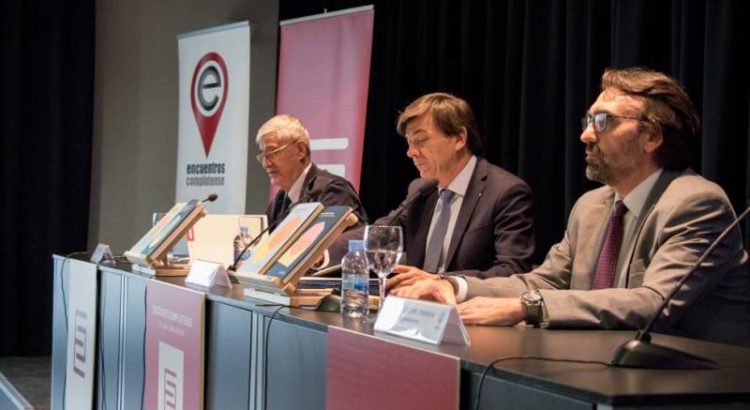
El cúmulo de conocimiento que produce la Universidad Complutense de Madrid (UCM) finalmente tiene un canal de difusión. El sello Ediciones Complutense ha sido presentado el pasado miércoles en un acto presidido por el rector de la institución, Carlos Andradas, en el Círculo de Bellas Artes. La editorial nace con el objetivo de “dar a conocer la producción científica, humanística, docente, técnica, cultural y artística [de la universidad] para contribuir al avance del conocimiento”, ha contado a EL PAÍS Antonio López, director del sello, que también ha estado presente en el evento.

Ediciones Complutense tendrá cinco clasificaciones diferentes de publicación: investigación, docencia, divulgación, actividad institucional y variedades. López afirma que la intención es generar, por un lado, libros destinados a estudiantes de la universidad e investigadores, con textos especializados en las distintas materias científicas y humanísticas. Por otro lado, la editorial también contará con una línea de difusión sobre temas de actualidad “para toda la sociedad”, indica su director.

Para adaptarse al panorama actual, las publicaciones de la Complutense aparecerán siempre en los dos formatos existentes, papel y electrónico. En el caso de los libros impresos, la universidad ha firmado un convenio con la distribuidora UDL para estar presente en las principales librerías de España. Por su parte, los ebooks podrán adquirirse directamente desde el sitio web de Ediciones Complutense, a través de la plataforma universitaria Unebooks o inclusive en Amazon. Los precios, de acuerdo con López, oscilarán entre los 12 y 15 euros para los títulos enfocados en la divulgación y entre los 20 y 30 euros para los volúmenes sobre investigación.

López remarca que las obras de la editorial pasan primero por un “filtro riguroso”, tanto del comité interno como de evaluadores externos. “Para que un libro se publique, debe tener al menos dos valoraciones positivas”, confirma. Además, en su búsqueda por llegar a los grandes públicos, especialmente a los más jóvenes, el director explica que prestarán especial atención al diseño de los libros. “Queremos superar la imagen tradicional que se tiene de las editoriales académicas y ofrecer una imagen actual, moderna”. En esa línea, afirma que han sido cuidadosos hasta con el diseño de su logotipo, de estética minimalista, e intentarán que las portadas luzcan “modernas y atractivas”.

“Queremos ser una editorial académica de referencia”, destaca el director. Su meta principal, en ese sentido, es “asentarse en el mercado español”. Los títulos de humanidades y ciencias sociales serán protagonistas en esa tarea. Posteriormente, López señala que tienen como objetivo llegar también al mercado latinoamericano y a otros escenarios internacionales. “Es muy importante para nosotros”, subraya. Como parte de esta tarea, Ediciones Complutense estará presente en algunas de las ferias literarias más importantes del mundo, como la de Fráncfort, en Alemania, y la de Guadalajara, en México.

Fuente:https://elpais.com/cultura/2017/10/27/actualidad/1509102561_735921.html

Imagen:https://ep01.epimg.net/cultura/imagenes/2017/10/27/actualidad/1509102561_735921_1509102905_noticia_normal.jpg

Comparte este contenido:

Donald Trump as the Bully-in Chief: Weaponizing the politics of Humiliation


Donald Trump’s ascendancy in American politics has made visible a scourge of oppressive stupidity, manufactured deceptions, a corrupt political system, and a contempt for reason that has been decades in the making; it also points to the withering of civic attachments, the undoing of civic culture, the decline of public life, and the erosion of any sense of shared citizenship. Galvanizing his base of true-believers in post-election demonstrations, the world is witnessing how Trump’s history of unabashed racism and politics of hate is transformed into a spectacle of fear, divisions, and disinformation.  Under President Trump, the plague of mid-20th century authoritarianism has returned not only in the menacing spectacle of populist rallies, fear-mongering, unchecked bigotry, and humiliation, but also in an emboldened culture of war, militarization, and extreme violence that looms over society like a rising storm.

The reality of Trump’s ascendency to the highest levels of power may be the most momentous development of the age because of its apocalyptic irrationality and the shock it has produced. People throughout the world are watching, pondering how such a dreadful event could have happened.  How have we arrived here? What forces have undermined education as a democratic public sphere making it incapable of producing the formative culture and critical citizens that could have prevented such a catastrophe from happening in an alleged democracy? We get a glimpse of this failure of civic culture, education, and civic literacy in the willingness and success of the Trump administration to empty language of any meaning while reducing political rhetoric to the service of humiliating taunts and a discourse of bigotry and hatred.  This is more than a politics of theatrical diversion, it is a rhetorical practice that constitutes a flight from historical memory, ethics, justice, and social responsibility.  Under such circumstances and with too little opposition, the United States government has taken on the workings of a disimagination machine, characterized by an utter disregard for the truth, and often accompanied, as in Trump’s case, by “primitive schoolyard taunts and threats.”  In this instance, Orwell’s “Ignorance is Strength” materializes in the Trump administration’s weaponized attempt not only to rewrite history, but also to obliterate it. What we are witnessing is not simply a political project but also a reworking of the very meaning of education both as an institution and as a broader cultural force.

Trump along with Fox News, Breitbart, and other right-wing cultural apparatuses, echoes one of totalitarianism’s most revered notions, one which pushes the notion that truth is a liability and ignorance a virtue.  Under the reign of this normalized architecture of alleged commonsense, education and critical thinking are regarded with disdain, words are reduced to data, and science is confused with pseudo-science. All traces of critical thought appear only at the margins of the culture as ignorance becomes the primary organizing principle of American society. For instance, two thirds of the American public believe that creationism should be taught in schools and a majority of Republicans in Congress do not believe that climate change is caused by human activity, making the U.S. the laughing stock of the world. Such ignorance operates with a vengeance when it comes to higher education. Not only is higher education being defunded, corporatized, and transformed to mimic labor relations associated with Wal-Mart by the Trump administration under the preposterous ill-leadership of the religious fundamentalist, Betsy DeVos, it is also according to a recent poll viewed by most Republicans as being “bad for America.” One of its liabilities being is that it is at odds with Trump’s vision of making America great again.[1]             The politics of humiliation has its counterpart in systemic culture of lies that has descended upon America like a plague. Trump rejoices in his role as a serial liar knowing that the public is easily seduced by exhortation, emotional outbursts, and sensationalism, all of which mimics an infantilizing and depoliticizing celebrity culture. Image selling now entails lying on principle making it easier for politics to dissolve into entertainment, pathology, and a unique brand of criminality.  The corruption of both the truth and politics is abetted by the fact that the American public has become habituated to overstimulation and live in an ever-accelerating overflow of information and images. Experience no longer has the time to crystalize into mature and informed thought.  Popular culture delights in the spectacles of shock and violence.[2] Defunded and stripped of their role as a public good, many institutions extending from higher education to the mainstream media are now harnessed to the demands and needs of corporations and the financial elite. In doing so, they have succumbed to the neoliberal assault reason, thoughtfulness, and informed arguments. Governance is now replaced by the irrational tweeter bursts of an impetuous four-year old trapped in the body of an adult.

Donald Trump is the high-priest of caustic rants. He appears to revel in a politics of humiliation both as a tool to insult his critics and as a way to discredit policies he dislikes. In part, his resort to producing humiliating insults is a rhetorical ploy that mimics a mix of cut throat politics, aggressive showmanship, and the bullish behavior found on Reality TV shows, not unlike the television show, The Apprentice, which launched him to celebrity status.  At the heart of Trump’s politics is a distorted mindset and a desire to make sure everyone but him is “fired” or voted off the island. Trump’s mode of governance combines a penchant for inflicting pain with a relentless obsession with ratings, praise, and disruption.  Such actions would be comical if it were not for the fact that they are being used endlessly by one of the most powerful politicians in the world.

Trump’s insults and bullying behavior have become a principal force shaping his language, politics and policies. He has used language as a weapon to humiliate just about anyone who opposes him. He has publicly humiliated and insulted members of his own Cabinet, such as Secretary of State, Rex W. Tillerson and Attorney General Jeff Sessions, undermining their respective ability to do their jobs. Senators such as Mitch McConnell, Jeff Flake, and Ben Sasse, among others have been the object of Trump’s infantile tweets.  More recently, he has mocked Senator Bob Corker’s height referring to him on Twitter as “Liddle Bob Corker,” and he has shamefully insulted Senator John McCain’s body language, pointing to the physical disabilities he suffered while he was a prisoner of war in Vietnam. The latter is particularly disturbing since McCain has recently been stricken with cancer. Chris Cillizza, a CNN editor, claims that “By my count, Trump has personally attacked 11 senators — or, roughly, 21% of the entire 52 person GOP conference between his time as a candidate and his nine months in the White House. That’s more than 1 in 5!”[3]

Ignorance is a terrible wound when it is self-inflicted but it is both a plague and dangerous when it is the active refusal to know and translates into power. Trump’s lies, lack of credibility, lack of knowledge, and unbridled narcissism have suggested for some time that he lacks the intelligence, judgment, and capacity for critical thought necessary to occupy the presidency of the United States. But when coupled with his childish temperament, his volatile impetuousness, and his Manichean conception of a world inhabited by the reductionist binary that only views the world in term of friends and enemies, loyalists and traitors, his ignorance translates into a confrontational style that puts lives, especially those considered disposable, if not the entire planet at risk.

Trump’s seemingly frozen and dangerous fundamentalism and damaged ethical sensibility suggest that we are dealing with a kind of nihilistic politics in which the relationship between the search for truth and justice, on the one hand, and moral responsibility and civic courage on the other have disappeared. For the past few decades, as Richard Hofstadter and others have reminded us, politics has been not only disconnected from reason but also from any viable notion of meaning and civic literacy. Government now runs on willful ignorance as the planet heats up, pollution increases, and people die. Evidence is detached from argument. Science is a subspecies of fake news, and alternative facts are as important as the truth.  In this instance, violence becomes both the pre-condition and the after effect of the purposeful effort to empty language of any meaning. Under such circumstances, Trump gives credence to the notion that lying is both normalized and can serve as the enabling force for violence.

For Mr. “Grab ‘Em By the Pussy”, words no longer bind or become the object of self-reflection, even when they reveal a complete collapse of civility and ethical norms. In this case, Trump’s revolting hyper-masculinity scoffs at any chance of dialogue or justifiable moral outrage. Trump has sucked all of the oxygen out of democracy and has put in play a culture and mode of politics that kills empathy, wallows in cruelty and fear, and mutilates democratic ideals. Trump’s worldview is shaped by Fox News and daily flattering and sycophantic news clips by his staff that boost his deranged need for emotional validation, all of which relieves him of the need to think and empathize with others. He inhabits a privatized and self-indulgent world in which tweets appear perfectly suited to colonizing public space and attention with his temper tantrums and incendiary vocabulary.  His call for loyalty is shorthand for developing a following of stooges who offer him a false and egregiously grotesque sense of community–one defined by laughable display of ignorance and a willingness to eliminate any vestige of human dignity. Anyone who communicates intelligently is now part of the fake news world that Trump has invented. Language is now forced into the service of violence. Impetuousness and erratic judgment become central to Trump’s leadership, one that is as ill-informed as it is unstable.

On a policy level, Trump has instituted legislation that reveals both his embrace of violence and the racial bigotry that drives it. For instance, he has recently revoked DACA [Deferred Action for Childhood Arrivals], putting the bodies and dreams in limbo of over 800,000 undocumented immigrants brought to the country as children. There is something particularly cruel and sadistic about Trump’s punishing these Dreamers who were brought to this country involuntarily and who only have known the United States as their home. Moreover, this particular group of immigrants by all the relevant measures are well-educated, economically productive, and valuable members of American society. This particular policy points to a president who thrives on a politics of social abandonment and extreme punitiveness.

Another recent example of Trump’s penchant for cruelty in the face of great hardship and human suffering is evident in his slow response to the devastation Puerto Rico suffered after Hurricane Maria. Five weeks after the powerful hurricane hit, the health care system is in shambles, a third of the population are without clean water, waterborne diseases are spreading, and the number of deaths is increasing. Trump’s response has been hideously slow, with conditions getting painfully worse. Given the accelerating crisis, the Mayor of San Juan, Carmen Yulin Cruz made a direct appeal to President Trump for aid stating: “We are dying.” Trump told her to stop complaining and then produced a series of tweets in which he suggested that the plight of the Puerto Rican people is their own fault and that they should start helping themselves rather than rely on government services. He also suggested, without irony or a sense of shame, that the crisis in Puerto Rico was not that bad when compared to a “real crisis like Katrina.”

Trump’s politics of humiliation reflects more than a savage act of cruelty, such practices also points to an emerging form of state sanctioned violence. What is different about Trump’s leadership compared to past presidents is that he relishes violence and willfully inflicts humiliation and pain on people; he pulls the curtains away from a systemic culture of cruelty, and in doing so refuses to hide his own sadistic investment in violence as a source of pleasure and retribution. Trump is the bully-in-chief, a sadistic troll who has pushed the country — without any sense of ethical and social responsibility — deep into the abyss of authoritarianism and has propagated a culture of violence and cruelty that is as unchecked as it is poisonous and dangerous to human life and democracy itself.

[1] Chris Riotta, “Majority of Republicans say Colleges are Bad for America (yes, really),” Newsweek (July 10, 2017).

[2] Brad Evans and Henry A. Giroux, Disposable Futures: The Seduction of violence in the Age of the Spectacle  (San Francisco: City Lights, 2016).

[3] Chris Cillizza, “Donald Trump has now personally attacked 1 in 5 Republican senators,” CNN Politics-The Point (October 24, 2017).

Source:

https://www.counterpunch.org/2017/10/30/donald-trump-as-the-bully-in-chief-weaponizing-the-politics-of-humiliation/

Comparte este contenido:
Page 189 of 396
1 187 188 189 190 191 396