Page 51 of 397
1 49 50 51 52 53 397

‘My Faith in This World Is Gone.’ For Protesters Injured by Police, There’s No Real Recovery

‘My Faith in This World Is Gone.’ For Protesters Injured by Police, There’s No Real Recovery

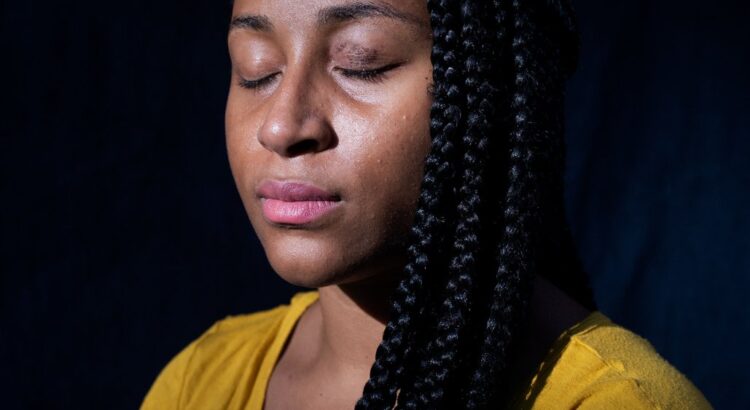
Shantania Love was walking away from law enforcement officers at a protest in Oak Park, Calif., on May 29 when they started firing projectiles to disperse the crowd. Love believes it was a rubber bullet that permanently blinded her.

Ellen Urbani shook her head in disbelief as she scanned the cobwebbed shelves of her suburban garage, looking for items that might protect her at a Black Lives Matter protest. “This is absurd,” she thought. “I can’t believe I let people talk me into thinking I need this stuff.”

She dusted off her son’s snowboard helmet and hooked it onto a backpack that held her daughter’s swim goggles, her asthma respirator and a change of clothes in case the long-sleeved yellow V-neck she was wearing burned off from chemical gas. She scribbled her husband’s name and phone number on her thigh in permanent marker, in the event she became incapacitated. With her auburn hair braided into pigtails, the 51-year-old author then left the safety of her 43-acre farm outside Portland, Ore., on July 24 to link arms with hundreds of other mothers demanding justice for George Floyd.

By midnight, Urbani says, federal agents had enveloped the protesters in a cloud of gas, and flash grenades exploded. Projectiles as big as softballs began to fly. As the women around her choked and vomited from the fumes and as bodies began crashing into each other, Urbani reminded herself that she’s “just a mom,” a law-abiding former Peace Corps volunteer and a threat to no one. “Then I felt my bone break,” says Urbani. “It felt like being hit by a 90-m.p.h. baseball.”
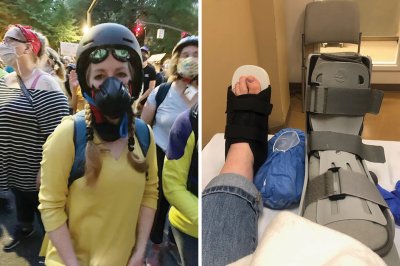
Ellen Urbani was hit in the foot by what she believes was a rubber bullet at a protest in Portland, Ore., on July 24.

Ellen Urbani was hit in the foot by what she believes was a rubber bullet at a protest in Portland, Ore., on July 24.
While taking part in the largest sustained social justice mobilization in modern U.S. history, dozens of people have been beaten with batons, hit by cars, doused in pepper spray and critically wounded by rubber bullets, beanbag rounds and other police weapons. More than 93% of Black Lives Matter protests across the U.S. have been peaceful, according to an analysis of more than 7,750 demonstrations from May 26 to Aug. 22 by the nonprofit Armed Conflict Location & Event Data Project. Even so, at least 115 protesters were shot in the head, face and neck with various projectiles, including bullets and tear gas canisters, from May 26 to July 27, according to a report by Physicians for Human Rights. The nonprofit health-advocacy group compiled its data from news and medical reports, social media posts and lawsuits.
Compared with other Black Lives Matter protesters injured by law enforcement, Urbani knows she is one of the luckier ones. She was hit in the foot by what she believes was a rubber bullet, which shattered her big toe. It’s slowly healing as she undergoes physical therapy, but her mental anguish is here to stay. “I never thought I’d be shot in my own city by my own countrymen,” says Urbani, who comes from a military family and who had always respected law enforcement.

«I never thought I’d be shot in my own city, by my own countrymen.»

In the competition to define what has happened in America’s streets since Floyd’s death on May 25, critics of the protests point to the handful of cities where stores were burned or looted. Advocates for protesters reply that, regrettable as those incidents may be, property can be restored. But the bodies of demonstrators have been irreparably damaged—often in incidents documented by cell-phone cameras, posted to social media and replayed on local and national news. Millions of people saw footage of a young woman being knocked to the ground in New York City and of an elderly man bleeding from his ear after being shoved to the pavement in Buffalo, N.Y. They watched as a New York Police Department (NYPD) vehicle sped up and drove into a crowd of protesters.

In each case, the outrage is compounded by the setting: a protest over police brutality. And months later, after the attention has shifted elsewhere, the injured are left to navigate a new set of challenges: mounting medical bills, job losses, unquenchable anger and time-consuming lawsuits that end up costing taxpayers more than they cost the targeted police department. Only occasionally do they see the officers who have changed their lives charged with crimes or fired from their jobs.
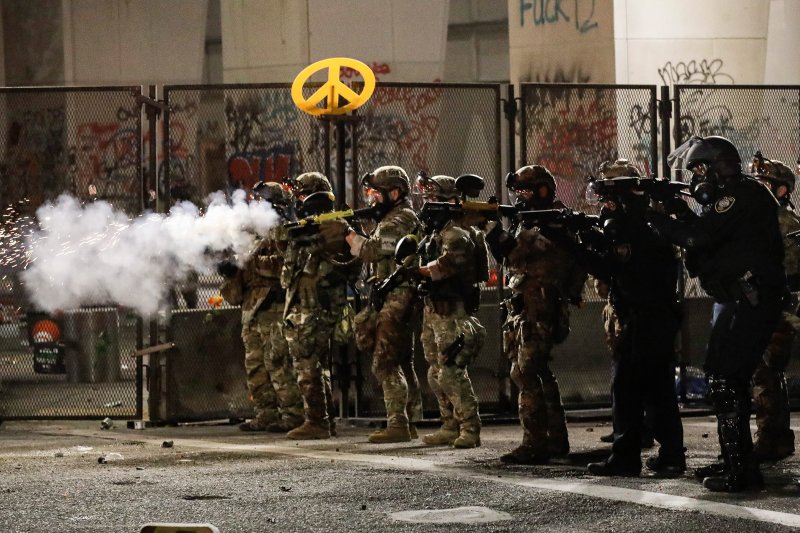
Federal agents use crowd-control munitions to disperse Black Lives Matter demonstrators during a protest in Portland, Ore., on July 24.

Federal agents use crowd-control munitions to disperse Black Lives Matter demonstrators during a protest in Portland, Ore., on July 24.
Marcio Jose Sanchez—AP

“It’s not the police departments that feel the weight and burden of it,” says Jennvine Wong, a staff attorney with the Legal Aid Society.

In New York City alone, taxpayers spent $220 million to settle more than 5,800 lawsuits filed against the NYPD during the 2019 fiscal year, according to the latest data released by the city comptroller. In 2018, Chicago taxpayers spent more than $113 million—the highest amount since at least 2011—to settle police-misconduct lawsuits and pay for outside lawyers, according to an analysis by the Chicago Reader. Breonna Taylor’s family settled with the city of Louisville, Ky., for $12 million after police shot her to death in her own apartment, but protests have continued over the decision not to prosecute officers for her killing.

“My faith in this world is gone,” says Dounya Zayer, the young woman who was pushed by a police officer during a Black Lives Matter march in New York City on May 29. The 21-year-old had a seizure after her head smacked against the curb and has yet to recover from the concussion and back injury that she suffered. “I’m angry and scared and depressed,” she says. “I know I’m not the only one.”

On July 11, Donavan La Bella was holding a stereo above his head at a Portland, Ore. protest, blasting a song by the artist Dax called “Black Lives Matter,” when a line of U.S. Marshals across the street began launching smoke canisters. Cell-phone footage shows La Bella, 26, calmly kicking aside a canister that landed at his feet, then picking it up and tossing it away before lifting the stereo above his head again. Seconds later, as La Bella stands in place, not moving toward the officers, he’s shot between the eyes with an “impact munition” and drops to the ground.

La Bella’s skull was fractured, and the bones around his left eye socket were broken. He has trouble concentrating and controlling his emotions and suffers from extreme sensitivity to light and sound and impaired vision, says his mother, Desiree La Bella. “Try to imagine having a migraine for a minimum of 12 hours a day for five, six weeks straight,” his mother says. “You can’t get away from that kind of pain.” La Bella spent most of the past two months in the hospital, having returned there on Aug. 17 for the third time to treat a sinus and brain infection as well as a cerebrospinal fluid leak, conditions related to his injuries.
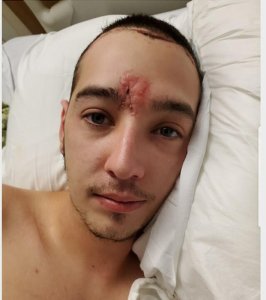
Donavan La Bella was shot with impact munition at a protest in Portland, Ore., on July 11, fracturing his skull and breaking the bones around his left eye socket.

Donavan La Bella was shot with impact munition at a protest in Portland, Ore., on July 11, fracturing his skull and breaking the bones around his left eye socket.
Courtesy the La Bella Family

“The trauma we are facing now is long-lasting,” says Zayer, who still has seizures, suffers migraines and struggles to keep food down. The former competitive gymnast is in physical therapy up to five times a week when she’s not sitting in a waiting room to see multiple specialists. “Physically and mentally, I feel like a whole different person,” she says. “I don’t think I’m ever going to be the same.”

Zayer was one of dozens of protesters who testified in June about being shoved, kicked and violently wrangled by police, during a three-day public hearing held online by the New York attorney general. Some displayed cuts and bruises as they told investigators they were kicked in the jaw, thrown against brick walls and pushed off bikes. NYPD Commissioner Dermot Shea testified that hundreds of police officers were injured during the first few nights of protests as some demonstrators looted and threw bottles, bricks, trash cans and rocks at them. Others set fire to police vehicles and attacked precincts. “This was some of the worst rioting that occurred in our city in recent memory,” he said, adding that it’s difficult for officers to avoid interacting with peaceful protesters while dealing with violent ones. Since protests erupted in the city on May 28, an NYPD spokesperson said, more than 470 officers have been wounded, including 20 who have not yet recovered enough to return to work. Zayer and other witnesses challenged that narrative.

“I didn’t often see cases where protesters were fighting back,” said Whitney Hu, a Brooklyn activist who aided Zayer and more than a dozen others who were pepper sprayed or beaten with batons. “I saw protesters hiding or trying to help others who’ve been wounded.”

Shantania Love, a 30-year-old Sacramento mother of two, was walking away from law enforcement officers at a protest in Oak Park, Calif., around midnight on May 29 when they started firing projectiles to disperse the crowd. Love believes a rubber bullet hit her in the eye, permanently blinding her in that eye, as she turned around to look for her brother. “My eye was blown to pieces,” says Love, who underwent two surgeries in an attempt to save her vision. “It was probably the worst pain I’ve ever felt, and I pushed out two kids.”

Love now struggles with mundane tasks like pouring a cup of juice or walking up and down the stairs because of her skewed depth perception. For days, her youngest daughter, who is 5, cried when she saw Love’s wounded eye. Love hasn’t been able to return to work as a medical assistant and consequently lost her health benefits in August. “I have to pay for everything myself,” she says through tears.
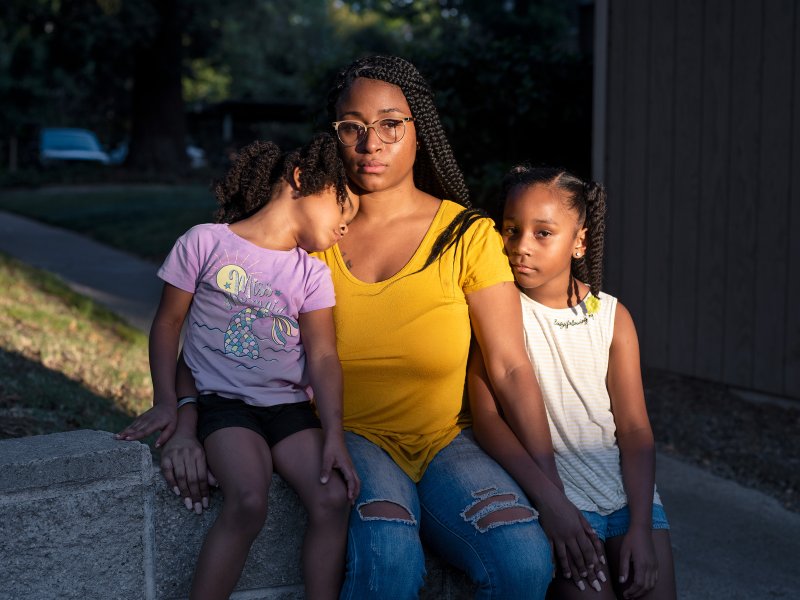
Love with her two daughters outside Sacramento on Oct. 4.

Love with her two daughters outside Sacramento on Oct. 4.
Andres Gonzalez for TIME

“Her life has been so radically altered, it’s just devastating,” says Love’s lawyer, Lisa Bloom, who filed a lawsuit against the city and county of Sacramento, the state of California and numerous officers for damages. “It may have been a split second for them to pull the trigger. It’s a lifetime of pain for her and many others.” A Sacramento Police Department spokesperson said the department has not yet confirmed it was responsible for Love’s injury, since multiple outside agencies responded to the protests. The incident is still under review.

Many of the weapons used by police in recent protests, like rubber bullets and beanbag rounds, are deemed “less-lethal” by law enforcement, even though they can maim and kill. From January 1990 to June 2017, at least 53 people died after such weapons were used for crowd control in incidents around the world, according to a 2017 study published in the medical journal BMJ Open. Three hundred others suffered permanent disability, often from being struck in the head and neck. “Bullets by another name are still bullets,” says Dr. Rohini Haar, the study’s lead author. As an emergency doctor in Oakland, Calif., Haar says she witnessed the damage of the projectiles firsthand in 2014, when rubber bullets were used on Black Lives Matter protesters amid unrest over a St. Louis grand jury’s decision not to charge the officer involved in Michael Brown’s shooting death. When police answered protests with violence in 2020, she was not surprised.

«The level of violence that police officers have used throughout history, against people exercising their constitutional right to protest, is really quite staggering.»

Neither were historians. Recent accounts of police aggression mirror those seen multiple times in American history, according to historian and author Heather Ann Thompson, who studies 1960s and ’70s policing and protest movements. Her book, Blood in the Water, about the Attica, N.Y., prison uprising, won the 2017 Pulitzer Prize in History. “There’s a long, long history of this,” says Thompson, citing the 1968 protest at the Democratic National Convention and a massacre that same year in Orangeburg, S.C., in which law enforcement killed three students and wounded more than two dozen others during a civil rights protest. “The level of violence that police officers have used throughout history, against people exercising their constitutional right to protest, is really quite staggering,” she says.

What’s new, Thompson says, is that police are militarized, often with surplus U.S. Army equipment designed for use in wars of occupation. And in 2020, police actions, and those of white, far-right groups claiming to want to protect businesses and towns from protesters, have been emboldened by a sitting U.S. President, she says. “None of these other presidents would have verbally celebrated white-vigilante, racist violence the way that Donald Trump has,” Thompson says.

Trump has generalized Black Lives Matter protesters as “violent anarchists” and threatened to quell demonstrations with federal forces. “These are not ‘peaceful protesters,’” he tweeted in part on Sept. 8. “They are THUGS.”

During the decade that Martin Gugino has spent protesting, the 75-year-old retiree has been arrested at demonstrations four times and faced charges ranging from misdemeanor trespassing to demonstrating without a permit. He had never been convicted in court or injured at a protest until June 4, when a police officer in Buffalo, N.Y., pushed Gugino onto the pavement. In some of the most graphic footage to emerge from the protest movement, Gugino is seen staggering backward, then falling on his back to the sidewalk, his head slamming to the ground. Blood leaks from his ear, and more than a dozen officers in riot gear stream past the apparently unconscious man without helping him.

The last thing Gugino remembers seeing is a line of helmeted officers coming toward him with batons. “When I was in the hospital,” Gugino says, “I thought, ‘What’s all the fuss about?’ And then I saw the video and I said, ‘Oh yeah, I get it.’” He suffered a fractured skull and concussion and was hospitalized for about a month—the last three weeks of which were spent in physical therapy, relearning how to walk. When he was first hospitalized, Gugino says he could not hear anything because his ears were full of blood. Gugino, who’s hoping for a full recovery, says the experience was a small sample of what Black people endure on a daily basis. “It’s unacceptable,” he says of police violence. “They need to be corrected. The cops have just got the wrong idea. And bad ideas have bad consequences.”
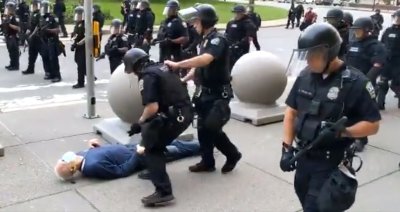
Martin Gugino was shoved by police officers in Buffalo, N.Y., on June 4.

Martin Gugino was shoved by police officers in Buffalo, N.Y., on June 4.
Mike Desmond—WBFO NPR/AFP/Getty Images

Some officers are facing those consequences. On June 6, prosecutors charged two officers involved in Gugino’s incident with felony assault. Four other law enforcement officers in Indiana and Philadelphia are facing assault charges for clashes caught on camera. One is accused of pepper spraying protesters in the face while they were kneeling. Another allegedly clubbed a college student on the head with a metal police baton, resulting in a gash that required about 20 staples and sutures, according to prosecutors.

The New York City police officer who pushed Zayer, Vincent D’Andraia, was charged with misdemeanor assault and faces up to one year in jail if convicted. D’Andraia was initially suspended from the force for 30 days without pay. He’s now on modified assignment while he awaits a court hearing, an NYPD spokesperson said. His lawyer declined to comment. “They put a Band-Aid on a bullet wound,” says Zayer, who wanted D’Andraia to be fired.

For people whose cases don’t end in charges against police—often because their injuries are not caught on camera—the only way to seek accountability is through civil lawsuits. On Aug. 24, Urbani and three other injured demonstrators filed a class-action lawsuit, claiming the federal agents Trump deployed to Portland used “unconstitutional and unnecessary force” against protesters. Attorney General William Barr defended the agents’ actions in testimony before the House Judiciary Committee on July 28, saying “violent rioters and anarchists have hijacked legitimate protests.”
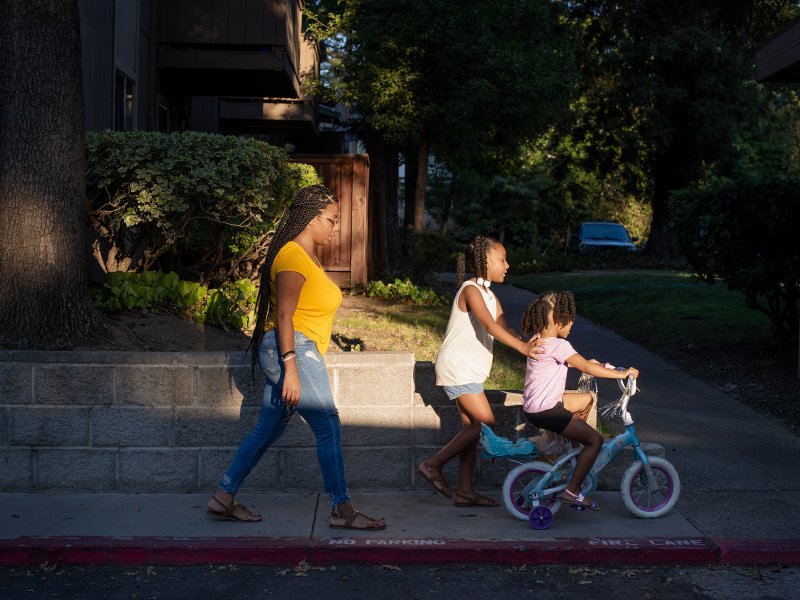
Love now struggles with mundane tasks like pouring a cup of juice or walking up and down the stairs because of her skewed depth perception.

Even when departments settle lawsuits, they’re rarely required to admit fault, meaning the injured may walk away with some funds to help pay medical expenses but no acknowledgment of wrongdoing. Love knows that, and that no amount of money will replace her eye. But she would rather fight for a piece of justice than do nothing.

“I have children,” she says. “I don’t want them to grow up in a world where this type of behavior is tolerated.”

Fuente de la Información: https://time.com/5894356/protesters-injured-police/
 

Comparte este contenido:

Pyka Bets The Path To The Future Of Passenger Planes Runs Through Banana Plantations In Latin America

Pyka Bets The Path To The Future Of Passenger Planes Runs Through Banana Plantations In Latin America

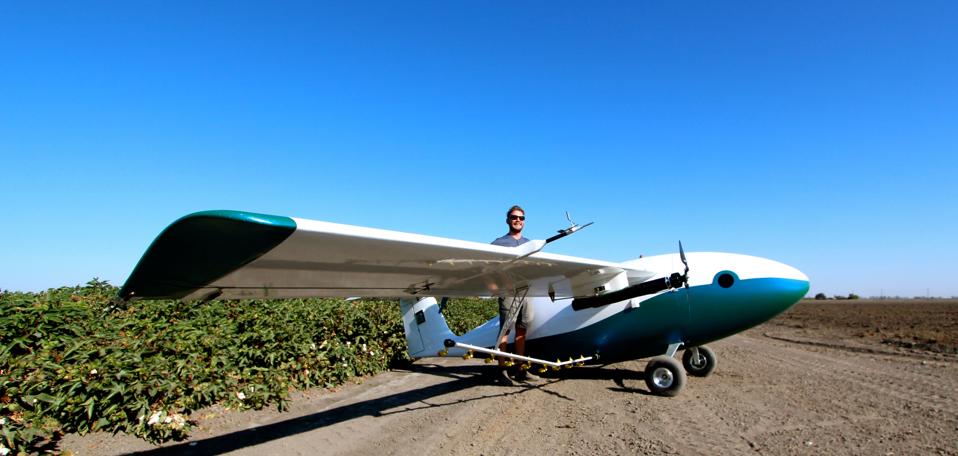
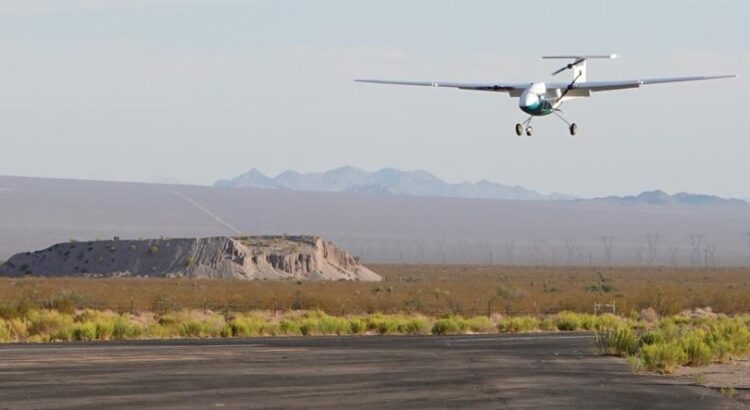
Pyka’s Pelican crop-spraying drone can carry more than its weight in chemicals and is designed to take off and land in 150 feet, half the length of a football field.

 COURTESY OF PYKA

Oakland-based Pyka shares a goal common to many high-tech California aviation startups: to build an autonomous electric passenger aircraft. However, its first steps to get there have taken the company far away from the pack, first to New Zealand and now to banana plantations in Costa Rica and Ecuador, where it’s preparing to field a robotic crop-spraying airplane called Pelican that CEO Michael Norcia says will prove out technology he believes will lead the way to an era of green, low-cost passenger planes.

The fat-bellied, 500-pound plane can carry more than its weight in liquid pesticides or fertilizer, and is engineered to take off and land in a ridiculously short space: 150 feet, half the length of a football field. Someday that short takeoff and landing capability may enable passenger service to be shoehorned into cities and suburbs in a different way than many other electric aviation startups are envisioning. For now, the 28-year-old Norcia is betting that agriculture is a more practical – and lucrative — avenue to pursue. Pyka says the Pelican will have 50% of the operating costs of manned crop-spraying planes and will remove pilots from harm’s way in a business where skimming fields at 140 miles per hour too often leads to accidents and death. And banana plantations, which are the most frequent users of aerial spraying in the world, may be the perfect environment for it to take wing.

Dozens of companies are trying to build futuristic-looking, autonomous electric “air taxis” that can take off and land vertically on city roofs, carrying one to a half-dozen passengers. Norcia, whose first job after graduating from UC Davis with a physics degree was at one of them, billionaire Larry Page’s Kitty Hawk, believes they’re a decade too soon – the limitations of current batteries and other technologies leave eVTOLs with too little range given how energy intensive it is to propel an aircraft straight up and down, he says.

Pyka’s strategy is to take the well-understood efficiencies of fixed-winged airplanes and marry it to advances in high-power electric motors to produce an airplane that can operate on radically shorter runways. “They like to fly,” Norcia says of fixed-wing airplanes. “By starting with something that looks like an airplane you start off on the right foot.”

Dozens of companies are trying to build futuristic-looking, autonomous electric “air taxis” that can take off and land vertically on city roofs, carrying one to a half-dozen passengers. Norcia, whose first job after graduating from UC Davis with a physics degree was at one of them, billionaire Larry Page’s Kitty Hawk, believes they’re a decade too soon – the limitations of current batteries and other technologies leave eVTOLs with too little range given how energy intensive it is to propel an aircraft straight up and down, he says.

Pyka’s strategy is to take the well-understood efficiencies of fixed-winged airplanes and marry it to advances in high-power electric motors to produce an airplane that can operate on radically shorter runways. “They like to fly,” Norcia says of fixed-wing airplanes. “By starting with something that looks like an airplane you start off on the right foot.”

Crop-spraying planes hug the ground in rural airspace that no one else is using, meaning Pyka doesn’t have to solve the thorny problems that drone package delivery services and autonomous urban air taxi hopefuls do of how to ensure their aircraft don’t crash into each other, or the airplanes and helicopters that already fill suburban and urban skies.

Another reason Norcia says they “fell in love” with crop spraying: profit potential.

“The unit economics are fantastic, stronger than any other use case we looked at,” says Norcia, including passenger service or cargo delivery, which a number of other startups are focused on as a more practical near-term target.

Pyka, which has raised $11 million from backers including Prime Mover Labs and Y Combinator, declined to discuss the numbers behind its analysis, but Norcia says of all crops, bananas offer the company the most fertile environment.

Just one variety, the Cavendish, accounts for 99% of the world’s banana exports; grown in Latin America on vast plantations that are susceptible to getting wiped out by funguses, the 15-foot-tall plants are sprayed aerially on a weekly basis. That will keep Pelican busy on the same fields, which is key for it be competitive now.

Before it can start spraying, Pelican’s operators have to survey the field, pinpointing boundaries and obstacles like telephone wires or irrigation towers that the plane will have to avoid. Down the road Norcia says Pelican, which is equipped with downward-facing Lidar and forward-facing lasers, will be able to map fields in 15 minutes, but for now it takes three hours, which means it’s not time or cost-competitive with manned aircraft unless the field needs frequent spraying.

That’s a lesson Pyka learned through experience in New Zealand, where it’s already sprayed crops with a smaller, earlier-generation version of its plane called Egret that the company says is the largest UAV yet to be used commercially. Pyka set up shop there due to a more experimentation-friendly regulatory environment that first attracted Norcia’s former employer Kitty Hawk, which has been flight-testing a two-seat autonomous aircraft in New Zealand since 2017, now in partnership with Boeing.

Norcia Pyka Egret

Michael Norcia with Egret, Pyka’s first crop-spraying drone.

 COURTESY OF PYKA

But worried that safety certification from New Zealand aviation authorities for such new technology wouldn’t be recognized in other countries, Pyka decided to shift to the U.S. for certification. The U.S. Federal Aviation Administration granted Pyka a special airworthiness certificate for Pelican two weeks ago that allows the company to start demoing it on farms in the U.S. and to train crews here on how to operate the airplane, which the company plans to lease to aerial spraying outfits. Norcia expects to receive full-fledged certification from the FAA by the end of the year to spray fields within line of sight of a safety monitor, which should allow the company to get under way at the banana plantations, given reciprocal recognition by those countries’ aviation authorities.

In the U.S., the largest aerial spraying market in the world with roughly $800 million in annual sales, by the estimate of the National Agricultural Aviation Association, drones have caught on for monitoring the health of crops, but not for applying pesticides, due to crop-spraying drones’ high cost and limited capacities. Pyka sees opportunity with crops like leafy greens and vegetables that need to look good on supermarket shelves – those often are sprayed five to 15 times a year, says Norcia.

Norcia concedes that Pelican will only be 40% as productive as the average manned crop-spraying plane, which carries roughly six times as much chemical as the 625-pound payload electric drone, and traverses fields at much faster speeds (140 mph vs. 80 mph for Pelican) but he says the electric drone will make up for it on the cost side. “It’s an order of magnitude less expensive per hour to run,” he says. Plus he says the robot will be able to apply its payload more accurately and efficiently than a human pilot, flying safely at night, when winds are often gentler, and minimizing drift, which would limit the chemical exposure of people who live by farms.

Andrew D. Moore, CEO of the National Agricultural Aviation Association, says his members will embrace any technology that makes them more efficient, but he says the jury is still out on how precise crop-spraying drones are given the air flow impact of their multiple rotors. The agricultural aviation industry has worked with the EPA for decades to reduce drift and optimize how single-propeller airplanes dispense chemicals, he says, intensively studying their aerodynamics and how to align spraying booms and nozzles. “When claims are made about the precision of UAVs, the research is not there,” Moore says.

Norcia says the design flexibility allowed by lightweight electric motors has enabled Pyka to place its three propellers – one high up on Pelican’s T tail and one on each wing — where they have no measurable impact on the drone’s spray pattern, which he says they’ve studied with top researchers in the field.

Damon Reabe, a third-generation crop sprayer who runs two businesses in Wisconsin that operate eight single-prop Air Tractor AT-502s and a helicopter, says Pyka isn’t taking account real-world problems that may torpedo its efficiency claims.

Pyka says Pelican is capable of spraying 135 acres an hour, landing every 15 minutes to refill its tank and with a battery swap after 45 minutes. Reabe says that means he’d need at least three of the drones to cover the same amount of ground in an hour as he can with a single Air Tractor. Given that each Pelican requires a crew of two (a remote pilot and a ground station operator) and a truck to haul the drone, chemicals and water to the field, Reabe says it sounds like “a logistical nightmare.”

Three trucks means recruiting three workers who hold commercial drivers’ licenses, who Reabe says are tough to recruit for seasonal work, as well as training more people on how to mix and handle the chemicals. And they all have to show up on time in order to get out to the farm for a full day’s work.

Once there, Reabe says it may be harder than Pyka realizes to find space for all that equipment on a busy farm, as well as for Pelican to take off and land, something he says he knows well from his helicopter operation, which also operates from a truck on site.

“I don’t want to disparage their efforts, but there are other problems that need to be solved,” says Reabe, “and once you do that you don’t know that it’s less expensive than putting the pilot in the aircraft.”

Norcia says Pyka’s efficiency case will be bolstered once it’s certified to fly beyond the pilot’s visual line of sight, and down the road a single pilot should be able to oversee multiple Pelicans.

The company says they have a three-year backlog covering the first 80 Pelican deliveries to agriculture aircraft operators.

Other startups are exploring the potential of short-takeoff-and-landing (STOL) airplanes: Electra.aero, founded by UAV pioneer John Langford of Aurora Flight Sciences, is developing a hybrid STOL passenger plane, while Marc Ausman, the chief strategist for Airbus’ shuttered Vahana eVTOL project, is heading a venture called Airflow that aims to build an electric STOL cargo plane.

Fuente de la Información: https://www.forbes.com/sites/jeremybogaisky/2020/10/12/pyka-bets-the-path-to-the-future-of-passenger-planes-runs-through-banana-plantations-in-latin-america/#fbde6d849042


Comparte este contenido:

Coinciden Trump y Biden en pronta reapertura de escuelas en EUA

Trump le pidió explicar supuestas irregularidades en relación a negocios de su hijo Hunter Biden.

Joe Biden y Donald Trump se enfrentaron este jueves en el último debate antes de las elecciones presidenciales del 3 de noviembre y coincidieron en la pronta reapertura de escuelas en Estados Unidos cerradas por los contagios de COVID-19.

En el debate ocurrido en la universidad de Belmong en Nashville, ubicada en Tenneseee, el demócrata señaló que creará estándares nacionales para abrir escuelas y comercios. “Voy a encargarme de esto, de asegurarme que tengamos un plan. El no tiene uno”, explicó.

En tanto Trump argumentó que deben abrirse ya que “la tasa de transmisión entre los jóvenes es muy leve. Yo quiero abrir las escuelas, no se puede cerrar el país”.

Trump cuestionó a su rival y le pidió explicar supuestas irregularidades de cuando era vicepresidente entre 2009 y 2017 en relación a negocios de su hijo Hunter Biden.

“Nunca he recibido ni un centavo del extranjero en toda mi vida”, respondió a los señalamientos de los negocios de su hijo en Ucrania y China que el magnate catalogó como “un caso de corrupción importante”.

Biden por otra parte, criticó la política de Cero Tolerancia en 2018 en la que se separó a niños migrantes de sus padres.

“Esos chicos están solos, sin lugar a donde ir. Eso es criminal”, dijo Biden sobre los 545 menores de los que aún no se localiza a sus padres.

Fuente: https://www.adn40.mx/internacional/nota/notas/2020-10-22-21-50/coinciden-trump-y-biden-en-pronta-reapertura-de-escuelas-en-eua

Comparte este contenido:

My Student Experience: Mathematics Education Student Jessica Terrones ‘22 Shares Her ‘Sin Limite’ Experience as Latinx Heritage Month Committee Chair

My Student Experience: Mathematics Education Student Jessica Terrones ‘22 Shares Her ‘Sin Limite’ Experience as Latinx Heritage Month Committee Chair

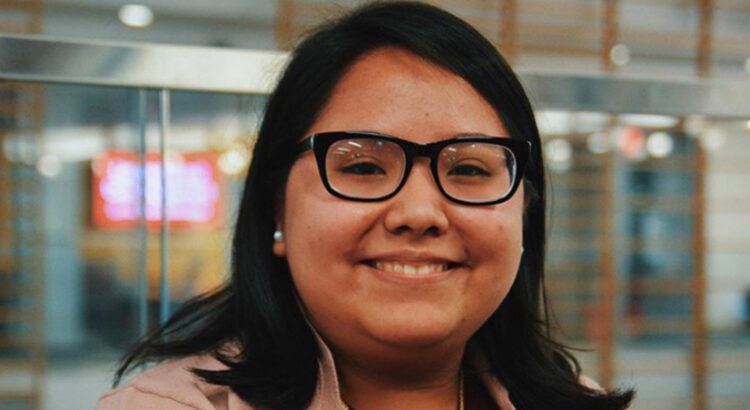
“Sin limite.” In Spanish, the phrase means “limitless.” For Jessica Terrones ‘22, who helped choose those two words as the theme for this year’s Latinx Heritage Month, it means a world of possibilities.

“As a daughter of immigrants, I have always felt that I had limitations, such as fears of proving myself because of the color of my skin or being frowned upon for the way I speak,” Terrones said. “It never felt like I could ever overcome such limitations until now. I know that I am more than capable, and I am willing to continue to persist without fear of what others think of me.”

That confidence comes in part from her role as this year’s NC State University Latinx Heritage Month committee chair. As the committee chair, the number of tasks she needed to complete to make sure the month went off without a hitch came close to pushing her to her limits.

In addition to helping select the theme, she recruited students to the planning committee, decided on programming, organized marketing materials and served as the committee’s liaison to other student organizations. But Terrones was up to the challenge, thanks to her experiences with Professional Learning Teams (PLT) as a mathematics education major in the College of Education.

“I had to regularly communicate with my committee members and let their voices be heard,” Terrones said. “I had never been in charge of a group or event so large as Latinx Heritage Month, but many of the skills like public speaking, PLT techniques, cultural competence and more that I attained through the College of Education helped me successfully lead and take charge.”

Terrones first volunteered with the Office of Multicultural Affairs to fulfill the College of Education’s Passport to Success cross-cultural signature experience, but that experience soon turned into a job opportunity that eventually led to her taking a leadership role as the chair of the Latinx Heritage Month committee.

For Terrones, the month, which lasted from Sept. 15 to Oct. 15, is a vital opportunity to let students know their heritage is being recognized.

“As a person of color at NC State, it can be easy to feel intimidated for standing out in a predominantly white institution,” Terrones said. “So by having Latinx Heritage Month, it at least gives students a moment to feel heard and acknowledged, even if it’s for a month.”

And it’s not just about being heard and acknowledged, but about bringing people together.

“It lets students know that there is a community out there where they can feel accepted and can relate their experiences while continuing to learn about one another,” Terrones said.

To create these learning opportunities, Terrones and the rest of the committee planned a variety of events, including “Mi Cocina” cooking videos on Instagram, a keynote speaker series and a virtual educational gallery. Planning these virtual events was a challenge, but Terrones knew it was necessary.

“We had seen with our own eyes that Latinx people had been one of the most impacted groups by the pandemic, so we could not risk endangering the lives of our peers as much as we wanted to do in-person events,” Terrones said.

Normally, there is only one keynote speaker during the month, but Terrones and her committee wanted to demonstrate how intersectional “sin limite” could be.

“You can be Latinx and have a career in STEM,” said Terrones. “You can be a librarian and a DJ. You can connect with your ancestral roots while encouraging underrepresented groups to engage with the outdoors. There is no one who fits all views on how a Latinx person should be in 2020, so we used this thought to guide our selection of keynote speakers.”

A self-described introvert, Terrones overcame her fear of public speaking in order to step into her leadership role.

“I had to lead keynote speaker events and committee meetings, which were very intimidating, but I enjoyed that they challenged me to do better,” she said.

Latinx Heritage Month enabled Terrones to transcend her limits, but it also allowed her to stay grounded.

“Through my experience, I have been able to stay connected with my identity,” Terrones said. “Coming into college, I was scared of losing that part of me, but instead, I have been able to embrace it.”

Fuente de la Información: https://www.google.com/search?q=traductor+on+line&oq=traductor+on+line&aqs=chrome.0.69i59j0i10j0l6.8365j0j15&sourceid=chrome&ie=UTF-8


Comparte este contenido:

Race For COVID-19 Vaccine Gets Hotter

Race For COVID-19 Vaccine Gets Hotter

Dozens of companies, from biotech start-ups to Big Pharma, are racing to develop a safe and effective COVID-19 vaccine, because the world needs it and for the potential pay day.

Here’s an update on the quest for a magic bullet against the coronavirus that has already killed more than a million people worldwide.

How Many In The Pipeline? 

The World Health Organization (WHO) has identified 42 «candidate vaccines» at the stage of clinical trials, up from 11 in mid-June.

10 of them are at the most advanced «Phase 3» stage, in which a vaccine’s effectiveness is tested on a large scale, generally tens of thousands of people across several continents.

United States (US) biotech firm Moderna, a US-German collaboration between BioNTech and Pfizer, several state-run Chinese labs, and a European project led by the University of Oxford and AstraZeneca are thought to be among the more promising.

Russia has already registered two COVID-19 vaccines, even before clinical trials were completed.

American pharmaceutical giant Pfizer said on Friday it would apply for emergency authorisation in the US for its vaccine in late November if safety data pans out.

Other clinical trials are still in Phase 1 or 2, while another 156 are in pre-clinical stages of development.

What Kind Of Vaccines? 

Some methods for making a vaccine are tried-and-true, while others remain experimental.

Inactivated «classic» vaccines use a virus germ that has been killed while others use a weakened or «attenuated» strain that is virulent enough to provoke antibodies but not to cause disease.

So-called «sub-unit» vaccines contain a fragment of the pathogen that it is derived from to produce an appropriate immune response.

«Viral vector» varieties use other forms of live virus to deliver DNA into human cells, triggering an immune response.

A measles virus modified with a coronavirus protein, for example, can be deployed against COVID-19.

There are also experimental gene-based vaccines using DNA or RNA fragments.

What Are The Results? 

To date, only the result of Phase 1 and 2 trials have been published in peer-reviewed medical journals.

On Friday, preliminary results showing that a vaccine developed by Chinese firm Sinopharm provoked an immune response were published in The Lancet.

Similar studies in recent weeks have reported on one of the Russian vaccines, along with those from the University of Oxford, Chinese company CanSino, and Moderna.

While encouraging, it is too soon to say whether these vaccines will pan out. Trials of two candidate vaccines – made by Johnson & Johnson and Eli Lilly – were «paused» recently over safety concerns.

But that is not necessarily bad news, said Stephen Evans, a professor of pharmacoepidemiology at the London School of Hygiene and Tropical Medicine.

«The fact that trials are paused should indicate that there should be confidence that the whole process of monitoring the safety of trial participants is working well,» he said.

Recent cases in which recovered COVID patients were infected a second time with a new strain also raise the question of how long vaccines might last.

Speed Vs. Safety 

Companies backed by their governments in China, Russia and the US are racing to be the first across the finish line.

In early August, Russian President Vladimir Putin declared victory, announcing the roll-out of the Sputnik V vaccine before Phase 3 trials had begun.

But there were few takers outside of Russia, and experts dismissed the announcement as premature.

Donald Trump has promised a vaccine before the 3 November election, but it is unlikely he will be able to deliver.

Earlier this month, the US Food and Drug Administration (FDA) said it would need to see two months of follow up data after vaccination before giving emergency authorisation for use.

And on Friday, Pfizer said its vaccine wouldn’t be ready until mid-November.

«What is different for COVID-19 vaccines is that speed of development and potential approval is much faster due to the public health emergency,» noted the European Medicines Agency (EMA).

But even that pressing need cannot overcome the rules.

«Before approval, all vaccines in the European Union (EU) are evaluated against the same high standards as any other medicine,» the EMA said in a statement. – AFP

Fuente de la Información: https://theaseanpost.com/article/race-covid-19-vaccine-gets-hotter

Comparte este contenido:

Estados Unidos: Deportation Fear Grips Latino Students

Deportation Fear Grips Latino Students

When President Donald Trump took office in 2017, immigration advocates and school officials braced for the prospect that he would undertake  unprecedented immigration enforcement measures that could upend the lives of millions.

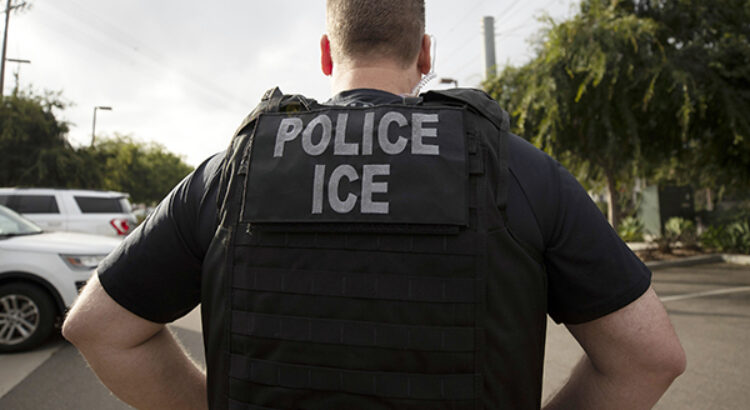
Nearly four years later, the nation’s Latino schoolchildren are bearing the mental and psychological brunt of the president’s campaign to curtail immigration: A majority of Latino high school students in two states fear that someone close to them could be arrested and deported, a new Migration Policy Institute study reveals.

More than half the students surveyed in both Rhode Island and Texas, states with vastly different immigration enforcement climates,…

Fuente de la Información: http://blogs.edweek.org/edweek/learning-the-language/2020/09/deportation_fear_latino_students.html


Comparte este contenido:

Estados Unidos: CPS presenta plan tentativo para el regreso a clases en persona

América del Norte/Estados Unidos/18-10-2020/Autor(a) y Fuente: www.telemundochicago.com

El plan propone que la población estudiantil en general continúe recibiendo educación remota y por fases regresen gradualmente a los salones de clases.

Las Escuelas Públicas de Chicago anunciaron el viernes un plan de aprendizaje para el segundo trimestre del año escolar a medida que continúa la pandemia del coronavirus.

El plan del distrito propone que todos los estudiantes continúen sus clases de forma remota y luego por fases vayan regresando gradualmente a los salones de clase.

CPS dijo en un comunicado que planea comenzar su reapertura gradual a las escuelas con los «estudiantes de prekínder y alumnos vulnerables, como los de educación especial o aquellos que enfrentan desafíos significativos al participar en el aprendizaje remoto sin el apoyo de un tutor, hecho que agrava aún más las desigualad educativa».


Los estudiantes seleccionados comenzarían a regresar al salón de clases en enero mientras que CPS pone en función los procesos necesarios de salud para reabrir las escuelas de manera segura.

El distrito planea comunicarse con los padres de los estudiantes de otros grados a finales de este año para evaluar su interés en que sus estudiantes regresen a las escuelas.

CPS dijo que enviará a todos los padres y tutores de estudiantes de prekínder y de programas de grupo un formulario de intención el 21 de octubre para indicar si se sentirán cómodos enviando a sus hijos a la escuela, pidiéndoles que lo devuelvan antes del 28 de octubre.

El distrito señaló que los padres tendrán la opción de optar por no participar en cualquier momento y que cada escuela llevará a cabo una reunión para responder cualquier pregunta antes de una posible reapertura.

CPS dijo que una decisión final sobre el aprendizaje en persona se tomaría junto con el Departamento de Salud Pública de Chicago más cerca del comienzo del segundo trimestre, el 9 de noviembre.

El liderazgo del Sindicato de Maestros de Chicago (CTU) de inmediato reaccionó a este plan tentativo de CPS y dicen que les preocupa el que estas decisiones se tomen cuando han comenzado a aumentar de nuevo los casos de coronavirus en Chicago.

Por su parte, CPS indica que están desarrollando protocolos sanitarios en las escuelas que incluye el uso de cubrebocas, gel antimaterial y lavado de manos constante, además buscan hacer grupos pequeños de estudiantes, que siempre trabajaran juntos, para minimizar interacciones y el rastreo de contactos.

Fuente e Imagen: https://www.telemundochicago.com/noticias/local/cps-presenta-plan-tentativo-para-el-regreso-a-clases-en-persona/2126762/


Comparte este contenido:
Page 51 of 397
1 49 50 51 52 53 397