Page 1554 of 1670
1 1.552 1.553 1.554 1.555 1.556 1.670

Higher education and neoliberal temptation A conversation with Henry Giroux

Fuente: Eurozine / 7 de Mayo de 2016

Henry Giroux, Almantas Samalavicius

Higher education and neoliberal temptation

A conversation with Henry Giroux

If the university is to survive, faculty are going to have to rethink their roles as critical public intellectuals, connect their scholarship to broader social issues and learn how to write for and speak to a broader public. Of this much, the cultural critic and doyen of critical pedagogy Henry Giroux is convinced.

Almantas Samalavicius: The neoliberal agenda that came into being a few decades ago in the northern hemisphere, and was eventually globalized, now seems to threaten systems of higher education worldwide. The persistence of this phenomenon has become alarming to many who care about its social consequences. As you have correctly and insightfully observed in your 2014 book Neoliberalism’s War on Higher Education, «a full-fledged assault is also being waged on higher education in North America, the United Kingdom and various European countries. While the nature of the assault varies across countries, there is a common set of assumptions and practices driving the transformation of higher education into an adjunct of corporate power and values». Why is this agenda taking over societies that are so different from each other? What makes neoliberalism so overwhelmingly powerful and resistant to criticism as well as to social action? Why do governments give themselves up to neoliberal ideology, even if they claim to represent quite different ideological positions?

Henry Giroux: For all of its differences, neoliberalism brings together a number of elements that makes it appear almost insurmountable, if not universal, in its ability to normalize itself and convince the rest of the world that there is no alternative as Margaret Thatcher once argued.

First, it has created a new set of power relations in which power is global and politics is local. The financial elite now operate in the global flows of capital and have no allegiance to the nation-state or to the social contract that mediated between labour and capital in the post-war period. This separation points to a crisis of agency on the part of the state and a crisis of politics in terms of the ability to develop social formations that can challenge capital on a global rather than simply a local scale. The nation-state can no longer make concrete decisions on the economic level or create social provisions necessary to limit the effects of the market and offer the most basic services for people.

At the nation level, state sovereignty has been transformed into economic sovereignty. Governments don’t give themselves up, they have been hijacked by the institutions, power and wealth of the global elite. There is no way for states to challenge global forms of governance. We must remember that neoliberalism is very powerful not only because of its economic structures but also because of its pedagogical and ideological power. It not only consolidates wealth and power in different wars for the ultra-rich, it also controls all of those cultural apparatuses and pedagogical sites that function to produce identities, desires and values that mimic the market. In this sense it is a mode of governance that controls all of social life and not simply the market.

As a mode of governance, it produces identities, subjects and ways of life free of government regulations, driven by a survival of the fittest ethic, grounded in the idea of the free, possessive individual and committed to the right of ruling groups and institutions to accrue wealth removed from matters of ethics and social costs. As a policy and political project, neoliberalism is wedded to the privatization of public services, the selling off of state functions, the deregulation of finance and labour, the elimination of the welfare state and unions, the liberalization of trade in goods and capital investment and the marketization and commodification of society. As a form of public pedagogy and cultural politics, neoliberalism casts all dimensions of life in terms of market rationality.

AS: As public higher education withers in a number of countries, either various policies of privatizing higher education are introduced or the logic of the market takes over. More and more universities and other institutions of higher education are being run as if they were large multinational companies seeking immediate profit; politicians and administrators speak out for efficiency, marketability of knowledge, institutional sensitivity and adaptability to the market, etc. What do you think will be the social and cultural price if this tendency continues to retain the upper hand? And do you see any possibilities to resist this global transformation of universities as well as higher education in general?

HG: If this tendency continues, it will mean the death of critical thinking and higher education will simply become another ideological apparatus dedicated to training rather than education, stifling critical inquiry rather than nurturing it – and will narrow if not kill the imagination rather than cultivate it. One consequence will be that knowledge will be utterly commodified, students will be defined in utterly instrumental terms and the obligations of citizenship will be reduced to the private orbits of self-interest, consumption and commodification. This nightmare scenario will reinforce one of the central tendencies of totalitarianism; that is, a society dominated by thoughtlessness, stupidity and diverse modes of depoliticization.

In the United States and in many other countries, many of the problems in higher education can be linked to low funding, the domination of universities by market mechanisms, the rise of for-profit colleges, the intrusion of the national security state and the lack of faculty self-governance, all of which not only contradicts the culture and democratic value of higher education but also makes a mockery of the very meaning and mission of the university as a democratic public sphere. Decreased financial support for higher education stands in sharp contrast to increased support for tax benefits for the rich, big banks, military budgets and mega corporations. Rather than enlarge the moral imagination and critical capacities of students, too many universities are now wedded to producing would-be hedge fund managers, depoliticized students and creating modes of education that promote a «technically trained docility».

Strapped for money and increasingly defined in the language of corporate culture, many universities are now driven principally by vocational, military and economic considerations while increasingly removing academic knowledge production from democratic values and projects. The ideal of the university as a place to think, to engage in thoughtful consideration, promote dialogue and learn how to hold power accountable is viewed as a threat to neoliberal modes of governance. At the same time, higher education is viewed by the apostles of market fundamentalism as a space for producing profits, educating a docile labour force and a powerful institution for indoctrinating students into accepting the obedience demanded by the corporate order.

However, it is crucial to remember that power is never without resistance and this suggests that faculty, students, unions and broader social movements must fight to regain higher education as a democratic public sphere. In addition, it must be made clear to a larger public that higher education is not simply about educating young people to be smart, socially responsible and adequately prepared for what ever notions of the future they can imagine, but that higher education is central to democracy itself.

Without the formative culture that makes democracy possible, there will be no critical agents, no foundation for enabling people to hold power accountable and no wider foundation for challenging neoliberalism as a mode of governance and political and ideological rationality. The struggle over higher education and its democratic misuse cannot be separated from the struggle to undo the reign of markets, neoliberalism and the ideologies informing this savage market fundamentalism. We see this struggle being taken up in precisely these terms in many countries in Latin America, the United Kingdom and the United States. Time will tell if they can spark a global movement to transform both higher education and the political and economic system that holds it hostage.

AS: The American research university has been a model institution of higher education during the last half-century in many places of the globe. Despite the spectacular ascent of multiversity, proclaimed as early as 1963 by Clark Kerr in his famous book The Uses of the University, the production of research is in fact just one of the university’s functions. However, this function is taken for granted and even fetishized. Meanwhile, the teaching and education of informed, responsible citizens, capable of critical scrutiny as well as many of the other tasks of higher education, have been largely neglected and ignored. Do you see this imbalance in the functions of the university as threatening? What are the potential dangers of imagining the university exclusively as a research enterprise that relinquishes any commitment to teaching and cultivating a critical consciousness?

HG: The role of research in the university cannot be separated from the modes of power that influence how research is defined and carried out. Under the reign of neoliberalism and given the encroaching power of the military-industrial complex, research is prioritized and rewarded when it serves the interests of the larger society. In this instance, research becomes armed and instrumentalized, serving largely the interests of powerful corporations or the ongoing death-machine of the military and its corporate allies. Research that matters informs teaching and vice versa. Universities are not factories and should not be defined as such. They are there to serve faculty, students and the wider community in the interests of furthering the public good. When the latter become subordinated to a research agenda that is simply about accumulating capital, the critical, moral and political essence of the university withers and everybody who believes in a democracy is marked for either failure, exclusion or punishment.

The corporate university is the ultimate expression of a disimagination machine, which employs a top-down authoritarian style of power, mimics a business culture, infantilizes students by treating them as consumers and depoliticizes faculty by removing them from all forms of governance. Clearly all of these defining relations produced by the neoliberal university have to be challenged and changed.

AS: Traditionally, the university has been understood as community of scholars and students. However, there are multiple reasons for the university hardly existing any more in these terms. Back in the 1970s, the American social thinker Paul Goodman still articulated a vision of a community of scholars but during recent decades, academics either function simply as obedient personnel afraid to lose their diminishing rights and «privileges» (if there are any at all) or otherwise their collective voice is hardly heard. How can public criticism get back to where it should belong – i.e. in the universities?

HG: The increasing corporatization of higher education poses a dire threat to its role as a democratic public sphere and a vital site where faculty can address important social issues, be self-reflective and learn the knowledge, values and ideas central to deepening and expanding the capacities required to be engaged and critical agents. Unfortunately, with the rise of the corporate university which now defines all aspects of governing, curriculum, financial matters and a host of other academic policies, education is now largely about training, creating an elite class of managers and eviscerating those forms of knowledge that conjure up what might be considered dangerous forms of moral witnessing and collective political action.

Many faculty have bought into this model because it is safe for them and they get rewarded. If the university is to survive, faculty are going to have to rethink their roles as critical public intellectuals, connect their scholarship to broader social issues and learn how to write for and speak to a broader public. Neoliberal modes of governance reinforce the worse dimensions of the university: specialisms, a cult of distorted professionalism, a narrow empiricism, unwillingness to work with others and a mode of scholarship steeped in obtuse and often mind-numbing discourse. All of this must change for faculty or they will not only be unable to defend their own labour as academics, they will continue to lose power to the corporate and managerial elite.

AS: Higher education is intrinsically connected to what is usually termed as a public good, however, as you penetratingly observe «under the current regime of neoliberalism, schools have been transformed into a private right rather than a public good». Do you think it is possible for higher education to reclaim its role in creating and providing a public good or at least providing a setting where a public good might be created? Under what conditions can are universities able to perform such a task? How can they get support from the public? Can one count on public intellectuals at all?

HG: Universities are suffering from a crisis of legitimacy and a crisis of agency. If they are going to regain their role as a public good, faculty, students and other educational progressives are going to have to strongly challenge the current role of higher education. This means that faculty, students and various groups outside of the university are going to have to engage in a range of acts of civil disobedience extending from occupying classrooms to mobilizing larger populations in the street to force the hand of corporate power and its allies.

We saw this happen in Quebec a few years ago and such actions must be repeated on a global level. Public intellectuals are absolutely necessary to participate meaningfully in this role. We rarely hear about them but there are plenty of academics acting as public intellectuals, not only in the liberal arts, social sciences and humanities, but also in the health sciences where faculty are working closely with communities to improve the conditions of the often poor residents who reside in these communities. While public intellectuals can ask important questions, provide a critical language, help write policy and work with social movements, any real change will only come from the outside when social formations, educators and other progressive groups can force the hands of political power, governance and legislation.

AS: Despite higher education’s present orientation toward the market and the reign of an ideology that glorifies the market even in those spheres where it is not supposed to and cannot work, what is your vision of the coming tendencies in higher education during the next decades? Do you expect the present trends concerning the marketization of higher education to be finally reversed? Or will we witness the final triumph of neoliberalism?

HG: I am not optimistic but hopeful. That means, I don’t think progressive change will come by default, but only by recognizing the problems that have to be faced and then addressing them. The latter is a matter of real hope. The cruelty, barbarism and violence of neoliberalism is no longer invisible, the contradictions it produces abound and the misery it inflicts has become extreme. Out of the ashes will hopefully rise the phoenix of hope.

Link original: http://www.eurozine.com/articles/2016-05-04-giroux-en.html#.VywfBucKSeU.facebook
Comparte este contenido:

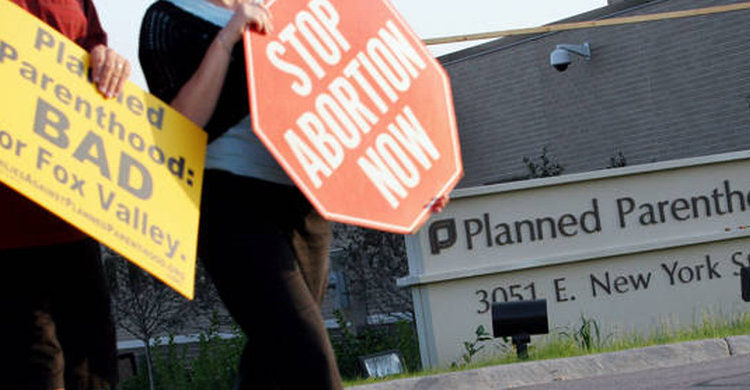
EEUU: Planned Parenthood Defunded in Kansas

América del Norte/EEUU/Mayo 2016/Autor: Gabriella Dunn/ Fuente: McClatchyDC

Resumen: El centro de Planificación Familiar del estado de Kansas manifestó que recibió una carta de la oficina del gobernador, de dicho estado, en la que les informa que serán retirados los fondos a partir del 10 de mayo del año en curso.

Planned Parenthood says it received a letter from the state announcing that it will be defunded beginning May 10.

The governor’s office, the Kansas Department of Health and Environment and the Centers for Medicare and Medicaid Services did not immediately comment.

“This is an outrageous attempt by Governor Brownback to punish the women and men who have freely chosen Planned Parenthood for their health care for decades,” Laura McQuade, president and CEO of Planned Parenthood of Kansas and Mid-Missouri, said in a written statement.

The state money comes through , which provides health care for low-income and disabled Kansans. Some of the services it covers include annual exams, birth control, preventative care and breast exams. Medicaid does not cover abortions.

Gov. Sam Brownback previously promised to defund Planned Parenthood in his State of the State address in January and cited video images that anti-abortion activists say show Planned Parenthood executives arranging for the sale of fetal tissue and organs for medical research.

He did not apologize to Planned Parenthood when the videographers were indicted a few days later.

Eileen Hawley, the governor’s spokeswoman, said in an e-mail Wednesday that the governor called for this action “in order to protect the unborn and support a culture of life in Kansas. Planned Parenthood has been fully informed of the reasons for this decision, including their own refusal to submit to a lawful inspection of their premises.”

The letter from the Kansas Department of Health and Environment says the order was made at the direction of the governor, through the head of the state health department.

Brownback cited these reasons for taking away Planned Parenthood’s funding: noncompliance with laws, administrative regulations or with providing medical provider information; noncompliance with provider agreements; unethical or unprofessional conduct; and “other good cause.”

Kansas Department of Health and Environment Division of Health Care Finance notified Planned Parenthood of the state’s plan to defund the program in a March 10 letter, which alleges that Planned Parenthood’s Overland Park facility prevented a waste inspector from KDHE from completing a December inspection and photographing certain portions of the facility. The letter notes that Planned Parenthood’s attorneys have rejected this claim.

The March 10 letter also cites the videos from Houston as evidence “that warrant termination of (Planned Parenthood Fedaration of America) PPFA’s Kansas affiliates.”

Lawyers representing Planned Parenthood on April 29 presented arguments about why it shouldn’t be defunded during an administrative review with representatives from the Division of Health Care Finance.

“After a thorough review of all information presented, it is the decision of DHCF (the Division of Health Care Finance) that your participation in KMAP (the Kansas Medical Assistance Program) will be terminated effective May 10, 2016,” the letter read.

A statement from the American Civil Liberties Union of Kansas said 10 other current and former Planned Parenthood medical providers were also terminated.

The statement went on to say that the Centers for Medicare and Medicaid Services does not allow states to exclude providers for offering abortion services.

“Medicaid recipients have the right to receive services from any Medicaid-eligible provider,” the ACLU statement read.

Sen. Laura Kelly, D-Topeka, the ranking Democrat on the Senate Public Health and Welfare Committee, called it an attack on women, saying that it would affect low-income and young women who rely on Planned Parenthood for gynecological services.

“By withdrawing these funds, which were not used for abortions, all you’re doing is taking away primary healthcare for women,” Kelly said.

“If people were truly concerned about reducing the number of abortions they would be enhancing funding for entities like Planned Parenthood and our community health clinics, so that women could get good family planning care,” she added. “The only way we’re ever going to reduce abortions is to reduce the number of unintended pregnancies.”

Troy Newman, president of Operation Rescue, an anti-abortion group, said “hallelujah” when he heard about the announcement.

“Mark my words, this is the beginning of the end of Planned Parenthood,” he said, adding that he foresees federal legal issues for Planned Parenthood.

“Really, the stripping of their money is the least of their worries,” Newman said.

If it disagrees with the decision, Planned Parenthood has a month to formally request a hearing with the state’s Office of Administrative Hearings.

Planned Parenthood announced March 22 that it was expanding access to the abortion pill in Wichita as well as treatments for menopause and HIV prevention medicine along with transgender care.

Fuente de la noticia: http://readersupportednews.org/news-section2/318-66/36698-planned-parenthood-defunded-in-kansas

Fuente de la imagen: http://readersupportednews.org/images/stories/article_imgs20/020916-pp-050516.jpg v

Comparte este contenido:

BM: Let Girls Learn Event: Helping Girls Get the Education They Deserve

Fuente Grupo del Banco Mundial/ 7 de Mayo de 2016


First Lady Michelle Obama Promotes Smart Investing in Girls’ Empowerment

  • At a special event during the World Bank Group Spring Meetings, United States First Lady Michelle Obama advocated for adolescent girls’ education as smart economic policy.
  • World Bank Group President Jim Yong Kim announced a $2.5 billion investment over five years in education projects targeted to adolescent girls.
  • Continuous learning is essential to efforts to advance gender parity, and Obama called the investment a powerful affirmation of girls’ extraordinary promise.


At this special event, United States First Lady When United States First Lady Michele Obama was young, there were not many opportunities for girls in education and for women in employment. Over the last two decades the divide has narrowed between boys and girls in education and women now make up nearly half of the United States workforce.

Yet the progress we have made is not enough. Obama explained how critical gaps remain at a special “Let Girls Learn” event on April 13, 2016 during the World Bank Group-IMF Spring Meetings. An estimated 62 million girls around the world do not attend school, and half of these girls are adolescents. Women still lag behind men in most measures of economic opportunity, and in being able to make choices about their own lives.

Obama said an emphasis on girls’ education should be seen as a cornerstone of smart development agendas: “If half the population is devalued, abused and oppressed … sustainable development will not be possible.” Research has shown that enabling girls to attend and stay in school helps them to delay marriage, raise healthier children, and obtain better paying jobs.

2.5 Billion Pledge for Girls’ Education

Before introducing the First Lady at the event, World Bank Group President Jim Yong Kim announced that the World Bank was pledging USD 2.5 billion over five years to education projects targeting adolescent girls (ages 12-17). The funds will be allocated by 2020 and 75 percent of the money will go mostly to countries in Sub-Saharan Africa and South Asia, which have the highest number of out-of-school girls.

Research shows getting girls to attend and stay in school is smart development policy. (Photo credit Peace Corps)

Research shows getting girls to attend and stay in school is smart development policy. (Photo credit Peace Corps)


Kim noted the enormous prospects for economic growth if every adolescent girl can complete a full 12 years of education: «Unleashing the full economic potential of half the population can drive the growth and prosperity of nations. Investing in girls and women is not only the right thing to do for them as individuals. It’s also the smart thing to do for economies.»

The investment is part of the new World Bank Group global strategy for gender equality to promote its twin goals of ending extreme poverty and boosting shared prosperity.

Making Progress Toward Gender Equality

Three representatives from Ghana, India, and Rwanda began the event by describing their governments’ strategies in educating and training girls, to help them eventually attend college, gain access to credit, run their own businesses, and raise healthier families. They cited examples of changing societal attitudes toward employment, integrating gender in budgets, making school infrastructure and curricula more girl-friendly, and offering life and job skills courses.

A packed audience awaits the start of the “Let Girls Learn” event at Washington, DC headquarters

A packed audience awaits the start of the “Let Girls Learn” event at Washington, DC headquarters


Case studies and discussions on these types of gender equality initiatives can be found in the Open Learning Campus’ gender curricula. Videos, e-courses, communities of practice, and other offerings cover gender and agriculture, economic empowerment, energy, health, infrastructure, and many more related issues. The Open Learning Campus recognized that filling knowledge gaps in this area for policymakers, practitioners, civil society, and the general public could lead to more innovative thinking and collaborative solutions.

The Open Learning Campus’ just-in-time interactive learning in gender topics features the World Bank’s cross-sectoral knowledge and experiences on the ground. More learning in this area could help all of us answer Obama’s call to action: What can my government, business, organization, or I do to help girls go to school and be drivers of growth and progress.

Comparte este contenido:

Dos posibles caminos del Big Data en educación

Graduate XXI

La Inteligencia Artificial está llegando a la educación. Ya no es ciencia ficción. El uso de grandes cantidades de datos (Big Data) para dirigir el aprendizaje de los alumnos ya está siendo parte de nuevos experimentos reales. Es un momento central en la historia de la educación: ¿quién controlará los datos? ¿Qué usos tendrán? ¿Qué beneficios y qué riesgos traerán? ¿Quiénes serán los ganadores y perdedores? Muchas preguntas cruciales se están abriendo. Aquí veremos dos casos que ayudan a formular estas preguntas y aventurar posibles respuestas.

El primer camino del Big Data es el modelo de las AltSchool, ya reseñadas en este blog. Las AltSchool son un furor en el mundo de EdTech. Su creador es Max Ventilla, cuyos años previos en Google lo llevaron a una visión de frontera en el uso de algoritmos predictivos.

Las AltSchool son micro-escuelas, muy pequeñas, de menos de 150 alumnos. Su propósito central es convertirse en la mayor revolución educativa del siglo XXI. Por eso invierten el 10% de su presupuesto (que se agigantó con U$S 133 millones de capital recolectado recientemente, con Mark Zuckemberg de Facebook como principal inversor) en investigación y desarrollo.

Lo que hacen las AltSchool hoy es un laboratorio de lo que, según Ventilla, será un nuevo modelo de escuelas y de sistema educativo en los próximos 30 años.

En las AltSchool se está experimentando es el modelo más extremo de observación de los alumnos para personalizar la enseñanza. Esto incluye el seguimiento con cámaras y micrófonos de todas las interacciones de los alumnos dentro de las escuelas con un software de seguimiento de los movimientos corporales y faciales y de reconocimiento de voz.

El seguimiento de las expresiones en el rostro de los alumnos permite realizar una analítica de cada clase: la iluminación del aula cambia automáticamente dando una señal cuando el ruido de los alumnos se hace demasiado alto. El docente es asistido por las máquinas para controlar el curso y es evaluado por el nivel de atención e interés de sus alumnos.

En paralelo, las AltSchool tienen un “playlist” de aprendizaje para cada alumno, con diversas actividades digitales personalizadas.

El reconocimiento facial basado en la filmación de los alumnos (véase aquí el sistema EngageSense, su prototipo más avanzado) brinda datos a una computadora que utiliza algoritmos para medir el nivel de compromiso con la tarea y sugerir a los docentes actividades. Para resumirlo (y simplificarlo): si los alumnos no prestan atención una computadora le avisará al docente.

Este primer modelo de uso experimental del Big Data en educación abre dos grandes preguntas éticas: ¿qué ocurre con la privacidad de los alumnos? ¿Quiénes pueden acceder a esta tecnología de frontera?

La primera cuestión se enfrenta con grandes vacíos legales, como lo analiza esta nota. El Big Data está casi completamente desregulado en todo el mundo. ¿Quién tiene derecho a filmar y analizar las expresiones faciales de nuestros hijos? ¿Cuáles son las consecuencias de saber que uno está siendo filmado todo el tiempo? ¿No es este modelo educativo una amenaza de panóptico estilo Big Brother, de vigilancia absoluta que puede cambiar la personalidad de los alumnos, sus relaciones y amenazar su intimidad?

La segunda cuestión refiere a la equidad. Las AltSchool son escuelas de elite que nacieron en Silicon Valley: cuestan aproximadamente 30 mil dólares por año para quienes quieren asistir a ellas. Si realmente tienen resultados, si logran la personalización de la enseñanza por vía de las máquinas, ¿no estarán ampliando la brecha social mediante cambios educativos exponenciales que benefician a los privilegiados?

El otro camino del Big Data en educación tiene una orientación muy distinta, pero comparte el componente de innovación radical que permiten los avances de la Inteligencia Artificial basada en algoritmos. Se trata del uso de grandes cantidades de datos para analizar el funcionamiento de un sistema educativo, detectar desigualdades y actuar para reducirlas.

Un ejemplo revelador de estas posibilidades fue sistematizado por distintos investigadores chilenos que resultaron ganadores del concurso “Nuevos debates, Datos para el desarrollo” del BID. El estudio se tituló: “Apoyando la formulación de políticas públicas y toma de decisiones en educación utilizando técnicas de análisis de datos masivos: el caso de Chile”.

Utilizando técnicas de la ciencia de los datos, los investigadores analizaron datos abiertos publicados por el gobierno chileno sobre la oferta educativa, los contextos sociales y diversos indicadores de rendimiento educativo. Uno de los ejes del análisis fue estudiar dónde vivían los alumnos según la escuela a la que asisten, e incluso medir el tiempo que demoraban en llegar a la escuela por distintas vías de transporte.

Un mapa de estas características es un poderoso predictor de la deserción escolar, dado que permite localizar personalizadamente la distancia entre los alumnos y las escuelas. Con estos datos se podría planificar la creación detallada de nuevas escuelas (o sistemas de transporte) para cubrir demandas e injusticias imposibles de divisar sin este nivel de desagregación de la información.

El estudio construyó un modelo para predecir la deserción escolar que inicialmente usó 127 atributos de los estudiantes, establecimientos y las manzanas donde viven o se ubican, para alimentar un algoritmo de aprendizaje automático. Estos atributos se redujeron a 31, entre los cuales aparecen como significativos variables como la vulnerabilidad del colegio, la convivencia, participación, autoestima y motivación de los estudiantes.

El estudio creó una “geografía de las oportunidades educativas”, analizando también la equidad en los resultados de aprendizaje. El uso de los datos desagregados permitió mapear con exactitud la segregación educativa, que concentra a los alumnos de mejor nivel socioeconómico en escuelas más cercanas, de más fácil acceso y de mejores resultados de aprendizaje.

En suma, esta nueva generación de uso de los datos tiene un inmenso potencial tanto para personalizar la enseñanza como para mapear desigualdades de manera tan detallada que faciliten la acción del Estado y ataquen directamente los factores que promueven la deserción escolar. Los riesgos del primer modelo no deben ser subestimados: borrar la intimidad de los alumnos, controlar la vida privada desde grandes corporaciones o desde el mismo Estado, agigantar las brechas sociales por medio de las brechas tecnológicas. Pero también sus posibilidades de personalización de la enseñanza deberán ser estudiadas con rigor en los próximos años.

Es tiempo de abrir las preguntas, los debates, las experiencias y crear una nueva discusión educativa: el uso del Big Data para promover la equidad y la pasión por el aprendizaje. Los gobiernos de América Latina no pueden dejar estas discusiones para atender las urgencias: aquí mismo pueden estar ocultas algunas de las respuestas a esas mismas urgencias.

Fuente del artículo: http://futuroeducativo.com/esta-llegando-dos-posibles-caminos-del-big-data-en-educacion/

Comparte este contenido:

México: El derecho a la educación debe ser maximizado, no restringido”, Afirma Suprema Corte de Justicia de la Nación

Fuente CLADE/ 7 de Mayo de 2016

Una resolución de la Primera Sala de esta corte, en respuesta a un recurso de amparo interpuesto por una estudiante universitaria, a quien se le había impuesto el pago de una cuota de inscripción en la universidad, dispone que este centro educativo y sus autoridades se deben abstener de vulnerar la gratuidad de la educación superior


Desde Justiciabilidad del Derecho a la Educación

Fuente: Suprema Corte de Justicia de la Nación

Una resolución de la Primera Sala de Suprema Corte de Justicia de la Nación (SCJN) de México, [] en oportunidad de resolver un recurso de amparo interpuesto por una estudiante a quien la Universidad Michoacana de San Nicolás de Hidalgo le había impuesto la obligación de cubrir una cuota en concepto de inscripción, considera que se violó su derecho humano a la educación consagrado en el artículo 3 de la Constitución Federal y el artículo 138 de la Constitución del Estado de Michoacán, así como el principio de progresividad.

Señala asimismo que la autonomía universitaria no exime a la Universidad de respetar el derecho a la gratuidad de la educación superior, ya que dicha figura constituye una garantía institucional del derecho a la educación cuya finalidad es maximizarlo, no restringirlo. Además, que en virtud del principio de progresividad, una vez que dicho Estado ha extendido la gratuidad a la educación superior tiene prohibido adoptar medidas regresivas.

Finalmente, la resolución dispone que el Gobernador del Estado debe transferir a la Universidad los recursos necesarios para garantizar la gratuidad de la educación que reciba la reclamante, y que la Universidad y sus autoridades, se deben abstener de vulnerar la gratuidad de la educación superior como mínimo, evitando cobrarle a la reclamante cuotas de inscripción durante su educación superior.

Mira aquí la noticia al respecto, que ha sido difundida a través del Canal Judicial.

Comparte este contenido:

Hacen falta más maestros minoritarios en las aulas de EEUU

Un informe presentado hoy refleja la brecha entre los estudiantes y los maestros de minorías y propone soluciones para lograr una educación más rica y completa

FOTO: J.EMILIO FLORES / LA OPINION/ POR: MARÍA PEÑA 

WASHINGTON.- Casi la mitad de los estudiantes en las escuelas públicas de EEUU pertenece a minorías pero, al frente del salón de clases, la mayoría de sus maestros son de raza blanca, un síntoma de los problemas relacionados con la diversidad racial que persisten en el país.

Según un informe divulgado este viernes por el Departamento de Educación, la escasez de maestros de minorías en las primarias y secundarias de EEUU impide una buena preparación de los estudiantes para la fuerza laboral del país, cada vez más multicultural y multiétnica,  y refleja además las trabas que persisten para la formación y retención de maestros.

El documento, titulado “El Estado de la Diversidad Racial en la Fuerza Labora de Maestros”, destacó que apenas el 18% de los maestros en escuelas públicas pertenece a minorías,pese a que el 49% de los estudiantes en primarias y secundarias proviene de éstas.

El patrón actual es problemático si se toma en cuenta que, según proyecciones del gobierno federal, el porcentaje de estudiantes blancos bajará del 51% que registró en 2012 a 46% en 2024. Mientras, los estudiantes hispanos pasarán del 24% en la actualidad al 29% en tan solo ocho años.

Los estudiantes asiáticos subirán un uno por ciento al 6% en ese periodo, mienras que los afroamericanos bajarán del 16% al 15%.

El informe del Departamento de Educación fue divulgado en el marco de una cumbre de maestros precisamente para fomentar la diversidad de docentes en las aulas.

¿Quiénes educan a los niños?

La fuerza laboral docente en las escuelas públicas de EEUU sigue siendo homógenea: el 82% de los maestros es de raza blanca, al igual que lo es el 80% de los líderes educativos,y aunque la contratación de minorías va en aumento, no es suficiente para los cambios demográficos en las escuelas.

Hay menos estudiantes de minorías preparádose para ser maestros. Foto: Archivo

Así, el “canal” de maestros afronta una suerte de “avería” en lo que se refiere a la preparación, contratación y retención de maestros minoritarios y,  según el estudio, los problemas comienzan en las universidades, donde hay menos estudiantes negros y latinos en programas de formación de maestros.

Las minorías conforman el 38% de la población universitaria, y sólo el 25% de los que se matriculan en programas de preparación de maestros.

Y los estudiantes minoritarios que se inscriben en esos programas tienen menores índices de graduación que sus contrapartes de raza blanca.  El 73% de los blancos se gradúa de esos programas, en comparación con el 42% de los negros y el 49% de los hispanos.

¿Por qué importa?

El dictamen unánime del Tribunal Supremo en el caso “Brown v. Board of Education”, el 17 de mayo de 1954, condenó las leyes estatales de entonces que establecieron la segregación de las escuelas públicas, y sentó las bases para su integración racial.

Pero este logro histórico del movimiento de los derechos civiles se ve amenazado por patrones de re-segregación racial en las escuelas públicas, sin duda agravada por divisiones económicas.

En ese contexto, el secretario de Educación, John King, dijo hoy que la falta de diversidad de maestros priva a los estudiantes minoritarios de “ejemplos a seguir”,  lo que a su vez afecta los resultados académicos y la integración en los sitios de empleo y en las comunidades.

“Es importante que los estudiantes minoritarios tengan modelos a seguir que luzcan como ellos y compartan experiencia comúnes… que los maestros minoritarios ocupen puestos de liderazgo en sus aulas y comunidades”, dijo King.

Por ello, consideró importante que los estados y distritos escolares tengan apoyo institucional para la formación, contratación, apoyo y retención de maestros minoritarios.

La escasez de diversidad también perjudica a los blancos porque los priva de nuevas perspectivas y entendimiento del cambiante rostro del país.

Para el Instituto Albert Shanker, que se especializa en estudios en este campo, el mayor obstáculo para la presencia de maestros minoritarios en las aulas no está en el proceso de contratación  – nueve ciudades,  incluyendo Los Angeles, tienen buen récord en esa área-sino en el éxodo de éstos de la profesión.

Los maestros minoritarios, en general, están abandonando la profesión no por la calidad u origen de sus estudiantes sino por las condiciones laborales en sus escuelas, según el instituto.

Las quejas principales tienen que ver con “la falta de una voz colectiva en la toma de decisiones y una falta de autonomía profesional en las aulas”, indicó.

Randi Weingarten, presidente del sindicato Federación de Maestros de EEUU (AFT), señaló que el informe de hoy deja en claro que queda mucho por hacer para diversificar aún más la fuerza laboral de docentes.

Andrea Prejean, encargada del programa para promover la calidad de los maestros en la Asociación Nacional de Educación (NEA, en inglés), pidió una mayor inversión de fondos públicos para aumentar el número de maestros minoritarios en las aulas.

Para conocer el informe haga clic aquí

Fuente de la noticia: http://www.eldiariony.com/2016/05/06/hacen-falta-mas-maestros-minoritarios-en-las-aulas-de-eeuu-dice-informe/

Comparte este contenido:

RvsR: En el mayo zapatista: ¡Galeano vive!

Red Contra la Represión y por la Solidaridad

Son dos años sin el Maestro Votán Zapatista Galeano. En el contexto de su ausencia física podemos retomar elementos que nos dan luces de la importancia de la organización, la vida en comunidad y los esfuerzos colectivos.

Con nudo en la garganta, los dientes apretados y el dolor en el corazón, no podemos dejar de denunciar que nuestro Maestro fue asesinado y que los cobardes responsables son muchos: el desprecio del sistema capitalista hacia los pueblos indígenas en resistencia, la política de contrainsurgencia del Estado mexicano en contra de las comunidades zapatistas, los criminales que ostentan cargos institucionales, los grupos de poder locales y caciques de la región, los medios de comunicación de paga.

Todos y cada uno de ellos fueron representados por los asesinos de la CIOAC y periodistas que trabajan para La Jornada y El Universal, los primeros autores materiales del asesinato y los segundos como viles cómplices presentando a los agresores como los agredidos, tratando de reducir un acto de guerra a una falaz “refriega” intercomunitaria. Este ataque paramilitar dejó a otros compañeros heridos de gravedad y tuvo también como objetivo una escuela zapatista.

La vileza con que actuaron los homicidas pone de manifiesto cómo se articula la guerra de exterminio en contra del Ejército Zapatista de Liberación Nacional. Aludo al proceso de descomposición en el que algunas organizaciones sociales han mutado hasta convertirse en bandas paramilitares, esta involución no sería posible sin la existencia de programas “sociales” como el denominado “Cruzada contra el Hambre”, debido a que dichos proyectos son tan sólo el parapeto institucional que genera, por un lado, el enriquecimiento -aún más- de la clase política en el poder a través de la corrupción, y por el otro, la compra de votos y despojo de tierras, reforzando así  las estructuras del poder caciquil.

En suma, el ataque hacia la organización de las comunidades zapatistas involucró a todo el aparato institucional,  desde los grupos más reaccionarios y confesos, hasta los que se reclaman “progresistas” y de “izquierda”. Buscando con ello una respuesta que ayudará a generar el caldo de cultivo para una escalada represiva de mayor profundidad.

Frente a este contexto de guerra total, la respuesta del Ejército Zapatista de Liberación Nacional fue clara, contundente, creativa y fundamentalmente colectiva y organizada. Ante las aspiraciones bélicas de arriba por que se optara por la venganza y la muerte, las comunidades rebeldes eligieron la vida y la justicia.

Fue así que la vida de un indígena, un Maestro, un Votán, un compañero, movilizó a miles de mujeres y hombres bases de apoyo, milicianos e insurgentes zapatistas y a otras decenas de miles más personas en el mundo; y además con su vida como ejemplo, se retomó el ejercicio de la solidaridad como un acto colectivo.

Cartas, pronunciamientos, movilizaciones, pláticas, cierres de calles y avenidas, toma de espacios públicos, estuvieron contagiadas del dolor y la rabia, pero también de la inventiva y dignidad zapatista. Artistas, poetas, músicos, mujeres, luchador@s sociales, trabajador@s, estudiantes, maestr@s, colectivos, organizaciones, barrios, comunidades, la raza pues, con sus propios esfuerzos se dispuso no sólo a sumar, sino a construir para poner un granito de arena en la reconstrucción de lo que la muerte pretendió de manera inútil destruir.

No sólo, pero fue principalmente desde los espacios de lucha convocados por adherentes a La Sexta que se pudo tejer de manera tal, que se logró dar cuenta cabal sobre el hecho que nuestro compromiso no es la búsqueda de gestionar y administrar la solidaridad, por el contrario, la misma la fuimos tejiendo con no pocos esfuerzos abajo, con aquell@sque no ven a los pueblos indios zapatistas como los “pobrecitos”, sino como compañer@s de lucha de l@s cuales hay mucho que aprender.

Sucedió entonces un abrazo, uno colectivo, por el dolor, por la rabia, por la vida. Desde La Sexta, con modestos pero con esfuerzos propios, abrazamos al Votán Galeano, a su familia, a su escuela y clínica autónomas, a su comunidad La Realidad, a su Caracol y a su Ejército Zapatista. Fue un reivindicar la vida y una repulsa a la muerte.

Quedó de manifiesto que el actor fundamental en la lucha de transformación es el colectivo, o mejor aún: lo colectivo. Resaltamos que ante un acto de represión la respuesta siempre tendrá que ser la organización, no como consigna, sí como principio para levantarse. Fuimos testigos que en el tema de la justicia no se recurre a los responsables del crimen, léase al Estado o al poder, como tampoco a quienes llegan a convertirse en diques para la resistencia y la auto-organización, buscando mediatizar el conflicto, hablamos de los esfuerzos tipo ONG´s; pudimos entender que la construcción de la justicia se encuentra en el trabajo diario de comunidades organizadas.

Fue un 2 de mayo del 2014 que la muerte pobló el territorio zapatista, fue una madrugada del  día 25 del mismo mes y año en que la vida colectiva resurgió de nueva cuenta, dotando de sentido no a una frase, sino a un principio: ¡Viva la Vida! ¡Muera la muerte!… y con ello nos suma decir, no como consigna, sino como acto de memoria y justicia: ¡Viva Galeano!

¡Justicia para el Votán Galeano!
¡Viva la vida! ¡Viva el Votán Galeano!
¡Viva el Ejército Zapatista de Liberación Nacional!
Contra el despojo y la represión: ¡la Solidaridad!
Red contra la Represión y por la Solidaridad
(RvsR)

¡CONTRA EL DESPOJO Y LA REPRESIÓN: LA SOLIDARIDAD!
Red Contra la Represión y por la Solidaridad
Correo electrónico: redcontralarepresion@gmail.com
Página: http://www.redcontralarepresion.org/
facebook.com/redcontralarepresion
http://twitter.com/RvsRepresion

Fuente: http://enlacezapatista.ezln.org.mx/2016/05/03/rvsr-en-el-mayo-zapatista-galeano-vive/

Comparte este contenido:
Page 1554 of 1670
1 1.552 1.553 1.554 1.555 1.556 1.670