Page 236 of 1670
1 234 235 236 237 238 1.670

Estados Unidos: The Racial Reckoning Went Global Last Year. Here’s How Activists in 8 Countries Are Fighting for Justice

The Racial Reckoning Went Global Last Year. Here’s How Activists in 8 Countries Are Fighting for Justice

MAY 11, 2021 6:30 AM EDT

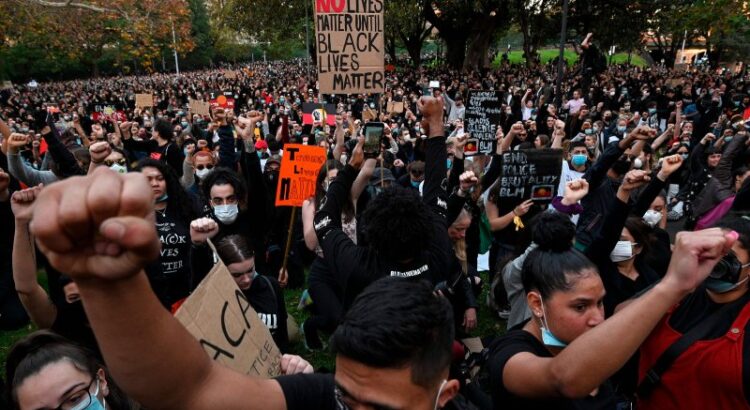
The video of Derek Chauvin’s kneeling on George Floyd’s neck traveled from a Minneapolis street to every corner of the worldBlack activists in the U.K. spoke of their visceral reactions to the footage, while Floyd’s dying words, “I can’t breathe,” brought back painful memories in France and Australia of Black and Aboriginal people killed while in police custody. The video transcended borders on social media too, sparking solidarity protests in more than 50 nations, from Germany to Thailand, Argentina to Turkey.

Despite COVID-19 restrictions in many countries, hundreds of thousands of protesters turned out in solidarity and to show that racial injustice was not just an American problem. Many voiced frustrations at specific racist and colonial legacies. Statues of slave traders and imperialists became flash points across Europe, while #PapuanLivesMatter trended, highlighting discrimination against natives of West Papua and stirring calls for independence from Indonesia.

But as suddenly as it came, the global summer of Black Lives Matter (BLM) was building over time. Grassroots activists had been pushing for change for years, building movements for racial justice that inspired not only social awakenings but also concrete legislative change, corporate involvement and, inevitably, reactionary backlash. Here, how eight movements for equity took shape over the past year and where they aim to go next.

Australia

Australia had some of the largest protests outside the U.S. after George Floyd’s murder. Tens of thousands of people took to the streets in cities across the country during June. Alongside Black Lives Matter signs, protesters carried placards with the names of some of the 476 ­Aboriginal and Torres Strait Islander people who, according to the Guardian, have died in police custody since 1991. A disproportionate number of the continent’s Indigenous people reside in its prisons: they accounted for 29% of Australia’s inmates in June 2020, despite being only 3% of the population.

The wave of demonstrations had some impact. New South Wales, the Australian state that’s home to Sydney, launched a parliamentary inquiry into how deaths in custody are investigated, and the state of South Australia made it mandatory for police to notify the state’s Aboriginal Legal Service whenever an Aboriginal person is taken into custody. In late July, the federal government also announced a target of moving 15% of Indigenous adults out of prison by 2031.

But the problem persists. At least seven Aboriginal people have died in custody since the beginning of March, prompting one Australian senator to call the situation a “national crisis.” —Amy Gunia

Demonstrators protest after João Alberto Silveira Freitas was beaten to death by security guards at a Porto Alegre supermarket, Brasilia, Nov. 26, 2020.

Brazil

News of George Floyd’s murder reached a Brazil already deep in crisis over racial justice following the 2018 election of President Jair Bolsonaro. The far-right leader has compared Black people—who make up 56% of the country’s ­population—to cattle, celebrated police brutality in mostly Black favelas and tried to strip Indigenous communities of protections. Meanwhile COVID-19’s onslaught in Brazil, one of the worst-hit countries in the world, has killed Black people and wiped out their jobs at higher rates than for white people.

Black Brazilians’ protests brought unprecedented attention from the mostly white media to systemic racism in Brazil. In late 2020, several major companies introduced Black-only hiring programs. In November’s local elections, Black candidates outnumbered white ones for the first time.

Still, despite those changes, the path forward for antiracism advocates is rocky. In April 2020, local media unearthed a video lesson published by Rio de Janeiro’s state education body that claimed it was “unacceptable” to discuss racism in Brazil, arguing that high rates of interracial relationships made the term irrelevant. The President voiced the same sentiment in November, when protests broke out over the fatal beating of João Alberto Silveira Freitas, a Black father of four, by grocery-­store security guards in the city of Porto Alegre.

In the face of public denial, Black activist networks have become more active than ever, organizing to feed families struggling during the pandemic, overhaul the education system and protect neighborhoods from police violence. —Ciara Nugent

Assa Traoré gives a press conference to commemorate the anniversary of the death of her brother, Adama Traoré, who died in police custody, Persan, France, July 18, 2020.

France

In July 2016, 24-year-old Adama Traoré was out walking, looking forward to celebrating his birthday later in the evening, when police apprehended him. Traoré, who was Malian-French, later died in police custody; his last words were reportedly “I can’t breathe,” the same as George Floyd’s final words. Protests erupted in Paris after Traoré’s death—and resurged last year when Floyd’s murder drew renewed attention to police violence around the same time that an independent autopsy commissioned by Traoré’s family ruled that Adama died of asphyxiation after being restrained.

Activists say Adama’s case is part of a long history of police brutality in France, where young Arab and Black men are 20 times as likely as white men to be stopped by law enforcement. In early June, tens of thousands of people defied coronavirus restrictions to protest in cities across France—with Adama’s sister, Assa, at the forefront of marches in Paris. As public outcry grew, France announced a ban on choke-hold arrest tactics on June 8.

Even after the protests, similar police behavior has continued; in November, a video emerged of three white police officers beating Black music producer Michel Zecler at his Paris studio. Mass protests and outrage ensued, particularly in response to proposed legislation that sought to criminalize those who distribute imagery of police officers in action.

“The Adama generation is on the street to speak out against police brutality, racial discrimination,” Assa Traoré told TIME late last year. Parliament approved an adapted version of that security bill, which extends police powers, in April, despite the outcry. —Suyin Haynes

Unilever faced backlash for its  Fair & Lovely  skin-lightening cream as more activists began speaking up against the prevalence of colorism in Indian ­culture.

India

The Black Lives Matter movement prompted a reckoning in India over colorism, discrimination against those with darker skin tones, which has deep roots in India’s caste system and colonial history. Last summer, after Priyanka Chopra joined Indian stars in voicing support for BLM, social media users pointed out she and many others had promoted whitening cosmetics. (Chopra had previously said she regrets endorsing these products early in her career.)

For years, activists had been speaking up about colorism in Indian ­culture—from Bollywood’s promotion of light-­skinned actors to the global multibillion-­dollar skin-whitening industry. In 2009, an Indian nonprofit started the “Dark Is Beautiful” campaign, endorsed by Bolly­wood actor Nandita Das, to raise awareness about color bias in schools and in the media.

The outcry of 2020 prompted some changes. The matchmaking service Shaadi.com stopped letting users sort by skin tone. But the road is long. While popular skin-lightening product Fair & Lovely changed its name to Glow & Lovely, the product’s formula remained the same. —Simmone Shah

A June 14, 2020 march against racism in Tokyo

Japan

Black Lives Matter marches held across Japan in June 2020 were both a gesture of solidarity with protesters in the U.S. and a call to confront racism at home. Much of the discussion in Japan has centered on discrimination toward biracial individuals, following multiple high-profile incidents of prejudice. In 2019, a Japanese comedy duo said tennis icon Naomi Osaka—who was born to a Haitian father and a Japanese ­mother—“needed some bleach.” And that wasn’t the first such incident: Ariana Miyamoto, whose father is African American and mother is Japanese, faced criticism after being crowned Miss Universe Japan in 2015. In a country that is largely ethnically homogenous, these incidents have prompted calls for recognizing the Japaneseness of biracial people. —Kat Moon

The New Zealand Labour Party’s female MPs on the steps of parliament on Nov. 24, 2020, in Wellington.

New Zealand

Elections in New Zealand in October 2020 brought to power one of the world’s most diverse governments. The first parliamentarians of African, Latin American and Sri Lankan heritage were voted in; almost half of the seats went to women; more than 10% of law­makers identify as LGBTQ. Prime Minister Jacinda Ardern’s Cabinet picks were no less ­diverse, including the country’s first Indigenous female Foreign Minister and first openly gay Deputy Prime Minister.

Representation for Maori people is also high. New Zealand’s original inhabitants, who make up some 17% of the population, now hold around 20% of parliament’s 120 seats and 25% of Cabinet positions. Among the new parliamentarians are two members of the Maori Party, which made a comeback after being ousted in 2017.

But despite representation at the highest levels of government, Maori people face worse outcomes than non-Maori people in many areas. The Maori unemployment rate is more than double the national rate, and they are more likely to be homeless. Their life expectancy is about seven years shorter, and they are more than twice as likely to die from assault and homicide.

Now, the Maori Party has promised to be an unapologetic voice for Indigenous New Zealanders. “You know what it feels like to have a pebble in your shoe?” the party’s co-leader Rawiri Waititi said in December, in his first speech in parliament. “That will be my job here.” —A.G.

A woman at a protest against police brutality in Lagos, Nigeria.

Nigeria

After a video emerged in October that appeared to show officers from Nigeria’s Special Anti-Robbery Squad (SARS) killing a young man, protests erupted, led by young Nigerians who were angry with their government for ignoring corruption and extrajudicial killings. (Police initially denied responsibility.) The outcry went global when the military shot peaceful #endSARS demonstrators on Oct. 20, sending shock waves through the Nigerian diaspora. BLM co-founder Opal Tometi organized an open letter demanding justice for protesters who had reminded the world that Black Lives Matter, everywhere. —S.H.

The statue of Edward Colston is thrown into the harbor of Bristol in southwest England, June 7, 2020.

United Kingdom

In June, Black Lives ­Matter protesters in the U.K. drew worldwide attention when they tore down a statue of 17th century slave trader Edward Colston and threw it into the harbor of Bristol in southwest England. But long before June, campaigners, activists and historians were interrogating the U.K.’s imperial past, and its deep implications for the present.

A widely condemned government-­commissioned report in March claimed that U.K. society was “no longer” rigged against people from ethnic minorities and “should be regarded as a model for other white-majority countries.” (U.N. experts called the report an “attempt to normalize white supremacy.”) Official studies show racial disparities across the board.

Police data suggest that Black people are nine times as likely as white people to be stopped and searched by police in England and Wales, and according to the Equality and Human Rights Commission, unemployment rates are significantly higher among ethnic minorities than white people. Campaigners have also called for an independent public inquiry into the handling of the pandemic and its disproportionate impact on Black, Asian and minority ethnic groups, who faced up to 50% higher risk of death from COVID-19 when compared with white Brits.

Anti-Asian hate and discrimination has also soared during the pandemic, with U.K. police data suggesting a threefold increase in hate crimes toward Chinese, East and Southeast Asians in the first quarter of 2020 compared with the same period in 2018 and 2019.

Activists are pushing for changes including shifting school curriculums to include the history of the British Empire, returning museum objects looted from former colonies and exploring the links between British stately homes and slavery. Despite backlash from conservative politicians and right-wing media, a re-examination of Britain’s racist past and present is finally getting under way. —S.H.

Fuente de la Información: https://time.com/6046299/fighting-injustice-world/
Comparte este contenido:

Estados Unidos: US Professor Who Found Stereotypes Influence Use of Deadly Force Inspires Police Reforms

US Professor Who Found Stereotypes Influence Use of Deadly Force Inspires Police Reforms

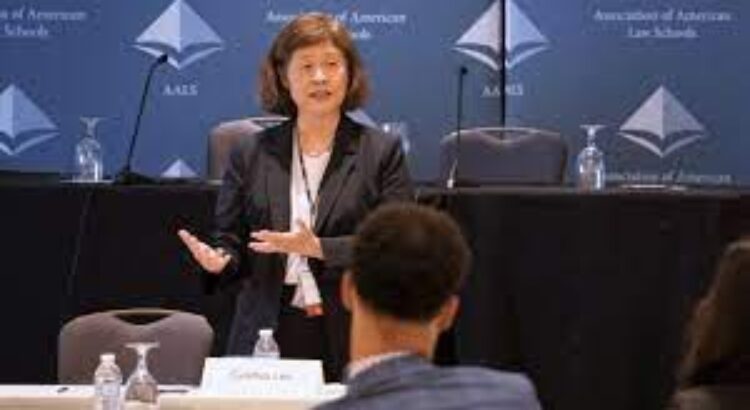
WASHINGTON – Long before police brutality emerged as a dominant public issue in the United States, Cynthia Lee, a George Washington University professor and an expert on race and self-defense, devoted much of her research to deadly police shootings of unarmed Black men and women.

In a 2004 study, she concluded that stereotypes about African Americans, often working at a subconscious level, influenced a police officer’s split-second decision about whether to use deadly force, accounting for the disproportionately large number of Black victims in police shootings.

 US Police Killings by Race

In 2018, she authored a groundbreaking law journal article on reforming laws governing police use of deadly force. Most states, she learned, allowed police officers to use deadly force as long as they had a «reasonable belief» in the need for such action.

This standard, however, allowed juries to believe that an officer’s use of force was justified even if it wasn’t necessary or proportional. Lee’s solution: changing the law to make it equally important to assess whether an officer’s actions leading up to a shooting were reasonable, and requiring the use of force to be necessary, proportionate and based on an immediate need.

At the time she wrote the article, Lee thought the chances of states adopting her model were «fairly slim.» But her work began to attract attention in the wake of incidents in which police officers killed African Americans while attempting to take them into custody, including the death of George Floyd in Minneapolis nearly a year ago, which touched off international protests and a push for police reform.

In the year since Floyd’s death, one city and two states — Washington, D.C., Virginia and Connecticut — have used Lee’s model to adopt stringent use of deadly force statutes. The measures were adopted as part of comprehensive police reform legislation.

People hold up signs, including one with an image of George Floyd, outside the courthouse in Minneapolis, Minnesota, April 20, 2021, after former Minneapolis police officer Derek Chauvin was found guilty in the death of Floyd.

In Delaware, members of the Law Enforcement Accountability Task Force have also expressed interest in her model, Lee said.

While Washington, Virginia and Connecticut account for only a handful of the more than 1,000 deadly police shootings a year in the U.S., reform advocates hope that these changes will help rein in police use of excessive force.

The controversy over police use of force is front and center on Capitol Hill, where Senate Democrats and Republicans are fighting over House-passed legislation that would end qualified immunity, the legal doctrine that protects individual police officers from lawsuits for misconduct. In March, the House approved the George Floyd Justice in Policing Act that would, among other things, ban the use of chokeholds, strengthen federal civil rights laws and end qualified immunity.

Lee is hoping that her model statute finds its way into the national debate.

«It’s the kind of change we need because we need to make sure the police officers are treating people fairly and with respect and that people are not getting unnecessarily hurt or killed by the use of force,» said Democratic Virginia state Senator John Bell, an early supporter of Lee’s proposal.

Criticism of model statute 

Critics say the changes force juries to second-guess police officers’ split-second decisions on the use of deadly force, whether to fire a gun or wrestle a suspect to the ground or subdue him or her in some other life-threatening hold.

«They changed the law to say, ‘What would a civilian who looks at the use of force say about whether it was reasonable or not,'» said John Krupinsky, president of the Connecticut State Fraternal Order of Police.

Barry Friedman, a New York University law professor who has argued that a dearth of laws has left police to police themselves, praised Lee’s proposed reform.

«We need to pass statutes to tell the police specifically how it is that they should police, and her statute is an effort to do that,» he said.

While other states such as California, Colorado and Maryland, spurred by the Black Lives Matter protest movement, have enacted strict police use-of-force standards in the past couple of years, none stemmed from the work of Lee.

«Of course, you always hope that your research will have real-world impact,» Lee told VOA. «I wanted to inform discussions about policing, but I never imagined that my work would actually become law in any state, let alone two states and the District of Columbia.»

Given that juries largely remain sympathetic to police officers, Lee’s model statute is unlikely to lead to a sharp increase in convictions. Lee said it could have a deterrent effect, however, encouraging police officers to «act with more care» before using deadly force.

But changing police culture is likely to take time. The Washington statute has yet to be made permanent. The Virginia legislation went into effect March 1, while the Connecticut statute doesn’t take effect until next year.

US Police Killings by Age and Gender

Deadly force standard 

In the United States, the use of deadly force is governed both by a landmark 1989 Supreme Court decision known as Graham v. Connor and by individual state laws. The Supreme Court ruling requires that all claims of excessive force against a police officer be judged from the perspective of «an objectively reasonable officer.»

«It’s not your judgment or my judgment. It’s ‘how would a reasonably objective officer judge the situation,'» explained David Harris, a University of Pittsburgh law professor.

For decades now, the high court ruling has served as the default standard for police use of deadly force in the country, Harris said. Every police officer in America is trained on its legal significance. When an officer is sued over excessive force in a civil case, it is Graham v. Connor that applies. But when an officer involved in a deadly shooting faces criminal charges, state criminal statutes take control, according to Lee.

At the time Lee conducted research for her model statute, only nine states and the District of Columbia did not have use of deadly force statues. Most of the other states focused solely on the reasonableness of an officer’s belief in the need to use deadly force. Consequently, instead of assessing an officer’s conduct, juries probe whether an officer’s fear of the suspect is reasonable: Was the suspect holding a gun? Was he or she resisting arrest?

«I felt that the real focus should be on the actions of the officer,» Lee said, «because the officer is the one on trial.»

To ensure an officer is held accountable, Lee’s model statute requires that juries consider whether an officer acted reasonably before using deadly force. But what makes an officer’s actions reasonable? Lee offers a couple of factors for a jury to consider.

First, the model instructs the jury to consider whether the officer used any de-escalation measures, such as trying to calm the suspect or using less-lethal force.

Second, it requires that jurors consider whether the officer’s conduct increased the risk of a deadly confrontation. Importantly, the statute allows the jury to consider the officer’s actions «before the moment in time» when the officer is fearing for his life.

Borrowing from self-defense law in civilian homicide cases, Lee’s model legislation allows the jury to find an officer guilty of manslaughter if the officer’s belief in the need to use force was «honest but unreasonable» or if the officer’s belief was reasonable but actions were unreasonable.

Applying the model 

To demonstrate how her model could alter the outcome of a deadly shooting case, Lee applied it to the 2014 police killing of Tamir Rice. Rice, a 12-year-old African American boy, had been carrying a replica toy gun when a white police officer arrived on the scene and almost immediately shot the youth. Two experts hired by Cleveland prosecutors applied the Supreme Court standard and concluded that the use of force in the case was justified.

FILE - Demonstrators blocking Public Square in Cleveland during a protest over the police shooting of 12-year-old Tamir Rice, Nov. 25, 2014.

But Lee said that a jury relying on her model statue could reach a different conclusion. The jury would note that by driving too closely to Rice, the officers put themselves in a vulnerable position, increasing the risk of using deadly force to protect themselves. Had they parked their car further away from the scene, they could have talked to the boy and convinced him to drop his gun, instead of «immediately firing on him.»

Lee’s model is hardly a recipe for radical change. To critics on the left, it doesn’t go far enough. Still, it took nothing short of Floyd’s death beneath the knee of former Minneapolis police officer Derek Chauvin — and an enthusiastic outreach effort by Lee’s students — for legislators to take a close look at her model statute.

In January 2020, a former student, then working for District of Columbia Councilmember Kenyan McDuffie, shared Lee’s model statute with her boss. But it wasn’t until after Floyd’s death that Lee learned that McDuffie had incorporated her measure into a use-of-force bill. Within days, the council unanimously adopted the statute as part of emergency police and justice reform legislation.

«I was floored when I found out that D.C. had enacted police reform legislation that included my model statute,» Lee said.

But the council took her statute one step further, she said. It held that police officers may use deadly force only after «all other options have been exhausted.»

«This was a great addition to my model statute,» Lee said.

Gregg Pemberton, chairman of the D.C. Police Union, said many of the provisions in the district legislation had been enacted by the Metropolitan Police Department years ago.

«The MPD does not have issues with racial profiling or police brutality,» Pemberton said.
Less than a month after the District of Columbia adopted her model statute, an official in Connecticut Governor Ned Lamont’s office emailed Lee to inform her about proposed changes to the state’s use of deadly force statute based on her model legislation.

«I was surprised and pleased to learn that Connecticut was looking into adopting key provisions from my model statute,» Lee said.

In late July, Lamont, a Democrat, signed the bill into law, with an effective date of April 1. Shortly before the bill was to take effect, however, Lamont, under pressure from law enforcement groups, signed a bill delaying the effective date until January 1, 2022.

Around the time Connecticut lawmakers were debating changing the state’s use-of-force standards last year, Virginia Governor Ralph Northam, a Democrat, called a special session of the state general assembly to meet on August 18 to pass criminal justice and policing reform.

At that time Virginia was one of nine states that didn’t have a use-of-force statute. So Lee drafted a model statute for Virginia, including the District of Columbia requirement that an officer exhaust all other options before using deadly force. She had her research assistant send the document to about a dozen lawmakers.

In October, Northam signed into law police reform legislation sponsored by state Senator Mamie Locke. It went into effect March 1. Unlike in Washington D.C. and Connecticut, law enforcement agencies were relatively open to the proposed changes.

Dana Schrad, executive director of the Virginia Association of Chiefs of Police, said the group worked with state lawmakers «to make sure that there was a standard in there that allowed a law enforcement officer to protect his or her own life.»

Fuente de la Información: https://www.voanews.com/usa/race-america/us-professor-who-found-stereotypes-influence-use-deadly-force-inspires-police

Comparte este contenido:

México: Proponen utilizar criterios en favor de la mujer para creación de políticas públicas

Proponen utilizar criterios en favor de la mujer para creación de políticas públicas

Rebeca Aguirre / La Voz de Durango

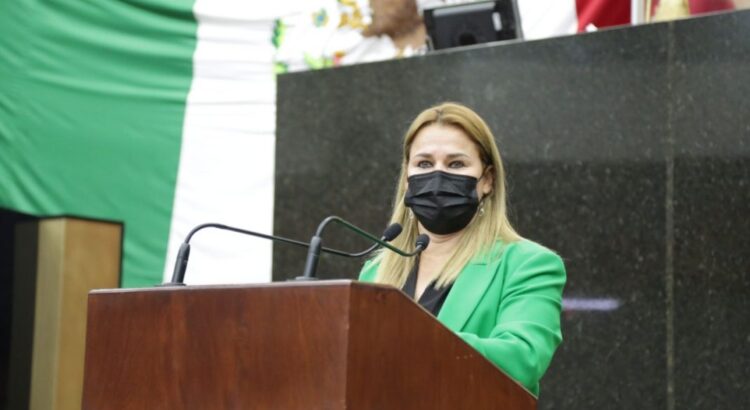
El Grupo Parlamentario del Partido Acción Nacional (GPPAN), presentó una iniciativa que propone adicionar una fracción al artículo 48 de la Ley de las Mujeres para una Vida sin Violencia, relativo a las facultades y obligaciones del Instituto Estatal de las Mujeres (IEM).

Esta propone adicionar la consistente en recabar y difundir los criterios interpretativos de normativa nacional, estatal o internacional aplicable, emitidos por las instancias judiciales y organismos públicos, además de las resoluciones jurisdiccionales de relevancia en materia de derechos de las mujeres, que contribuyan a erradicar la violencia en contra de estas en cualquiera de sus formas, para que sean utilizadas como referente en la creación de políticas públicas y de concientización de la sociedad general.

La ampliación de motivos de la iniciativa, fue presentada por la diputada María Elena González Rivera, quien expuso que “hablando en específico de las mujeres, muchas de ellas desde niñas hasta adultas mayores sin distinción alguna y de manera desafortunada, viven en un estado de asedio manifestado a través de una gran diversidad de acciones y actitudes en menoscabo de su dignidad”.

“Del total de las mujeres que viven en nuestro país, una gran cantidad de ellas en algún momento de su vida han padecido alguna expresión de violencia en su contra, por el solo hecho de ser parte de ese universo, mismo que hoy en día abarca prácticamente la mitad de toda la población de México”, lamentó la legisladora.

Asimismo, comentó que la adición a la Fracción 48, dice: Recabar y difundir los criterios interpretativos de normativa nacional, estatal o internacional aplicable, emitidos por las instancias judiciales y organismos públicos, además de las resoluciones jurisdiccionales de relevancia en materia de derechos de las mujeres, que contribuyan a erradicar la violencia en contra de estas en cualquiera de sus formas, para que sean utilizadas como referentes en la creación de políticas públicas y de concientización de la sociedad en general.

Fuente de la Información: https://lavozdgo.com/2021/05/10/proponen-utilizar-criterios-en-favor-de-la-mujer-para-creacion-de-politicas-publicas/


Comparte este contenido:

Estados Unidos: How the Closure of In-School Learning Damaged U.S. Children’s Mental Health During the Pandemic

How the Closure of In-School Learning Damaged U.S. Children’s Mental Health During the Pandemic

Nobody ever believed the pandemic would go easy on children. The virus might target them less directly than it targets older people, but other challenges—the loss of school, the loss of play, the loss of time with friends—would exact their own emotional toll. A study published April 29 in JAMA Network Open sheds light on how serious that harm has been.

The work, led by psychologist Tali Raviv at Northwestern University, involved a survey of more than 32,000 caregivers looking after children from kindergarten to grade 12 in the Chicago public school system. The definition of “caregiver” was broad, including parents and grandparents as well as anyone 18 or older with principal responsibility of caring for children in a household. The sample group of the families was ethnically and racially diverse—39.3% white, 30.2% Latinx; 22.4% Black; and 8.1% mixed.

The pivot point of the research was March 21, 2020: the day that in-person instruction ended in Chicago public schools and home-schooling began. Raviv and her colleagues asked each caregiver to rate the children they were looking after on how they exhibited 12 different traits in the time before the end-of-school date, and in the time after (the surveys themselves were filled out between June 24 and July 15):

The results were striking. On every one of the negative traits the overall scores went up, and on every one of the positive ones, there was a decline. Some were comparatively small shifts: Talking about plans for the future fell from 44.3% to 30.9% (a change of 13.4 percentage points); positive peer relationships declined from 60.4% to 46.8% (a 13.6 percentage-point drop). But in other cases the change was more dramatic. Just 3.6% of kids overall were reported to exhibit signs of being lonely before the schools were shuttered and 31.9% were that way after, a massive shift of 28.3 percentage points. Only 4.2% of children were labeled agitated or angry before the closures, compared to 23.9% after, a jump of 19.7 points.

A small number of the children studied, Raviv says, improved over the before-and-after period. “About 7% actually benefited” from the shift to in-person learning, she says. Self-harm and suicidal ideation, for example, declined from 0.5% to 0.4% among Black children, and from 0.4% to 0.3% among Latinx kids. “Maybe school was a stressful place and remote learning was good for them.”

But that’s not at all the case for most kids and, as with so many things, race, ethnicity and income play a role, though in this case it was Black and Latinx children generally faring better than whites, instead of the other way around.

Overall, the figure for the “loneliness” characteristic was 31.9% post-school closures, but it broke down to 22.9% among Black kids and 17.9% among Latinx, compared to 48.4% among whites. Since all three groups clocked in at just over 3% before in-class learning ended, the resulting increase in loneliness was much higher among whites. On the “hopeful or positive” metric, 36.4% Black kids exhibited the traits, compared to 30.7% in Latinx households and just 24.6% among whites—a decline in all three cases, but a more precipitous one among whites who were down from 55.7%, compared to 40.2% for Latinx kids and 49.8% for Blacks.

The explanation, Raviv suspects, could be that the greater level of privilege whites generally experience left them less prepared to deal with the hardships of the lockdowns when they came around.”It may have been more unusual for white families to have to cut back,” she says. “For some lower-income people it might not have been that much of a change.”

But Black and Latinx families suffered in other ways. Across the board, they were more likely to have a family member who contracted COVID-19; to have lost a job, lost a home, lost health insurance; to have difficulty getting medicine, health care, food, and PPE. Even if the Black and Latinx children’s change in overall mental health as tabulated in the study was less severe than that of white kids’, they experienced hardship all the same. “They were more likely to see these additional stressors,” says Raviv.

Going forward, Raviv and her colleagues write that the pandemic can be something of a teachable moment for educators, clinicians, and policymakers. The research, they say, points to the need for a renewed commitment to better mental health care—especially access to telehealth; improved access to school- and community-based mental health services; improved funding for communities in need; and a better effort to eliminate structural inequality. The pandemic, eventually, will end. The emotional pain kids in every ethnic group have sustained could stay with them for a long time to come.

Fuente de la Información: https://time.com/5964671/school-closing-children-mental-health-pandemic/


Comparte este contenido:

Esta dos Unidos: Megan Rondini lawsuit can proceed, state supreme court rules: Former Alabama student died in suicide after alleged rape

Megan Rondini lawsuit can proceed, state supreme court rules: Former Alabama student died in suicide after alleged rape

The lawsuit against a man from a prominent Tuscaloosa family in the death of Megan Rondini, a former college student who killed herself after alleging she was raped, can move forward, according to an Alabama Supreme Court ruling issued Friday.

Rondini was a UA student from Texas when she reported to police she was raped by T.J. Bunn in 2015.

Bunn worked at ST Bunn Construction Company, which is across the street from the Innisfree Pub, where Rondini reportedly became drunk, or was drugged, before being raped for 30 minutes in July of that year.

Rondini’s story became public in a June 2017 BuzzFeed story, as told by her parents, family and friends.

They claimed the 20-year-old was mistreated by Tuscaloosa County investigators, the university and DCH Regional Medical Center. Rondini left Tuscaloosa and took her own life in February 2016.
In an earlier lawsuit filed on behalf of parents Michael and Cynthia Rondini, the documents identified T.J. Bunn, the Tuscaloosa man implicated in the alleged sexual assault of Rodini, as being part of a family that is “well connected and powerful in the Tuscaloosa community, and were major financial supporters of UA.”

Bunn had filed a motion in federal court saying that because Rondini took her own life, that automatically prevented him from being liable in her death.

For example, experts explained, if a person was injured in a car wreck and later committed suicide as a result of that car wreck, Alabama and most other states typically say that the person who caused the wreck is no longer responsible.
In this case, however, the Alabama Supreme Court decided that when it comes to sexual assault, if there’s enough evidence to show the sexual assault happened and the victim then commits suicide, the alleged assailant can still be held liable for the sexual assault.

In the Supreme Court ruling, it says the federal court had concluded that Rondini’s family had produced substantial evidence that Bunn had sexually assault her, said Rondini attorney Leroy Maxwell of Birmingham law firm Maxwell Tillman.

“We all knew that was a fact,’’ Maxwell said Friday. “Bunn made a technical argument, not an innocence argument, he made a technical argument saying since he killed herself, he should no longer be responsible for damages,’’ Maxwell said.

The Supreme Court, however, said if someone hurts someone intentionally and they commit suicide, the assailant can still be held responsible for her wrongful death. “They literally did exactly what we asked the court to do and cited the exact case law from our brief,’’ Maxwell said. “This is a huge day for her family, an emotional, big day for them.”


Fuente de la Información: https://www.al.com/news/2021/05/megan-rondini-lawsuit-can-proceed-state-supreme-court-rules-former-alabama-student-died-in-suicide-after-alleged-rape.html

Comparte este contenido:

Protestan contra feminicidios en la Ciudad de México

Por: Erika Lozano


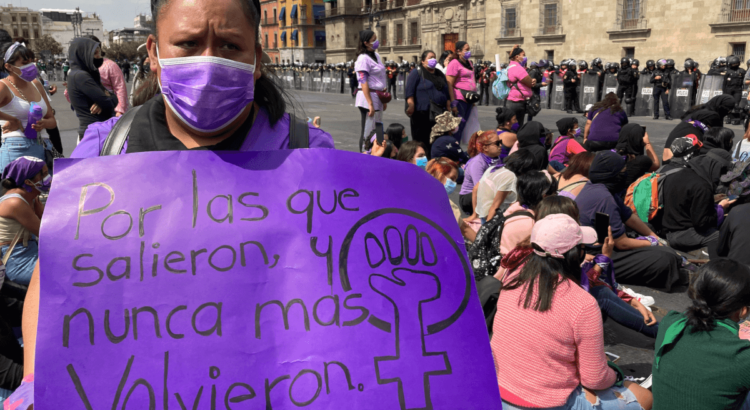
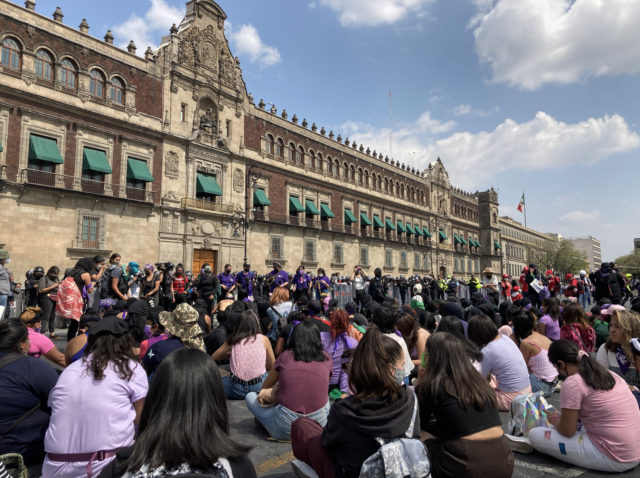
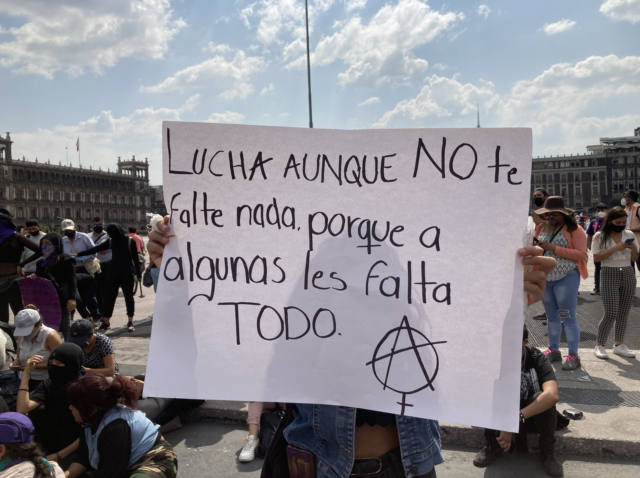
Colectivos feministas realizaron una marcha para exigir justicia por las víctimas de feminicidio en el país y se solidarizaron con las madres de las víctimas, previo al 10 de mayo. Las mujeres se movilizaron del Monumento a la Revolución hacia el Zócalo capitalino la tarde de este viernes.

Durante la protesta exigieron justicia para todas las mujeres asesinadas y desaparecidas en México y manifestaron su apoyo a todas las madres de las víctimas. En las calles del centro se escucharon consignas como «mujer, escucha, esta es tu lucha» y «señor, señora, no sea indiferente, se mata a las mujeres en la cara de la gente».

Las manifestantes llegaron al Palacio Nacional, donde exigieron a las autoridades apoyo, seguridad, trato digno y justicia para las madres de las víctimas.

También se solidarizaron con la lucha del pueblo colombiano, enviaron un mensaje de apoyo a las miles de personas que se encuentran desde hace más de una semana en las calles en el marco del Paro Nacional y exigieron alto a la represión.

Fuente: desinformemonos
Comparte este contenido:

Trabajadores esenciales: precarizados y prescindibles

Por: Tlachinollan

Las jornaleras y jornaleros agrícolas son trabajadores del campo que, por su precaria preparación académica, son contratados de manera temporal para realizar trabajos sumamente extenuantes, inhumanos, que requieren fuerza física y habilidades especiales. Se trata de una población marginal que sale de sus comunidades de origen, para enrolarse como jornaleros y jornaleras. No cuentan con contratos de trabajo formales. El enganchamiento realizado por contratistas y mayordomos es el sistema de explotación semiesclavista, que confina a las familias a sobrevivir en las galeras de los campos agrícolas o en las periferias de las ciudades. Un gran número de familias trabajan en campos conocidos como ranchos, que no cuentan con registros ante la secretaría del trabajo, y que en la mayoría de lugares funcionan de manera irregular.

Por su pertenencia a un pueblo indígena las jornaleras y jornaleros, son maltratados y discriminados por privilegiar su comunicación en sus lenguas maternas y por tener dificultades para expresarse en castellano. Las relaciones que se imponen en los campos son de explotación, sumisión, racismo, clasismo, machismo, violencia y agresión sexual contra las mujeres. Sus derechos laborales son violentados de forma masiva y sistemática, sin que exista una autoridad en nuestro país que se avoque a proteger y defender sus derechos. Su itinerancia los estigmatiza como los indios, para resaltar su atraso y propiciar su repulsión. Son víctimas de extorsión, engaños, fraudes, abusos y atracos. Para las autoridades son seres invisibles, que no existen como personas con derechos. No son atendidos en sus comunidades de origen, porque su desarraigo no les permite organizarse para exigir a los funcionarios municipales que asignen presupuesto para la instalación de servicios básicos.

La falta de inversión en el campo ha propiciado la expulsión de las familias que no encuentran opciones productivas que mejoren sus condiciones de vida y fomenten el arraigo. El trabajo agrícola no remunerado ha tornado inviable la vida comunitaria. La sola siembra del maíz, el frijol y la calabaza han dejado de ser el principal sustento para las familias indígenas. La baja productividad de sus tierras los obliga a salir para contratarse como jornaleros y jornaleras. Su desplazamiento familiar les impide que los hijos asistan de manera regular a la escuela. Para muchas madres y padres el estudio es un bien intangible que resulta ser oneroso, porque son más de doce años que las hijas y los hijos tienen que dedicarse al estudio, dejando en segundo término las labores del campo, sin que obtengan beneficios económicos inmediatos. El monto de las becas y de los demás programas federales no son aún una cantidad atractiva para las jefas y jefes de familia, porque no logran cubrir de manera satisfactoria sus necesidades básicas. Las remesas que llegan de Estados Unidos representan una alternativa para enfrentar el problema del hambre. El alto costo de la canasta básica requiere ingresos permanentes, que como mínimo rebasen 6 mil pesos mensuales por familia.

Ante la falta de ingresos seguros y de un familiar en Estados Unidos, los padres o las madres establecen contactos con contratistas de la región para planear la salida de sus comunidades. El sueldo base oscila entre 120 a 150 pesos diarios. Pocos son los lugares que ofrecen galeras para instalarse con los niños y niñas. En otros campos pueden trabajar a destajo, dependiendo de la urgencia que tengan los empresarios para recolectar y exportar sus productos. Puede haber un mejor sueldo a cambio de un esfuerzo físico extraordinario, pero la renta del cuarto corre por su cuenta. Son trabajos que no duran más de tres meses. El poco dinero que juntan será para pagar el autobús que los trasladará a otros estados en busca de un sueldo no menor a los 150 pesos, porque no sacarían los gastos de comida de la semana. La meta es encontrar trabajos donde puedan tener un pago de 200 a 250 pesos diarios. Hay familias que se desplazan hasta san Quintín donde hay empresas que ofrecen estos sueldos, pero por la alta demanda no siempre son contratados.

Recientemente llegaron de Villa Unión Sinaloa 50 familias jornaleras que salieron de una colonia de Tlapa el 16 de diciembre. Fueron 4 meses de intensos trabajos. Varios jefes de familia que rebasan los 60 años, se enlistaron junto con sus esposas para trabajar al lado de sus hijas e hijos en la recolecta del chile jalapeño. La empresa les pagó a 5 pesos el bote de 20 kilos. Las personas mayores llegaban a juntar 50 botes con mucho esfuerzo, para ganar 250 pesos diarios, con un horario de 7 de la mañana a las 8 de la noche. Los afortunados eran los jóvenes que llegaban a recolectar de 60 a 70 botes, para ganar de 300 a 350 pesos diarios, sin embargo, pronto se acabó el trabajo. Fueron meses difíciles porque se enfermaron mucho de tos y de gripa. Ante estos síntomas los mayordomos no los dejaban trabajar, porque temían que fuera el Covid 19.  Varios se quedaron en sus cuartos gastando lo poco que ganaron con la compra de medicamentos. Los servicios médicos, que por ley deben de brindar las empresas, no los proporcionan. Cuando hay accidentes de trabajo, son los familiares quienes se encargan de trasladarlos a clínicas particulares, pagando un viaje especial. La empresa no se responsabiliza de estos incidentes, por el contrario, amedrenta a los trabajadores con no recibirlos en el campo. El seguro social sigue siendo parte de este entramado institucional que protege al patrón y permite la simulación de las prestaciones sociales, que supuestamente garantiza a sus trabajadores. Para que la secretaría del trabajo haga verificaciones sobre cómo las empresas dan o no cumplimiento a la ley federal del trabajo, tiene que haber una solicitud formal, con datos muy específicos sobre la razón social, la dirección fiscal, su ubicación y la problemática que existe. Con estos trámites burocráticos se obstaculiza en la ley misma, que los derechos de los trabajadores y trabajadoras se hagan efectivos y no sean justiciables.

En la región de la Montaña, el Consejo de jornaleros y jornaleras agrícolas registró del mes de febrero de 2020 al mes de marzo de 2021, la salida de 17 mil 775 personas. La mayoría de familias son de Cochoapa el Grande, Metlatónoc, Tlapa, Alcozauca y Copanatoyac. Los niños y niñas de 0 a 17 años arrojan un registro de 7 mil 389. El 29 por ciento no cuenta con estudios, mientras el 22 por ciento cuenta con primaria incompleta y sólo el 16 por ciento concluyó la primaria. El 10 por ciento logró terminar sus estudios de secundaria. El rezago educativo es muy alto, al grado que el municipio de Cochoapa presenta los índices más bajos de desarrollo humano. La alta migración jornalera forma parte de estos indicadores de la pobreza extrema que muestra las dificultades que enfrentan las familias indígenas para que dentro de su propio hábitat desarrollen sus capacidades cognitivas y todo su potencial creativo que dignifiquen su vida y enaltezcan su cultura, su lengua y su patrimonio cultural y natural.

Dentro de la clase trabajadora en México la población indígena, no sólo se encuentran en los índices más bajos del desarrollo humano, sino que es la más explotada y discriminada por su pertenencia a una cultura primigenia y porque existe esa visión racista de que son inferiores, y por lo mismo, pueden hacer trabajos rudos, al modo de explotación esclavista. El abandono secular, no es gratuito, es parte de ese etnocentrismo de la clase política, que ha ensanchado la brecha de la desigualdad social y del segregacionismo racial, al confinar al olvido a las poblaciones indígenas del estado, siendo los protagonistas de luchas históricas que han defendido con su sangre, la libertad, la independencia, la abolición de la esclavitud, el reconocimiento de los derechos del trabajador, el pago justo de su jornal o su salario, y que además, han dado fama mundial a un territorio encantador que han sabido preservar por siglos sus bellezas naturales, junto con un legado cultural de alto nivel, que forma parte de la civilización mesoamericana.

Los jornaleros y jornaleras agrícolas en esta pandemia no pararon de trabajar. Son parte las y los trabajadores esenciales que garantizan la alimentación en nuestro país. No ha habido ningún reconocimiento a su labor silenciosa pero titánica. Se ha puesto en primer término al ejército como la institución que más ha trabajado en tiempos de la pandemia, por encima del personal médico. Esta falta de visibilidad para la población indígena, forma parte de esta visión monoétnica que reproducen las autoridades, que siguen sin reconocer el aporte de los pueblos indígenas y su importancia estratégica para el desarrollo justo y equitativo en nuestro país.

Las jornaleras y jornaleros indígenas han estado expuestos al contagio del Covid 19, sin que las autoridades de los tres niveles de gobierno los atiendan de manera prioritaria. No se ha obligado a que los empresarios agrícolas cumplan con las recomendaciones de la secretaría de salud para evitar contagios en los campos, ni se han interesado en hacer gestiones, para que se puedan instalar módulos de vacunación dentro de los campos agrícolas, para las personas mayores de 60 años. Los trabajadores del campo aún no se les reconoce como un sector productivo que es estratégico y esencial, pero se les sigue viendo como seres precarizados y prescindibles.

Fuente e imagen: Centro de derechos humanos de la Montaña, Tlachinollan

Comparte este contenido:
Page 236 of 1670
1 234 235 236 237 238 1.670