Page 711 of 1669
1 709 710 711 712 713 1.669

México: Policías estatales de Chiapas desalojaron un bloqueo de maestros con gases lacrimógenos (Video)

México / 22 de abril de 2018 / Autor: Redacción / Fuente: El Diario


Con gases lacrimógenos policías estatales de Chiapas desalojaron un bloqueo de maestros del nivel de Educación Indígena de la CNTE que exigen respeto a sus derechos sindicales y laborales.

https://diario.mx/noticias/videos/policias-estatales-de-chiapas-desalojaron-un-bloqueo-de-maestros-con-gases-lacrimogenos/

Comparte este contenido:

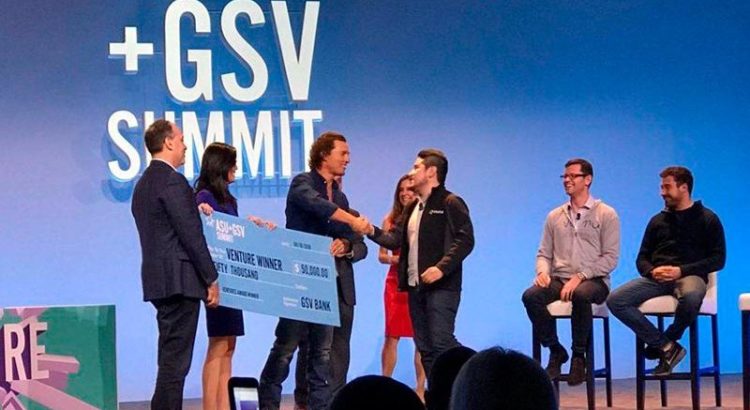
Platzi ganadores del premio “Venture Awards” en el evento de educación más importante de Estados Unidos

Estados Unidos / 22 de abril de 2018 / Autor: Redacción / Fuente: Guapacho

El colombiano Freddy Vega, CEO y co-fundador de Platzi  recibió el pasado 18 de abril el primer lugar en los “Venture Awards” en San Diego, California. Evento que cuenta con personalidades como The Bill Gates and Melinda Foundation, el Ex Presidente Vicente Fox de México y el actor Mathew McCounaghey formaron parte del panel de jurados, audiencia y financiadores.

“La misión de Platzi como plataforma de educación es transformar la economía digital de los países de latinoamérica. Queremos llevarlos de economías basadas en lo que sale de la tierra: agricultura, minería y manufactura, y convertirlas en economías digitales que realmente impulsen el talento humano de nuestras naciones” dijo Freddy Vega, CEO de Platzi durante la presentación de preselección.

El jurado “élite” estuvo conformado por Betty Liu de Bloomberg, el ganador del Oscar, Mattew McConaughey y el CEO de Chegg, Dan Rosensweig, una de las empresas de educación más importantes de la industria. Fundaciones y personalidades como The Bill Gates and Melinda Foundation asistieron como audiencia, al igual que ex presidentes del mundo.

El ASU+GSV Summit es el evento más importante de educación en Estados Unidos que reúne a empresas de alto impacto en el mundo a través de alternativas de educación disruptivas para la sociedad. Platzi fue la plataforma ganadora tras demostrar el impacto positivo en la vida de los estudiantes. ASU+GSV Summit hace referencia a: ASU (Arizona State University) + GSV (Global Silicon Valley, aceleradora de startups de educación e innovación). El evento comenzó en 2010 con una colaboración entre la Universidad Estatal de Arizona y Global Silicon Valley (GSV), la cumbre anual de ASU + GSV es el catalizador de la industria para elevar el diálogo y conducir acciones en torno al aumento del aprendizaje y los resultados de carrera a través de la innovación a escala.

Fuente de la Noticia:

https://guapacho.com/platzi-ganadores-del-premio-venture-awards-en-el-evento-de-educacion-mas-importante-de-estados-unidos/

Comparte este contenido:

Libro: La (des)educación (PDF)

Estados Unidos / 22 de abril de 2018 / Autor: Noam Chomsky / Fuente: Google Books

A Noam Chomsky se le reconoce mundialmente como uno de los grandes intelectuales y educadores del siglo XX. Y, sin embargo, hasta ahora no se habían recogido en ningún libro sus escritos sobre la educación y la deseducación de los ciudadanos. En éste, el gran lingüista norteamericano critica duramente nuestro actual sistema de enseñanza. Frente a la idea de que en nuestras escuelas se enseñan los valores democráticos, lo que realmente existe es un modelo colonial de enseñanza diseñado primordialmente para formar profesores cuya dimensión intelectual quede devaluada y sea sustituida por un complejo de procedimientos y técnicas; un modelo que impide el pensamiento crítico e independiente, que no permite razonar sobre lo que se oculta tras las explicaciones y que, por ello mismo, fija estas explicaciones como las únicas posibles. Raras veces los profesores piden a los alumnos que analicen las estructuras políticas y sociales que informan sus vidas. Raramente se insta a los estudiantes a que descubran la verdad por sí mismos. En este libro, Chomsky nos proporciona excelentes herramientas para desmontar este tipo de enseñanza pensada para la domesticación de los ciudadanos: si los educadores rechazan el adiestramiento tecnocrático que les desintelectualiza para convertirse en intelectuales auténticos que denuncien la hipocresía, las injusticias sociales y la miseria humana, conseguirán que los estudiantes asuman el reto de ensanchar los horizontes de la democracia y de la ciudadanía y, junto a ellos, trabajarán para construir un mundo menos discriminatorio, más democrático, menos deshumanizado y más justo.

Link para la descarga:

https://drive.google.com/file/d/1uyodp3jiqr9LW1K9FD3LYn8XKOAeF7hL/view

Fuente de la Reseña:

https://books.google.com.mx/books/about/La_des_educaci%C3%B3n.html?hl=es&id=GQMH7v0KnZwC&redir_esc=y

Comparte este contenido:

Book: The State of Innovation in Higher Education: A Survey of Academic Administrators (PDF)

USA / April 22, 2018 / Autor: Dr. Jill Buban / Source: onlinelearningconsortium

The State of Innovation in Higher Education: A Survey of Academic Administrators
This report explores the drivers and barriers to innovation at U.S. higher education institutions. The report, which is based on a survey of more than 100 U.S. academic administrators, reveals what an innovative culture looks like and how higher education institutions define and employ innovation.

Download:

https://onlinelearningconsortium.org/read/state-of-innovation-in-higher-education/

Source:

https://onlinelearningconsortium.org/read/state-of-innovation-in-higher-education/

Comparte este contenido:

México: Maestros de Chihuahua anuncian paro indefinido de labores por adeudos del Estado

México / 22 de abril de 2018 / Autor: Redacción / Fuente: Animal Político

Líderes sindicales aseguraron que la voluntad del gobernador no es acatada por sus funcionarios.

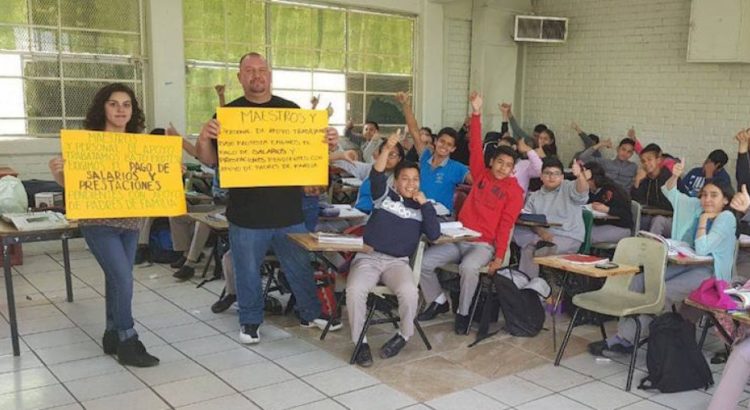
Un grupo de alrededor de 200 maestros integrantes de la Sección 42 del Sindicato Nacional de Maestros (SNTE) anunciaron que realizarán un paro de labores indefinido, como protesta por los adeudos de salario y prestaciones que mantiene el gobierno del panista Javier Corral.

El paro forma parte de una serie de estrategias que seguirán los maestros para exigir pagos y prestaciones pendientes, las cuales se determinaron en una reunión con más de 130 secretarios delegacionales del estado.

La interrupción de labores iniciará este martes 17 de abril, mientras que la logística para dicha estrategia se determinará el lunes 16 de abril.

“Es inaceptable que desde la administración estatal algunos funcionarios pretendan vulnerar la unidad que como gremio nos caracteriza. Algunos funcionarios, lejos de resolver los problemas del magisterio estatal incumplen compromisos y contraponen su desempeño”, dijo el secretario general de la Sección 42, Ever Enrique Avitia Estrada.

Avitia Estrada confirmó que el paro está respaldo del presidente del Comité Ejecutivo Nacional del SNTE, Juan Díaz de la Torre.

Afirmó que los avances sindicales en pro de los trabajadores de la educación han costado mucho, por lo que no permitirán que se vulneren las mismas por visiones ajenas a lo educativo.

Avitia Estrada, en una rueda de prensa, pidió disculpas a los padres de familia y estudiantes afectados y aseguró que sólo están defendiendo sus derechos.

Desde principios de abril, decenas de maestros han realizado diversas protestas debido al incumplimiento de pago de sus salarios.

Fuente de la Noticia:

https://www.animalpolitico.com/2018/04/maestros-de-chihuahua-a-paro-indefinido-por-adeudos-del-estado/

Comparte este contenido:

Estados Unidos: Los maestros latinos, el vínculo entre la escuela y la familia que garantiza el éxito de los estudiantes hispanos

Estados Unidos / 22 de abril de 2018 / Autor: Juliana Jiménez / Fuente: Univisión

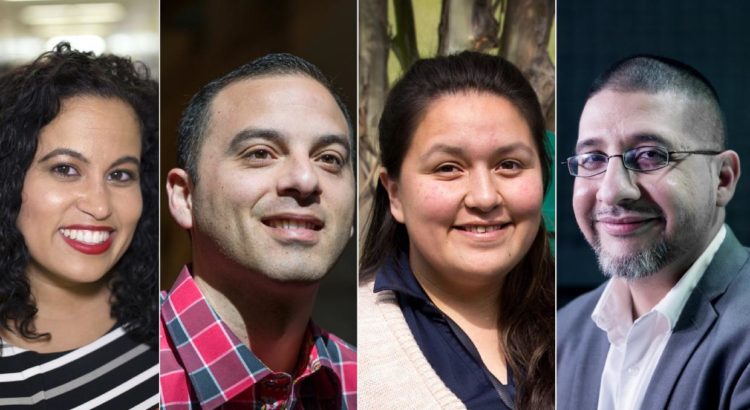
Los latinos son 25% de la población estudiantil, pero son solo 7% de los maestros. Los estudios muestran que cuando un estudiante tiene un docente que se le parece, su interés, su desempeño y sus tasas de graduación mejoran. Por esto la labor de los maestros hispanos es fundamental para el éxito académico y la salud emocional de los estudiantes latinos. Estas son algunas de sus inspiradoras historias.

El día que Ricky Castro por poco murió baleado en una esquina de Chicago su vida cambió para siempre. Castro había crecido entre pandillas, donde el respeto y el poder los traía la violencia y el miedo. Sus padres eran inmigrantes mexicanos y arduos trabajadores, pero esta ética de trabajo en algún momento de su adolescencia se le perdió. Ese día, al conversar con Antonio, su compañero de misión, se pusieron a pensar en qué hacían realmente allí y qué estaban haciendo con sus vidas. Decidieron irse temprano. Cinco minutos después un carro pasó y balaceó la esquina.

Castro recibió una segunda oportunidad que luego se convirtió en la oportunidad de ayudar a otros como él, cuando un maestro hispano le tendió una mano. Castro cambió la vida de la calle por una vida de servicio a la comunidad.

Jorge Lucero, hoy profesor de Arte de la Universidad de Illinois, le mostró a Castro un modelo de un hombre hispano distinto al que él conocía: alguien que era admirado y respetado por su poder intelectual, por su poder de conectar profundamente con sus estudiantes y de cambiar vidas. Castro ahora es un modelo para sus estudiantes, quienes quieren ser maestros como él y causar un cambio positivo en sus comunidades.

Como Castro y como Lucero hay miles de maestros hispanos por todo el país que actúan como puentes y vías salvavidas para sus comunidadesUnivision Noticias se alió con Pearson Education para celebrarlos, contar sus historias, proveerles recursos online y hablar de los retos y las satisfacciones de ser un educador hispano en el país, cuando estos son tan necesitados y tan escasos.

Se necesita más maestros hispanos que nunca. ¿Por qué?

En Estados Unidos, los hispanos representan el 25% de la población estudiantil, pero tan solo 7% de los maestros. Esta disparidad afecta a todos los estudiantes. Los estudios demuestran que todos los niños y jóvenes se benefician cuando sus maestros son más diversos. Aumenta la creatividad y la habilidad para resolver problemas críticamente y pensar fuera de la caja.

Pero los que más se benefician, sin lugar a duda, son los estudiantes hispanos, quienes son también los que más tienen por ganar.

Los estudiantes hispanos se gradúan a tasas mucho menores y abandonan la escuela mucho más que sus contrapartes no hispanas. Aunque la tasa de deserción hispana de la secundaria alcanzó un punto bajo histórico de 10% en 2016 (era 32% en el año 2000), los hispanos aún tienen la tasa de deserción más alta de todos los grupos étnicos y raciales, según datos del Centro de Investigación Pew. Para los estudiantes negros esta tasa es del 7%, para los blancos de 5% y para los asiáticos es de 3%.

La tasa de deserción escolar en los últimos 20 años% de estudiantes de 1...
La tasa de deserción escolar en los últimos 20 años
% de estudiantes de 18-24 años que abandonaron la escuela, por raza y etnia (1996-2016).
 Censo de EEUU, Encuesta de la Población Actual de Octubre / Centro Investigación Pew

Los maestros hispanos juegan un papel crucial en cerrar la brecha educacional

Las investigaciones apoyan la teoría de que tener maestros más diversos es bueno para los estudiantes. En un estudio de 2004 de alumnos del tercer grado de Tennessee, Thomas S. Dee, un profesor de Economía de la Universidad de Swarthmore, vio mejoras en las puntuaciones de exámenes de lectura y matemáticas cuando a los estudiantes negros y blancos no hispanos se les asignaron profesores de la misma raza.

Y Anna Egalite, una profesora de Educación de la Universidad Estatal de Carolina del Norte, encontró efectos similares en estudiantes negros de escuelas primarias en Florida quienes recibieron clases de profesores negros.

Sus conclusiones preliminares son que «los estudiantes que comparten características raciales o de género con sus profesores suelen reportar mayores niveles de esfuerzo personal, de felicidad en la clase, de sensación de sentirse cuidados, de comunicación estudiante-maestro, de motivación postsecundaria y de compromiso académico».

Para muchos estudiantes hispanos sentirse apoyados, comprendidos y cuidados por sus maestros es más vital que nunca.

El miedo y la ansiedad, una barrera para el aprendizaje

La comunidad hispana está en la mira en el momento político histórico que vive Estados Unidos. Desde el 2016, los crímenes de odio hacia hispanos han aumentado un 15%, según datos del FBI, pero el Departamento de Justicia indica que la cifra podría ser hasta 40 veces mayor. El bullying en las escuelas también ha aumentado.

«Los maestros están reportando un aumento de la actividad antisemita, antimusulmana y antiinmigrante», dice Maureen Costello, directora del proyecto de Tolerancia de Enseñanza ( Teaching Tolerance) en el Southern Poverty Law Center, una organización que monitorea los incidentes de odio, como mi colega Jessica Weiss reportó en marzo de 2017:

“La elección presidencial dejó una estela de intolerancia en Estados Unidos, que golpeó especialmente a las escuelas. A fines de noviembre, Teaching Tolerance administró una encuesta online voluntaria a educadores de primarias y secundarias de todo el país. Recibieron más de 10,000 respuestas de maestros, consejeros, administradores y otros trabajadores en las escuelas. ¿Su conclusión? La campaña había tenido un ‘impacto profundamente negativo en las escuelas y los estudiantes’”.

Además, muchos estudiantes indocumentados y sus padres viven en temor por las nuevas políticas migratorias en el país. Más de 12 millones de niños (de los cuales unos 10 millones nacieron en EEUU) viven con un padre que no es ciudadano estadounidense, según un análisis de la Fundación Kaiser.

También están los alrededor de 800,000 estudiantes con protección de DACA, el amparo de la deportación que firmó el expresidente Barack Obama, quienes están sufriendo más estrés y ansiedad que nunca luego de que el presidente Donald Trump le dio fin a la protección en septiembre de 2017.

Para estos estudiantes, tener un maestro hispano que los comprenda puede hacer una diferencia enorme. Así le ocurrió a Nelson García, estudiante de Ricky Castro que recibe la protección de DACA.

“Él me enseño que uno tiene que tener perseverancia”, le dijo García a Univision Noticias. “Viendo a un latino en una posición tan alta, me dijo que yo también puedo hacerlo”.

Así mismo, los maestros que tienen DACA pueden aportar mucho al bienestar mental y emocional de sus estudiantes. Se estima que unos 20,000 maestros tienen DACA, como Luis Juárez, maestro de quinto grado de ciencias en Dallas, Texas.

Luis Juárez: "Es difícil llegar al éxito cuand...
Luis Juárez: «Es difícil llegar al éxito cuando uno no da lo mejor de sí». Ben Torres

Juárez ve lo positivo de la situación: “Soy un joven profesional con una carrera, pero también soy indocumentado… eso me ha dado herramientas muy importantes que he podido compartir con las familias”.

Los maestros hispanos pueden facilitar la comunicación con las familias porque muchas veces han pasado por situaciones similares a las de sus estudiantes y pueden relacionarse con ellos o con sus padres. La comunicación entre padres y maestros es uno de los indicadores más fuertes del éxito académico, más allá del papel que juegan los padres en casa. Además, estos maestros pueden prestar una calidez humana y una cercanía que para los latinos es importante y muchas veces se da más fácil.

Así, muchos estudiantes pueden encontrar en ellos una conexión y apoyo emocional que no encuentran en sus hogares, por lo que su maestro o maestra puede ser la única fuente de comprensión, la única persona adulta que les preste atención sin juzgarlos y que les pueda dar un modelo de cómo entender y expresar sus emociones de una manera saludable y controlada. Muchos niños viven vidas familiares conflictivas y en ambientes donde el trauma es común, y el maestro puede ser un modelo a seguir que los niños no encuentran en otros ámbitos.

Esto es lo que la maestra Melissa Salguero trata de hacer con su trato y con el ejemplo que le da a sus estudiantes.

“He encontrado el secreto para ganarme su respeto”, le dijo Salguero, ganadora del Grammy a la educación musical de 2018 y maestra en el distrito congresional más pobre del país, a Univision Noticias. “Y la clave es simplemente, sin importar qué pase, incondicionalmente, constantemente, darles amabilidad y respeto”.

En nuestra campaña entrevistamos a más de dos docenas de maestros sobre su trayectoria profesional, sobre los retos que han sobrepasado para llegar a donde están, y muy importante, sobre qué los motivaba a trabajar de sol a sol y dar tanto de sí por sus estudiantes.

Lo que encontramos que muchos tienen en común es que a pesar de que los sacrificios son significativos, al final del día vale la pena.

«Lo más emocionante de la enseñanza es cuando los estudiantes regresan y expresan gratitud por las habilidades que les inculqué durante su tiempo conmigo», le dijo a Univision Noticias Elaine Sánchez, maestra de Ciencias de 5to grado en Chicago. «Comprendo que quizás no llegue a cada uno de los estudiantes en un año escolar, pero cuando algún estudiante puede estar mejor preparado para la universidad gracias a las habilidades que le enseñé, siento una inmensa alegría».

Llevo 15 años enseñando y una cosa que he aprendido es que...
Llevo 15 años enseñando y una cosa que he aprendido es que la enseñanza no es una profesión como las demás. Ben Kolak

Estos maestros, además, no solo son excepcionales porque son hispanos, bilingües y biculturales. No son solo excepcionales porque tienen que hacer un “segundo turno” invisible y traducir textos y servir de interpretes en sus escuelas, tanto con el resto de la facultad, como con las familias y la comunidad. Son excepcionales también por su pedagogía, su cosmovisión, y su manera de acercarse a la educación, a la enseñanza y al aprendizaje, como nos explicó Ricky Castro durante el evento que organizamos en los estudios de Univision en Miami para celebrar a estos maestros. Son educadores que continúan aprendiendo toda la vida.

¿Qué diferencia a un educador excepcional de un maestro común y corriente? Esto le preguntamos a Ricky Castro, el Maestro del Año del estado de Illinois de 2017.

Como en el caso de Salguero, más allá de encontrar una manera divertida y entretenida de explicar conceptos científicos y musicales con frutas y vegetales, se trata en el fondo de conectar, de encender la chispa del entendimiento, y de hacer que el aprendizaje sea un proceso emocionante y que los estudiantes quieran seguir repitiendo por el resto de sus vidas por si solos. Para los mejores maestros enseñar es este reto intelectual, creativo y emocional. Los mejores maestros se divierten aprendiendo junto con sus estudiantes. Viven lo que enseñan.

Para aprender más sobre la importante labor de los profesores latinos en nuestras comunidades, visita nuestro proyecto en conjunto con Pearson, Nuestros Maestros.

Fuente de la Noticia:

https://www.univision.com/noticias/nuestros-maestros/los-maestros-latinos-el-vinculo-entre-la-escuela-y-la-familia-que-garantiza-el-exito-de-los-estudiantes-hispanos

Comparte este contenido:

USA: Corey Robin: Striking Teachers Are “Real Resistance” to “Incoherent” Republicans and “Gutted” Dems (Audio)

USA / April 22, 2018 / Democracy Now


In the continuing teachers’ rebellion sweeping the U.S., dozens of Oklahoma teachers have completed a 7-day, 110-mile march from Tulsa to the state capital Oklahoma City. Public schools across Tulsa and Oklahoma City remain closed as thousands of teachers continue their strike for education funding into a ninth day. The strike comes as the Supreme Court is considering Janus v. AFSCME, a case that could deal a massive blow to public unions nationwide—and as President Trump is successfully appointing right-wing judges to federal courts, reshaping the judiciary for decades to come. We continue our conversation with Corey Robin, a professor of political science at Brooklyn College and the Graduate Center of the City University of New York. Robin calls the conservative movement “weak and incoherent” and the Democratic Party “a gutted machine,” and says labor organizing like the teachers’ revolt are the “real resistance” in the U.S. today.

Transcript
This is a rush transcript. Copy may not be in its final form.

AMY GOODMAN: This is Democracy Now!, democracynow.org, The War and Peace Report. I’m Amy Goodman, with Nermeen Shaikh, as we continue with our guest, from Paul Ryan to what’s happening around the country in the conservative movement and those that are challenging it. Nermeen?

NERMEEN SHAIKH: Well, in Oklahoma, dozens of teachers have completed a 7-day, 110-mile march from Tulsa to the state capital Oklahoma City, where they will now meet with lawmakers to demand they pass legislation to fund education in Oklahoma. Public schools across Tulsa and Oklahoma City remain closed as thousands of teachers continue their strike into its ninth day.

AMY GOODMAN: Our guest Corey Robin recently wrote on Facebook, “In West Virginia, Oklahoma, Kentucky, and Arizona, we’re seeing the real resistance, the most profound and deepest attack on the basic assumptions of the contemporary governing order. These are the real midterms to be watching, the places where all the rules and expectations we’ve come to live under, not just since Trump’s election but since forever, are being completely scrambled and overturned.”

Professor Corey Robin, can you talk more about these teacher rebellions? I mean, you had the stoppage in Kentucky. You had West Virginia, and they won. You have now—you have now Oklahoma and then Arizona. We’re talking about Trump land here.

COREY ROBIN: I think it’s really important for a couple of reasons. Beyond the specific issues of teacher pay and classrooms and quality of public education, which is in such a parlous state, what these teachers are really doing is raising the question about the low-taxes, low-public-services politics that we have been living with in this country for a very long time.

I just want to bring this back for an historical analogy. If we went back to 1978—and this is why the midterm question is important—if you had looked at the midterm elections in 1978, you would have seen that the Democrats were still firmly in control of the House of Representatives, in the House, and the Senate, and in control of many state legislatures across the country. You would had very little inkling, just looking at the midterms, of the very profound right-wing counterrevolution that was coming in two years, in the election 1980. If, however, you had looked at what happened in California with Proposition 13, which was a public ballot initiative that basically made it very difficult to raise taxes anymore, there you would have have seen the future of American politics for the next half-century.

Likewise today, I think if you’re looking at what’s happening in Oklahoma, really, as you said, in the heart of Trump country, these teachers are saying—are saying something that is such a challenge to the Republican Party about taxes and spending, but also to the Democratic Party. I think it’s very important. Democrats have been terrified of being tagged as the tax-and-spend party, really since Walter Mondale. And what are these—and the only times Democrats are willing to raise taxes is to deal with the deficit or the debt. What are these teachers saying? They’re saying raise the capital gains tax, not to cut the debt or the deficit, not to be good government people, but instead to deliver vital public services that the public needs and wants. And I think that’s the real challenge that they’re posing.

AMY GOODMAN: I mean, this is such an astounding story that’s happening in Oklahoma. You have schools that are only operating four days a week, because they don’t have enough money for the fifth day, and the teachers don’t have enough money to teach for the fifth day, because they need second and third jobs. We had a teacher who taught—what—for 20 years, and so had her husband, and her husband, on his day off, he sells his own blood products.

COREY ROBIN: I mean, it’s horrible. But in a way, it’s just a very extreme version, I think, of what happens in a lot of states. I mean, I teach at the City University of New York. It used to be one of the crown jewels of the city and of the state. It has also been—systematically been underfunded and defunded, by both Republicans and Democrats alike. This is a national problem. What’s so amazing is that it’s being confronted in the place where you would think there would be the most support for it. And not only are they doing this—

AMY GOODMAN: You’re talking about Governor Cuomo, Democratic Governor Cuomo, here in New York.

COREY ROBIN: Yes, Democratic governor. And going way back to his father, as well, defunded CUNY, but—Mario Cuomo. But in Oklahoma, you know, these teachers are doing this, and they’ve got—it’s amazing to me, is that they’ve got overwhelming public support with what they’re doing.

NERMEEN SHAIKH: Well, has there been any precedent, is there any precedent, for this number of teachers’ strikes, or even public sector workers, in general, in the U.S.?

COREY ROBIN: I think, oh, there definitely have—I mean, public sector workers have really been in the forefront for the last 50 years—

NERMEEN SHAIKH: Right.

COREY ROBIN: —of leading strikes. In the 1970s, particularly women and people of color were in the vanguard of a lot of these efforts, in organizing public sector workers. And, in fact, one of the reasons you could say that the Republican right has been so—pushing so hard on this Janus decision, which would basically make it very hard for public sector unions, the Supreme Court decision, is precisely because they feel like that’s the last bastion of unionized workers, and they are workers that tend to be, compared to the rest of the workforce, overwhelmingly women and people of color.

AMY GOODMAN: And this is why judges are so important right now, and as you have Mitch McConnell saying, “The fight should be in the Senate. We’re going to lose the House,” he said—

COREY ROBIN: Yes.

AMY GOODMAN: —apparently this weekend, according to The Washington Post, that the fight is around the judiciary. And they are packing these courts.

COREY ROBIN: Yeah.

AMY GOODMAN: I mean, they do take this extremely seriously, for anyone who thinks that President Trump isn’t getting anything accomplished.

COREY ROBIN: I mean, this has been very clear from the early part of the Trump administration. They were—they bungled so many other things. But the one thing that, from the get-go, they knew how to do was to get the courts, the judges appointed. In fact, he’s been appointing judges at a faster rate than Barack Obama did, I think faster than George W. Bush did. But that tells you something, though, I think, not about the strength of the conservative movement and the Republican Party, but about its weakness. McConnell is very clear about this: “If we can just hold on to the Senate, we can have a lock on the courts, not just the Supreme Court, but the courts, for 30 to 40 years.” And remember, the judges they appoint, these are people who are, you know, in their fifties, in their forties, who will be with us for a very, very long time.

AMY GOODMAN: I mean, you have this judicial nominee, Vitter, Wendy Vitter—

COREY ROBIN: Yes.

AMY GOODMAN: —who worked for the archdiocese in Louisiana, who, when confronted by Senator Blumenthal yesterday about whether she supports this landmark Supreme Court decision, Brown v. Board of Education, challenging desegregation, she demurred. She said she wouldn’t say.

COREY ROBIN: Yes. Well, this is their—this is the big strategy all the conservative justices and nominees have been pioneering, really going back to Judge Bork in the 1980s, which is: Say nothing, make no statements whatsoever about your points of view. And you can present yourself as if you’re—you know, remember, Clarence Thomas said he had no opinion whatsoever on Roe v. Wade. He had never—he claimed he had never even had a conversation about Roe v. Wade, even though he was in law school when Roe v. Wade was decided. So this is a long-standing strategy, to say nothing about what your opinions are, and to get you in that way.

AMY GOODMAN: And you have Stephen Reinhardt now, who has just died, 9th Circuit Court of Appeals, a huge deal, was the last of President Jimmy Carter’s federal judicial appointees. Trump can now remake the 9th Circuit.

COREY ROBIN: Yeah. I mean, and this is—and this is really the goal. I mean, it’s been really astonishing, again, given the dysfunction and the disorganization that we’ve seen throughout this administration, their inability to pursue things on so many fronts, but when it comes to this, this is something that they’ve been very focused on, you know, almost maniacally so.

NERMEEN SHAIKH: Well, can you talk about, Corey, the rise of someone like Bernie Sanders and all the movements—the Occupy Wall Street movement, Black Lives Matter—in the context of what you were saying earlier, that these strikes are geared towards not just Republicans, or opposed not just Republican policies, but also Democrat policies?

COREY ROBIN: Yeah. So, you know, the—as I’ve said, the conservative party—the conservative movement in the Republican Party is quite weak, I think, and in part the reason why it’s so weak is because conservatism, you know, as a historical project, really was overwhelmingly successful. The fundamental target of conservatism, number one, was the labor movement, and, compared to what—the heyday of American labor, completely succeeded in destroying it. And the second target was the black freedom struggle, and they were very successful in destroying that struggle, as well. So, conservatism, I think we have to realize, has been very successful.

And what you’re seeing now, I think, on the left, in both Occupy, Bernie Sanders, the teacher strikes, Black Lives Matter, is a growing confrontation, within the left, a growing reckoning of how successful, in fact, conservatism has been, and how feckless and ineffective the Democratic Party and traditional liberalism has been in opposing this. And I think, frankly, the real story in American politics right now is not so much what’s happening with the Republican Party and the conservative movement, which, as I’ve said, is, by any historical measure, quite weak and incoherent, precisely because it was so victorious over the last several decades. I think the real story, the real question is: Is there going to be a force on the left, not just movements in the street, but an organized force that’s able to tip this house of cards over?

AMY GOODMAN: So, talk about that further, what exactly you mean, where you feel the Democratic Party is failing right now.

COREY ROBIN: Well, I mean, first of all, you can just look at the numbers. I mean, Bernie Sanders pointed this out in Mississippi the other day and got actually attacked for it. But the fact of the matter is, over the last 10 years the Democrats have lost nearly a thousand legislative seats. That’s, I think, the highest proportion of seats lost under a Democratic—a two-term Democratic president since at least maybe Dwight David Eisenhower. I mean, it’s—you oftentimes lose seats, but the proportions were just tremendous. And the Democratic Party as a whole is really a kind of gutted machine. I mean, the mere fact, I might say, that Bernie Sanders was able to get as far as he did in those primaries tells you how weak and sort of structureless and rudderless the Democratic Party is.

But I think the real question is, on the left: Do you have an ideology, a theory, a kind of set of accounts, similar, frankly, to what Ronald Reagan did in 1980 or FDR did in 1932? These are these two great realignment presidents—”great” not in the sense that I support Reagan, but, you know, powerful. And what they did was articulate a really profound, completely countervailing set of ideas and institutions, and were able to shatter the existing dispensation. I think that’s the question that’s on the table and that Bernie is sort of slowly pushing towards.

AMY GOODMAN: Well, Corey Robin, we thank you for this very interesting discussion, one we will continue, professor of political science at Brooklyn College and Graduate Center of the City University of New York, author of The Reactionary Mind: Conservatism from Edmund Burke to Donald Trump.

A very happy birthday to—a landmark birthday to Anna Özbek!

https://www.democracynow.org/2018/4/12/corey_robin_striking_teachers_are_real

Comparte este contenido:
Page 711 of 1669
1 709 710 711 712 713 1.669