América del Norte
Switching sides: Whitewashing history in the age of Trump
By: Henry Giroux
Madeleine Albright, without irony, has written a book on resisting fascism. She has also published an op-ed in the New York Times pushing the same argument.
Albright, former secretary of state under Bill Clinton, is alarmed. She wants to warn the public to stop the fascism emerging under the Trump regime before it’s too late.
Unfortunately, moralism on the part of the infamous and notorious is often the enemy of both historical memory and the truth, in spite of their newly discovered opposition to tyranny.
It defies belief that a woman who defended the killing of 500,000 children as a result of the imposed U.S. sanctions on Iraq can take up the cause of fighting fascism while positioning herself as being on the forefront of resistance to American authoritarianism.
Denis J. Halliday, the United Nations humanitarian coordinator in Iraq for part of the sanctions era, once said of those measures: “We are in the process of destroying an entire society. It is as simple and terrifying as that.”
Is any policy worth the death of 500,000 children?
Albright, however, is not alone.
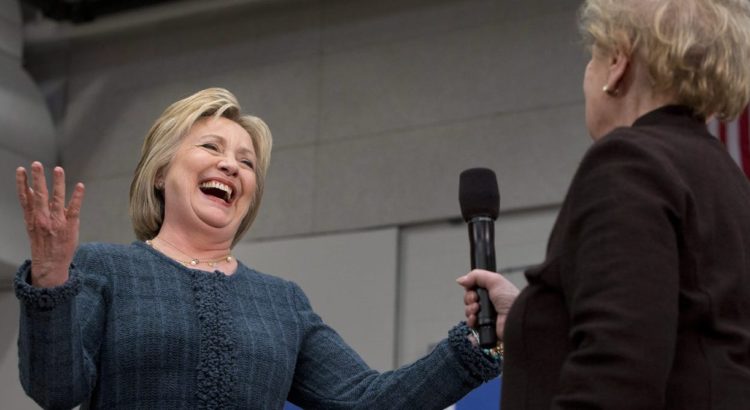
Hillary Clinton, herself a former war-monger and an unabashed ally of the financial elite, has also resurrected herself as a crusader in fighting the creeping fascism that now marks the Trump regime.
Speaking recently at the PEN World Voices Festival, Clinton appeared to have completely removed herself from her notorious past as a supporter of the Iraq war and the military-industrial-financial complex in order to sound the alarm “that freedom of speech and expression is under attack here in our own country.” She further called for action against America’s creeping authoritarianism.
‘Flight from memory’
It’s an odd flight from memory into the sphere of moral outrage given her own role in supporting a number of domestic and foreign policies both as a former first lady and as secretary of state.
There was the refusal to punish CIA torturers, the drone killings, the lavishing of funds to the military war machine, the shredding of the federal safety net for poor people and the endorsement of neoliberal policies that offered no hope or prosperity “for neighbourhoods devastated by deindustrialization, globalization, and the disappearance of work.”
Clinton’s critique of Trump’s fascism does more than alert the public to the obvious about the current government, it also legitimatizes a form of historical amnesia and a long and suppressed legacy of cruelty and human misery. It gets worse.
Michael Hayden, the former NSA chief and CIA director under George W. Bush, has joined the ranks of Albright and Clinton in condemning Trump as a proto-fascist.
Writing in the New York Times, Hayden, ironically, chastised Trump as a serial liar and in doing so quoted the renowned historian Timothy Snyder, who stated in reference to the Trump regime that “Post-Truth is pre-fascism.”
And yet he’s now being regarded as an honest, expert commentator on intelligence and other issues.The irony here is hard to miss. Not only did Hayden head Bush’s illegal National Security Agency warrantless wiretapping program while the head of the NSA, he also lied repeatedly about about his role in Bush’s sanction and implementation of state torture in Afghanistan and Iraq.
Dubious heroes
The United States and its Vichy Republican Party has drifted so far to the fascist right that people like Albright, Clinton and Hayden are serving as heroes in the political and ethical resistance to fascism.
While the call to resist fascism is to be welcomed, it has to be interrogated, not aligned with individuals and ideological forces that helped put in place the racist, economic, religious and educational forces that produced it.
I am not simply condemning the hypocrisy of former politicians who are now criticizing the emerging fascism in the United States. Nor am I proposing that only selective condemnations should be welcomed.
What I am suggesting is that the seductions of power in high places often work to impose a silence upon people that allow them to benefit from and become complicit with authoritarian tendencies and anti-democratic policies and modes of governance. Once they’re out of power, their own histories of complicity are too often easily erased, especially by the mainstream media.
Their newly found stances against fascism do nothing to help explain where we are and what we might do next to resist it now that it’s engulfing American society and its economic, cultural and political institutions.
What is often unrecognized in the celebrated denunciations of fascism by celebrity politicians is that neoliberalism is the new fascism.
And what becomes invisible in the fog of such celebration is neoliberalism’s legacy and its deadly mix of market fundamentalism, anti-intellectualism, rabid individualism, unchecked selfishness, shredding of the welfare state, privatization of the public sphere, white supremacy, toxic masculinity and all-embracing quest for profit.
‘Savage politics’
The new and more racist, violent and brutal form of neoliberalism under Trump has produced both a savage politics in the U.S. and a corrupt financial elite that now controls all the commanding institutions of U.S. society.
Systemic corruption, crassness, overt racism, a view of misfortune as a weakness, unapologetic bigotry and a disdain of the public and common good has been normalized under Trump, but it’s been gaining strength for the last 50 years in U.S. politics. Trump is merely the blunt instrument at the heart of a fascistic neoliberal ideology.
We need to be wary, to say the least, about those mainstream politicians now denouncing Trump’s fascism who while in power submitted, as noted U.S. sociologist Stanley Aronowitz puts it, “to neoliberal degradations of health care, jobs, public housing, and income guarantees for the long-term unemployed (let alone the rest of us).”
What is often ignored in the emerging critiques of fascism is neoliberalism’s legacy coupled with the mainstream media’s attempts to hold up many of its architects and supporters as celebrated opponents of Trump’s fascist government.
Trump is the extreme point of a long series of attacks on democracy —and former politicians like Albright and Clinton cannot be removed from that history.
Unchecked and systemic power, a take-no-prisoners politics and an unapologetic cruelty are the currency of fascism because they have long been the wedge that makes fear visceral and violence more than an abstraction.None of these politicians have denounced nationalism, the myth of American exceptionalism and the forces that produce obscene inequality in wealth and power in the U.S., or the oppressive regime of law and order that has ruled the U.S. ruthlessly and without apology since the 1980s.
This lethal mix is also a pathological condition endemic to brutal demagogues such as Trump. Trump and his ilk demand loyalty —not to justice and democracy, but loyalty to themselves, one that stands above the truth and rule of law.
Stamp out amnesia
The calls to resist fascism are welcome, but they can’t be separated from the acts of bad faith that helped produce it.
The fight against fascism is part of a struggle over memory. We must not engage in historical and social amnesia.
It is also a fight to defend the public spheres and institutions that make civic literacy, the public imagination and critical consciousness possible. We must expose the forces that are and have been complicit in the longstanding attack on democratic institutions, values and social relations, especially those that now hide their past and ideological convictions.
Any resistance to fascism has to be rooted in the call to make education central to politics with a strong emphasis on the teaching of historical consciousness and civic literacy as crucial weapons.
At the same time, the fight must be unwavering in its refusal to equate capitalism and democracy. We are at war over not just the right of economic equality and social justice, but also against the powerful and privileged positions of whiteness, toxic masculinity and the elimination of solidarity and compassion.
This is a war waged over the possibility of a radical democracy while acknowledging that the rich and powerful will not give up their power without a fight.

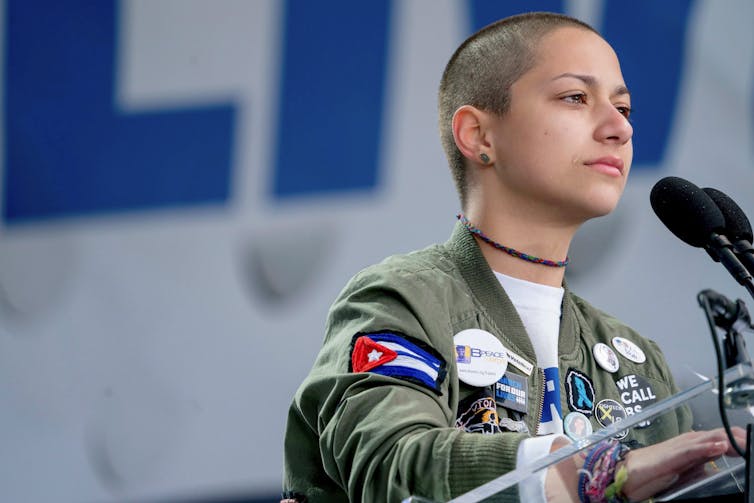
And so instead of listening to complicit politicians and others deeply embedded in a system of exploitation, disposability, austerity and a criminogenic culture, we need to listen to the voices of the striking teachers, the Parkland students, the women driving the #MeToo movement, the Black Lives Matter organizers and others willing to make resistance visible, collective and widespread.
The fight against American-style fascism cannot and will not be lead by establishment politicians and pundits parading as the new heroes of the resistance to Trump’s fascism.
Source:
http://theconversation.com/switching-sides-whitewashing-history-in-the-age-of-trump-95729
EEUU: Betsy DeVos just got exposed for sabotaging the Education Department’s investigation into for-profit colleges
EEUU/ May 15, 2018/By: RACHEL LEAH, SALON/ Source: https://www.rawstory.com
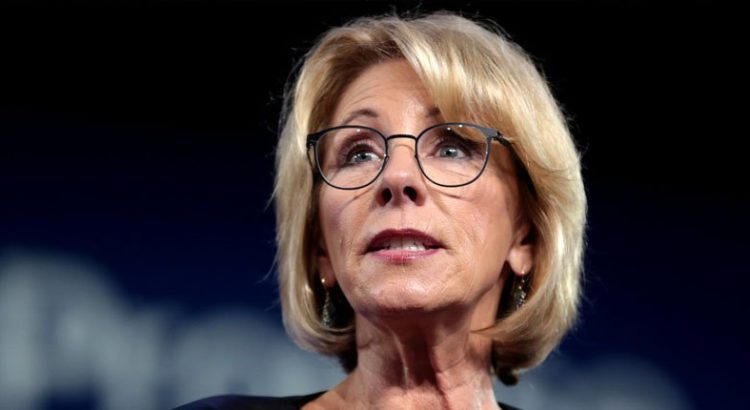
The Education Department significantly scaled back a special team investigating abuses by for-profit colleges, the New York Times reported and Betsy DeVos, the education secretary, has hired several of the people who were formerly employed at the for-profit colleges under investigation. They now hold top positions in the education department, while “The unwinding of the team has effectively killed investigations into possibly fraudulent activities at several large for-profit colleges,” according to the Times.
The original investigative unit was created by the Barack Obama administration in 2016 to look into advertising, recruitment practices and job placement claims at several for-profit institutions, like DeVry Education Group. This was amid the collapse of the for-profit Corinthian Colleges. But student complaints echoed beyond the Corinthian institutions, and pointed to widespread fraud, predatory activities and gross misrepresentation of enrollment benefits, program offerings and job placements rates at for-profit colleges.
This team, which under President Obama included more than a dozen lawyers and investigators, has now been stripped down to three employees. “Their mission has been scaled back to focus on processing student loan forgiveness applications and looking at smaller compliance cases, said the current and former employees, including former members of the team, who spoke on the condition of anonymity because they feared retaliation from the department,” the Times reported.
Early last year, the investigation into DeVry was stopped and a few months later, DeVos hired former DeVry dean, Julian Schmoke, as the investigative team’s supervisor. Investigations into two other large for-profit colleges, Bridgepoint Education and Career Education Corporation, were also halted. And former employees of these institutions, Robert S. Eitel, Diane Auer Jones and Carlos G. Muñiz, were hired by DeVos.
A spokeswoman for the Education Department told the Times that “conducting investigations is but one way the investigations team contributes to the department’s broad effort to provide oversight.” She added that the new employees from the for-profit education industry had not influenced the investigative unit’s task.
Sen. Elizabeth Warren (D-Mass) pointed out that the marginalization of the investigative unit is just one of many of DeVos’ decisions to roll back Obama-era regulations that are meant to protect students from the for-profit college industry. “Secretary DeVos has filled the department with for-profit college hacks who only care about making sham schools rich and shutting down investigations into fraud,” Warren told the Times.
DeVry settled two lawsuits in 2016, one with the Federal Trade Commission for misleading students and one with the Education Department for fraudulent claims about graduation success rates. But the investigative unit continued to look into other claims made by the institution.
Other for-profit colleges like Bridgepoint, which was under investigation, has deep ties to the administration. Bridgepoint is a former client of Mercedes Schlapp, director of strategic communications at the White House. The consulting and lobbying firm, Cove Strategies, which she founded with her husband Matt Schlapp, worked with Bridgepoint and is still a Cove client. “Bridgepoint and other online institutions were persecuted by President Obama’s administration because they dared to bring innovation to the education market,” Matt Schlapp told the Times in an email. “I believe educational innovation and disruption are a fight worth having and it matches the President’s agenda of rolling back the excess of the Obama regulatory stranglehold.”
The Education Department spokeswoman told the Times that the department’s new mission is “focused on weeding out bad actors” across institutions of higher education, “not capriciously targeting schools based on their tax status.”
Source:
https://www.rawstory.com/2018/05/betsy-devos-just-got-exposed-sabotaging-education-departments-investigation-profit-colleges/
México: Promueven Modelo de Educación Dual
América del Norte/ México/ 14.05.2018/ Por: Fuente: www.elsoldedurango.com.mx/.
Se llevó a cabo la firma del convenio Modelo Mexicano de Educación Dual entre la Secretaría de Educación del Estado y el Consejo Coordinador Empresarial, misma que en un objetivo principal busca que jóvenes de bachillerato tengan la oportunidad de recibir su formación entre las aulas y las empresas, es decir combinar la teoría con la práctica y con ello tener una formación integral que ayude además a elevar la productividad en los centros de trabajo donde apliquen su formación.
El secretario de Educación, Rubén Calderón Luján comentó que es interés del Gobierno del Estado establecer estrategias educativas que permitan la educación integral, una de ellas puede ser la educación dual; este modelo se implementaría en la capital del estado.
Dijo que en la región Laguna de Durango ya se implementó el Modelo Mexicano de Educación Dual con experiencias exitosas entre Jonh Deere y Conalep. En esta empresa se ha reconocido el trabajo y compromiso de los estudiantes, quienes ya forman parte de la planta laboral y se han destacado por su profesionalismo y lealtad.
“Este convenio servirá para que los jóvenes de bachillerato de Subsistemas como CECyTE Durango y Conalep incursionen en las empresas de la capital, ayudará a la formación integral de los estudiantes, a mayor calidad en los servicios de las empresas y un incremento en la productividad”.
En Durango seguiremos promoviendo el Modelo Mexicano de Formación Dual como una estrategia y una política pública que busca el equilibrio armónico entre la teoría y la práctica en beneficio de los jóvenes, que adquirirán mayores competencias, de las empresas en tiempo invertido en capacitación y de toda la sociedad que contará con profesionistas mejor capacitados y actualizados, afirmó el funcionario estatal.
Por su parte Jaime Mijares Salum, presidente del Consejo Coordinador Empresarial dijo que el sector empresarial reconoce que el Modelo Mexicano de Educación Dual es de suma importancia para que los jóvenes lo aplique en las empresas y sobre todo los conocimientos que puedan adquirir; de esta manera su aprendizaje será más valorado a la hora de buscar trabajo, pues tendrán una formación teórica en las aulas y práctica en las empresas
“Es la oportunidad de compartir la experiencia, pero sobre todo también una necesidad de obtener ayuda extra en las empresas, es una gran aportación e intensión de aprendizaje, esto es una oportunidad para que tanto las empresas como los estudiantes puedan tener una formación mucho mejor”.
Asimismo María Elena Gaucín Morales, presidente de Canacintra Durango mencionó que este sector apoyará con gran interés que el Modelo Mexicano de Educación Dual sea lleve con éxito en esta región del estado; en la Expo de Alemania fue un tema muy importante no solo para Durango, sino para todo el país.
“Es muy importante que exista una vinculación entre el sector productivo y el sistema educativo y aprender de los casos de éxito de otras entidades para obtener buenos resultados”, destacó.
En esta rúbrica participaron Rubén Calderón Luján, secretario de Educación; Jaime Mijares Salum, presidente de Consejo Coordinador Empresarial; María Elena Gaucín Morales, presidenta de Canacintra Durango, Tomás Palomino Solórzano, subsecretario de Educación Media Superior y Superior.
Fuente de la noticia: https://www.elsoldedurango.com.mx/local/promueven-modelo-de-educacion-dua
México: Seguridad, economía y educación, retos de próximo gobierno
América del Norte/ México/ 14.05.2018/ Fuente: www.jornada.com.mx.
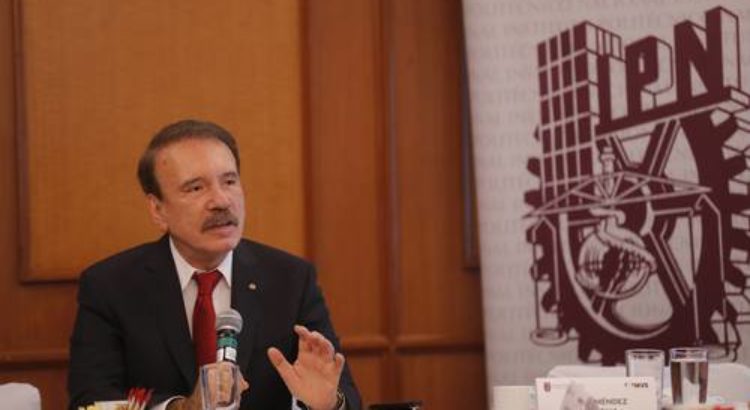
La seguridad, la economía y la educación son los principales temas que deberá atender el próximo Presidente de México, aseguró el director general del Instituto Politécnico Nacional (IPN), Mario Alberto Rodríguez Casas.
Dijo que esa casa de estudios “no tiene capacidad” para aumentar su matrícula en educación superior, debido en gran parte a la insuficiencia de los recursos económicos. Y es que de las cien mil solicitudes de ingreso que recibió el IPN para el siguiente ciclo escolar, solo 22 mil de ellos serán aceptados.
“Si en este momento nosotros quisiéramos aceptar a los cien mil jóvenes que nos demandan un espacio, sencillamente no tenemos capacidad física. Sin duda, habrá que trabajar en eso, sería necesario contar con un proyecto a mediano plazo en lo que se pueden dar las condiciones de infraestructura para poder hacerlo”, dijo el director Rodríguez Casas, entrevistado en el marco del quinto foro regional “México 2018: los desafíos de la nación. Las plataformas electorales discutidas por universitarios”.
Convocado por la Asociación Nacional de Universidades e Instituciones de Educación Superior (Anuies) y el Instituto Nacional Electoral (INE), el foro, realizado en la Unidad Profesional Interdisciplinaria de Ingeniería (UPIIG) Campus Guanajuato, del IPN, analizó las propuestas electorales de las diferentes coaliciones partidistas y candidatos presidenciales –incluido los independientes-, en materia de innovación tecnológica y vinculación del conocimiento con el desarrollo nacional.
El objetivo del encuentro fue realizar un intercambio de ideas, conceptos y visiones institucionales sobre los planteamientos y diagnósticos que las coaliciones partidistas y los candidatos independientes han establecido en sus plataformas políticas, rumbo a las elecciones del próximo 1 de julio.
El análisis representaciones políticas, impulsar nuevas formas de trabajo entre las Universidades y los tomadores de decisiones a partir de políticas públicas.
Los análisis y diagnóstico en las plataformas tienen un sustento empíricio. Tamaño de la brecha que debemos y tenemos que cerrar.
Fuente: http://www.jornada.com.mx/ultimas/2018/04/27/seguridad-economia-y-educacion-retos-de-proximo-gobierno-ipn-4438.htm
Libro: Anatomía política de la reforma educativa (PDF)
México / 13 de mayo de 2018 / Autor: Roberto González Villarreal, Lucía Rivera Ferreiro y Marcelino Guerra Mendoza / Fuente: Publicaciones UPN
Link para la descarga:
http://editorial.upnvirtual.edu.mx/index.php/publicaciones/descargas/category/1-pdf?download=405:anatomia-politica-reforma-educativa
Fuente:
http://editorial.upnvirtual.edu.mx/index.php/publicaciones/9-publicaciones-upn/379-anatomia-politica-de-la-reforma-educativa
Melesio Morales y su aportación en la enseñanza musical de México (Audio)
México / 13 de mayo de 2018 / Autor: Fonoteca Nacional / Fuente: IVOOX
Escucha a Theo Hernández en una emisión dedicada al compositor mexicano Melesio Morales (4 de diciembre de 1839 – 12 de mayo de 1908) . Conoce cuáles fueron los precedentes para el estreno de su ópera Ildegonda y las importantes repercusiones que tuvo para la composición en México. Disfruta este programa con una selección de piezas del compositor, bajo la curaduría de Hernández.
Fuente:
https://mx.ivoox.com/es/melesio-morales-su-aportacion-ensenanza-audios-mp3_rf_25838478_1.html


Users Today : 0
Total Users : 35492277
Views Today :
Total views : 3610831