Page 829 of 1684
1 827 828 829 830 831 1.684

Rethinking Higher Education in a Time of Tyranny

By: Henry Giroux

What kind of democracy is possible when the institutions that are crucial to a vibrant civil society are vanishing?

Many of the great peace activists of the 20th century, extending from Mahatma Gandhi and Paulo Freire to Jane Addams and Martin Luther King Jr., shared a passion for education as an important part of the democratic project. Refusing to view education as neutral or reducing it to the instrumental practice of training, they sought to reclaim education as a practice of freedom, part of a wider struggle to deepen and extend the values, social relations and institutions of a substantive democracy.

They understood that tyranny and authoritarianism are not just the product of state violence and repression; they also thrive on popular docility, mass apathy and a flight from moral responsibility. They argued passionately that education could not be removed from the demand for justice and progressive social change. In doing so, they recognized the value of education and its ability to transform how people understand themselves, their relations to others and the larger world. In the face of massive injustice and indignity, these prophetic voices refused to look away from human suffering, and embraced the possibility for resistance fueled by courage, compassion and the ability to think otherwise in order to act otherwise.

Let us hope that in the midst of our witness to the current revolt against democracy, higher education will neither remain silent nor be too late.

One of Martin Luther King’s great insights was his recognition that education provided a bulwark against both ignorance and indifference in the face of injustice. Like Gandhi, he warned people over and over again not to remain silent in the face of racism, militarism and extreme materialism, and argued that “he who accepts evil without protesting against it is really cooperating with it.” Of the civil rights era, King warned that “history will have to record that the greatest tragedy of this period of social transition was not the strident clamor of the bad people, but the appalling silence of the good people.… In the end, we will remember not the words of our enemies, but the silence of our friends.”1

Advocates of civic courage and compassion reflected in their words and actions what King called the “fierce urgency of now,” reminding us that “tomorrow is today” and that “there is such a thing as being too late.”2 Let us hope that in the midst of our witness to the current revolt against democracy, higher education will neither remain silent nor be too late.

Echoing King’s belief that American innocence was neither tenable nor forgivable, the great novelist James Baldwin filled in the missing language of fear and terrorism at the heart of a racist society. His famed “Talk to Teachers” began with an impassioned warning about the times in which he lived, a warning more relevant now than it was when he delivered the speech in 1963. He said:

Let’s begin by saying that we are living through a very dangerous time. Everyone in this room is in one way or another aware of that. We are in a revolutionary situation, no matter how unpopular that word has become in this country. The society in which we live is desperately menaced… from within. To any citizen of this country who figures himself as responsible — and particularly those of you who deal with the minds and hearts of young people — must be prepared to “go for broke.”3

In the context of a worldwide rebellion currently taking place against democracy, dissent, human rights and justice, I think we need to “go for broke.” Authoritarianism is on the rise once again, emerging in countries in which such a politics, in light of the past, has appeared unthinkable. In Hungary, Russia, India, Turkey and Poland, democracy is being voted down and aggressively dismantled. In addition, a new and dangerous moment has emerged in the United States as it becomes clear that an American-style authoritarianism is no longer the stuff of fantasy, fiction or hysterical paranoia.

In the context of a worldwide rebellion currently taking place against democracy, dissent, human rights and justice, I think we need to ‘go for broke.’

This summer in Charlottesville, hundreds of neo-Nazis marched brandishing torches reminiscent of Hitler’s Germany while shouting white nationalist slogans such as “Heil Trump,” and later unleashing an orgy of violence that led to the deaths of three people. Donald Trump, the president of the United States, stated there were good people on both sides of that rally as if good people march with white supremacists and neo-Nazis who revel in hate and offer no apologies for mimicking the actions that resulted in the slaughter of millions during the fascist nightmare of the 1930s and 1940s.

Donald Trump’s ascendancy to the presidency speaks not only to a profound political crisis but also to a tragedy for democracy.4 His rise to power echoes not only a moral blind spot in the collective American psyche, but also a refusal to recognize how past totalitarian ideas can and have reappeared in different forms in the present. The return of a demagogue who couples the language of fear, decline and hate with illusions of national grandiosity have found their apotheosis in the figure of Donald Trump. He is the living symbol and embodiment of a growing culture of unbridled and naked selfishness, the collapse of civic institutions, and a ruinous anti-intellectualism that supports a corrupt political system and a toxic form of white supremacy that has been decades in the making. There is nothing natural or inevitable about these changes. They are learned behaviors. As shared fears replace any sense of shared responsibility, the American public is witnessing how a politics of racism and hate creates a society plagued by fear and divisiveness.

As shared fears replace any sense of shared responsibility, the American public is witnessing how a politics of racism and hate creates a society plagued by fear and divisiveness.

While numerous forces have led to the election of Donald Trump, it is crucial to ask how a poisonous form of education developed in the larger society, one that has contributed to the toxic culture that both legitimated Trump and encouraged so many millions of people to follow him. Part of the answer lies in the right-wing media with its vast propaganda machines, the rise of conservative foundations such as the Koch brothers’ various institutes, the ongoing production of anti-public intellectuals and a visual culture increasingly dominated by the spectacle of violence and reality TV. On a more political note, it is crucial to ask how the educative force of this toxic culture goes unchallenged in creating a public that embraced Trump’s bigotry, narcissism, lies, public history of sexual groping and racism, all the while transforming the citizen as a critical political agent into a consumer of hate and anti-intellectualism.

News morphs into entertainment as thoughtlessness increases ratings, violence feeds the spectacle and serious journalism is replaced by empty cosmetic stenographers. Language is pillaged as meaningful ideas are replaced “by information broken into bits and bytes [along with] the growing emphasis on immediacy and real time responses.”5 In the face of this dumbing down, critical thinking and the institutions that promote a thoughtful and informed polity disappear into the vast abyss of what might be called a disimagination machine. Nuance is transformed into state-sanctioned vulgarity. How else to explain the popularity and credibility of terms such post-truth, fake news and alternative facts? Masha Gessen is right in arguing that in the Trump era, language that is used to lie and “validate incomprehensible drivel” not only destroys any vestige of civic literacy, it also “threatens the basic survival of the public sphere.”6

We live in a moment of digital time, a time of relentless immediacy, when experience no longer has the chance to crystalize into mature and informed thought. Communication is now reduced to a form of public relations and a political rhetoric that is overheated and overexaggerated and always over the top. Opinion and sanctioned illiteracy now undermine reason and evidence-based arguments. News becomes spectacle and echoes demagoguery rather than questioning it. Thinking is disdained and is viewed as dangerous. The mainstream media, with few exceptions, has become an adjunct to power rather than a force for holding it accountable. The obsession with the bottom line and ratings has brought much of the media into line with Trump’s disimagination machine wedded to producing endless spectacles and the mind-numbing investment in the cult of celebrity and reality TV.7 What kind of democracy is possible when the institutions that are crucial to a vibrant civil society and the notion of the social are vanishing?

What kind of democracy is possible when the institutions that are crucial to a vibrant civil society and the notion of the social are vanishing?

Institutions that work to free and strengthen the imagination and the capacity to think critically have been under assault in the United States long before the rise of Donald Trump. Over the last 50 years, critical public institutions from public radio to public schools have been defunded, commercialized and privatized transforming them from spheres of critical analysis to dumbed-down workstations for a deregulated and commodified culture.

Lacking public funds, many institutions of higher education have been left to mimic the private sector, transforming knowledge into a commodity, eliminating those courses and departments that do not align themselves with a robust bottom line. In addition, faculty are increasingly treated like Walmart workers with labor relations increasingly designed “to reduce labor costs and to increase labor servility.”8 Under this market-driven governance, students are often relegated to the status of customers, saddled with high tuition rates and a future predicated on ongoing political uncertainty, economic instability and ecological peril.

This dystopian view feeds an obsession with a narrow notion of job readiness and a cost-accounting rationality. This bespeaks to the rise of what theorists such as the late Stuart Hall called an audit or corporate culture, which serves to demoralize and depoliticize both faculty and students, often relieving them of any larger values other than those that reinforce their own self-interest and retreat from any sense of moral and social responsibility.

As higher education increasingly subordinates itself to market-driven values, there is a greater emphasis on research that benefits the corporate world, the military and rich conservative ideologues such as the Koch brothers, who have pumped over $200 million into higher education activities since the 1980s to shape faculty hires, promote academic research centers, and shape courses that reinforce a conservative market-driven ideological and value system.9 One consequence is what David V. Johnson calls the return of universities to “the patron-client model of the Renaissance” which undermines “the very foundation of higher education in the United States.”10

Under such circumstances, commercial values replace public values, unbridled self-interest becomes more important than the common good and sensation seeking and a culture of immediacy becomes more important than compassion and long term investments in others, especially youth. As Paul Gilroy has pointed out, one foundation for a fascist society is that “the motif of withdrawal — civic and interpersonal —” becomes the template for all of social life.11

Democracy and politics itself are impoverished in the absence of those conditions under which students and others use the knowledge they gain both to critique the world in which they live and, when necessary, to intervene in socially responsible ways in order to change it. What might it mean for educators to take seriously the notion that democracy should be a way of thinking about education — one that thrives on connecting equity to excellence, learning to ethics, and agency to the imperatives of social responsibility and the public good?

Higher education needs to reassert its mission as a public good. Educators need to initiate a national conversation in which the classroom is defended as a place of deliberative inquiry and critical thinking, a place that makes a claim on the radical imagination and a sense of civic courage.

Second, educators need to place ethics, civic literacy, social responsibility and compassion at the forefront of learning. Students need to learn how power works across cultural and political institutions so that they can learn how to govern rather than merely be governed. Education should be a process where students emerge as critically engaged and informed citizens contributing not simply to their own self-interest but to the well-being of society as a whole.

Third, higher education needs to be viewed as a right, as it is in many countries such as Germany, France, Norway, Finland and Brazil, rather than a privilege for a limited few, as it is in the United States and the United Kingdom. Rather than burden young people with almost insurmountable debt, it should call people to think, question, doubt and be willing to engage in dialogue that is both unsettling to common sense and supportive of a culture of questioning.

In addition, it should shift not only the way people think but also encourage them to help shape for the better the world in which they find themselves. Teaching should not be confused with therapy or reduced to zones of emotional safety. The classroom should be a space that disturbs, a space of difficulty — a space that challenges complacent thinking. Such pedagogical practices should enable students to interrogate commonsense understandings of the world, take risks in their thinking, however troubling, and be willing to take a stand for free inquiry in the pursuit of truth, multiple ways of knowing, mutual respect and civic values in the pursuit of social justice.

Students need to learn how to think dangerously, or as Baldwin argued, go for broke, in order to push at the frontiers of knowledge while recognizing that the search for justice is never finished and that no society is ever just enough. These are not merely methodical considerations but also moral and political practices because they presuppose the creation of students who can imagine a future in which justice, equality, freedom, and democracy matter and are attainable.

Fourth, in a world driven by data, metrics and an overabundance of information, educators need to enable students to express themselves in multiple literacies extending from print and visual culture to digital culture. They need to become border crossers who can think dialectically, and learn not only how to consume culture but also produce it. At stake here is the ability to perform a crucial act of thinking, that is, the ability to translate private issues into larger systemic concerns.

Fifth, there is a plague haunting higher education, especially in the United States, which has become the model for its unjust treatment of faculty. Seventy percent of all part- and full-time instructional positions are filled with contingent or nontenure-track faculty. Many of these faculty barely make enough money to afford basic necessities, have no or little health insurance and are reluctant to speak out for fear of losing their jobs. Many adjuncts are part of what are called the working poor. This is an abomination and one consequence of the increasing corporatization of higher education. These faculty positions must be transferred into full-time positions with a path toward tenure and full benefits and security.

Sixth, while critical analysis is necessary to reveal the workings and effects of oppressive and unequal relations of power, critique without hope is a prescription for cynicism, despair and civic fatigue. Students also need to stretch their imagination to be able to think beyond the limits of their own experience, and the disparaging notion that the future is nothing more than a mirror image of the present. In this instance, I am not referring to a romanticized and empty notion of hope. Hope means living without illusions and being fully aware of the practical difficulties and risks involved in meaningful struggles for real change, while at the same time being radically optimistic. The political challenge of hope is to recognize that history is open and that the ethical job of education, as the poet Robert Hass has argued, is “to refresh the idea of justice going dead in us all the time.”12

The late world-renowned sociologist Zygmunt Bauman insisted that the bleakness and dystopian politics of our times necessitates the ability to dream otherwise, to imagine a society “which thinks it is not just enough, which questions the sufficiency of any achieved level of justice and considers justice always to be a step or more ahead. Above all, it is a society which reacts angrily to any case of injustice and promptly sets about correcting it.”13 It is precisely such a collective spirit informing a resurgent politics that is being rewritten by many young people today in the discourses of critique and hope, emancipation and transformation. The inimitable James Baldwin captures the depth which both burdens hope and inspires it. In The Fire Next Time, he writes: “The impossible is the least that one can demand. …Generations do not cease to be born, and we are responsible to them…. the moment we break faith with one another, the sea engulfs us and the light goes out.”14 It is one of tasks of educators and higher education to keep the lights burning with a feverish intensity.


1. Cited in Marybeth Gasman, “Martin Luther King Jr. and Silence,” The Chronicle of Higher Education [Jan. 16, 2011]. 

2. Rev. Martin Luther King, “Beyond Vietnam: A Time to Break Silence,” (April 4, 1967) American Rhetoric 

3. James Baldwin, “A Talk to Teachers,” in The Price of the Ticket, Collected Non-Fiction 1948-85, (New York: Saint Martins, 1985), 325. 

4. I take this up in great detail in Henry A. Giroux, The Public in Peril: Trump and the Menace of American Authoritarianism (New York: Routledge, 2018). 

5. Michiko Kakutani, “Texts Without Context” The New York Times, (March 21, 2010), p. AR1 

6. Masha Gessen, “The Autocrat’s Language,” The New York Review of Books, [May 13, 2017]. 

7. Brad Evans and Henry A. Giroux, Disposable Futures: The Seduction of Violence in the Age of the Spectacle (San Francisco: City Lights, 2016). 

8. Noam Chomsky, “The Death of American Universities,” Reader Supported News (March 30, 2015). 

9. The definitive source on this issue is Jane Mayer, Dark Money: The Hidden History of the Billionaires Behind the Rise of the Radical Right (New York: Anchor, 2017). 

10. David V. Johnson, “Academe on the Auction Block,” The Baffler [Issue No. 36 2017] 

11. Paul Gilroy, Against Race: Imagining Political Culture beyond the Color Line, (Cambridge: The Belknap Press of Harvard University Press, 2000), p. 216. 

12. Cited in Sarah Pollock, “Robert Hass,” Mother Jones (March/April 1997). 

13. Zygmunt Bauman and Keith Tester, Conversations with Zygmunt Bauman (London: Polity Press, 2001), p. 19. 

14. James Baldwin, The Fire Next Time (New York: Vintage, 1992) p. 104. 

Source:

Rethinking Higher Education in a Time of Tyranny

Comparte este contenido:

EEUU: UPTB looks to infuse rigor into College of Education

EEUU/November 28, 2017/By: By Ruth Campbell rcampbell@oaoa.com/ Source: http://www.oaoa.com

President wants to grow the university, provide more hands-on opportunities.

The University of Texas of the Permian Basin officials say they are reorganizing the College of Education to ensure that prekindergarten through 12th grade activities are connected to the rigor of the university and the academic programs it offers.

This would include creating linkages between the College of Education, Childcare Center, UTPB STEM Academy and Ector County Independent School District’s Falcon Early College High School. STEM stands for science, technology, engineering and math.

President Sandra Woodley also is formulating plans to promote future growth at UTPB.

Dean of the College of Education Selina Mireles said the core of what the university does is academics and research, so the goal is to bring all these aspects together to prompt more faculty involvement and research. Mireles said this will also strengthen these parts of the university and local education system.

In separate interviews, Mireles and Woodley said First 5 Permian Basin, which offered a variety of services for new mothers and fathers in their child’s first years of life, still exists and still offers the same programs, but are being infused with a more academic component.

First 5 currently falls under Roy Hurst, associate dean of the College of Education.

She added that the College of Education also is examining its mission statement and how it can better tailor what it does to the community.

Mireles said energy, agriculture and water are important to West Texas and the College of Education is looking at the path from theoretical academic concepts to work and careers.

She noted that the STEM Academy was part of the College of Education, under its charter, and programs that were part of First 5 still exist, but plans are to make them more research based.

Woodley said she thinks the First 5 programs were working fine, but her observation was that they could be enhanced if they were directly connected to the academic rigor of the programs in the College of Education.

“The programs were good and they can be better and we hope to make them better by this alignment with the College of Education. … We have an early childhood program in the College of Education that there was no connection to. The faculty and the students in that program and the work of … First 5 benefit from being together. That’s the reason I made the decision to align them,” Woodley said.

Tara Wilson, an assistant professor of reading at UTPB, is going for a grant related to incarcerated fathers reading to their children through video and studying the educational impact that may have, Mireles said. She said the grant has been submitted and is pending.

“It’s starting to look at the efficacy and the impact on their social-emotional learning and we will look at reading scores, of course. It’s not the end-all of interventions, but these are the kinds of investigations that we’re starting and that we’re utilizing our current structure to springboard and continue,” Mireles said.

The journey to future teacher’s early childhood certificates and continuous credentialing and experiences also are being examined.

For instance, if someone wants to become a math or science teacher, they could gain experience by tutoring at the local schools, attain tutoring certification and start building their portfolio that way, Mireles said.

The college also is looking for opportunities for externships and internships for students to equip them with the practical knowledge and experience they’ll need in the future.

“Putting those field-based experiences up front is really critical …,” Mireles said.

Starting young students on a path toward a future career also is part of the discussions, for example, having kindergarteners learn how to test the acidity of a lemon.

“… We’re working on grade appropriateness and linkages to the TEKS (Texas Essential Knowledge and Skills),” Mireles said.

Future Falcon Leaders in Teacher Education, UTPB’s program for high school students interested in becoming teachers, also will still go on.

“We’re soliciting more grants to support some of these things so that they continue and we look at them from different avenues,” Mireles said. “We’re looking at what does it mean to be teacher- ready? Does it mean you have content expertise, pedagogical knowledge? What does that mean? What does that profile look like, so developing an instrument that could contribute to the research knowledge and actually piloting that and looking at that, that’s another area where we’re interjecting that research piece.”

The Early Childhood Coalition also still exists and they are examining the same community issues. “What (existed) is still in motion. What we’re doing now is just adding and strengthening the pieces that were part of the program to begin with,” Mireles said.

Something Mireles said that Woodley has brought to the table is the idea of stackable credentials for people who have gone through different pathways and experiences to get to a four-year degree.

Another aspect is a desire to investigate going from at-risk to no-risk students.

For at-risk students, Mireles said the college would try to figure out how to make at-risk students less at risk and address soft skills such as communication, reading and writing.

“We’re not quite sure what that’s going to look like when all said and done, but know it has to be addressed,” Mireles said.

Woodley said she thinks the College of Education has a chance to ramp up the number of teachers it trains.

“There’s a shortage of teachers here and teachers that stay. We want to be part of that solution and we want the teachers that we graduate to know about and to be involved in developing these innovations around teaching and learning. The First 5 and the STEM Academy and the early college high school give us an opportunity to do that through the College of Education,” Woodley said.

Woodley said she and Mireles have both talked to ECISD Superintendent Tom Crowe and are collaborating on several ideas with a view to improving education in Odessa and Midland.

“I think the university being the university, we have a responsibility here. We need to look to that k-12 pipeline. … We have a self interest in that, as well, in the sense that we have STEM programs that we need students to choose and be successful at like engineering, math and nursing. The STEM Academy, the teacher training and all the things that we’re doing around that provide us with the ability to grow our own pipeline here, too, to make sure that these students are academically well prepared to be successful in our STEM programs,” Woodley said.

Woodley also has been working on a strategic plan for UTPB. The planning process for that will be kicked off more formally in the next several weeks, she said.

“We’ll look at key themes and some goals and objectives. I’ll be spending time with key stakeholder groups. I have already talked to students and will be spending more time with them, time with faculty, the leadership here and our professional staff but also we’ll be spending time with external stakeholders and looking for what are those key contributions that University of Texas of the Permian Basin needs to make to have the maximum impact to this region,” Woodley said.

Woodley said UTPB has a lot to be proud of and a lot of “really great programs.”

“We’re a growing institution. We’ve got new state-of-the-art facilities coming on board. I think growing our student population will be really important and we’re paying close attention to continuing to have very high quality programs for the students when they are here,” Woodley said.

Another key thing is greater connectivity between what is done on the UTPB campus and what is needed in the economy, particularly with the university’s business and industry partners.

“For example, in the engineering programs we want to connect with those that are hiring our graduates to make sure that they’re getting what they need. We want more internships and coops from those companies so that our students can get more hands-on learning experience in those business and industries here in the Basin,” Woodley said.

“We think those are things that will set our students apart, provide an area of expertise that not all students have in engineering programs. We have so much going on in the Permian Basin around the energy industry and that concentration of work that’s going on in the companies that do business here, that’s not true everywhere. I think the ability for our students to connect with that hands-on learning experience here in the Basin will be something that we’ll be spending a lot of time working on … over the coming years,” she added.

Mireles will be working with people in the university’s Student Success centers to see how the university can improve the way UTPB handles developmental math, Woodley said.

“I want to make sure that our engineering programs, our nursing programs and our science programs (are) … able to reach students who otherwise wouldn’t have the opportunity. We’re going to have to be the best at developmental math and those kinds of things if we’re going to grow that pipeline. That’s part of what’s exciting about having the First 5 and the STEM charter and the early college high school because that’s your training ground for trying out some of these new things” and perfecting math teaching techniques for those who may not be as good at it, Woodley said.

Source:

http://www.oaoa.com/community/article_f8212f16-d168-11e7-8c01-ff23d55a00e7.html

Comparte este contenido:

Canadá: In a time of robots, educators must invest in emotional labour

Canadá/Noviembre de 2017/Fuente: The Conversation

Resumen:  Tanto los críticos de la tecnología como los defensores argumentan que los empleos humanos se están eliminando mediante la automatización del lugar de trabajo, lo que minimiza la necesidad de interacción humana.

Otra forma de verlo es que la tecnología emergente está aumentando nuestra capacidad para enfocar nuestras energías colectivas en las demandas sociales, culturales, éticas y emocionales de nuestro mundo en rápida transformación.

Todo, desde los teléfonos inteligentes hasta las ciudades inteligentes, nos está liberando para preocuparnos más por los demás y comprometer más recursos para transformar las partes de nuestras sociedades y economías donde persisten las necesidades y las desigualdades.

La automatización crea nuevas oportunidades para privilegiar, valorar y desarrollar la interacción humana, las habilidades interpersonales y nuestra comprensión mutua y apreciación por las personas.

Technology critics and defenders alike argue that human jobs are being eliminated by workplace automation, minimizing the need for human interaction.

Another way to see it is that emerging tech is increasing our capacity to focus our collective energies — on the social, cultural, ethical and emotional demands of our rapidly changing world.

Everything from smart phones to smart cities are freeing us up to care more for others and to commit more resources to transforming the parts of our societies and economies where need and inequities persist.

Automation creates new opportunities to privilege, value and grow human interaction, soft skills and our mutual understanding of and appreciation for people.

Supporting the well-being of Canadians

Canada is well positioned here. The country began long ago to shift away from manufacturing in favour of a service-based economy.

Today, as more and more baby boomers reach retirement age, health care is one of the fastest growing industries. Economic powerhouses like education, public administration, retail, finance, real estate and communications continue to grow. Service industries represent more than 70 per cent of Canada’s gross domestic product (GDP) and this share will only increase over time.

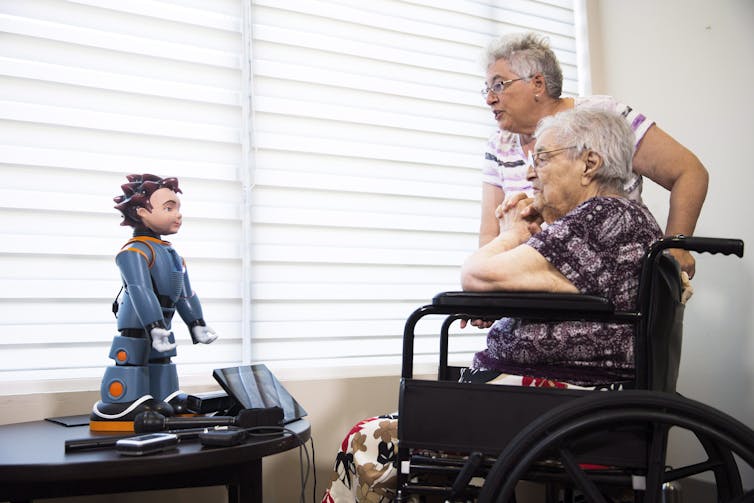
Ludwig, a two-foot-tall robot, was created by University of Toronto researchers to engage people with Alzheimer’s disease and dementia. (THE CANADIAN PRESS/Michelle Siu)

The implication, then, is that the country’s present and future depend very much on our ability to understand and meet the needs of people. This means investing in the research, education and skills training opportunities that support the well-being of Canadians.

Here again Canada is headed in the right direction. Earlier this year, Canada’s Fundamental Science Review Panel submitted its final report to Minister of Science Kirsty Duncan, on the state of basic and applied research.

The study identified gaps in the country’s research ecosystem and made recommendations to enhance Canada’s investigator-led research capacity. The panel’s remit was broad, examining research inquiry and apparatus in science, technology, engineering and math through to health sciences, social sciences and humanities.

Much of the debate that followed has focused on where and how to spend federal research dollars to improve the country’s knowledge production, innovation capacity and path to prosperity.

More of the debate needs to focus on why Canada must invest in research for end-users in the public, private and not-for-profit sectors without shortchanging teaching, learning and skills development.

The challenge of serving others

To build research capacity we need to build skills, training and knowledge translation capacity. The three go hand in hand.

The real and potential economic and social value of research carried out in Canada’s post-secondary education institutions is not well understood or communicated to the various stakeholder groups that stand to benefit.

It is not well understood, for example, that research funding distributed through our federal granting agencies is contributing to the training and skills development of undergraduate and graduate students involved in research.

Or that the toughest tasks these future workers will face won’t be technical, but interpersonal — working with, understanding and serving others.

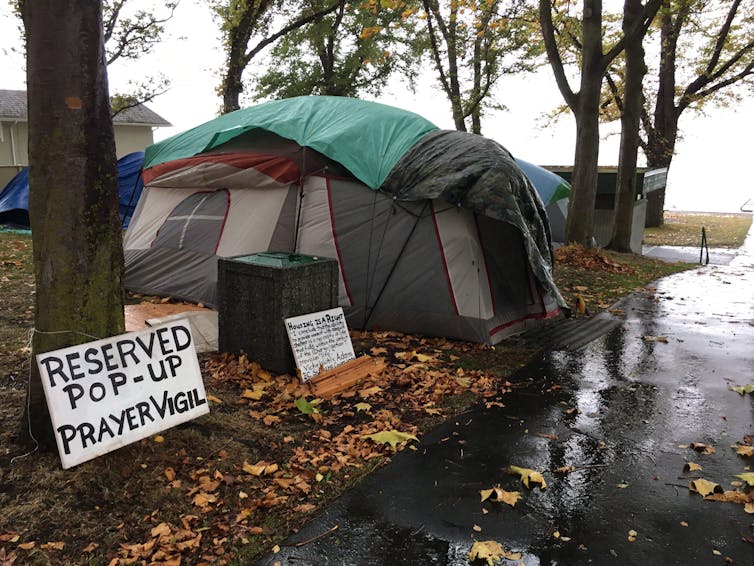
Automation frees time and resources to invest in societal challenges such as affordable housing. Here homeless people pitch tents in Victoria’s wealthy Oak Bay in 2017 to draw attention to housing shortages for disadvantaged people across British Columbia. (THE CANADIAN PRESS/Dirk Meissner)

Canada’s research community must do more to translate and transfer the practical benefits of its work. And, alas, there’s no easy way to automate the process.

Emotional labour is key to growth

What this means for now is that we’re undermining our own potential to address complex challenges — social, scientific or otherwise — to innovate and allocate our resources. School boards, universities, polytechnics and colleges all have important roles to play. So do employers.

Studies of employers, human resources staff and job databases have shown steadily growing demand over the past 35 years for soft skills, social skills or what one writer for Aeon magazine recently called “emotional labour.”

In economic terms, these skills are the key to productivity and growth in the service industries. Which is why the time and money that technology saves us must be reinvested — in cultivating, contextualizing, communicating with and caring for people.

There will soon be an algorithm to diagnose your health problem, a driverless air taxi to take you to the hospital and a robot to perform surgery on you, while post-op or palliative care will be handled by a team of sociable machines.

If we under-invest in the research and training that support the development of social, emotional and communication skills in relentless pursuit of research commercialization or bigger and better robots, we’ll miss the crucial opportunity that new technology affords us.

Canada might up end making better things, not making things better.

Fuente: https://theconversation.com/in-a-time-of-robots-educators-must-invest-in-emotional-labour-88016

Comparte este contenido:

Estados Unidos: La revolución de Harvard

Estados Unidos/Noviembre de 2017/Autora: Gloria Helena Rey/Fuente: Portafolio

Casi no puede creerse. La universidad de Harvard, que se ha distinguido por su alta exigencia, calidad educativa y clasismo, viene liderando desde hace cinco años con el MIT una serie de programas masivos educativos online, a través de la plataforma edx, de código abierto, que están beneficiando a unas 13 millones de personas en el mundo.

Los cursos son gratuitos y cualquiera que desee puede beneficiarse de ellos. Solo tiene que registrarse en www.edx.org/es. La duración de un curso individual puede variar de semanas a meses, cuando se trata, por ejemplo, de programas de Certificación Profesional y Micro Masters. 

“Solo si un estudiante desea obtener un certificado/credencial que demuestre su conocimiento del programa, debe realizar un pequeño pago. Con un certificado verificado, un curso individual puede costar en promedio US$50”. Los certificados verificados demuestran que se domina un área en particular.

Los Micro Masters, la última gran innovación de la plataforma, cuestan entre US$600 y US$1.500 y los programas con Certificación Profesional pueden variar en el número de cursos del programa, pero cada uno cuesta en promedio US$100, explica a Portafolio Eduardo Zambrano, gerente de mercadeo del programa para Iberoamérica.

Añade que los Micro Masters son cursos de nivel maestría que equivalen del 25% al 50% de una maestría tradicional, que ofrecen al estudiante las habilidades que necesita de forma rápida, flexible, y con un costo accesible y con el respaldo de las universidades.

Insiste en que “cualquier persona, en cualquier parte del mundo puede beneficiarse de los cursos en línea, pues nuestra misión es llevar educación de calidad a todos. Lo único que se necesita es una conexión a internet, y un computador, tableta o teléfono inteligente”.

Juan David Cruz

Juan David Cruz, estudiante colombiano que gracias a los cursos de edx montó su propia empresa y una fundación.

ARCHIVO PARTICULAR

“Tenemos cursos y programas de certificación profesional y Micro Masters en temas muy variados, por ejemplo en ciencias de la computación, administración de negocios, gestión de proyectos, ciencias de datos y muchos más”.

YA SON MILLONES

En América Latina los cursos online de Harvard y el MIT han impactado la vida de dos millones de personas. “Un caso digno de mención es el de Juan David Cruz, un estudiante colombiano que gracias a los cursos de edx montó su propia empresa y una fundación para ayudar a personas invidentes a reconocer su entorno, por medio de dispositivos móviles”, afirma Zambrano. 

Añade que Colombia es un país con un gran potencial en la región y que la plataforma edx cuenta ya con 350.000 estudiantes. “Estamos seguros de que este número aumentará considerablemente en los próximos meses”.

Asegura que los programas que se ofrecen son diseñados “para entregar resultados reales en las carreras profesionales y ayudar a los estudiantes a mejorar sus vidas. La educación en línea ofrece acceso a educación de calidad accesible y flexible en áreas de alta demanda en el mercado laboral con trabajos de pago alto”.

Más de 130 universidades e instituciones están vinculadas a la plataforma edx de Harvard y el MIT entre las que figuran también las de Oxford, Boston University, Brown, Princeton.

También, algunas de las instituciones ofrecen contenido en español como el Tecnológico de Monterrey, la Universidad Galileo en Guatemala, La Pontificia Universidad Javeriana de Colombia, la de Córdoba en Argentina, el Banco Interamericano de Desarrollo, la Universidad Autónoma de Madrid, y la Universidad Politécnica de Valencia en España.

“Estamos seguros que más universidades de la región se unirán a nuestra misión de llevar educación a todas partes del mundo, en especial a nuestros estudiantes hispanohablantes”, manifestó Zambrano.

SIN FINES DE LUCRO

La plataforma edx es una organización sin fines de lucro, fundada por la Universidad de Harvard y el MIT, para llevar educación de calidad, de las mejores universidades del mundo, a todas las personas que la deseen recibir.

Estos cursos online son ofrecidos en la plataforma www.edx.org/es, y, ahora, con el lanzamiento de la plataforma en español “será más fácil navegar para estudiantes hispanohablantes. En este momento, contamos con más de 130 cursos en español, en diferentes áreas como ciencias de la computación, administración de negocios, biología y artes”, aseguró Zambrano.

En su opinión, lo más innovador de este proyecto es que está encaminado a transformar la vida de millones de personas a través de la educación. “La plataforma ha evolucionado desde sus comienzos y se ha ido ajustando a las necesidades de los estudiantes. Comenzamos con MOOCs individuales, en este momento continuamos ofreciendo estos cursos pero, de igual forma, hemos desarrollado contenido que permita que los estudiantes puedan comenzar sus carreras o avanzar profesionalmente. Contamos con los programas de Certificación Profesional, que son un conjunto de cursos desarrollados por las universidades e instituciones en edx, para ofrecer las habilidades que los empleadores están buscando, es por esto que estos cursos son respaldados por grandes corporaciones”.

Zambrano está orgulloso con los resultados obtenidos con la plataforma edx en estos cinco años de funcionamiento. “A diario escuchamos cientos de historias de estudiantes que gracias a nuestros cursos han logrado avanzar profesionalmente y realmente obtener los conocimientos que necesitan y mejorar sus vidas. Son más de 13 millones de historias. En edx creemos en la innovación por lo cual nuestros programas también son grandes logros, continuaremos innovando para así ofrecer grandes experiencias a nuestros estudiantes”.

Fuente: http://www.portafolio.co/tendencias/la-revolucion-de-la-universidad-de-harvard-512013

Comparte este contenido:

México: Jóvenes en pro del medio ambiente crean proyecto de desalinización del agua

México/Noviembre de 2017/Autora: Cynthia Sánchez/Fuente: Diario de Xalapa

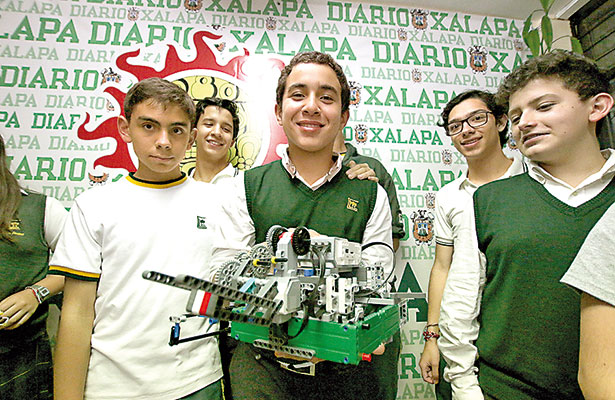
Usar la ciencia y la tecnología para dar respuesta a los problemas medioambientales que actualmente aquejan a la sociedad fue lo que llevó a un grupo de 10 estudiantes de secundaria y bachillerato a crear un prototipo robótico que desaliniza el agua del mar, permitiendo su uso doméstico.

Los jóvenes pertenecen al Club de Robótica del Colegio Las Hayas, en Xalapa, quienes inscribieron su proyecto en la competencia internacional First Lego League México, del cual ganaron la etapa regional y lograron su pase para representar a Veracruz en la eliminatoria nacional que se realizará este 2 de diciembre en la Ciudad de México.

“El First Lego League México es un torneo de varias categorías que busca impulsar a los jóvenes a desarrollar proyectos científicos innovadores, usando la robótica y destacando el trabajo en equipo”, señaló Bernardo Silva, de segundo año de secundaria.

Dulce María Silva, otra de las integrantes del equipo, explicó que el proyecto “consiste en la desalinización del agua mediante el óxido de grafeno, que es un polito que funciona como una delgada tela que puede separar las bacterias y cosas muy, muy pequeñas que están en el agua.

“Buscamos que el proyecto fuera muy innovador, este año el concurso eligió la hidrodinámica, plantear una solución a la escasez de agua; así que nosotros analizamos las investigaciones que a nivel mundial se han hecho y decidimos inclinarnos por la desalinización mediante el óxido de grafeno. De hecho uno de nuestros principales retos fue conseguir el óxido de grafeno, que es nuestro compuesto base, porque es muy difícil y caro de conseguir; también nos enfrentamos a la presión del tiempo para trabajar y tener nuestro prototipo listo para la competencia”, agregó Andrea Zamudio, de quinto semestre de preparatoria.

Una de las particularidades de la competencia es que los jóvenes deben trabajar en equipo, desarrollar un pensamiento crítico y aplicar a problemas reales conceptos de matemáticas y ciencias. El 2 de diciembre el equipo veracruzano se enfrentará a jóvenes de otros 16 estados de la República por su pase al internacional.

Pese a ser de diferentes grados y grupo, los jóvenes han logrado cohesionarse para sacar adelante el proyecto. Para ello se subdividieron en un equipo que maneja lo mecánico y el otro la investigación; en la coordinación general de este proyecto está la maestra María Lourdes García Vázquez.

“El robot está hecho para completar una serie de problemas que especifica la misma competencia, entonces tenemos varios equipamientos que nos apoyan a hacer los trabajos más fáciles; como todo el trabajo es autónomo, es decir, que tenemos que programar, pues puede ser un poco complicado lograr la afinación de cada programa con cada una de las piezas”, indicó Mauricio Bautista.

La propuesta de desalinización del agua ayudaría a que se tuviera agua disponible para uso doméstico, es decir, para riego de plantas, limpieza, etcétera, no así para consumo humano, pues el proceso deja sin minerales el agua, por lo que carece de nutriente alguno.

Finalmente los estudiantes destacaron que participar en la competencia les ha dejado aprender a coordinarse, respetar las ideas de otros y llegar a acuerdos para lograr un mismo objetivo: “El principal problema en México es que no hay trabajo en equipo, la gente quiere hacer las cosas por sí sola, no ha aprendido a compartir tareas y eso lleva a que hacer cosas sea difícil, pero si desde jóvenes aprendemos a trabajar en equipo, podemos hacer que México destaque a nivel mundial”, agregó Mauricio Bautista.

Los integrantes del equipo son Dulce María Silva Benítez, Mauricio Bautista Aguilar, Bernardo Rafael Silva Benítez, Éricka Esparza Pérez, Elda Alejandra Rivera Aguilar, Alejandro Rafael Villegas Álvarez, Miguel René Hernández Abreu, Manuel Andrés Manterola Galindo, Andrea Zamudio Palafox y Bernardo Estrada Fuentes.

Fuente: https://www.diariodexalapa.com.mx/veracruz/jovenes-en-pro-del-medio-ambiente-crean-proyecto-de-desalinizacion-del-agua

Comparte este contenido:

Dilemas de la universidad pública en un mundo globalizado

Por: José Vega López

2017 es un año especial para nuestra máxima Casa de Estudios en el estado de Michoacán.  Conmemoramos sus primeros 100 años de existencia como Universidad autónoma y de profundas raíces populares. 2017 también es un año de coincidencias históricas nacionales e internacionales: La Revolución Rusa de 1917, la Constitución Mexicana de 1917 y nuestra querida Universidad Michoacana de San Nicolás de Hidalgo que enarbolan la bandera de la justicia social.

Vivimos en una sociedad que tiende a hacerse cada vez más planetaria porque se han venido unificando nuestras diversas cosmovisiones del mundo en una sola, y, en consecuencia, se nos induce a admitir que la cosmovisión del mundo válida, adecuada y cierta es la cosmovisión de quien tiene el poder. Es decir, lo que percibimos es la instauración  de un sistema de redes de poder a través de las cuales se logra determinar la orientación de los intereses y las prácticas políticas de los ciudadanos, en concordancia con una idea de unificación e “integración” que sea lo suficientemente aceptable como para fusionar en un solo proyecto social, el proyecto particular de todos. Esta unidad de identidades  lo que se  propone, en el trasfondo del asunto, es un auténtico proceso de aculturación que tiene como objetivo no declarado profundizar los mecanismos de dependencia de las amplias capas de la población en todos sus aspectos, siendo el principal el que gira en torno a los sistemas de consumo económico, esto es, del mercado. A éste se supeditan los restantes sistemas de sociabilidad política y los discursos del conocimiento técnico. De esta manera se determinan ideológicamente los fines a los que apuntan las relaciones ciudadanas públicas.

Lo que observamos es una nueva reconversión capitalista, pues el impacto de los desarrollos tecnológicos en pro de la economía y del orden político que le sirve de sustento termina por lograr la “revolución del mercado” en su mundialización, acentuando la acumulación del capital más que orientar su “revolución” a satisfacer las principales necesidades y satisfacciones sociales de la mayoría de la población. Lo anterior pone en evidencia el tipo de globalización  que se alcanza a través del sistema capitalista neoliberal, en cuanto que privilegia el dominio de una cultura de la producción para el consumo, convirtiendo al ser humano en un eterno lactante, como lo expresara en su momento Erich Fromm.

La plataforma ideológica y política del capitalismo  parte del supuesto de que existe un mínimo de oportunidades materiales iguales para todos los miembros de una sociedad determinada. Sin embargo, no siempre esto ha sido posible en el mundo real, sobre todo para aquellos individuos que son segregados o marginados del ámbito público por parte de la clase social que detenta las estructuras efectivas del poder. Esto quiere decir que la estructura de poder también termina globalizada por aquellos que son sus beneficiarios. Lo cual contribuye a un mayor nivel de dominación a escala planetaria, ya que supone que se estarían reproduciendo los mecanismos de control a una escala imposible de cuantificar y, por consiguiente, más universalista que pudiera contener en un solo bloque antropocéntrico a la diversidad de sociedades y culturas.

El nuevo orden mundial continúa siendo un orden hegemónico, puesto que se mantienen, sin mayores diferencias o cambios, las estructuras de producción y reproducción del control social desplegado por la economía neoliberal.

La globalización está promoviendo el paso de un homo faber a un homo consumens obsesionado por el dominio de poder que le ofrece la técnica para hacerse dueño de su propio destino, a través de una sociedad de consumo altamente desarrollada que le permita obtener los productos con los cuales proveerse de cuanto necesita. Revalorizando la propiedad privada y el consumo, se garantiza, en su momento, más el tener que el deber ser, como lo diría Erich FrommEl capitalismo neoliberal  considera esto como principios generales de la producción económica a la que corresponde la naturaleza social de los hombres, siendo que los convierte en objetos alienados por la producción y el consumo, más que sujetos liberados de la productividad por medio de la técnica y del conocimiento. La visión de un mundo global, en el que no estamos todos reconocidos ni como hombres ni como ciudadanos, se impone hoy por hoy, más por medio de los aparatos ideológicos  y culturales del sistema, que a través de la intimidación y acción militar, aplicada ésta, con frecuencia, durante la llamada Guerra Fría.

Al decir de Althusser, el “Estado capitalista se reactualiza constantemente a través de sus aparatos ideológicos” (Althusser, Elementos de autocrítica, Hachette, 1974:18). El Estado capitalista neoliberal es por consiguiente, un Estado difusor y emisor de juicios y opiniones políticas con las que el ciudadano debe estar constantemente vinculado e identificado.

Cuando la información y los medios de comunicación están  comprometidos con órganos de dirección de poder que no son los que favorecen la libertad de expresión y la libertad de comunicación, entonces,  nos  encontramos ante un  modelo comunicativo  de opinión que no permite la divergencia o la contestación, mucho menos la posibilidad de un diálogo   horizontal con todos los integrantes de la sociedad.

Ahora bien, ¿existen alternativas más generosas para con el ser humano? Intentaremos mostrar que sí es posible construir otras alternativas que hagan más humana la convivencia entre los hombres, sin importar su lugar de origen o de residencia. De hecho, en sus inicios la nueva sociedad burguesa impulsó el pensamiento humanista, que es para nosotros una alternativa real, retomado tanto por filósofos como  pedagogos, sobre todo después de la Segunda Guerra Mundial. Para Fromm, por ejemplo, el nuevo humanismo requiere como conditio sine qua non: “[…] Que los hombres se den cuenta de la inhumanidad de su situación presente, y no sólo del peligro físico, sino sobre todo del peligro psíquico que les acarrea la perfecta enajenación…tenemos que empezar por hacernos conscientes de quiénes somos, qué es lo que nos empuja y adónde vamos. Únicamente haciéndonos conscientes de ello, podremos tomar una decisión de adónde queremos ir” (Erich Fromm, La revolución de la esperanza, F.C-E., 2010:39).

Un primer paso en la consecución de ese ideal, descrito por Erich Fromm, es reformular los cometidos o las metas de las instituciones educativas porque, una educación orientada exclusivamente hacia la ciencia y la tecnología no es garantía del desarrollo integral del ser humano. Se requiere de una educación humanista, dialógica y crítica por definición, en el sentido en que lo explica Paulo Freire, es decir: “[…] Solamente el diálogo, que implica el pensar crítico, es capaz de generarlo. Sin él no hay comunicación y sin esta no hay verdadera educación. Educación que […] se instaura como situación gnoseológica en que los sujetos inciden su acto cognoscente sobre el objeto cognoscible que los mediatiza” (Paulo Freire, Pedagogía del oprimido, Siglo XXI, 2010:112-113).

De lo comentado anteriormente se desprende que la educación en general y la Universidad Pública en particular tienen frente a sí  un gran reto: formar  un nuevo tipo de estudiante que tenga  una formación humanista que contemple  el desarrollo  físico, intelectual y moral de sus educandos.

En este sentido, sería interesante saber cuál es la función primordial de una universidad. Pablo González Casanova sostiene que: “[…] La universidad no puede limitarse a preparar  profesionistas o técnicos. Tiene que enseñar a aprender y que enseñar a investigar, tiene que hacer del dominio de sus estudiantes y profesores el dominio  y el gusto de la lengua propia, de las matemáticas, de las ciencias naturales y sociales, de las humanidades, las artes y las técnicas. Todo universitario  tiene que rehacer su cultura general” (Pablo González Casanova, ¿Qué Universidad queremos?, UMSNH, 2003:6). En consecuencia con lo expresado por el ex-rector de la UNAM se hace aún más necesario recordar  que el proyecto tecnócrata, que vienen impulsando los gobiernos de derecha como el español, el argentino o el mexicano, no ha ocultado su deseo de constreñir a su mínima expresión las universidades públicas, lo cual se materializa disminuyendo  la responsabilidad del Estado en materia educativa. Obligando a los gobiernos de los países en desarrollo, por no decir  subdesarrollados o tercermundistas,  a implementar sendas reformas en la educación  superior que, según Axel Didriksson, serían las siguientes: “[…] Propiciar una gran diferenciación institucional, que incluya el desarrollo de  la educación privada. Introducir políticas explícitas designadas a dar prioridad a objetivos de calidad y equidad. Redefinir el rol del gobierno. Control del acceso a la educación  superior pública” (González Casanova, ¿Qué Universidad queremos?, UMSNH, 2003:7).

“El objetivo, asegura Didriksson, es liquidar el único espacio, que aún queda, desde donde se estaría en posibilidad de resistir los embates del neoliberalismo, es decir el espacio universitario.” (González Casanova, ¿Qué universidad queremos?, UMSNH, 2003:7).

Aquí es importante subrayar que la privatización de la educación está estrechamente vinculada a intereses del mercado y el consumo. Bauman advierte que “nosotros, los académicos, deberíamos preocuparnos por un daño aún más pernicioso que los inmediatos efectos que supone el hecho de lanzar a las universidades en brazos de los mercados de consumo (pues esto  y no otra cosa es el resultado de la retirada del patrocinio del Estado combinada con el aumento al triple de las matrículas). Se trata de la suspensión o el abandono de los proyectos de investigación, de su devenir superfluo… por lo tanto de un empeoramiento en las condiciones del aprendizaje y su calidad” (Zigmunt Bauman, Sobre la educación en un mundo líquido, Paidós, 2014:61).

Las intenciones, como vemos, no pueden ser más claras. Por ejemplo, en las últimas tres décadas la matrícula en las universidades privadas creció en un 528 %, mientras que en las universidades públicas fue del 40 %, según el estudio realizado por Adrián Acosta a invitación del IESALC-UNESCO 2005. En palabras del Dr. Pablo Arredondo (Rector del Centro Universitario de Ciencias Sociales y Humanidades de la Universidad de Guadalajara) este crecimiento se debe “a la multiplicación de las universidades garage o patito”. Actualmente la educación privada cubre el 30 % de la matrícula a nivel nacional.

Ante el vertiginoso crecimiento de la educación privada tenemos el imperativo de reformular nuestro quehacer docente, y asumir un compromiso efectivo que no deje lugar a dudas de que estamos en la defensa de la educación pública, desde el aula como principal trinchera.

Por eso planteamos que la formación de estudiantes-investigadores  desde  el nivel medio superior es otro de los  grandes retos que tiene frente a sí la Universidad Pública, de lo contrario se auto-condenaría al estancamiento y al atraso. No podemos seguir simulando, sencillamente por una cuestión elemental de ética para con aquellos que todavía creen en nuestras instituciones de educación superior. El docente  improvisado o aquel que ha perdido todo sentido de la vocación, no es la mejor garantía  para impulsar ese tipo de educación que  requieren hoy en día los pueblos en los  países en vías  de desarrollo.

Una educación humanista requiere de un docente  humanista y  no un mercader. Éste  es para Luis Porter: “[…] El que hoy vende su talento y su tiempo para trabajar en la investigación o en la docencia con la misma actitud que lo hace un obrero de una fábrica, sometido y forzado a aceptar condiciones que deberían ser inaceptables, olvidando o desconociendo las necesidades nacidas de su propia vocación, sensibilidad y compromiso. De esta manera, va adoptando la conducta que corresponde a una nueva versión del burócrata: sin gracia ni maneras, sin estilo ni capacidad de expresión, sin civilización ni cultura, en suma, sin la creatividad que surge del placer de trabajar con alegría” (Luis Porter, La universidad de papel, UNAM, 2003:116).

Bajo la perspectiva capitalista la multimencionada calidad educativa, que a diario escuchamos en boca de funcionarios,  se traduce en números, en horas trabajadas, en un sinfín de informes, etc., esto es: lo que importa es la cantidad no el aprendizaje realmente significativo en los estudiantes. Por eso, nuestra propuesta va encaminada hacia una auténtica humanización de la enseñanza en todos sus niveles. González Casanova comenta al respecto: “[…] El proceso de enseñanza-aprendizaje  tiene que enfrentarse  a  las  presiones comerciales y estatales desde una autonomía responsable  y disciplinada, plural y crítica, diagonal e informada, que impulse los talleres pedagógicos de las comunidades y los grupos de trabajo escolares  y extraescolares  con actividades colectivas y personalizadas también creadoras” (Luis Porter, La universidad de papel, UNAM, 2003:14).

La educación humanista, precisamente, ve al hombre como creador de alternativas humanas;  ella contempla  la construcción de utopías y las prácticas de las  mediaciones para alcanzarlas. Sólo de esa manera se podrá cristalizar la formación de un nuevo profesionista comprometido este con su momento histórico. He aquí nuestra magna tarea: construir utopías pero sin perder nuestros ideales, mismos que se convierten en el motor de la creatividad humana. Pero también hay que construir esas utopías con alegría, con optimismo, como lo comenta Fernando Savater: “[…] En cuanto educadores no nos queda más remedio que ser optimistas […] quien sienta repugnancia ante el optimismo, que deje la enseñanza y que no pretenda pensar en qué consiste la educación. Porque educar es creer en la perfectibilidad humana, en la capacidad innata de aprender y en el deseo de saber que la anima, en que hay cosas (símbolos, técnicas, valores, memorias, hechos  […] que pueden ser sabidos y  que merecen serlo, en que los hombres podemos mejorarnos unos a otros por medio del conocimiento” (Fernando Savater, El valor de educar, IESSA, 1997:24).

La cuestión es, entonces, elaborar o buscar las alternativas que  permitan sustraernos a ese proceso envolvente y alienante. Dichas alternativas garantizarían que el ciudadano común pueda asumir en un futuro próximo una actitud más crítica y reflexiva  acorde con su condición de homo sapiens. Humanizar al hombre por medio de la educación, sin lugar a dudas sería la mejor garantía de revertir en un mediano plazo los actuales embates de la globalización capitalista neoliberal. Además les recuerdo que NOS FALTAN 43 ESTUDIANTES.

Fuente: http://michoacantrespuntocero.com/dilemas-la-universidad-publica-mundo-globalizado/

Comparte este contenido:

Polarizados de acento pijo

Por: Sandra León

Los ciudadanos con más nivel educativo muestran afinidades partidistas más fuertes.

Una de las consecuencias de la polarización política es que disuelve los consensos que la sociedad ha ido forjando alrededor de ciertos temas. Lo vemos estos días con la evolución de la confianza en las instituciones europeas en Cataluña. Pero también ocurre en cuestiones que, por su naturaleza, uno esperaría que quedaran fuera del debate político, como las relacionadas con el medioambiente. La realidad, sin embargo, es que el debate sobre el cambio climático no escapa a la división política.

Más interesante es que el nivel educativo de los ciudadanos no suavice esa fractura. Como muestran los datos de opinión pública de Gallup, en Estados Unidos los republicanos y demócratas con más formación tienen posiciones sobre las causas y consecuencias del cambio climático más distantes que las que sostienen republicanos y demócratas con menor nivel educativo. A la hora de formarse una opinión sobre el tema, la educación no impide que ignoren el consenso científico en la materia.

La realidad es que la educación no es un factor que modere la división política, sino todo lo contrario. Los ciudadanos con más nivel educativo muestran posiciones ideológicamente más polarizadas y afinidades partidistas más fuertes. Las políticas que defienden estos ciudadanos son más coherentes con sus valores, su posición ideológica y la orientación de su voto. También son más impermeables a los cambios porque son más selectivos a la hora de aceptar nueva información: solo incorporan la que concuerde con su visión del mundo. Estas características explican por qué el aumento de la polarización desde los años ochenta en Estados Unidos se ha concentrado entre los sectores más activos y formados.

En definitiva, una ciudadanía más educada no conduce necesariamente a una política más moderada. Los ciudadanos con más formación son más partidistas, se movilizan más y los representantes políticos suelen hacerles más caso. Si además, los que tienen más ingresos están desproporcionadamente representados entre los más educados, entonces, como dice Larry Bartels, el coro de voces que mueve la política tendrá un marcado acento de clase alta.

Fuente: https://elpais.com/elpais/2017/11/21/opinion/1511276353_736769.html

Comparte este contenido:
Page 829 of 1684
1 827 828 829 830 831 1.684