Page 60 of 146
1 58 59 60 61 62 146

Máximo órgano legislativo de China revisa informe sobre igualdad de educación

Asia/China/29 Agosto 2018/Fuente: spanish.people

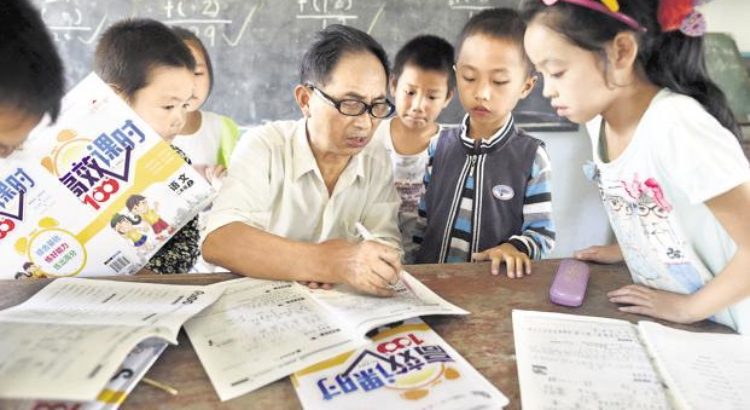
Los legisladores chinos revisaron hoy martes un informe del Consejo de Estado, el gabinete del país, sobre el desarrollo coordinado de la educación obligatoria en las áreas urbanas y rurales, que concede atención particular a las regiones rurales.

Encargado por el Consejo de Estado, el ministro de Educación, Chen Baosheng, presentó el informe a los legisladores en la sesión del Comité Permanente de la Asamblea Popular Nacional, que se celebra entre el lunes y el viernes.

Al hablar de las medidas tomadas por las autoridades para acortar la diferencia entre las regiones urbanas y rurales, Chen dijo que asignaron 17.900 millones de yuanes (unos 2.630 millones de dólares) para ofrecer prestaciones de subsistencia a 16,04 millones de estudiantes de familias pobres en 2017, y añadió que las autoridades destinaron el 90 por ciento del dinero a los estudiantes de las regiones centrales y occidentales, menos desarrolladas.

Un total de 170.000 graduados universitarios serán seleccionados para trabajar en escuelas rurales de 2017 a 2018, indica el informe.

Tras reconocer que la asignación desequilibrada e inadecuada de los recursos educativos sigue siendo un problema importante, el informe llama a los gobiernos a diversos niveles a que asuman las responsabilidades debidas en la administración de la educación obligatoria y den más apoyo a las regiones afectadas por la pobreza.

La educación obligatoria incluye la escuela primaria y el primer ciclo de la secundaria en China.

Fuente: http://spanish.people.com.cn/n3/2018/0829/c31621-9495087.html

Comparte este contenido:

China otorga 24 becas universitarias a jóvenes guatemaltecos

Centro América/Guatemala/27.08.18/Fuente: dca.gob.gt.

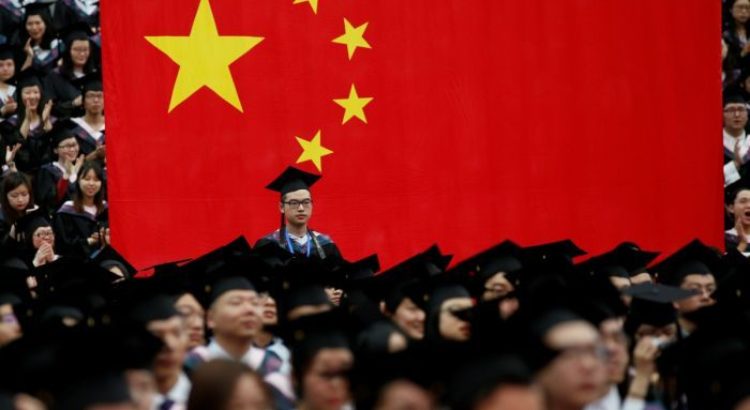
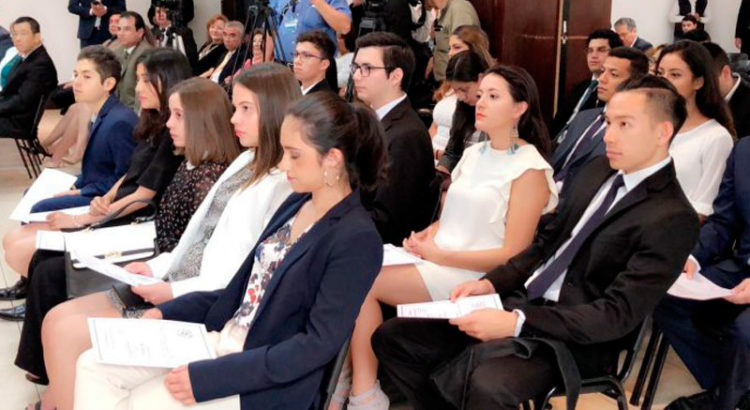
Un total de 24 becas a igual número de jóvenes guatemaltecos, para que reciban formación en universidades de prestigio, entregó hoy el gobierno de China (Taiwán), como parte de su programa educativo de apoyo a otras naciones.

Al respecto, el ministro de Educación, Óscar Hugo López, se dirigió a los beneficiados diciéndoles, “estamos totalmente convencidos que cuando ustedes regresen traerán conocimiento para realizar aportes a la sociedad guatemalteca”.

Los alumnos cursarán los grados de licenciatura, maestría y doctorado en las carreras de Administración de Empresas, Odontología, Ingeniería Mecánica e Ingeniería de la Computación, así como en Ciencia y Biotecnología.

Por su parte, el embajador del país asiático, John Lai, dijo que este intercambio educativo fomenta la amistad entre los dos países.

Fuente de la Noticia: https://dca.gob.gt/noticias-guatemala-diario-centro-america/china-taiwan-otorga-24-becas-universitarias-a-jovenes-guatemaltecos/

Comparte este contenido:

Hong Kong educators have forgotten that schooling should be fun

By Luisa Tam

I came across a very inspiring video on Facebook recently in which a teacher in a US public school was seen starting her class in the morning by exchanging elaborate handshakes with her young students, which had been personalised to each and every one of them. It wasn’t difficult to see that they were so excited to shake their teacher’s hand as they queued outside the classroom awaiting their turn.

I was totally overwhelmed and inspired by this, but sadly this is something I have rarely seen in our own education system. In Hong Kong, our educators seem to have forgotten that schools should be fun places to inspire and excite students to learn by providing a warm and hospitable environment to nurture their love for learning.

A good education should not just focus on academic attainment but also embrace genuine learning, creative teaching and encourage the overall development of the child.

This Facebook video, which has gone viral with more than 49 million views, also illustrates how important it is for teachers to build a genuine connection with students. Although the Baptist University debacle has died down for now, a short clip is a critical lens that shows what we seriously lack in Hong Kong’s education; our educators’ inability to connect, collaborate, engage with students or instil creativity in them. They are also guilty of turning schools into boring and lifeless education factories driven merely by a culture of homogeneity.

I dare say that many of our local educators still cling to the conformist concept that learning should not be fun because the process of acquiring anything worthwhile cannot and should not be fun at all, let alone enjoyable.

In Hong Kong, schools have turned into academic torture dens and signs of academic burnout are becoming increasingly common in younger primary students, which could trigger low self-efficacy and low self-esteem. I have witnessed some of these problems in the young children of some of my friends.

If you ask any child who attends a local school in Hong Kong, most of them will tell you it’s hard to differentiate between schools and prisons, as children feel trapped and unfulfilled in their classrooms, day in and day out.

Unlike Western education, local schools in Hong Kong are never meant to be fun and nor do they pretend to be. Most of our schools advocate excruciatingly long hours of homework, constant drills and rote-learning but never meaningful learning. Surviving school in Hong Kong is real hard work and local students recognise that this is what to expect throughout the course of their schooling; they have become blasé to this sad fact of life and so they choose to serve their time without complaint.

Whenever I hear the Hong Kong government churn out the buzzwords “creative economy”, I can’t help but feel that we are actually stuck in an “uncreative economy”. Moreover, if we are to build a creative economy, like what the government has been emphasising, we would need to have more creative industries. And to reach that goal, it would mean having to nurture creative young people to assure our future survival in an increasingly creative and competitive world.

But the irony is the government keeps on discouraging creativity and innovation, which turns our young people into near lifeless robots who only know how to push themselves to earn the best exam results.

The video clip of the cheerful US public school stands in stark contrast to the recent controversy at Baptist University, in which a group of students barged into a school office to push for the scrapping of the school’s apparently unreasonably difficult Mandarin assessment. It was obvious in the video that the American teacher and her students shared a mutual respect, but this was not the case with the Baptist University students, who chose to blame their educators and the establishment for their own shortcomings.

The challenge that Hong Kong’s educators face is that as the world of education has evolved to keep pace with a creative economy, they are still bogged down by the tremendous weight of the stifling rigidity of traditional education that neither meets today’s needs nor tomorrow’s challenges.

Our Hong Kong teachers might not be as agile as the American teacher in creating rhythmic or synchronised handshakes with their students, but a good first step is to treat students like individuals and recognise their differences in learning and motivation. Teachers and students need to build a positive relationship to create a learning experience that is welcoming and a setting that’s inviting. Like running a good business, there has to be trust and respect and a collaborative culture in which students can acquire a truly genuine education for tomorrow. That’s the future of learning and without this, we are doomed.

Fuente del artículo: https://www.scmp.com/comment/insight-opinion/article/2133070/hong-kong-educators-have-forgotten-schooling-should-be-fun

Comparte este contenido:

China reforzará normas sobre instituciones de educación extracurricular

Asia/China/23 Agosto 2018/Fuente: Spanish.xinhua

China reforzará la normativa que regula las instituciones de clases extracurriculares o de formación extraescolar, según una directriz publicada por la Oficina General de Consejo de Estado, el gabinete chino.

Los departamentos de educación a nivel provincial deben estipular estándares específicos en coordinación con otros departamentos para garantizar que las instituciones de educación extracurricular den clases en lugares fijados con equipos estables de profesores cualificados, según el documento.

Estas instituciones deben contar con la autorización de los departamentos de educación locales antes de comenzar con las solicitudes de los certificados de registro y los permisos de actividad.

La directriz también les requiere que informen a los departamentos de educación locales de los detalles de las clases que impartan, como el contenido, los horarios y los estudiantes objetivos, así como que hagan pública esta información.

Los certificados y permisos se revisarán de forma anual, según el documento, que pide a los gobiernos locales que publiquen en sus sitios web listas tanto de las instituciones cualificadas como de las que no cumplen los estándares.

Un informe de la Sociedad China de Educación muestra que China contaba con 180 millones de estudiantes en edad escolar en 2016 y que más de 137 millones de alumnos acudían a clases extracurriculares o de formación fuera de su centro educativo, de forma que este mercado superaba los 800.000 millones de yuanes (117.000 millones de dólares).

Fuente: http://spanish.xinhuanet.com/2018-08/22/c_137410661.htm

Comparte este contenido:

Encounters with Asian Decolonisation

By David Fettling

In the YouTube video the young man browses Chinese-language books in a library, practices Chinese calligraphy with careful brushstrokes, introduces himself in Mandarin.

He is 20 years old from southern Sumatra in Indonesia, enrolled at Wuxi Institute of Technology outside Shanghai. He admits learning Mandarin is difficult, but points out it’s now the world’s most-used language, with English relegated to second place.

Other Indonesians studying in China, in other YouTube videos, likewise demonstrate a cultural attraction to the country, emphasising the richness of China’s past, its fast-modernising present, and its hyperpower future.

One Indonesian student remarks how much traditional Chinese architecture remains in Chinese cities: China’s culture is still «murni», or pure, she says.

Another remarks bluntly that China is now «lebih maju», more developed, than Europe, a leader in «teknologi».

Study here, another claims, and you and your country can «bangkit», or awaken, as China has.

Chinese culture, Indonesians note, treats education with great seriousness. One student translates a Chinese expression for «early to sleep, early to rise» into Indonesian, «tidur cepat, bangun cepat» — then adds to it «belajar cepat», quick to study.

Others remark on the «semangat» or spirit, of learning on Chinese campuses, remarking how university libraries are filled with students even on weekends.

Australia has much invested in its ability to attract large numbers of young Asians for tertiary study. The income they bring is increasingly how Australia’s university sector is financed.

Australian institutions want to start drawing more young people from other rising Asian nations, especially India and the ASEAN states: populous, demographically young, and with rapidly expanding middle-classes, they constitute tantalising 21st century markets.

Yet there is increasingly sharp regional competition for where those students choose to study — from China.

Influx of foreign students hits China

South-east Asians and Indians are enrolling in Chinese universities in rapidly increasing numbers.

Roughly 80,000 South-East Asians were studying at Chinese universities in 2016, up 15 per cent from two years before. That includes 14,000 Indonesians (20,000 are in Australia).

Some 18,000 Indians are now at Chinese institutions, more than are in Britain.

China will likely host 500,000 international students before 2020.

One reason for China’s attractiveness is a lower cost of tuition and living — Beijing offers many scholarships, too. But deeper cultural factors are also at work.

Foreign students enthused by China’s uber-modernity

For centuries people across Asia have been intellectually drawn to China and sought to learn from Chinese practices.

China’s 19th century weakness switched emphasis to the West and Japan. But the old pattern was starting to echo again by the mid-20th century when post-colonial Asian nations saw in the newly-proclaimed People’s Republic of China a potential model for their own development.

Indonesian nationalists of that era widely admired the People’s Republic of China as pioneering a new form of Asian modernity. That may be a harbinger of what’s starting — or restarting — now.

Indonesian students in China enthuse about China’s uber-modernity in e-commerce and fast subwaysthey say studying in China will help them better launch businesses and reduce unemployment back home; and they voicehappiness with the structure and content of their Chinese study programs.

The idea of China as a simultaneously great civilisation, fast-modernising power, and culture conducive to scholarship is attractive to large numbers of young Asians.

International student numbers at Australian universities are currently breaking records. It’s easy to conclude Australia’s position as regional higher education powerhouse is impregnable, that Asian middle classes will always seek their international educations mostly from Western nations.

Such assumptions could soon look as short-sighted as previous ideas of mineral booms lasting forever.

Asian international students in Australia have been voicing increasing dissatisfaction with their educations. Many regret their social isolation: most international students live in a «parallel society» from Australians, often segregated on campuses in international-only dormitories.

Meanwhile, many Chinese institutions, after initially housing international students in separate accommodation, are now moving toward integration of housing and other campus facilities.

Australia has significant advantages in attracting Asia’s best

Asian international students are also increasingly dissatisfied with what they see as Australian universities’ declining quality.

Australian universities have endured four decades of budget cuts with no end in sight, with implications that have not escaped notice on WeChat.

Meanwhile, universities in China have increasingly impressive libraries and laboratories — Indonesians praise Chinese facilities on campuses— and professors with increasingly impressive academic credentials.

Yet Australia has significant comparative advantages in attracting Asia’s best and brightest.

Australia is a liberal democracy in a region that is mostly not: its universities should be naturally superior places for young people who hope to think, write and speak freely, to freely inquire.

A revealing point of irritation among Indonesians experiencing China after their own mostly-free press is China’s internet censorship.

One Indonesian student in China reacted to that aspect of the People’s Republic this way: «Oh my God: seriously?»

Students in China hoping to research «sensitive» topics are often rejected.

China might be seen as more developed because of things like e-commerce, but its e-Stalinism can speedily cancel out the impression.

Our cultural attractiveness is being undermined

And Australia’s stated project of an open, multicultural society, a society that offers international students a chance to fully participate in its workings, either temporarily or permanently as citizens, should have sustained attractiveness — and offer a sustained contrast with more rigid notions in East Asia of who «belongs» and who is an outsider.

Rather than reinforcing those advantages — by revitalising financially-straitened Australian universities, by consolidating its multicultural model — Australia is eroding both.

For years Australia has ignored evidence that its rhetoric of multicultural inclusiveness does not, in practice, extend adequately to Asian international students, many of whom, according to Melbourne University’s Fran Martin, come «full of hopes to learn about and participate in Australian society», yet who often cannot name a single Australian friend when they graduate.

Increased questioning of multiculturalism by government ministers, and tightening of residency and citizenship requirements, is undermining Australia’s cultural attractiveness.

And the persistent downgrading of the place of the university in Australian society — the budget cuts themselves, the commodification and trivialisation of the very concept of university education — inevitably erodes the image of Australia as a place of open, free inquiry, an astute choice of place for people to develop their minds.

Australia has turned its universities into degree factories. Should it be any surprise that China, «the factory of the world», proposes to do that better?

Source of the article: http://www.abc.net.au/news/2018-08-16/australian-unis-biggest-china-threat-competition-chinese-unis/10117508
Comparte este contenido:

China consulta a opinión pública sobre regulación de educación en línea

Asia/China/14.08.18/Fuente: spanish.xinhuanet.com.

El Ministerio de Justicia de China está consultando a la opinión pública sobre un proyecto de regulación respecto a la educación en línea.

El documento, que estará abierto para comentarios del público hasta el 10 de septiembre, regula la educación en línea.

Las escuelas privadas que ofrezcan educación en línea tendrán que obtener permiso para operar escuelas y para operaciones en línea, de acuerdo con el proyecto.

Las instituciones que ofrecen capacitación en línea deben obtener permiso para la operación en línea y registrarse con los departamentos de educación, recursos humanos y seguridad social a nivel provincial.

El proyecto también regula el establecimiento de escuelas privadas e instituciones educativas y protege los derechos e intereses de maestros y de otros empleados.

Fuente de la noticia: http://spanish.xinhuanet.com/2018-08/13/c_137387742.htm

Comparte este contenido:

Etiopía y China estrechan vínculos en materia de educación

África/Etiopía/09 Agosto 2018/Fuente: Prensa Latina
Etiopía y China estrecharon los vínculos en materia de educación, con la apertura de nuevas becas de estudio para alumnos de este país en Beijing, confirmaron hoy fuentes oficiales.

El intercambio académico incluye postgrado en universidades chinas tanto en disciplinas de ciencias sociales como naturales, y la mayoría de ellos se prepararán para realizar sus estudios de doctorado.

De acuerdo con Samuel Kifle, viceministro etíope de Educación, el programa representa ‘una de las mejores alianzas en el mundo en todos los ámbitos, tanto diplomáticos como culturales y económicos’.

‘Continuaremos teniendo esta fuerte relación, porque enviaremos en varios grupos a estudiantes destacados que marcarán la diferencia en el futuro’, refirió Kifle.

Tomando nota del compromiso del Gobierno en el fortalecimiento del acceso a la enseñanza superior, el alto funcionario también elogió el apoyo chino para llenar el vacío en ese sentido.

‘A medida que invertimos en nuestro capital humano, la contribución de China, principalmente en términos de concesión de becas, es inmensa. Me gustaría agradecer a la gente y al Gobierno de esa nación por apoyar todos nuestros esfuerzos de desarrollo’, dijo.

Tan Jian, embajador chino en Addis Abeba, reiteró el compromiso de apoyar los programas de los territorios africanos en el sector educativo.

También dijo que la cooperación en el sector es ‘un trabajo muy significativo e importante’.

El representante diplomático hizo además un llamado a los becarios para que sirvan como puentes de conexión en el reforzamiento de los lazos integrales y estratégicos

Fuente: http://www.prensa-latina.cu/index.php?o=rn&id=201434&SEO=etiopia-y-china-estrechan-vinculos-en-materia-de-educacion
Comparte este contenido:
Page 60 of 146
1 58 59 60 61 62 146