Page 41 of 73
1 39 40 41 42 43 73

DECC UK Department of Energy and Climate Change : UK-India partnership through education, skills and entrepreneurship

UK-India/August 29, 2017/Source: http://www.4-traders.com

Delighted to be here and interact with this next gen group from different educational streams.

The UK and India have a long relationship and we are looking towards partnering India in the future particularly in education, skills and entrepreneurship. I am glad to know that a significant number of students from the Heritage school and colleges go to the UK for higher studies and work.

The UK welcomes the brightest and best international students to our world-class universities.

A British education is a quality-mark and a passport to global success. The UK is home to some of the oldest and most respected universities in the world, and some of the very best. The UK hosts four of the world’s top 10 universities (Cambridge, UCL, Imperial College London and Oxford) and is home to 30 of the world’s top 200 universities.

Oxford has been ranked the best university in the world by Times Higher Education World University rankings. Oxford knocked five time champion California Institute of Technology into second place as Cambridge and Imperial College joined the top 10.

A British education offers excellent value for money. British degree courses are more intense than in many other countries, with students receiving top quality education in a shorter period, costing less overall than other destinations like Australia, the US and Singapore.

Studying in the UK is a truly international experience. We attract more overseas students than any other country except the US. The UK is a diverse, multicultural society, home to an Indian diaspora of 1.5 million.

And it is not that students always pay for the courses themselves. The UK in India hosts the largest Chevening Scholarships and Fellowships country programme in the world, with a £2.6 million budget to fund about 130 fully funded scholarships and fellowships for future Indian leaders. Besides scholarships for Masters’ programmes, short term fellowships are offered in financial services, journalism, cyber security, science & innovation and leadership & management.

The British Council will be familiar to all of you. I believe the Heritage School has a very effective ongoing partnership with the British Council. The council offers the GREAT scholarships for a range of subjects ranging from engineering and law to art and design and information technology across England, Scotland, Wales and Northern Ireland.

The Commonwealth Scholarships for students from developing Commonwealth countries are offered Master’s, PhD, and split-site (PhD) study in the UK. These scholarships are funded by the UK’s Department for International Development. On average 60 Indian students are supported by the Commonwealth programme each year.

I know some of you feel that it is difficult to get a UK visa. The student visa process is straightforward for genuine students. In 2016, 95% of student entry clearance visa applications were approved, a number that has risen every year since 2010, and the issue rate in India is 91%.

A recent research done by the British Council revealed that one in 10 current world leaders have studied in the UK. Notable alumni from UK universities include the former Australian Prime Minister Tony Abbott, Queen Margrethe II of Denmark, and Hassan Rouhani, the Iranian president.

Around 38% of Nobel Laureates who have studied at universities abroad, studied in the UK – more than any other country.

Earlier this year the first Newton Prize Competition was held in India with a prize of £1 million. The competition focused on public health and wellbeing, including issues such as anti-microbial resistance, disease, healthcare, and nutrition.

The UK Science Ministry also announced a series of research programmes from the Newton Fund worth up to £80 million to address global challenges affecting people in India. The investments were announced on the sidelines of the India-UK TECH Summit in New Delhi – India’s premier science and technology showcase.

The new programmes take the total joint UK-India investment in research through the Newton Fund up to £200 million by 2021, demonstrating the fund as a major bilateral initiative in India. It brings together the world class excellence of the UK and India to address global challenges through science and technology.

India is currently the world’s ninth largest economy, and is predicted to become the third largest by 2050. It is currently the world’s fastest growing economy. However, it is also home to a third of the world’s poor, ranks 142nd on the World Bank’s ease of doing business index and 94th on transparency international’s corruption index. Additionally it is the third largest emitter of greenhouse gases despite 300 million people lacking access to energy.

India’s economic success and development are vital to the global economy, to UK interests across South Asia and to global priorities like the sustainable development goals.

In this context, the target action areas include improvements in the business environment, skill development, employment generation, energy security and developing smarter cities as engines of growth.

The TECH Rocketship Awards from our Department for International Trade supports globally aspirational start-ups across sectors with a technology backbone. The focus over the last few years has been on innovations that impact energy, education, health and finance sectors.

The exchange of ideas and skills is a two way process. The Generation UK-India Programme supports young people from the UK gain skills and experience in India over the next five years. For example – in partnership with TCS for 1,000 internships for UK students. Generation UK-India will work with Indian institutions to create opportunities for young people in the UK to undertake cultural immersions placements, teaching partnerships and work placements.

The UK India Education and Research Initiative in its first two phases has supported over 1000 new education and research partnerships that aim to deliver long term prosperity benefits for both the UK and India. The programme has also facilitated 25,000 exchanges of academicians, researchers, staff and students, creating lifelong links between the UK and India and over 35 million young people have benefitted through train the trainer programmes.

I see education, skills and entrepreneurship as the backbone of the UK-India future partnership and hope the next gen in both countries will take advantage of the opportunities available to become Living Bridges connecting the people of both nations across political, economic and social platforms.

Source:

http://www.4-traders.com/news/DECC-UK-Department-of-Energy-and-Climate-Change-UK-India-partnership-through-education-skills-and–25017970/
Comparte este contenido:

India: Reach for the stars

Asia/India/Agosto del 2017/Noticias/http://www.thehindu.com/

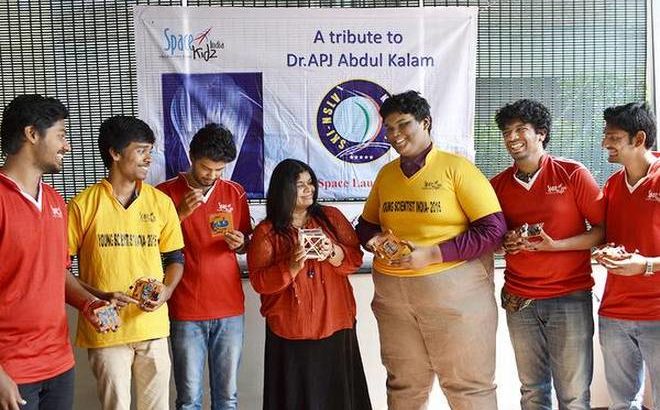
The world’s lightest satellite, designed by an Indian student, has been launched by NASA.

When talent, dream and team work come together, age is just a number. With his invention, Mohammed Rifath Sharook has proved that today.

A lead scientist in Space Kidz India, Sharook, an 18-year-old student from Pallapatti in Karur district, Tamil Nadu, has created the world’s smallest, lightest and low-cost nano satellite along with his team. The satellite was launched by NASA’s Langley research centre, Virginia, on June 22, this year. Sharook explains his invention, “It was a sub-orbital flight — a space flight that doesn’t complete the orbit of the earth but goes to space and lands in a parabolic trajectory.”

Inspiration

Sharook developed an interest in space science while he was studying in Class VIII because of his father who was a space research scientist. “We would always talk about space and the universe when I was a child. I used to tell him that I will design a satellite one day,” said Sharook. This passion for space research has made him one of the leading scientists in a Chennai-based space organisation called Space Kidz India (SKI).

After his father’s death in 2008, he garnered support to realise his dream. “My greatest supporters are my mother, uncle and Dr. Srimathy Kesavan, CEO of SKI, who constantly supported me,” he adds

Sharook participated in a space challenge contest, ‘Cubes of Space’, for young inventors. This challenge was organised by an education company called ‘I doodle Learning’. He led the project and created the satellite along with his team Vinay Bharadwaj, Tanishq Dwivedi, Yagna Sai, Abdul Khasif and Gobinath. He named it as KalamSat to demonstrate his admiration for renowned space scientist, Dr. A.P.J. Abdul Kalam.

The satellite can be used as a radio reflector and as backup communication during disaster. It is made of reinforced 3D-printed carbon fibre polymer. “This carbon fibre is used to reduce the size of the satellite and make the launch more cost-effective,” says Sharook. “We created the satellite from scratch. We did a lot of research on different cube satellites from all over the world and found that ours was the lightest,” he added. How hard was it for them? “Well, the biggest struggle we had was to fit all the things in a 3.8 cm cube as the weight of the satellite could not be more than 64 grams.”

“Creating a private space research agency such as Space X India is our next aim,” says Sharook.

Fuente: http://www.thehindu.com/education/reach-for-the-stars/article19479862.ece

Imagen: https://lh3.googleusercontent.com/EQUGWiwkXsAM5b6M6AIfQmxMN6sw9vp5E8r32McHiO2WMMXUAGiFBh6s18l8PzaVl5lvAg=s85

Comparte este contenido:

India: SFI sweeps student union polls

Asia/India/Agosto del 2017/Noticias/http://www.thehindu.com

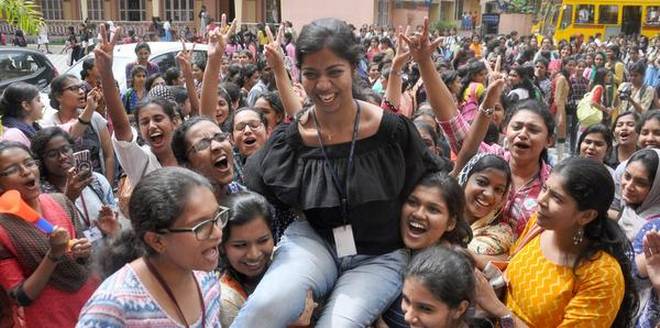
Mridula Gopi becomes the first girl chairperson at Maharaja’s College

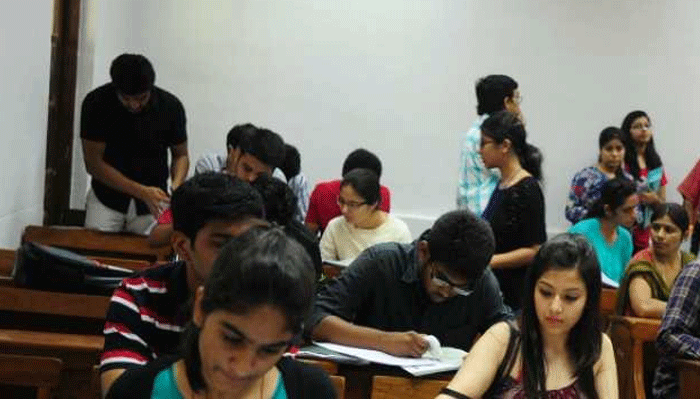
The Students’ Federation of India (SFI) claimed a major victory in the college union elections held in institutions affiliated to the Mahatma Gandhi University in Ernakulam on Tuesday.

The organisation said it had won 47 of the 51 colleges in the district. The autonomous Ernakulam Maharaja’s College witnessed the election of its first girl candidate as chairperson of the union. Mridula Gopi of the SFI defeated Fuvad Muhammed of the Fraternity Movement by a margin of 121 votes. Ms. Gopi won 884 votes while Mr. Fuad got 763 votes. Seven girl students from the SFI panel won the election. It also won 13 of the total 14 seats.

Fraternity Movement bagged one seat when its candidate Ishaq Ibrahim won as the representative of the third year degree batch. A release issued by the Fraternity Movement said that it had also won the union at HM College, Muvattupuzha.

A release issued by the SFI claimed that it had won all the seats in 31 colleges. It regained the college union at Al-Ameen College, Edathala, from the KSU-MSF combine after nine years.

Mridula Gopi, who was elected chairperson of the union at Maharaja’s College.

The federation also defeated the Kerala Students Union to win all the seats at U.C. College, Aluva. Seventy-seven of the 86 university union councillors also belonged to the SFI, it said.

The colleges in which the SFI panels won all seats include Gujarati College, Kochi; RLV College, Thripunitura; SS College, Poothotta; St. Thomas College, Puthencruz; H.M. College, Ranarkara; Eldho Mar Baselius College, Nellikuzhi; Indira Gandhi College, Nellikuzhi; Mar Elias College, Kottapadi; St. Mary’s College, Allapra; Al-Ameen College, Edathala; BMC Law College, Choondi; SNGICT Arts College; SNGICT Engineering College; Mata College, Manakkapadi; and KMM College, Thrikkakara.

A release issued by the KSU said that it won the union at Cochin College. The combine of KSU and MSF won all seats at Jai Bharat College.

Fuente: http://www.thehindu.com/news/cities/Kochi/sfi-sweeps-student-union-polls/article19541436.ece

Imagen: https://lh3.googleusercontent.com/p7opHBqQ0Yxq0WmDd4g3UXVmqZLSlRClS78BeR6AdL1Hhk7i-iB9pte-78Ab3TZA9rubhA=s85

Comparte este contenido:

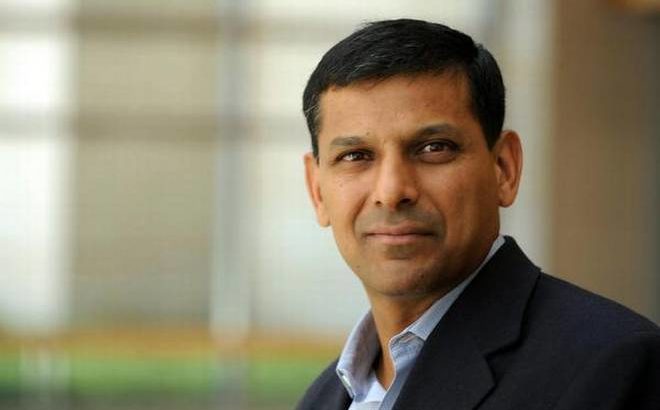
India: Raghuram Rajan pens book on RBI stint in ‘turbulent times’

Asia/India/Agosto del 2017/Noticias/http://www.thehindu.com/

Raghuram Rajan explains economic concepts and talks of issues like tolerance and connection between political freedom and prosperity in his new book, which is a collection of essays and speeches during his stint as RBI head.

When Mr. Rajan took charge as governor of the Reserve Bank of India in September 2013, the rupee was in free fall, inflation was high, India had a large current account deficit, and exchange reserves were falling.

As measure after measure failed to stabilise markets, speculators sensed a full-blown crisis and labelled India one of the Fragile Five economies.

Mr. Rajan’s response was to go all out, not just to tackle the crisis of confidence, but also to send a strong message about the strength of India’s institutions and the country’s ongoing programme of reform, publisher HarperCollins India said.

Mr. Rajan’s commentary and speeches in “I Do What I Do: On Reform, Rhetoric & Resolve” convey what it was like to be at the helm of the central bank in those turbulent but exciting times, it said.

The book will hit stores on September 4.

“Rajan outlined a vision that went beyond the immediate crisis to focus on long-term growth and stability, thus restoring investor confidence. Boldness and farsightedness would be characteristic of the decisions he took in the ensuing three years,” the statement by HarperCollins said.

“Whether on dosanomics or on debt relief, Rajan explains economic concepts in a readily accessible way. Equally, he addresses key issues that are not in any banking manual but essential to growth: the need for tolerance and respect to assure India’s economic progress, for instance, or the connection between political freedom and prosperity,” it added.

This is not Mr. Rajan’s first book. He co-authored “Saving Capitalism from the Capitalists” with Luigi Zingales and wrote “Fault Lines: How Hidden Fractures Still Threaten the World Economy”, for which he was awarded the Financial Times-Goldman Sachs prize for best business book.

Fuente: http://www.thehindu.com/books/raghuram-rajan-pens-book-on-rbi-stint-in-turbulent-times/article19546543.ece

Imagen: https://lh3.googleusercontent.com/4ZICRvg-z1m4U7FFtY9eIbh6V8DZ4gnn0fml7F6km1xlD0AwqvDcdlL7tZNxNYSgzy9xsg=s85

Comparte este contenido:

EEUU: 3-day open innovation hackathon from Aug. 29

América del Norte /Asia/EEUU/India/Agosto del 2017/Noticias/http://www.thehindu.com

Chief Minister to present awards for best prototypes during the event

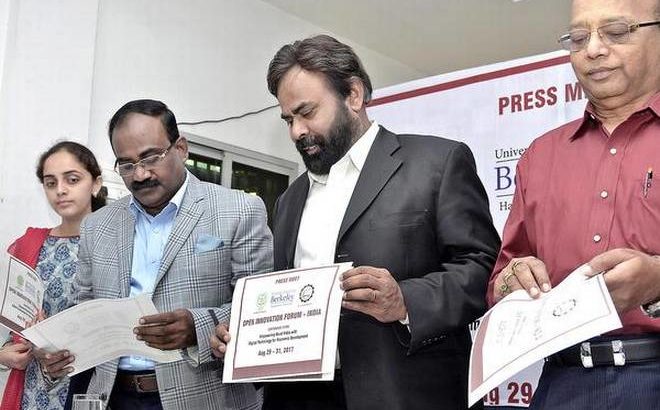
Students of University of California (UC) Berkeley will work together with the students of Indian universities on ‘UC Berkeley-Andhra Smart Villages’ programme and an agreement has been made in this regard.

The US university has partnered with Koneru Lakshmaiah University (KLU) and other Indian universities to evaluate and find solutions to the problems in the rural areas, according to Solomon Darwin of University of California and chairman of Open Innovation Forum.

As part of the project, the open innovation hackathon would hold a convention for students, entrepreneurs, businessmen and heads of different global banks on KLU campus at Vaddeswaram in Guntur district from August 29 to 31, said Darwin at a press conference held here on Tuesday. “The hackathon designing team has identified categories, including agriculture, education, health, aquaculture, digital technology, transportation, entrepreneurship, skill development, communication, safety and security, proposed to develop in villages.

Chief Minister N. Chandrababu Naidu will present awards for best prototypes in each category,” said Prof. Darwin. The theme of the programme was to empower rural India with digital technology for economic development by creating a platform to converge knowledge centres, academicians, administrators, researchers and students, said KL University Vice-Chancellor L.S.S. Reddy. Chief Advisor of Berkeley-Andhra Smart Villages Project I.V. Murali Krishna said as many as 22 students worked on different technologies and challenges would share their ideas with the Indian students. KLU Registrar T. Uma Maheswara Rao and university open forum chairman M. Kishore Babu said arrangements were on for the event.

“As many as 2,300 student teams from different institutions got registered for the three-day open innovation forum, of which 30 best teams were selected for the meet, in which representatives of various technical institutions in India, professors from UC-Berkeley and Stanford Universities, corporate executives of Silicon Valley and other firms will address the delegates”, Mr. Murali Krishna said.

Fuente: http://www.thehindu.com/news/national/andhra-pradesh/3-day-open-innovation-hackathon-from-aug-29/article19543789.ece

Imagen: https://lh3.googleusercontent.com/Db-nqRCd3GqZbDUqx0Afryany3zt0Zc-oztsY27L02wU8PKJP0opIVCOmtLyI0yf7eWhrA=s85

Comparte este contenido:

Estudio de impacto de Educación Infantil en la India

ASERCENTRE

El estudio sobre el Impacto de la Educación en la Primera Infancia de la India (IECEI) es un estudio de investigación en colaboración que reúne elementos de investigación cuantitativa y cualitativa para comprender la ECE en la India rural. Concebido como un estudio longitudinal de cinco años (2011-2016) de una cohorte de cuatro años de edad en tres estados principales de la India, el estudio propone ver el impacto de aprendizaje temprano, la socialización y las experiencias de preparación escolar en preescolar en los resultados educativos y de comportamiento A lo largo de las etapas primarias. El Informe de Estudio de Impacto de Educación Infantil de la India fue publicado por UNICEF y lanzado el 28 de julio de 2017.

India Informe de Estudio de Impacto de Educación Infantil  | Resumen de políticas

Fuente: http://www.asercentre.org/Keywords/p/306.html

Comparte este contenido:

Number of Indian students in UK on the rise: Envoy

India/Agosto de 2017/Fuente: Zee News

Resumen:  El Alto Comisionado Británico de India, Dominic Asquith, dijo el jueves que el número de estudiantes indios en el Reino Unido está aumentando después de haber experimentado un descenso en los últimos años. Agregó que no hay ningún intento del gobierno del Reino Unido para detener a estudiantes extranjeros dispuestos a cursar estudios universitarios en su país. «Hubo una disminución en el número de estudiantes indios en el Reino Unido desde los últimos años, pero se ha recuperado un 10 por ciento en el último año.El noventa por ciento de esos estudiantes están llegando a la educación universitaria en el Reino Unido, «Dijo Asquith en una interacción con los estudiantes del Instituto del Patrimonio aquí.

British High Commissioner to India Dominic Asquith on Thursday said the number of Indian students in the UK is picking up after going through a decline in the last few years.

He added that there is no attempt from the UK government to hold back foreign students willing to pursue university education in their country.

«There was a decline in the number of Indian students in the UK since the last few years but it has picked back up by 10 per cent in the last year. Ninety per cent of those students are coming to pursue university education in the UK,» Asquith said at an interaction with the students of Heritage Institute here.

«If anybody has the perception that there is any intention to keep students away, it is not true. Around 90 per cent of the Indians who apply for higher education in the UK get the visa. It was 83 per cent in 2010 and has been going up since then,» he said.

Citing the example of Edinburgh University where 99.7 per cent of the total Indian applicants end up getting through, Asquith said some of the UK-based universities have a remarkable record of Indian students applying and studying there.

He said the drop in the number of Indian students in the UK was not because of the change in its student immigration policy but because a number of further education colleges were shut down by the government in 2010 as they were not offering any proper courses.

«In 2010 we found out a large number of further education colleges were a hoax. They were not educating anybody. They never had a course. So we closed them as they were not colleges at all,» Asquith said.

«Back in 2010, there were 19,000 Indian students in the UK of whom 50 per cent went to further education colleges while the rest went to pursue university education. In today`s time 90 per cent of the students go for university education while 10 per cent go to pursue higher education courses,» he added.

Fuente: http://zeenews.india.com/education/number-of-indian-students-in-uk-on-the-rise-envoy-2036027.html

Comparte este contenido:
Page 41 of 73
1 39 40 41 42 43 73