Page 56 of 73
1 54 55 56 57 58 73

India: Higher education has collapsed in India, we just don’t know it yet

Asia/India/Octubre de 2016/Autor: K Yatish Rajawat/Fuente: Firstpost

RESUMEN: El fracaso del sistema de educación indígena es dura cuando se ve a la luz del hecho de que miles de estudiantes cada año van al extranjero para la educación universitaria. Universidades europeas e incluso los gobiernos europeos parecen tener un plan más definido para los estudiantes indios que la India. Un título de grado en la India es sobre todo una farsa en la mayoría de los colegios. Casi no hay educación impartida y se considera más un trampolín para una maestría o una necesidad de hacer otra cosa. presentar a los estudiantes en los colegios pasan su tiempo en todo menos en la educación. Los cursos son obsoletos, la facultad es inepta, analfabeta a los cambios del entorno. Mientras luchamos con la educación superior, Europa parece estar mirando a la estudiante de la India de conciencia. Cada vez son más los estudiantes están viajando al extranjero para estudiar. A principios de costo que solía ser un gran obstáculo para la educación en el extranjero. Pero como nuestro sistema de educación superior está colapsando otros países están viendo como una oportunidad. La canciller alemana, Angela Merkel, ha aprobado un plan de seis años para atraer a estudiantes de la India a Alemania.

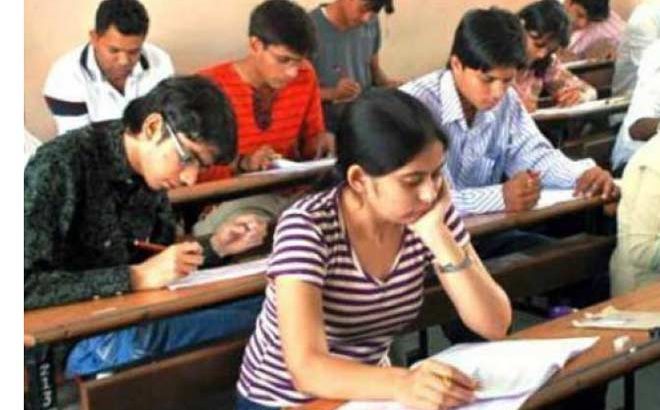
The failure of Indian education system is stark when seen in light of the fact that thousands of students every year go abroad for college education. European universities and even the European governments seem to have a more definite plan for Indian students than India. A graduate degree in India is mostly a farce in most of the colleges. There is hardly any education imparted and it is seen as more a stepping stone for a masters or a necessity to do something else. Students file into colleges spend their time in everything but education. Courses are outdated, faculty is inept, illiterate to the changes around them.

A recent experience in Guru Gobind Singh Indraprastha University really brought all these issues upfront. The outreach cell of the university organised a seminar on globalisation. It roped in a public sector company as a sponsor, tied up with a one man think tank from Chandigarh. Invited to speak I was piqued as it seemed like a interesting effort. It seems only the invitation was genuine. Neither the university nor the organisers were actually interested in seminar. All that they were interested in was getting to know a minister. The obsession of the academia in Delhi with politicians is not new. Most faculty appointments are at behest of the politicians. Huge physical infrastructure but very poor soft infrastructure is not just true of public universities like Guru Gobind Singh Indraprastha but it is even worse in private universities.

The highway from Delhi to Roorkee, is dotted with shells of buildings posing as private universities. Actually on any national highway anywhere if you see a glass or fancy building with nothing around it will be a private university. Everything is new and shiny, designed to grab a student’s attention. Large rooms are labelled labs with hardly any equipment inside, huge campus with skeletal staff and even less faculty.

As of 2014, there are 677 universities, 37,204 colleges and 11,443 stand-alone institutions in India, as per the statistics from the website of India’s HRD ministry. There is no dearth of institutions willing to give a degree for money, education or skills is not the concern. Higher education is in rot at all levels, the irony is that these numbers are touted as an indication of the prowess of our education system. Not a sign that this rapid mushrooming has created an edifice that is destroying an aspirational class. There is very little debate and discussion on the fact that our higher education system has completely collapsed.

A study done by a private body says that approximately 18.43 percent of engineering graduates are employable, which means 80 percent of them are unemployable. The situation is worse for plain graduates and that is where the real malaise lies. Employers say just 5 percent of the graduates in other disciplines are actually employable. What these figures mean is that in sum higher education or college education has collapsed. Do we see any concern around this collapse. NO.

The IITs, AIIMs, IIMs are cited as examples of success, not because they have great faculty but because of the students. How many faculty members from our so called Institutes of National Importance have done anything worthy. A committee under Anil Kakodkar was formed in 2011 to revamp the 30 NITs, the second rung of the IITs, and not the 37,204 colleges or the 11,304 institutions. The rationale according to the preamble to this committee says that these 30 NITs can aid in ‘nation building’. So what will the lakhs of students in thousands of colleges doing? If they are not involved in aiding the nation building exercise than we have a much bigger problem on hand.

Kakodkar’s report is a bundle of homilies, generalities and advice from geriatrics. It was submitted in 2014 to the then Education Minister Smriti Irani. Here is a sample of Kakodkar committee’s recommendation: “ICT for the NITs acts like a force multiplier. NITs must deploy and upgrade the IT infrastructure and associated facilities. Each institute must facilitate extensive use of computer-aided / on-line teaching, virtual labs, e-learning resources, connectivity with National Knowledge Network, etc». This is a recommendation in 2014, in the world of MOOCs, Coursera, and availability of free lectures from MIT or any other university of repute. In a world of mobile internet, ubiquitous internet access. Its recommending National knowledge network !! will a student go there or see and hear the latest lecture from a noble laureate. Even the term ICT referring to Information computer technology harks back to the 60’s when some of the committee members actually did their education.

This is the saddest and the most ironical part of higher education the system is ossified because of its sheer reliance on age, hierarchy or seniority. While the world that their students live and learn in has changed. Higher education will not be revived or pulled out from depths of his failure by people who do not have a stake in its future. A retired nuclear scientist more a bureaucrat should not be recommending anything about the future of anything let along higher education. Bureaucrats should be kept far away when it comes to reinventing.

While we struggle with higher education, Europe seems to be eyeing the conscientious Indian student. More and more students are now travelling abroad for education. Earlier cost used to be big barrier for a foreign education. But as our higher education system is collapsing other countries are seeing it as an opportunity. German chancellor Angela Merkel has approved a six year plan to attract Indian students to Germany. Under fire for her liberal immigrant policy she is pushing German universities to attract Indian students waiving off tuition fees for them. Daria Kulemetyeva, of Germany’s largest public university, Georg-August-Universtat Gottingen, says, Indian students will have to pay just the administrative fees of 300 euros per year if they are selected in a course. The travel and accommodation costs are separate. The rationale, according to Kulemetyeva is to seek diversity in the student population.

It is not just German universities, almost every country in Europe and its public universities are keen to attract Indian student. Universities from Sweden, Norway, Spain, and France have been working very hard for the last few years to attract Indian students. They have adapted their courses in English offering free language lessons for immigrant students, etc. A combination of ageing population and fall in interest in higher education among the current generation is forcing these universities to India. British universities have always found India a fertile ground for students.

John Sanders of University of Sussex, says the lack of standards in Indian higher education means that our Indian student population has always been growing year on year. Harish Lokhun of University of Edinburgh says, now Indian students go for even liberal arts and humanities whereas earlier they were only interested in engineering and the likes. Even the oldest university in Europe, Sweden’s Uppasala University is looking for Indian students, and for a reason. Lina Solander, of Uppasala University, “When we are looking at health problems, Indian students would have a much more different view of health policy than a local Swedish student.”

Spain has formed a consortium of four universities to target Indian students. Matilde Delgado Chauton represents Universidad Autnoma De Madrid, one of the leading university which is part of
the consortium. She says, that the gaps in higher education in India means that only a small number of students gets access to quality, we are looking at bridging those gaps by offering a quality education with a European exposure. Spain is also looking at funding Indian students. Indian students have traditionally looked at just US universities for graduation, now they have more avenues opening up.

If India does not look at the collapse of its higher education closely not only will we be leading to a new brain drain but a collapse of aspirations. This is especially of concern to the new government that has come to power on the rise of this aspirational class.

Fuente: http://www.firstpost.com/business/higher-education-has-collapsed-in-india-we-just-dont-know-it-yet-3047184.html

Comparte este contenido:

India: This school in the cloud is really small

Bengala / 12 de octubre de 2016 / Por: Mathew Joy Mathew / Fuente: http://www.newindianexpress.com/

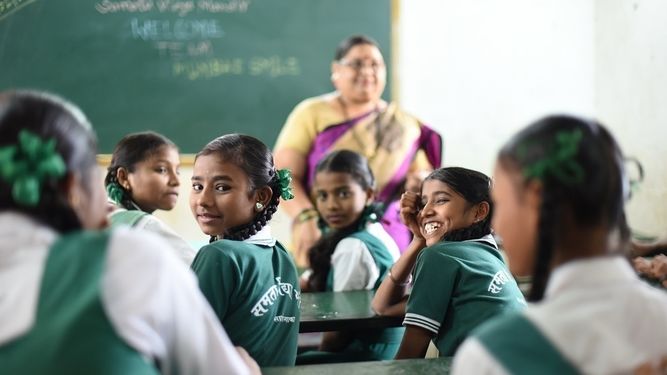
Most schools in rural India are unequipped to deal with educating and enlightening the young minds in terms of infrastructure and skilled teachers. 2013 TED prize winner Professor Sugata Mitra has the solution for it, an educational platform where students search for their answers on the Internet and also provide a Cloud network where students get adult guidance in their education. Located in a rural Montessori middle-school in Dasghara, West Bengal, about three hours from Kolkata, Sugata Mitra has opened the smallest school in the Cloud research lab under six and a half lakh rupees. Professor Mitra says, “This is part of an experiment to see just what was possible if I aimed small and employed local contractors, personally handling the project management from start to finish.”

There are two programmes this small school has to offer, SOLE and SOME. “SOLEs (self-organised learning environments) are an innovative approach to learning being used all over the world. In SOLEs, children work in groups using the Internet to find their own answers to the questions they want to ask. SOMEs (self-organized mediation environments – better known as The Granny Cloud) bring in the ‘grandmother effect’ – an encouraging and enthusiastic adult on the sidelines who helps the children with their language and confidence level,” says Mitra. He also believes that a computer can never replace a good teacher. “There are places in the world where good teachers simply do not exist and a SOLE provides access to an education that a child may not otherwise be able to obtain,” he says.

Reach Out: www.theschoolinthecloud.org

Fuente noticia: http://www.newindianexpress.com/education/edex/2016/oct/10/this-school-in-the-cloud-is-really-small-1525995.html?pm=192

Comparte este contenido:

Sonrisas de Bombay denuncia que más del 60 por ciento de los jóvenes analfabetos en todo el mundo son mujeres

Asia/india/11 de octubre de 2016/Fuente: lainformacion

La ONG logra que 635 niñas regresen al colegio gracias a su proyecto ‘Girl Child Education’

La garantía del acceso a la educación de niñas y jóvenes en todo el mundo supone una condición indispensable para «romper el círculo vicioso de la pobreza», según ha destacado la ONG Sonrisas de Bombay, que ha denunciado que al menos 103 millones de jóvenes carecen del nivel mínimo de alfabetización, de los cuales más del 60 por ciento son mujeres.

Según ha manifestado la organización con motivo del Día Internacional de la Niña, la desigualdad de género sigue siendo una asignatura pendiente en todo el mundo pero especialmente en India, donde la tasa de alfabetización en hombres era del 82,14 por ciento en 2011 frente al 65,46 por ciento de alfabetización femenina.

En 2014, la ONG puso en marcha el proyecto ‘Girl Child Education’ para promover la reincorporación a los programas de educación formal de aquellas jóvenes que hubieran tenido que abandonar sus estudios por cualquier circunstancia. Desde entonces, unas 635 niñas han regresado al colegio.

«Esta iniciativa no sólo ha ayudado a reducir la presión económica de mi madre, sino que nos está ayudando a vivir una vida mejor en muchos aspectos. Me siento mucho más segura ahora. El proyecto invierte y apuesta por niñas como yo. He aprendido mucho a resolver problemas y a enfrentarme a situaciones complicadas», ha señalado Sravani, una niña de trece años.

«Creo que es muy beneficioso para las niñas y que sería genial poder ayudar a un mayor número. No son únicamente becas, también talleres y seminarios de desarrollo personal, potenciación de habilidades y gestión del tiempo», ha añadido.

En la ciudad de Bombay, donde más del 60 por ciento de sus 20 millones de habitantes viven en barrios de chabolas en condiciones de exclusión social, la vulneración de los Derechos Humanos es común, según ha manifestado la organización, que ha denunciado que las mujeres sufren una doble discriminación.

ABANDONAR EL COLEGIO

En India, la mayor parte de los menores abandonan los estudios a los once años para trabajar, cuidar de la casa o de la familia, según ha manifestado la ONG, que ha indicado que el hecho de que no puedan completar su educación básica establece un círculo de dependencia que les impide aprovechar todas las oportunidades que se les presentan.

El proyecto, que se enmarca dentro de los Objetivos de Desarrollo Sostenible de la ONU, persigue garantizar una educación inclusiva, equitativa y de calidad, así como promover oportunidades de aprendizaje para niños y niñas en India, donde la educación de las menores no es valorada a pesar de ser obligatoria.

La ONG ha instado, además, a construir un cambio de paradigma en el que las jóvenes dejen de ser sólo beneficiarias y pasen a ser agentes del cambio en el marco de un desarrollo sostenible en el que no haya lugar para la pobreza.

Fuente: http://www.lainformacion.com/educacion/Sonrisas-Bombay-denuncia-analfabetos-mujeres_0_961404298.html

Imagen: imagenes.lainformacion.com/2016/10/10/educacion/Sonrisas-Bombay-denuncia-analfabetos-mujeres_961414403_115039624_667x375.jpg

Comparte este contenido:

India: Más de 60 millones de chicas adolescentes no tienen un nivel mínimo de alfabetización

Asia/India/8 Octubre 2016/Fuente: La información 

De los 103 millones de jóvenes que no tiene un nivel mínimo de alfabetización, más del 60% son mujeres. Esa situación se da especialmente en países como la India, donde la tasa de alfabetización en hombres es del 82% y el de las mujeres está en el 65%.Son algunos de los datos que recuerda la ONG Sonrisas de Bombay con motivo del Día Internacional de la Niña, que se conmemora el 11 de octubre. En este contexto, la ONG reivindica el acceso a la educación como condición para romper el círculo vicioso de la pobreza, y trabaja en la integración de las mujeres a través de la educación. El pasado curso, gracias a su proyecto ‘Girl Child’, posibilitó que más de 400 chicas volvieran a estudiar en el país asiático.La organización insiste en que la desigualdad de género sigue siendo, y a pesar del desarrollo económico, una asignatura pendiente para el país. En la ciudad de Bombay -en la que trabaja la fundación más del 60% de sus 20 millones de habitantes viven en barrios de chabolas, en condiciones de exclusión social y sufriendo vulneraciones sistemáticas de derechos. A esta realidad las mujeres a menudo suman una doble discriminación por cuestión de género. Si en la India los menores suelen abandonar sus estudios a los 11 años, las niñas lo hacen antes, ya sea para trabajar, cuidar de la casa o la familia, ser víctimas de redes de explotación, o para casarse. Por ello no pueden completar su educación básica y se establece un círculo de dependencia en el que perderán oportunidades de futuro.

Fuente: http://www.lainformacion.com/educacion/MILLONES-CHICAS-ADOLESCENTES-MINIMO-ALFABETIZACION_0_959004370.html

Comparte este contenido:

India: Right to education: At least a lakh left out

Asia/India/Octubre de 2016/Autora: Shreya Roy Chowdhury/Fuente: The times of India

RESUMEN: A partir de 2011, los planes del gobierno de Delhi para inscribir a los niños que estan fuera de la escuela  (OOSC) se basaron en pequeñas encuestas y la suposición de que, en un año, hay aproximadamente 7.000-8.000 OOSC en Delhi. Por eso, el primer ejercicio formal para contar  los niños que estan fuera de la escuela ha llevado a entrar en pánico. Con los datos de la primera ronda, los administradores de educación ahora se encuentran para que tengan más de 1 lakh de los niños fuera de la escuela en sus manos. El gobierno está preparándose para la acción. En una reunión de septiembre de la Dirección de Educación decidió sobre el inicio de los centros especiales de formación (STC) en todas las escuelas públicas y municipales – cerca de 2.700 – para ejecutar cursos puente.

A partir de 2011, los planes del gobierno de Delhi para inscribirse fuera de la escuela los niños (OOSC) se basaron en pequeñas encuestas y la suposición de que, en un año, hay aproximadamente 7.000-8.000 OOSC en Delhi. Por eso, el primer ejercicio formal para contar fuera de la escuela de los niños ha llevado a entrar en pánico.

Con los datos de la primera ronda, los administradores de educación ahora se encuentran para que tengan más de 1 lakh fuera de la escuela de los niños en sus manos.

El gobierno está preparándose para la acción. En una reunión de septiembre de la Dirección de Educación decidió sobre el inicio de los centros especiales de formación (STC) en todas las escuelas públicas y municipales – cerca de 2.700 – para ejecutar cursos puente. Actualmente, hay 166. El DOE también decidió permitir que las preocupaciones comerciales específicas con menos de 30 niños a correr; «Relajar las normas para la designación de los profesores, y, seis años después de que se implementó la Ley del Derecho a la Educación de 2009 para, enmarcar una» política integral «.

But practically no data on OOSCs is fully reliable. The Census 2011 data, admittedly old, placed over 2 lakh kids out of school in the seven-14 age-group. In the Ward Registry Survey, 5,137 dropped-out and 28,428 never enrolled. These are the only two attempts at a complete headcount. The rest — NSSO’s «Key Indicators of Social Consumption in India: Education» and SRI-IMRB’s «National Sample Survey of Estimation of Out-of-School Children in the Age 6-13 in India» — are sample surveys, once again with very different estimates.

Delhi’s SSA division «verified» data gathered by municipal bodies in one ward in every school district. «Of the 1,150 kids we found across 12 wards, only about 100 were actually out-of-school. Some couldn’t even be located,» says Babu.

Bhatty isn’t surprised that questions are already being raised. «There are genuine problems with capturing data, particularly in urban areas where there is a shifting population, seasonal migration,» she says. Definitions of «discontinued» or «drop-out» differ, as do policies for striking names off due to absenteism; «out-of-school» can be «never-enrolled» or «don’t attend.» «It is very hard to get an accurate estimate. It also depends on how families understand these terms. Does «discontinued» mean they’ve withdrawn or attend irregularly? School have incentives for keeping names on too.»

 Till now, STC staff were responsible for locating OOSCs — «child-mapping» and STCs are both provisions of the RTE Act.
Fuente: http://timesofindia.indiatimes.com/city/delhi/Right-to-education-At-least-a-lakh-left-out/articleshow/54705048.cms
Imagen: http://www.unesco.org/new/es/education/themes/leading-the-international-agenda/right-to-education/normative-action/standard-setting/


Comparte este contenido:

China e India son los mayores mercados de internet, revela estudio de la ONU

Asia/China-India/07 de octubre de 2016/www.un.org

15 de septiembre, 2016 — India ha sobrepasado este año a Estados Unidos para convertirse en el segundo mayor mercado de internet, con 333 millones de usuarios, sólo detrás de China, cuyos 721 millones de internautas lo colocan como líder mundial en el sector.

Un informe de la Comisión de la ONU sobre Banda Ancha para el Desarrollo Sostenible, divulgado hoy en Ginebra, revela esos datos e indica, por otro lado, que el 55% de la población global sin acceso a internet se concentra en seis países, que incluyen a China e India.

Según el estudio, el número de usuarios de internet aumentó 300 millones con respecto a 2015. “Este año hay 3.500 millones de personas en línea, que suman el 47% de la población mundial, pero todavía hay 3.900 millones fuera de la red, la mayoría de ellas en los países en desarrollo, sobre todo en África y Asia”, detalló la experta de la Unión Internacional de Telecomunicaciones (UIT), autora del informe.

El documento destaca la brecha existente entre los países industrializados, cuyo nivel de conectividad se acerca a la saturación, y las naciones más pobres de África subsahariana, donde menos del 3% de la población tiene acceso a la red.

No obstante esta disparidad, la Comisión manifiesta optimismo frente al potencial que ofrece la banda ancha móvil y subraya que 165 países cuentan ya con redes móviles de alta velocidad 4G.

Los expertos argumentan que si el acceso casi universal a los teléfonos móviles básicos pudiera convertirse a teléfonos inteligentes, esos aparatos ayudarían a acelerar el desarrollo.

En este sentido, el estudio insta a ampliar la base de internautas en los países en desarrollo a través de opciones asequibles de acceso a la banda ancha móvil.

Una mayor conectividad puede generar crecimiento económico, inclusión social y protección ambiental, concluye el informe.

Tomado de: http://www.un.org/spanish/News/story.asp?NewsID=35805#.V_L-SojhDIU

Comparte este contenido:

4th BRICS Education Summit held in New Delhi

Nueva Deli / 05 de octubre de 2016 / Por: Xinhua / Fuente: http://en.moe.gov.cn/

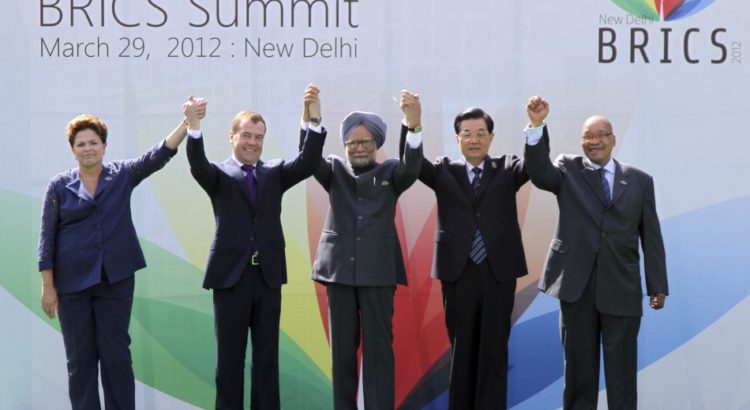
The 4th Meeting of BRICS Ministers of Education was held here Friday in a bid to promote education cooperation and people to people exchanges among the five countries before the upcoming BRICS Leaders’ Meeting this October.

It is an important BRICS meeting after the informal meeting among BRICS leaders during the 11th G20 Summit held in Hangzhou this September.

The meeting gathered delegations from the BRICS members, namely Brazil, Russia, India, China, South Africa.

In his speech, Hao Ping, China’s Vice Education Minister Hao Ping said China faces three major challenges in educational development and reform.

Firstly, China is now running the largest education system in the world, which demands constant and huge investment. Secondly, considerable disparity still exists in education development, which requires further efforts to promote education equity. Thirdly, improving education quality is one of the top priorities in China’s 13th 5-year education plan.

Hao Ping also proposed three suggestions to further enhance education cooperation among BRICS countries, including promoting more cooperation among BRICS universities, encouraging more joint research and teaching, and providing supporting policies and services to facilitate student and faculty mobility.

His proposals were highly acclaimed by other delegates, and were included in the New Delhi Declaration on Education, which was signed by the participating ministers during the meeting.

The declaration emphasized issues of common interest, including promoting equal and accessible education through strengthening international cooperation, and advocates more cooperation in Technical and Vocational Education and Training (TVET), quality assurance, life-long learning, knowledge transfer and student and faculty exchanges, which is in line with the Sustainable Development Goals (SDG) 2030 of the UN.

Fuente noticia: http://en.moe.gov.cn/News/Top_News/201610/t20161001_282925.html

Comparte este contenido:
Page 56 of 73
1 54 55 56 57 58 73