Page 17 of 29
1 15 16 17 18 19 29

Only Jewish education can help bridge the Israel-Diaspora divide

By Pinchas Goldschmidt

 Israel’s passage of the nation-state law brought another round of barrages across the Atlantic underlining the growing alienation of the world’s two largest Jewish communities. The issues are increasingly familiar: American pluralism versus Jewish exceptionalism, Orthodox versus Liberal, nationalism versus enlightenment.

Yes, we have a problem. Israel and American Jewry are growing apart from one other. It would be wrong to put the responsibility of this growing schism only on the Israeli government, or Israeli civil society, since Diaspora denominations have changed, too. The American Reform movement, for example, unilaterally introduced patrilineal descent, redefining Jewishness.

These tensions were aired in Ronald Lauder’s recent op-ed in The New York Times, in which the president of the World Jewish Congress argued that the nation-state law betrayed Israel’s universalist values and that the country’s religious establishment was alienating non-Orthodox Jews in the Diaspora. Reading between the lines, I sensed the anguish of a father and grandfather who sees his children distancing themselves from their people and ancestral homeland.

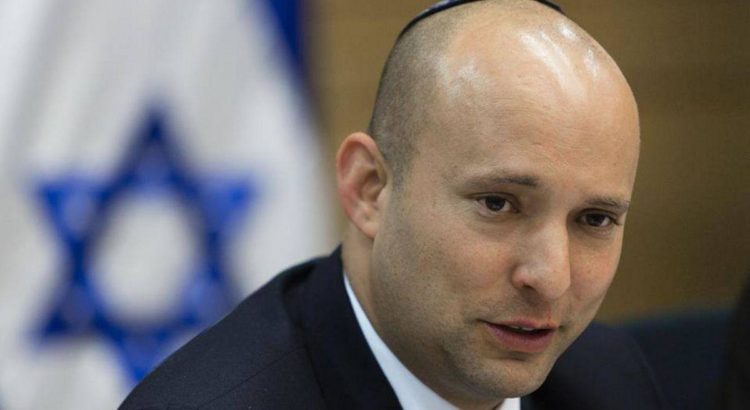
Naftali Bennett, Israel’s education and Diaspora minister, responded to Lauder’s op-ed with one of his own in the same newspaper, pushing back in defense of Israel’s right to pass such laws. Bennett seems uninterested in bettering relations with the Diaspora — in direct contradiction to his title and portfolio. He did not understand that the main question posed by Lauder was not “who is right and who is wrong,” but what can we do to minimize the divide between Israel and American Jewry.

As American Jews are grappling with the direction their country is taking, and struggling to identify with a non-utopian Israel, the search for fresh waters from the well of our Jewish sources is called for.

Liberal Diaspora denominations count fewer followers in the U.S., and the Jews there are being assimilated into an increasingly secular country. The empty synagogues will have to be replaced with the classrooms of Jewish schools. The challenge of giving over 1 million Jewish children a minimal Jewish education can and should be tackled if the government of Israel will take a lead and major Jewish philanthropists will join.

In the beginning of the 1990s, when the Jewish Zionist establishment vehemently opposed the idea of establishing schools in the former Soviet Union, Lauder was among the first to understand that Jewish continuity, especially in the secularized post-Soviet countries, can only be guaranteed by formal Jewish education. The establishment of two dozen schools in Eastern and Central Europe in the beginning of the ’90s by the Ronald S. Lauder Foundation guaranteed a positive Jewish identity for tens of thousands of children of Jewish families.

(Full disclosure: My wife, Dara, is the head of the Lauder Etz Chaim School in Moscow, the largest Jewish day school in the former Soviet Union with currently almost 600 children.)

Having the honor to meet and speak to many of the thousands of graduates of our schools in Moscow, I can attest to the impact on the identity and personal commitment to the Jewish cause of the students of the Lauder school. These children’s lives are forever changed.

What Lauder has achieved in Central and Eastern Europe should be applied now in the United States, where the continuity of the largest community outside of Israel is in danger.

Communities such as the United Kingdom, Australia and France have achieved great strides in recent years toward this goal. The great majority of their children receive a formal Jewish education; there is no reason why this should not be attainable in the U.S.

Every Diaspora Jew is the carrier of dual identities — the national one and the Jewish one — trying to juggle and reconcile and build a symbiosis. Trying to strike the balance between enlightenment and tradition has not been easy.

Harvard psychologist Steven Pinker, in his latest book “Enlightenment Now,” argued that the Enlightenment improved humanity by replacing “dogma, tradition and authority with reason, debate and institutions of truth-seeking.” Yoram Hazony of The Herzl Institute, in a response to Pinker, said that if the response of the Jews to the Enlightenment had been absolute, then the Zionist movement — which drew its passion and strength from the vast sources of Jewish tradition and history — would never have been born and we wouldn’t have had a Jewish state today.

We as a people are out of balance. The world is out of balance. The climate is out of balance, and geopolitics are increasingly shrill and simplistic, polarizing friends and family members. Let us try to regain some balance and perspective for the sake of our future, of our children — before it is too late.

Source of the article: https://www.jta.org/2018/08/20/news-opinion/jewish-education-can-help-bridge-israel-diaspora-divide
Comparte este contenido:

Aprobada una ley israelí que prohíbe a las ONG antiocupación dar charlas en centros escolares

Redacción: Público

El nuevo objetivo estatal del sistema educativo de Israel será formar a sus estudiantes hacia la prestación de un servicio significativo en el Ejército o en el servicio nacional.

El Parlamento israelí (Knéset) aprobó en la madrugada de hoy una ley para impedir que ONG pacifistas e individuos, que se considere dañan al Ejército y al Estado de Israel, puedan dar charlas en centros escolares.

La ley incluye como nuevo objetivo estatal del sistema educativo que los estudiantes sean formados para prestar un servicio significativo en el Ejército o en el servicio nacional y autoriza al titular de Educación vetar el ingreso a las escuelas estatales a personas u organizaciones, que contradigan este supuesto.

Además, se aplicará la prohibición a representantes y organizaciones que estén contribuyendo a procedimientos legales contra soldados o fomenten trabajos diplomáticos contra el Estado de Israel, explicó Yehuda Shaul, el coordinador de «Breaking the Silence» (Romper el silencio).

La ley es conocida como «Breaking the Silence» (Romper el silencio), organización israelí que denuncia los excesos de soldados con la población palestina en los territorios ocupados, pero según Shaul el tercer supuesto relativo a la diplomacia hará que afecte a cualquier organización crítica.

«Este es un paso más para terminar con la existencia de la sociedad israelí como una sociedad abierta en contraposición con el mantenimiento de la ocupación y las colonias», valoró el coordinador. Hasta ahora, organizaciones de todo tipo -pacifistas, nacionalistas o religiosas- tenían libertad para participar en actividades educativas destinadas a promover el debate público con estudiantes con la autorización previa del director de cada centro.

El proyecto, introducido por el diputado de Hogar Judío, Shuli Mualem Refaeli, del partido del actual titular de Educación de Naftalí Benet, pasó anoche segunda y tercera lectura en la cámara que lo convierte en ley.

Fuente: http://www.publico.es/internacional/israel-aprobada-ley-israeli-prohibe-ong-antiocupacion-dar-charlas-centros-escolares.html

Comparte este contenido:

El modelo israelí de las 120 escuelas: funcionan como start-ups para generar emprendedores

Asia/Israel/19 Julio 2018/Fuente: Infobae

Se llama «modelo pedagógico único». Los expertos aseguran que reduce la brecha de aprendizajes entre las distintas clases sociales y fomenta la creatividad

Israel es el octavo país más innovador del mundo, según la Organización para la Cooperación y el Desarrollo Económicos (OCDE), pero es el líder indiscutido en el universo emprendedor. Es el territorio con mayor concentración de start-ups: tienen una cada 1.844 habitantes. No hay misterios. Hay educación que estimula la creatividad.

El ministerio de Educación de la Nación, junto a la Embajada de Israel y la Fundación BAMA, organizó una conferencia con expertos israelíes en materia educativa para que cuenten, cada uno desde su lado, cómo se trabaja para despertar el espíritu emprendedor en niños y adolescentes.

El ministro Alejandro Finocchiaro abrió la conferencia: «Hoy estamos mirando a Israel para entender lo que vale la voluntad de un país sin grandes recursos naturales para instalarse como potencia emprendedora. Nuestro sistema educativo siempre fue muy resistente al cambio, pero entendimos que tenemos que innovar porque los cambios vienen y no van a esperar a que Argentina decida hacerlo», sostuvo.

El ministro de Educación, Alejandro Finocchiaro, junto al embajador de Israel en Argentina, Ilán Sztulman

El ministro de Educación, Alejandro Finocchiaro, junto al embajador de Israel en Argentina, Ilán Sztulman

Una de las oradoras fue Edith Kimchi, responsable del organismo de regulación dinámica de la educación. La primera pregunta que respondió fue: ¿cuál es la necesidad innovar? «El campo es muy veloz y la ley es lenta. Con campo me refiero a alumnos, padres, docentes, incluso sector privado. La ley se hace para que dure muchos años. Entonces se genera una brecha de velocidad. Nosotros nos propusimos ser más veloces en la regulación que el campo», explicó.

Kimchi también es la asesora principal de la comisión nacional de escuelas con modelos pedagógicos únicos. En los hechos son alrededor de 4 mil escuelas que aplican el nuevo esquema, pero el Ministerio solo avala y realiza seguimiento en 120 instituciones. Son primarias y secundarias distribuidas en todo Israel, con gran diversidad: está dirigido tanto a judíos como árabes, religiosos y seculares.

«Hay grandes diferencias con el modelo convencional», le dijo a Infobae la funcionaria. «Primero que no tiene antecedentes. Tu referencia ya no es el pasado, sino el futuro y principalmente se trabaja como si la misma escuela fuera una start-up. El desarrollo y la evaluación se hacen al mismo tiempo. No se aprende para rendir un examen más adelante», agregó.

El punto de partida, remarca, no es un presupuesto. El presupuesto está determinado a partir de los propósitos, que, más allá de ciertas diferencias, suelen ser: estimular la diversidad para dar soluciones a todos los alumnos, reducir la brecha de aprendizajes sin frenar a los que van más rápido, disminuir la segregación social y generar las oportunidades para satisfacer la demanda productiva del país.

Edith Kimchi, durante su exposición (Crédito: Nicolás Kremenchuzky/Fundación Bamá)

Edith Kimchi, durante su exposición (Crédito: Nicolás Kremenchuzky/Fundación Bamá)

De acuerdo al seguimiento, todos esos objetivos de base se cumplen. «Un modelo pedagógico único es un desarrollo coherente que sabe verbalizar sus principios de enseñanza y explicar por qué se eligieron esas prácticas. Cuando se analiza, uno ve qué produce ese modelo. No es un experimento que surgió de un artículo que leí ayer o una ambición temporal. Responde a una lógica de desarrollo personal», sostuvo Kimchi.

Las 120 escuelas se dividen por disciplinas o por ideología. Una parte está focalizada exclusivamente a una temática: artes, ciencia, bilingües, educación física, para chicos con problemas de aprendizaje. Las otras apuntan a comunidades pequeñas, buscan fortalecer el sentido de pertenencia y el desarrollo intelectual en pos de favorecer a esa comunidad puntual.

A las escuelas que aplican el modelo único se les imponen una serie de condiciones. Les exigen cumplir horarios, estándares de calidad, exámenes nacionales y perfiles docentes. También, conscientes de la relación directa entre el nivel socioeconómico y los resultados académicos, cancelaron los mecanismos de ingreso. Ya no pueden elegir quién entra a la escuela. Incluso hay 30% de ventaja para los chicos más postergados. El resto va a sorteo.

Escuela secundaria de ciencias en Lod, para judíos y árabes

Escuela secundaria de ciencias en Lod, para judíos y árabes

Del mismo modo, también se les conceden ciertos privilegios. Tienen más autonomía como unidad educativa, más flexibilidad pedagógica como para delinear la currícula y la forma en que quieren enseñar. Incluso se les permite cobrar un valor limitado a los padres para financiarse.

En lo que lleva de su visita por Buenos Aires, Kimchi tuvo conversaciones con funcionarios argentinos que «se mostraron interesados» en el modelo israelí. Quedaron en continuar el diálogo para analizar posibilidades de «mentoring»: escuelas que ya aplican la metodología asisten a las que inician su camino para generar un «efecto contagio».

«Se trata de dar apoyo a los emprendedores del campo. Buscamos encender esa chispa. Si no está despierta, la despertamos», dijo la experta. «No podemos negar la realidad. La mayoría de las start-ups fracasa. El fracaso es parte del proceso. Hay que cambiar la concepción de que el fracaso es malo. No se puede estimular sin entender que la mayoría va a fracasar, pero necesitamos de la innovación».

Fuente: https://www.infobae.com/educacion/2018/07/18/el-modelo-israeli-de-las-120-escuelas-funcionan-como-start-ups-para-generar-emprendedores/

Comparte este contenido:

Gran Bretaña Encabezará Revisión Sobre Incitación Contra Israel En Libros De Texto Palestinos

Asia/Israel/09.07.18/Fuente: israelnoticias.com.

El gobierno británico y otros donantes del sistema educativo palestino emprenderán una revisión de la incitación contra Israel y los judíos en los libros de texto palestinos.

“No hay lugar en la educación para materiales o prácticas que inciten a las mentes jóvenes a la violencia”, dijo el parlamentario Alistair Burt, ministro de Relaciones Exteriores, durante un debate el miércoles en la Cámara de los Comunes, la cámara baja del Parlamento británico, sobre la incitación Libros de texto de la Autoridad.

“Nuestro apoyo continuo vendrá con un fuerte desafío continuo a la Autoridad Palestina sobre la incitación al sector educativo”, agregó. “Estamos en las etapas finales de las discusiones para llevar adelante una revisión de libros de texto junto con otros donantes”.

La revisión debería completarse para septiembre de 2019, agregó. La revisión será “basada en la evidencia y rigurosa”, dijo Burt.

El debate fue convocado a petición de la legisladora Joan Ryan, presidenta de Labor Friends of Israel.

Ryan citó ejemplos de un informe de octubre sobre una reforma en el plan de estudios de la Autoridad Palestina. Los cambios que trajo significaron que “la radicalización es omnipresente en este nuevo plan de estudios, en mayor medida que antes”, según el informe del Instituto para el Monitoreo de la Paz y la Tolerancia Cultural en la Educación Escolar con sede en Israel.

Un libro para estudiantes de 11º grado, “Islamic EducationVol. 1, “declara que:” La corrupción de los hijos de Israel en la tierra fue y será la causa de su aniquilación, y este credo islámico se aplica a todo tirano y opresor”.

Otro libro para estudiantes del décimo grado, titulado “Arabic Language, Vol. 1, “ignora la presencia judía en la Tierra de Israel o la describe como una causa común contra la cual los musulmanes y los cristianos deben luchar”.

Por otra parte, la ministra de Asuntos Exteriores australiana, Julie Bishop, anunció el 2 de julio que Australia suspendería por completo sus fondos para la Autoridad Palestina sobre sus salarios para los terroristas encarcelados en Israel, incluidos los asesinos.


Fuente de la noticia: https://israelnoticias.com/internacional/gran-bretana-encabezara-revision-sobre-incitacion-contra-israel-libros-texto-palestinos/

Comparte este contenido:

Israel’s Education Ministry Is Funding Two Illegal West Bank Farm Schools

Asia/Israel/02.07.18/By Yotam Berger and Yarden Zur/Source: www.haaretz.com.

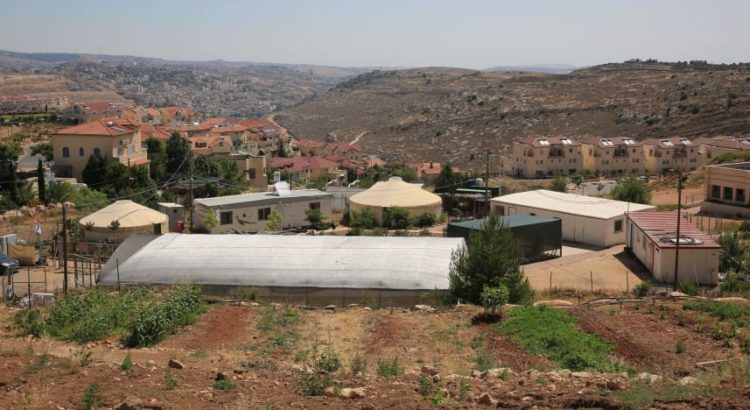
Projects built in Efrat, Geva Binyamin settlements on land that does not belong to the state are left standing as Civil Administration does not enforce the law against them.

The government is financially supporting, two farm schools in the West Bank via the Education Ministry and two local councils that were built illegally on land that does not belong to the state. One is in the Efrat settlement in Gush Etzion and the other is in the Geva Binyamin settlement in the central West Bank. The farms were built by the local councils and the Education Ministry allocates classroom hours to them. The councils and the ministry confirmed their connections to the farms.

The Israeli Civil Administration in the West Bank is aware of the illegal construction but does not enforce the law against it, either because enforcement authority lies with the regional council or the buildings are low on the administration’s order of priorities for demolition.

Students from area schools are brought to both farms for “ecological agricultural education.” Both are officially supported by the Education Ministry, which funds classroom hours, and by the local councils. The Efrat budget shows that last year the settlement received 992,000 shekels ($274,000) from the government to build the farm, but the budget does not specify which government ministry is responsible for transferring the funds.

The farms were built in enclaves along the settlements’ blue line that marks the boundary of state lands. The blue line represents land that Israel holds in the territories where it can build legally and retroactively legalize buildings that were erected illegally. The state does not have this authority on land that is not state land. Usually, lands are excluded from being part of state land in such “enclaves” when it is suspected that they were private Palestinian land.

«For the umpteenth time, Efrat has been caught exploiting the land of its Palestinian neighbors,» said Dror Etkes of the Kerem Navot, a group the stated purpose of which is to halt what it says is the dispossession of land owned by Palestinians in the West Bank. «This time too they will surely tell us that it involves state land,» he said.

The Efrat local council responds: “Although the lands are not within the blue line, they are state lands. No one has claimed ownership of them for decades. (…) Agricultural work at the site does not conflict with the building plans at the location, and any structure erected there is also transportable. Efrat has always upheld the law as well as placing an emphasis on good relations with the neighbors.”

However, the area in question is not within the bounds of state lands and the assertion that the land is part of state lands is false.

Avi Roeh, head of the Mateh Binyamin regional council, says: “These are trailers in a place where there was a school. I can’t tell you if they are inside or outside a blue line. This is a site that has been around for many years, that originally was a state-religious school. Now ‘Siah Hasadeh’ is there and it’s a kind of farm school, not exactly a school – students come there and get lessons about agriculture. As far as I know, the permanent structure is supposed to be built in Kochav Yaakov [a settlement north of Jerusalem]. For now they’re there and they have no option to expand. I think the structures have been there for more than 10 years.”

The Education Ministry responded: “The educational farms in question were built by the local authorities. The ministry only allocates classroom hours to the two farms.”

Source of the notice: https://www.haaretz.com/israel-news/.premium-israel-s-education-ministry-funds-two-illegal-west-bank-farm-schools-1.6197277

 
Comparte este contenido:

Israel: Ultra-Orthodox Families’ Increasing Demand for Secular Education Not Being Met

Asia/Israel/05.06.2018/By: Or Kashti/ Source: www.haaretz.com.

Education Ministry ‘foiling attempts at integration into society,’ say parents who want state-run Haredi school system to incorporate subjects like English, math

Hundreds of ultra-Orthodox children whose families want them to receive education in secular subjects are likely to be left in the lurch in the coming school year.

Despite growing demand among the ultra-Orthodox, or Haredim, to have children learn «core» subjects as English and math as part of the curriculum in the state Haredi school system – no solution has been forthcoming. The reasons for this, parents claim, include lack of room, hurdles by the local authorities and indifference on the part of the Education Ministry.

In light of this situation, an attempt by parents of some 250 children to be accepted to state Haredi schools next year is doomed to fail. A group of parents has gotten together recently, demanding an increase in the number of classrooms in these schools, but it seems that most will end up registering their children in the regular Haredi school system, where secular subjects are taught at a low level, if at all.

The parents accuse the Education Ministry of shirking its responsibilities. One has even charged that “the state is foiling attempts by Haredi families to integrate into the general society.”

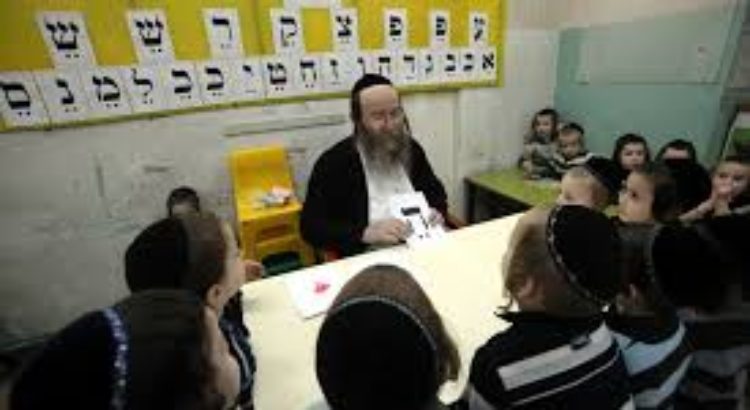
The state Haredi school system was launched at the initiative of former Education Minister Shai Piron, who sought to bypass the contentious issue of core subjects being taught in the non-state schools that cater to the community. In addition to religious subjects, the relatively new state-run system offers a full curriculum of secular subjects from the first grade, and it is supervised by the ministry, in contrast to the Haredi system that is independently managed and has its own curriculum.

According to Education Ministry figures, the number of children enrolled this academic year in 43 state-run Haredi schools is 5,562, as compared to 4,675 pupils in 36 institutions last year. The ministry would not divulge data regarding the coming school year.

In conversations with parents and Haredi education activists it emerges that some 150 children who will be entering first grade in Jerusalem in the fall have been told that the schools are completely full. In Petah Tikva and Bnei Brak, 70 children are looking for a place in Haredi state schools, while others seek to enroll in them in Bat Yam, Holon and other cities – including locales with a Haredi majority such as Modi’in and Betar Ilit.

According to senior Education Ministry officials, these are numbers that warrant urgent attention.

A preliminary survey by Itamar Kea Levi, an activist in Jerusalem, reveals that there are 120 families across the country that have shown interest in setting up a school as part of the state-Haredi system in their own locales. He says that dozens of other families did not wish to give details about their efforts, as yet.

“The world is changing, people realize that you can stay in the world of Torah and work at the same time,” says Kea Levi. “In such a world, you want your child to have all the options.”

There are currently three such schools in Jerusalem – an elementary school for girls, and an elementary and high school for boys. Next year, a high school for girls is scheduled to be opened.

‘A different approach’

Former Bnei Brak resident Neta Katz says that he moved to Jerusalem so that his two sons, aged 7 and 9, will be able to study at a state Haredi school. “We’re at the end of the first year and I thank God for the move,” he says, adding that his daughter will be entering first grade in the fall of 2019.

“I asked the principal of the girls’ school to keep a place for her,» he says, «but she told me not to count on it. If it’s hard to deal with the demand at this point, I have no doubt that things will only get worse.”

Katz himself studied in schools run by the strict Gur Hasidic sect, and he recalls that, “95 percent of the time was devoted to religious studies, with an hour or an hour and a half left over for secular subjects. English was taught on an irregular basis. When I reached the academic world I had great difficulties since I had to start from very basic concepts like simple arithmetic problems.”

In the state Haredi schools, Katz explains, “the approach is completely different, both in terms of the level and the scope. I never knew there was a subject called science. I don’t believe core subjects should be imposed on people who don’t want them, but the state must enable this for those who do. In many high-density Haredi communities there are no such schools. If one considers the interest of the state, this is an unacceptable situation.”

Israel’s compulsory education law gives the responsibility for education to the state and to local authorities. Often, this joint responsibility leads one of the sides to pass the buck. According to sources in some local governments, the procedure is usually that the municipal education department turns to the ministry to ask for a new school to be built. The ministry has various methods of supporting the school system in local authority, through enhanced general budgets or by covering some specific expenses.

The Haredi department at the Education Ministry is responsible for state Haredi schools as well as for the independent Haredi system. Katz says that when he met in the past with people in this department, he was advised to organize a group of parents and then approach the local authority.

“The problem is that you can’t wait for the free market to kick in,” says Katz. “There are many hurdles and objections and you can’t tell parents to deal with local governments on their own.”

Says Yehuda Grovais, from Bnei Brak, “The Haredi department promised to deal with establishing a school if we produced a list of interested parents. By word of mouth we managed to get a list of 40 girls who want to attend such a school next year. So we were sent to the municipality. The sense is that the Education Ministry prefers that someone else do the fighting for them.”

Grovais notes that city hall had suggested that the girls go to a regular Haredi school. When he insisted he wanted something different, he was told that, “it won’t work here.” The same thing happened to another group in Petah Tikva.

“[Education Minister] Bennett is abandoning ultra-Orthodox people who want to integrate” says one parent. “The ministry is strengthening the grip of the extremist elements of the Haredi community and we’re paying the price.”

In response, the Bnei Brak municipality says that efforts will be made to resolve the issue. The Petah Tikva municipality said there was not enough demand for such schools.

The Education Ministry said it viewed the demand for more state-run Haredi schools positively and would examine ways to meet it, together with the relevant local authorities.

Source of the news: https://www.haaretz.com/israel-news/.premium–1.6141203

Comparte este contenido:

El gobierno de Israel se mueve para amordazar a los profesores que respaldan al BDS

Israel / 15 de abril de 2018 / Autor: Redacción / Fuente: Monitor de Oriente

Un documento presentado por el gobierno israelí para la educación superior, encabezado por el ministro de Educación, Naftali Bennett, aceptado el domingo, determina “un código de ética (…) que impide que los académicos pidan un boicot a Israel”, informó Haaretz.

Según el documento, los principios requieren una “prohibición de la discriminación, positiva o negativa, de los estudiantes con base en sus opiniones políticas” y una “prohibición de discriminación, positiva o negativa, de un miembro de la facultad o candidato a entrar, basado en sus opiniones políticas”.

El cuarto principio prohíbe la “propaganda partidaria en el marco de la enseñanza” y el quinto prohibiría “presentar o publicar materiales con opiniones políticas o personales como si fueran opiniones de la institución”.

Las medidas, dice Haaretz, “se extenderán tanto a profesores como a administradores”.

Además, el comité también propuso que se prohibiera a los profesores “aprovecharse de la plataforma de enseñanza para exhortar sistemática e indebidamente una posición política que claramente se salga del material del curso”.

Este documento ha sido enviado a los directores de las instituciones académicas de Israel para que respondan, antes de que el tema sea “presentado ante todo el consejo”.

El Comité de Directores Universitarios ha llamado al documento “una colección de reglas dictadas por el gobierno sobre un conjunto de actividades académicas de la facultad académica en Israel”.

Fuente de la Noticia:

https://www.monitordeoriente.com/20180327-el-gobierno-de-israel-se-mueve-para-amordazar-a-los-profesores-que-respaldan-al-bds/

Comparte este contenido:
Page 17 of 29
1 15 16 17 18 19 29