Page 270 of 773
1 268 269 270 271 272 773

News Didac India – Exploring A World of Unlimited Opportunities

Author: Redation Digital Learning

Resumen: Didac India es hoy uno de los eventos más reconocidos en la región de Asia y el Pacífico para material educativo, capacitación y soluciones basadas en la tecnología para el sector de la educación preescolar, escolar, de educación superior y de habilidades y capacitación.

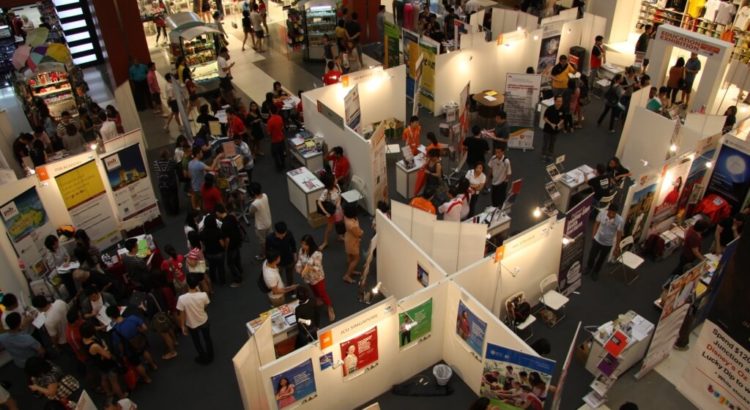
Didac India is today one of the most renowned events in the Asia Pacific Region for Educational Material, Training & Technology-based solutions for Preschool, School, Higher Education, and Skill & Training segment of education sector.

In a bid to showcase the best global practices of education sector, Didac India, the educational event is being organised for nine years. To address the growing demand for innovative educational products and solutions in the Indian subcontinent, the event is held annually with international exhibition and conference.

The event has British Education Suppliers Association (BESA), DIDACTA (Germany), Worlddidac Association & India Didactics Association among esteemed partners. It is also supported by many ministries of the Government of India and various public and private educational bodies.

The World Education Summit (WES) is one such event organised on the similar lines. Held annually in various parts of the world, it is organised by Elets Technomedia Pvt Ltd, the Asia and Middle East’s premier technology and media research company.

The WES is meant to showcase innovations, initiatives and best practices followed across the globe in the education space. So far, 10 editions of WES have been organised across the world in various countries.

Congregating top-notch decision makers, influencers, experts and practitioners from around the world under one roof, the WES facilitates learning about groundbreaking innovations in the education sector and propagate them in different parts of the world, making meaningful improvements in global education.

The summit serves as a premier international platform dedicated to encouraging innovation and creative action in education landscape. In this, top decision-makers share insights with on-the-ground practitioners and collaborate to rethink education.

The latest edition of the World Education Summit is set to be organised on 9-10 August this year in New Delhi’s The Leela Ambience Convention Hotel.

Meanwhile, the 10th edition of the Didac India Exhibition and Conference is scheduled to be organised from 4-6 October 2018 in New Delhi.

The stage is, however, also set for Didac India 2018. With a focus on adding more varied products and solutions and a determination to expand improve, the annual exhibition is set to create new benchmarks in the Indian Education & Training Industry.

WES is the congregation of some of the leading thinkers in the education world from across Asia and beyond. The latest edition of WES will inspire one and all, making them understand the challenges and solutions of the developing education world through a new prism.

The event is a must visit for all those wanting to network with the most promising and fastest growing economies of the world – India and also an ideal platform to reach out to the education industry of Asia.

Fuente: http://digitallearning.eletsonline.com/2018/06/didac-india/

Comparte este contenido:

UK visa changes ‘discriminate’ against Indian students

Asia/Inda/universityworldnews

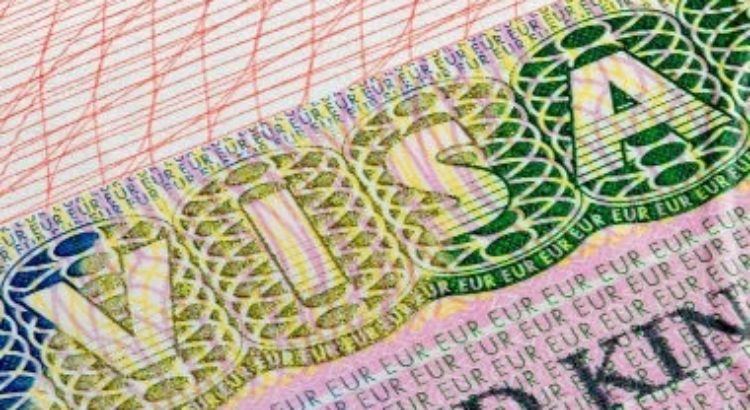
Resumen: Los movimientos del gobierno del Reino Unido para facilitar los procedimientos de visa de estudiantes para una docena de países no europeos han causado indignación en India cuyos estudiantes, entre los más numerosos en el Reino Unido, han sido excluidos mientras que los estudiantes chinos se benefician de los cambios que entran efecto el 6 de julio.  El anuncio del 15 de junio, que amplía la lista de países de «vía rápida» de 15 a 26, se presentó en el parlamento británico el mismo día. Permite una documentación reducida para los requisitos de competencia en idioma inglés, educativo y financiero y coloca a países como Argentina, Bahrein, Camboya, China, Indonesia, Serbia, Tailandia y Estados Unidos a la par con Canadá y Nueva Zelanda, cuyos nacionales ya se benefician de procesos simplificados para visas para estudiar en el Reino Unido.  Pero India, uno de los tres países principales que envían estudiantes al Reino Unido después de China y Estados Unidos, no ha sido incluido, y se considera que sus ciudadanos están en mayor riesgo de ‘desaparecer’ una vez que ingresan con visas de estudiante, a pesar de la falta de Evidencia del Ministerio del Interior para respaldar este reclamo frente a estudiantes de otras nacionalidades. De hecho, un informe de la Oficina de Estadísticas Nacionales del Reino Unido del año pasado señaló que la mayoría de los estudiantes indios solían irse poco después de graduarse de las instituciones del Reino Unido, antes de que sus visas expiraran.En 2016, unos 7,469 estudiantes indios abandonaron el país antes de la fecha de vencimiento de su visa, mientras que 2,209 se quedaron para solicitar una extensión de visa.  «Los estudiantes tailandeses, chinos, indios y norteamericanos tenían más probabilidades de partir antes de que expiraran sus visas de estudio, mientras que los estudiantes rusos, bangladesíes, paquistaníes y sauditas tenían más probabilidades de extender su permiso para permanecer [en el Reino Unido]», según el informe. Oficina de Estadísticas Nacionales.


Moves by the United Kingdom government to ease student visa procedures for around a dozen non-European countries have caused outrage in India whose students – among the most numerous in the UK – have been excluded while Chinese students stand to benefit from the changes which come into effect on 6 July.

The announcement on 15 June which extends the list of ‘fast-track’ countries from 15 to 26, was tabled in the British parliament the same day. It allows reduced documentation for educational, financial and English language proficiency requirements and puts countries like Argentina, Bahrain, Cambodia, China, Indonesia, Serbia, Thailand and the United States on a par with Canada and New Zealand whose nationals already benefit from streamlined processes for visas to study in the UK.

But India, one of the top three countries sending students to the UK after China and the US, has not been included, with its nationals regarded as being at a higher risk of ‘disappearing’ once they enter on student visas, despite a lack of Home Office evidence to back up this claim vis-a-vis students of other nationalities.

In fact, a UK Office for National Statistics report last year noted that a majority of Indian students tended to leave soon after graduating from UK institutions, before their visas expired. In 2016, some 7,469 Indian students left the country before their visa expiry date while 2,209 stayed to request a visa extension.

“Thai, Chinese, Indian and North American students were more likely to depart before their study visas expired, whereas Russian, Bangladeshi, Pakistani and Saudi Arabian students were more likely to extend their leave to remain [in the UK],” according to the Office for National Statistics.

It additionally noted the “strong evidence” that the methodology used by the UK government is likely to “underestimate student emigration” so that student figures as part of net immigration are likely to be an overestimate.

A Home Office paper released in August 2017 on exit checks of all people known to have left the UK found that 97.4% of 181,024 international students from outside Europe left on time.

The UK government’s exclusion of Indian students contrasts with Canada which announced a ‘Student Direct Stream’ earlier this month to speed up visa processing times for students from China, India, Vietnam and the Philippines for certain categories of students who satisfy language and financial requirements.

‘Discriminatory policy’

The National Indian Students and Alumni Union (NISAU) UK expressed disappointment at India’s exclusion, which it said effectively categorises Indian students as “high risk”, and said it was unfair that Indian students should be treated differently from Chinese or other nationals on the list. It raises the question, “Will China continue to get even more favourable actions while India gets the rhetoric?” said Sanam Arora, NISAU UK president.

“Such a discriminatory move has naturally caused outrage among Indians who feel cheated and humiliated. One feels compelled to ask why India is deemed high risk only when it comes to students, while the same Theresa May government has removed the visa cap for Indian doctors and nurses?” an English-language tabloid newspaper DNA said in an editorial last Monday.

It was referring to the exemption of doctors and nurses from the UK’s annual cap of 20,700 visas announced by the May government recently amid shortages being experienced by the country’s National Health Service.

India has repeatedly raised the issue of visas for students and professionals during high level meetings, including during Theresa May’s visit to India in 2016, and most recently during Indian Prime Minister Narendra Modi’s visit to London in April.

Indian MP, Ahmed Patel of the opposition Congress party, tweeted: “Extremely unfortunate that our students have been left out from UK’s simplified visa process,” and called for the Ministry of External Affairs to take the issue up with the British government at the “highest levels”.

The Indian High Commission in London said High Commissioner YK Sinha met with UK Minister of State for Universities Sam Gyimah earlier this month and “made special mention of the challenges regarding smoother and greater student, faculty mobilities” between the two countries.

Sinha has in the past contrasted the UK’s treatment of Indian students with countries such as Australia, Germany and France which are “actively going on to campuses in India and trying to attract students there”, he said. “There is something going wrong here because the UK has obviously been the first preference for Indian students.”

Link to trade relations

In the UK, criticism of the exclusion was linked the need to improve trade relations with non-EU countries as Britain leaves the European Union. India is seen as an important potential trading partner.

In a statement issued last Monday, James Kirkup, director of the Social Market Foundation, an independent public policy think tank based in London, said: “Being seen to discriminate against Indian students is an act of economic and diplomatic self-harm” by the British government.

The decision to exclude Indian students from new immigration rules was a missed opportunity for Britain. “Brexit means it is more important than ever for Britain to demonstrate that it is economically and intellectually open to the world. This decision sends the wrong message to India and its students,” Kirkup said.

In the year that ended in September 2010, Britain gave visas to 60,322 students from India. By September 2017, the figure had fallen to 14,081. During the same period, the number of Indians studying at American and Canadian universities had risen, according to the think tank.

Lord Karan Bilimoria, president for the UK Council for International Student Affairs, said the exclusion was an insult to India and an example of Britain’s “economically illiterate and hostile attitude to immigration”.

Excluding India from the list “is myopically short-sighted and is damaging what has always been a special relationship between our countries”.

Bilimoria, founder of Cobra Beer and founding chair of the UK India Business Council, said: “It is completely hypocritical that this is announced at the same time that Britain is talking about doing a post-Brexit free trade agreement with India. If this is the way they treat India, they can dream on about an FTA with India.”

According to the Home Office, 90% of Indian students who apply for a UK visa are successful, up from 86% in 2014 and 83% in 2013, and the Home Office added that Indian student visa applications are up 30% on last year. “We continue to have regular discussions with the Indian government on a range of issues, including on visas and UK immigration policy,” it said.

Fuente: http://www.universityworldnews.com/article.php?story=20180619132721781
Comparte este contenido:

Vietnam: Alemania ayuda a Vietnam en formación profesional relacionada con ecología


Asia/Vietnam/17.07.18/Fuente: es.vietnamplus.vn.

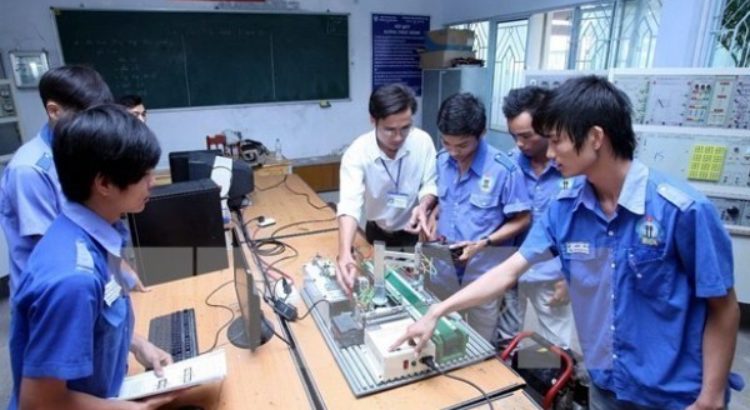
El Departamento de Trabajo, Inválidos de Guerra y Asuntos Sociales de esta urbe survietnamita y la Agencia alemana de Colaboración Internacional para el Desarrollo (GIZ) organizaron un taller sobre la formación profesional relacionada con el medio ambiente y la ecología.

En el encuentro, los participantes propusieron a los centros de educación vocacional integrar estos contenidos en los programas de capacitación, de acuerdo con los requisitos y perfil de cada carrera.

Opinaron que lo anterior contribuirá a la formación de un contingente de trabajadores con habilidades y capacidad para superar los desafíos sociales, económicos y ecológicos.

Coincidieron en que la mano de obra calificada desempeña un papel importante al abordar los temas de aprovechamiento de la energía y recursos en el lugar de trabajo de la manera más eficaz , y prevenir los riesgos para el medio ambiente.

Christian Knuppert, asesor técnico del Programa de reforma en la capacitación vocacional de Vietnam, dijo que la educación ecológica en los centros de enseñanza es objetivo en varios países en el mundo, en respuesta a la tendencia del desarrollo y la integración.

Nguyen Van Lam, subdirector del Departamento municipal de Trabajo, Inválidos de Guerra y Asuntos Sociales, informó que las entidades vocacionales se centran hoy en la reforma del programa de enseñanza en concordancia con la demanda social.

La mayor urbe sureña dispone en este momento de más de 500 instituciones dedicadas a la educación vocacional.


Fuente de la noticia: https://es.vietnamplus.vn/alemania-ayuda-a-vietnam-en-formacion-profesional-relacionada-con-ecologia/90304.vnp

Comparte este contenido:

Maharashtra´s copyright policy makes education unaffortable

By Anubha Sinha


In an alarming development for Indian students, Balbharati – the Maharashtra state bureau of textbook production and curriculum research – has issued a copyright policy that forces all publishers, digital educational-content creators, and coaching classes to obtain expensive licenses for developing material directly or indirectly relating to Balbharati’s content. The stated object of the policy is to prevent commercialization of Balbharati’s physical and digital material.

Balbharati is responsible for setting curriculum and content for Classes 1-10, which is followed by Maharashtra state board schools. It is estimated that that around 85,000 schools in Maharashtra follow Balbharati’s prescribed content and syllabus, and the policy is set to affect students’ access to affordable supplementary material in state board schools, especially – most of which belong to the vernacular-rural section of society.

The government faced a backlash from various groups after the policy was released last week.

Source of the article: http://www.atimes.com/maharashtras-copyright-policy-makes-education-unaffordable/

Comparte este contenido:

Education as a weapon in Iran and South Africa

By Amy Fehilly

Education is usually seen as the key to better societies and better futures. But it can also be used as a weapon of discrimination, as the legacy of South Africa’s apartheid era has shown. And in Iran today, the government withholds education for the same effect: to marginalize, penalize and repress the country’s Baha’i people.

“Education is a double edged sword that can liberate or be used to enslave,” said Professor Somadoda Fikeni, a policy and political analyst at the University of South Africa, speaking at an event marking the launch of Not A Crime’s new project in Johannesburg on June 1.

The project raises awareness of the educational apartheid against the Baha’is of Iran, the country’s largest religious minority. Since the 1979 Islamic Revolution, the Iranian government has blocked Baha’i’s from pursuing higher education. As part of the initiative, Not A Crime studies the cost of discrimination in other countries where groups of people have faced discrimination. South Africa, which was ruled by the apartheid regime from 1948 to 1994, was the natural first choice for the study.

The panel discussion, which included experts in economics, law and sociology and IranWire founder Maziar Bahari via Skype, drew parallels between systematic and government-sanctioned education discrimination during apartheid and Iran today. “Iran cut links with South Africa during apartheid, but they continued to implement their own human rights abuses,” said Khwezi Cenenda, who chaired the debate.

The panel also featured Tahirih Matthee, Director of the Baha’i Office of Public Affairs in Johannesburg, Dr Iraj Abedian, founder and CEO of Pan-African Capital Holdings, and Professor Salim Nakhjavani from the University of Wits in the city, and took place at the School of Law at the university.

21_lKV4VCr_I0Imgmy.jpg.815x390_q85_crop_upscale

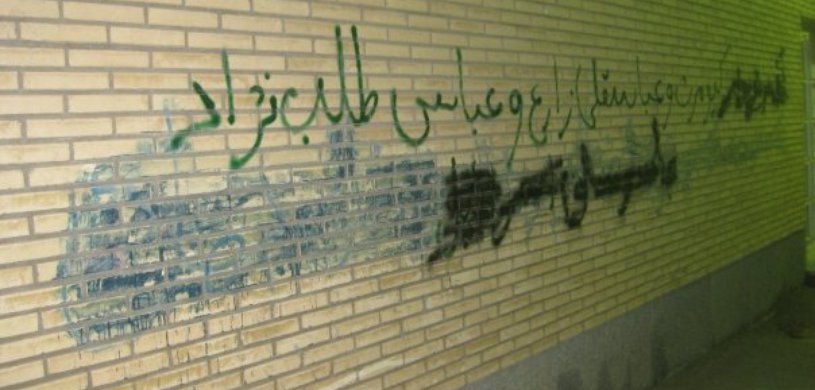
Anti-Baha’i graffiti in Iran

So what happened to education in South Africa under apartheid, and what is its legacy today? The South African government, led by a number of leaders including Hendrik Verwoerd, denied South Africa’s blacks and “coloreds” access to equal education for close to 50 years. The fallout from that cruel education segregation is one of the main causes of South Africa’s wealth disparity and high unemployment today. “Just over 50 percent of our population is unemployed,” said Iraj Abedian, a South African-based Iranian working in economics and business. “Our economy is not doing well, we have a shortage of skills. This is not a society at ease with itself. If a society is not at ease with itself it cannot unlock its full potential.”

The Baha’is in Iran are subjected to discrimination on religious grounds rather than race. The discriminatory policies are rooted in a 1991 memorandum signed by Iran’s then and current supreme leader, Ayatollah Ali Khamenei, which said that the progress of the Baha’is should be “blocked” by denying them work opportunities and higher education.

“What are the Bahai’s really doing that makes the government so angry?” asked Tahirih Matthee.  It’s a question, she said, that you would never dare ask of South African blacks today, so the same can be assumed for Iran’s Baha’is. “Iran has the potential to thrive if they give equal opportunities to all their citizens,” she said.

In response to the ban on higher education, Baha’is created the Baha’i Institute for Higher Education (BIHE), an underground university, in 1987. Thousands of Baha’is currently study through the BIHE system, and academic institutions around the world recognize its qualifications. “The more I studied BIHE the more I admired the resilience of young Baha’is who were fighting to study,” said Maziar Bahari, speaking about the inspiration behind the project. “So I decided to make a film about the Baha’is in Iran. The Baha’is have flourished because of education and peaceful resistance. As a result, everyone should know about the BIHE and this successful peaceful resistance movement.” Bahari’s film, To Light a Candle, was released in 2014.

Not A Crime also focuses on the history of the civil rights movement in the United States, and a series of murals have gone up in streets in Harlem, New York, Atlanta, Georgia and Nashville, Tennessee — where divisive, discriminatory laws wreaked damage on communities for decades. Speaking about the murals, Bahari said Not A Crime looked to the experience of black Americans in order to “explore the real cost of discrimination, as a warning to the Iranian government.”

The event in Johannesburg also featured three short films produced by Not A Crime, interviews with South Africans who studied under the Bantu education system, which was implemented by the architect of apartheid, Hendrik Verwoerd, as a secondary form of education tasked with creating second class jobs for black citizens. “There is no place for the Bantu in a European community above certain forms of labor,” said Somadoda Fikeni.

African-Americans are still dealing with the aftermath of brutal discrimination, and South Africans still deal with the legacies of apartheid today. In South Africa, overcoming that past and working for equal education is now a national mandate. The stories of people who lived through this time serve as an inspiration for the Baha’is in Iran – and, as Bahari describes, specifically as a warning to the Iranian government of the consequences of denying basic rights to 300,000 Baha’i Iranian citizens.

Speaking at the Johannesburg event, Abedian also issued a warning against “institutionalized, state-driven and politically motivated” denial of education. “The discrimination is based not on racial grounds but religious grounds; the essence is identical,” he said.

Perhaps most importantly, the discussion in South Africa ended on a message of hope. “The denial of access to knowledge is in itself one of the most grievous acts of oppression,” said Salim Nakhjavani. He asked the audience what they thought Iran could learn from the South African experience, and speakers discussed how peaceful resistance — a key tenet of the Baha’i faith — could bring about change in Iran.


Source of the article: http://iranpresswatch.org/post/14813/education-as-a-weapon-in-iran-and-south-africa/

Comparte este contenido:

A report card: Iran and its Afghan children

By The Guardian

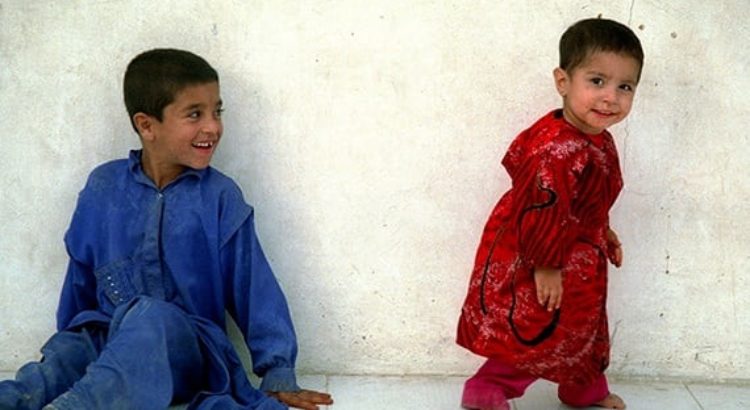
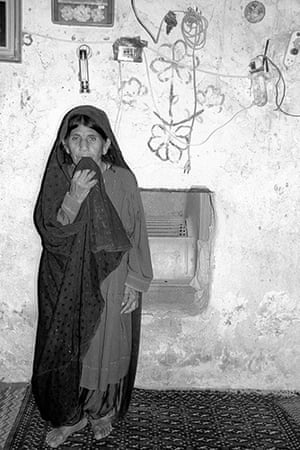
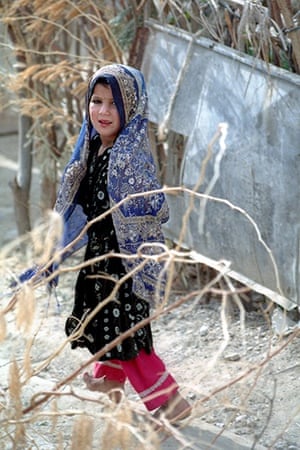
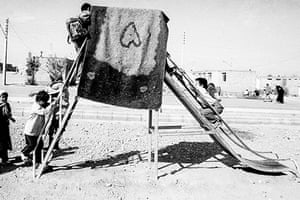
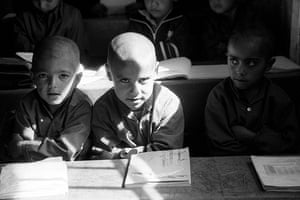
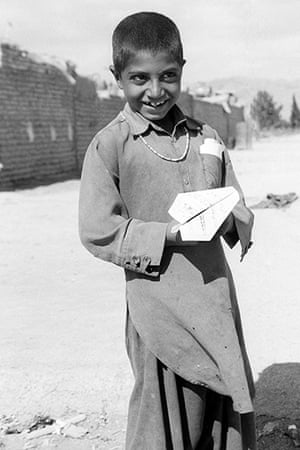
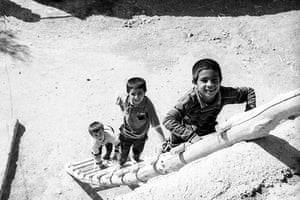
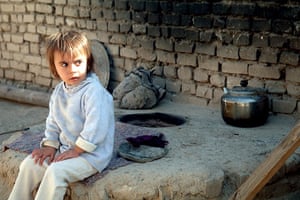
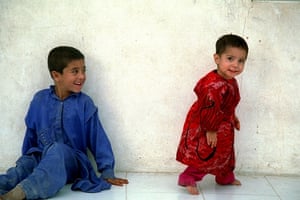
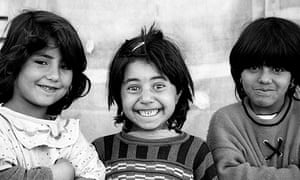
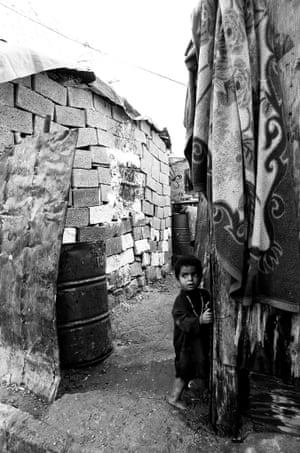
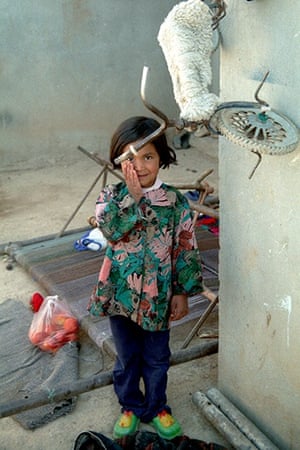
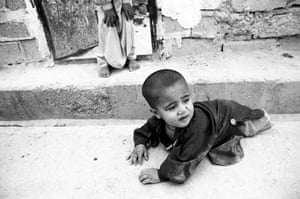
Coinciding with a trip by the Taliban to Tehran last month, supreme leader Ayatollah Khamenei announcedthat all Afghan children in Iran – there illegally or not – had a right to enroll in school. Access to education has been fraught with obstacles for refugees. Michelle May, who has been specialising in the topic, looks at the Islamic republic’s track record over the past 36 years. Photos by Shahriar Khonsari

Afghans

Afghans

afghans

Afghan children

Afghans in Iran

afghans

afghans

afghan

Afghan children in Iran

afghans

Afghan children

afghan

afghans

Source of the article: https://www.theguardian.com/world/iran-blog/gallery/2015/jun/01/a-report-card-iran-and-its-afghan-children

Comparte este contenido:
Page 270 of 773
1 268 269 270 271 272 773