Page 351 of 774
1 349 350 351 352 353 774

Revisan todas las guarderías chinas tras denuncias por abuso infantil.

Asia/China/28.11.2017/Autor y Fuente: http://www.prensa-latina.cu
Todas las guarderías de China están hoy bajo investigación por orden del Consejo de Estado luego de varias denuncias sobre abuso infantil en distintos centros, la última se registró en Beijing y conllevó a una pesquisa policial.
El gabinete orientó las indagaciones para determinar si en realidad algunas instituciones incumplen con las reglas educativas y aplican prácticas contrarias a la protección de los menores.

La medida responde a una cadena de denuncias reportadas en las últimas semanas acerca de la conducta inadecuada de profesores en diferentes guarderías del país.

El último caso explotó el jueves en esta capital, donde varios padres presentaron quejas sobre el uso de agujas y pastillas desconocidas con los infantes en una institución preescolar del céntrico distrito de Chaoyang.

De inmediato, la policía abrió una investigación que incluye la revisión de las cámaras de seguridad y pruebas forenses.

Según varios reportes de la prensa local, algunos profesores están suspendidos mientras dure el proceso.

Además, la Comisión Educacional de Beijing ordenó chequear en cada una de las guarderías de la ciudad las actividades que puedan dañar la salud y seguridad de los menores, antes de tomar las medidas pertinentes para proteger sus derechos.

Fuente: http://www.prensa-latina.cu/index.php?o=rn&id=134177&SEO=revisan-todas-las-guarderias-chinas-tras-denuncias-por-abuso-infantil

Imagen: http://www.prensa-latina.cu/images/2017/noviembre/25/guarderias-chinas.jpg
Comparte este contenido:

India can learn from China, Turkey how to infuse technology in education: Intel

India- China – Turkey/November 28, 2017/By:  IANS/Source: http://www.financialexpress.com

Technology can do wonders in providing a great educational experience and create a pool of talent for these disrupting technologies.

With emerging technologies like Artificial Intelligence (AI), Internet of Things (IoT) and Big Data Analytics knocking at India’s doors, the country needs to sow the learning seeds early — in the classroom — and China and Turkey can show the way, top global Intel executives have said. The world has realised what is coming its way in the next 10-20 years and has already begun modernising classrooms at schools to prepare a technology-ready workforce. “The Chinese and Turkish authorities have given kids IoT-enabled devices in millions of schools. Every student has a device connected to an intelligent whiteboard at the front of the classroom. There are teacher-controlled devices too. The curriculum is designed for that kind of environment. This is the future of education,” Joe D. Jensen, Vice President, Internet of Things (IoT) Group, and General Manager, Retail Solutions Division at Intel, told IANS. “Intel has installed 400,000 IoT-enabled connected devices for schools in Turkey, a million-and-a half in Chinese schools and another million to go in China in the next two years,” Jensen informed.

Technology can do wonders in providing a great educational experience and create a pool of talent for these disrupting technologies. “In China, the newest innovation is that there are eight video cameras and a series of microphones in a classroom at certain private schools and colleges. The videos of the classroom activities are recorded daily. Parents can later log on and see the student-teacher interaction,” Jensen told IANS. For Lisa Davis, Vice President and General Manager, IT Transformation for Enterprise and Government at Intel, while India is at the cusp of dramatic changes in delivering next-generation education, it is also set to learn new ways to infuse technology in many other sectors. “Not just education, we are looking at the financial services, transportation, retail and health-care sectors too in India. The next big wave is coming in video surveillance and the security sector, and our teams are engaged with the stakeholders in the country,” Davis told IANS.

Intel has also pushed the envelope towards creating a modern workforce in India. In April this year, Intel made a commitment to democratise AI in the country by training 15,000 developers and engage with not just businesses but also the government and academia to enable the adoption of AI. Intel India has trained 9,500 developers, students and professors in the past six months. The chip giant has collaborated with 40 academic institutions that are using the technology for scientific research and 50 public and private organisations across e-commerce, health-care, technology, defence, and banking and financial services.

Intel India has also launched an initiative to strengthen the use of technology in the country’s education ecosystem. It is collaborating with leading device manufacturers, education digital content publishers and education solution providers to build end-to-end solutions that promote the use of technology. The company will then help deploy management solutions for schools, classrooms, content and learning, and also manage student information systems. There is an Intel India Maker Lab in Bengaluru to drive the innovation ecosystem in the country. The lab offers access to start-ups of hardware and software development kits, reference boards, design collaterals, test and debugging equipment. It provides technical support for design, development and testing products. “India is at the cusp of a technology boom, but needs training and teaching right from the beginning to prepare a future digital workforce,” Davis stressed.

Source:

http://www.financialexpress.com/industry/technology/india-can-learn-from-china-turkey-how-to-infuse-technology-in-education-intel/948478/

Comparte este contenido:

Vietnam: Irish and VN higher education institutions promote co-operation

Vietnam/November 28, 2017/Source: http://english.vietnamnet.vn

Irish Aid will grant 578,000 euros (US$685,000 ) to support ten partnerships between Irish and Vietnamese higher education institutions on teaching and research co-operation during 2017-2018.

The partnerships were launched on Thursday under the Việt Nam-Ireland Bilateral Education Exchange (VIBE) Programme which aims to encourage co-operation and research links between higher education and research institutions of the two contries.

Under the programme, during 2016-2017, five such partnerships were granted about 250,000 euros.

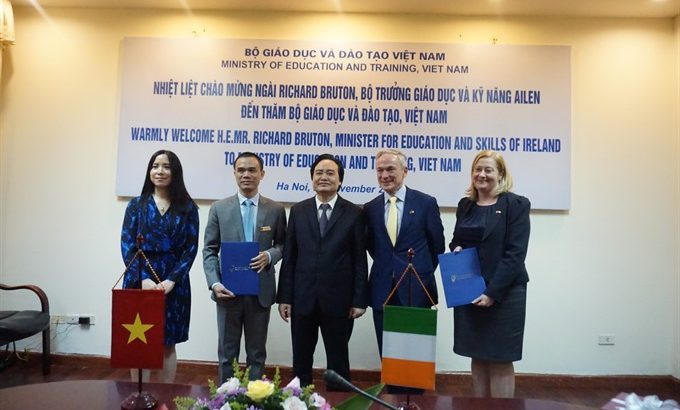
Minister of Education and Training Phùng Xuân Nhạ and Minister of Education and Skills of Ireland Richard Bruton who is on a working visit to Việt Nam from November 23-25, attended the launch ceremony.

They also discussed potential co-operation opportunities in education between the two countries, especially those relating to higher education.

Nhạ said that Việt Nam wanted to change the structure of its economy from labour-intensive to a service-based one, so it was in need of high quality human resources.

However, Nhạ admitted that Việt Nam’s higher education quality was not good enough and its students faced difficulties after graduating from universities because of a lack of skills desired by employers.

Assistance from other countries with high-quality higher education like Ireland would be very useful to Việt Nam, he said.

Minister Richard Bruton said that Irish higher education institutions are strong in fields such as technology and applied research, implying that Ireland and Việt Nam had huge potential co-operation.

Over the last ten years, as many as 219 Vietnamese students have been offered scholarships from the Government of Ireland Scholarship Programme. In Ireland, Vietnamese students usually study Finance and Economics, Pharmaceuticals, Management, Engineering, Marketing and Computer and Data Science.

Before his visit to Việt Nam, he said: “Increasing international cooperation is a key objective under my Action Plan for Education, which aims to make Ireland’s education and training service the best in Europe within a decade, and our International Education Strategy. I am looking forward to increasing opportunities for Irish students to travel to Vietnamese and South Korean higher level institutions, by strengthening and building partnerships with institutions in these countries. By building these bilateral relationships, we can ensure mutual benefit for both the institutions and students alike.” — VNS

Source:

http://english.vietnamnet.vn/fms/education/190916/irish-and-vn-higher-education-institutions-promote-co-operation.html

Comparte este contenido:

Japan: Education: Best investment for our future

Japan/November 28, 2017/By:  IKUKO TSUBOYA-NEWELL/ Source: https://www.japantimes.co.jp

Among the 34 nations in the Organisation for Economic Co-operation and Development, Japan has always been among the bottom three when it comes to public spending on education as a percentage of GDP. In 2011, Japan was the worst at 3.8 percent, followed by Slovakia and Italy — against the OECD average of 5.6 percent. Countries that come on top in this category are Denmark, Norway and New Zealand.

Of course, to be fair, the ratio of student numbers to the total population needs to be considered with respect to this data. Japan, in fact, has the second-lowest ratio at 15.5 percent, sitting between Chile, the lowest, and Italy. The OECD average is 22.2 percent.

Looking at the ratio of spending on education to total general government spending, the OECD average is 12.9 percent. Again Japan ranks low, coming in second to last at 9.1 percent, just above Italy at 8.6 percent. At the top is New Zealand with 21.6 percent.

In summary, Japan does not invest heavily in education. This creates financial pressure on households as they try to provide fundamental education to their children, particularly in the underfunded areas of preschool and higher education. Data show that when it comes to household expenditures for pre-elementary school education, the top five spenders are Japan, Australia, South Korea, the United States and Spain. For higher education they are Chile, South Korea, the United Kingdom, Japan and the U.S.

In all of these countries, a large number of households bear heavy financial burden for these two important stages of education.

In the case of Japan, we see that annual government spending per head is quite unevenly distributed — people in their 70s and 80s receive far more, for example, than newborns to 16-year-olds because of the heavy cost of welfare programs such as pensions, medical services and nursing care.

While this lopsided distribution has long been the case, the government is now seeking to shift resources more toward the younger generation. It plans to provide more public funding for preschool education, and Prime Minister Shinzo Abe’s Liberal Democratic Party is considering the introduction of a scheme to ease household costs for higher education similar to the HECS-HELP system in Australia, in which the government issues an interest-free loan on behalf of students to pay tuition fees directly to higher education providers. This loan is subject to indexation but charges no real interest. Students begin to repay the debt once their income is above a minimum threshold.

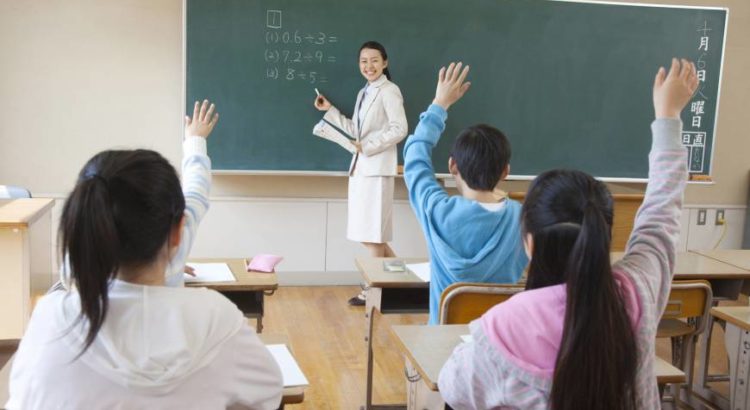
These are good initiatives, but are they enough? There are other factors that should be considered as well, and one very important issue is class size and diversity of students per class. As far as elementary schools are concerned, countries with the largest class sizes are Chile, with an average of 30.4 students, followed by Japan with 27.9 and Israel with 27.3. The OECD average is 21.2. For junior high schools, the average in South Korea is 34.0, while in Japan it is 32.7 and for Israel it is 28.7. The OECD average is 23.3 students per class.

It must be noted that the numbers for Japan include schools in severely depopulated areas. There can actually be up to 40 students per class in any public school (except for the first grade, where the maximum is set at 35). This means populated areas generally have classes with far more students than the average. This is particularly problematic because these are the areas in Japan where students are more likely to be socio-economically and academically at risk.

In Japan, there are 631,000 students identified as having developmental disabilities in the public elementary and junior high schools. This translates to 2.5 students out of the maximum class size of 40. One out of seven students comes from a household of relative poverty, or 5.7 out of every 40. Among public elementary school students, 13.4 percent, or 5.3 out of every 40, say classes are too easy and boring. Another 15 percent, or six out of every 40, say classes are too difficult and that they have difficulty understanding the content. There are 80,119 non-Japanese students in public or state schools, from elementary to high school, who need intensive Japanese lessons. This is a distribution of 0.3 students per class.

Overall, there is likely to be a considerable range of students in any one large class. Surely this must impact the likelihood of effective teaching.

Reducing class size to increase student achievement has been debated and analyzed for several decades. Smaller class sizes are generally welcomed for allowing teachers more time to spend with each student and less time on classroom management. This means the teacher can provide better teaching, tailored to each student’s individual needs, to ensure maximum success. In this respect, smaller class sizes may be viewed as an indicator of the quality of a school system.

An influential and credible study of the effects of reduced class size is the Student Teacher Achievement Ratio (STAR) study carried out in the U.S. state of Tennessee in the late 1980s. In this study, students and teachers were randomly assigned either to a small class, with an average of 15 students, or a regular class, with an average of 22 students. It was found that a smaller class size increased student achievement by an amount equivalent to about three additional months of schooling over four years. A long-term follow-up survey of participants into adulthood showed that they were about 2 percent more likely to be enrolled in college at the age of 20.

International studies also provide evidence of the positive effect of class-size reduction. Israel, just like Japan, has a limit of 40 students. Researchers there found positive effects from smaller fourth- and fifth-grade classes.

Why then, do we in Japan, continue to maintain a class size limit of 40 when in the U.S., U.K., France and Germany the limit is around 30? Of course, to some extent the answer is related to decisions about the careful use of taxpayer money and considerations that it be used most productively without undue waste. Perhaps, because of historical and cultural factors, it has been easier to have larger classes in Japan. For instance, a Confucian heritage means that teachers are highly respected and easily obeyed, and thus less affected by larger class sizes.

The OECD points out that data from the Program for International Student Assessment (PISA) suggests that high-performing education systems, such as those in Japan and South Korea, prioritize the quality of teachers rather than class size. Catherine Rampell, writing in the The New York Times, also points out that South Korea and Japan, which have some of the highest-achieving students in the world, also have the biggest class sizes. Both of these reports are right and we should be proud of our achievement and the high quality of our teachers. However, even with our Confucian roots, it is growing ever more difficult for a single teacher to meet students’ individual needs in today’s educational contexts.

As far as I am concerned, I would support having my tax contributions spent on providing better educational environments suited to student needs. Why not start by aiming to achieve the OECD’s average number of students per class by limiting class size to 30 students? I do not think I am alone in thinking that one of the best investments for the future is to invest in our children’s education.

Ikuko Tsuboya-Newell is the founder and chair of Tokyo International School. She serves as the International Baccalaureate Japan ambassador and as adviser on revitalization of education commissioned by the Ministry of Education, Culture, Sports, Science and Technology.

Source:

https://www.japantimes.co.jp/opinion/2017/11/26/commentary/japan-commentary/education-best-investment-future/#.Whuxz0qWY2w
Comparte este contenido:

China construye biblioteca con 1.2 millones de libros en su interior

China/28 de Noviembre 2017/Fuente: diariocorreo

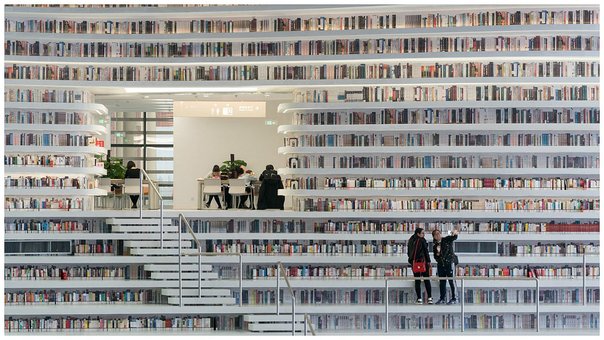
Como sacado de una película futurista, China tiene la primera biblioteca realizada con más de cinco ambientes dedicados a la lectura con 1.2 millones de libros. La compañía holandesa MVRDV, junto con el Instituto de Planificación y Diseño Urbano de Tianjin (TUPDI), han diseñado la futurista Biblioteca Tianjin Binhai como parte de proyecto que proporcione un distrito cultural para la ciudad.

El edificio no actua solo como centro educativo, sino también como un puente entre el parque que la rodea y el distrito cultura.

La planta subterránea es un conjunto de espacios para el almacenamiento de libros y un gran archivo, mientras que en la planta baja están las áreas de lectura, con accesos fáciles pensados para niños y ancianos.

Como se recuerda, China es considerado uno de los países con mayor potencia económica pero también lo es en la educación.

Fuente de la noticia: 

https://diariocorreo.pe/cultura/china-construye-biblioteca-con-12-millones-de-libros-788403/

Fuente de la imagen: 

https://diariocorreo.pe/media/thumbs/uploads/img/2017/11/25/china-construye-biblioteca-con-1-2-millones-de-l

Comparte este contenido:

Vietnan: Shortage of teachers for children with disabilities

Vietnan/Noviembre de 2017/Fuente: Vietnan.net

Resumen: Dinh Thi Thu Huong, profesor de la escuela Nguyen Dinh Chieu, dijo: «Además de las clases regulares, también proporcionamos otras clases, como habilidades para la vida y movilidad para estudiantes con discapacidad visual, entre otros. Normarly para la materia de movilidad, un maestro se centrará en un estudiante, pero tenemos que enseñar a 20 estudiantes a la vez «. «Actualmente una clase dura solo una hora. Creo que sería mejor si los niños estudiaran a tiempo completo. Espero que haya más maestros para estudiantes con impedimentos visuales «, dijo Ta Thi Thu Huyen, padre de un alumno. A pesar de haber sido capacitados con cursos de capacitación en educación especial, la mayoría de los maestros reconocen que existen grandes brechas entre las teorías y la realidad para cada estudiante. Pham Thi Kim Nga, director de la escuela Nguyen Dinh Chieu de Hanoi, dijo: «Los profesores deben equiparse con conocimientos sobre la psicología de los estudiantes con discapacidad visual. También se les exige que conozcan Braille «.» Esperamos que en el futuro haya más cursos de capacitación para maestros «, agregó.

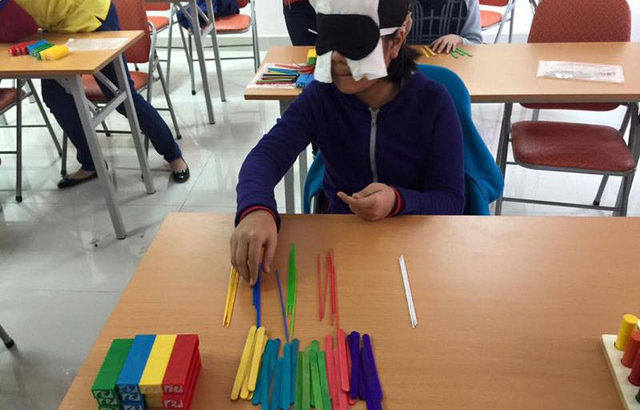
Dinh Thi Thu Huong, a teacher at Nguyen Dinh Chieu School said:”Besides regular classes, we also provide other classes such as living skills and mobility for visually impairedI students, among others. Normarly for the mobility subject, one teacher will focus on one student, but we have to teach 20 students at a time.”

“Currently a class lasts only one hour. I think it would be better if the children studied full-time. I hope there will more teachers for visually impaired student,” Ta Thi Thu Huyen, a pupil’s parent said.

Despite being trained with special education training courses, most of the teachers acknowledge that there are huge gaps between theories and reality for each student.

Pham Thi Kim Nga, Headmaster of Nguyen Dinh Chieu School, Hanoi said:”The teachers have to equip themselves with knowledge about the psychology of visually impaired students. They are also required to know Braille.” “We hope in the future there will be more training courses for teachers,” she added.

Vietnam has only two departments of the Hanoi National University of Education and the Ho Chi Minh University of Education that provide special education training programmes, though they have very limited training quotas.

Deputy Director of Special Education Centre under the Vietnam Institute of Educational Sciences Nguyen Thi Kim Hoa said:”In some advanced countries, they have many specialists and effective models to learn from, however, it’s very difficult to apply in Vietnam. To help disabled children integrate into society, it’s necessary to have stronger involvement of the community, and family.”

To date, Vietnam has only about 3,000 specially trained teachers for visually impaired children. A lack of human resources in the field has hamstrung the nation’s efforts to help 75 percent of disabled people integrate into society by 2020./.

Fuente: http://english.vietnamnet.vn/fms/education/190853/shortage-of-teachers-for-children-with-disabilities.html

Comparte este contenido:

Japón: “Scholarships” Are Driving Students into Debt

Japón/Noviembre de 2017/Autor: Iwashige Yoshiharu/Fuente: Nippon

Resumen: Nada puede ser más importante para los jóvenes que el deseo de aprender. Sin embargo, hay muchos casos en que las becas destinadas a apoyar el aprendizaje pueden convertirse en una gran carga financiera después de la graduación debido a la necesidad de comenzar a reembolsar los préstamos estudiantiles. La carga de amortización puede reducir el entusiasmo por el trabajo y afectar las decisiones sobre el matrimonio y el parto. Incluso los beneficiarios de becas públicas ofrecidas por la Organización de Servicios Estudiantiles de Japón han sufrido las consecuencias negativas de los préstamos estudiantiles.

Scholarships Risk Aggressive Debt Collection

Nothing can be more important for young people than the desire to learn. There are many cases, however, when scholarships intended to support learning can become a great financial burden after graduation because of the need to start repaying student loans. The repayment burden can dampen enthusiasm for work and affect marriage and childbirth decisions. Even the recipients of public scholarships offered by the Japan Student Services Organization have been suffering from the negative consequences of student loans.

Students seeking loan-based scholarships are rising rapidly due to the high cost of education and the difficulty many families have of paying tuition. Many students now graduate with debt of several million yen and must start their working careers with excess liabilities. With the growth of low-wage, nonregular employment, people cannot afford to pay back their loan-based scholarships. In response, JASSO is strengthening its debt collection efforts, such as by placing people on blacklists, assigning collection to external agencies, and initiating court-mediated summary procedures. Many people will consequently be driven into a corner no matter how hard they work.

Relief Measures That Do Not Provide Relief

Loan-based scholarships differ from other types of loans in that they are extended while future employment and income are unknown, meaning that there is an inherent risk of loan delinquency. Inasmuch as they are a form of scholarship, relief measures should be built into the system to address cases when delinquency occurs. Unfortunately, existing relief measures are extremely inadequate.

For example, people experiencing difficulty repaying a JASSO loan because their annual income is less than ¥3 million can have the repayment period suspended. This measure, however, only applies for 10 years. Once 10 years have passed, the measure cannot be used even if annual income remains very low. Limitations in how the relief measure is applied are another problem. When people are delinquent, they must resolve their delinquency before they can take advantage of the relief measure, such as by paying the entire amount of late charges and principal payments in arrears. These people, however, are delinquent because they are unable to repay their loan; it makes no sense to offer relief only to those who end their delinquency.

Such application of relief measures has been criticized repeatedly for some time. In April 2014, JASSO extended the suspension of repayment in cases when the borrower’s annual income was less than ¥2 million. In December of the same year, however, JASSO restricted the use of this new measure. It stated that delinquency will not be suspended for people who have gone to court or for people who claim that the statute of limitations applies to part of the repayment obligation. It is unreasonable to restrict relief for people with financial difficulties just because they have taken their case to court or claim that the statute of limitations has run out; they have every right to do so. JASSO states, moreover, that whether or not such relief measures are applied is at its discretion and is not a right of the scholarship recipients. Giving such discretionary powers to the lender will strip the relief measures of their meaning.

Expanding Grants and Interest-Free Scholarships

Clearly, JASSO loans are scholarships in name only. Many of the people suffering from the repayment burden are victims of circumstances beyond their control.

The negative consequences of such “scholarships” cannot be prevented with efforts by individuals alone. The entire system needs to be overhauled. I advocate the following reforms:

  • Educational expenses that are extremely high compared to other nations should be reduced.
  • Grants should be expanded.
  • Loan-based scholarships should be made interest free.
  • Repayment should be made flexible in line with repayment capacity.

Some Progress Achieved

While the scholarship system has many problems, the influence of public opinion has resulted in some steps toward improving the system.

First, grant scholarships without a repayment requirement were finally introduced in fiscal 2017—a first for government scholarships. Eligible students are those facing difficulties pursuing higher education, such as those raised in children’s homes and children from low-income, tax-exempt households. This scholarship, however, is extremely limited in scope. There are only about 20,000 recipients per academic grade, who will still need to take out loans since monthly stipends are between ¥20,000 and ¥40,000. They also need to maintain high grades to qualify. Children raised in difficult circumstances frequently do not have a supportive studying environment. Having such a standard will severely limit the effectiveness of the scholarship. Also, repayment may be demanded when grades are poor. This standard, however, is vague, and it is possible that people will not apply for the scholarship out of fear of the potential repayment burden. While the introduction of a grant scholarship is a step forward, its design still has many flaws.

Second, new efforts have been made for interest-free loans. JASSO scholarships can be either interest bearing or interest free. The pool of funds for interest-free scholarships is limited, however, so students who qualify may still be unable to receive them. The Ministry of Education, Culture, Sports, Science, and Technology has stated that, starting in the current fiscal year, all qualifying students desiring interest-free scholarships will be able to receive them. The ministry reports that so-called residual qualifiers total 24,000 students, a figure that many educators feel is too low. Income and grade standards for interest-free loans have been tightened, which has greatly reduced the number of residual qualifiers; the 24,000 figure of should be understood with this in mind.

Third, a repayment plan adjusted for income has been introduced. In fiscal 2017, a new scholarship system was introduced where monthly repayments are adjusted for income. The design of this system, however, falls short of its objective since, based on the rationale of a limited budget, tax-exempt persons, including those with zero income, are still required to make monthly payments of ¥2,000. While repayment can be suspended for people with low incomes, the problems associated with relief measures discussed above have not been fully addressed. Also, the issue of smaller monthly payments lengthening the repayment period has not been addressed. Another problem is the income used to determine monthly payments, which is the sum of the income of the scholarship recipient and the income of the household breadwinner who is not a party to the scholarship agreement.

Supporting Education with the Whole of Society

Policymakers claim there are no funds available for scholarships. The real issue, then, may be the extremely limited funds that are allocated for education in Japan. The Organization for Economic Cooperation and Development reports that the ratio of public educational expenditures to GDP, which averages 5.4% for all member nations, is just 3.6% for Japan—a figure that falls to 0.5% for higher education, the lowest figure among member nations. This reality stems from the mistaken application of the beneficiary-pays principle, where people receiving an education bear its costs. Education, however, is not just meant for the individual. It also benefits society as a whole. As things stand, students must take out large loans to pay for their education depending on their parents’ financial situation. This goes against the principle that “all people shall have the right to receive an equal education” stipulated in Japan’s Constitution and cannot be called fair.

There is an urgent need to allocate a level of funds for education similar to other OECD nations and to begin a national dialogue on the infrastructure needed to support the development and education of children and young people.

Fuente: http://www.nippon.com/en/currents/d00355/

Comparte este contenido:
Page 351 of 774
1 349 350 351 352 353 774