Page 354 of 772
1 352 353 354 355 356 772

Qatar: Comienza este martes la Cumbre Mundial en Innovación para la Educación

Qatar/ 15 noviembre 2017/Fuente: ABC

Educación en el mundo de la «postverdad», de la realidad virtual y la inteligencia artificial, el papel de los dicentes, la importancia o no de la inteligencia, el beneficio del fracaso…Algunos de los temas que se tratarán en las más de 50 sesiones previstas que tendrán lugar en el marco de la octava edición de esta cumbre que se celebra en Doha.

Este martes comienza en Doha, Catar la Cumbre Mundial en Innovación para la Educación bajo el lema «Co-existir, co-crear, aprendiendo a vivir y a trabajar juntos».

La cumbre se celebrará los días 14, 15 y 16 y reunirá a expertos mundiales en educación que participarán en las más de 50 sesiones en las que se tratará la importancia de la inovación en educación en los difíciles momentos actuales, en los que la violencia y los conflictos en todo el globo afectan a millones de niños en todo el mundo y, al mismo tiempo, se asiste a revolución tecnológica que parece no tener fin.

«Wise defiende la innovación no como un fin en sí mismo, sino como una forma de acelerar el objetivo universal de una educación de calidad para todos», señala el CEO de Wise, Stavros N. Yiannouka.

Educación en el mundo de la «postverdad», de la realidad virtual y la inteligencia artificial, el papel de los docentes, la importancia o no de la inteligencia, el beneficio del fracaso, los nuevos modelos de enseñanza, el papel de la tecnología, de los valores, los refugiados y la educación y un extenso etcétera.

WISE es una cumbre constituida por la Fundación Qatar en el año 2009 bajo el liderazgo de su presidenta la jequesa Sheikha Moza bint Nasser. Es una plataforma internacional y multisectorial para el pensamiento creativo, el debate y la acción conjunta que se ha consolidado como referencia mundial en nuevos enfoques educativos.

Fuente: http://www.abc.es/sociedad/abci-comienza-este-martes-cumbre-mundial-innovacion-para-educacion-201711131950_noticia.html

Comparte este contenido:

Important lessons for antiwar movement makers…

By: Bill Ayer

The Antiwar Movement Then and Now

Howard Machtinger
Vietnam Full Disclosure

A broad-based antiwar movement which challenges white and male supremacy and stands in support of oppressed people around the globe, from the Rohingya to the Palestinians, is an important part of a larger movement for social change; one that can navigate racial, class, gender, generational, ideological, spiritual and strategic and tactical differences is required.


It is offered—not in expectation of agreement—but to provoke a serious discussion about the current state of antiwar politics.

Burns and Novick in their PBS documentary: The Vietnam War could not ignore the antiwar movement, but exhibit little interest in its dynamics, except in its supposed hostility to American GIs. Since my interest still lies in how to build a more effective antiwar movement, I want to focus on the lessons learned and not learned by the Vietnam antiwar movement as a prelude to exploring how we might move forward to confront the multiple wars and threats of war that beset our world.

Of course, there was not one unified antiwar movement, but a conglomeration of tendencies featuring contending critiques, strategies and tactics. What follows is an attempt at a succinct, dispassionate description of those tendencies, which no doubt risks over-simplification. I will look at three general perspectives. I will begin with a critique of tendencies with which I was associated.

The first set of tendencies included the anti-imperialists, militants, and Marxist-Leninists. Members of these overlapping, but distinct groupings, all grasped the depth of the problem that the war in Vietnam exposed. The war was not a mistake or an aberration from the general direction of US global policy. Its goal was to dominate the world and, in this particular case, to gain a strategic foothold in mainland Asia. These movement tendencies recognized the need to do more and to widen the scope of protest. They also placed great importance in connecting to and humanizing the Vietnamese enemy, not merely viewing them as victims, but recognizing and honoring their capacity to resist.

Too often, however, the connection remained abstract or turned romantic. Che’s invocation of “2, 3 many Vietnams” not only decontextualized Vietnamese resistance, but led people to ignore or downplay the incredible price paid for this resistance. In the 1980’s an uncritical anti-imperialism led to support for leaders who proved to be problematic such as Cayetano Carpio in El Salvador, Daniel Ortega in Nicaragua, and Robert Mugabe in Zimbabwe. One version of anti-imperialism meant support for any leader hostile to the US; including people like Saddam Hussein or Bashar al-Assad. For them, the enemy of our enemy by definition became a friend. Anti-imperialists did not always acknowledge other negative forces operating in the world aside from US imperialism.

The romanticization of the Vietnamese resistance also led militants to overstate the revolutionary possibilities in 1960s and 70s America. Some resorted to violent methods that proved ineffective, isolating, and divisive for the movement as a whole. Though violence as a strategy, not as spontaneous outbursts, constituted a small part of the antiwar movement, it too often became the ‘issue’ and functioned to divert attention from the monumentally greater violence of imperial war.

The parts of this tendency that identified with global Communism–a relatively small, but influential sector–had little understanding of that movement, weak grasp of the Sino-Soviet split, and were often ignorant of differences within Vietnamese Communism. Sometimes the result was a dumbed-down and sanitized Maoism. Their version of democratic centralism was rarely democratic. And they were often drawn into obscure sectarian struggles.

The pacifist left tendency brought a solid grasp of the profound penetration of militarism in the US economy, its politics and culture. It offered a valuable overall critique of war and militarism. A. J. Muste and Dave Dellinger played unifying roles in an often-fractious movement. And militant pacifists like Dellinger forged a creative model of militant nonviolence that effectively expressed the depth of opposition to the war.

But other pacifists enjoyed the role of the ‘good’ protestor as opposed to other less acceptable protestors, thereby dividing the movement and enabling an establishment critique, providing fodder for false equivalences between imperial violence and resistance to it. Pacifists could and did adopt a purer than thou attitude. It should have been possible to legitimize one’s own form of protest without delegitimizing other forms. Most significantly, the pacifist tendency was overwhelmingly white and middle class with insufficient connection to the powerful movements of people of color that had staked out clear and resonant positions against the war. This was not simply a question of coalition building, but of creating consistent, enduring relationships of trust.

Another tendency consisting largely of dissident and liberal Democrats saw the war as a losing proposition damaging US credibility, draining treasure, destroying morale and national unity, not to mention increasing battlefield casualties. This is in part the perspective of the Burns/Novick effort. This tendency brought to light the war’s corrosive effect on democratic institutions: the expanding imperial Presidency, the impotence and irrelevance of Congress, and the repression of protest. Innovative forms of working ‘the system’ were created, that while often frustrating, pointed the way to a possible political revitalization. These movements led to some Congressional scrutiny of the war, LBJ’s abdication, McGovern’s nomination as the Democratic candidate in 1972 and Nixon’s impeachment; generally forcing politicians to openly deal with the war.

But it proved unable to prevent Nixon’s election–allowing him to pose as a strange sort of stealth peace candidate—and didn’t achieve majority support in the Congress until very late in the war. It did not develop adequate means of holding politicians accountable. It both expanded the scope of mainstream politics and was simultaneously hemmed in by the establishment.

Parts of this tendency also posed as a preferred, less radical alternative to the politics of the street. Finally its overly pragmatic strategy implied that the war was a correctible mistake, not requiring a fundamental overhaul of the national security state and its imperial goals.

There are important parts of the movement that I have obviously so far ignored. The antiwar movement was a boost to the development of new creative and feisty women’s and queer liberation movements both by providing spaces for activism and then circumscribing these spaces because of the limits of iantiwar leaders’ consciousness of gender issues. So women and LGBTQ people were energized and then marginalized which simultaneously divided the movement and resulted in new organizational forms, including significant antiwar organization and action as well as a critique of military and movement macho.

The level and sophistication of GI and veteran resistance was unprecedented. Dewey Canyon III in Washington DC in 1971, when veterans threw away their medals, brought the issue of the war’s immorality and pointlessness home and helped transform the public face of the antiwar movement from that of cowardly, spaced out hippies and unrealistic pacifists. Often left buried in the dustbin of history are efforts like the coffee house movement where civilians and soldiers collaborated in spreading the antiwar message. It would certainly be worthwhile to further explore what was learned about civilian/soldier relationships from this experience.

After the war, the antiwar movement lost steam and direction in a sense succumbing to the fantasy that the end of the war allowed a return to normalcy without further consequence. We did not succeed in helping Americans come to terms with military defeat—to understand it as something positive for the American spirit.

Vietnam was more isolated in the 1980s than during the American war as it invaded Cambodia to overthrow the genocidal Khmer Rouge regime and then fought off a Chinese invasion. The Cold War framing of Southeast Asian conflict as part of a Soviet plot was reasserted by the US with little opposition from the remnants of the antiwar movement; the Maoist fringe, in line with Chinese policy, even supported the Khmer Rouge. There were brief upsurges of activity in response to Reagan’s Central America wars and before both Gulf wars, especially W’s 2003 war. Today there exists a barely perceptible antiwar movement. Its impotence allowed Donald Trump to play a bogus antiwar card during the 2016 campaign.

As antiwar activists we have allowed the myth—of which Burns/Novick partake—of the deep antagonism between the civilian antiwar movement and soldiers to penetrate American consciousness, including that of younger antiwar activists. I have met numerous young activists who take for granted that the antiwar movement typically spat at returning soldiers. We can credit Jerry Lembcke for Burns and Novick not further propounding that particular myth. They favor ’baby killers’. In any large, sprawling social movement almost any perspective can be found. Though I knew a few people who felt like targeting soldiers was legitimate; this was a quite marginal perspective in the antiwar movement. The same mythology led many of those opposed to the Gulf wars to so reassure the public that the movement was pro-soldier that they lost sight of the central task of any effective antiwar movement: projecting and humanizing the direct victims of the war in Iraq. It was a form of surrender to the prevailing Islamaphobia.

As a movement, we have failed to adequately challenge the deleterious effects of imperial war on democratic institutions. ‘Forever war’ means permanent limitations on freedom and the right to protest and continuing intrusions on privacy. We haven’t been able to convincingly demonstrate to Americans the connection between successive wars; how the Iraq war increased sectarianism and chaos in the entire region, catalyzing the growth of groups like ISIS; how we are imprisoned by the terrible logic of war in which the next war is seen as a justifiable and necessary response to the failure of the previous one.

Given this history, how might a more effective antiwar movement be constituted? First of all, we must acknowledge, embrace even, that maybe none of us in this room will be in leadership of this reconstitution. If we are together, we can offer perspective, some cautions, a necessary connection to past efforts. Multiracial forces already in motion will lead the new activist peace/antiwar movement. For instance, the M4BL highlights the militarization and racism of our criminal ‘justice’ system while connecting to global struggles of people of color. The immigration and refugee movements—with important experience in navigating cultural difference—has drawn attention to the connections between war, state violence, and population movement and alerted us to the role of racism and Islamaphobia in mobilizing and justifying aggressive wars. Environmental activists lead us to revalue the leadership of indigenous people as in Standing Rock; organizations like 350.org explicate the relationship between environmental degradation and wars and potential wars over natural resources, as well as leading to increased global migration. The new women’s and LGBTQ movements have led the way in expanding our consciousness of sexual violence in war and in the military. And even as the nature of war has changed, the voices of GIs and veterans remain vital. A new antiwar movement must be constituted and led by those forces which will both broaden and deepen the movement making evident the intersectionality of movements against oppression, white supremacy and militarism.

We are living in a treacherous moment for our and other species. The impact of climate change imposes a fateful due date. The prevalence of nuclear weapons along with authoritarian leaders eager to demonstrate their macho add to the immediate peril.

So a broad-based antiwar movement which challenges white and male supremacy and stands in support of oppressed people around the globe, from the Rohingya to the Palestinians, is an important part of a larger movement for social change; one that can navigate racial, class, gender, generational, ideological, spiritual and strategic and tactical differences is required. Absolute agreement is not required; rather a Zen-like mastery of the art of coordination, mutuality and solidarity is the order of the day. We don’t need one big organization but we do need accountable organizations with accountable leadership. Our movement must not be so ‘correct’ that it does not allow for experimentation and a diversity of tactics. The movement must strive for power as it creates an open and welcoming environment where, rather than being stigmatized or shamed for inevitable mistakes, activists can learn from them and grow with the movement. And we must make our case to ordinary people while still engaging in anti-racist and anti-sexist initiatives. The other side is driven by a mean-spirited white male nationalism that we must directly take on.

There is a lot we have to do. We must work in establishment politics and reinvigorate democratic forms, fighting for meaningful reform; and at the same time (not necessarily the same people) be on the streets, loud and passionate. We must be militant, but smart and strategic about our militancy; keep the engine rev-ed but prevent it from veering off the tracks. Be moral and not moralistic, nor purer or more radical than thou. Connections are local and global, virtual and personal. Be forthright and sure-footed, but humble about our importance and correctness. Nothing less is required.

My comments leave many questions unexplained and unanswered. My simple goal is not completeness or agreement but to both initiate and add to a discussion that will lead to more effective action. We sorely need some.

The Full Disclosure campaign is a Veterans for Peace effort to speak truth to power and keep alive the antiwar perspective on the American war in Viet Nam — which is now approaching a series of 50th anniversary events. It represents a clear alternative to the Pentagon’s current efforts to sanitize and mythologize the Vietnam war and to thereby legitimize further unnecessary and destructive wars.

Source:

https://billayers.org/2017/10/

Comparte este contenido:

Indian: DBT has shown mixed results for education system: World Bank official

Indian/November 14, 2017/By: PTI/Source: http://indianexpress.com

The conditional stipend for girls going for secondary education in Bangladesh led to a movement to bring girls to schools and the enrolments rose to 53 per cent of the total strength, said Junaid Kamal Ahmad, Country Director for the World Bank in India.

The direct benefit transfer (DBT) scheme has shown mixed results for the education system, although it can have a major impact on poverty levels and nutrition, a senior official of the World Bank said Sunday. The DBT scheme can have major impact on poverty levels, access and nutrition, said Junaid Kamal Ahmad, Country Director for the World Bank in India, adding “whether it has any impact on outcomes of learning – mixed results so far.”

Ahmad advocated that the DBT scheme be made a part of the broader reform programme in schools to achieve desired goals. “DBT has to be part of a broader reform programme in the school system,” he said in his address at a conference on DBT in education organised by the Centre for Civil Society (CCS).

Citing the huge impact of conditional grant in improving enrolment of girls in secondary education in his home country Bangladesh, he stressed on the importance of decentralisation of schools. The conditional stipend for girls going for secondary education in Bangladesh led to a movement to bring girls to schools and the enrolments rose to 53 per cent of the total strength, he said.

Ahmad said the DBT scheme should be enabled across every single service through investing in capacity of states to bring together the functions of unique IDs, financial systems, financial transfers and registry. CCS president Parth Shah called for complimentary interventions like ease of opening schools, fixing accountability and measuring learning outcomes to boost DBT’s effects on education.

Source:

http://indianexpress.com/article/education/dbt-has-shown-mixed-results-for-education-system-world-bank-official-4933840/

Comparte este contenido:

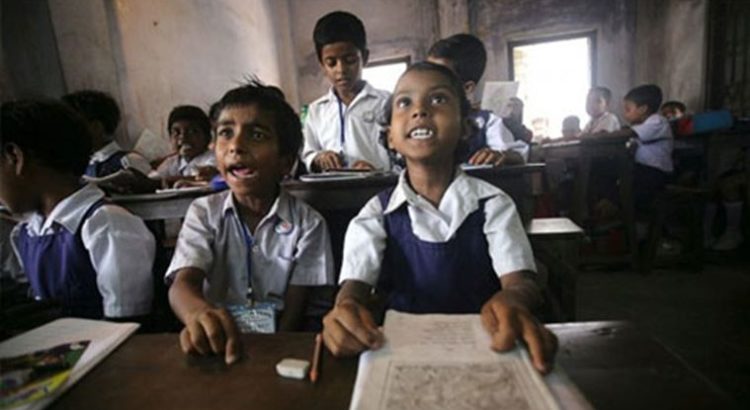
Pakistan: Is Punjab Education Foundation a better solution?

Pakistan/November 14, 2017/Source: https://www.pakistantoday.com.pk

  • Failure of public education system

How much development and progress has been made can be seen from recent statistics about Literacy Rate in Pakistan. As it dropped by 2pc in the year 2015-16 to 58pc and that under the criteria, “a person is literate who can read and write a paragraph (3 lines) in a national/regional language with comprehension”

On the one hand our government is hiring hundreds and thousands of new teachers while on the other it is privatising thousands of public schools through PEF


“Education is a matter of life and death for Pakistan. The world is progressing so rapidly that without requisite advances in education, not only shall we be left behind others but may be wiped out altogether.” Quaid-e-Azam Muhammad Ali Jinnah.

Recently, Pakistan celebrated its 70th Independence Day. How much development and progress has been made can be seen from recent statistics about Literacy Rate in Pakistan. As it dropped by 2pc in the year 2015-16 to 58pc and that under the criteria, “a person is literate who can read and write a paragraph (3 lines) in a national/regional language with comprehension”.

Reasons behind the downfall of education system?

Let’s talk about the reasons of downfall of education in Pakistan, especially Punjab, which was once considered the hub of educational institutes and province with highest literacy rate. There is no special reason but an amalgam of corruption, overspending education budgets in salaries given to teachers, lack of motivation towards education among students and parents alike, lack of schools in rural areas, lack of counselling, and missing infrastructure in schools.

Punjab Education Foundation (PEF)

Punjab Education Foundation (PEF) was established by the Punjab Assembly’s PEF Act of 1991. At that time its purpose was to help private investors (by funding or granting loans to) build new schools so there may be more schools accessible to the public. The ultimate authority of PEF was under the government from 1991 until Act of 2004 as between this period the chief minister of Punjab was its chair, but after 2004 it started working as an autonomous body under a board of directors. Initially, its basic aim was to provide better education to the nation with the help of private schools by providing teacher training, professional development for private schools, interest-free loans for building construction and by providing special vouchers to households of the students to incentivise them for taking education seriously. But today, a significant chunk of PEF’s budget goes to it Foundation Assisted Schools (FAS) programmes through which, Punjab Education Foundation (PEF) pays for every child’s fee enrolled in a Foundation Assisted Private School.

Punjab Education Foundation (PEF) claims that its programmes are cost effective that is why these programmes are the best solution for equity and quality of education. In a wave of privatisation of already existing public schools, Punjab Education Foundation (PEF) has privatised thousands of public schools. PEF gave management of these thousands of public schools to private investors. Now, I would concede to the fact that, yes, PEF is efficient in what it is doing so far, but the real question is whether the approach being followed by PEF is the right approach for long-term greater good?

Punjab needs to spend more on education?

In the fiscal year 2016 Punjab’s Education budget was $2.99b out of which only $0.602b was allocated for development projects and the rest was to cater the current needs of the education department. During the fiscal year 2014, 87pc of the education budget was spent on salaries given to teachers. The major problem lies in the overspending of the education budget on salaries to 343,458 teachers and when after evaluations a schools’ progress is represented by numbers they just decide to outsource these schools or encourage students of these schools to go to private schools which are already compensated by Punjab Education Foundation (PEF) other programmes; eventually wasting tax payer’s money in the process. It may serve its purpose in the short term but then what is the purpose of having a public school system if eventually all that government is going to do is to outsource these public schools.

Punjab Education Foundation (PEF) started paying fees of the students to the private management of the schools. Fee varies according to the grade level of a student;

Rs550 per student up till primary classes

Rs600 per student for elementary classes

Rs900 per student for secondary arts classes

Rs1100 per student for secondary science students

Punjab Education Foundation is aiming to privatise the management of all schools up till grade five across Punjab and also plans to keep management of some of the school from grade six onwards.

It is worth noting how this system can collapse in seconds as it did with the change of government after 2008 national elections when PEF’s progress stalled for nearly a year. This concludes that the progress will show its numbers as long as you keep paying these private investors and this is not going to help raise the quality of education in public schools at all. On the other hand, if public schools get operated appropriately by introducing a better attendance system for teachers and students, they may even need lesser funds than what they are already spending paying these investors and overpaying their own teachers.

What needs to be done?

Pakistan as a whole has more than 600,000 teachers appointed as government employees, these teachers may have degrees, but most of them lack motivation and discipline for doing their job with honesty as most of them do not even bother showing up in schools and gather huge sums of money in salaries. This problem needs to be addressed on an emergency basis by introducing appropriate measures.

The government needs to stop paying private investors fees for students and needs to raise the standard of the public education system which is more useful in the longer run. This policy is going to help the government build a precedence of good management within its public schools otherwise its already failing public schools because of lack of good management are going to lose their remaining symbolic as well as figurative value.

Failure of charter schools in America

Pakistan is not the first country whose government has taken this step as in America this policy was implemented in the form Charter Schools. There are two types of Charter Schools in America; for-profit and non-profit. Our policy is almost similar to the US in its structure. According to National Charter School Study (NCSS), done by the Centre for Research on Education Outcomes (CREDO), 75pc of the charter schools in America were either worse or not better performing than public schools. That is because with the Charter Schools Programme, the US government focused more on their public education system to ensure that faults remain no more.

Importance of public schools

Finland has a literacy rate of 100pc. There are no private schools in Finland. The reason for that is if there are no private schools then rich people are going to care about public schools as much as they care about private schools because now they do not have any choice but to help make those public schools better. It is not easy to comprehend that a country where private schools are non-existent can have a literacy rate of 100pc. Finland had the same old rusty education system similar to the entire world till 1970, and then they changed everything once and for all for the sake of the greater good.

Only those people are hired as teachers who fall among the top 10pc of the graduating students. Teaching profession is considered as good as doctors and engineers. Teachers in Finland get paid more than teachers in the United States of America (USA). There is no standardised testing system for students and Finish students do not take any test until they are 16 years of age. There is no ranking among schools because they work under the policy “whatever it takes” and try to keep everyone at the same level. According to Programme for International Student Assessment (PISA) scores released in 2009 Finish Students came 2nd in science, 3rd in reading, and 6th in math among nearly half a million students worldwide. These plans may seem very hard at the first look but once implemented they are way easier. All the schools are publicly funded, and if it seems so hard then why not shut down, all these high-end schools and ask the wealthy to fund public schools. There is no corporal punishment as widely practiced in Pakistan and no competition among students or schools which leads to hundreds of students falling in the pit of anxiety, depression, and eventually committing suicide. There is a rigorous check, and balance for teachers and that is the key to quality education which needs to be implemented in public schools in Punjab and Pakistan as a whole.

Conclusion

From the above discussion it is obvious that privatisation of education never helps. It is necessary to support and raise the public education system on the top. On the one hand our government is hiring hundreds and thousands of new teachers while on the other it is privatising thousands of public schools through PEF. If the government has accepted its failure and is not ready to run the public education system at all, why hiring new people for an already failed system? And if the mission is to make the government schools stronger, why are we wasting funds on paying to the private schools for free education. These two contradictions cannot run side by side for long.

Can we stop experimentation on education and follow the common successful practices only and seriously?

The question remains.

Source:

https://www.pakistantoday.com.pk/2017/11/12/is-punjab-education-foundation-a-better-solution/

Comparte este contenido:

In Cambodia, push to end maternal deaths in remote areas

Camboya/Noviembre de 2017/Autor: Matthew Taylor/Fuente: UNFPA

Resumen:  En la remota aldea agrícola de Sakreang, en el noreste de Camboya, Romam Pcheuk visita a las mujeres embarazadas en sus hogares. «Vigilo a las chicas pálidas y a las que se quedan embarazadas muy jóvenes», explicó. «Es mi trabajo advertirles de las señales de peligro». La Sra. Pcheuk una vez ayudó a las mujeres a dar a luz de la manera tradicional: en el hogar, a menudo usando prácticas peligrosas. «Empujé sus vientres con más fuerza cuando el bebé no salía», recordó. «Si hubo problemas, se volvió peligroso. No teníamos ningún equipo o medicamento a mano «. Pero hace cinco años, se unió a una iniciativa liderada por el gobierno, con el apoyo del UNFPA, que tenía como objetivo educar a las mujeres en comunidades remotas sobre embarazos y partos seguros. Crucialmente, ella aprendió a alentar a todas las mujeres embarazadas a que visiten a proveedores de servicios de salud profesionales.

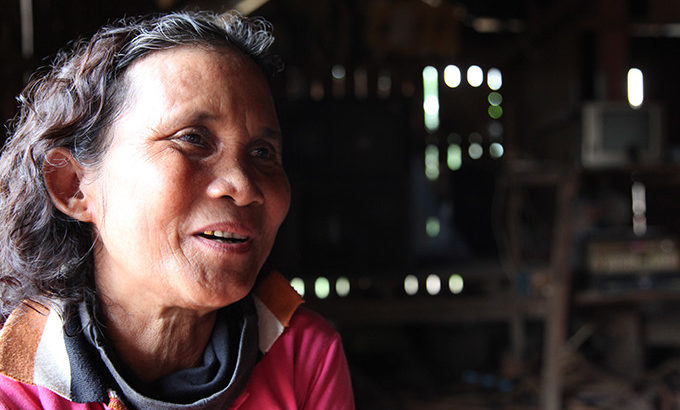
In the remote farming village of Sakreang, in Cambodia’s far north-east, Romam Pcheuk visits pregnant women in their homes.

“I keep my eye on the girls who are pale, and those that get pregnant very young,” she explained. “It’s my job to warn them of danger signs.”

Ms. Pcheuk once helped women give birth the traditional way – at home, often using dangerous practices.

“I pushed their bellies down harder when the baby wouldn’t come out,” she remembered. “If there were problems, it got dangerous. We didn’t have any equipment or medicine on hand.”

But five years ago, she joined a government-led initiative, supported by UNFPA, that aimed to educate women in far-flung communities about safe pregnancy and childbirth. Crucially, she learned to encourage all pregnant women to visit professional health care providers.

Midwife Sou Sreymech checks over a pregnant woman at the Oyadav district health centre in Rattanakiri, Cambodia. © UNFPA/ Matthew Taylor

Today, she is a community health volunteer, looking out for hundreds of pregnant women in Sakreang and nearby villages in Rattanakiri Province. She monitors their progress and gives them referrals to health facilities.

She also holds education sessions. “It was hard getting women to come to my sessions at first, but gradually people joined in,” she said.

“Today, no one here gives birth at home anymore. Everyone goes to the facility.”

Huge gains, lingering challenges

Cambodia has made huge gains in bringing down maternal mortality.

“In 1990, Cambodia’s maternal death rate was right up at around 1,200 women dying per every 100,000 live births,” said Catherine Breen Kamkong, UNFPA’s Deputy Representative in Cambodia. By 2015, it was about 161 per 1,000 live births.

According to the latest data, nearly 90 per cent of all births in Cambodia now take place under the care of a skilled birth attendant.

But in remote provinces like Rattanakiri, progress is only just starting to show.

“We’ve had zero maternal deaths in our district so far this year,” said Dr. Lek Chanthy at the Borkeo district hospital, which covers a population of around 70,000 in Rattanakiri. “But language barriers, traditional practices and a lack of education are still serious challenges.”

There are nearly 195,000 people in the province, over half from indigenous groups. Many stick closely to traditional lifestyles: farm work, early unions and home births.

“Some people marry at just 14, so when they get pregnant their bodies are not ready,” explained Dr. Lek Chanthy, vice-chief of the district hospital. “Young mothers face higher risks of things like excessive bleeding and disability later in life, and with no skilled birth attendants helping with childbirth, they may not make it through serious complications.”

Romam Phel, 17, is poised to become one of these young mothers. She was married at 16, and is now seven months pregnant.

“I think my time came, and we just fell in love,” she said about her early marriage. “I wanted to have children straight away after our wedding.”

Ms. Pcheuk is encouraging her to give birth in a health facility.

The last mile

Since the 1990s, UNFPA has supported the government in building a workforce of professional midwives and boosting access to sexual and reproductive health services.

Today, UNFPA, the government and partners are focusing on remote and underserved regions, increasing the number of midwives trained to deal with complicated births and doctors who can perform emergency Caesarean sections.

“Risks remain high for geographically remote communities and for marginalized groups like ethnic minorities, adolescents and migrants,” explained Ms. Breen Kamkong. “This is why we are focusing our actions on nine key provinces facing health and other inequities.”

Education is also essential. With UNFPA support, the Ministry of Education is developing comprehensive sexuality education curricula, which will be rolled out to all students between 10 and 18 years old.

“We need to go the last mile in bringing down maternal deaths,” said Ms. Breen Kamkong.

“That means putting the rights and needs of remote communities and marginalized groups right up front – so everyone can benefit from Cambodia’s phenomenal gains in bringing down maternal mortality, and can access vital sexual and reproductive health services and information.”

Fuente: http://www.unfpa.org/es/news/cambodia-push-end-maternal-deaths-remote-areas

Comparte este contenido:

Jordan signs agreement with Germany worth 10 million euros to finance education projects

Jordania/Noviembre de 2017/Fuente: Xinhuanet

Resumen: Jordania y Alemania firmaron el domingo un acuerdo de subvención adicional por valor de 10 millones de euros para financiar la Fase II del Programa de Construcción de Escuelas bajo el Plan de Respuesta de Jordania (JRP). La subvención, que forma parte de los compromisos de 2016, tiene como objetivo financiar la segunda fase del Plan de Construcción Escolar para construir nuevas escuelas públicas, y ampliar y proporcionar mobiliario y equipos a los existentes en las comunidades anfitrionas de refugiados sirios. La primera fase se firmó el 31 de julio de 2017 con un valor de 19 millones de euros. El proyecto surge como parte de los compromisos asumidos durante la Conferencia de Londres sobre el apoyo a Siria y la región en 2016.

Jordan and Germany on Sunday signed an additional grant agreement worth 10 million euros to finance the School Construction Programme Phase II under the Jordan Response Plan (JRP).

The grant, which is part of 2016’s commitments, aims to finance the 2nd phase of the School Construction Plan to build new public schools, and expand and provide furniture and equipment to existing ones at Syrian refugees host communities.

The 1st phase was signed on July, 31, 2017 with value of 19 million euros. The project comes as part of the commitments made during the London Conference on supporting Syria and the region held in 2016.

During the signing ceremony, Minister of Planning and International Cooperation Imad Fakhoury said that the programme is among the priorities of the Jordan Response Plan to the Syrian crisis, and will contribute to implementing the Education Ministry’s plan on addressing the impacts of the Syrian crisis on education in the Kingdom and improving the quality of education provided to the Syrian and reducing overcrowding at schools.

Fuente: http://news.xinhuanet.com/english/2017-11/12/c_136746865.htm

Comparte este contenido:

Chinese investors swoop on foreign education assets to meet soaring demand at home

China/Noviembre de 2017/Fuente: Times Tv

Resumen:  Los inversores chinos están intensificando su búsqueda de activos educativos en el extranjero a medida que más estudiantes chinos buscan acceso a recursos educativos occidentales en el país o en el extranjero.

La firma de capital privado Citic Capital presentó una oferta para Study Group, según dos fuentes. Providence Equity Partners, un grupo de capital privado con sede en los EE. UU., Está vendiendo la empresa con sede en Sydney, que ofrece cursos de idiomas y preparatorios para estudiantes universitarios, por hasta $ 1 mil millones, dijeron las fuentes.

Y Citic, en un consorcio con Baring Private Equity Asia, también se está acercando a un acuerdo para adquirir el negocio de aprendizaje de idiomas de Pearson Plc Wall Street English (WSE) por $ 350-400 millones. Citic Capital y Providence se negaron a hacer comentarios.

Por separado, Bright Scholar Education Holdings, respaldado por el magnate chino de la propiedad Yeung Kwok-keung, se encuentra entre los postores del proveedor de cuidado infantil estadounidense Learning Care Group (LCG). El acuerdo podría valorar el negocio en hasta $ 1,6 mil millones, informó Reuters el mes pasado.

Chinese investors are stepping up their hunt for education assets overseas as more Chinese students seek access to Western educational resources at home or abroad.

Private equity firm Citic Capital has submitted a bid for Study Group, according to two sources. Providence Equity Partners, a U.S.-based private equity group, is selling the Sydney-headquartered company, which provides language and preparatory courses for university students, for up to $1 billion, the sources said.

And Citic, in a consortium with Baring Private Equity Asia, is also nearing a deal to acquire Pearson Plc’s language learning business Wall Street English (WSE) for $350-400 million. Citic Capital and Providence declined to comment.

Separately, Bright Scholar Education Holdings, backed by Chinese property tycoon Yeung Kwok-keung, is among the bidders for U.S. child care provider Learning Care Group (LCG). The deal could value the business at up to $1.6 billion, Reuters reported last month.

The moves are triggered by the continued rise in Chinese students flocking to study in Western countries, and as the growing middle class in the world’s second-largest economy looks for international-style education at home.

This is also bolstered by a traditional Chinese view that providing the best education available is the biggest priority for any parent. Investors, especially private equity firms, like education assets because they are cash-rich with stable income from prepaid tuitions and other fees, said a managing director at a Chinese private equity fund, who asked not to be identified.

«There is long-term visibility of the business. It’s easy to understand,» he said.

The latest deals, if successful, would significantly push up China’s overseas investments in the sector. China’s global education push has also been reflected in a series of listings in recent weeks in New York by RISE Education, which offers English lessons for kids in China, pre-schooling provider RYB Education and Four Seasons Education which runs mathematics classes.

The number of Chinese students studying abroad totalled 544,500 in 2016, up 4 per cent year-on-year and more than four times the number a decade ago, according to statistics from China’s Ministry of Education.

Chinese students already make up the bulk of revenues for companies like Study Group and WSE, said Lin Feng, founder and chief executive officer at DealGlobe, a China-focused M&A advisory firm with offices in Shanghai and London.

During the past decade, the average disposable income of Chinese people has more than doubled, government statistics show. While families are already spending more on their children’s schooling, China’s decision in 2015 to allow people to have two children – ending 36 years of its «one-child policy» is expected to further boost demand for early and pre-school education.

Tapping the growth potential, Chinese investors, including companies, private equity firms and family offices, have snapped up education assets ranging from a pre-school education technology firm in Singapore, a professional training services provider in France and private schools in the UK, Thomson Reuters data show.

«This is really meeting the rigid demand from Chinese parents who care about kids’ education the most,” said Hou Yi, an executive director at Chinese private equity firm CDH Investments focusing on education and consumer sectors.

CDH last December acquired a controlling stake in Singapore-based Ednovation Pte Ltd, a pre-school educational technology firm. China now accounts for about 80 per cent of Ednovation’s 2017 core earnings, up from 50 per cent before the deal, Hou said, adding deals in the education sector will remain strong and active in the next three to five years.

DealGlobe’s Feng said his clients were most interested in parents’ efforts to upgrade their children’s education, scouting for overseas high-end learning services including pre-school institutes and boarding schools.

Vocational training services in particular are expected to grow strongly even if the Chinese economy continues to slow down as more people will want to seek to learn new skills as their current jobs are displaced, Feng said.

«The first thing after an acquisition is to build up the Chinese market,» he said. «These overseas assets are not cheap, but domestic ones are even more expensive. Chinese firms can still find multiple arbitrage opportunities.»

The $350-400 million valuation of WSE would represent more than 15 times its earnings before interest, tax, depreciation and amortisation (EBITDA), according to people close to the deal.

«Everything (for sale) is pricey these days and, when you have to spend money, you want to be in a defensive industry,» said Samson Lo, head of Asia M&A at UBS. «The education sector will do well in either a good or a bad economy. It is also a cash business and there is exponential growth in China.»

Still, China’s overseas education investments have some way to go to catch up with the spending at home. In 2016, investors spent $2.5 billion on 50 acquisitions globally, of which only three deals were done overseas, according to Thomson Reuters data. Despite the potential outbound surge in education deals this year, domestic deal volume in the sector – at $863 million – was still more than double the outbound amount as of the end of October.

Fuente: http://timesofoman.com/article/121694/Opinion/Columnist/Chinese-investors-are-stepping-up-their-hunt-for-education-assets-overseas-as-more-Chinese-students-

Imagen de archivo

Comparte este contenido:
Page 354 of 772
1 352 353 354 355 356 772