Page 574 of 772
1 572 573 574 575 576 772

Viceprimera ministra China pide más apoyo para profesores rurales

China/15 septiembre 2016/ Fuente: Xinhuanet

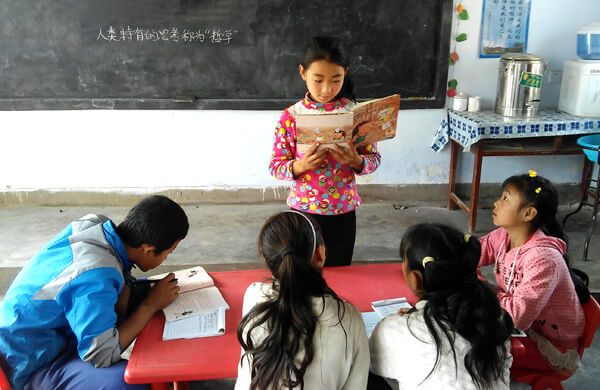
La viceprimera ministra de China Liu Yandong pidió más esfuerzos destinados a apoyar a los profesores rurales y mejorar la educación rural.

Liu se reunió hoy con profesores excelentes y veteranos que trabajan en áreas rurales, antes del Día del Maestro que en China se celebra el 10 de septiembre.

La calidad de la educación rural es un índice importante para evaluar la educación nacional, y tiene una gran importancia para la justicia social y el desarrollo económico, dijo Liu.

China tiene más de 15 millones de profesores que dan clases a 260 millones de estudiantes. De ellos, más de tres millones trabajan en áreas rurales remotas, donde hacen importantes contribuciones al crecimiento de los niños rurales y al desarrollo equilibrado de la educación nacional, indicó Liu.

Actualmente, 32 por ciento de las escuelas secundarias de China, 62 por ciento de las escuelas primarias y 34 por ciento de jardines de niños están en áreas rurales.

Liu pidió a los gobiernos locales aplicar varias políticas en relación con los profesores rurales, mejorar su capacitación e incrementar sus ingresos.

También alentó a los profesores a dedicarse a su profesión y fomentar más talentos para impulsar la causa socialista.

Fuente noticia: http://spanish.xinhuanet.com/2016-09/08/c_135670306.htm

Fuente imagen: http://es.sumec.com/uploadfile/image/20160108/20160108160207_69613.jpg

Comparte este contenido:

Pakistán otorga becas a 2.000 estudiantes afganos que cursan estudios en sus centros

Pakistán/15 septiembre 2016/Fuente: La Información

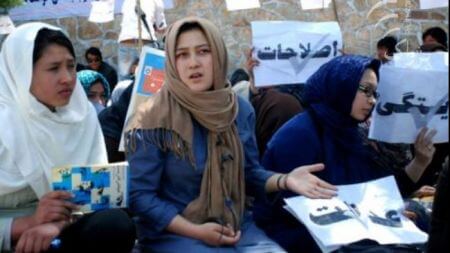
Abdul Qadir Baloch, funcionario paquistaní ha afirmado que al menos 2.000 estudiantes afganos han recibido una beca para estudiar en distintas universidades de Pakistán en una movimiento que refuerza la estrategia educativa de Islamabad, según ha informado la agencia Jaama .

Así Baloch ha comfirmado la aprobación de las becas y ha detallado que actualmente más de 7.000 estudiantes afganos estudian en Pakistán costeándose sus propios cursos. Mientras, 30.000 afganos que ya completaron su educación en Pakistán trabajan en el país vecino sirviendo en departamentos gubernamentales, el Ejército o multinacionales.

«Ya se ha mandado un resumen al primer ministro para relajar a todos los refugiados afganos que tienen propiedades o empresas en Pakistán», ha afirmado según unas declaraciones recogidas por el diario ‘The Daily Times’.

Fuente noticia: http://www.lainformacion.com/educacion/Pakistan-estudiantes-afganos-estudios-centros_0_948505189.html

Fuente imagen: http://globedia.com/imagenes/noticias/2013/5/26/estudiantes-afganos-hambre-reformas_1_1706616.jpg

Comparte este contenido:

Higher education access targets ‘set to be missed’ in the developing world

14 de septiembre de 2016 / Por: Chris Havergal / Fuente: https://www.timeshighereducation.com

Cambridge study finds women are least likely to benefit when university enrolment is expanded in South Asia and sub-Saharan Africa

Global higher education access targets are likely to be missed, according to a study that found that women are at the back of the queue when university enrolment widens in the developing world.

An analysis of higher education participation rates in 35 countries in South Asia and sub-Saharan Africa by University of Cambridge researchers detected “extremely low” rates for under-25s in almost all of them: below 10 per cent in 31 of the countries, and below 5 per cent in 20.

Drawing on US-funded Demographic and Health Surveys conducted between 2007 and 2014, Sonia Ilie and Pauline Rose found that enrolment was generally lowest in sub-Saharan Africa, with participation among the young below 2 per cent in countries including Malawi, Mozambique, Niger, Rwanda and Tanzania.

However, average attendance rates mask “vast differences” in participation between the poorest and richest in each country, write Dr Ilie and Professor Rose in the journal Higher Education. There are five countries where the number of poor young people going to university is “not statistically different from zero” : Burkina Faso, Liberia, Malawi, São Tomé and Príncipe, and Tanzania.

More than 5 per cent of the poorest half of young people went to university in only four of the 35 countries – Comoros, Bangladesh, Nepal and Pakistan – and, even in these nations, richer citizens were three to five times more likely to enrol.

Dr Ilie and Professor Rose find that the overall access trend for poorer young people over the past 40 years has been “one of stagnation”. It is richer people who have benefited the most, although this has often been relatively gradual: participation rates are estimated to have increased by fewer than 5 percentage points in 22 of the 35 countries.

Given that the gap in participation between rich and poor “has, if anything, widened over time”, Dr Ilie and Professor Rose write that the chances of meeting the goal of equal university access for all women and men by 2030, set out in the United Nations’ Sustainable Development Goals, seem “remote”.

The prospects for women are particularly concerning, add Dr Ilie and Professor Rose. They find that, in countries where access is restricted to a very small proportion of under-25s overall, the difference in participation between men and women is small.

However, in 24 of the 30 countries where at least some of the poorest are enrolled, poor young women were the least likely to enter university and, in 15, rich men were the most likely to. In Guinea, the paper says, fewer than 0.1 per cent of poor young women enrol, compared with 1.1 per cent of poor young men and 15 per cent of rich young men.

Professor Rose told Times Higher Education that “wide inequalities will remain” until standards of primary and secondary schooling are significantly improved.

“Despite recent expansion in higher education in African countries, the evidence shows that the poorest young people in African countries are very rarely getting access,” Professor Rose said. “As higher education expands, there is also some evidence to suggest that gaps in access to higher education between young women and men widen in these countries.

“Public spending needs to focus on the parts of the education system where inequalities begin, in primary and secondary schooling.”

Fuente noticia: https://www.timeshighereducation.com/news/higher-education-access-targets-set-to-be-missed-in-the-developing-world

Comparte este contenido:

China enhances higher education cooperation with South Africa

China / 14 de septiembre de 2016 / Fuente: http://en.moe.gov.cn/

China’s Minister of Education, Chen Baosheng, received a delegation from South Africa, on Sept 9, led by its minister for higher education and training, Blade Nzimande, to review the progress of the two countries’ strategic partnership especially in the field of education.

Chen praised the cooperation after the two established Sino-South African diplomatic relations and how the leaders have given special attention to education and high-level contacts.

He also explained the preparations for exchanges between China and South Africa at the vice-premier level and discussed mutual recognition of academic credentials and degrees, student exchanges, interschool cooperation, and joint research.

The two agreed to increase exchanges and cooperation in higher education and promote education development in a pragmatic way.

Fuente noticia: http://en.moe.gov.cn/News/Top_News/201609/t20160912_280844.html

Comparte este contenido:

Vietnan: Vocational education needs reform

Vietnan / 14 de septiembre de 2016 / Fuente: http://english.vietnamnet.vn/

Vietnam’s vocational education system must undergo reform to produce workers who can compete with their counterparts in other countries, the head of Institute of Vocational Education Studies has said.

Speaking at a conference held in HCM City on September 11, Dr Vu Xuan Hung said that only 38.5 percent of labourers had been trained at vocational schools.

“Vietnam’s labourers are not ready for the ASEAN Economic Community,” Hung said.

The number of unemployed students has increased quarter by quarter, he said, adding that workers’ English skills were lower than those in Malaysia, the Philippines and Indonesia.

He said that vocational training would be necessary to close the gap with workers in other countries.

Dr Huynh Thanh Dien, who is working on a support industry project, said many workers were not qualified to work in standard manufacturing.

This was partly due to lack of cooperation in training between enterprises and schools. The city, for instance, had not created models for cooperation and vocational school training had not been based on enterprises’ need, he said.

Associations that represent businesses should establish links between schools and companies, he said.

HCM City will need 270,000 employees each year from now to 2025, and of that amount, 85 percent should be trained labour, according to the Centre for Human Resource Forecast and Labour Information.

Since 2011, the southeastern region has lacked sufficient human resources for the construction and industrial sector, while there are more than enough workers for the service sector.

Each year, the number of working-age people from 15 years old and above in the city increases by 100,000.

Of this number, 70 percent continue to study at high school or university and the remaining seek jobs or attend vocational training schools.

Fuente noticia: http://english.vietnamnet.vn/fms/education/163590/vocational-education-needs-reform.html

Comparte este contenido:

India: Union Cabinet approves setting up of Higher Education Financing Agency with initial corpus of Rs 2,000 crore

India / 14 de septiembre de 2016 / Por: Pranshu Rathee / Fuente: http://www.ibtimes.co.in/

HEFA aims to «push for high-quality infrastructure in educational institutions,» says an official statement.

The Union Cabinet on Monday approved the setting up of a Higher Education Financing Agency (HEFA), with an initial corpus of Rs 2,000 crore.

The move is aimed at making «a push for high-quality infrastructure in educational institutions,» according to an official statement from a government spokesperson.

Organisation

The HEFA would be jointly promoted by the identified Promoter and the Ministry of Human Resource Development (MHRD) with an authorised capital of Rs.2,000 crore. The Government equity would be Rs.1,000 crore.

The HEFA would be formed as a SPV within a PSU Bank/ Government-owned-NBFC (Promoter). It would leverage the equity to raise up to Rs. 20,000 crore for funding projects for infrastructure and development of world class Labs in IITs/IIMs/NITs and such other institutions.

Objective and Proposed Functions

The major objective of the HEFA is to leverage funds from the market and supplement them with donations and CSR funds. These funds will be used to finance improvement in infrastructure in top educational institutions

The HEFA would also mobilise CSR funds from PSUs/Corporates, which would in turn be released for promoting research and innovation in these institutions on a grant basis.

Funding and Finances

The HEFA would finance the civil and lab infrastructure projects through a 10-year loan. The principal portion of the loan will be repaid through «internal accruals» (earned through the fee receipts, research earnings etc) of the institutions. The government would service the interest portion through the regular Plan assistance.

All the Centrally Funded Higher Educational Institutions would be eligible for joining as members of the HEFA. For joining as members, the Institution should agree to escrow a specific amount from their internal accruals to HEFA for a period of 10 years. This secured future flows would be securitised by the HEFA for mobilising the funds from the market. Each member institution would be eligible for a credit limit as decided by HEFA based on the amount agreed to be escrowed from the internal accruals.

Criticism

Eminent economist, Deepak Nayyar had criticised the move when it was first announced by Finance Minister Arun Jaitley. Nayyar belived that there was no need to make such a body and instead suggested that it would be more beneficial to vest such powers into the existing body of University Grants Commission.

«I think you should actually recreate the University Grants Commission into a higher education financing authority, something which the United Kingdom has done, which France has done» Nayyar was qouted saying during an interactive session after delivering a lecture on ‘Union Budget 2016 and Beyond’.

Comparing the UGC to the Reserve Bank of India, Nayyar concluded : «They do too many things. They do disbursement, they do accreditation, they do licensing, they do certification…it is wrong.No one institution, nowhere in the world does this.»

«…this financing agency with the corpus of Rs 1,000 crore… what is it going to do? Who is going to lend to it? Because any lender will look for rates of return. Allocation made for the higher education financing agency, forgive me, is peanuts. If you feed peanuts, you will get monkeys. It is not the answer,» Nayyar concluded.

Fuente noticia: http://www.ibtimes.co.in/union-cabinet-approves-setting-higher-education-financing-agency-initial-corpus-rs-2000-crore-693432

Comparte este contenido:

Armas transgénicas para extinguir especies

Por Silvia Ribeiro

Si se pudiera extinguir totalmente especies que una empresa o institución considere dañinas ¿estaría justificado hacerlo? ¿Quién lo decide? ¿Cómo afectará las cadenas alimentarias y los ecosistemas? El arma ya existe y aunque está en prototipo, su desarrollo ocurre a un ritmo vertiginoso, dejando muy atrás cualquier regulación de bioseguridad y consideraciones ecológicas, éticas, sociales o económicas de la gran mayoría.

Para poder avanzar con este enorme riesgo tecnológico, la industria biotecnológica ha cambiado de táctica. Unas pocas ONG internacionales promueven esta nueva biotecnología como medio de “conservación de la naturaleza”, que proponen usar para extinguir especies invasoras: ratones, insectos, malezas. Presentaron también una moción al Congreso mundial de la Unión Internacional para la Conservación de la Naturaleza (IUCN) que se reúne del 1 al 10 de septiembre en Hawái, para adoptar la biología sintética como herramienta de conservación.

Frente a esto, 30 personalidades del ámbito científico, ambientalistas, abogados, líderes indígenas y otros, publicaron un llamado a poner un alto a estas propuestas y a la tecnología de “impulsores genéticos”. Entre los firmantes –que incluyen a Jane Goodall, David Suzuki, Vandana Shiva, Víctor Toledo, Alejandro Nadal- están las presidentes de la Unión de Científicos Comprometidos con la Sociedad, Elena Álvarez-Buylla, México y Angelika Hilbeck, Alemania, de la Red Europea de Científicos por la Responsabilidad Social y Ambiental (ENSSER).

La Dra. Hilbeck, entomóloga, señaló que “los impulsores genéticos son una tecnología que se propone exterminar especies. Aunque le pueda parecer a algún conservacionista profesional una “buena solución” para situaciones complejas, hay altos riesgos de consecuencias no intencionales, que podrían ser peores que el problema que tratan de resolver” (www.synbiowatch.org/gene-drives-iucn-pr).

Los “impulsores genéticos” o gene drives en inglés, se basan en una tecnología tan nueva que aún no existe traducción acordada. Es una construcción transgénica que “engaña” a la naturaleza para que las especies de reproducción sexual (plantas,insectos, animales, humanos), pasen forzosamente un gen foráneo a todas las generaciones posteriores.

Es una vía biotecnológica para destruir la ventaja desarrollada en la co-evolución de las especies en millones de años con la reproducción sexual. Normalmente, la progenie hereda 50 por ciento de la información genética de cada progenitor, lo que en generaciones posteriores facilita a los organismos eliminar genes que no son útiles o le son extraños. Con los impulsores genéticos, el constructo artificial  diseñado con tecnología CRISPR-Cas9, corta/inserta nuevas secuencias y elimina el gen correspondiente que aporta el otro progenitor, garantizando así que finalmente el gen introducido esté en toda la especie. (Más información en http://tinyurl.com/hp2gph5)

En caso de que sea una modificación para que la progenie sea de un sólo sexo, se extinguiría la especie. Esto es justamente lo que se propone el proyecto GBIRd (Genetic Biocontrol on Invasive Rodents), liderado por el grupo Island Conservation, que desarrollan roedores manipulados con impulsores genéticos para que sólo puedan procrear ratones machos. Pretenden liberarlos en 2020 en islas para eliminar a ratones que dañan a las aves. Otro proyecto que se quiere liberar en Hawai (del grupo Revive and Restore) son mosquitos con impulsores genéticos para extinguirlos por la misma vía, argumentando que trasmiten malaria aviar que afecta aves nativas. Esto a pesar de que las aves han comenzado a desarrollar resistencia natural a esa enfermedad.

El enfoque es estrecho y erróneo, porque no toca las causas, condiciones e interacciones en que desarrollan las supuestas especies “dañinas” y por tanto, seguirán surgiendo o serán reemplazadas por otras con la misma función. En el caso de GBIRd, se trata de manipular ratones comunes, por lo que la cascada de riesgos sobre la especie, sobre otros roedores emparentados y el papel que juegan en diferentes ecosistemas, es de una amplitud enorme e imposible de controlar. Esto no es muy distinto en el caso de los mosquitos; la eliminación de un tipo de mosquito –si fuera posible- abrirá paso a otros que se volverán vectores de enfermedad, quizá mucho más difíciles de controlar.

Por esta y otras razones, 71 gobiernos y 355 ONG que pertenecen a la IUCN, en lugar de apoyar el uso de biología sintética, votaron una enmienda a dicha moción, estableciendo una moratoria “de facto” dentro de IUCN al apoyo o respaldo a la investigación, experimentos de campo y uso de impulsores genéticos, hasta que se analicen en profundidad y evalúen sus impactos en la biodiversidad y otros aspectos. (http://tinyurl.com/hht8byo).

El uso de impulsores genéticos no sólo se piensa para conservación, las trasnacionales de agronegocios lo desarrollan como una vía para eliminar malezas, revertir resistencias de hierbas invasoras a los agrotóxicos de los cultivos transgénicos, para aumentar su uso. Que se dé más importancia mediática como instrumento para conservación o prevenir enfermedades, es también una manipulación para evitar que se asocien con el extendido rechazo global a los cultivos transgénicos.

Urge ampliar el debate sobre los usos, riesgos e impactos de la biología sintética y especialmente de los impulsores genéticos, sobre los que se debe establecer una estricta moratoria internacional que prevenga cualquier liberación. Para empezar, aquí puede agregar su firma a la carta mencionada http://tinyurl.com/jm4t6bg .

– Silvia Ribeiro, Investigadora del Grupo ETC – www.etcgroup.org

Ecoportal.net

ALAINET

http://www.alainet.org
Comparte este contenido:
Page 574 of 772
1 572 573 574 575 576 772