Page 633 of 772
1 631 632 633 634 635 772

India recibirá 1.000 millones de dólares del Banco Mundial para su programa de energía solar

Asia/India/01 de Julio de 2016/Fuente: Russia Today

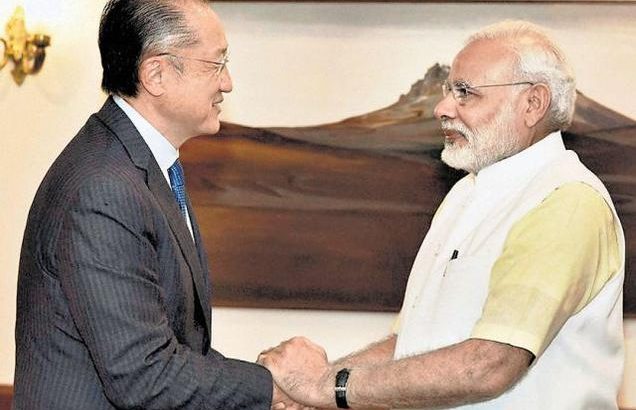
El Banco Mundial ha anunciado que va a destinar 1.000 millones de dólares para apoyar los proyectos de energía solar de la India. Es la mayor financiación en la historia de esta entidad para proyectos de energía solar, informa el periódico ‘The Hindu’.

India planea utilizar los fondos asignados para proyectos que incluyen la instalacíón de paneles solares, la creación de parques solares, la promoción de tecnologías de energía renovable y la construcción de líneas de transmisión para las regiones del país en donde haya más sol.

En un comunicado oficial, el primer ministro de la India, Narendra Modi, ha indicado que su país “quiere triplicar el porcentaje de energía renovable para 2030″, circunstancia que “transformará el suministro energético del país y tendrá un efecto importante en la lucha contra el cambio climático”.

Descarga la aplicación#CDNNews y visita nuestra página web www.cdn.com.do para que amplíes estas y otras informaciones.

Fuente: http://www.cdn.com.do/noticias/2016/07/01/india-recibira-1-000-millones-de-dolares-del-banco-mundial-para-su-programa-de-energia-solar/


Comparte este contenido:

Susan Wojcicki, la mujer más poderosa de internet

03 Julio 2016/Fuente: lavanguardia/Autora: EVA MILLET

El perfil de Susan Wojcicki en LinkedIn —la red social de contactos laborales— es breve pero contundente. Bajo el epígrafe “experiencia” se listan únicamente dos trabajos: consejera delegada de YouTube desde febrero del 2014 y responsable de publicidad en Google durante “14 años y 10 meses”. Por lo que respecta a su educación, aparecen las universidades de Harvard (cum laude en Historia y Literatura), y sendos másters en Económicas en Santa Cruz y UCLA, en California. En el estado que inventó la industria digital reside esta mujer de 47 años, madre de cinco hijos y considerada por la revista Time la ejecutiva más poderosa de internet. Forbes estima su fortuna personal en 350 millones de dólares.

Lo que no aparece en este currículum es el dato —anecdótico pero significativo— que Susan Wojcicki fue la casera de Larry Page y Sergey Brin.  En 1998 los fundadores de Google le alquilaron el garaje y dos habitaciones de su casa en Menlo Park, cerca de Palo Alto. Wojcicki y su marido, Dennis Troper, acababan de casarse y los 1.700 dólares mensuales de alquiler les ayudarían a pagar la hipoteca.

Alquiló el garaje  de su casa a los fundadores de Google por 1.700 dólares que usó para pagar la hipoteca Wojcicki fue la empleada dieciséis de Google y la primera de la empresa en pedir la baja maternal después, cuando Google ya se había trasladado a otras oficinas, Wojcicki entró a trabajar en la empresa. Como explicó en una entrevista en el Financial Times, lo hizo atraída por el potencial de internet, un medio que ya le interesó en Harvard, donde combinó las humanidades con el aprendizaje del código informático y la ingeniería. Google, compañía que conocía bien, cumplía con sus requisitos de ser innovadora e interesante. De todos modos: “Tenía mis reservas respecto a trabajar con dos estudiantes. Así es como los veía en ese entonces: dos estudiantes que estaban montando su primera compañía”, relató al Financial Times.

Le encantan los niños, y siempre tuvo claro que iba a combinar maternidad y trabajo. Tener una familia numerosa no ha afectado en absoluto a su brillante trayectoria. Al contrario: asegura que existe una clara asociación con sus cinco bebés y los avances en su carrera. “El primero es el bebé Google, ya que me uní a Google como directora de marketing durante mi primer embarazo”, enumeró en una entrevista en Fortune TV. Fue durante la baja maternal del segundo cuando decidió especializarse en la publicidad on line, donde destacó por su visión de negocio. El tercer embarazo coincidió con la adquisición de YouTube —impulsada por ella—, por 1.600 millones de dólares, mientras que el cuarto bebé llegó cuando Google compró la compañía de publicidad online DoubleClick por 3.100 millones de dólares (“¡Fue todo un poco demasiado!”, observó en esa misma entrevista). “El último llegó poco después de que entrara en YouTube, así que es el bebé YouTube. Cada uno ha significado una era de oportunidad”, resume, para a continuación añadir que, quizás: “Debería encontrar un modo de avanzar en mi carrera sin necesidad de tener bebés. ¡La casa ya está llena!”.

Defensora de la conciliación familiar

Por razones obvias, la ejecutiva se ha convertido en una activista de la conciliación familiar, que ella trata de llevar a cabo. ¿Su fórmula? Procura guardarse el tramo de 18 a 21 horas para estar en casa con sus hijos, algo que insta a hacer a sus empleados. En YouTube ha instaurado la flexibilidad laboral y una baja maternal remunerada de 18 semanas, algo muy inusual en Estados Unidos. Activista por el derecho a una baja maternal digna en su país, también ha instalado áreas de parking para embarazadas, además de cocinas surtidas con alimentos saludables y salas de descanso.

Para ser efectiva en su trabajo, prioriza: “Trato de gestionar bien mi tiempo en la oficina y salir a una hora razonable, como las seis de la tarde”. Una vez en casa, se concentra en la familia y procura no contestar a ningún e-mail hasta las nueve de la noche (“Lo que es difícil”, admitió en un programa de la NBC). Está firmemente convencida que ser madre la hace aún mejor en su trabajo: “Para mí, estar en casa para cenar es fundamental para lograr un equilibrio. Además, me ha forzado a priorizar y ver lo que tiene más impacto. De este modo he conseguido los mejores resultados para YouTube”.

Otro de sus caballos de batalla es incrementar la presencia de las mujeres en la industria digital. Entre otros, lanzó el proyecto made with code para animar a las jóvenes a aprender código informático. También es una de las responsables de que, en una industria predominantemente masculina, el 30 por ciento de la plantilla de YouTube sean mujeres.

Lo que hace, dice, le apasiona. A los que sugieren que la plataforma de vídeos de internet más grande del mundo, donde se suben hasta 400 horas de material por minuto, es una infinita sucesión de tonterías, ella responde: “Al haber tanto, hay algo de interés para todo el mundo”. Define YouTube como “una plataforma que da voz a la gente” y que permite que “nuestros hijos puedan ser creadores desde su habitación”. Sus hijos, usuarios mucho más veteranos que ella, le han ayudado a entender cómo funciona este medio. Aunque la publicidad le apasiona, confiesa que “de vez en cuando” se salta los anuncios previos a los vídeos.

Su padre, Stanley Wojcicki, es físico de origen polaco y su madre es educadora y descendiente de judíos rusos Sus hijos, usuarios más veteranos que ella, le han ayudado a entender cómo funciona YouTube. A su madre, Esther, educadora y descendiente de judíos rusos, la define como una mujer muy divertida: “Creo que tengo cosas suyas por ambos lados”. Las Wojcicki son tres hermanas, muy talentosas. Janet es epidemióloga y doctora en Antropología, mientras que Anne fue una de las fundadoras de 23andme, empresa pionera en el diagnóstico genético. Anne estuvo casada con Sergey Brin, del que se separó en el 2013. El divorcio no afectó las relaciones de Susan con su poderoso jefe en Google. “Nunca mezclo mi vida personal con la profesional”, añade

Fuente de la noticia: http://www.lavanguardia.com/gente/quien/20160702/402916740144/susan-wojcicki-mujer-poderosa-internet.html

Fuente de la imagen: http://www.lavanguardia.com/r/GODO/LV/p3/WebSite/2016/07/02/Recortada/img_ajimenez_20160625-164412_imagenes_lv_getty_susan1-kuEC-U402916740144PwG-992×558@LaVanguardia-Web.jpg

Comparte este contenido:

Armenia: French University of Armenia has become beacon of Armenian – French cooperation

Asia/Armenia/Julio 2016/Autor: Editor / Fuente: arka.am

Resumen:  El primer ministro armenio Hovik Abrahamian asistió el 30 de junio, a una celebración festiva dedicada al  decimoquinto aniversario de la Universidad Francesa de Armenia.

Armenian Prime Minister Hovik Abrahamyan attended June 30 a ceremonious event dedicated to the 15th anniversary of the French University of Armenia.

Congratulating the students, teachers and graduates on the anniversary of the university, the Prime Minister noted that by introducing European standards of higher education, the French University gave a new quality and a new spirit to the Armenian-French cooperation.

According to Hovik Abrahamyan, thanks to close interaction between the Armenian and French ministries of Foreign Affairs and Education and Science, the University has become a beacon of the Armenian-French cooperation.

“Having a unique place and being highly rated in our country’s educational system, the French University of Armenia has the merit of building up and combining the know-how accumulated in the Armenian and French educational systems over years. During 15 years of efficacious activity, the University has awarded diplomas to over 1,500 graduates in management, marketing, finance and law,” the Prime Minister said, adding that the graduates of the University have committed their knowledge and high professionalism to the cause of strengthening our statehood, developing the economy and promoting civil society in Armenia.

The Prime Minister said that this is the outcome of the dedicated work of the faculty and the administrative staff, the continued assistance provided by the Armenian and French authorities, Jean Moulin Lyon 3 University, as well as mutually beneficial cooperation with university partners. Reiterating his congratulations, Hovik Abrahamyan wished the faculty and the students every success and new achievements in the future.

For localization of European and French higher educational standards, valuable contribution to vocational education and the development of the French University in Armenia, as well as on the 15th anniversary of the University, Hovik Abrahamyan awarded the Prime Minister’s commemorative medal to FUA Fund Rector, Doctor of Technical Sciences Professor Jean-Marc Lavesti and President of the Jean Moulin Lyon 3 University, Doctor of Humanitarian Sciences, Professor Jacques Comby.-0-

Fuente de la noticia: http://arka.am/en/news/society/french_university_of_armenia_has_become_beacon_of_armenian_french_cooperation_pm_says/

Fuente de la imagen: http://arka.am/upload/resize_cache/iblock/b31/344_258_2/b3112b6f212ca586cc0a9b0a689e1398.jpg

Comparte este contenido:

India: Engineering an education revolution

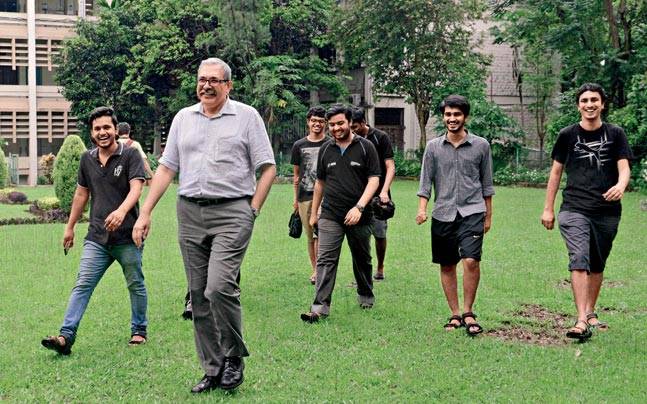
Resumen:   Cuando Shivam Garg y sus 20 amigos participen en el más grande evento educativo de deportes de motor, Formula Student de Europa, el 14 de julio en Londres, Reino Unido, será otro galardón del Instituto Indio de Tecnología (IIT) de Bombay. El suyo es el único equipo de la India que ha diseñado un coche eléctrico para esta competición. Ellos tratarán de ganar su cuarto premio consecutivo como el mejor equipo no europeo en esta competición.

When Shivam Garg and his 20 friends participate in Europe’s biggest educational motorsport event, Formula Student, on July 14 in London, UK, it will be another feather in the cap of Indian Institute of Technology (IIT) Bombay. Theirs is the only Indian team which has designed an electric car for this competition. They will try to win their fourth straight award as the best non-European team in this competition.

The racing team’s success story is in sync with the rising graph of IIT Bombay in the academic as well as the non-academic sphere. Its healthy educational climate and research-oriented outlook has made it one of the best technical institutes that also encourages students to excel in extracurricular activities.

With an impressive 1:14 faculty-student ratio, IIT Bombay is the most sought-after institute for engineering aspirants. It has witnessed three big trends in the past few years. The number of students has grown from 5,300 in 2009 to 10,000 now. Computer science and engineering, electrical engineering and mechanical engineering are the most sought- after courses.

There is almost five-fold growth in its research and development activities. Simultaneously, there is huge student interest in entrepreneurship, with a vibrant startup ecosystem developing around the campus. No wonder, the institute spent Rs 243 crore on R&D in 2015, published 1,500 research papers, produced 266 PhD scholars and filed 130 patents.

High-tech infrastructure facilities such as the Laser Doppler Vibrometer, High Resolution Mass Spectrometer, Orientation Imaging Microscope and Image-Based Diagnostic Systems give researchers here a head start. They have obtained licences for innovations like the electric three-wheeler, an Ethernet switch router, modular toilet unit for Indian Railways and a modular hybrid air conditioner.

Second-year student Anuraj Gupta says the alumni association, good placement offers and good on-field experience at IIT Bombay serve as a magnet for students. «Students get good placement offers as the alumni working with different companies are sentimentally attached to the institute. They then come looking for the best brains.»

Figures vindicate Gupta’s assertion. Till June 2015, 310 organisations had taken part in the campus placements and offered 1,118 jobs. The year 2014-15 saw the largest registration for placement at 1,675; of them 1,118 got jobs. The institute has not only produced well-qualified engineers but also equally qualified consultants. Last year, 155 jobs were offered in field of data analytics making it the biggest recruiter after engineering and information technology companies. It was followed by job offers in corporate consulting (107), financial services (100), R&D (48) and educational institutes (45), public sector (10) and FMCG (6). Obviously, jobs in engineering and technology were the highest at 381 followed by IT (199).

In 2015, around 365 job offers were of a salary more than Rs 11 lakh per annum. Only 83 were offered a salary less than Rs 5 lakh a year. The highest domestic salary offer was Rs 34 lakh a year, and the highest international salary offer was Rs 65 lakh per annum. The average domestic salary offer was Rs 9.5 lakh per annum.

Located close to two lakes, Vihar and Powai, the IIT Bombay campus is a natural delight for its students. The greenery and the pleasant atmosphere keep him energetic, says student Archit Sanadhya. Of course, the Gulmohar Cafeteria, or Gullu as students call it and the Students’ Activity Centre remain favourite haunts.

Director Devang Khakhar says the highly flexible curriculum which offer plentiful choice of subjects and hands-on learning make the IIT Bombay education very effective. «The campus experience transforms our students,» he says. «We provide them rigorous academic work and excellent extra-curricular facilities. Our modern laboratories allow students to participate in research. Our core strength is our outstanding faculty.»

The institute introduced two new courses last year, a Bachelor in Design (BDes) and Executive MBA ,jointly with Washington University, St Louis. Around 800 students had applied for the 35 seat BDes course.

Separate gyms, playing areas, sports library, mess and shops at each of the 16 hostels keep students occupied. They also look forward to two big annual events, Mood Indigo, Asia’s largest cultural festival at the college level, and Techfest, a science & technology festival to promote technology, scientific thinking and innovation.

Stories of the simplicity of two of its alumni-defence minister Manohar Parrikar and entrepreneur-turned-politician Nandan Nilekani-are legion. But there’s equal interest in the likes of Bharat Desai, chairman of IT firm Syntel. «After all, he is the richest IITian,» says a student. And his role model too.

Fuente de la noticia: http://indiatoday.intoday.in/story/indian-institute-of-technology-mumbai-engineering-college/1/704308.html

Fuente de la imagen: http://media2.intoday.in/indiatoday/images/stories/univ-technical-jul11-1_647_070116094322.jpg

Comparte este contenido:

China: UN chief welcomes China joining the International Organization for Migration

Asia/China/02 Julio 2016/Noticias/Boletín de Beijin

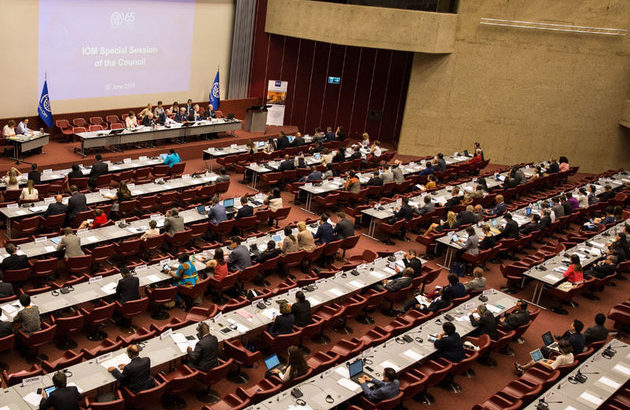
El 1 de julio de 2016 – El Secretario General Ban Ki-moon, ha celebrado la decisión de China para unirse a la Organización Internacional para las Migraciones (OIM), diciendo que el país hará una «valiosa contribución» a la OIM.

En un comunicado emitido ayer, el Secretario General señaló que el momento es «crucial» dadas las necesidades urgentes de los migrantes y refugiados.

El anuncio se produce un día antes de los Estados Miembros de la OIM decidió unirse al sistema de las Naciones Unidas como una organización relacionada.

«Hoy [30 de junio] ha sido un punto de inflexión en la vida de esta organización, que está celebrando su año número 65,» El Director General de la OIM William Lacy Swing, dijo en una reunión de su Consejo especial en Ginebra el jueves, en la que «los Estados miembros aprobaron el movimiento por el que la OIM se unirá al sistema de las Naciones Unidas «.

«Esperamos tener pronto un asiento y una voz en la mesa de la ONU y la ONU pronto tendremos una agencia para la migración dedicado», agregó.

Se espera que el Secretario General de la ONU para recibir la notificación oficial pronto. La decisión entonces será presentado a la Asamblea General de la ONU para su aprobación. Se espera que entre en vigor, tras la firma del acuerdo, durante una cumbre de la ONU sobre los migrantes y refugiados el 19 de septiembre.

Fuente: http://www.beijingbulletin.com/index.php/sid/245472375

Fuente Imagen :http://cdn.bignewsnetwork.com/uni1467394863.jpg

1 July 2016 — Secretary-General Ban Ki-moon has welcomed China’s decision to join the International Organization for Migration (IOM), saying that the country will make a «valuable contribution» to IOM.

In a statement issued yesterday, the Secretary-General noted that the timing is «crucial» given the urgent needs of migrants and refugees.

The announcement comes just one day before IOM member states decided to join the United Nations system as a related organization.

«Today [30 June] has been a watershed moment in the life of this organization, which is celebrating its 65th year,» IOM Director General William Lacy Swing told a meeting of its Special Council in Geneva on Thursday, in which «Member States approved the motion by which IOM will join the United Nations system.»

«We expect to soon have a seat and a voice at the UN table and the UN will soon have a dedicated migration agency,» he added.

The UN Secretary-General is expected to receive the official notification soon. The decision will then be submitted to the UN General Assembly for approval. It is expected to enter into force, upon signature of the agreement, during a UN Summit on migrants and refugees on 19 September.

Comparte este contenido:

Taiwan: Students arrive from US to take course in Tainan

Asia/Taiwan/Julio 2016/Autor: Sean Lin / Fuente: taipeitimes.com

Resumen:   Estudiantes de universidad y posgrado de los Estados Unidos llegaron a Taiwan para recibir cursos de dos meses de lengua china y cultura taiwanesa con una beca establecida conjuntamente por Taiwan-United States Sister Relations Alliance (TUSA) y el Ministerio de Educación.

US college and postgraduate students arrived in Taiwan on Thursday for a two-month Chinese-language and Taiwanese culture course on a scholarship jointly established by the Taiwan-United States Sister Relations Alliance (TUSA) and the Ministry of Education.

The ministry said it hopes to make Taiwan the top choice for foreigners to learn Chinese.

Department of International and Cross-strait Education counselor Chiu Yu-chan (邱玉蟾) said the 55 students were selected from 46 universities across 32 US states that have joined TUSA or signed memorandums of understanding with the Foundation for International Cooperation in Higher Education of Taiwan.

Students are from Cornell University and Columbia University in New York and Stanford University in California, among others.

Chiu said they are to attend Chinese-language classes at National Cheng Kung University in Tainan over the coming two months.

In addition to 120 hours of Chinese-language studies, the students will also be taught about Taiwanese film and pop culture, food, art, politics and economics, as well as cross-strait relations based on the National Cheng Kung University curricula, she said.

The students are also to tour the nation, traveling from the streets of Taipei to the beaches of Kenting (墾丁), she said, adding that 46 families have offered the students board.

The ministry hopes to achieve “meaningful” diplomacy through the program by fostering “Taiwan-friendly” individuals, she said.

Ministry official Lai Yi-fan (賴羿帆) said more than 250 US students have participated in the scholarship program since its inception.

The program has come a long way since it was established in 2005, with the number of US students covered by the scholarship increasing from just four to 55, while TUSA received more than 200 applications this year.

The US is an important ally to Taiwan, Lai said, adding that he hopes the ministry can continue to work with TUSA to expand the scholarship so that more US students can visit Taiwan.

Lai said the ministry is exploring the possibility of offering the scholarship at other universities.

Fuente de la noticia: http://www.taipeitimes.com/News/taiwan/archives/2016/07/02/2003650173

Fuente de la imagen: https://www.google.com/search?q=universidad+tainan&client=ubuntu&hs=BV7&channel=fs&source=lnms&tbm=isch&sa=X&ved=0ahUKEwiImeOft9XNAhXDXyYKHWrMCRQQ_AUICSgC&biw=1301&bih=673

Comparte este contenido:

Japón: Scientists Find New Kind of Fukushima Fallout

Asia/Japón/Julio 2016/Autor: Sam Lemonick / Fuente: Forbes

Resumen:  Científicos han descubierto que parte del material radiactivo que escapó del reactor nuclear de Fukushima Daiichi en 2011 tomó una forma que nadie estaba buscando. Ahora tienen que averiguar lo que significa para Japón y para futuros desastres

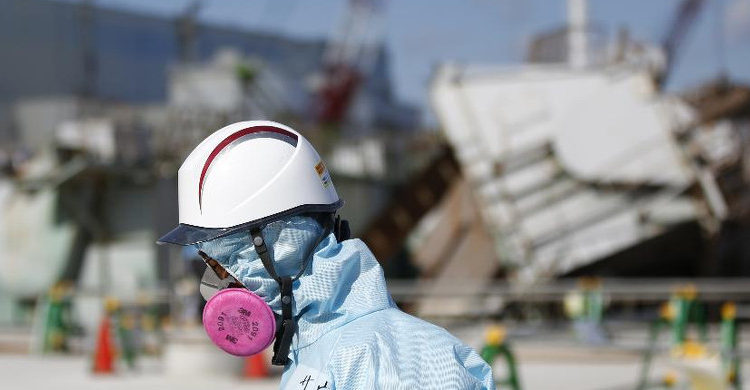
Some of the radioactive material that escaped the Fukushima Daiichi nuclear reactor in 2011 took a form no one was looking for, scientists have discovered. Now they have to figure out what it means for Japan and for future disasters.

Radioactive cesium—specifically, cesium-137—is one of the waste products of nuclear power. It’s also one of the most dangerous substances in a nuclear disaster like Chernobyl or Fukushima.

One reason why is that the type of radiation it emits is particularly damaging to our bodies. Another is that cesium-137 dissolves in water. That means it can spread quickly through the environment and get into the plants, animal and water we consume.

Until now, scientists and disaster experts thought cesium-137 fallout from the Fukushima reactor meltdown was in this soluble form. That guided their cleanup efforts, like removing and washing topsoil, and helped them map where radiation might spread.

It turns out that wasn’t entirely true. Satoshi Utsunomiya, a geochemist at Kyushu University in Japan, announced over the weekend that he had found cesium-137 in a new form: trapped inside tiny glass particles that spewed from the damaged reactors. These particles are not water soluble, meaning we know very little about how they behave in the environment—or in our bodies. He found the particles in air filters placed around Tokyo at the time of the disaster.

According to Utsunomiya, high temperatures inside the malfunctioning reactors at the Fukushima plant melted and broke down the concrete and metal in the buildings. Silica, zinc, iron, oxygen and cesium-137 fused into millimeter-wide glass microparticles, each about the size of a pin’s head. Lifted into the atmosphere by the fires raging at the plant, they then blew about 240 kilometers southeast to Tokyo.

“As much as 89% of all of the cesium [in Tokyo] was in fact in these particles. It’s profound,” says Daniel Kaplan, a geochemist at Savannah River National Laboratory in South Carolina. He attended Utsunomiya’s lecture describing the findings at the ongoing Goldschmidt Conference in Yokohama, Japan.

Kaplan says similar particles were observed near the Chernobyl reactors after the explosion there in 1986. But they were only seen within about 30 kilometers; beyond that, cesium-137 was only observed in rain.

The discovery could change how we model fallout from nuclear disasters. Kaplan explains that it might add a new variable to the models we use to predict where radioactive particles will go and how long they’ll stay there. It might also change how we treat cesium-137 during cleanup and monitoring.

It is probably still too early to say what this means for people living in Tokyo or elsewhere in Japan. Kaplan thinks the amount of radiation they received probably hasn’t changed. Whether they got it from water-soluble cesium-137 or from these particles, the radiation dose was the same—and for Tokyo residents, that number was within the margin of safe exposure.

The bad thing about water-soluble cesium-137 is that it can easily get into our bodies from soil by way of plants and animals. This new discovery alleviates that concern. But it opens up a new possibility we know little about.

“If the particles are in the air—because that’s how they get to Tokyo—then when you are aspirating this air you should find them in some ways on your lungs,” says Bernd Grambow, who studies nuclear waste chemistry as head of the SUBATECH laboratory in France.

Water-soluble cesium-137 that makes it into our lungs passes into the bloodstream and is peed out within a few weeks. But Grambow says we really don’t know what happens to insoluble cesium-137-containing particles if they get in our lungs. Some of them are likely coughed out or removed by our lungs’ other normal processes. As for the rest, Grambow says we don’t know how long they might remain.

He cautions that any internal radiation from particles containing cesium-137 would be much less than the doses people got from external radiation, which would come from cesium-137 and other radioactive elements in the soil or the environment around them. “We don’t know very much, and my point is only that they should be studied,” Grambow says.

Utsunomiya’s next step is finding out how much of the cesium-137 that ended up in soils in Tokyo and elsewhere was in these glass particles. That way, researchers will be able to better understand how cesium made its way out of the reactor and into the environment.

Fuente de la noticia: http://readersupportednews.org/news-section2/318-66/37768-scientists-find-new-kind-of-fukushima-fallout

Fuente de la imagen: http://readersupportednews.org/images/stories/article_imgs21/021680-japan-070116.jpg

Comparte este contenido:
Page 633 of 772
1 631 632 633 634 635 772