Page 1238 of 2504
1 1.236 1.237 1.238 1.239 1.240 2.504

We can’t retool U.S. schools based on Finland or China

Get Schooled recently ran an essay about Chinese education, in which “the goals are excellence, diligence and compliance.” This approach was valorized in the narrative provided by Amy Chua in “Battle Hymn of the Tiger Mother,” in which she argues on behalf of highly disciplined, harsh, authoritarian schooling and parenting.

The Get Schooled essay challenged readers to consider whether U.S. schools should become more like Chinese schools, and U.S. parents more like Chinese parents, in order for the U.S. to challenge the Chinese in their performance on international standardized tests.

The specter of falling behind has motivated school reform many times. When I was in first grade in 1957, the Soviets launched Sputnik, and we fell behind in the space race, prompting massive efforts to overhaul schools under the assumption our STEM education was inadequate.

By 1983 I was a high school English teacher in Illinois. That year A Nation at Risk was published by President Reagan’s National Commission on Excellence in Education, opening with “Our once unchallenged preeminence in commerce, industry, science, and technological innovation is being overtaken by competitors throughout the world …the educational foundations of our society are presently being eroded by a rising tide of mediocrity that threatens our very future as a Nation and a people…others are matching and surpassing our educational attainments.”

Around that time, it was common for Americans to lament our failures relative to Japan and its culture of worker compliance and loyalty, and academic excellence. I taught some Japanese exchange students back then, and they talked about how their teachers would hit them if they got too interested in someone of the opposite sex, which would take their attention from their studies. Further, suicide notes of Japanese teens often identified pressure to succeed in school as the cause of their decision to end their lives. But their tests scores were impressive.

It probably helped that Japan did not have a military and its enormous costs, and so could focus its resources and attention largely on commerce, education, infrastructure, and other domestic investments. That fact was mostly absent from appeals for the U.S. to be more like Japan, even though at the time we were still recovering from the costs of Vietnam and beginning the Reagan-era military buildup.

More recently, Finland has been set as the model for U.S. schools, again because of their comparative scores on international tests, and their unusually happy teachers.

It’s always tempting to see greener grass on the other side of the ocean, without getting close enough to notice how much manure lies at ground level or how different the weather might be to green up what’s visible. I think that looking longingly at other nations can be deceiving, and for a variety of reasons.

First, the nations we are encouraged to emulate tend to be culturally and racially homogeneous. Having a monoculture helps to focus on and perpetuate national goals and ways of being. I don’t say that to argue against cultural diversity of the sort we have in the United States. I think the multiplicity of perspectives across the social spectrum is healthy and invigorating, if often difficult to put into harmony. Diversity does work against common cause, however, including agreeing on the purpose and process of education.

Trying to be more like Finland, or China, or Japan, or the next shiny distraction overseas overlooks the critical issue that context matters in how social institutions function, and matters a great deal.

Let’s take Finland, a monocultural nation with a strong socialistic economic system. Schools are well funded, and children are protected by a range of social services that make them relatively healthy and school-ready. If you want U.S. schools to be like Finland’s, by all means vote to increase your taxes, because you can’t get their schools with our financing. If you want the U.S. to have schools like Finland’s, then you have to make the U.S. more like Finland.

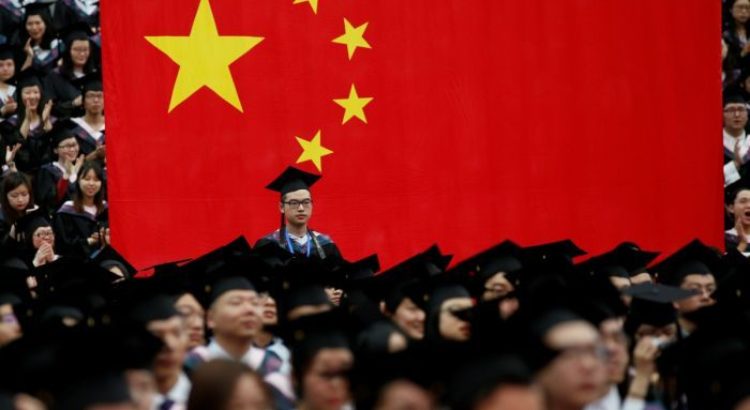
If you want us to be more like China, then you have to reconceive a lot of American values. The Get Schooled essay includes the acknowledgement that the Chinese system produces “homogeneous and driven graduates” based on a “narrow and rigid approach [that] doesn’t yield a diverse, independent-thinking and inventive workforce…The Chinese system kills curiosity from a very early age…The Chinese [rely] on coercion and intimidation to establish order and routine.” They also have a culture in which test scores are indicators of both ability and character, and are highly prized as valid measures of success.

Within nations, there are local cultures that don’t often mix well. A few years ago, football star Adrian Peterson nearly lost his career when he disciplined his son by punishing him with a licking with a switch. That’s the way he’d been brought up in Texas, with the switch not spared. Culturally, Peterson was subjecting his son to a form of discipline that had been administered in his own family for generations. He thought he was being a good parent for doing what his parents had done to shape him up. But corporal punishment of children had become unacceptable to families working from other assumptions, and his career and public reputation were in tatters.

Peterson sounds as though he’d be a good fit in China, where according to the Get Schooled essay, “when 3-year-old Rainey begins an elite preschool refusing to eat eggs, his teachers force-feed him. When he balks at napping, teachers warn him the police will take him away. Other willful acts by children are met with threats their mothers will not return to pick them up at the end of the day.” But not in Minnesota, where his football career had taken him to, and where it nearly ended because of the severe disciplinary methods he used in his home.

I’m not here to attack or defend whipping kids with switches, being a Tiger Mom, or raising your taxes. (Well, I’d defend the last one, and I’m sure many of you would attack.) My point is simply to say that you can’t take something out of its national or cultural context, deposit it neatly into one that’s quite different, and expect it to work the same.

We may well have something to learn from how other nations educate their children. But ignoring why those practices work there will have consequences here. If you have Finland Envy, or China Envy, or Japan Envy, make sure that you envy the whole country and how it is structured and populated before you isolate a schooling practice and insist we should institute it here.

Source of the article: https://www.myajc.com/blog/get-schooled/opinion-can-retool-schools-based-finland-china/ZcqxE1BJcpUunJkMUdKXaK/
 

Comparte este contenido:

La educación y el sujeto de la acción educativa

Por Guillermo Dávalos

En Bolivia aún el carácter universal y gratuito de la educación postulado por la CPE es una aspiración que contrasta sobre todo con la exclusión del sistema educativo de los adolescentes.

En Santa Cruz solo algo más de tres de cada diez adolescentes del nivel más pobre están escolarizados, subiendo a seis de cada diez en los tres siguientes niveles socioeconómicos y a ocho en los del nivel de mayores ingresos; por el otro lado, cerca de siete de cada diez de los del nivel más bajo de pobreza están incorporados al mercado laboral poniendo en evidencia que a mayores niveles de pobreza, mayor inserción temprana al mercado laboral y por tanto, mayor exclusión del derecho a la educación, reproduciendo el círculo vicioso de pobreza e inequidad.

Este es el contexto que explica la privación de libertad de 183 adolescentes varones y 18 mujeres menores de 18 años, además de 115 bajo medidas socioeducativas en los centros dependientes de la Gobernación de Santa Cruz y el Centro Fortaleza de la iglesia católica, quienes están asumiendo de manera auspiciosa la educación como derecho humano en contextos de privación de libertad.

La educación de las personas menores de 18 años en el encarcelamiento se presenta como un escenario altamente complejo, por la escasa pertinencia dado el carácter burocrático centralista de la gestión educativa en Bolivia, que junto la escasez de ítems se tradujeron en un viacrucis de cerca de dos años para obtener la autorización del Ministerio de Educación e instalar el Centro de Educación Alternativa Amboró en el Centro de privación de libertad de El Torno con escasos tres ítems, que son complementados con media docena de profesores voluntarios y los técnicos del centro.

Más aún se tiene que recurrir a formas poco convencionales logrando que una unidad educativa permita de manera excepcional el acceso a la educación regular inscribiendo a 38 adolescentes, quienes pasan clases a distancia con apoyo del equipo interdisciplinario de los centros de privación de libertad y figuran como alumnos de la unidad educativa solidaria, puesto que no pueden acceder al CEA por restricciones de edad. Como corolario de este persistente empeño se logró la promoción de una docena de bachilleres a los que sumará otro tanto esta gestión, los que a la fecha carecen de oportunidades de profesionalización.

Está claro, por tanto, que el primer reto para asegurar el derecho a la educación pasa por romper con el secante centralismo de la gestión educativa de manera que la misma sea pertinente a los sujetos poseedores de este derecho que, en el caso de adolescentes menores de 18 años privados de libertad, debe darse en el marco de una inserción o inclusión social que fortalezca sus capacidades en la construcción de planes de vida y de compromiso frente al mundo en el que viven pugnando por integrarse al mundo adulto y por el otro se oriente a la tecnificación y apropiación de conocimientos y herramientas a través de un plan de capacitación para el trabajo.

A los jóvenes que salen de las cárceles sin educarse, además se le suman las condiciones deficitarias e inferiores que suelen impactar en la subjetividad por estar en el encierro, transformándolos en personas frustradas, con más resentimiento, más hostilidad, más violencia, más vulnerabilidad. Este contexto los suele hacer volver al circuito de violencia y delito que sumado a las condiciones sociales y económicas, la estigmatización y las familias que los reciben con una alta vulnerabilidad, solo logran profundizar los procesos de exclusión.

Fuente del artículo: https://www.eldeber.com.bo/opinion/La-educacion-y-el-sujeto-de-la-accion-educativa-20180814-0007.html

Comparte este contenido:

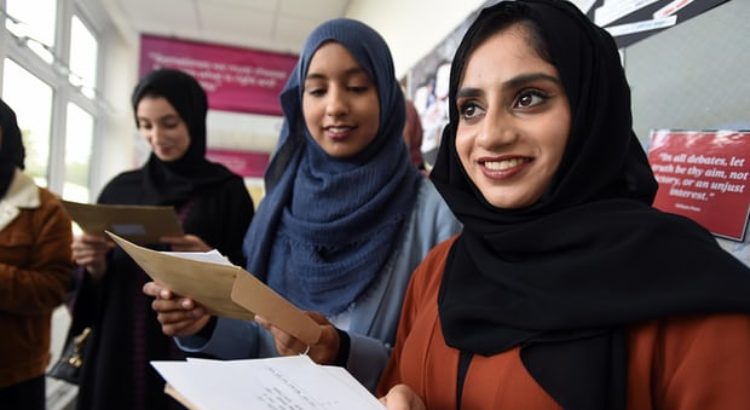
A-level results are out, but what about those not going to university?

By Fiona Millar

A significant number of young people are turned off by traditional higher education. They should have a decent alternative

This year’s A-level results day saw grades down slightly, universities awash with places, and signs that young people might be starting to vote with their feet, and not in the direction successive governments have predicted. What is going on? For the past 20 years, encouraging more young people into higher education has been a central aim of education policy. Until now there was no real reason to think this plan wasn’t working.

Around a third of all school-leavers go on to higher education at 18, and that figure rises to almost 50% by the age of 30. But a survey tracking aspirations for a university education among pre-GCSE pupils released on Thursday by a social mobility charity, the Sutton Trust, suggests that the wind might now be blowing in a different direction. The trust has been monitoring aspirations for the past 15 years and reports a falling proportion of young people who think university matters. The survey also shows there is still a marked difference in attitudes towards higher education between students from different social backgrounds.

A blip or a worrying straw in the wind? We should fear the latter as it would point to a growing and glaring omission at the heart of our education system – the failure to cater adequately for those for whom university may not be the right choice. One obvious reason for disenchantment (reflected in the survey) is the high cost of tuition fees and living expenses. A degree generally leads to higher wages, and employers increasingly seek this level of education when recruiting – even for non-graduate jobs. Up to a third of graduates may now be working in low-skilled jobs.

But the survey also reveals that of those not planning to attend university, 58% cite not enjoying “that type of learning”. We need to understand why this is, what we might do about it. The assumption that everyone can and should enjoy an academic education is almost certainly flawed. Like many other graduates from a Russell Group university – in my case at a time when only 10% of the population went to university and were fully funded to boot – I believe every young person should have the chance I had. Not just of an academic education and a route into professional work, but also the opportunity to learn and develop socially and emotionally, preferably away from home, without the pressure of having to earn a living.

However, as a parent and a school governor I also know this path isn’t right for everyone. The over-academisation of the school curriculum and the devaluation of any sort of assessment that doesn’t involve a high-stakes exam may now be demoralising many young people, in particular those who most need to see the point of education.

There have been signs throughout this academic year that the latest incarnation of the GCSE – increased content, no coursework and lengthy exam papers – might be a massive switch-off to key groups of pupils. And the failure over decades to develop alternatives to academic study, in the form of high-status technical education and apprenticeships, is starting to look like a criminal act, especially in the run-up to Brexit when skilled workers from elsewhere may not be readily available. Over the past 50 years, a series of vocational qualifications have come and gone and never garnered the kudos of O-levels, GCSEs or A-levels. So we should not be surprised that traditional qualifications still reign supreme, that university still sits at the pinnacle of the education system and that growing numbers of students see no realistic alternative routes into fulfilling work.

Most people probably haven’t even heard of the new T-levels – the current government’s answer to this endemic English problem. These apparently “world-class” qualifications won’t even come on stream until 2020; and they will have to be delivered in woefully underfunded further education colleges. Even worse – there are barely 100 degree apprenticeships on offer, a drop in the ocean compared with thousands of more conventional courses. So for the growing number of young people who feel university is not for them there really isn’t anything concrete to aspire to.

The Sutton Trust is right: more maintenance grants and apprenticeships would probably help. But what is really needed is a huge culture shift, away from the assumption that academic is best and towards a broader vision of what makes a real education. A vision that should include what might be seen as “that other type of education”: practical, creative, technical, engaging – and, above all, of equal status to a university degree.

Source of the article: https://www.theguardian.com/commentisfree/2018/aug/16/a-levels-results-higher-education-alternatives

Comparte este contenido:

Educación de calidad, inclusiva y con equidad

Por Mauricio Ramírez Villegas

Bolivia fue anfitrión de la II Reunión regional de ministros de Educación de América Latina y el Caribe, titulada “Transformar la educación: una respuesta conjunta de América Latina y el Caribe para lograr el Objetivo de Desarrollo Sostenible 4”. Bolivia participó no solo como anfitrión, sino que fue liderada por el ministro de Educación, Roberto Aguilar Gómez, quien es vicepresidente mundial del Comité de Dirección de la Unesco para el ODS 4.

Se reconoció que la educación es fundamental -y transversal- para el logro de los 17 Objetivos de Desarrollo Sostenible (ODS). En 2015 los miembros de NNUU acordaron implementar la Agenda 2030 para el desarrollo sostenible que es un plan de acción a favor de las personas, el planeta y la prosperidad. Los 17 ODS son de carácter universal, integral e indivisible y conjugan las dimensiones económica, social y ambiental del desarrollo. Los ODS ponen a la igualdad y la dignidad de las personas en el centro y llaman a cambiar el estilo de desarrollo, respetando el medioambiente. La Agenda 2030 es ambiciosa y visionaria, requiere la participación de todos los sectores de la sociedad y del Estado.

Los concurrentes a la reunión regional, convocada por Unesco y el Ministerio de Educación de Bolivia, aprobaron los Acuerdos de Cochabamba y adoptaron la hoja de ruta regional para la implementación de la Agenda de Educación 2030 para América Latina y el Caribe. Se compartieron experiencias, se reconocieron los avances y se identificaron varios desafíos en materia educativa para el logro del ODS 4 -educación de calidad-. Algunas de las principales conclusiones fueron que a través de una educación de calidad e inclusiva podemos alcanzar la meta de acabar con la pobreza y transformar vidas, protegiendo además el planeta.

Bolivia ha trabajado con éxito en políticas para la reducción de la deserción escolar. Según datos oficiales, para 2017 la deserción del nivel primario es del 2% y del nivel secundario del 4,4%, lo cual representa una disminución del casi 50% desde el año 2006. Pero hoy, es necesario incluir en las acciones urgentes al nivel de formación superior dado que la alcanzan solo 27 de cada 100 bolivianos, de acuerdo a datos del INE.

Bolivia recalcó los avances en materia legal que ha logrado con la ley 070, que reconoce la educación como un derecho fundamental. En su artículo 1.1 establece que “Toda persona tiene derecho a recibir educación en todos los niveles de manera universal, productiva, gratuita, integral e intercultural, sin discriminación.”

Durante los dos días de trabajo se debatió sobre la transformación de la educación y el desarrollo, las experiencias y aprendizajes de la Cooperación Sur–Sur, la reconstrucción de los conceptos de calidad, equidad e inclusión, así como de los temas docentes. También se analizó los mecanismos de seguimiento y monitoreo con el propósito de revisar y fortalecer las políticas educativas y el financiamiento público educativo para lograr las metas a 2030. La herramienta más importante aprobada en este encuentro regional fue la hoja de ruta que contribuirá a desarrollar políticas y acciones en los temas que han sido priorizados por los países de la región: la calidad de la educación, equidad e inclusión, docentes y trabajadores de la educación, y aprendizaje a lo largo de la vida. Es un marco de referencia para el diseño y ejecución de acciones regionales en educación y contiene recomendaciones para la implementación de políticas públicas a nivel nacional. Además, apoya el avance coordinado y coherente en los temas priorizados por los países de la región.

Fuente del artículo: https://www.eldeber.com.bo/opinion/Educacion-de-calidad-inclusiva-y-con-equidad-20180814-9460.html

Comparte este contenido:

Encounters with Asian Decolonisation

By David Fettling

In the YouTube video the young man browses Chinese-language books in a library, practices Chinese calligraphy with careful brushstrokes, introduces himself in Mandarin.

He is 20 years old from southern Sumatra in Indonesia, enrolled at Wuxi Institute of Technology outside Shanghai. He admits learning Mandarin is difficult, but points out it’s now the world’s most-used language, with English relegated to second place.

Other Indonesians studying in China, in other YouTube videos, likewise demonstrate a cultural attraction to the country, emphasising the richness of China’s past, its fast-modernising present, and its hyperpower future.

One Indonesian student remarks how much traditional Chinese architecture remains in Chinese cities: China’s culture is still «murni», or pure, she says.

Another remarks bluntly that China is now «lebih maju», more developed, than Europe, a leader in «teknologi».

Study here, another claims, and you and your country can «bangkit», or awaken, as China has.

Chinese culture, Indonesians note, treats education with great seriousness. One student translates a Chinese expression for «early to sleep, early to rise» into Indonesian, «tidur cepat, bangun cepat» — then adds to it «belajar cepat», quick to study.

Others remark on the «semangat» or spirit, of learning on Chinese campuses, remarking how university libraries are filled with students even on weekends.

Australia has much invested in its ability to attract large numbers of young Asians for tertiary study. The income they bring is increasingly how Australia’s university sector is financed.

Australian institutions want to start drawing more young people from other rising Asian nations, especially India and the ASEAN states: populous, demographically young, and with rapidly expanding middle-classes, they constitute tantalising 21st century markets.

Yet there is increasingly sharp regional competition for where those students choose to study — from China.

Influx of foreign students hits China

South-east Asians and Indians are enrolling in Chinese universities in rapidly increasing numbers.

Roughly 80,000 South-East Asians were studying at Chinese universities in 2016, up 15 per cent from two years before. That includes 14,000 Indonesians (20,000 are in Australia).

Some 18,000 Indians are now at Chinese institutions, more than are in Britain.

China will likely host 500,000 international students before 2020.

One reason for China’s attractiveness is a lower cost of tuition and living — Beijing offers many scholarships, too. But deeper cultural factors are also at work.

Foreign students enthused by China’s uber-modernity

For centuries people across Asia have been intellectually drawn to China and sought to learn from Chinese practices.

China’s 19th century weakness switched emphasis to the West and Japan. But the old pattern was starting to echo again by the mid-20th century when post-colonial Asian nations saw in the newly-proclaimed People’s Republic of China a potential model for their own development.

Indonesian nationalists of that era widely admired the People’s Republic of China as pioneering a new form of Asian modernity. That may be a harbinger of what’s starting — or restarting — now.

Indonesian students in China enthuse about China’s uber-modernity in e-commerce and fast subwaysthey say studying in China will help them better launch businesses and reduce unemployment back home; and they voicehappiness with the structure and content of their Chinese study programs.

The idea of China as a simultaneously great civilisation, fast-modernising power, and culture conducive to scholarship is attractive to large numbers of young Asians.

International student numbers at Australian universities are currently breaking records. It’s easy to conclude Australia’s position as regional higher education powerhouse is impregnable, that Asian middle classes will always seek their international educations mostly from Western nations.

Such assumptions could soon look as short-sighted as previous ideas of mineral booms lasting forever.

Asian international students in Australia have been voicing increasing dissatisfaction with their educations. Many regret their social isolation: most international students live in a «parallel society» from Australians, often segregated on campuses in international-only dormitories.

Meanwhile, many Chinese institutions, after initially housing international students in separate accommodation, are now moving toward integration of housing and other campus facilities.

Australia has significant advantages in attracting Asia’s best

Asian international students are also increasingly dissatisfied with what they see as Australian universities’ declining quality.

Australian universities have endured four decades of budget cuts with no end in sight, with implications that have not escaped notice on WeChat.

Meanwhile, universities in China have increasingly impressive libraries and laboratories — Indonesians praise Chinese facilities on campuses— and professors with increasingly impressive academic credentials.

Yet Australia has significant comparative advantages in attracting Asia’s best and brightest.

Australia is a liberal democracy in a region that is mostly not: its universities should be naturally superior places for young people who hope to think, write and speak freely, to freely inquire.

A revealing point of irritation among Indonesians experiencing China after their own mostly-free press is China’s internet censorship.

One Indonesian student in China reacted to that aspect of the People’s Republic this way: «Oh my God: seriously?»

Students in China hoping to research «sensitive» topics are often rejected.

China might be seen as more developed because of things like e-commerce, but its e-Stalinism can speedily cancel out the impression.

Our cultural attractiveness is being undermined

And Australia’s stated project of an open, multicultural society, a society that offers international students a chance to fully participate in its workings, either temporarily or permanently as citizens, should have sustained attractiveness — and offer a sustained contrast with more rigid notions in East Asia of who «belongs» and who is an outsider.

Rather than reinforcing those advantages — by revitalising financially-straitened Australian universities, by consolidating its multicultural model — Australia is eroding both.

For years Australia has ignored evidence that its rhetoric of multicultural inclusiveness does not, in practice, extend adequately to Asian international students, many of whom, according to Melbourne University’s Fran Martin, come «full of hopes to learn about and participate in Australian society», yet who often cannot name a single Australian friend when they graduate.

Increased questioning of multiculturalism by government ministers, and tightening of residency and citizenship requirements, is undermining Australia’s cultural attractiveness.

And the persistent downgrading of the place of the university in Australian society — the budget cuts themselves, the commodification and trivialisation of the very concept of university education — inevitably erodes the image of Australia as a place of open, free inquiry, an astute choice of place for people to develop their minds.

Australia has turned its universities into degree factories. Should it be any surprise that China, «the factory of the world», proposes to do that better?

Source of the article: http://www.abc.net.au/news/2018-08-16/australian-unis-biggest-china-threat-competition-chinese-unis/10117508

Comparte este contenido:

School Choice Is the Enemy of Justice

By  Erin Aubry Kaplan

In 1947, my father was one of a small group of black students at the largely white Fremont High School in South Central Los Angeles. The group was met with naked hostility, including a white mob hanging blacks in effigy. But such painful confrontations were the nature of progress, of fulfilling the promise of equality that had driven my father’s family from Louisiana to Los Angeles in the first place.

In 1972, I was one of a slightly bigger group of black students bused to a predominantly white elementary school in Westchester, a community close to the beach in Los Angeles. While I didn’t encounter the overt hostility my father had, I did experience resistance, including being barred once from entering a white classmate’s home because, she said matter-of-factly as she stood in the doorway, she didn’t let black people (she used a different word) in her house.

Still, I believed, even as a fifth grader, that education is a social contract and that Los Angeles was uniquely suited to carry it out. Los Angeles would surely accomplish what Louisiana could not.

I was wrong. Today Los Angeles and California as a whole have abandoned integration as the chief mechanism of school reform and embraced charter schools instead.

This has happened all over the country, of course, but California has led the way — it has 630,000 students in charter schools, more than any other state, and the Los Angeles Unified School District has more than 154,000 of themCharters are associated with choice and innovation, important elements of the good life that California is famous for. In a deep-blue state, that good life theoretically includes diversity, and many white liberals believe charters can achieve that, too. After all, a do-it-yourself school can do anything it wants.

But that’s what makes me uneasy, the notion that public schools, which charters technically are, have a choice about how or to what degree to enforce the social contract. There are many charter success stories, I know, and many make a diverse student body part of their mission. But charters as a group are ill suited to the task of justice because they are a legacy of failed justice.

Integration did not happen. The effect of my father’s and my foray into those white schools was not more equality but white flight. Largely white schools became largely black, and Latino schools were stigmatized as “bad” and never had a place in the California good life.

It’s partly because diversity can be managed — or minimized — that charters have become the public schools that liberal whites here can get behind. This is in direct contrast to the risky, almost revolutionary energy that fueled past integration efforts, which by their nature created tension and confrontation. But as a society — certainly as a state — we have lost our appetite for that engagement, and the rise of charters is an expression of that loss.

Choice and innovation sound nice, but they also echo what happened after the 1954 Brown v. Board of Education Supreme Court decision, when entire white communities in the South closed down schools to avoid the dread integration.

This kind of racial avoidance has become normal, embedded in the public school experience. It seems particularly so in Los Angeles, a suburb-driven city designed for geographical separation. What looks like segregation to the rest of the world is, to many white residents, entirely neutral — simply another choice.

Perhaps it should come as no surprise that in 2010, researchers at the Civil Rights Project at U.C.L.A. found, in a study of 40 states and several dozen municipalities, that black students in charters are much more likely than their counterparts in traditional public schools to be educated in an intensely segregated setting. The report says that while charters had more potential to integrate because they are not bound by school district lines, “charter schools make up a separate, segregated sector of our already deeply stratified public school system.”

In a 2017 analysis, data journalists at The Associated Press found that charter schools were significantly overrepresented among the country’s most racially isolated schools. In other words, black and brown students have more or less resegregated within charters, the very institutions that promised to equalize education.

This has not stemmed the popular appeal of charters. School board races in California that were once sleepy are now face-offs between well-funded charter advocates and less well-funded teachers’ unions. Progressive politicians are expected to support charters, and they do. Gov. Jerry Brown, who opened a couple of charters during his stint as mayor of Oakland, vetoed legislation two years ago that would have made charter schools more accountable. Antonio Villaraigosa built a reputation as a community organizer who supported unions, but as mayor of Los Angeles, he started a charter-like endeavor called Partnership for Los Angeles Schools.

This year, charter advocates got their pick for school superintendent, Austin Beutner. And billionaires like Eli Broad have made charters a primary cause: In 2015, an initiative backed in part by Mr. Broad’s foundation outlined a $490 million plan to place half of the students in the Los Angeles district into charters by 2023.

I live in Inglewood, a chiefly black and brown city in Los Angeles County that’s facing gentrification and the usual displacement of people of color. Traditional public schools are struggling to stay open as they lose students to charters. But those who support the gentrifying, which includes a new billion-dollar N.F.L. stadium in the heart of town, see charters as part of the improvements. They see them as progress.

Despite all this, I continue to believe in the social contract that in my mind is synonymous with public schools and public good. I continue to believe that California will at some point fulfill that contract. I believe this most consciously when I go back to Westchester and reflect on my formative two years in school there. In the good life there is such a thing as a good fight, and it is not over.

Source of the article: https://www.nytimes.com/2018/08/14/opinion/charter-schools-desegregation-los-angeles.html?rref=collection%2Ftimestopic%2FEducation&action=click&contentCollection=opinion&region=stream&module=stream_unit&version=latest&contentPlacement=3&pgtype=collection

Comparte este contenido:

Tecnología para Educar

Por Juan Sebastián Rozzo

En pleno desierto guajiro, en la Vereda El Estero de Riohacha, el profesor Juan Carlos Epinayú cuenta que nada volvió a ser igual para él y sus alumnos desde que al Centro Etnoeducativo No. 12 llegaran 30 tabletas precargadas con contenidos pedagógicos que les permiten a sus estudiantes aprender desde matemáticas y ciencias naturales, hasta realizar videos en Wayuunaiki para preservar la lengua de su pueblo.

A muchos kilómetros de distancia, en Buenaventura, Valle del Cauca, vive Mary Lili Caicedo, una profesora de sonrisa amable de la Normal Superior Juan Ladrilleros. Gracias a un aula virtual creada por ella misma, logró que los puntajes de sus alumnos en las Pruebas Saber mejoraran y hoy se ubican por encima del promedio nacional en sus competencias de inglés.

Son miles los casos como los de Juan Carlos, Mary Lili y Lucy, que demuestran que la educación en Colombia ha venido experimentando una verdadera transformación de la mano de la tecnología y en especial a través del programa Computadores para Educar, una iniciativa conjunta de la Presidencia de la República, del Ministerio TIC y del Ministerio de Educación, que en pocos meses cumplirá 18 años de operación.

Este programa tiene como objetivo promover el uso de la tecnología para fortalecer el proceso educativo de los niños y niñas en las instituciones educativas publicas del país. De ahí que los contenidos educativos con los que están dotados los equipos permitan enseñar materias como matemáticas, lenguaje, artes y ciencias, y además adquirir las habilidades digitales que nuestros niños necesitarán para su futuro cercano.

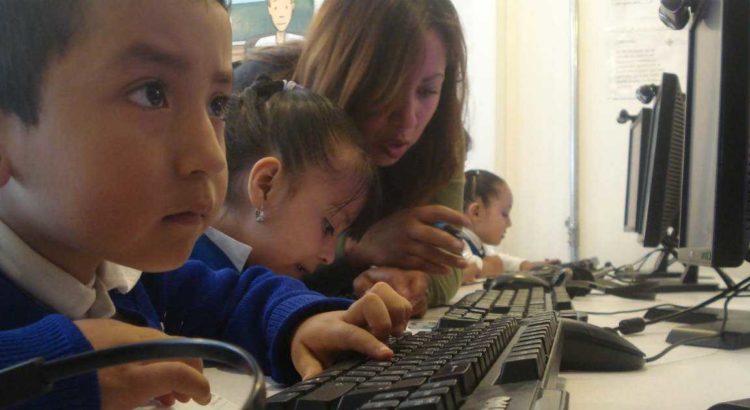
Durante los últimos ocho años, la brecha digital en educación se redujo en un 83%. Mientras en 2010 teníamos 24 niños por computador, esto es, más de dos equipos de futbol haciendo fila para usar un computador, hoy son solo 4 niños los que comparten un terminal. Esta escena se repite especialmente en regiones apartadas en las que los maestros asumieron, pese a las dificultades de su entorno, la apropiación de la tecnología para mejor la calidad del aprendizaje y las oportunidades de sus estudiantes.

El impacto de Computadores para Educar en las instituciones educativas de Colombia ha sido contundente, tanto así que en las escuelas y colegios beneficiados con formación docente los estudiantes mejoraron su desempeño en las Pruebas Saber, aumentando así su posibilidad de ingresar a la educación superior. Además, en estas instituciones las tasas de repitencia y deserción escolar disminuyeron significativamente.

Hay dos factores esenciales que permiten explicar estos grandes logros. En primer lugar, la dotación de más de 2.8 millones de equipos (computadores y tabletas) a 43.000 sedes educativas de todo el país ha logrado atacar de raíz la brecha de acceso. El segundo factor es la apuesta por formar a 160.000 docentes oficiales (esto es, la mitad de los que tiene Colombia), en el uso y apropiación de las TIC, con una inversión que supera los $1.5 billones en los últimos 8 años. La formación de profesores permitió que estos integren la tecnología en el ecosistema educativo de manera eficiente y asertiva.

Educar con tecnología ha sido un propósito de país. Lo entendieron centenares de alcaldes y gobernadores de buena parte de Colombia, que no dudaron en apostar por la cualificación tecnológica de las instituciones educativas de sus regiones, lo que también le ha dado aún más impulso al programa y ha potencializado su impacto.

Atrás van quedando, poco a poco, las clases dictadas con tiza y tablero, para darle paso a procesos educativos en los que los profesores convierten las TIC en aliadas y protagonistas en la formación de sus estudiantes.

Es cierto que en este mundo de la tecnología todo evoluciona a un ritmo acelerado, y es evidente que este programa no es la excepción. Computadores para Educartuvo sus inicios hace casi 30 años con el Conpes 3063 de 1999 y el Decreto 2324 de 2000, y sin duda ha evolucionado.

Pasó de ser un programa previsto para recolectar y reacondicionar computadores para ser donados a escuelas del país, a convertirse tanto en uno de los programas del gobierno nacional de mayor impacto social a través de las TIC, como en un referente de aprovechamiento de residuos electrónicos a nivel latinoamericano.

Su continuidad, estoy convencido, debe asegurarse y su evolución no debe detenerse. Este programa, por ejemplo debe adaptarse a la aparición de nuevas tecnologías o tecnólogas emergentes como la Inteligencia Artificial, el Internet de las Cosas (IoT), el Big Data, llevándolas a las aulas educativas de Colombia. A través de esta iniciativa, el país debe seguir fortaleciendo el ecosistema educativo y lograr que los estudiantes colombianos desarrollen las habilidades y el conocimiento para enfrentar los retos de un mundo en el que la tecnología es el nuevo lenguaje. Por eso su nombre debería evolucionar y pasar a llamarse Tecnología par Educar.

Si no fuera por este programa cientos de miles de niños y niñas del país, especialmente los que viven en las zonas rurales y veredas, jamás hubiesen siquiera tenido la oportunidad de conocer un computador, ni acceder al mar de información que a través de ellos es posible explorar. Su vida hoy ya no es la misma y no tengo duda de que podrán tener mejores oportunidades para su desarrollo personal, familiar y profesional. Su futuro podrá ser mejor.

Me quedo con las palabras del profe Juan Carlos: “Cuando todos nos esforzamos en que un niño aprenda es posible hacer cosas que parecen imposibles, como encender una tableta en medio del desierto”. Razones sobran para seguir haciendo esta apuesta, que nos permite lograr un país donde la educación y el acceso a la información no es un privilegio de unos pocos en las ciudades, sino un derecho garantizado para los niños y las niñas en todo el territorio nacional.

Fuente del artículo: http://caracol.com.co/radio/2018/08/14/tecnologia/1534248893_866720.html

Comparte este contenido:
Page 1238 of 2504
1 1.236 1.237 1.238 1.239 1.240 2.504