Page 1619 of 6736
1 1.617 1.618 1.619 1.620 1.621 6.736

Gremios y movimientos protestaron contra la agenda económica y educativa de Bolsonaro

Gremios y movimientos protestaron contra la agenda económica y educativa de Bolsonaro

Protestan en Brasil contra agenda económica y educativa de Bolsonaro

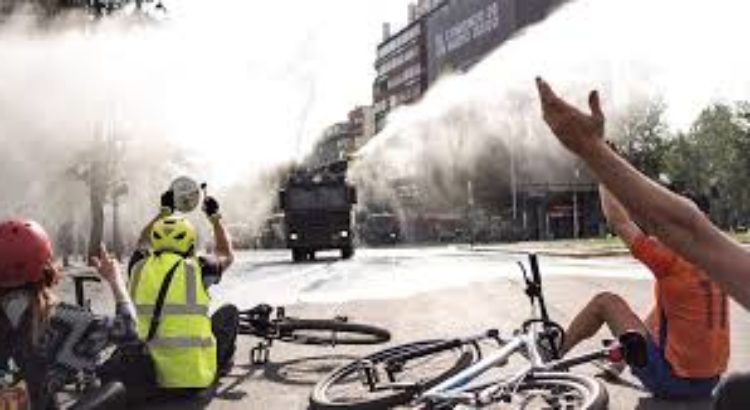
Centrales sindicales y movimientos sociales brasileños ocuparon ayer la Avenida Paulista, en Sao Paulo, para protestar contra la agenda económica y educativa del Gobierno del presidente ultraderechista Jair Bolsonaro.

El acto tuvo lugar en el mismo momento en que Bolsonaro fue recibido por Paulo Skaf, presidente de la Federación de Industrias del estado de Sao Paulo.

Una de las reivindicaciones del movimiento es contra la política gubernamental de generación de empleo, con una alta tasa de desempleo y un aumento del número de trabajadores informales.

‘De hecho, nos estamos defendiendo de un ataque que ha estado ocurriendo desde que el Gobierno de Bolsonaro asumió el cargo, atacando el movimiento sindical, atacando los derechos laborales y vamos a resistir. No dejaremos que esto suceda. Vamos a empezar a resistir a este gobierno antes de que acabe con Brasil’, afirmó Wagner Gomes, secretario general de la Central de Trabajadores de Brasil.

Consideró que la próxima gran batalla de los trabajadores está en el Congreso respecto a la Propuesta de Enmienda Constitucional (PEC 905), que establece la cartera laboral verde y amarilla, ‘que generalmente libera a los empresarios para acabar con los derechos de los trabajadores’, señaló Gomes.

‘La lucha es dura. Con este desmantelamiento que el presidente Bolsonaro ha mantenido en las políticas públicas, el desguace de la cuestión de las industrias, hemos estado luchando de frente para ganar nuestra soberanía’, dijo el metalúrgico Américo José Galvani Júnior, de 29 años, empleado de la automotriz Volkswagen en Sao Bernardo do Campo (Sao Paulo), citado por el portal Brasil de Fato.

Insistió en que ‘venimos a esta lucha para recuperar todo lo que se está perdiendo’.

Para Luiz Cláudio Marcolino, vicepresidente de la Central Única de los Trabajadores de Sao Paulo, la unidad entre las centrales sindicales afloró desde finales del año pasado y la manifestación de este lunes forma parte de un conjunto de acciones para el desarrollo social con la defensa de los empleos y contra el proceso de desmantelamiento de la industria nacional.

Simone Nascimento, exdirectora de asistencia a los educandos de la Unión Nacional de Estudiantes (UNE), habló sobre la importancia de la presencia de los jóvenes en la manifestación.

‘Estar aquí con los trabajadores es fundamental en el sentido de que la lucha es una sola. Estamos en contra de este proyecto del gobierno de becas que tiene precarias las vidas de los más pobres’, apuntó.

Denunció que ‘los más pobres son los jóvenes, los trabajadores, los negros, las mujeres, la comunidad LGBT. Muchos de los trabajadores tienen hijos, muchos de los estudiantes son trabajadores. Muchos de los trabajadores son estudiantes’, remarcó.

Prensa Latina

Fuente de la Información: https://www.nodal.am/2020/02/gremios-y-movimientos-sociales-protestaron-contra-la-agenda-economica-y-educativa-de-bolsonaro/

Comparte este contenido:

Chile: Visita de CIDH representa una oportunidad histórica para la defensa de derechos humanos

Chile: Visita de CIDH representa una oportunidad histórica para la defensa de derechos humanos

La visita in loco de la Comisión Interamericana de Derechos Humanos (CIDH) es fundamental para la vigencia y garantía de los derechos humanos en Chile, dijo Amnistía Internacional, ante recientes declaraciones de autoridades estatales que emplazaban a la CIDH a no involucrarse en los asuntos internos del país.

“A más de cuatro décadas de la última visita in loco de la Comisión Interamericana de Derechos Humanos a Chile, las autoridades estatales no solo deben cooperar plenamente para que pueda llevar a cabo su labor sin ninguna injerencia indebida, sino también garantizar que sus recomendaciones sean seriamente tomadas en cuenta para atender la situación en el país. El gobierno del presidente Sebastián Piñera debe honrar sus compromisos internacionales en materia de derechos humanos”, dijo Erika Guevara Rosas, directora para las Américas de Amnistía Internacional.

A más de cuatro décadas de la última visita in loco de la Comisión Interamericana de Derechos Humanos a Chile, las autoridades estatales no solo deben cooperar plenamente para que pueda llevar a cabo su labor sin ninguna injerencia indebida, sino también garantizar que sus recomendaciones sean seriamente tomadas en cuenta para atender la situación en el país.

Erika Guevara Rosas, directora para las Américas de Amnistía Internacional

La crisis de Derechos Humanos que enfrenta Chile, pone en evidencia la necesidad de permitir el escrutinio internacional. La visita del CIDH representa un presedente histórico para la realización de los derechos humanos en el país y es fundamental para garantizar el acceso de las víctimas de violaciones de derechos humanos a los derechos a la verdad, la justicia, la reparación y las garantías de no repetición”.

Una visita in loco es la visita oficial más importante que la CIDH puede realizar en pleno (con los siete Comisionados y Comisionadas, Relatores Especiales y la Secretaría Ejecutiva) a un estado miembro de la Organización de Estados Americanos, para analizar en profundidad la situación general de los derechos humanos en el territorio. Esta se da por invitación del estado. El tiempo transcurrido desde la última visita a Chile en 1974, la grave crisis de derechos humanos que enfrenta el país, y la falta de respuesta a los distintos reclamos de la sociedad chilena en materia de derechos humanos en el país, hacían urgente una nueva misión.

Fuente de la Información: https://www.amnesty.org/es/latest/news/2020/01/chile-visita-cidh-oportunidad-historica-derechos-humanos/


Comparte este contenido:

India needs a new education paradigm

India needs a new education paradigm

crisis effectively

As we embark upon a new decade, India celebrates the 10th anniversary of its Right to Education Act (RTE), which went into effect in April 2010. While the RTE has been censured for its limited focus on governance and learning outcomes, its achievement in improving access to schooling is undeniable. It has also served as a rallying point for a wide range of stakeholders to intervene in the sector.

But as is well-established by now, India’s learning outcomes remain stubbornly low. Quality concerns around education are seldom viewed as a political priority. But these concerns cannot be ignored for much longer, especially in light of India’s human capital crisis, reflected in unemployment statistics. Furthermore, as economist Shamika Ravi writes, those with higher education are less likely to be employed than those without: “It says something about the quality of Indian education; too many engineers and other professionals are waving around degrees that are relatively worthless.

” The 2030 Skills Scorecard by the Global Business Coalition for Education reinforces these concerns — in 2030, India will have the highest number of secondary school graduates in South Asia, but nearly half of them will lack the skills to enter the job-market.

Until now, the band-aid response to such crises has been to establish a Ministry of Skilling, instead of more profound reforms in school education. Moving forward, India must extricate itself from this unstable equilibrium and view education within a larger human capital framework. In the upcoming decade, India’s education sector must focus on both scale and substance, addressing the learning problem at a system-wide level, while also recalibrating the raison d’etre of the education system itself.

In the past, even the most sophisticated education policies and curriculum frameworks have failed to live up to their promise, owing to weak administration. Strengthening the pillars of governance in the education sector is of undeniable importance. The state’s role is central, as Julia Gillard, former Prime Minister of Australia and Chair of the Global Partnership on Education writes: “Like any good orchestra conductor, governments must get a diverse collection of instruments, each playing its own notes, to produce a sound of coherent splendour.”

Over the past few years, several States, including Haryana, Rajasthan, and Himachal Pradesh, have taken ownership to drive large-scale changes in how education is administered. In many of these States, the starting point has been the integration of schools. Historically, government schools have emerged organically without a coherent strategy, sometimes serving just a handful of students, causing a large, unwieldy school network. The state’s capacity to manage such a system, however, is limited with inadequate frontline administration, information gaps, and large vacancies among faculty.

Optimising for the number of schools is complemented with interventions directed at infrastructure improvements, adequate staffing of teachers, school leaders, and frontline officials, and developing the capacity of these staff. Alongside is a strong focus on ‘remediation’ to enable all students to achieve grade-level competency. In terms of administration, programmes across States appear to share some common elements: management information systems to improve review and monitoring; communications across all levels of government, leveraging technology such as video conferences and WhatsApp; and project management protocols at the State, district, and block levels.

In Rajasthan, where the International Innovation Corps worked with the Department of Education alongside other players, the State focussed on developing approximately 10,000 “model” secondary schools — one in every gram panchayat — with quality infrastructure and prioritised staffing under the Adarsh programme. Headmasters of these schools were subsequently designated Panchayat Education Officers and trained to mentor other schools. Such efforts reduced teacher vacancies from 50 per cent to 19 per cent over four years, and created a cadre of frontline administration that regularly monitors schools. The State has defied national trends to witness a reverse migration of students from private to government schools, and both the National Achievement Survey and Board results point to improvements in secondary school outcomes.

Other States have similarly seen positive results. For instance, in Haryana, an evaluation by Gray Matters India estimates that students in 94 of the 119 blocks are now “grade-level competent.” This has been attributed to the Saksham Haryana Programme. The programme has instituted new mechanisms for data collection and analysis, and a restructuring of planning, coordination, mentoring, and monitoring at the district- and block-levels.

Building on such successes, the NITI Aayog and three States — Odisha, Madhya Pradesh, and Jharkhand — are in the process of scaling such efforts through the SATH-E programme. Additionally, 14 of the 30 indicators for the NITI Aayog’s new School Education Quality Index are concerned with governance processes, including availability of teachers, training, and accountability and transparency.

Revaluation of outcomes

This focus on building the capability of the state to better manage the education system is an important shift in the sector, and the aforementioned examples demonstrate how to go about it. But despite their successes, these should be viewed as starting points. These efforts remain focussed on the public school system. For more meaningful change, it is imperative to transition from seeing the government as just a provider to a regulator and facilitator.

There has recently been an increasing sense of competition, with governments claiming how their schools are out-performing private schools. While this may induce a positive pressure to perform, the reality is that apart from an elite few, the bulk of private schools are under-resourced and have little regulation of quality, safety, or outcomes.

More fundamentally though, improving implementability needs to be complemented with a recalibration of intent. India’s education system continues to be centred on standardised and ambitious curricula, students grouped by age instead of learning levels, and high-stakes board examinations. The consequence is, as economist Karthik Muralidharan writes, a “sorting system,” not a human capital system. In this context, we should question if administrative strengthening, by itself, is merely improving the management of a faulty process, perpetuating a mass-production model of education — or the ‘Prussian Model’ — that may have outlived its utility.

Traditionally, education systems around the world have followed a linear logic of prioritisation — expanding schooling access, improving working to improve the quality of core academic subjects, and finally, focussing on cultivating the skills needed to thrive in the world. But, Rebecca Winthrop, as co-director of the Center for Universal Education, finds, there exists a 100-year gap between the educational attainment of those in developed versus developing countries. At the same time, there is uncertainty about the skills required for a rapidly changing world. What are the outcomes we want schooling to generate, and are they adequate to produce the qualities for individuals to contribute meaningfully to society and the economy? These factors, Winthrop explains, imply an urgent need to break away from this linear logic and “leapfrog” by transitioning to a system that expands its idea of outcomes from literacy and numeracy to a “breadth of skills” —the larger set of skills that are needed in a changing world, including critical thinking, collaboration, and problem-solving.

Fixing administration is an important but belated response to the state capacity problems. A new policy must capitalise on this energised administrative apparatus to redefine the broader objectives of the education system. This will require a fundamental reengineering of assessments mechanisms, a mass behavioural change to facilitate a shift in focus from high-stakes examinations, and new partnerships between stakeholders — parents, students, teachers, frontline administrators, and NGOs.

An “outcomes-focus” is undoubtedly critical, but should be underpinned by an overarching human capital strategy. In a few years, a generation of students, who would otherwise not have access to an education, will have completed a full cycle of schooling thanks to the RTE. But over the next decade, the key priority that education policy must seek to address is to make sure that schooling isn’t just an end for students, but a ladder to opportunity.

Rohan Sandhu was formerly Associate Director at the International Innovation Corps, and is currently at the Harvard Kennedy School. This article is by special arrangement with the Centre for the Advanced Study of India, University of Pennsylvania.

Fuente de la Información: https://www.thehindubusinessline.com/opinion/columns/india-needs-a-new-education-paradigm/article30736218.ece

Comparte este contenido:

Sex Education: 10 Important Lessons That We Wish We Learned When We Were Younger

Sex Education: 10 Important Lessons That We Wish We Learned When We Were Younger

Netflix’s Sex Education is one of the most powerful TV shows streaming today. With some incredible characters, moving stories and a number of life lessons to take on board, it’s no wonder that it’s as popular as it is.

While these characters are young and still finding their feet, they are learning a lot that we really wish we knew when we were younger. Here’s 10 of these lessons that you can take away from Sex Education that are important to learn while you are still young.

10 SEXUAL IDENTITY

Being open to exploring one’s own sexual identity is important, especially in younger years. However, in the same vein, it’s also completely okay to wait for a while before trying to understand your sexuality better. There’s one key lesson from the show, though: don’t be afraid to embrace who you are. We’ve seen characters like Adam struggle to express themselves, while people like Ola and Lily could go on to have one of the best relationships on the show. It’s all about opening up to the world.

9 SAYING NO IS OKAY

There are plenty of opportunities to say no in life. It just needs to be known that it’s okay to use that two-letter word. We’ve seen the teens of the show become more comfortable with saying no as they grow into young adulthood.

Whether it’s with their partners, friends or even their parents, understanding when to express that you are not happy with a situation can lead to a lot of self betterment as well as strong conversations with those you are saying no to.

8BEST FRIENDS FIRST

There’ are plenty of phrases to sum this up, but the essential message of the key characters in the show ⁠— Otis, Eric and Maeve ⁠— is that best friends should always come first ⁠— even if an ongoing love interest could get in the way of this.

7DIFFICULT CHOICES ARE RIGHT


It’s not easy to make a choice. Oftentimes there’s an easy one and a difficult on,e and many of the teens on Sex Education always try to go for the easy option. Even in complex situations, the more painful option is often the best one.

Jackson, for example, cannot bring himself to have a conversation with his parents about his swimming. He turns to self harm and being able to sit on the sidelines for a small amount of time rather than having that conversation. What people don’t often realize is that the easy option hurts us more in the long run.

6 TAKE RESPONSIBILITY


Otis also struggles with his father and how he too shares a lot of characteristics with the man. However, his father has gone through two marriages and is left with nothing except alcohol and a broken relationship with his son.

Otis learns throughout the show that he needs to take responsibility for his actions, ultimately defending his mom in front of the whole school. This moment is a turning point for the character, and we wish we all knew to act this way in the early days.

5PARENTS ARE PEOPLE TOO


It seems odd to suggest that parents are people too, but the characters of Sex Education seem to forget that their mothers and fathers also be have emotional conflicts with themselves on occasion. Ola seems to be the only one who understands this with Jakob.

4FRIENDS STICK TOGETHER

Much like the best friends lesson from earlier, other friends will also stick together. It’s amazing that people can get support from a few different places they wouldn’t expect. For Aimee, this comes in the form of the other girls at school.

When she is sexually assaulted on the bus to school she no longer wants to go in this journey. However, her friends stick with her and she feels more comfortable using the public transport when she is supported.

3EDUCATE YOURSELF

It seems obvious to say, but it’s important to continue educating yourself at all times. Whether this is emotionally or perhaps in the world of sex education, or maybe even science fiction comics, so we can all understand our friends a little better.

A major issue at the school was the spread of a sexually-transmitted infection. However, if any of the kids had educated themselves, they would know this is mass hysteria and friendships wouldn’t have been broken over lies and misinformation.

2SEEK SUPPORT

This is one of the most important observations on this list. It’s incredibly crucial to seek support about any problem. It can be from friends, teachers or parents, but when uncomfortable or seeking some kind of feedback, seeking support from a trusted source is key.

Dr. Jean had her own clinic set up in the school for students to seek support, and this was incredibly beneficial to a number of pupils, including a student who discovered she was asexual. This greatly improved her happiness at school.

1STUDY FIRST

Outside of all this drama and sex among the students, one lesson seems to slip by, but is just as important ⁠— always study first. This is still a school and those who are taking their studies seriously are getting opportunities to better themselves.

This doesn’t have to be academically, though. Jackson studied his lines hard and performed well during the school play, opening other doors to him outside of swimming, where he is happier. Such an important stage of life should be treated with hard work.

Fuente de la Información: https://screenrant.com/sex-education-important-lessons-wish-learned-young-age-netflix-series/


Comparte este contenido:

Ending student quotas has been disastrous for higher education

Ending student quotas has been disastrous for higher education

Catherine Fletcher

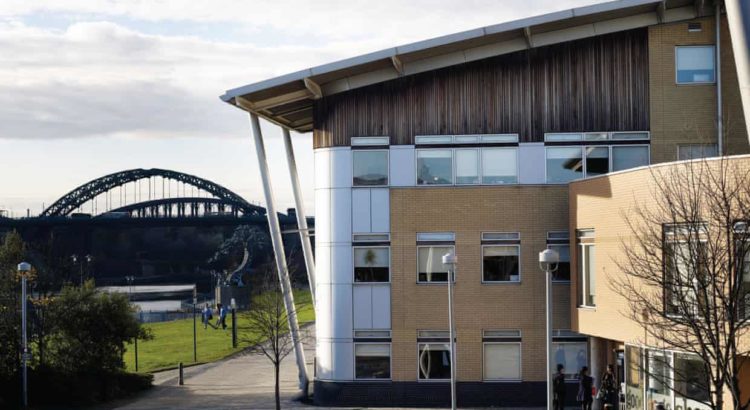
The decision by Sunderland University to close history, modern languages and politics degrees in favour of more “career-focused” courses has been widely criticised. One objection is simply that all these humanities subjects offer students skills that play well in the job market. But it’s a problem to reduce university education to simply what sells to employers. These are subjects that matter to society as a whole, whether in working out the political implications of the climate crisis or understanding the fate of post-industrial towns. They shouldn’t become the preserve of an elite. Post-92 humanities departments – the UK’s polytechnics became universities in 1992 – rarely get the media attention that their counterparts in the Russell Group enjoy, but they do plenty of innovative teaching and research, with especially strong track records in local and regional history and engagement with the heritage industry.

I don’t know the inside story at Sunderland, but course closures such as these are a predictable consequence of the government’s decision to remove the quotas on student recruitment from 2015. Prior to that point, there were centrally imposed limits on how many students any given university could recruit. Since then, it’s been a free-for-all: the decision created a market in university places that is doing the higher education sector no favours.

Subjects such as history and politics, which don’t require expensive infrastructure to teach, were popular targets for expanding student intake in the more selective universities. That was good news for students who’d previously had to settle for their second-choice institution, but it’s making it hard to sustain a full range of courses at the middle- and lower-tariff universities, as a proportion of their applicants head for more “prestigious” institutions and their student numbers decline. Goldsmiths, University of London has just announced that it needs to save £10m in less than two years in the light of student recruitment problems. It plans to “streamline” provision.

While more applicants now get into their first choice of university, not every applicant is equally mobile. The students who lose most as courses close are those who need to fit study around the school run, or other caring responsibilities, and therefore rely on local provision. Then there are the applicants who prefer a university with experience of dealing with people who are the first in their family to go into higher education, or who arrive with BTecs rather than A-levels. I have taught in a university with no entrance requirements, in one that asked for three As at A-level (preferably in “traditional” subjects), and in others in between. Understandably, they used different teaching strategies, particularly in the first year, taking those different starting points into account. Media discussion of widening participation in higher education often focuses on Oxbridge, but the Guardian’s league tables show that on the measure of which institutions add most value between a student’s entry qualifications and final degree, the post-92s match – and sometimes beat – the achievements of their more prestigious counterparts.

The market makes for losers in the “prestigious” universities, too. I am told by academic staff at one popular institution that they’re expected to support 50 personal tutees each, making it nigh on impossible to get to know students individually. Colleagues at another university that appears to be doing well report that students wait weeks for an appointment at the counselling service. Lectures scheduled from 8am, or until 6pm, stretching out the working day, are another growing phenomenon.

University staff are bearing the brunt of the volatility, whether navigating those enormous tutorial groups at one end of the scale, facing redundancy at the other, or stuck in the middle on a fixed-term contract that may or may not be renewed depending on student numbers. It is hardly surprising that the University and College Union is currently in dispute over casualisation and workload – as well as pay and (in the pre-92 universities) pensions. But the implications of this shake-up to the sector go wider. At Lampeter University, for example, the number of students has fallen from around 1,500 in the 1990s to fewer than 400 now, with inevitable knock-on effects for the local economy.

This is not a political climate that favours easy decisions in higher education. In November 2019, the credit rating agency Moody’s accorded more universities a negative financial outlook. Concerns about the impact of Brexit and reliance on overseas fee income have been widespread. But I’m reluctant to accept that these must be the terms of the debate. A society – and indeed a world – confronting the climate crisis urgently needs people who have the

education to think about big issues. Those aren’t only scientific or technological: they’re also about the ways that people have made, and continue to make, decisions. The humanities matter. And it matters that students from all backgrounds – and across the country – have the opportunity to join in these world-changing discussions.

Fuente de la Información: https://www.theguardian.com/commentisfree/2020/feb/04/universities-competition-disastrous-lecturers-humanities


Comparte este contenido:

Entrevista a Oscar Laborde, presidente del PARLASUR «Necesitamos acuerdos de cooperación, más que de libre comercio»

Por: Sergio Ferrari/Rebelión

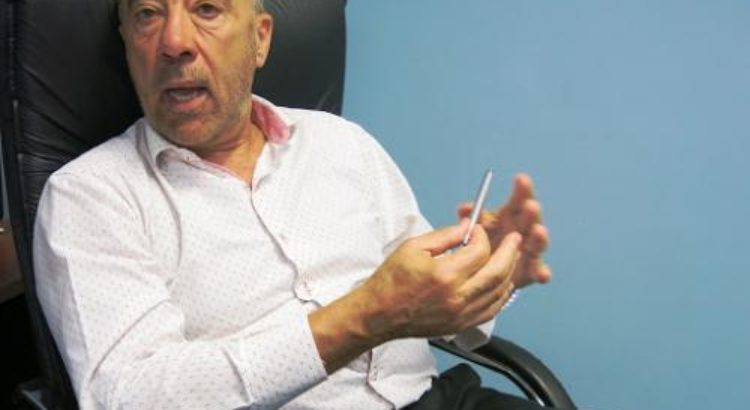
Es muy difícil que el tratado entre la Unión Europea y el Mercado Común del Sur (MERCOSUR) pueda ser aceptado por los parlamentarios de Argentina, e incluso, de algunos países europeos. En particular, si se tiene en cuenta tanto el resultado final como el proceso de elaboración. Reflexión contundente de Oscar Laborde, personalidad de primer nivel en la diplomacia sudamericana, desde 2016 diputado argentino en el PARLASUR (Parlamento del Mercosur), y a partir de enero del 2020, presidente de este legislativo regional. “Dicho acuerdo fue el resultado de un secretismo total, sospechoso e injustificado” subraya. “Nosotros, en tanto parlamentarios regionales, no tuvimos información precisa sobre el contenido del documento que se estaba negociando. Los legisladores argentinos, tampoco. Los empresarios y los sindicatos, en su mayoría, fueron descartados de su elaboración”, enfatiza Laborde, ex intendente de la populosa ciudad bonaerense de Avellaneda (entre 1999 y el 2003) y director del Instituto de Estudios de América Latina (IDEAL), perteneciente a la Central de Trabajadores de Argentina (CTA).

Los vicios y paradojas de dicho tratado firmado por el ex presidente Mauricio Macri a mediados del 2019, son notables. “Muchas veces nosotros, en tanto parlamentarios, tuvimos que recibir de nuestros pares europeos la información sobre los contenidos del documento en elaboración. Ni qué hablar de los sindicalistas argentinos que debieron informarse a través de las centrales gremiales europeas sobre lo que se estaba discutiendo”.

El gobierno anterior “ha definido que el acuerdo es por sí o por no, sin posibilidad de modificaciones”. Y eso no puede ser, enfatiza Laborde, quien anticipa que el mismo va a ser llevado al parlamento argentino donde, casi con seguridad, será rechazado en su forma actual, ya que no se puede aprobar si se tiene en cuenta el defectuoso mecanismo de elaboración. “Hay que reabrirlo, estudiarlo y conocerlo a fondo”, ya que es inconcebible que un documento que compromete de manera tan global las posibilidades futuras del país, no se conozca en detalle”, enfatiza.

Un “golpe” mediático del gobierno anterior

“Cuando a fines de junio del 2019 Macri -que estaba en ese momento en la reunión del G20 en Japón-, lo anunció, el gobierno necesitaba dar una buena noticia en momentos en que atravesaba una fuerte crisis y que no tenía ninguna buena noticia que anunciar”, explica Oscar Laborde. En ese contexto, la “forma en que informaron las autoridades argentinas fue patética, interesadas únicamente en el impacto mediático”.

El actual presidente del PARLASUR recuerda que, entonces, faltaba la traducción en muchas de las lenguas de los países europeos y tampoco se había hecho la traducción del inglés al español; ni se había integrado la revisión por parte de varias instancias técnicas. Además, se publicitó como si el acuerdo estuviera definitivamente cerrado y a punto de aplicarse, aunque faltaba la aprobación tanto de los parlamentos de los países latinoamericanos que integran el MERCOSUR como de sus contrapartes europeas.

“Se lo presentaba como un tratado muy bueno sin hacerse público los contenidos. Fue una real vergüenza. Faltaban varios pasos esenciales. El Gobierno anterior solo buscaba publicidad, argumentando las supuestas ventajas de un mercado de 500 millones de personas que se abría, pero sin detallar las condiciones, mecanismos y limitaciones”. Constatamos que hoy son varios los países europeos que tienen grandes preguntas y dudas sobre el documento, de igual manera que nosotros, puntualiza.

Su mirada crítica también involucra al acuerdo entre el MERCOSUR y la Asociación Europea de Libre Comercio (AELE), integrada por Suiza, Noruega, Islandia y Liechtenstein. Dado a conocer el 23 de agosto del 2019, padece los mismos problemas en cuanto al secretismo de su elaboración. “Así como la falta de una proyección de futuro. No se realizaron simulacros económicos sobre el impacto del convenio a 5 años”, condición esencial en toda negociación seria y responsable, explica Laborde.

Dos concepciones diplomáticas… dos modelos de país

Esos acuerdos constituyen un ejemplo más -sigue reflexionando el diplomático argentino con rango de embajador- “del estilo de absoluta poca seriedad que tuvo la diplomacia argentina durante la gestión anterior”. Y expresa las dos concepciones, los dos modelos diferentes de país, el de Macri y lo que impulsa el actual gobierno, afirma.

Uno, el anterior, con el acento agroexportador, para nada preocupado en negociar realmente con la región y con una visión política e ideológica alineada con los Estados Unidos de Norteamérica. El otro, el actual, interesado en promover e impulsar la producción nacional, con salarios correctos e intensificando el comercio intrarregional. Nuestra concepción percibe a América Latina como un polo que debe negociar en un mundo multipolar. Con Estados Unidos, que es también un centro importante. Con el sudeste asiático, que es otro. Con China, con Rusia, con Europa. Negociando con todos, pero de igual a igual, insiste Laborde.

En la esencia de la nueva lógica internacional sobresale un concepto que el diplomático argentino desarrolla con maestría: más que libre comercio lo que debemos promover es la cooperación. “Libre comercio significa te vendo todo y te compro todo. Cooperación implica, expresar, selectivamente, lo que me conviene vender y lo que necesito comprar. Así lo entendemos nosotros. Convenios donde se establezca cómo cooperar con el otro”.

Eso implica, según el presidente del PARLASUR, “un análisis riguroso de área por área y producto por producto…por eso hablo de un acuerdo virtuoso de cooperación”. En ese sentido es inadmisible que el gobierno anterior, antes de firmarlo, no haya realizado, por ejemplo, un “simulacro de consecuencias comerciales”, que es esencial, que siempre se hace, y que implica analizar si se gana o se pierde, y la evaluación sobre que sector se beneficia o cual arriesga perjudicarse. “Altos funcionarios españoles, por ejemplo, me confiaron que ellos lo hicieron. Todos los países europeos, de hecho, analizaron profundamente esas eventuales consecuencias. Calcular el impacto es elemental”, insiste.

La lógica del gobierno anterior de firmar el tratado con Europa, residió en presentarlo como un gran logro, publicitarlo, y regocijarse por haber llegado a un resultado luego de 20 años de negociaciones, como ellos decían. “Para Macri era mejor un mal acuerdo que un no-acuerdo. Habla de su planteo. Nosotros también creemos que es necesario negociar. Tanto con Europa como con los diferentes polos mundiales, pero, conociendo los contenidos, debatiéndolos, permitiendo que cada uno haga sus cálculos y asegurando que se respete a fondo nuestra soberanía y la de los otros”, insiste.

Lógica futura

¿Cuál serán en el futuro los instrumentos diplomáticos latinoamericanos para intentar promover una visión realmente integradora?, preguntamos como conclusión. Por ahora no podrá ser la Unasur, subraya Laborde, haciendo referencia a la situación compleja que vive este organismo. Tampoco la OEA, (Organización de los Estados Americanos) con su Secretario General Luis Almagro, que “demostró que solo defiende los intereses de los Estados Unidos de Norteamérica en desmedro de los latinoamericanos y caribeños”. En este marco la Celac (Comunidad de Estados Latinoamericanos y Caribeños) que incluye 33 naciones (toda la OEA, menos Estados Unidos y Canadá, pero con Cuba) “tiene la oportunidad histórica de poder potenciar proyectos populares en una región que, en el mundo actual, necesita más que nunca posicionarse en conjunto”.

Integración latinoamericana… a pesar de Bolsonaro

En la segunda semana de febrero se reunirá en Buenos Aires la comisión directiva del PARLASUR, encabezada por su nuevo presidente Oscar Laborde. Prometió su presencia en la reunión el nuevo Ministro de Exteriores argentino Felipe Solá. A fines de diciembre, Solá, se reunió con los diputados de este legislativo regional y reiteró que para el nuevo gobierno ésta es una instancia “preponderante”. Posición que implica un cambio sustancial. Nuevamente, los parlamentarios regionales vuelven a ser valorizados por el gobierno argentino. Durante los cuatro años de la gestión de Mauricio Macri, los legisladores del PARLASUR y el mismo organismo regional fueron prácticamente ignorados. Desoyendo una obligación legal, Macri no incluyó en el proceso comicial del 2019 la elección de los diputados argentinos al PARLASUR. El organismo regional, entonces, ratificó el mandato de los diputados argentinos que habían sido electos el 25 de octubre del 2015.

Oscar Laborde, pieza clave en la construcción de las relaciones regionales argentinas, tendrá un gran reto por delante: asegurar el funcionamiento y la dinamización del PARLASUR. Y promover la política de integración que concibe el nuevo gobierno, opuesta radicalmente a la no-integración regional a la que apuesta su par brasilero Jair Bolsonaro. Como lo analizaba en su columna semanal en Cítrica Radio de la tercera semana de enero, Oscar Laborde, fino analista internacional, recuerda la voluntad de Alberto Fernández de fortalecer la relación con México para “no quedar aislado…ni encerrado en una polémica suramericana con Brasil”.

En un análisis publicado en el Cohete a la Luna, Laborde reivindicaba la importancia de la Celac como marco “natural de la asociación continental”. La decisión de mediados de enero del año en curso de Brasil de suspender su participación en la Celac, creada en el 2010, integrada por 33 naciones y presidida a partir del 2020 por México, “es una forma de boicotear” todo aquello que pueda significar una política continental integradora y soberana, concluía Laborde.

Rebelión ha publicado este artículo con el permiso del autor mediante una licencia de Creative Commons, respetando su libertad para publicarlo en otras fuentes.

Fuente: http://www.rebelion.org/noticia.php?id=265096

Comparte este contenido:

Julio Bocca: «La danza debería ser parte integral de la educación»

Por: Evelin Benegas.

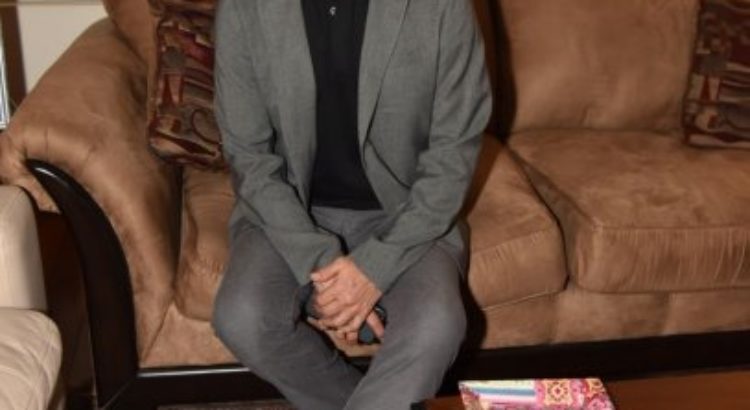
Tras haber tenido una exitosa carrera, el bailarín Julio Bocca dedica su vida a enseñar lo que le apasiona. Lo hace en una gira por todo el mundo y esta vez le tocó a Paraguay

A pesar ser una gran leyenda viviente del ballet, reconocido a nivel mundial, Julio Bocca es de trato gentil y de maneras muy humildes. El paso del tiempo le ha sentado bien, en su cabello corto luce algunos mechones plateados y se mantiene en buena forma.

Su mundo estuvo siempre ligado al arte. Su madre fue profesora de danza, él creció en el estudio, y ser un bailarín le resultó hasta muy natural.

“La recuerdo dando clases, siempre en movimiento, con una energía increíble, muy positiva, y en todo momento activa. Cuando decidí dedicarme a esto, mi mamá y mis abuelos siempre me apoyaron en todo”, rememora.

DISCIPLINADO. El éxito del bailarín argentino no fue fortuito. Trabajó con mucha dedicación hasta lograr la excelencia, tanto que es muy conocido por sobreexigirse. En una oportunidad, haciendo el Hamlet Ruso con la compañía de Boris Eifman, el cartílago que une las costillas quedó expuesto. “Tenía que sostener a bailarines de dos metros de altura. En un giro, uno de ello se movió antes de tiempo, yo me fui para atrás pero traté de parezca como parte de la coreografía y terminé el baile. Uno se acostumbra al dolor, la carrera demanda mucho esfuerzo físico”, puntualiza.

Con 15 años ya pisó grandes escenarios. Siempre fue un bailarín clásico pero con el tiempo fue absorbiendo todos los estilos, como la danza contemporánea, neoclásico, jazz y musicales. Bailó hasta conseguir la medalla de oro más importante en el mundo de la danza: el Concurso Internacional de la Danza de Moscú. Este premió lo catapultó y así fue como en 1986 fue convocado para ser el primer bailarín en el American Ballet Theatre. De ahí pisó escenarios de teatros como el Royal Ballet de Londres, el Bolshoi de Moscú, el Kirov de Leningrado, Alla Scala de Milán, la Zarzuela de Madrid, el Royal Danish Ballet de Dinamarca,el Ballet de la Ópera de Oslo, el Stuttgart Ballet de Alemania, el Ballet de la Ópera de París, entre otros.

DE LUJO. El ex primer bailarín del American Ballet Theatre llegó a Paraguay, luego de 10 años, como una de las figuras internacionales del Summer Couser 2020 del Ballet Clásico y Moderno Municipal.

Además de las clases de técnicas y grandes saltos, el laureado bailarín compartió sus vivencias y respondió a las preguntas de los chicos. “La misión es transmitir a la juventud todas las cosas nuevas que se están haciendo en el mundo, contar un poco mis experiencias y transmitirles ese amor que tengo por esta carrera”, sostuvo.

EL ARTE DE ENSEÑAR. Tras haber tenido una ascendente y gloriosa carrera y un retiro multitudinario, Julio Bocca pensó que lo natural era dedicarse a transmitir todo el conocimiento que adquirió en su rica trayectoria, pero confiesa que nunca se deja de aprender. “Con la gente joven hay que ser dinámicos, porque se aburren rápido; constantemente hay que generar cosas nuevas, diferentes. Pero nunca dejar de lado el respeto y la disciplina. La danza debería ser parte integral de la educación ”, asevera.

Está seguro de que en Latinoamérica hay mucho talento y cree que cuando los políticos entiendan que el arte no es un hobby, sino una forma de vida, tendremos ciudadanos mucho más cultos.

Ficha del artista

Nombre: Julio Adrián Lojo Bocca.

Fecha de nacimiento: 6 de marzo de 1967.

Ocupación: Bailarín, director, coreógrafo y maestro de ballet.

Premios

– Medalla de Oro en el 5º Concurso Internacional de la Danza de Moscú (1985).

– María Ruanova «Primus inter Pares» (1986).

– «Dancer of the Year» del New York Times (1987).

– Caballero de la Orden de San Martín de Tours (1987).

– Acquidanza en Acqui-Terme, Italia.

– Premio Gino Tanni a las Artes, en Roma

Premio Konex – Diploma al Mérito (1989).

– Mejor bailarín estrella internacional de danza clásica (Asociación Iberoamericana de Danza) en Barcelona (1990), entre muchos otros.

Fuente de la reseña: https://www.ultimahora.com/julio-bocca-la-danza-deberia-ser-parte-integral-la-educacion-n2867586.html

Comparte este contenido:
Page 1619 of 6736
1 1.617 1.618 1.619 1.620 1.621 6.736