América del Sur/ Venezuela/ 11.02.2019/ Fuente: www.eluniversal.com
Europa/ España/ 11.02.2019/ Fuente: www.elperiodicodearagon.com.
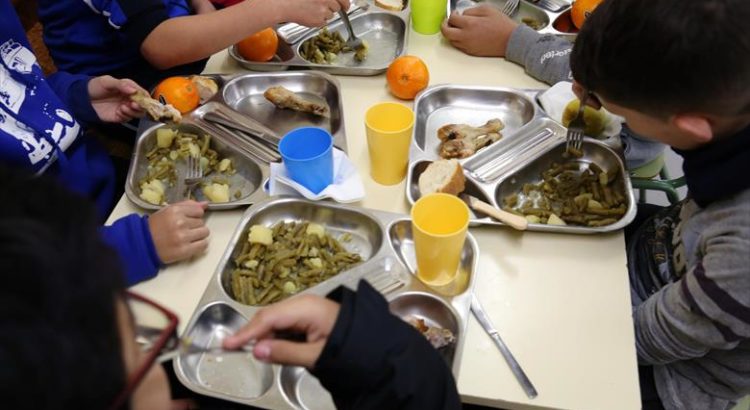
Uno de cada cuatro niños en España, un 26,5%, vivirá en situación de pobreza en el 2030, una tasa similar a la actual (28,3%), si no se toman «medidas urgentes», alerta Save The Children en el informe El futuro donde queremos crecer. En todo caso, precisa que si se aumenta la inversión a un 2,4% del PIB anual, se podría reducir en más de 10 puntos para ese año.
«La tasa de pobreza infantil va a permanecer en niveles del 26,5%, uno de cuatro niños permanecerá en situación de pobreza en 2030 si no se toman decisiones importantes. La pobreza infantil se ha convertido ya en una enfermedad crónica», alertó el director de Save the Children España, Andrés Conde.
Si bien, la oenegé ha precisado que esta «enfermedad no es incurable» y que si existe voluntad y consenso político, si se invierte en políticas de infancia y se da un enfoque integral, la pobreza infantil podría reducirse en más de 10 puntos en el 2030, pasando del 28,3% actual a un 17%. En concreto, calculan que sería necesaria una subida de la inversión anual hasta el 2,4% del PIB.
MÁS PRESUPUESTOS / Para contribuir a esta reducción de la pobreza infantil, la entidad va a proponer a los grupos políticos una Enmienda del futuro a los Presupuestos Generales del Estado de 2019, que prevé aumentar en 265 millones de euros la partida destinada a la prestación por hijo a cargo; incrementar en 10 millones la de educación infantil de 0 a 3 años, y en 18,5 millones las de refuerzo escolar y becas. «Pedimos el apoyo de todos los grupos políticos», subrayó.
El coste de no hacer nada, según precisó Conde, sería «infinitamente superior» que el de poner en marcha estas medidas. En concreto, la oenegé estima que el coste de mantener la tasa de pobreza infantil actual es de «5 puntos del PIB».
Atendiendo a las políticas urgentes que serían necesarias para reducir la tasa de pobreza en 10 puntos en una década, la directora de Sensibilización y Políticas de Infancia de Save the Children, Ana Sastre, ha precisado que estas deben darse en cuatro ámbitos: educación, salud, protección social y conciliación.
En concreto, la organización recomienda incrementar la prestación por hijo a cargo, pasando de los 24,25 euros mensuales que reciben las familias vulnerables en la actualidad a 100 euros. Este aumento tendría un coste de 2.400 millones de euros, es decir, un 0,22% del PIB, según el informe.
EL LUJO DE LA SALUD / Precisó que también existe una relación perversa entre pobreza y salud, hasta el punto de que «ir al dentista o al psicólogo sigue siendo un lujo que algunas familias no pueden permitirse». También planteó el problema de la obesidad infantil. Las alternativas propuestas por la organización supondrían una inversión de 231 millones de euros.
En relación a la conciliación, la oenegé propone el aumento de los permisos de paternidad y maternidad y garantizar progresivamente el acceso a la educación infantil de 0 a 3 años, aumentando el nivel de cobertura actual al 70%, creando unas 370.000 plazas nuevas en cinco años. Todas estas medidas supondrían un coste de 4.700 millones de euros.
Por último, Andrés Conde insistió en la importancia de que aumente la tasa de natalidad en España porque «las mujeres en España tienen la mitad de hijos de los que quieren tener».
Asia/ Japan/ 11.02.2019/ Source: japantoday.com.
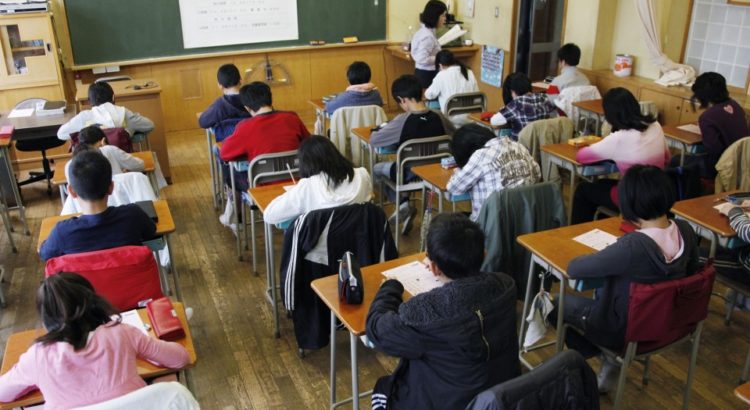
A western Japan city said Friday it plans to use artificial intelligence to predict the seriousness of suspected school bullying cases, in what will be the first such analysis by a municipality in the country.
«Through an AI theoretical analysis of past data, we will be able to properly respond to cases without just relying on teachers’ past experiences,» Otsu Mayor Naomi Koshi said regarding the planned analysis beginning from the next fiscal year starting April.
AI will be used to analyze 9,000 suspected bullying cases reported by elementary and junior high schools in the city over the six years through fiscal 2018. It will examine the school grade and gender of the suspected victims and perpetrators as well as when and where the incidents occurred.
Statistical analysis of the data is expected to help local authorities and teachers to identify forms of bullying that tend to escalate in seriousness and require particular attention, said the Otsu city education board in Shiga Prefecture.
The AI analysis will also look at other factors, such as school absenteeism and academic achievement, and the findings will be compiled into a report for use by teachers and in training seminars.
«Bullying may start from low-level friction in relationships but can get worse day by day. It is important to know which cases have a tendency to become serious,» an official of the education board said.
The Otsu city education board came under fire over the handling of a bullying case involving a 13-year-old junior high school student, who jumped to his death from the condominium building where he lived in 2011.
The board initially found no connection between the suicide and bullying, but some students were later found to have stated in a school survey that the boy was told to «practice killing himself.» An independent committee set up by the Otsu city government attributed the suicide to bullying in a report issued in 2013.
The case led Japan to enact a law the same year obliging schools to set guidelines to prevent bullying. In Otsu, schools are required to report all possible bullying cases to the city education board within 24 hours.
Elementary, junior and senior high schools in Japan reported more than 410,000 cases of bullying in fiscal 2017. Ten of the 250 students who committed suicide had been bullied at school, according to education ministry data.
Source of the notice: https://japantoday.com/category/national/japanese-city-to-use-ai-to-predict-seriousness-of-school-bullying
North America/ Estados Unidos/ 11.02.2019/ By: Michael Sainato/ Source: www.theguardian.com.
Colorado city educators would be the latest in a broad wave of strikes and protests across the country battling for funding
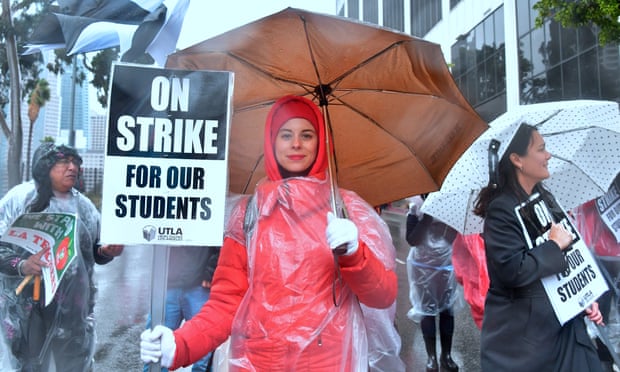
School teachers in Denver, Colorado, are set to strike on Monday in the latest of a wave of actions that has swept the sector in the past year as educators battle for better pay and working conditions.
In Denver, teacher salaries have been steadily decreasing, leading to high turnover in the district. Teachers are forced to financially rely on bonuses and incentives beyond their control as part of a system called ProComp, first enacted in 2005.
“The bonuses and the amounts change every year. This has led to a problem where teacher salaries are different every year, and teachers, including myself, have been getting paid less every year,” said Michelle Garrison, a teacher at Farrell B Howell Early Childhood Education-8th grade school “You don’t ever get a paycheck that’s the same. It makes it hard for budgeting.”
Tanessa Wilson, a teacher at John H Amesse Elementary in Denver cited an example that teachers at her school missed out on a $1,500 bonus this year because students who receive free and reduced lunches decreased by 0.2%.
“These incentives are based on factors that are out of our control and we don’t think that is fair,” said Wilson.
Some 93% of the Denver Classroom Teachers Association membership voted to authorize a strike last month in the midst of new contract negotiations.
“The current model isn’t working for teachers, it isn’t working for students,” said Nik Arnoldi, a teacher at Escalante-Biggs Academy.
Denver Public Schools officials responded to the strike vote by formally requesting the state of Colorado to intervene to avoid a strike, but the state declined.
“To our teachers: We want and need you in our classrooms,” said Susana Cordova, district superintendent, in a statement. “We want to work to reach an agreement and we welcome support from Governor [Jared] Polis and his administration to bring us both back to negotiate.”
A spokesperson for the district added: “The school district is committed to keeping schools open and on normal schedules during a strike to support our students and their education.”
Teachers in Oakland and Sacramento in California are also potentially heading toward strikes in coming weeks as part of a broader wave of actions that occurred in several states and cities in 2018. Those strikes led to significant victories for teachers in Oklahoma, West Virginia, Arizona, and, most recently, Los Angeles.
The American Federation of Teachers president, Randi Weingarten, said these walkouts are part of a broader trend of teachers combatting decade-long systematic funding problems in public education.
“No teacher wants to go on strike, but these actions are a direct response to the austerity politics that have left public schools low on the budget priority list in far too many states,” said Weingarten. “Our communities have made clear that they want safe, strong public schools, where kids can learn and where teachers can teach. When educators walk out, they’re doing it to get what their kids need, and they’re using the power of their collective voices to fight for the resources that are necessary to make schools better.”
The decline in teacher pay has been a significant public policy issue highlighted in these waves of strikes and protests. A report published by the Economic Policy Institute (EPI) in September 2018 found teacher pay has eroded since the mid-1990’s, with teacher pay penalties – the percentage by which public school teachers are paid less than comparable workers – growing to 18.7% in 2017.
Several states with the highest teacher pay penalties – Arizona, Virginia, Colorado, and Oklahoma – saw teacher walkouts and protests highlighting this increasing pay gap.
“Across the US, teachers and entire communities are saying enough is enough,” said Dr Sylvia Allegretto, co-chair of the Center on Wage and Employment Dynamics at UC Berkeley and lead author of the EPI report.
In Sacramento, teachers are still fighting for resources they won in a November 2017 contract with the Sacramento Unified school district. A strike was narrowly avoided when the teachers union and city reached a contract deal days before a scheduled walkout, but the teachers union says the district has ignored the contract.
“The contract we accomplished with the district not only dealt with economic issues but found resources to lower class sizes, add counselors, early intervention, school nurses, a lot of what they were working on in Los Angeles,” said David Fisher, president of the Sacramento City Teachers Association.
“Since then it’s been an issue with the implementation,” he added.
South of Sacramento, teachers in Oakland, California, voted to authorize a strike amid their contract negotiations. The Oakland Education Association announced on 4 February that 95% of union members voted to authorize a strike, which could occur anytime after 15 February.
“We are fighting for smaller class sizes, living wage, stopping school closures and more student support,” said Quinn Ranahan, a math teacher at Roots International Academy middle school, one of 24 schools in the Oakland Unified school district that are being considered for closure over the next five years.
A spokesperson for the district said in an email: “We are eager to come to an agreement with our teachers union, one that pays teachers what they deserve and that allows them to thrive in the expensive Bay Area. That being said, we have serious budgetary limitations, so we need to come to an agreement that is also sustainable for the district..”
Source of the notice: https://www.theguardian.com/us-news/2019/feb/10/teacher-strikes-denver-education-salaries-funding

México / 10 de febrero de 2019 / Autor: AIEDMX / Fuente: Youtube
Cuba / 10 de febrero de 2019 / Autor: Redacción / Fuente: Tiempo21
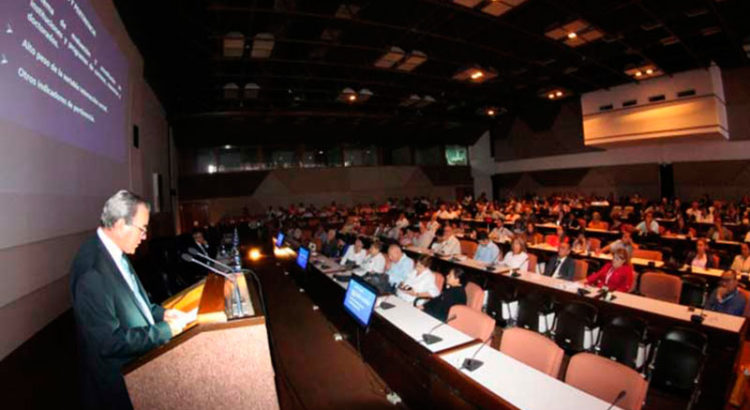
Sobre la formación de las nuevas generaciones de profesionales y científicos se debatirá hoy en la última jornada del XVI Congreso Internacional Pedagogía 2019, que sesiona desde el lunes en esta capital.
Para este viernes está prevista, además, una conferencia sobre la experiencia de la isla en la formación de técnicos medios para la salud.
En esta ocasión, se incluyó en la cita un espacio para un foro sobre la relación de las empresas con el mundo educativo, y el impacto de sus productos en los diversos niveles de enseñanza.
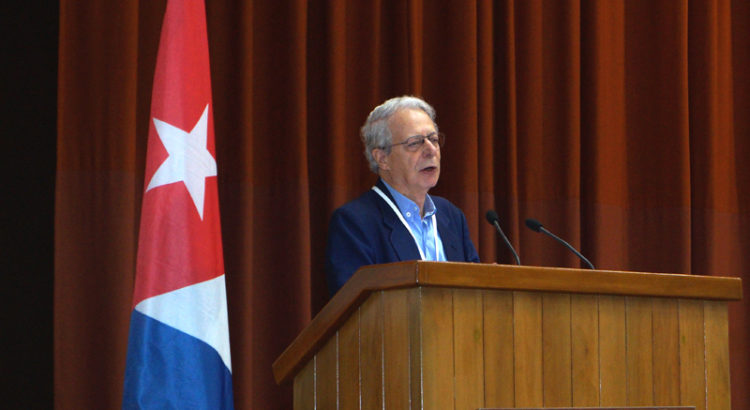
Además, se realizaron conferencias magistrales a cargo de la ministra cubana de Educación, Ena Elsa Velázquez; el titular de Educación Superior, José Ramón Saborido, y del teólogo brasileño Frei Betto.
También se rindió tributo al líder histórico de la Revolución cubana, Fidel Castro (1926-2016), y se recordó la prioridad que le concedió a la educación y las estrategias creadas para impulsar la formación académica de los cubanos.
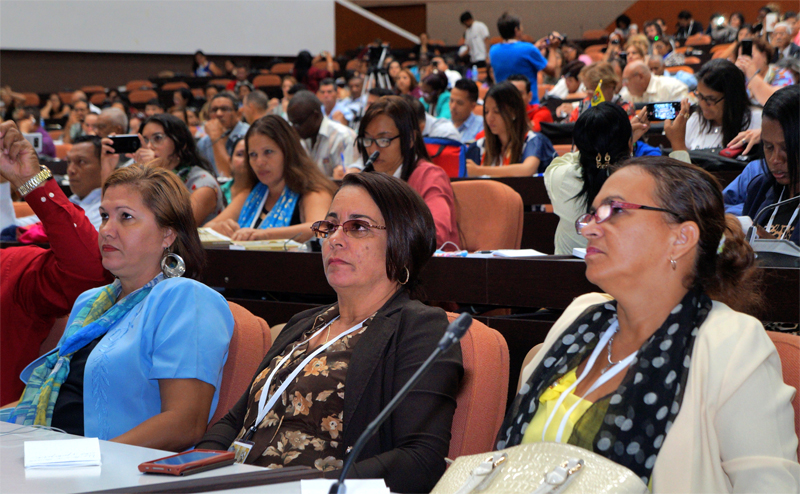
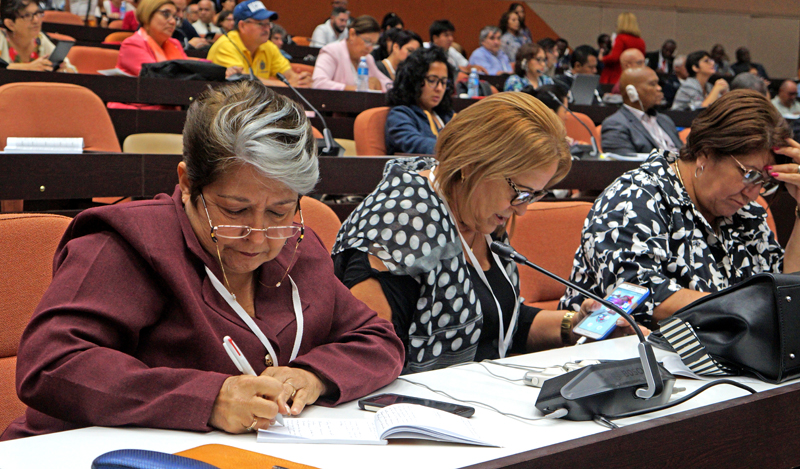
En las jornadas precedentes se efectuaron simposios, paneles, y se presentaron más de mil 500 trabajos de profesores e investigadores procedentes de más de 40 naciones.
De acuerdo con los organizadores, el evento permite socializar resultados científicos y buenas prácticas del quehacer de miles de profesionales de la educación que contribuyen con su labor al cumplimiento de los Objetivos de Desarrollo Sostenible de la Agenda 2030.
Fuente de la Noticia:
http://www.tiempo21.cu/2019/02/08/concluye-cuba-xvi-congreso-internacional-pedagogia-2019/
ove/mahv
Cuba – Brasil / 10 de febrero de 2019 / Autores: Darian Bárcena y Erika Alfonso / Fuente: Radio Rebelde
Las condiciones y retos de la educación en América Latina fue el tema central de la segunda jornada de actividades del Encuentro Internacional Pedagogía 2019, que tuvo como colofón la conferencia Educación y conciencia crítica, impartida por el teólogo brasileño Frei Betto.
Durante su ponencia, el intelectual sudamericano resaltó la influencia nefasta que ha tenido para la educación el ascenso de regímenes políticos de derecha en el continente.

Frei Betto destacó, además, la banalización de la docencia en la región y su puesta al servicio de los designios del capital, en lugar de fomentar el desarrollo espiritual de las personas.
La deshumanización y mercatilización del proceso docente es uno de los principales retos que enfrentan los educadores a escala global, por eso es imprescindible la formación de una conciencia crítica frente a las actuales circunstancias.

Frei Betto remarcó la influencia de Fidel en el éxito del sistema educativo cubano, y también su calidad indiscutible.
Fomentar una educación al servicio de las personas, que busque el debate y la crítica constituye un objetivo fundamental de los participantes en el Encuentro Internacional Pedagogía 2019 que sesiona en el capitalino Palacio de Convenciones por la unidad de los educadores.
Fuente de la Reseña:
http://www.radiorebelde.cu/noticia/frei-betto-aboga-por-una-educacion-critica-20190206/
ove/mahv