Page 2751 of 6814
1 2.749 2.750 2.751 2.752 2.753 6.814

Presidente angoleño anuncia lanzamiento de aplicación educativa

África/Angola/27 Agosto 2018/Fuente: Prensa Latina

El presidente angoleño, Joao Lourenzo, anunció hoy el lanzamiento de la aplicación móvil Qualificar (Calificar) que permitirá la consulta de unos tres mil cursos ofertados por centros educacionales del país.
Con esta plataforma tecnológica damos un paso en la modernización de los servicios públicos, escribió Lourenzo en su cuenta de Facebook.

A continuación preguntó a los jóvenes si estaban preparados, la que acompañó con la etiqueta #decideoteufuturo (decide tu futuro).

En su mensaje, de un párrafo, el mandatario dijo que siempre defendió que apostar en los jóvenes es apostar en el futuro.

Creo que el camino para el éxito depende de la dedicación a los estudios y al trabajo, explicó Lourenzo al recordar que la enseñanza y la formación son prioridades de su mandato, que comenzó hace 11 meses, el 26 de septiembre de 2017.

La plataforma gratuita disponible para instalación en Play Store y Apple Store reúne unos tres mil cursos de 500 instituciones, incluidas de los niveles de enseñanza secundaria técnica, educación superior, pedagógica, formación profesional y para administración.

El buscador permite realizar consultas por cursos, provincias y por área del conocimiento, incluidos prioritarios como agricultura y pesca.

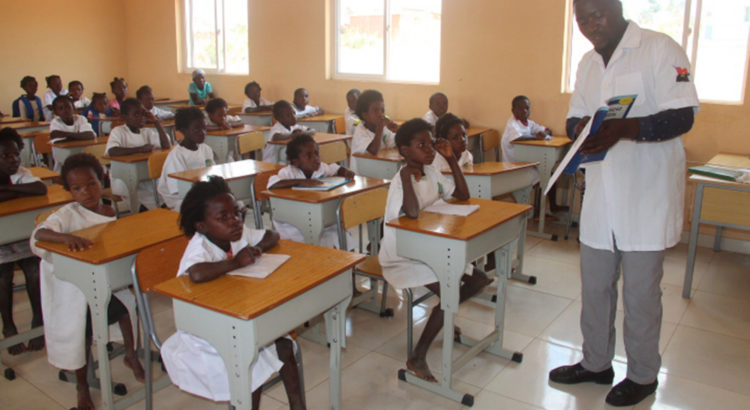
Angola tiene más de dos millones de niños y adolescentes en edad escolar fuera del sistema de enseñanza y un déficit de profesionales en distintas áreas del saber.

Fuente: https://www.prensa-latina.cu/index.php?o=rn&id=205461&SEO=presidente-angoleno-anuncia-lanzamiento-de-aplicacion-educativa
Comparte este contenido:

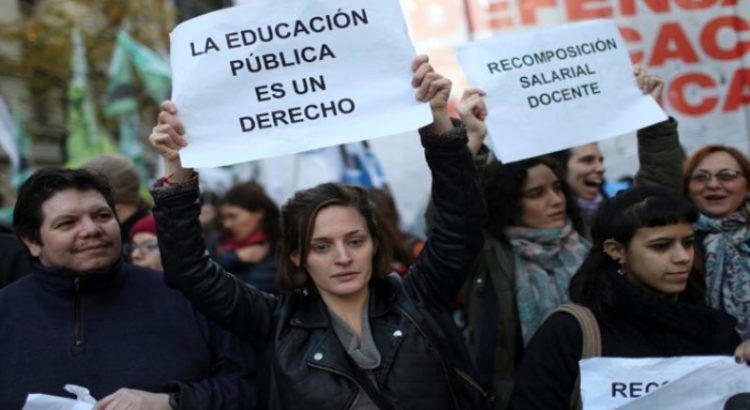
Comienza otra semana dura para los docentes argentinos

América del sur/Argentina/27 Agosto 2018/Fuente: Prensa Latina

En medio de la protesta que los mantiene hace tres semanas en paro, hoy será un día clave para los profesores de las universidades públicas argentinas que pelean por mejores salarios y contra el recorte del presupuesto.
Este lunes los gremios universitarios fueron convocados por el Gobierno a una nueva mesa de diálogo, en la que se espera que esté presente el ministro del ramo, Alejandro Finocchiaro, para resolver un conflicto que mantiene a casi 60 centros educacionales cerrados.

En una dura lucha que el viernes pasado incluso los llevaron a dar clases públicas en la emblemática Plaza de Mayo, frente a la Casa Rosada y a la vista de todos, los docentes están dispuestos a seguir en protesta hasta que sus reclamos sean escuchados y atendidos.

Al igual que sucede con otros conflictos de diversos gremios educativos, como el de la provincia de Buenos Aires, cuyos docentes entrarán en paro de 72 horas mañana, los profesores de las universidades nacionales rechazan el tope del 15 por ciento de aumento ofrecido por el Ejecutivo al considerarlo insuficiente frente a la creciente inflación.

El Ejecutivo hasta ahora ha mantenido su oferta del 15 por ciento de aumento de sueldo en cuotas y los docentes de antemano la rechaza, piden un salario que no los deje en la pobreza frente a los índices inflacionarios que ya se acercan casi al doble de lo propuesto.

De no resolverse el conflicto ya los maestros han adelantado que encabezarán una manifestación el venidero 30 de agosto, desde las inmediaciones del Congreso hasta el Palacio Pizzurno, sede del ministerio de Educación.

Fuente: https://www.prensa-latina.cu/index.php?o=rn&id=205386&SEO=comienza-otra-semana-dura-para-los-docentes-argentinos
Comparte este contenido:

Informe sobre la desigualdad en América Latina

América del Sur/Perú/ 27.08.18/ Fuente: www.lavanguardia.com.

La III Reunión de la Conferencia Regional sobre Población y Desarrollo de América Latina y el Caribe, organizada por la Cepal, finalizó recién con la presentación de un informe que señaló las deficiencias en la implementación de los derechos sociales y las brechas de desigualdad en esa región.

La Propuesta del Primer Informe Regional sobre Población y Desarrollo de América Latina y el Caribe contiene los avances de las delegaciones de la Comisión Económica para América Latina y el Caribe (Cepal) en la implementación del Consenso de Montevideo, adoptado en 2014.

El documento señala que, desde 2000 y hasta hace pocos años, la región venía experimentando una reducción considerable de la pobreza, pero datos analizados en 2015 y 2016 revelan un incremento en los niveles generales, principalmente por la influencia de países con un gran volumen de población o con grandes aumentos de ese indicador.

La desigualdad de ingresos, si bien sigue siendo una de las más altas del mundo, «continuó mostrando una tendencia a la disminución, aunque menos intensa en el último periodo, y pocos países registran un incremento», precisó.

En este ámbito, los programas de transferencias condicionadas constituyen uno de los mecanismos de protección social más presentes en la región y «han desempeñado un papel destacado en la mencionada disminución de la pobreza», añadió el informe.

Los países que redujeron la pobreza han realizado reformas en los sistemas de salud, pensiones y educación, y pone de manifiesto los programas de protección social en esas áreas.

Respecto a los derechos y necesidades de los niños, adolescentes y jóvenes, los niveles de conclusión de la educación secundaria aún son bajos entre niños y adolescentes, y solo una minoría logra seguir estudios superiores.

Además, persiste la marginación laboral entre adolescentes y jóvenes cuyas tasas de desempleo son mucho mayores que en otras edades, y la violencia sigue siendo una gran preocupación, de la que no hay signos de descenso.

El informe remarcó que «aún restan enormes desafíos porque la fecundidad adolescente de la región sigue siendo comparativamente alta a escala mundial, muy desigual y no deseada por la mayoría de adolescentes que se embarazan».

En relación a la población adulta mayor, una gran parte no tiene acceso a pensiones de vejez que les garanticen protección y la cobertura de seguridad social de la población ocupada es muy desigual.

Sobre la salud sexual de la población en general, el informe señaló que la planificación familiar ha mejorado y se logró eliminar casi totalmente la transmisión del VIH/sida de madre a hijo.

Respecto a la igualdad de género, señaló el acoso y la violencia política que sufren las mujeres candidatas a cargos públicos, así como las dificultades de acceso a la financiación y la cultura contra la paridad en los partidos políticos.

Asimismo, persisten las desigualdades étnicas y en algunos países siguen siendo profundas especialmente contra mujeres, jóvenes y niños indígenas.

Además, se observa altos niveles de tuberculosis y mortalidad materna con enfermedades crónicas y degenerativas.

Igualmente, la Cepal llamó la atención sobre el hecho de las vicisitudes que muchas personas migrantes enfrentan en varios corredores migratorios, en la inserción en el destino y en la reinserción en el retorno.

La III reunión de la Conferencia Regional sobre Población y Desarrollo de América Latina y el Caribe se celebró en Lima con el objetivo de analizar la ejecución de los acuerdos elaborados en el Consenso de Montevideo de 2014 y la propuesta de una plataforma virtual para seguir el tema.

Fuente de la noticia: https://www.lavanguardia.com/politica/20180810/451272517510/cepal-cierra-cita-de-lima-con-informe-sobre-desigualdad-en-america-latina.html

Comparte este contenido:

China otorga 24 becas universitarias a jóvenes guatemaltecos

Centro América/Guatemala/27.08.18/Fuente: dca.gob.gt.

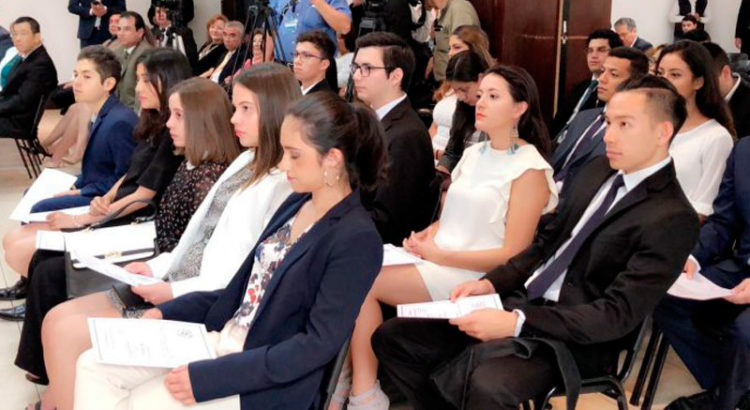
Un total de 24 becas a igual número de jóvenes guatemaltecos, para que reciban formación en universidades de prestigio, entregó hoy el gobierno de China (Taiwán), como parte de su programa educativo de apoyo a otras naciones.

Al respecto, el ministro de Educación, Óscar Hugo López, se dirigió a los beneficiados diciéndoles, “estamos totalmente convencidos que cuando ustedes regresen traerán conocimiento para realizar aportes a la sociedad guatemalteca”.

Los alumnos cursarán los grados de licenciatura, maestría y doctorado en las carreras de Administración de Empresas, Odontología, Ingeniería Mecánica e Ingeniería de la Computación, así como en Ciencia y Biotecnología.

Por su parte, el embajador del país asiático, John Lai, dijo que este intercambio educativo fomenta la amistad entre los dos países.

Fuente de la Noticia: https://dca.gob.gt/noticias-guatemala-diario-centro-america/china-taiwan-otorga-24-becas-universitarias-a-jovenes-guatemaltecos/

Comparte este contenido:

Hong Kong educators have forgotten that schooling should be fun

By Luisa Tam

I came across a very inspiring video on Facebook recently in which a teacher in a US public school was seen starting her class in the morning by exchanging elaborate handshakes with her young students, which had been personalised to each and every one of them. It wasn’t difficult to see that they were so excited to shake their teacher’s hand as they queued outside the classroom awaiting their turn.

I was totally overwhelmed and inspired by this, but sadly this is something I have rarely seen in our own education system. In Hong Kong, our educators seem to have forgotten that schools should be fun places to inspire and excite students to learn by providing a warm and hospitable environment to nurture their love for learning.

A good education should not just focus on academic attainment but also embrace genuine learning, creative teaching and encourage the overall development of the child.

This Facebook video, which has gone viral with more than 49 million views, also illustrates how important it is for teachers to build a genuine connection with students. Although the Baptist University debacle has died down for now, a short clip is a critical lens that shows what we seriously lack in Hong Kong’s education; our educators’ inability to connect, collaborate, engage with students or instil creativity in them. They are also guilty of turning schools into boring and lifeless education factories driven merely by a culture of homogeneity.

I dare say that many of our local educators still cling to the conformist concept that learning should not be fun because the process of acquiring anything worthwhile cannot and should not be fun at all, let alone enjoyable.

In Hong Kong, schools have turned into academic torture dens and signs of academic burnout are becoming increasingly common in younger primary students, which could trigger low self-efficacy and low self-esteem. I have witnessed some of these problems in the young children of some of my friends.

If you ask any child who attends a local school in Hong Kong, most of them will tell you it’s hard to differentiate between schools and prisons, as children feel trapped and unfulfilled in their classrooms, day in and day out.

Unlike Western education, local schools in Hong Kong are never meant to be fun and nor do they pretend to be. Most of our schools advocate excruciatingly long hours of homework, constant drills and rote-learning but never meaningful learning. Surviving school in Hong Kong is real hard work and local students recognise that this is what to expect throughout the course of their schooling; they have become blasé to this sad fact of life and so they choose to serve their time without complaint.

Whenever I hear the Hong Kong government churn out the buzzwords “creative economy”, I can’t help but feel that we are actually stuck in an “uncreative economy”. Moreover, if we are to build a creative economy, like what the government has been emphasising, we would need to have more creative industries. And to reach that goal, it would mean having to nurture creative young people to assure our future survival in an increasingly creative and competitive world.

But the irony is the government keeps on discouraging creativity and innovation, which turns our young people into near lifeless robots who only know how to push themselves to earn the best exam results.

The video clip of the cheerful US public school stands in stark contrast to the recent controversy at Baptist University, in which a group of students barged into a school office to push for the scrapping of the school’s apparently unreasonably difficult Mandarin assessment. It was obvious in the video that the American teacher and her students shared a mutual respect, but this was not the case with the Baptist University students, who chose to blame their educators and the establishment for their own shortcomings.

The challenge that Hong Kong’s educators face is that as the world of education has evolved to keep pace with a creative economy, they are still bogged down by the tremendous weight of the stifling rigidity of traditional education that neither meets today’s needs nor tomorrow’s challenges.

Our Hong Kong teachers might not be as agile as the American teacher in creating rhythmic or synchronised handshakes with their students, but a good first step is to treat students like individuals and recognise their differences in learning and motivation. Teachers and students need to build a positive relationship to create a learning experience that is welcoming and a setting that’s inviting. Like running a good business, there has to be trust and respect and a collaborative culture in which students can acquire a truly genuine education for tomorrow. That’s the future of learning and without this, we are doomed.

Fuente del artículo: https://www.scmp.com/comment/insight-opinion/article/2133070/hong-kong-educators-have-forgotten-schooling-should-be-fun

Comparte este contenido:

Education Watchdog Revokes License of Top Russian University

Europa/Rusia/ 27.08.18/ Source: themoscowtimes.com.

A state education watchdog has revoked the accreditation of a prestigious Russian private university in what critics fear could further erode independent education in the country.

Founded in 1995 as a project to bring British and Russian education models together, the Moscow School of Social and Economic Sciences, also known as Shaninka, reportedly boasts some of Russia’s highest-earning graduates and is highly competitive among management students. It’s the second privately-run university to face high-profile censure by education authorities in the last two years.

Russia’s education watchdog Rosobrnadzor ordered the school’s education accreditation be revoked this week after it said inspections this spring found 11 of its master’s and bachelor’s programs in violation of state education standards.

The school’s rector Sergei Zuyev assuaged fears of a shutdown in an online statement, saying “a withdrawal of accreditation doesn’t mean a suspension of educational activity.”

Accreditation gives the university the right to issue state diplomas, reported Russian business website The Bell, which Shaninka has only had for the past decade.

The Bell quoted a senior administrator at Shaninka as saying that geopolitical tensions with Britain and security services’ concern about its connections abroad could have influenced the watchdog’s decision to withdraw accreditation.

“There was an impression that the FSB considered the school too independent and too often in contact with foreign universities, a ‘real hotbed of liberalism’,” the anonymous source told The Bell. Other university sources dismissed this concern as a conspiracy theory.

The move comes two years after Rosobrnadzor stripped the European University in St. Petersburg, one of Russia’s leading private post-graduate schools for the social sciences and humanities, of its license over building code violations. The move narrowed the university’s educational scope primarily to research, rather than teaching.

Source of the notice: https://themoscowtimes.com/news/education-watchdog-revokes-license-top-university-61952

Comparte este contenido:

United Kingdow: Prestigious universities edge out rivals in UK’s battle for students

Europe/United Kingdow/27.08.18/Source: www.theguardian.com

Less selective institutions bear brunt of demographic decline in number of school leavers

Prestigious universities are squeezing out their rivals in the battle for undergraduates, setting a trend that could continue for several years and place some institutions under greater pressure to attract students to secure their funding.

The shift comes as the university admissions clearing house, Ucas, reported that record numbers had been placed on university courses a day after hundreds of thousands of students received their A-level results across England, Wales and Northern Ireland.

The competition for places has meant that even medical schools – traditionally among the most competitive courses for entry – still had places on offer, and the Ucas website listed places on more than 25,000 undergraduate courses in England.

Figures released by Ucas show that despite an overall decline in acceptances by UK students, universities that traditionally require higher exam grades are maintaining or even increasing the number of students they admit, thanks to rising numbers of applicants from overseas.

Less selective universities are bearing the brunt of the demographic decline in the number of UK-based school leavers, with a 2% fall in acceptances via Ucas overall translating into fewer prospective undergraduates.

“High-tariff” universities have reported placing nearly 139,000 students, a record number that means they now account for a third of all undergraduates studying in the UK.

Lower-tariff institutions have accepted 5,000 fewer undergraduates compared with last year, with the total dropping to 148,000. Acceptances at mid-tariff universities also declined by more than 2,000.

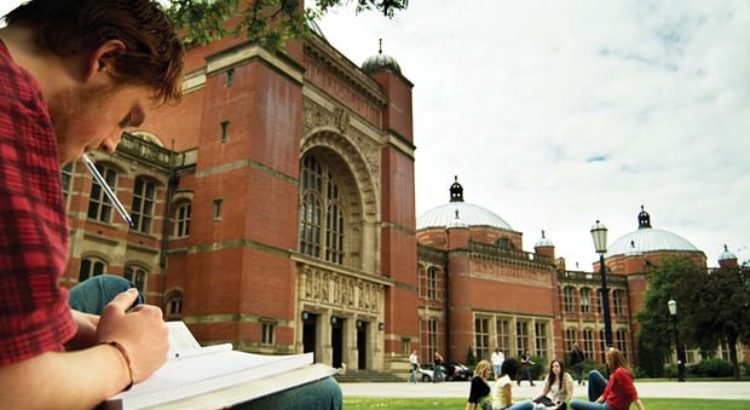
The higher tariff group includes Oxbridge and the Russell Group of research-intensive universities such as University College London and the University of Birmingham, and others with stringent entry requirements.

Ucas said a record 32,430 international students from outside the EU had been accepted this year, with more than 20,000 going to higher-tariff institutions.

The decline in UK undergraduates is the first recorded since 2012, in the aftermath of the introduction of £9,000 tuition fees. This year’s fall, however, is due to a 3% decline in the number of 18-year-olds, and would have been larger but for a rise in the percentage of school leavers going on to higher education.

The record numbers placed through the clearing process confirms suggestions that this year’s admissions process was a fruitful environment for potential students, with more waiting until the last minute or quickly finding new places after missing out on expected grades.

More than 15,000 applicants have taken up places at UK universities after going through the clearing process, the highest on record and more than three times as many as the same time 10 years ago.

The competition can be seen in the number of universities trying to recruit students by leaving popular courses open so as not to turn away any applicants.

One admissions director said the tactic was to advertise as many courses as possible, even those notionally full, and plan on shifting resources to match where applicants wanted to study.

The Press Association found that 18 of the 24 Russell Group universities were still advertising nearly 3,800 courses through clearing. Overall, 134 institutions were still advertising courses on Friday.

Mark Blakemore, the head of student recruitment at St George’s, University of London, said the medical school was holding interviews on Saturday. “Many students have exceeded the grades that they expected to get and it’s on the back of that that they are calling us,” he said.

The demographic decline among school leavers is forecast to continue until at least 2021, and may be exacerbated by the UK’s exit from the EU, if as expected that leads to fewer EU-based applicants.

Source of the notice: https://www.theguardian.com/education/2018/aug/17/prestigious-universities-edge-out-rivals-uk-battle-for-students
Comparte este contenido:
Page 2751 of 6814
1 2.749 2.750 2.751 2.752 2.753 6.814