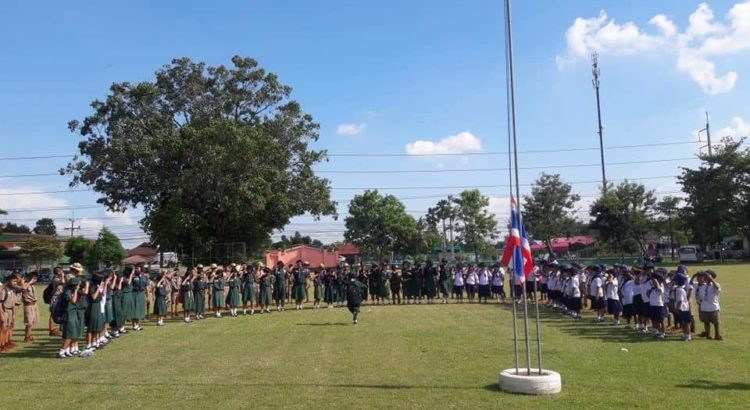
Asia/Thailandia/nationmultimedia.com
Resumen: CUATRO AÑOS después del golpe militar de 2014, el sector educativo de Tailandia todavía está atrapado en la misma vieja pregunta: ¿qué camino seguir?. Las incertidumbres prevalecen, a pesar de las muchas promesas y esfuerzos para la reforma educativa. Las nuevas iniciativas, que incluyen reducir las horas de clase para darles a los niños más tiempo para un desarrollo integral, han comenzado solo para decaer en los últimos cuatro años. La junta puede enorgullecerse del hecho de que se han aprobado varias leyes de educación bajo su mandato. Pero persisten las preocupaciones sobre la preparación y redacción de las leyes, dado que el nuevo Proyecto de Ley de Educación aún no está listo.«El proyecto de ley nacional de educación aún no se publicó. Pero mucho de lo que se supone que debe estar dentro de este marco ya se ha implementado. Esto significa que los problemas pueden ocurrir en el futuro «, señaló el profesor asistente Athapol Anunthavorasakul, profesor de la Facultad de Educación de la Universidad de Chulalongkorn y director del Centro de Educación Cívica de Tailandia. También insinuó que las leyes y las reformas educativas podrían no dirigirse hacia la misma dirección.
New initiatives, which include reducing class hours to give children more time for well-rounded development, have kicked off only to falter over the past four years.
The junta may take pride in the fact that several education laws have been passed under its tenure.
But concerns linger over the preparation and drafting of the laws, given that the new Education Bill is not yet ready.
“The National Education Bill, or framework, has not yet come out. But [much of] what is supposed to be inside this framework has already been rolled out. This means problems may occur in the future,” pointed out Assistant Professor Athapol Anunthavorasakul, a lecturer at Chulalongkorn University’s Faculty of Education and director of the Thai Civic Education Centre.
He also hinted that education laws and reform might not head toward the same direction.
For example, while the Early-Childhood Education Bill seeks to ban exams for children up to the age of 8, school graduates look set to undergo tough examinations to enter universities.
“And what will teacher-producing institutes do with their programmes when the Early-Childhood Education Bill is introduced as law?” Athapol asked.
The educator also raised doubts about the enforcement of the Equitable Education Fund Act and the upcoming National Curriculum Development Centre Act.
“Will works done under these new laws clash with the Education Ministry? Will the Education Ministry, as a key implementation agency, co-operate well with new agencies established under the new laws?” Athapol asked.
He warned that efforts made in good faith could backfire if there were no clear and proper policy direction.

Although Athapol reckons the establishment of the Independent Committee for Education Reform (ICER) is a clear step towards reform, he remained worried that complications could arise.
“By the third anniversary of the coup, we had hardly seen any clear progress on the educational front. It was only after the ICER was established [last May] that we started seeing visible progress. Yet that has also brought us concerns.”
He said that apart from the lack of direction for the overall picture, there are issues of a lack of co-ordination, inclusion and integration.
“How will the civil sector and the government sector work together?”
He added that the Education Ministry is in fact apparently reluctant to make any moves.
“Agencies under the ministry have hardly moved forward. It’s as if they are waiting for new agencies to start new things,” he said.
Such an approach suggests that new agencies established for so-called educational reform may merely follow in the footsteps of the Office for National Education Standards and Quality Assessment (ONESQA).
Established under the 1999 National Education Act, ONESQA assesses schools’ quality but its findings have rarely translated into school improvements given indifference on the part of authorities.
 Kunthida
Kunthida Rungruengkiat, an independent academic with knowledge of Finland’s famed educational systems and who recently co-founded the Future Forward Party, said she had noticed little tangible progress on the educational front during the past four years.
“There are some new projects, such as coupons for teacher development and the Pracha Rath schools. But I don’t see what students get from these initiatives,” she said.
She also lamented the fact that instead of decentralising educational organisation, the authorities have centralised power under the current government.
“The government should have realised that each area may have different educational needs. So it’s best to offer independence to local agencies in handling educational affairs.”
Under an order of the NCPO chief, provincial education committees were established with a goal of preventing corrupt promotion of local teachers and educational staff. However, the committees have caused management problems in several areas with top local education officials unwilling to co-operate.
Athapol said problems in the country’s education sector stemmed partly from a failure to base decisions on empirical research.
“That’s why we have this back and forth movement. Whenever a project attracts protests, policymakers will show reluctance and sometimes backtrack. This is because nothing has been built on solid research. They have no clear reason or evidence why they should not back down,” Athapol said.

Daranee ICER member Daranee Uthairatanakit is optimistic about what can be done in the future, though.
“We expect new agencies such as the National Curriculum Development Centre to prepare curriculum and the Education Ministry to keenly implement it,” she said.
During a recent TV interview, Education Minister Teerakiat Jareonsettasin said he recognised that a clear direction was crucial to education-reform success and that the focus should be on students, teachers and schools.
“Key education laws will be introduced during the term of the current government. Then, we will get a clear picture. Also, I will ensure the Education Ministry works efficiently. Good relationships among all stakeholders can make a difference,” he said.
Kunthida, however, does not believe the ICER’s reform efforts will provide a solution.
“In my opinion, decentralisation is the answer. One has to believe in the potential of schools and the civil sector,” she said.
Fuente: http://www.nationmultimedia.com/detail/national/30346212




 FVF
FVF FVF
FVF FVF
FVF
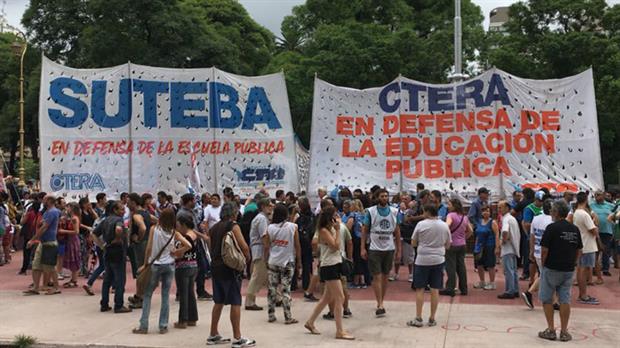
 Alternativa Docente y el MST Nueva Izquierda, encabezados por Alejandro Bodart, Vilma Ripoll, Celeste Fierro y Vanesa Gagliardi participó en la Marcha desde las distintas provincias, acompañó con fuerza la movilización y recibió a las columnas en la 9 de Julio en puntos claves: la Avda. de Mayo y en Avda. Belgrano, por donde entró la columna principal de CTERA y también la de SUTEBA junto a Neuquén, Chubut y el resto de la Patagonia.
 La adhesión al paro docente fue total en Neuquén, provincia que viene luchando a brazo partido, con 44 jornadas de paro en lo que va del año y una irrupción extraordinaria de la base. Incluso el miércoles 23, además de la importante presencia aportada en la Marcha Federal, realizaron una gran marcha en la provincia y corrieron a punteros de varias escuelas neuquinas cuando pretendían cubrir el lugar de docentes en huelga. También fue muy fuerte en Chubut, donde la medida en esta semana es por 96hs. Como parte de un plan de lucha que lleva más de 60 días y más de 20 jornadas de paro.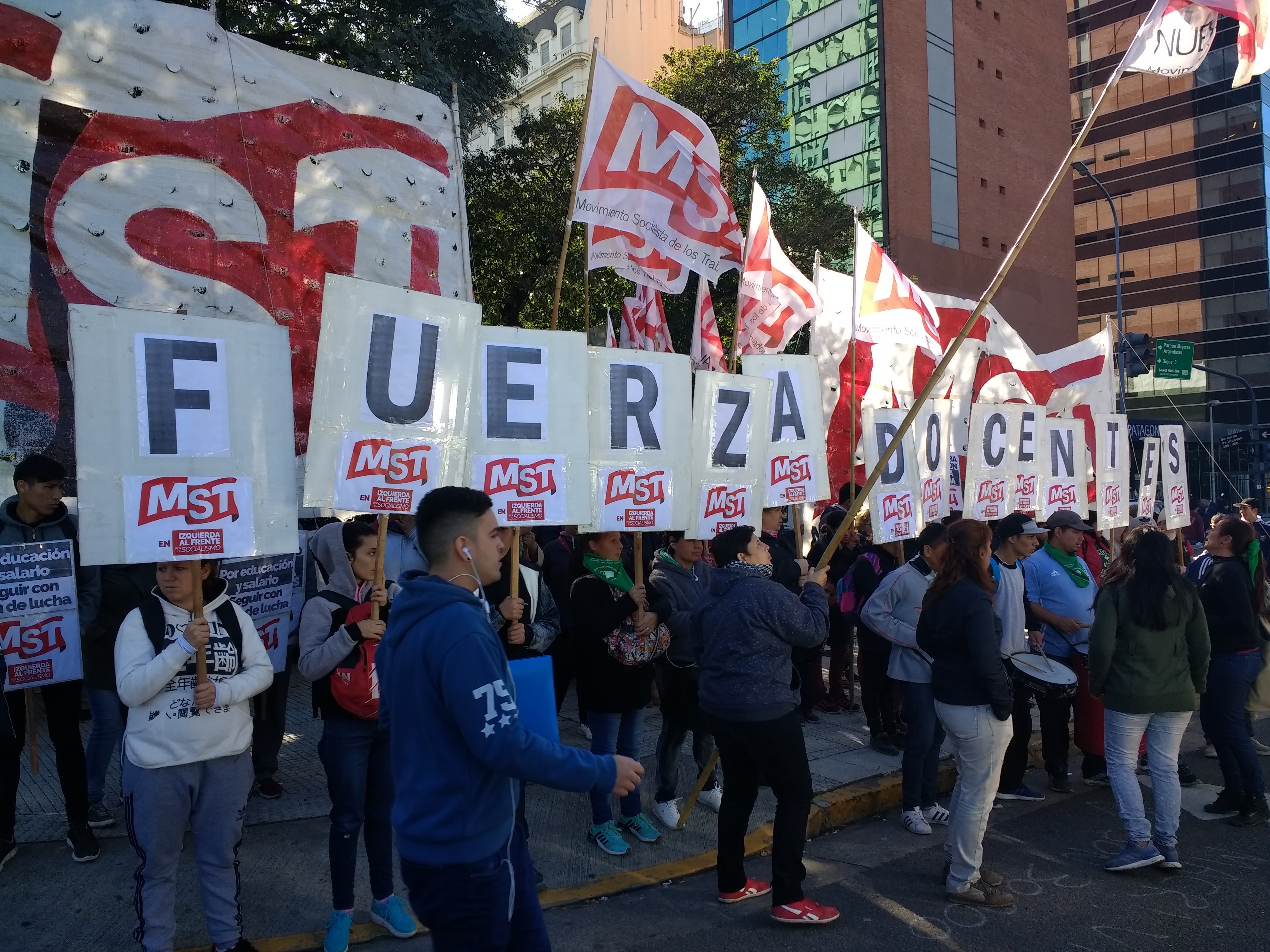
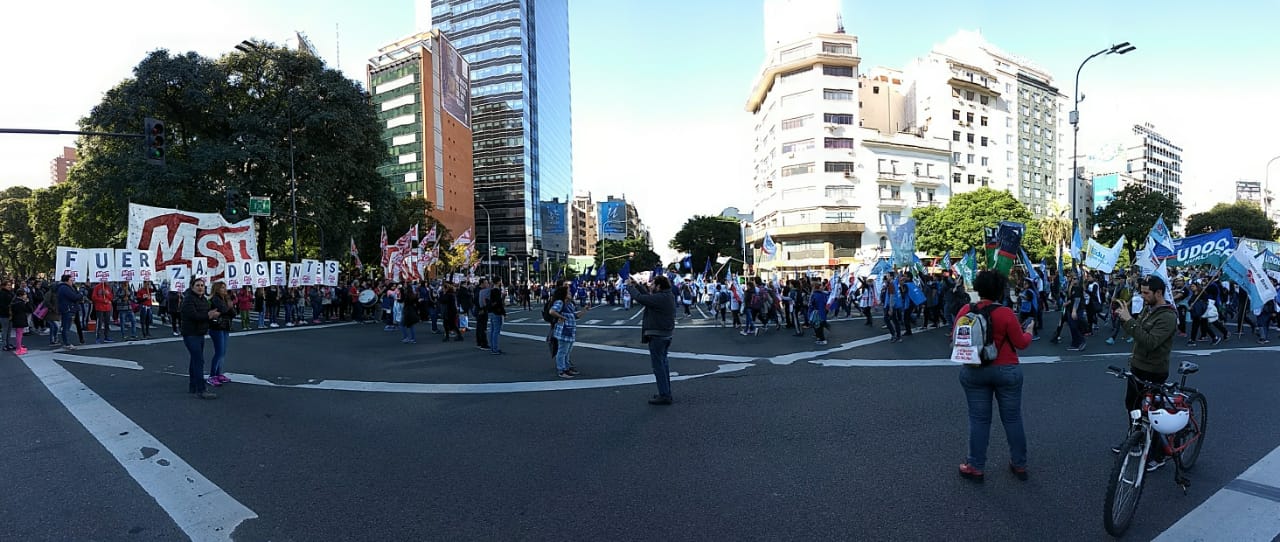


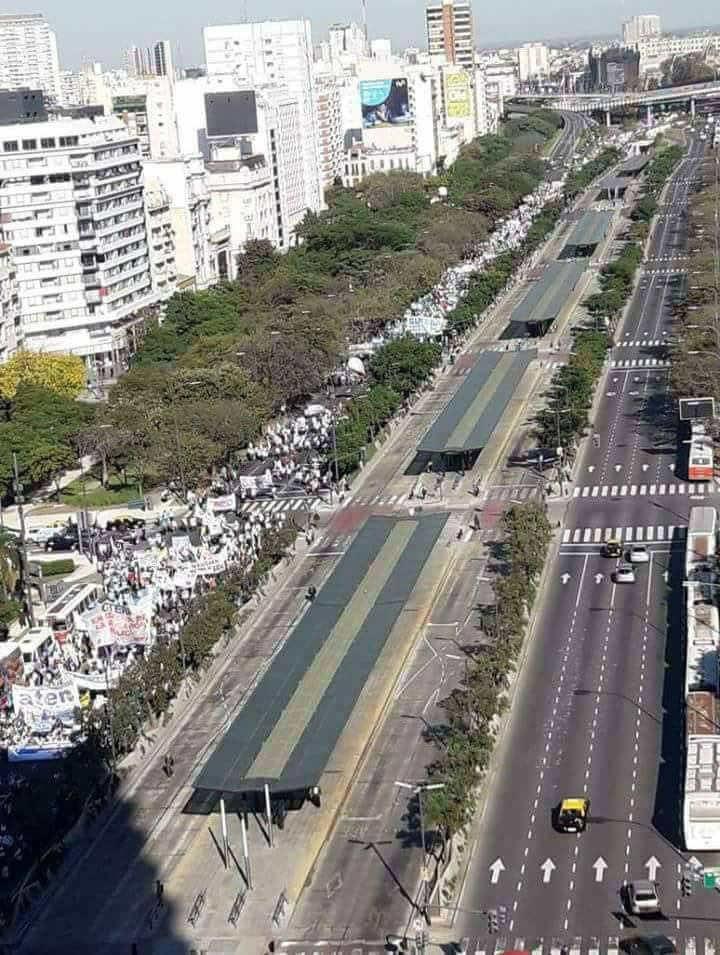 Como decimos en una nota previa a esta Marcha Federal, ante el ajuste global de Macri y los gobernadores del PJ, se da la mayor traición de la Celeste de CTERA y los gremios, al planchar la lucha nacional y aislar a las provincias. A diferencia de 2017, cuando debieron llamar a 14 paros nacionales y a la Marcha Federal en marzo, ahora no tienen empacho en actuar como la burocracia que garantiza la gobernabilidad del ajuste (ampliar aquí). Por eso aceptaron y acordaron, vergonzosamente con el macrismo y sus fuerzas represivas, liberar carriles para poder cruzar el puente, arriesgando el tránsito de una docencia custodiada a lo largo de la columna Sur.
 Más allá de cortarse solos para aparecer mediáticamente, resulta particularmente grave el seguidismo a lo que haga o deje de hacer la Celeste por parte de la Marrón/PTS que se ha negado a participar de los Plenarios de Delegados y acciones impulsadas por la Multicolor. Lo mismo que el Encuentro Colectivo/Enriqueta Lucero. A lo que se suman oscilaciones de la Azul y Blanca/PCR.
 Además de proponer la continuidad de las acciones de lucha con un nuevo paro y movilización docente para el 1 de junio, unificando con la llegada de la Marcha Federal al Congreso de organizaciones sociales, la CTA Autónoma, sectores de la CGT y el paro nacional que ATE convocaría para ese día.


 Users Today : 7
 Total Users : 35463408
 Views Today : 13
 Total views : 3425928