Page 3295 of 6815
1 3.293 3.294 3.295 3.296 3.297 6.815

Reino Unido: Education meets corporate at the London Business School

Reino Unido/Enero de 2018/Autor: Paul Milligan/Fuente: INAVATE

Resumen:

Una combinación de inversión de varios millones de euros y un proceso de instalación de un año de duración ha resultado en un impresionante proyecto en la London Business School, donde la educación se encuentra con las empresas. Paul Milligan informa.

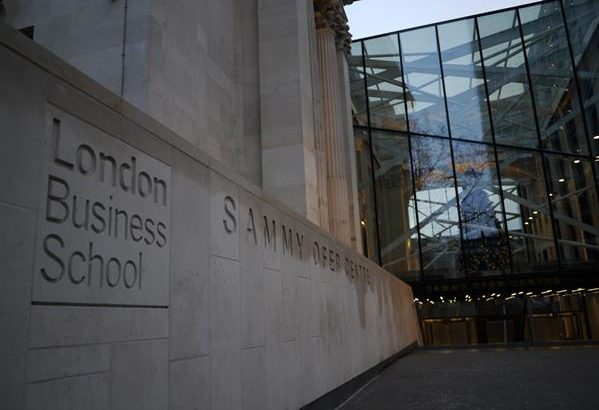
La apertura del Centro Sammy Ofer ha visto a London Business School (LBS) entrar en una nueva era. El proyecto de 125 millones de euros incluyó la remodelación de la Casa del Consejo del Ayuntamiento de Old Marylebone y de los edificios del Anexo, utilizando el espacio excavado entre los dos edificios para crear una nueva estructura de acero y vidrio. El edificio lleva el nombre del magnate naviero israelí, e incluyó una donación de 25 millones de euros de su hijo Idan, que se graduó con un MBA de la escuela en la década de 1980. Diseñado por los arquitectos, Sheppard Robson, cuenta con 35 salas de seminarios, 10 salas de estudio, ocho nuevas salas de conferencias, incluyendo dos aulas de planta baja, dos salas de juntas ejecutivas, un puñado de otros espacios AV pequeños, una nueva biblioteca, múltiples áreas de reunión y dos cafeterías . En total, el nuevo Centro ha aumentado el espacio de enseñanza en LBS en un 70%.

A combination of multi-million euro investment and a year-long installation process and has resulted in a stunning project at the London Business School where education meets corporate. Paul Milligan reports.

The opening of the Sammy Ofer Centre has seen the London Business School (LBS) enter a new era. The €125 million project included the refurbishment of The Old Marylebone Town Hall’s Council House and Annexe buildings, using the excavated space between the two buildings to create a new glass and steel structure. The building is named after the Israeli shipping magnate, and included a €25m donation from his son Idan, who graduated with an MBA from the school in the 1980s. Designed by architects, Sheppard Robson, it features 35 seminar rooms, 10 study rooms, eight new lecture theatres including two flat-floor classrooms, two executive boardrooms, a handful of other small AV spaces, a new library, multiple breakout areas and two cafeterias. All told, the new Centre has increased teaching space at LBS by 70%.

Founded in 1965, LBS is a post-graduate education establishment offering MBA, Masters and executive education programmes. It has been recently been named as the top graduate business school in Europe for the fourth year running by the Financial Times.

london business school 2

The grade-II listed building, owned by Westminster Council had lain empty for years because the council couldn’t fund a renovation. Already looking to expand to another site in London close to its HQ in Regent’s Park, LBS took on the building and is renting the property on a long-term lease with agreement that it houses Westminster Council meetings six to eight times a year. The famous wedding venue (Paul McCartney and Ringo Starr were both married there) has also been renovated as part of the project.

Planning for the (multi-million euro) AV side of things began early in 2013 when LBS engaged AV consultants Blend to formulate a plan with Wayne Buttigieg and his team. Buttigieg is head of Infrastructure and Media Services at LBS and had a clear idea from day one what the AV should achieve. “We wanted to have world-class teaching facilities. We wanted the best. That doesn’t always go hand in hand in a grade-II listed building. We wanted an AV consultant in early on to engage with the architect because we knew the spaces were going to involve constraints. There are some rooms where you can’t do anything to the floor. That was the first stage. Then we worked through the design, came up with a budget and took us to tender.”

london business school 3

Four system integrators took part in the tender, with GV Multimedia chosen as the winner, GV then took over design responsibility from Blend in August 2016 as the build started to take shape. As he knew this project was on the horizon, Buttigieg has spent years visiting ISE to get an idea of the products he would use and, as a result, everything you see on site now has been hand-picked. “It wasn’t Blend coming to us with a complete design, it was an evolution of our existing campus, to take it to the next level,” he says.

The project, for both client and integrator was a lengthy, sometimes difficult and detailed job. The tender process took place in December 2015 and GV first started installing cable runs in May 2016 to ensure late-to-be-sealed routes were in placed in line with the build programming. Following the 155-week build programme, handover from the main contractor took place at the end of July 2017, with students on site at the end of August 2017.  To help manage the process and keep engaged with the building and architectural work, GV employed a contracts manager to attend the (frequently daily) planning meetings.

london business school 4

The main focus for GV was to supply top class AV for over 50 teaching and meeting spaces, digital signage, boardrooms and eight new lecture theatres with a central control room, all spread across four floors and two buildings. Wherever possible GV has tried to standardise the AV, as a result it often resembles a high-end corporate office rather than a traditional educational establishment. The two flat-floor lecture theatres on the first floor are a great example of that.  Both rooms seat 35 students in a flipped-classroom style, where the only thing fixed to the floor is the custom made Simon Kohn all-white desk. Each lecture theatre has its own custom-sized version of the desk and control system, all designed to be used quickly and easily by teaching staff. Each desk refines an existing design piloted successfully on other sites. The only AV the staff can see on the desk itself is a 24-in Dell touchscreen monitor and 20-in widescreen AMX touchscreen, a standard PC is hidden underneath the desk.

“PCs used to be in the rack, but it’s all about getting the teaching going quickly, if the user sees a blue screen they can turn it off. Before they would have to phone someone up,” adds Buttigieg.

london business school 5

It is only when you look closely at the desk will you see one of the many clever features in the room. A full-width frosted glass panel sits on the desk surface, above it fixed in the ceiling is a Wolfvision VZ-C12 visualiser. This means the teaching staff can write on the (wipe-clean) surface and the text appears directly on two 94-in screens behind them, using Christie short-throw laser 4,000 lumens projectors. When the lecturer is finished or has filled up the screen with text, the image can be saved on the intranet or via USB. Simply wipe with a cloth and start again.  Not only is the technology inventive, but it allows the teaching staff to remain in face-to-face contact with the students at all times, instead of students having to stare at the back of the lecturer’s head whilst they write.

Alongside the two screens behind the lecturer, these two flat-floor lecture theatres have AV split down the middle of the room; on each side is an 84-in Smart Kapp board, one 80-in NEC flat panel and one traditional whiteboard. This is so the students can break out into discussion groups and be near the technology wherever they sit. It’s also possible to send the signals from the desk to all of the technology. “We are seeing more and more flipped classrooms, where students will sit through some pre-required learning (video or text), and then come into a session where they can focus their time with the academic staff to get the information they really need and work collaboratively with their peers,” says Daniel Victory, group technical director, GV Multimedia.

london business school 7

 Audio pickup in the room is via tiny AKG button boundary microphones dotted around the ceiling. The rooms are also set up for Skype for Business and a Panasonic PTZ camera runs into a Sonic Foundry Mediasite lecture capture system, as well as simultaneously providing for remote monitoring and Skype via IP and USB. If they want extra voice reinforcement, staff can also wear Revolabs Executive Elite wearable microphones around their necks. The main campus at LBS has used Mediasite for years, but there is a clever twist on its installation in the Sammy Ofer Centre explains Buttigieg. “To encourage usage instead of having to schedule recordings you can now record on the spot using the desk. You click on the screen (which has an NFC reader inside) with your ID pass and it recognises who you are then, depending on permissions, you can record your lecture. When you hit save it puts it in your folder on the server, ready to make available or edit if desired.  It records audio, video and the last source selected (slides etc).”

To make sure all the new AV was used to its fullest, Buttigieg and his team, following training from GV Multimedia, ran a series of 30-minute induction sessions for staff. “We changed the design of the panel to make it super-simple.  When it’s turned off all you see is a big start button.  You hit start and it takes what is displayed on the PC and puts it on the screens straight away, and that covers 70% of what people really want to do. If you want to go beyond that, it’s in stages – stage one select your source etc.” From the beginning of the process it was obvious the UI was going to be key to adoption of the technology says Victory. “It took a lot of conversations, and what we have now was pared back quite a bit from some of the initial discussions to ensure optimal user experience. We went through the workflow numerous times throughout the project to find out what the fewest buttons you had to press to get the lecture going were.” Using laser projectors has also helped transform class start up times adds Buttigieg.

london business school 8

In addition all lecture theatres and seminar rooms have Barco WeConnect wireless mirroring. This was for various reasons says Victory: “If you are teaching and you have an iPad it means you aren’t stuck behind a desk, you can get up and walk around.  It also means the students can connect wirelessly, to show the group work they have been working on, on the big screens. Additionally, the team at LBS have been working with Barco to allow lectures to be broken out to the seminar rooms on each floor and to allow the content being worked on to be reviewed comparatively from the main Barco node in the lecture theatre, either full screen or tiled as required.”

Outside each seminar room and lecture theatre are custom-made mounts for AMX room booking display screens to ensure a matched fit with other custom signage.  Custom programming was done by GV to interface the room booking system to merge with the AMX interfaces.

In another wing are the next four lecture theatres, holding 85 people in each, in beautiful wood-panelled rooms. Again, the AV mirrors the other lecture theatres, a white desk controls the AV on two Vutec 111-in or 123-in projection screens depending on room height available. The screens are served by two NEC 8,000 lumens laser projectors, hidden on hoists carefully integrated into the wooden slatted ceiling.  The projector screens are custom designed to allow them to be blended together to make one screen, for consistency with existing spaces the system permits the users to show two different pieces of content (slides, video etc) at the same time, side-by-side. Having two projectors also provides redundancy if one fails, notes Buttigieg.

london business school 9

Audio throughout the Sammy Ofer Centre is run on Dante. All of the audio in the rooms is collected through a DSP, which allows Buttigieg’s team to monitor mic and audio levels from the control room and also to send audio to other rooms in case of class overspill as well as being instrumental in the larger DSP requirement in the largest of their lecture theatres.

Monitoring of the lecture theatre AV technology is done via their main control room which uses in-room technology such as cameras and Mediasite, all routed via SVSi AV-over-IP technology (including a multi-preview display of all lecture theatres simultaneously on a 65-in NEC display) to provide near-instant monitoring from any of the lecture spaces. AV control in this space allows quick and full remote control of the outlying spaces via AMX RMS software and an in-room 10-in AMX touchpanel. A pair of bookable Polycom conferencing units are also available to and from each lecture theatre and the main control room, with all signals and control for the cameras and content passed over the network due to the long cable distance. “Getting all of the networked devices online and working on a fully converged network took a lot of close coordination with the client IT-team. This was essential both for system operation and to ensure the client network was unaffected” adds Victory.

Moving upstairs, you come to the biggest teaching space of all, a 200-seat lecture theatre, capable of being split into two exact 100-seat spaces. The room can be divided using a motorised Skyfold wall which is capable of concealing noise from the other side up to 50db.  Innovation in this room comes in the form of two audio systems. Because this theatre is used for both lectures and as a Council Chamber, choosing the right microphones was difficult. In the end, to keep desks uncluttered, 36 Earthworks microphones drop down from the ceiling on Servoreeler retractors when needed.

Because the room has two large 7.25m projection screens (providing two 163-in displays per screen), each served by two Panasonic 12,000 lumens laser projectors along with a highly complex slatted ceiling, that meant there wasn’t a lot of room left for loudspeakers, so some creative thinking was needed. The solution came in the form of perforated projection screens made by Monarch and mounted onto GV-designed, custom, angled frames behind which two Renkus-Heinz digitally steerable line arrays are hidden.

The rooms, again, have the same desk control space, but also feature two NEC displays with Shadowsense touchscreen technology mimicking the projection for direct interaction and Telemetrics camera system for Westminster and Business School uses. The Council now has the added ability to stream and record the event via a NewTek Tricaster. Using a touchscreen Elo panel the operator can zoom in within seconds on any speaker in the room via the 200 preset positions programmed into it. Alongside the Telemetrics and Tricaster control surfaces are also an iPad (for room control) and a mixing desk up in the technical space rear corner of the room to control the AV for the council meetings. To enable rapid deployment, the desk is connected simply by power and a Dante network connection which provides full connection to the ceiling, floorbox and wireless microphone positions and routing to all destinations, including the Westminster Reception room for relay during functions.

The 35 Seminar and 10 Study rooms are used by staff and students (booked via an app) for meetings and collaborative teaching. Seating between 6-12 people around the building, the rooms feature individually custom-made tables with connectivity inside. A selection of 42-in Smart Kapp boards, NEC P Series displays and Logitech MeetUp huddle room conference systems can be found on the walls in these spaces.

So what difference has the new technology made to the LBS? “Previously in the seminar rooms we had a PC in the corner of the room with a little screen which could only be used by one person, even though there was up to eight in the room. Now we have 35 rooms where our students can collaborate,” says Buttigieg. “In the lecture theatres it has given us the ability to put into practice a lot of the ideas we’ve had over the last few years. By starting a lecture theatre from scratch it means you can put visualisers in from the off, rather than retro-fitting them. It has given us the chance to try out different technologies, like the mirroring. There is an expectation from the faculty now there will be new technology, so it has given us the opportunity to put it in.”

KIT LIST

Audio
AKG C562 ceiling microphone
Ampetronic CLD1AC-CD desk induction loop
Audac WX302/B loudspeakers
BSS BLU-102 conferencing processor
Clockaudio S 135-RF desktop mic
Ecler eGPA2-150 amplifier
Extron XPA 1002 amplifier
K-array KY102 array loudspeaker
Kef Ci160QS ceiling loudspeakers
Polycom Soundstructure C12, Soundstructure C16 audio DSP
Renkus Heinz IC16-8-RD array loudspeaker
Revolabs Executive Elite wireless microphone system
Shure SM58 mic
Soundcraft Performer II digital console
Vaddio EasyUSB audio bridge

Control/distribution
AMX MSD-1001 and MSD-431-L display screens, Modero X Series touch panels
Atlona AT-HDVS-150-TX AV signal extender
Extron USB Extender Plus T transmitter

Mounting
B-Tech BTEBT7535B articulating arm wall
Chief XSM1U wall bracket
Display Devices DL3 1B-14 ceiling visualiser hoist
Ergotron 45-245-026 LX DUAL articulating arm bracket
SMS Func Bracky XL wall bracket
Top-Tec TT485-Y03 wall display bracket
Unicol PZX1 wall bracket

 Fuente: http://www.inavateonthenet.net/case-studies/article/education-meets-corporate-at-the-london-business-school


Comparte este contenido:

Vietnan: Free secondary education a vital stepping stone

Vietnan/Enero de 2018/Fuente: Vietnam News

Resumen:

Hoàng Thị Thảo es un desertor. La última vez que asistió a la escuela, en octavo grado, fue hace 14 años, cuando tenía 14 años.

Pero Thảo nunca perdió su pasión por aprender y todavía lamenta la oportunidad perdida.

La joven mujer de la norteña provincia de Ninh Bình tuvo que abandonar el país para ofrecerle a sus tres hermanos menores la oportunidad de ir a la escuela porque sus padres eran demasiado pobres para poder pagar la escolarización de todos sus hijos.

Poco después de dejar la escuela, Thảo se mudó a la ciudad capital, Hà Nội, para trabajar y mantener a su familia en casa. Unos años más tarde, Thảo tuvo la suerte de ser admitido en un centro de capacitación de cocina de caridad en Hà Nội, donde se capacitó, de forma gratuita, para ser chef. Con su gran pasión por el aprendizaje y la estudiosa, Thảo fue una de las mejores estudiantes del centro, y ahora está trabajando como chef para un hotel de tres estrellas en Hà Nội.

Hoàng Thị Thảo is a dropout.

The last time she attended school, in eighth grade, was 14 years ago, when she was 14.

But Thảo never lost her passion for learning and still rues the missed opportunity.

The young woman from northern Ninh Bình Province had to drop out to give her three younger siblings a chance to go to school because her parents were too poor to afford schooling for all their children.

Soon after she left school, Thảo moved to the capital city, Hà Nội, to work and support her family back home. A few years later, Thảo was lucky to be admitted to a charity cooking training centre in Hà Nội, where she was trained, free of charge, to be a chef. With her strong passion for learning and studiousness, Thảo was one of the best students at the centre, and is now working as a chef for a three-star hotel in Hà Nội.

“I still wish to have a chance to continue my education. At that time, watching my friends go to school, all I could do was cry my heart out,” Thảo said.

“And although I could not go to school, I have tried to learn whenever I can, from friends, colleagues and from books,” she said.

Thảo is one among millions of children in the country who either don’t get a chance to attend school or are forced to drop out at an early age. And most are not as lucky as Thảo, who got the opportunity to get trained and find a stable job.

According to a UNICEF report, released in 2014, over 1.1 million children aged between 5 and 14 in Việt Nam were out of school, including those who’d never attended one and those who dropped out.

According to the Ministry of Education and Training, the percentage of children who attend but subsequently drop out of school tends to increase dramatically with age, from 0.2 per cent at 5 years (kindergarten) and 1.16 per cent at primary school age to16 per cent at 14 (secondary school age) and 39 per cent at 17 (high school age).

Poverty barrier

The UNICEF report analysed barriers and bottlenecks from both the demand side – children and their parents – and the supply side – the education system and related agencies at all levels.

The supply side barriers concerned bottlenecks related to infrastructure and resources, teachers, education management and other systemic issues such as learning programmes, data systems, governance, capacity and financing mechanisms.

On the demand side, poverty was a key barrier preventing children from getting access to proper education.

The out-of-school rate was highest among children with disabilities, children from poverty-stricken families and remote areas, ethnic minority children and children of migrants (from rural areas), according to the study.

The country’s 2014 population and housing survey also showed that the national secondary education graduation rate was low, at 29.5 per cent.

The 2002-2010 Living Standards Survey of the General Statistics Office of Việt Nam cited difficult circumstances and high costs as major reasons for children dropping out of primary school. The survey found that among 20 per cent of the population with the lowest incomes, 7.8 per cent of children 15 years old and above had never attended school, six times as high those among the 20 per cent higher income bracket.

Far-reaching proposal

As part of efforts to universalise education access, the Ministry of Education and Training has proposed free tuition for all public secondary schools.

At present, free tuition only applies to public primary schools.

The proposal is part of draft amendments to the Law on Education that the ministry has submitted to the Government.

Under this proposal, public schools will charge no tuition fees until students finish their secondary education (grade 6-9).

Nguyễn Đình Hương, former vice chairman of the National Assembly’s Committee for Culture, Education, Youth and Children, said it was time to universalise education through secondary education, adding that it was also a global trend.

“Children need to get (free) access to education until they finish their secondary school (grade 9) and it is better if they can do that until they finish the grade 10. It would equip the children with basic knowledge and skills, from that, they can continue higher education (if they can afford it) or choose vocational training to have a better future,” he said.

Nguyễn Quốc Vương, an education expert, said providing free tuition fee for students through secondary school would be a fulfilment of the responsibility and obligations of the State towards people as also the responsibility of a society as a whole.

“The current tuition fee level is affordable for many people, but there is a huge gap between different regions in Việt Nam, so it is still a barrier preventing many children from going to school,” he said.

The tuition fee for the 2017-2018 academic year is VNĐ110,000 (US$4.8) per month per student for secondary schools in urban areas, VNĐ55,000 in rural areas and VNĐ14,000 in mountainous areas, according to the education ministry.

According to a recent study carried out by the ministry covering 18 countries representing four continents – Asia, Europe, America and Africa – including low-income, middle-income and developed countries, 33 per cent provide free tuition for preschool education, 100 per cent for primary schools, 61 per cent for secondary schools and 44 per cent for high schools.

Vương, author of the book “What Việt Nam can learn from Japanese education”, said that in Japan, the idea of education universalisation was accepted very early. After the Second World War, equal education opportunity for all became the nucleus of Japanese education system.

In Japan, since 1947, students from grade 1 to 9 do not have to pay any tuition fee under its Fundamental Law of Education.

“Particularly worth noting is that Japan issues textbook free of charge to all students,” Vương said.

“Việt Nam can learn from Japan in effectively implementing the principle of equality in providing education opportunities,” he said.

Is it feasible?

Many people, including experts, have expressed concerns about the State being able to afford universalisation of secondary education in the country, given the context of State Budget overspending and the small portion typically allocated for education.

Ngô Văn Thịnh, deputy head of the ministry’s Department of Planning and Finance, said basing on the ministry’s initial calculations, State Budget spending on education would not increase by much if the policy was implemented.

It is estimated that the State will spend around VNĐ2 trillion ($89 million) per year to cover tuition fees for public secondary education.

The ministry would work with Ministry of Finance to build a plan to ensure enough funds to implement the policy if it was approved and would submit the plan to the Government and National Assembly for consideration, he told Tuổi trẻ (Youth) newspaper.

The policy was in line with the 2013 Resolution of the Party Central Committee on basically and comprehensively renewing education and training, he added.

To help ensure efficiency if the policy is approved, the ministry and local authorities would increase inspection and supervision, preventing illegal collection of other fees at schools and strictly punish violations, Thịnh said.

Education expert Vương noted that wastefulness and corruption still existed in the education sector. Many investment projects had proved ineffective and the management there was a lack of good management over the purchase of education equipment or infrastructure construction.

“If we review and have reasonable and effective inspection and supervision mechanism to prevent wastefulness, we would have enough funds to provide free tuition for students through secondary education,” he said.

Just a step

Providing secondary education for free will be a big step in improving access to basic education and training for all children, but more needs to be done if the country’s human resource quality is to improve and meet the demands of the fourth industrial revolution.

Việt Nam has provided free compulsory education for primary pupils for nearly 30 years, but the quality of the nation’s workforce has remained low.

According the 2014 population and housing survey done by the General Statistics Office of Việt Nam, over 82.8 per cent of workers aged 15 and older received no technical training.

The latest Global Competitiveness Report of the World Economic Forum released last September ranked Việt Nam 89 out of 137 surveyed countries in terms of education quality. Other countries in the region did better, like Singapore, ranked second, and Malaysia, 19.

Former NA deputy Hương said it was time for the education sector to upgrade its training curricula to mould learners into global citizens in the context of regional and global integration.

“Thailand, for example, embarked on a program in 2016 to ensure that all primary schoolchildren are able to speak enough English to handle everyday situations within 10 years,” he said.

Thailand’s target is to achieve greater integration with the ASEAN Community and to increase business, social, cultural and employment opportunities among Southeast Asian countries.

«Việt Nam also needs to attract more qualified teaching staff to help train high-quality human resources,» Hương said.

“It is essential to tailor research as well as teaching and learning for a more globalised world. A creative labour force has the most advantage nowadays, not low-skilled, cheap labour as in the past,” he said.

The draft amendments to the education law will be submitted to the National Assembly for discussion at its fifth session in May and is expected to be adopted at the sixth session in October.

Chef Thảo got the last word: “I hope that younger generations will have a chance to get full access to secondary education, not like me. If this happens, they will have better chances of enjoying a better future.”

Fuente: http://vietnamnews.vn/society/421590/free-secondary-education-a-vital-stepping-stone.html#EIH1okZGDYL5C6DD.97

Comparte este contenido:

Egipto: Education, higher education ministers take part in EWF in London

Egipto/Enero de 2018/Fuente: Egypt Today

Resumen:

El ministro de Educación, Tarek Shawqi, y el ministro de Educación Superior e Investigación Científica, Khaled Abdel Ghafar, partieron el domingo a Londres para participar en el Foro Mundial de Educación (EWF), que se celebró en Londres del 21 al 24 de enero.

Shawqi tiene programado entregar una dirección en el foro.

El jefe del Comité de Educación del Parlamento, Khaled Sheha, y el subsecretario del Parlamento, Hani Abaza, están acompañando a los dos ministros.

El evento cuenta con el apoyo de Foreign and Commonwealth Office (FCO), el Departamento de Educación (DfE), el Departamento de Comercio Internacional (DIT), el Departamento de Desarrollo Internacional (DfID), el British Council y los socios de la industria de EWF.

Minister of Education Tarek Shawqi and Minister of Higher Education and Scientific Research Khaled Abdel Ghafar left on Sunday for London to take part in the Education World Forum (EWF), held in London on January 21-24.

Shawqi is scheduled to deliver an address at the forum.

Head of Parliament Education Committee Khaled Sheha and Parliament Undersecretary Hani Abaza are accompanying the two ministers.

The event is supported by the Foreign and Commonwealth Office (FCO), the Department for Education (DfE), the Department for International Trade (DIT), the Department for International Development (DfID), the British Council and the EWF industry partners.

The Forum offers three days of insight and inspiration from leading education pioneers, policy makers and education experts, with many of the sessions given by some 100 education ministers themselves as part of an honest assessment of countries’ common issues and challenges.

Fuente: https://www.egypttoday.com/Article/1/40682/Education-higher-education-ministers-take-part-in-EWF-in-London

Comparte este contenido:

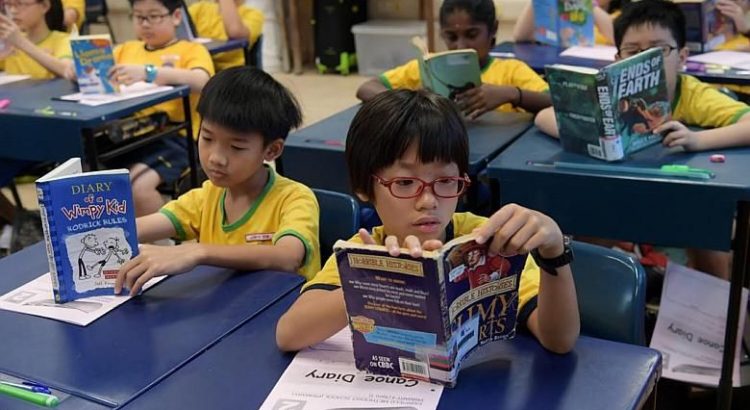
Primary school pupils in Singapore second in global reading literacy study

Singapur/Enero de 2018/Fuente: Straitstime

Resumen:

Los alumnos de la escuela primaria 4 en Singapur han quedado segundos en una prueba internacional que midió qué tan bien pueden leer, de 58 territorios.

Los resultados del estudio Progress in International Reading Literacy, que se publicó el mes pasado, también descubrieron que los alumnos superaron a sus compañeros en otros países en lectura y navegación de texto en línea.

Los alumnos de Singapur llegaron a la cima, superando otros 13 territorios, como los Estados Unidos, en la tarea en línea, lo que les obligó a responder preguntas relacionadas con la información en la Web.

Primary 4 pupils in Singapore have emerged second in an international testthat measured how well they can read, out of 58 territories.

The results of the Progress in International Reading Literacy Study, which was released last month, also found that pupils here outperformed their peers in other countries in reading and navigating online text.

Singapore pupils came up tops – surpassing 13 other territories such as the United States – in the online task, which required them to answer questions related to information on the Web.

This is the first time that the study – which has been administered every five years since 2001 – has included a component to assess how pupils understand online information, to capture the changing nature of how young people gather and process information in a digital age.

About 6,500 pupils from all 177 primary schools here took part in the test in 2016. More than 319,000 pupils worldwide took part.

Russia was top out of 58 education systems in this round, while Hong Kong was third, Ireland fourth and Finland fifth.

 Singapore was fourth out of 45 education systems previously in 2011.

The test, sponsored by the International Association for the Evaluation of Educational Achievement, evaluated pupils’ reading and comprehension skills, such as retrieving and connecting pieces of information, and making inferences from text.

Pupils were given two reading passages – narrative fiction as well as information-based texts such as news articles – and had to answer multiple-choice and written-response questions.

More than a quarter – or 29 per cent – of Singapore pupils achieved the “advanced” benchmark – the highest level of attainment in the 2016 study, similar to 2011’s results. The international proportion of such pupils was only 10 per cent.

The results mean that the pupils did well in higher-order skills such as interpreting and evaluating information.

The Ministry of Education (MOE) attributed Singapore’s improvement in literacy performance to changes in the way the English language has been taught in schools in the past decade.

These include the introduction of the Strategies for English Language Learning and Reading (Stellar) in primary schools.

Under the Stellar programme, grammar and vocabulary are taught through children’s stories and text, instead of textbooks and worksheets.

Mr Sng Chern Wei, MOE’s deputy director-general of education (curriculum), said: «We are heartened that the curricular strategies – such as Stellar – which are engaging and factor in our local diverse context, have shown success.

«Our students have displayed stronger literacy as well as communication and higher-order reading skills, which will ensure they are confident and well positioned to navigate today’s ever-changing society.»

Weaker pupils showed a marked improvement as well. Only 3 per cent of pupils here performed below the “low” benchmark in reading in 2016, compared with 14 per cent across all participating education systems.

In 2011, Singapore’s proportion of such pupils was also 3 per cent, but the figure was 10 per cent in 2001.

Ms Sofia Gita Parkash, head of the English language department at Fairfield Methodist Primary School, said that Singapore has a high standard of English language, and students benefit from a strong national curriculum.

She said her school is constantly thinking of ways to imbue pupils with a love for reading, especially among those who may not have been exposed to the English language at home, as well as improving their comprehension and speaking skills.

In its daily Buddy Reading Programme, upper primary pupils pair up with Primary 1 pupils who are weaker in the language, to listen to them read storybooks, help them along the way and explain the meaning of certain words if necessary.

Fairfield Methodist Primary School’s Buddy Reading Programme

The school has also started to train selected pupils to be reporters and ambassadors for their school, with the aim of getting them to use communication skills in authentic settings.

This means hosting school visitors and leading them on tours of the school compound, learning to use a software to put together news video clips, and writing for a school publication.

About 120 pupils are currently part of this programme, which started three to four years ago.

Ms Parkash said that communication skills are important when it comes to the English language. «We’re not just concerned about the conventions of grammar. We want pupils to learn how to greet people, how to code switch, how to react to different situations, cultures and contexts.»

The Progress in International Reading Literacy Study also found that parents play an important role in their children’s reading literacy.

Children whose parents engaged them frequently in activities such as reading or talking when they were younger, or sang to them, did better than their peers who did not get the same level of exposure, even if they came from similar home backgrounds.

Primary 6 pupil Nathaniel Tang said that his father, a 44-year-old manager in a telecommunications company, read picture books to him every day when he was younger.

«Now it’s become a habit. Whenever I have free time, I will read,» said the 11-year-old, who likes reading novels, National Geographic and military magazines.

Similarly, Ms Kam Sook Wei has exposed her Primary 2 daughter and Kindergarten 2 son to a daily routine of reading from as young as four months old.

“I read to them every night, whether or not they were listening. At that time (four months), it was more about voice recognition,” said the 35-year-old who runs her own business.

“In the car, I also play audio books, turn on the BBC, and we have books in the car for them to read.”

But beyond doing well in comprehension and language tests, more can be done to encourage children to be spontaneous in situations, said Ms Kam.

“I find that our children don’t do very well in answering off-the-cuff questions,» she said.

Fuente: http://www.straitstimes.com/singapore/education/primary-school-pupils-in-singapore-take-second-place-in-global-benchmarking

Comparte este contenido:

China: China Education Resources Inc. Soccer Program Update

China/Enero de 2018/Fuente: Nasdaq

Resumen:

China Education Resources, Inc. («CER») (TSX-V: CHN) (OTC: CHNUF), una compañía de tecnología de la información con tecnología líder de sistemas inteligentes y contenidos para proporcionar aprendizaje en línea / fuera de línea, cursos de capacitación y redes sociales para maestros, estudiantes y profesionales de la educación, hoy ofrece a los accionistas e inversionistas una actualización de su programa de fútbol.

Además de su comunicado de prensa del 6 de diciembre de 2017, CER está trabajando en un programa de entrenamiento de fútbol para niños. Sobre la base de los productos y contenidos de educación de fútbol existentes de CER, CER ha alquilado un espacio de 2,900 pies cuadrados en un centro comercial para comenzar su programa de entrenamiento de fútbol para niños. El programa ofrecerá entrenamiento de fútbol cara a cara junto con la plataforma de entrenamiento de fútbol en línea de CER con contenidos de video y la interacción en línea / fuera de línea entre los estudiantes, entrenadores y padres.

China Education Resources, Inc. («CER») (TSX-V:CHN) (OTC:CHNUF), an ed-tech company with leading technology of intelligent system and contents to provide online/offline learning, training courses and social media for teachers, students and education professionals, today provides shareholders and investors with an update on its soccer program.

Further to its press release of December 6, 2017, CER is working on an indoor kids soccer training program. Building upon CER’s existing soccer education products and contents, CER has rented a 2,900 square feet space in a shopping mall to start its indoor kids soccer training program. The program will offer face to face soccer training together with CER’s online soccer training platform with video contents and online/offline interaction among students, coaches and parents.

Shopping malls in big cities of China now house early-stage educational institutes that offer classes covering every conceivable subject, ranging from English language to arts. According to research reports, the early-stage education market is still nascent in China, with 2017 sales revenue expected to top $30 billion USD. «Asian parents spend seven times more money on their kids’ education than American parents do. Connecting users and teachers through the internet is another way to solve the imbalance in the educational resource distribution.» industry observers said.

The Central Government of China is in the process of implementing national soccer plan with the aim of popularizing soccer knowledge and skills, developing soccer interests through organizing soccer activities on campus in various forms, and supporting family -oriented social soccer activities. The Government also encourages in-depth integration of internet technology with soccer education, with a focus on mobile internet, e-commerce, data, new technology and new industry; supporting the development of soccer mobile applications, internet and mobile phone soccer games, soccer theme animation and film and television works.

Without a doubt, there is a huge soccer market in China, and we believe soccer education has a great potential. We are pleased to have made progress on our soccer program and will continue to update shareholders on CER’s future development.

In collaboration with China’s education administrators and experts, China Education Resources has been helping to transform the curriculum of the world’s largest educational system. Recognizing the need to address education reform changes, China Education Resources has created educational tools and curriculum for China’s entire kindergarten through twelfth grade system. The Company is playing an integral part in transforming China’s educational system through helping to convert the existing educational system from a memory-based learning system to a creative thinking and interactive approach. Presently, China Education Resources has over 1 million kindergartens through twelfth grade teachers registered through its Web portal. For more information, please visit www.chinaeducationresources.com or call (604) 331-2388.

Safe Harbor Statement

Certain statements made herein, and other statements relating to matters that are not historical facts and statements of our beliefs, intentions and expectations about developments, results and events which will or may occur in the future, constitute «forward-looking information» within the meaning of applicable securities legislation. Forward-looking information and statements are typically identified by words such as «anticipate», «could», «should», «expect», «seek», «may», «intend», «likely», «plan», «estimate», «will», «believe» and similar expressions suggesting future outcomes or statements regarding an outlook. All such forward-looking information and statements are based on certain assumptions and analysis made by China Education Resources, Inc.’s management in light of their experience and perception of historical trends, current conditions and expected future developments, as well as other factors management believes are appropriate in the circumstances. These statements, however, are subject to a variety of risks and uncertainties and other factors that could cause actual events or results to differ materially from those projected in the forward-looking information or statements. Important factors that could cause actual results to differ from these forward-looking statements include those described under the heading «Risks and Uncertainties» elsewhere in the Company’s MD&A filed at www.SEDAR.com. The reader is cautioned not to place undue reliance on forward-looking information or statements. Except as required by law the Company does not assume the obligation to revise or update these forward-looking statements after the date of this document or to revise them to reflect the occurrence of future, unanticipated events.

The TSX Venture Exchange has not reviewed, and does not accept, responsibility for the adequacy or accuracy of the contents of this press release.

Fuente: http://www.nasdaq.com/press-release/china-education-resources-inc-soccer-program-update-20180122-00571

Comparte este contenido:

Pay of Australian university heads called into question after UK protest

Australia/Enero de 2018/Fuente: The Guardian

Resumen:

Los australianos deberían cuestionar cuánto ganan los vicerrectores de la universidad, ha declarado el ministro de educación, en medio de la controversia en el Reino Unido sobre el «escandaloso» salario del vicerrector de la Universidad de Bath, que era solo la mitad del equivalente mejor pagado de Australia.

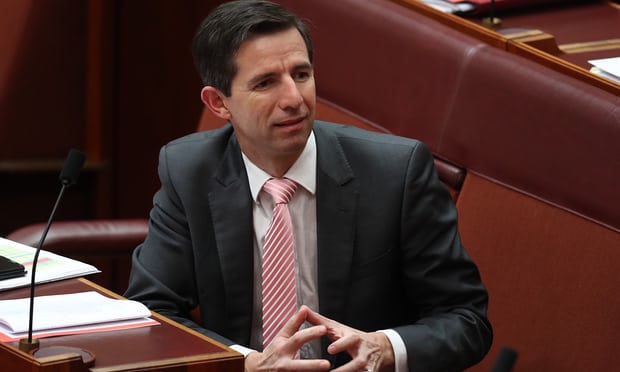
Simon Birmingham dijo el jueves que las universidades deberían reconsiderar los pagos de sus altos ejecutivos, algunos de los cuales ganan más de un millón de dólares al año en beneficios salariales y de alojamiento.

El miércoles, la vicerrectora de la Universidad de Bath, Dame Glynis Breakwell, se retiró después de la controversia sobre su salario de £ 468,000 al año ($ 812,500). El furor provocó una conversación nacional y llevó a los estudiantes a las calles en señal de protesta.

Australians should question how much university vice-chancellors earn, the education minister has declared, amid controversy in the UK over the “outrageous” salary of the University of Bath’s vice chancellor that was only half that of Australia’s highest-paid equivalent.

Simon Birmingham said on Thursday that universities should reconsider the pay packets of their senior executives, some of whom earn more than a million dollars a year in salary and accommodation benefits.

On Wednesday, the University of Bath vice-chancellor, Dame Glynis Breakwell, retired after controversy over her salary of £468,000 a year ($812,500). The furore led to a national conversation and drove students to the streets in protest.

According to the Australian, 12 vice-chancellors in Australia took home more than a million dollars in 2016, and the University of Sydney’s Michael Spence nearly doubled Breakwell’s total pay at $1.44m.

Breakwell was paid less than UNSW’s Ian Jacobs ($1.25m) and the Australian Catholic University’s Greg Craven ($1.24m), among others. The vice-chancellor of Oxford, Louise Richardson, made even less at £350,000 ($600,000), putting her below the heads of Newcastle University, James Cook University, and the University of Southern Queensland.

Birmingham said the international comparison should prompt taxpayers to ask if they were “getting value for money”.

“While Australians recognise the high level of skills needed to run a university, many taxpayers would question why remuneration should exceed global benchmarks.”

Vice-chancellor salaries are set by each university’s board or senate without government input.

The president of the National Tertiary Education Union, Jeannie Rea, said the salaries were “extremely embarrassing” and “out of proportion”.

“It used to be the case that a vice-chancellor would be paid some proportion, or related to that of a senior professor, plus some. They saw themselves as leaders of an academic institution, now they see themselves as CEOs.”

Belinda Robinson, the chief executive of Universities Australia, said the minister’s attack on salary was an attempt to distract from the government’s recent $2.2bn cuts to university funding.

“This distraction strategy will not hoodwink the community,” she said.

Rea agreed: “It’s somewhat flippant to say you can redistribute vice-chancellor’s salary and be able to pay for a whole lot of things. The underfunding of university places is a much bigger problem than that.”

Guardian Australia contacted several universities about the salaries of vice-chancellors.

The ACU’s deputy vice-chancellor, Stephen Weller, said Craven’s salary included the accommodation costs of managing a national, multi-campus university.

The University of Sydney, UNSW and the University of Queensland similarly said the million-dollar sums included superannuation and a housing allowance.

A spokesman for the University of Queensland, whose vice-chancellor Peter Høj earns $1.15m a year, said “the combined annual salaries of all Australia’s vice-chancellors comprise about 2% of the government’s latest cuts to the university sector”.

“UQ has 52,000 students and is ranked in the top 50 of more than 10,000 universities globally. As a point of comparison, the University of Bath has 17,308 students enrolled.”

Fuente: https://www.theguardian.com/australia-news/2018/jan/22/pay-of-australian-university-heads-called-into-question-after-uk-protest

Comparte este contenido:

Francia: Déçu par ses élèves de 5e, un professeur de français leur inflige un contrôle délirant

Francia/Enero de 2018/Autor:Hervé Hillard/ Fuente: Ouest France

Resumen:

Le había pedido a sus alumnos de quinto grado que leyeran «The Kingdoms of the North», de Philip Pullman, y escribiera una hoja de lectura. Solo tres de ellos lo han hecho, esta profesora de francés decidió vengarse al infligir finalmente un interrogatorio surrealista en un breve extracto de «Sí, sí en la granja», con una docena de preguntas dignas de EC1. Lo cual creó una controversia y un #YesOuiGate en las redes sociales.


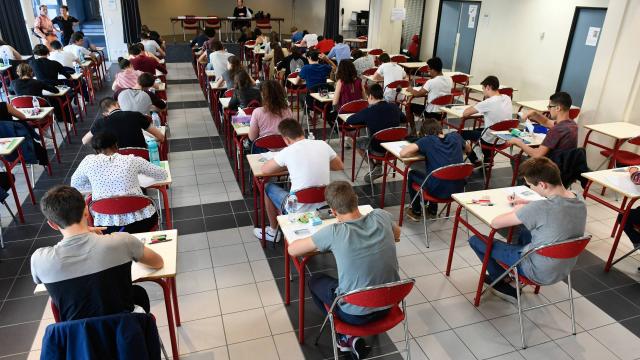
Il avait demandé à ses élèves de 5e de lire un roman, « Les royaumes du nord », de Philip Pullman, et d’en écrire une fiche de lecture. Seuls trois d’entre eux l’ayant fait, ce professeur de français a décidé de se venger en leur infligeant finalement une interro surréaliste sur un court extrait de « Oui-Oui à la ferme », avec une dizaine de questions tout juste dignes du CE1. Ce qui a créé une polémique et un #OuiOuiGate sur les réseaux sociaux.

« Oui-Oui, un pantin de bois un peu étourdi, est chauffeur de taxi dans la capitale du Pays des Jouets, Miniville »… Ainsi commence l’extrait de 7 lignes de « Oui-Oui à la ferme », écrit par Enid Blyton, sujet du contrôle d’un professeur de français pour ses élèves de 5e. Oui, de 5e. Contrôle qui consiste en dix questions évidentes dont toutes les réponses sont soit « Oui-Oui », soit « oui ». Suivies par six questions sur la couverture du livre à peine dignes du niveau du CE1.

La raison de cette interro délirante ? La déception de ce professeur de français face à la paresse de ses élèves. En début d’année, il leur avait demandé de lire, petit à petit, chapitre par chapitre, « Le royaume du Nord » de Philip Pulman, un roman d’heroic fantasy entre « Harry Potter » et « Game of Thrones », plusieurs fois primé en Grande-Bretagne, dont il s’était dit qu’il leur plairait.

Le contrôle qui a donné naissance au #OuiOuiGate.
Le contrôle qui a donné naissance au #OuiOuiGate. | Capture écran

Deux élèves avaient lu les trois premiers chapitres

Peine perdue. Au bout d’un mois, sur 23 élèves, 3 seulement avaient lu le livre entier. Sur les 20 restants, deux avaient lu les trois premiers chapitres. Les autres n’avaient même pas ouvert le livre.

Dépité par tant de paresse, le professeur a décidé de leur donner une petite leçon avec ce contrôle humoristique – et qui n’était évidemment qu’une plaisanterie, un « fake ».

Le professeur a ensuite publié toute l’histoire sur un groupe de privé de Facebook, consacré à l’enseignement. Mais ses deux messages – son coup de gueule et le fac-similé du contrôle – ont été rendus publics. Une journaliste l’a notamment publié sur Twitter. Et le tout a déclenché une avalanche de réactions sur les réseaux sociaux. À tel point qu’on hashtag #OuiOuiGate est même né.

Voir l'image sur TwitterVoir l'image sur Twitter

Car l’initiative du professeur divise, et pas seulement les enseignants. Pour schématiser, il y a ceux qui sont pour – « une petite leçon à bon compte » – et ceux qui désapprouvent – « on ne doit pas humilier un élève ».

Quoi qu’il en soit, tout le monde se mettra peut-être d’accord sur la phrase du romancier Daniel Pennac, prononcée sur France Culture, ce week-end : « Si un élève vous dit qu’il n’aime pas lire, il ne sait pas ce qu’il dit. Si vous le croyez, il est foutu. Et vous aussi comme professeur ».

Fuente: https://www.ouest-france.fr/education/enseignement/decu-par-ses-eleves-de-5e-un-professeur-de-francais-leur-inflige-une-interro-delirante-5517215

Comparte este contenido:
Page 3295 of 6815
1 3.293 3.294 3.295 3.296 3.297 6.815