Page 3393 of 6815
1 3.391 3.392 3.393 3.394 3.395 6.815

Costa Rica recibe el aval de la OCDE en Políticas para la Economía Digital

Costa Rica / www.eleconomista.net / 23 de Diciembre de 2017

El Gobierno de Costa Rica informó hoy de que el Comité de Políticas para la Economía Digital de la Organización para la Cooperación y el Desarrollo Económicos (OCDE), dio el aval para la adhesión del país al organismo.

Con la de hoy, Costa Rica suma 9 aprobaciones de los 22 comités necesarios para oficializar su ingreso a la OCDE, informó el Ministerio de Comercio Exterior en un comunicado de prensa.

«Gracias al excelente trabajo y dedicación del Ministerio de Ciencia, Tecnología y Telecomunicaciones (Micitt) logramos obtener nuestra novena opinión formal», dijo el ministro de Comercio Exterior, Alexander Mora, coordinador del proceso de adhesión, quien calificó esto como «un importante paso».

El Comité de la OCDE reconoció a Costa Rica sus avances en el sector de telecomunicaciones, las tecnologías de la información y la comunicación (TIC), gobernanza digital y otros aspectos de la economía digital.

«Reconoce que el país tiene un marco normativo y políticas públicas alineadas con los principios de la OCDE, así como la capacidad y voluntad de continuar fortaleciendo los mecanismos de trabajo entre el gobierno, el sector privado y la academia, para la implementación de políticas públicas de promoción de la economía digital», dijo el viceministro de Telecomunicaciones, Edwin Estrada.

El Comité de la OCDE evaluó a Costa Rica en áreas como desarrollo de banda ancha, gestión del riesgo de la seguridad digital, TIC y medio ambiente, privacidad, elaboración de políticas de internet y protección de la niñez en línea.

Hasta el momento Costa Rica ha recibido nueve aprobaciones de los 22 comités de la OCDE para su adhesión: Ciencia y Tecnología, Comercio, Salud, Agricultura, Educación, Trabajo y Asuntos Sociales, Política Regulatoria, Políticas al Consumidor, y Políticas para la Economía Digital.

En mayo de 2012, Costa Rica presentó formalmente su interés de adherirse a la OCDE y en abril de 2015 la organización decidió invitarle a iniciar el proceso formal de adhesión, tras lo cual se diseñó y adoptó, en julio 2015, la hoja de ruta que define los términos y condiciones a seguir.

La OCDE agrupa a 35 países miembros y su misión es promover políticas que mejoren el bienestar económico y social.

Fuente: http://www.eleconomista.net/2017/12/21/costa-rica-recibe-el-aval-de-la-ocde-en-politicas-para-la-economia-digital

Comparte este contenido:

Panamá Pacífico no está calificado como pernicioso por la OCDE

Panamá / www.radiopanama.com.pa / 23 de Diciembre de 2017

Leo González Administrador de la Agencia Económica Panamá Pacífico, explicó en Radio Panamá  que la Organización para la Cooperación y el Desarrollo Económico (OCDE), no ha calificado a Panamá Pacífico, ni a Ciudad del Saber cómo Perniciosos.

González resaltó que él ha participado de reuniones con la OCDE en donde se ha explicado la función y el papel de Panamá Pacífico, y que los integrantes del organismo han ido comprendiendo gran parte de los puntos.

Fuente: http://www.radiopanama.com.pa/noticias/actualidad/panama-pacifico-no-esta-calificado-como-pernicioso-por-la-ocde/20171221/nota/3671666.aspx

Comparte este contenido:

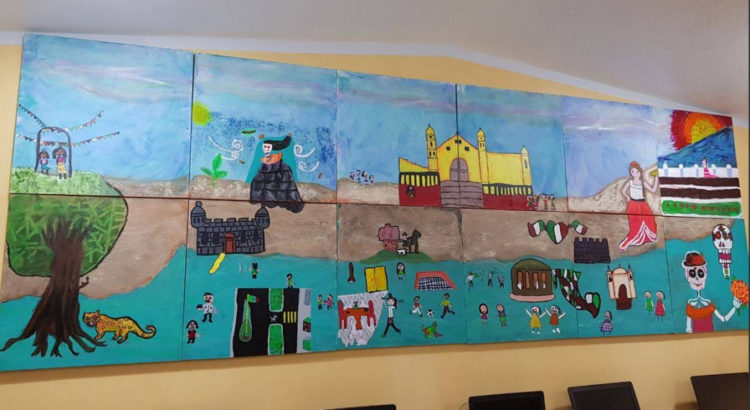
México: Alumnos de primaria de Campeche realizan mural para la UNESCO

México / www.noticierotelevisa.com / 23 de Diciembre de 2017

“La luz en la ciencia y en las artes”, fue el tema central de un mural realizado por alumnos de la Escuela Primaria “Niños Héroes” de Campeche, auspiciado por la Organización de las Naciones Unidas para la Educación, la Ciencia y la Cultura (UNESCO).

“El desarrollo fue de dos semanas, la primera semana fue de experimentos y empezar a escoger de toda la comunidad escolar de más de 400 niños, se fueron escogiendo solamente a 25 quienes fueron ya plasmando sus ideas en este dibujo. La escuela Niños Héroes fue la única escuela que participó en este programa a nivel nacional dentro de lo que corresponde a este gran proyecto”, indicó Francisco Euán, profesor.

Esta actividad fue organizada conjuntamente por artistas del Museo de la Luz de la Universidad Nacional Autónoma de México (UNAM) y la Asociación de Artistas Plásticos de México, lo que permitió desarrollar a los niños actividades vinculadas a la luz en los campos de la ciencia y el arte para fortalecer las habilidades cognitivas de los alumnos.

“Son forma de interrelacionar los conocimientos de diversas escuelas, diversas organizaciones, en este caso nos llega una solicitud donde ya la Unesco anda buscando escuelas donde pueda promocionar este programa que se titula Museo de la Luz, a todas luces”, señaló Francisco Euán, profesor.

Los niños se sienten orgullosos por su participación.

“Aquí ponemos tradiciones, costumbres, paisajes bellos que tiene Campeche porque eso es lo que nos identifica como campechanos. Nunca nos habían puesto esta actividad y estuvo muy bonito porque empleamos nuestra actitud, nuestra alegría, nuestra artesanía y todo eso”, externó Paola García, estudiante.

“Me siento orgulloso de ser campechano y haber hecho este mural”, añadió Kevin Rodríguez, estudiante.

Este tipo de actividades arraigan más la identidad cultural de los niños, lo cual hace que tengan un mejor desarrollo emocional, cognitivo y social.

Fuente: http://noticieros.televisa.com/ultimas-noticias/estados/2017-12-20/alumnos-primaria-campeche-realizan-mural-unesco/

Comparte este contenido:

India : Delhi should follow Beijing’s example in tackling air pollution

Asia/India/Diciembre del 2017/Noticias/https://theconversation.com/

Delhi’s air pollution crisis made international headlines in early December when a cricket match between India and Sri Lanka was suspended due to poor air quality.

Smog has also led to numerous school closures and flight cancellations in India’s capital and largest city. It has also been blamed for highway accidents.

Delhi is home to 20 million residents, and the city’s more than 10 million vehicles are a major contributor to air pollution. Industrial emissions are also to blame. Thirteen coal-fired power stations operate within a 300 kilometre radius of the city. Conditions reach crisis level every winter, when the capital’s already poor air quality is further degraded by smoke from post-harvest burning in the neighbouring agricultural states of Haryana and Punjab.

The concentration of airborne particulate matter (PM2.5) recently reached 999 in parts of Delhi. This measurement was literally off the charts of maximum thresholds for air pollutants. The alarming fact is that Delhi is not even India’s smoggiest city. By one measure, four other Indian cities typically suffer even worse air pollution.

There is little evidence that either the central or Delhi government has any effective policy strategy for air pollution. Now is the time for India to peer through the smog and learn how another major city, Beijing, is taking meaningful steps to stabilise its own air pollution crisis. While China still has progress to make, some lessons from the country’s capital are a useful guide for clearing Delhi’s air.

China’s response

According to the World Health Organisation, ten of the world’s 20 most polluted cities are in India, and three in China. The two countries top the ignoble list of deaths related to air pollution, with more than one millioneach in 2015. The two are the world’s most populous countries and also have among the highest proportions of deaths related to air pollution.

Nevertheless, China is making progress. The central government has taken a systematic and coordinated approach to managing air pollution. It has adopted a suite of policies that promote alternative energy and punish regulatory breaches.

The country is rapidly scaling back capacity for coal-fired power and steel, whose production is suspected of threatening respiratory health. China is also soliciting foreign investment in green energy technologies, and has intensified inspections of major polluters around Beijing.

In Beijing alone, fines for pollution topped USD$ 28 million in 2015. To combat vehicle exhaust smoke, which is responsible for one-third of Beijing’s emissions, an annual quota of 150,000 new cars was established for 2017, with 60,000 allotted only to fuel efficient cars. Beginning in 2018, this quota will be reduced by one third, to 100,000 annually. This will limit the total number of cars to around 6.3 million.

Beijing is also aiming to reduce coal consumption from the current 11 million tons per year to under 5 million by 2020.

There is some evidence that these measures are working. In the Beijing-Tianjin-Hebei region, PM2.5 levels decreased by 27% between 2013 and 2016.

India’s apathy

By comparison, India’s political inefficiency is making regional air pollution a nearly intractable problem. Although the states of Haryana and Punjab have banned farmers from burning straw, implementation has been minimal. Policy coordination is also weak across states governed by rival political parties. For example, the leaders of Delhi and Haryana have publicly clashed about who is to blame for air pollution. They have also failed to hold discussions about the problem or to find feasible solutions.

Farmers constitute a significant voting base in Haryana and Punjab. This has led state governments to demand compensation from central government for losses farmers incur by ceasing burning. Such focus on short-term political gain is distracting policymakers from collaborating on regional solutions. The consequences of territorial grandstanding are deadly.

Another difference between India and China is the level of apathy among the government and general public. In China, years of seething public anger prompted Prime Minister Li Keqiang to “declare war” on pollution in 2014.

In India, public outrage over air pollution is still “seasonal” and rarely swells beyond social media. The central government has remained largely silent about pollution while state leaders indulge in meaningless inter-party squabbling and political theatre.

Amid this discouraging accountability vacuum, India’s Supreme Court recently assumed the mantle of leadership on air pollution. It banned fireworks in the capital during the Diwali festival and pushed for response focused action planning. While these are encouraging steps, bypassing the legislative process on such fundamental public health issues is hardly ideal or sustainable.

Progress is needed

India has made remarkable progress lifting millions of people out of poverty in recent years. It aspires to be a global superpower, but has singularly failed to curb air pollution. Central government must intervene to coordinate collaborative policy among states and hold officials accountable for inaction. Central government should also reinforce state-level initiatives to minimise burning and promote sustainable farming.

More broadly, it may be time to ask whether highly argumentative democratic models are always the best solution for problems that transcend city and provincial boundaries. Sensible and informed policy leadership is needed to solve environmental challenges. India must rise above petty politics, lest the country bicker its way into smoggy irrelevance.

Fuente :https://theconversation.com/delhi-should-follow-beijings-example-in-tackling-air-pollution-89378

Imagen:

https://images.theconversation.com/files/199892/original/file-20171219-27557-a1ymzc.jpg?ixlib=rb-1.1.0&q=45&auto=format&w=926&fit=clip


 

Comparte este contenido:

Canada: Antisense therapy: a promising new way to treat neurological disease

America del Norte /Canada/diciembre del 2017/Noticias/https://theconversation.com/


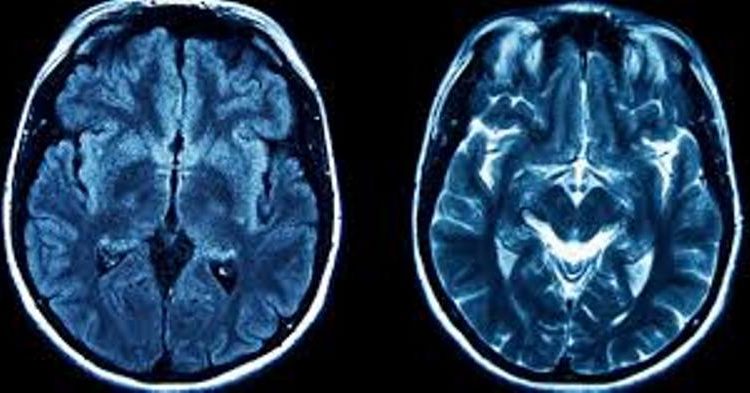
A new treatment for Huntington’s disease – a deadly brain disorder – has successfully completed first-in-human trials. The drug lowered levels of the harmful huntingtin protein in the spinal fluid of patients who took part in the trial.

Huntington’s disease is caused by a mutation in the gene that makes a protein called huntingtin. The mutation makes the protein bigger and more likely to clump together. It is this increased stickiness that scientists believe causes brain cells to die in people with Huntington’s disease. As the disease progresses, it affects movement, learning, thinking and emotions.

At the moment, there are no treatments for Huntington’s. Most people die within 15 to 20 years of receiving a diagnosis. But now, at least, there is hope. The new drug, developed by scientists at University College London working with a pharmaceutical company called Ionis, seems to be able to stop the production of the mutant huntingtin protein by silencing the mutated gene. The next stage is to show that this leads to a slowing in progression of the disease.

Antisense therapy

The experimental drug, Ionis-HTTRx, is a type of drug called “antisense oligonucleotides”. Before I explain how it works, it’s worth reviewing the fundamentals of how genes work.

Our genes are made out of DNA, a chemical code that includes the information that allows our cells to function. This information is used to make proteins, the molecular machines and building blocks that are crucial for cells to work. Antisense oligonucleotides intervene at a critical intermediate stage between DNA and proteins – where the DNA is converted into a molecule called messenger RNA (or mRNA for short).

mRNA is very similar to DNA, but much less stable, and chemically very slightly different. It acts as the template for making proteins. If you can get rid of it, the proteins don’t get made. Antisense oligonucleotides are synthetic fragments of DNA that can bind to mRNAs, causing them to be cut into pieces.

How antisense therapy works. Various public domain imagesAuthor provided

An important property of mRNAs is that the precise code they contain is specific to each protein. This means that you can design antisense oligonucleotides that can specifically target the production of protein from just one gene out of the many thousands in the human genome. In fact, if the gene you are targeting is mutated, you can even target just the mutant form of the gene.

The Huntington’s disease trial is still at an early stage, testing to see if the oligonucleotides can get inside the brain and reduce the amount of mutant protein. We don’t yet know whether the drug will slow down the disease. But there have been a couple of recent clinical trials in other neurodegenerative diseases that provide some hope that this approach might work.

Same approach, different diseases

The best example of this is for spinal muscular atrophy, a very rare (and also inherited) childhood form of motor neurone disease. In a clinical trial that was completed earlier this year, antisense oligonucleotides were used to correct a faulty version of a gene that is mutated in spinal muscular atrophy.

The scientists used a slightly different approach, but the results were very promising. In most cases, children with these mutations suffer severe problems with movement from birth, but most of the children treated with the oligonucleotides survived longer and had better movement than those without treatment.

The trial was so successful that it had to be stopped so that the child not receiving treatment could be provided with the oligonucleotides. The drug, called nusinersen, has since been approved by the US Food and Drug Administration for treating spinal muscular atrophy.

Both Huntington’s disease and spinal muscular atrophy are rare forms of neurodegeneration, but if antisense oligonucleotides can be shown to work for these disorders, then it may be possible that the same approach might work in more common diseases, like Parkinson’s or Alzheimer’s disease.

These diseases share some of the characteristics of Huntington’s disease and spinal muscular atrophy, such as the accumulation of sticky proteins (although the actual proteins that build up are different). As with Huntington’s disease, there aren’t any drugs that slow down or halt the brain cells dying in people with Alzheimer’s or Parkinson’s.

There is a lot of work that remains to be done to see whether antisense oligonucleotides could help in most types of neurodegeneration, and there are some really big challenges to be overcome. But these early studies, and smaller scale trials in rare diseases, are providing the evidence to convince medical research funding bodies and drugs companies that it is worth investigating further.

Fuente: https://theconversation.com/antisense-therapy-a-promising-new-way-to-treat-neurological-disease-89006

Imagen:

https://lh3.googleusercontent.com/LRpGLXSXbH3LnI0fdwrwYvYfisGo7pUgItJkTUzZJyxHgoJtESThOP7IZlwDiw89-ujrvac=s85

Comparte este contenido:

Libro: El poder de las regiones

El poder de las regiones 

Fernando Calderón Gutiérrez. Roberto Laserna. [Compiladores] 

Fernando Calderón Gutiérrez. José Luis Roca. Teresa Aguirre. José Blanes. Guillermo Capobianco. Carlos Carafa. Carlos Carvajal Nava. José Decker Márquez. Gonzalo Flores Céspedes. Ramiro Gantier. Fernando Prado Salmon. Roberto Laserna. Salvador Romero Pittari. Isaac Sandoval Rodríguez. Ramiro Velasco Romero. [Autores de Capítulo]
…………………………………………………………………………
Colección Histórica. 

CLACSO. Ediciones CERES.
Cochabamba.
Julio de 1985

Este es un libro polémico: contiene y generará discrepancias. En abril de 1983, CERES organizó un Seminario sobre el tema «Conflictos Sociales y Desigualdades Regionales». Aquí se reunen las ponencias y los comentarios que tienen relación directa con la realidad regional boliviana, y que proporcionaron las ideas que dinamizaron un debate intenso y fecundo. Pero el carácter polémico de este libro no radica sólo en el que registra posiciones diferentes expuestas en un Seminario, sino que se origina en el hecho de que toca uno de los problemas centrales de los bolivianos, el de identidad nacional, insertándose en la dinámica de uno de los problemas principales del poder y la política: la relación entre democracia, transformación social y desarrollo regional.
Descargar .pdf
Fuente:https://clacso.org.ar/libreria-latinoamericana/pais_autor_libro_detalle.php?id_libro=427&campo=autor&texto=2227&pais=7
Imagen: https://lh3.googleusercontent.com/qObpIYUo7d_wxgx9TljuLZJALIh6NSuJAzlMfEGua80IWXwty3y3GmNw6XAYzJxl_SVx=s85
Comparte este contenido:

Marchan movimientos sociales en Perú contra la corrupción


América del Sur/Perú/Diciembre del 2017/Noticias/http://www.cadenagramonte.cu

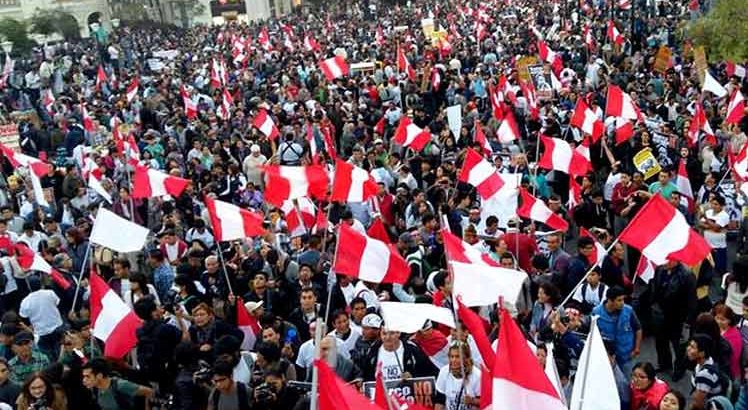
Una nueva marcha contra la corrupción y contra el Partido Fuerza Popular (FP), mayoritario en el parlamento, tendrá lugar hoy en la capital peruana bajo el lema “que se vayan todos los corruptos”, y exigirá nuevas elecciones generales.

La movilización fue convocada por diversos colectivos ciudadanos que el sábado último movilizaron a miles de manifestantes en rechazo a lo que consideran maniobras de FP para establecer una dictadura sobre los organismos de justicia y todo el aparato estatal, a partir de su poderío parlamentario.

La convocatoria, lanzada por las redes de Internet, rechaza que esa arremetida utilice como factor distractivo y de beneficio para el FP, el proceso de destitución del presidente, Pedro Pablo Kuczynski, que debatirá mañana el Congreso de la República.

Denuncia la corrupción generalizada que, afirma, involucra a los cuatro últimos presidentes electos, Alberto Fujimori (1990-2000), Alejandro Toledo (2001-2006) y Alan García (2006-2011), al actual mandatario y a la líder de FP, Keiko Fujimori.

Ante ese panorama, “hacemos un llamado a todas y todos los peruanos para luchar activamente contra la corrupción que nos arrebata derechos, oportunidades y la posibilidad de vivir en un Perú más justo”.

Tras reclamar el debido proceso para la vacancia (Destitución) de Kuczynski, denuncia la amenaza golpista del fujimorismo, y señala la responsabilidad de los partidos y gobernantes corruptos en la grave crisis actual.

Por su parte, la Confederación General de Trabajadores del Perú (CGTP) convocó para mañana a una jornada nacional de marchas de protesta que coincide con la crucial audiencia que verá la vacancia de Kuczynski.

La mayor central sindical peruana llamó a marchar en demanda de nuevas elecciones presidenciales y congresales y una nueva Constitución en reemplazo de la neoliberal vigente.

“Queremos que se vayan todos. Esta es una lucha a fondo contra la corrupción”, dijo el secretario general de la CGTP, Gerónimo López, mientras la vicepresidenta, Carmela Sifuentes, criticó a Kuczynski por poner en crisis el país y rechazó la agenda que pretende imponer el fujimorismo desde el parlamento.

De otro lado, el dirigente agrario Andrés Luna Vargas dijo en la norteña región de Piura que existen condiciones para la vacancia de Kuczynski, pero esta “no debe servir para encubrir a otros corruptos” y pueden aprovecharla para su impunidad Alan García y Keiko Fujimori, investigados por lavado de activos. (Texto y foto: PL)

Fuente:http://www.cadenagramonte.cu/articulos/ver/75826:marchan-movimientos-sociales-en-peru-contra-la-corrupcion

Imagen:https://lh3.googleusercontent.com/IdUxJbvLNo7lmh1jmBOBGg_GGK1_Wrawuz8CwEeMZt8eynwz09Zmbt8eJmCKXHy6dHfZfwg=s85

Comparte este contenido:
Page 3393 of 6815
1 3.391 3.392 3.393 3.394 3.395 6.815