Page 3977 of 6745
1 3.975 3.976 3.977 3.978 3.979 6.745

Magisterio Chileno alarmado: Desmunicipalización podría originar una «deuda histórica 2

Esto debido a que la Comisión de Educación del Senado despachó la iniciativa «sin resolver el problema del endeudamiento con los municipios». Colegio de Profesores anticipó que éste podría ser el tema principal de su asamblea nacional y «podría gatillar movilizaciones».

América del Sur/Chile/cooperativa.cl

Desde el Colegio de Profesores lamentaron que el proyecto de nueva educación pública o desmunicipalización fuera despachado de la Comisión de Educación del Senado sin haber resuelto el problema del endeudamiento de los municipios, situación que podría generar una «deuda histórica 2».

«Nosotros lamentamos que el proyecto salió de la comisión y no está resuelto el problema del endeudamiento que hay hoy día con los municipios«, manifestó el presidente del magisterio, Mario Aguilar.

En ese sentido, advirtió que si aquello «no se resuelve antes de que los docentes sean traspasados, va a originar una deuda histórica 2«, posibilidad ante la cual aseguró que están «alarmados».

El dirigente adelantó además que el magisterio tendrá asamblea nacional este jueves y viernes, instancia en la que «probablemente este tema del endeudamiento va a ser el tema principal y podría gatillar movilizaciones«.

En tanto, la diputada Cristina Girardi (PPD) rechazó el acuerdo del Gobierno con los senadores de la oposición para destrabar la iniciativa en la citada comisión, con el que se logró que se le dé mayor gradualidad al sistema.

La indicación despachada dice que al 2021 se deberán crear 11 servicios locales para el traspaso de colegiospero después será una comisión la que evaluará el proceso para implementar los otros 59, lo que quedará en manos de un próximo Gobierno que podrá decidir si ampliar los plazos.

«No nos parece ese acuerdo que hizo el Gobierno en el Senado respecto a dilatar el proceso, porque en el fondo es una dilatación y puede no ocurrir», cuestionó Girardi, asegurando que será dicho comité el que «va a definir si se hace o no se hace» el traspaso.

El proyecto deberá pasar a la Comisión de Hacienda y luego, de ser despachada, a la Sala del Senado.

Fuente: http://www.cooperativa.cl/noticias/pais/educacion/proyectos/magisterio-alarmado-desmunicipalizacion-podria-originar-una-deuda/2017-08-02/153242.html

Comparte este contenido:

¿Estamos preparados para la #GeneraciónZ? Un monográfico sobre los nativos digitales

Europa/España/periodismociudadano

Altruistas, políticamente sensibilizados con el aumento de las desigualdades o el cambio climático, sobrecualificados, hiperconectados, inconformistas. Estas son algunas de las características que definen a la Generación Z,  y que están perfilando cambios sustanciales en el actual panorama sociotecnológico.

Tras el acto de presentación del número 114 de la revista de la Juventud, titulado: Los auténticos nativos digitales: ¿Estamos preparados para la #GeneraciónZ?, ya puedes descargarte este monográfico gratis, en PDF, aquí, a través de la web del Injuve.

Óscar Espiritusanto, coordinador de este monográfico y autor de uno de los capítulos centrado en la creación de contenidos por parte de los usuarios, destacaba la necesidad de no quedarse únicamente en la terminología y profundizar en los cambios que definen a esta nueva generación. Llamémosles Generación Z o Centennials, o JóveneZ, lo importante es prepararnos para los cambios sociales, políticos o económicos que estos jóvenes, nacidos a finales de los noventa están ya introduciendo en nuestra forma de comprender el mundo.

En este acto de presentación hemos podido asomarnos a la radiografía de unos jóvenes que han pasado del anonimato a convertirse en una de las generaciones más observadas y analizadas de todos los tiempos. Los Z se preocupan por cuestiones civicopolíticas, si bien sus intereses políticos no coinciden con el de los políticos. Además, se han hecho más ortodoxos, más formalmente correctos, más proactivos frente a lo comunitario, más implicados en lo común, y mucho más preocupados por el orden y la seguridad.

Javier Dorado, (@JaviDorado), director del Injuve, señalaba como muchas de estas características están relacionadas con dos acontecimientos fundamentales como son los atentados del 11 de septiembre de 2001 y la crisis que siguió al colpaso de Lehman Brothers de 2007. Este contexto sociopolítico ha influído en esta generación a la hora de entender nuevas formas vinculadas a la economía del compartir, generándo fórmulas como la economía colaborativa. Sus decisiones afectan a los mercados, al ecosistema digital, a los medios de comunicación a través de una generación muy activa, implicada como consumidor/productor de contenido.

Mario Garcés, (@MarioGarcesSan), secretario de Estado de Servicios Sociales e Igualdad, destacaba en este acto que:

en manos de la Generación Z está el hacer frente a uno de los mayores retos a los que se enfrenta la sociedad y que es modificar la estructura de nuestra envejecida pirámide poblacional, cuya presión demográfica afecta sobre todo a la distribución por edades.

Estos jóvenes se distinguen marcados por unos claros rasgos de diferenciación, lo que llamamos las 5 íes y las 5 ces: Influencia y Conexión; Inmediatez y Cortoplacismo; Innovación y Creatividad; Irreverencia y Contraste; Inquietud y Cambio, y una C con mayúsculas, la de Compartir.

Si te interesa saber más sobre el tema puedes descargarte este monográfico gratis, en PDF, aquí, a través de la web del Injuve. También puedes descargarte los capítulos de cada autor.

En este trabajo han participado:

1.-Antonio Fumero, (@amfumero ), Ingeniero de Telecomunicación, (@amfumero ). Autor del capítulo: “JóveneZ”.

2.-Raul Magallón, (@raulmagallon), periodista y profesor de periodismo en la Universidad Carlos III de Madrid. Autor del capítulo: “El ADN de la Generación Z. Entre la economia colaborativa y la economía disruptiva”.

3.-Marc Parés, (@Marc_Pares) y Joan Subirats, (@subirats9), en el Instituto de Gobierno y Políticas Públicas y la Universidad Autónoma de Barcelona. Autores del capítulo: “Muy jóvenes, jóvenes y menos jóvenes. El lío de la juventud y la política“.

4.-Inma Aguilar, (@immaaguilar), periodista y Asesora de comunicación política y electoral. Autora del capítulo: “El futuro de la comunicación política: emociones y Generación Z“.

5.- Isabel Lara. Vicepresidenta de Atrevia, (@Atrevia) e Iñaki Ortega. (@InakiOrtega), Director de Deusto Business School. Autores del capítulo: “Los consumidores de la Generación Z impulsan la transformación digital de las empresas“.

6.- Yolanda Rueda, (@ciberyolanda), emprendedora social y actual presidenta de la Fundación Cibervoluntarios. Autora del capítulo: “Hacia un voluntariado abierto, innovador y conectado”.

7.- Pepe Cerezo, (@PepeCerezo ), director de Evoca Media y experto en estrategia y transformación digital. Autor del capítulo: “La Generación Z y la información”.

8.-Óscar Espiritusanto, periodista y profesor de periodismo en la Universidad Carlos III de Madrid.  Autor del capítulo: “Generación Z: Móviles, redes y contenido generado por el usuario “.

9.- Yolanda Quintana. (@y_quintana), Periodista e investigadora UCM, autora de “Ciberactivismo: las nuevas revolu-
ciones de las multitudes conectadas” y “Ciberguerra. Autor del capítulo: “Generación Z: vuelve la preocupación por la transparencia online“.

10.-Paloma Llaneza, (, Abogado y socio de Razona LegalTech. Autora del capítulo: “La Generación Z: incógnitos y privados”.

11.- Sebastián G.Mouret. (@sebasgmouret), estudiante de Periodismo en la Universidad Carlos III de Madrid. Autor del capítulo: “La Generación Z desde la generación Z”.

Imagen PortadaYacine Petitpretz en Flilckr bajo licencia CC

Fuente: http://www.periodismociudadano.com/2017/07/27/descargate-gratis-lo-nuevo-sobre-la-generacion-z-los-autenticos-nativos-digitales/

Comparte este contenido:

URUGUAY: Padres presentarán propuesta alternativa de educación sexual

América del Sur/Uruguay/El Observador

La orientación que ha tomado la ANEP para impartir educación sexual en su aulas preocupa a un grupo de padres, que nucleados en el grupo Red de padres responsables, trabajan desde el año pasado en la elaboración de una propuesta alternativa, de carácter integral, que no se reduzca solamente a los aspectos biológicos o sanitarios de la sexualidad, como sí consideran que lo hace el programa oficial.

En este marco, el grupo entiende que la guía de educación sexual para maestros que Primaria lanzó semanas atrás, «comparte la misma concepción ideológica que motivó la formación de la red», dijo a El Observador , Carlos González, uno de los padres que la integra.

Para presentar la propuesta que están elaborando, el grupo que tiene más de 2.000 adherentes, confeccionó un petitorio para entregar al Consejo Directivo Central ( Codicen ) de la ANEP, para el cual actualmente se encuentran recolectando firmas. Al respecto, González afirmó que hasta el momento cuentan con 1.500 rúbricas, pero el objetivo es llegar a las 10.000. No obstante, manifestó que si las circunstancias lo ameritan, pueden llegar a presentar el petitorio sin reunir todas estas firmas.

En el petitorio, que se encuentra publicado y disponible para firmar en la página web de la red ( www.redpadresresponsables.com ), reivindican el derecho y el deber que tienen como padres de educar a sus hijos de acuerdo a sus valores. «Queremos para nuestros hijos una formación afectivo-sexual positiva e integral, en el marco de una educación gradual en la responsabilidad y el amor, y en la consideración del matrimonio y la familia como el ámbito natural de ese amor y de esa educación», señala la carta. Añaden que promover esta perspectiva de la educación sexual es un derecho como educadores y el Estado debe garantizar esta libertad, «derecho y deber de los padres».

Por esta razón, piden al Codicen que «controle y asegure que no se imparta educación sexual en la educación pública o habilitada sin el previo consentimiento informado y expreso de los padres», dejando abierta la posibilidad de que los padres elijan ser los únicos educadores de sus hijos en lo que refiere a sexualidad.

Solicitan también que ante el ofrecimiento de educación afectivo – sexual por parte de cualquier centro educativo, se ofrezca a los padres la posibilidad de que sus hijos reciban la educación que la red propone. Por último, solicitan que en caso de que los padres lo pidan, se permita que la formación afectiva – sexual que ofrece la red se imparta también a padres y docentes mediante talleres.

Tal como informó El País, González manifestó que la red se formó el año pasado a raíz de la guía de educación sexual del grupo Llamale H, la cual no comparten. «Vimos que, tanto el programa de Educación Inicial y Primaria como los programas y materiales empleados en la capacitación de los referentes en educación sexual, proponían una concepción del hombre y de la moral contrarios a la nuestra. Así surgió la red de padres con el objetivo de generar una propuesta alternativa», relató.

Diversos credos

González aclaró que las 2.000 personas que forman parte de la red tienen distintas orientaciones políticas, religiosas y filosóficas, pero todos coinciden en dar otra perspectiva a la educación sexual.

Fuente:
http://entornointeligente.com/articulo/10405238/URUGUAY-Padres-presentaraacute;n-propuesta-alternativa-de-educacioacute;n-sexual-03082017

Comparte este contenido:

South Africa: ANC Wants Free Tertiary Education for Poor Students in 2018

Africa/Sudafrica/Allafrica

Resumen: El Congreso Nacional Africano quiere que el gobierno proporcione educación terciaria gratuita a estudiantes pobres en el año académico 2018, dijo este lunes 31/07 el secretario general del partido, Gwede Mantashe. «Los subsidios totalmente subvencionados deben ser proporcionados a los estudiantes pobres que califican académicamente y los pobres se definen como provenientes de familias que ganan un ingreso familiar bruto de R150,000 y menos por año», dijo Mantashe. La propuesta surgió del comité ejecutivo nacional del ANC lekgotla durante el fin de semana, por delante del gabinete lekgotla que comienza el martes. El ANC dijo que los estudiantes cuyas familias ganaban entre R150 000 y R600 00 por año deberían ser subsidiados a través de una combinación de subvenciones y préstamos.


The African National Congress wants government to provide free tertiary education to poor students in the 2018 academic year, the party’s secretary general Gwede Mantashe said on Monday.

«Fully subsidised grants should be provided to academically qualifying poor students. Poor students are defined as coming from families who earn a gross family income of R150 000 and below per annum,» Mantashe said.

The proposal emerged from the ANC national executive committee lekgotla over the weekend, ahead of the Cabinet lekgotla that starts on Tuesday.

The ANC said students whose families earned between R150 000 and R600 00 per annum should be subsidised through a combination of grants and loans.

«Students will be required to maintain adequate academic performance, and failure to do so would lead to disqualification,» Mantashe said.

 The ANC government is under pressure from within the party, and from students, to provide free education.

The ANC Youth League called for free education to be implemented by 2018 at the party’s national policy conference. There have also been nationwide Fees Must Fall protests.

The ANC’s recommendation comes ahead of findings by a commission established to investigate the feasibility of free higher education.

The commission has until August 30 to release its findings.

Source: News24

Fuente: http://allafrica.com/stories/201707311055.html
Comparte este contenido:

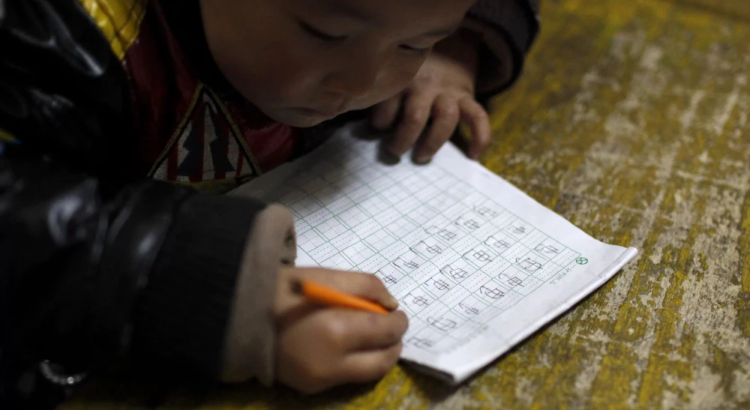
Education Charity in China Struggles to Soar Amid Rural Brain Drain

China/Agosto de 2017/Fuente: The News Lens

Resumen:  Las lágrimas brotaron en los ojos de Luo Maoling mientras se dirigía a la pequeña multitud en la ceremonia de clausura del campamento de verano. Más de 70 donantes de largo plazo de la Fundación Adream habían llegado a la ciudad de Barkam, sus familias en remolque, para participar en el campamento de cuatro días. Ahora, el jefe adjunto de la autoridad educativa local, Luo ha sido testigo del arco de la fundación caritativa desde su programa piloto lanzado en la ciudad de alrededor de 55.000 hace una década. «Me avergonzaba de que no hubiéramos puesto en práctica bien el programa», dijo. «Podríamos haber hecho un mejor trabajo haciéndonos dignos de todas estas donaciones». Barkam está situado en las montañas de la provincia de Sichuan en el suroeste de China. Su población es predominantemente poblada por tibetanos, aunque los residentes están bastante dispersos: La ciudad ocupa un área aproximadamente del tamaño de Shanghai, pero alberga alrededor del 0,2 por ciento de la población de la ciudad más grande. Cuando un terremoto de 8.0 grados de magnitud devastó la provincia en 2008, Barkam fue sobre todo salvado. De los estimados 87.600 que murieron, el terremoto sólo cobró ocho vidas de Barkam, que estaba a sólo unas horas de viaje desde el epicentro, pero protegido por una cresta de la montaña. Tres meses antes del terremoto, Adream abrió su primer «Centro de los Sueños», una especie de sala de lectura de alta tecnología para los jóvenes estudiantes de Barkam.

Tears welled up in Luo Maoling’s eyes as he addressed the small crowd at the summer camp’s closing ceremony. Over 70 longtime donors to the Adream Foundation had come to the city of Barkam, their families in tow, to participate in the four-day camp. Now the deputy head of the local education authority, Luo has witnessed the charitable foundation’s arc since its pilot program launched in the city of around 55,000 a decade ago.

“I was ashamed that we had not implemented the program well,” he said. “We could have done a better job of making ourselves worthy of all these donations.”

Barkam is nestled in the mountains of Sichuan province in southwestern China. It’s predominantly populated by Tibetans, though residents are fairly spread out: The city occupies an area roughly the size of Shanghai but is home to about 0.2 percent of the larger city’s population. When an 8.0-magnitude earthquake devastated the province in 2008, Barkam was mostly spared. Of the estimated 87,600 who died, the quake claimed just eight lives from Barkam, which was only a few hours’ drive from the epicenter but protected by a mountain ridge. Three months before the earthquake, Adream opened its first “Dream Center,” a sort of high-tech reading room for Barkam’s young students.

A decade later, you can still see signs of the earthquake in the mountains lining the raging, lead-colored rivers that snake through that part of the province. Since its founding, Adream has expanded from a single pilot project to 15 schools in the area and countless others across China, contributing the equivalent of 3 million yuan (US$446,000) in educational resources — classroom materials, teacher trainings, and online tech support — to the local school system. From its humble beginnings in Barkam, Adream has grown into one of the most influential education charities in China, serving 3 million underprivileged students with 2,600 Dream Centers, mostly in China’s oft-neglected heartland. Though the idea for Adream was conceived in Hong Kong and they are now headquartered in Shanghai, Barkam was ground zero.

In contrast to the philanthropic group’s rampant growth, Barkam itself has stayed more or less the same since the first Dream Center opened. Special instructors at the city’s partner schools are still holding Dream Classes for faculty, as they have for years. Serving as a sort of testing ground for creative teaching methods, these classes are a far cry from the rote learning methodology embraced by many schools in China. Yet because teachers are so often evaluated according to their students’ test scores, many of the Dream Teachers were given the cold shoulder by their peers, who saw little incentive to introduce change in their classrooms. And even if the faculty had been more receptive to the Dream Teachers, having just one per school was rarely enough to make a splash.

Beginning in 2015, Deputy Director Luo managed to transfer the few talented Dream Teachers working in the countryside into schools in downtown Barkam — up the professional ranks, for all intents and purposes. But by that time, most of Barkam’s Dream Teachers had become discouraged and quit. Only 13 remained. The high dropout rate made the program difficult to sustain in Barkam: Despite being Adream’s home base, the city was no beacon of success for other Dream programs to emulate.

Barkam No. 2 Middle School, the program’s flagship institution, saw seven Dream Teachers resign and its Dream Center nearly dismantled. Today, however, the school has a rising star in 26-year-old Cai Wenjun. Expressive, upbeat, and charming, Cai is often invited to travel to far-flung places such as Xinjiang and Inner Mongolia to train cohorts of China’s 60,000 Dream Teachers, who come from all walks of life and from partner schools all over the country.

China is a notoriously top-down society. For nonprofit and for-profit businesses alike, relationships with the authorities can spell doom or boom — and Adream has understood this since day one. The fact that Barkam’s Party secretary, Zhang Peiyun, and the head of the local education bureau, Liu Rongxin, attended the summer camp’s opening and closing ceremonies, respectively, speaks volumes about the guanxi — interpersonal relationships that facilitate business and other dealings — that the foundation has managed to cultivate in official circles. In fact, the charity counts at least one local government among its donors: In exchange for financial support from Zunyi, a city in southwestern China’s Guizhou province, the organization will introduce Dream Centers at all of the city’s public schools.

With nearly 3,000 Dream Centers now open to students, Adream is hungry for funding to cover both its current overhead costs and its plans for future expansion. So far, increased attention from government bodies has proved beneficial in helping the organization gain funding and an official vote of confidence — along with all the public credibility and influence that carries.

Out in the audience at the camp’s closing ceremony, Zhuokeji Primary School’s headmaster, Yan Bo, is less concerned about Dream Teachers needing training and Dream Centers needing refurbishing. Instead, he’s worried about the very survival of his school. It’s well-run and has a beautiful campus, but at 10 kilometers from the city center, it has trouble retaining students, who are leaving in droves for more central alternatives believed to have more resources at their disposal.

Urbanization is taking a mounting toll on rural schools, and Barkam is no exception. Zhuokeji Primary School was designed for 300 students but currently accommodates just 80. Sure to accelerate what until now has been a steady decline is the fact that just 4 kilometers away, the local government has built a massive new school for over a thousand students. Rumored to have topflight teachers and better facilities, Barkam No. 4 Primary School will open its doors this fall — and may soon force Zhuokeji to shutter its own.

Even after a decade of innovation and hope for Barkam’s schools, deputy education chief Luo has seen three of his young relatives settle down in Shanghai for work. But he understands their decisions: To him, true education stems from an awareness of the wider world — a world the Adream Foundation has opened up to the children of Barkam — and from pursuing the chance to roam and experience new things while we’re still young, willing, and able.

Fuente: https://international.thenewslens.com/article/75265

Comparte este contenido:

Australia: Scant return for billions spent on education

Australia/Agosto de 2017/Fuente: The Australian

Resumen: Una vez más, un nuevo conjunto de resultados del Programa Nacional de Evaluación – Alfabetización y Numeración demuestra que gastar miles de millones de dólares extra no es garantía de elevar el desempeño de las clases, especialmente en habilidades básicas como la escritura que son la base de la educación. La falta de un corolario de este tipo no es una novedad; hemos hecho muchas veces lo mismo en la última década. Sin embargo, es más pertinente que nunca en la actualidad, dado el compromiso del gobierno de Turnbull de gastar otros 23.500 millones de dólares en sus llamadas reformas de Gonski 2.0 desde el próximo año.

Yet again, a fresh set of results from the National Assessment Program — Literacy and Numeracy proves that spending billions of extra dollars is no guarantee of lifting classroom performance, especially in basic skills such as writing that are the foundation of further education. The lack of such a corollary is not new — we’ve made the same point many times over the past decade. It is more pertinent than ever at present, however, given the Turnbull government’s commitment to spend another $23.5 billion on its so-called Gonski 2.0 reforms from next year.

The slowest learners of all, unfortunately, are politicians. Faced with the news that South Australian students’ results in writing had gone backwards and that the state was last or second last in 16 out of 20 NAPLAN categories, yesterday’s knee-jerk response by the Weatherill government was predictable. It will spend another $70 million. How it spends it could make or break the academic, career and life chances of countless children. Federal opposition education spokeswoman Tanya Plibersek showed the same utilitarian thinking that has created the current malaise. Her spokesman claimed the Coalition was “holding Australian schools back — they are giving schools less funding and have no plan to improve them”. Not true. But Labor has promised to spend even more, another $17bn on top of the government’s needs-based reforms. In the real world, however, the vast sums already spent, $5bn over six years, have brought patchy improvements at best in reading and writing.

What has been well established by the most rigorous educational research is that the quality of classroom teaching is the greatest influence on student achievement. For that reason, the focus of reform and further investment should be on improving the expertise of trainee and qualified teachers in “the basics’’ of reading, writing and numeracy, especially in early years when foundations are set down for life.

The NAPLAN scores, and the reactions of different stakeholders, raise interesting issues. Yet again, the Australian Education Union showed how far removed it is from parents’ expectations when it claimed that placing excessive emphasis on the results was “simply a waste of time’’. We disagree, as do most parents, especially if their children can’t read, write or add up proficiently. Independent Education Union federal secretary Chris Watt was more constructive, raising legitimate concerns about non-academic learning crowding the school day such as “bike education, pet education … bushfire awareness’’ and much else. The Safe Schools and Respectful Relationships programs should be chopped for a start.

On the positive side, the progress (from a low base) of Year 3 and Year 5 children in the Northern Territory in reading, spelling, grammar and numeracy is encouraging and needs to be maintained as they progress through school. The fact that only half of the Territory’s Year 9 students meet minimum writing standards, however, demands urgent attention if the students’ chances of avoiding severe disadvantage in adult life are to be cut.

Across all states, the slump in writing scores at a time when children are texting and tapping more, from a young age, and handwriting less, raises questions about whether the move away from pencil and paper has impacted on their ability to put together sentences, paragraphs, a simple story or argument. Research is limited. But US studies show that handwriting in the early years helps in developing communication skills.

Education Minister Simon Birmingham is right to urge educators to look at what can be learned from high-achieving schools and applied in others. That goal should drive the government’s review into academic standards that will determine how the next $23.5bn in extra funding will be spent. Kevin Donnelly nailed the issue recently when he wrote: “It’s rare that a private business will invest billions without an idea of where or how the money will be spent. Not so with Gonski 2.0.’’ Australia cannot afford a re-run of the costly educational failures of recent years.

Fuente: http://www.theaustralian.com.au/opinion/editorials/scant-return-for-billions-spent-on-education/news-story/25f3212974dc17e8b012a664c6744ee1

Comparte este contenido:

Sudáfrica: Harnessing the power of technology in SA’s broken education system

Sudáfrica/Agosto de 2017/Fuente: It News Africa

Resumen: Si bien es erróneo comenzar a hablar de la tecnología como la bala de plata para la plétora de desafíos enfrentados por la educación sudafricana – particularmente cuando muchas escuelas carecen de servicios básicos como la electricidad – hay una esperanza creciente en el potencial de la tecnología para salvar muchos de los agujeros dentro de nuestro sistema comprometido. Así dice Alan Goldberg, Director de Educación de Digicape, un distribuidor Premium de Apple. Goldberg fue uno de los primeros entrenadores certificados de Apple en Sudáfrica y su mandato en Digicape es ayudar a las instituciones a ofrecer a los estudiantes una experiencia de aprendizaje más rica y personalizada mediante el uso de la tecnología de Apple.

While it’s misguided to start hailing technology as the silver bullet to the plethora of challenges faced by South African education – particularly when many schools lack basic amenities like electricity – there is growing hope in tech’s potential to bridge many of the holes within our compromised system.

So says Alan Goldberg, Director of Education at Digicape, an Apple Premium Reseller. Goldberg was one of the first certified Apple trainers in South Africa, and his mandate at Digicape is to assist institutions in offering learners a richer, more personalised learning experience through the use of Apple technology.

Despite South Africa having one of the highest budget allocations for education in the world (around 20% of total government expenditure), the South African education system is still chronically over-burdened and under-resourced. And it’s not just the case in South Africa, explains Goldberg: “All across the world governments are finding that their education systems lack infrastructure, and are not meeting the demands of these exponentially increasing populations.”

Technology is being sought to expand the educational curricula at all levels of schooling, and service larger classrooms. “However, without the guidance of a skilled educator, technology in itself is redundant. If an engaged teacher facilitates and guides the learning process, the full power of technology can be harnessed to truly transform the education experience.”

Goldberg refers to Dr Ruben Puentedura’s SAMR model, which is designed to help educators infuse technology into learning. ‘SAMR’ is an acronym of ‘Substitution’, ‘Augmentation’, ‘Modification’ and ‘Redefinition,’ four fundamental aspects of incorporating technology into education.

“The first two elements, ‘Substitution’ and ‘Augmentation’, focus on enhancing the learning process, while ‘Modification’ and ‘Redefinition’ are concerned with transformation. The model emphasises the need for a continuum of learning… through the use of technology, learning is no longer restricted to just the classroom – all locations become a space of learning, resulting in an immersive learning experience.”

And there’s no denying that transformation is desperately needed, given our local context. “If you set aside a host of other challenges for a moment – including the lack of amenities and misuse of resources – one of the core challenges identified is that many South African teachers do not have the basic pedagogic and content knowledge required to impart much-needed skills, due to a lack of investment in teacher training. This is where technology can bridge certain gaps,” explains Goldberg.

On a practical level, the concept of ‘connected classrooms’ allows a privileged school to connect with one in a rural area through an iPad, and share the learning experience.

In addition, given South Africa’s history and socio-economic context, the disparity in aptitude among students is vast. Goldberg sees technology as the great equaliser: “Technology allows for the learning process to be tailored by the educator to accommodate each student’s academic strengths and weaknesses, interests and motivations, and pace of learning.”

Most importantly, technology provides the child with greater agency, meaning they self-motivated students are able to process information for themselves, and seek their own solutions to problems.

Says Goldberg, “It is essential that effective programmes are put in place which facilitate student access and support teacher training. If teachers lack confidence when using technology, this will lead to resistance in its adoption. Many organisations, such as Digicape, offer teacher training programmes, so that educators can feel more confident utilising new technology and guiding students in its use.”

“In a nutshell, for the potential of technology in South Africa to be fully realised, the state and education system need to formally buy into its potential and invest in teacher training programmes. Adequate funding for its adoption and advancement in schools – starting with those whose students are primarily from previously disadvantaged backgrounds – needs to be allocated. It also requires effective safeguarding of devices, particularly in communities prone to crime.

“We, at Digicape, have a strong focus on education as we believe that it holds the key to levelling the playing field for students from previously disadvantaged backgrounds, and across the full socio-economic spectrum, provided there is an equipped educator leading the learning process,” concludes Goldberg.

Fuente: http://www.itnewsafrica.com/2017/08/harnessing-the-power-of-technology-in-sas-broken-education-system/

Comparte este contenido:
Page 3977 of 6745
1 3.975 3.976 3.977 3.978 3.979 6.745