Page 4090 of 6725
1 4.088 4.089 4.090 4.091 4.092 6.725

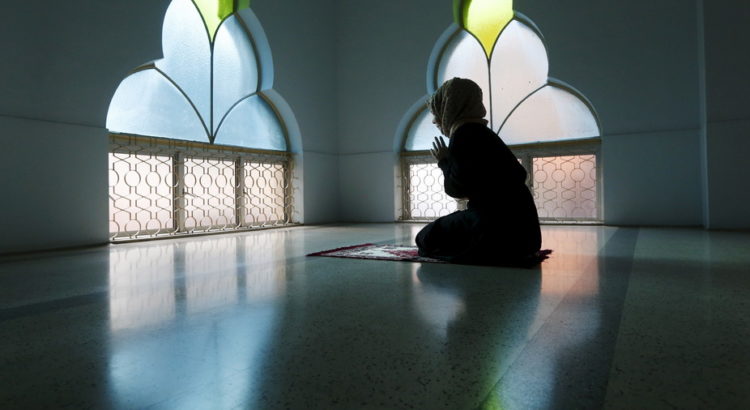
To fight radicalisation in Southeast Asia, empower the wome

Asia/Julio del 2017/Noticias/https://theconversation.com

Women have always been a quiet force to be reckoned with in uprisings worldwide. But, until recently, most studies focused on their roles as suicide bombers and combatants.

Terrorism research is now seeing a notable shift, with analysis examining the role women play as possible instigators of violence: mothers and mother-figures who are raising the next generation of soldiers.

Women as radicalisers

In Southeast Asia, for example, over the past year, there has been a rise in the number of stories of women involved in planning acts of terror and declaring support for extreme religious beliefs.

And ISIS is known to actively indoctrinate women in order to nurture young holy warriors.

Networks of women who pledge allegiance to the cause – whether ISIS’ or other extremist ideology – can exchange radical ideas among themselves and inculcate their children through a sustained domestic radicalisation strategy.

This suggests that terrorism prevention efforts should target not just extremist elements themselves, but also women, as possible vectors of radicalisation.

In Southeast Asia, home to 25% of the world’s Muslims, however, this proposition may sound particularly offensive. Here, women are often portrayed as symbols of virtue, selflessness and purity; entire sermons and treatises are dedicated to reverence for mothers.

A selection of hadiths, or Islamic teachings, about revering mothers are often cited as the reason for this inculcated respect, but even before the advent of Islam, Southeast Asian cultures treated mothers with great reverence.

Asian myths of various origins often feature a mother goddess who is deemed the personification of motherhoodfertility and creation.

Malay communities, for example, espouse a mother’s cherished status, and it is commonly believed that the pathway to heaven is in the footsteps of the mother.

The notion that it might lead instead to extremist thought and violent action is a dramatic departure from traditional thinking.

Nonetheless, across Muslim Southeast Asia, there are clear indications of increasing religiosity, from the controversial election, in April, of a conservative Muslim as Jakarta’s governor to purported support and empathy for ISIS in Malaysia.

Could mothers, those glorified beings, be part of the problem? Given dramatic economic and cultural changes underway in the region, the notion is not unfounded.

From distress to reprieve

As many parts of rural and coastal Southeast Asia undergo rapid development and urbanisation, many communities are quickly losing the natural habitats upon which their traditional livelihoods, like fishing and farming, depended.

Some families have been forced to migrate or commute to urban areas to seek employment in manufacturing, but volatile economic conditions and increasing automation have cast doubt on the longevity of even these jobs.

As a result, societies in which men have typically been the main breadwinner are now leaning on women to put food on the table.

To do so, mothers often rely on informal women’s networks . These provide information on bargain shopping or bartering for food. They might also resort to income-generating activities that men disdain as too difficult (such as the sale of homemade products) or too demeaning (such as collecting snails and greens in the forests).

When people are displaced for economic reasons, the women are in charge of feeding the family. Edgar Su/Reuters

Even as women in Southeast Asia increasingly serve as the family backbone, they receive little recognition or support for this role. Mental health services and financial assistance for women under pressure, such as those provided in some rural parts of India, are rarely, if ever, available here.

On the contrary, research has shown that that when men perceive that their public standing has been diminished by the inability to provide for the family, they may seek to exert more control in the personal sphere, translating into even more prohibitions on their wives and children.

Such economic and psychological burdens may leave poor, isolated women with religion as virtually their only reprieve.

Women as the family’s beacon of religion

A 2009 study of upper middle-class urban Malaysian women by Sylvia Frisk found that in spite of societal patriarchy, mothers and mother-figures are primarily responsible for disseminating and enforcing religious knowledge and rituals within their families.

And, in a decade of fieldwork in Malaysian coastal areas, we have seen that women who are most constrained by their husbands or families also most proactively take command of religious enforcement in their homes.

In other words, women who are under the most mental, physical or emotional pressures seem to find a sense of power that they are unable to exercise in other parts of their lives by compelling religious compliance in those closest to them.

Dictating religious practice becomes a way to exercise some form of control. The promise of a happier afterlife may also provide some sustenance.

The danger is that, unlike the upper middle-class women in Frisk’s study, poorer women have limited access to religious information. Their social circles are smaller, their movements more limited and they are less likely to read widely and critically question what they are taught.

If such women rely on a single source of Islamic learning, and that source is a radical one, they can be convincingly poisoned by extreme teachings. From here, it is not difficult to envision children being imbued with radical thought as well.

Empower the mothers

Women enforcing religious thought is innocuous on its own. But it becomes a concern when considered alongside the rise in female engagement with Islamic extremism.

In the Middle East, the existence of radical Muslim women’s networks has been documented. In several high-profile cases, mothers have encouraged their sons to fight the “holy war”.

At times, mothers appear to have even celebrated their children’s deaths as martyrs.

This is now happening in Southeast Asia too. As the recent case of Malaysian women selling their property to be with their ISIS loversshows, radicalisation among women is on the rise.

Muslims across Southeast Asia are becoming more religious. Edgar Su/Reuters

We also found that it is increasingly socially unacceptable to speak out against or disagree with a religious entity – a religious school or a faith leader, for example – in Malaysian society today, which allows venues for extremist education to flourish unchecked.

Among Malay Muslim, the fear that not abiding by anything taught by a religious teacher can lead to a loss of pahala, the reward of heaven, encourages compliance with religious instruction – no matter its source or content.

All of these factors combined create the perfect setting for women to disseminate radical Islamic beliefs, both intentionally and unintentionally. Their offspring may then fulfil their filial duty to obey.

To reduce the likelihood that radical thought will be spread in Southeast Asia, empower the mothers. Providing socioeconomic support where it is most needed – among women – is the best insurance against future terrorism, ensuring that mothers and families remain vectors for positive action and tolerant beliefs, not hotbeds of distress and discontent.

Fuente:

https://theconversation.com/to-fight-radicalisation-in-southeast-asia-empower-the-women-79387

Fuente Imagen:

https://lh3.googleusercontent.com/ycMtzRQPAG–IJfaOWc28_CsD5_iEFKy3BMw6YztymZpfcjWOwb2A358E7K-R7KrVjvVxQ=s85


 

Comparte este contenido:

España: Dudamel transmite la importancia de la educación en la música a los niños de la orquesta Abanca Resuena

Europa/España/Julio del 2017/Noticias/http://www.20minutos.es/

Los 186 niños que integran la orquesta de Abanca ReSuena han recibido este jueves la visita del prestigioso director orquestal Gustavo Dudamel, quien les ha trasladado la importancia de la educación en la música y les ha animado a «creer en lo que hacen y a trabajar en ello». Invitado por Abanca, y dentro de su agenda gallega, el director artístico y musical de la Filarmónica de Los Ángeles (California) y director de la orquesta Simón Bolívar de Venezuela, ha mantenido un encuentro con los estudiantes de Abanca Resuena en el CEIP Alborada de Elviña en A Coruña. Acompañado por el presidente de Abanca, Juan Carlos Escotet; y por el director general de Responsabilidad Social Corporativa y Comunicación de Abanca, Miguel Ángel Escotet, Dudamel ha animado a los más pequeños a «divertirse» con la música y a «trabajar» para conseguir aquello que quieren. Ante la presencia del director de orquesta venezolano, los 186 niños de entre 5 y 12 años que integran la orquesta Abanca Resuena han arrancado su repertorio tocando la pieza ‘Chamambo’, de Manuel Artés. Una interpretación que Dudamel no dudó en calificar de «maravillosa». DIRIGIDOS POR UN MAESTRO Tras esto, el director venezolano cogió la batuta y se animó a dirigir la orquesta compuesta por estos jóvenes, que volvieron a deleitar a los asistentes con otra interpretación del mismo tema. A estos jóvenes escolares Dudamel les ha trasladado la importancia de disfrutar con la música y que «lo más importante es divertirse tocando», animando a los niños «a creer en lo que hacen y a trabajar en ello». Después de escuchar con atención los consejos del artista, y a modo de despedida, la joven orquesta interpretó el ‘Himno de la Alegría’. Lo tocaron, lo cantaron y hasta lo bailaron.

Fuente

http://www.20minutos.es/noticia/3084197/0/dudamel-transmite-importancia-educacion-musica-ninos-orquesta-abanca-resuena/

Fuente Imagen:

https://lh3.googleusercontent.com/pBI2jR_cux7KxdZUbCo0vHUj7Gu63IR0MZylLOvgZqHe9ilRZu64P7UcI3Wkz-eqrRvV=s87


Comparte este contenido:

España: SAF lleva una queja al Defensor del Pueblo Andaluz ante la «enésima» demora en el concurso de traslados de funcionarios

Europa/España/Julio del 2017/Noticias/http://www.lainformacion.com/

El Sindicato Andaluz de Funcionarios (SAF) ha acudido al Defensor del Pueblo Andaluz (DPA) ante «la enésima e injustificada» demora en la resolución del concurso de traslados de personal funcionario, convocado hace ya un año y que tiene a «muchas personas en todo el territorio andaluz pendiente de una fecha que de forma recurrente se retrasa una y otra vez sin una causa plenamente justificada».

Las razones que argumentó el pasado día 30 la directora general de Recursos Humanos y Función Pública de la Junta de Andalucía en la reunión informativa celebrada con las organizaciones sindicales para justificar esta demora en su resolución con el alargamiento de plazos injustificado «se caen por su propio peso», según una nota de SAF, que no ve una causa objetivo que deriva en una toma de posesión retardada en más de dos meses desde la resolución del concurso, que se pretende sea a mediados de julio.

Según ha explicado, el argumento de la Junta de que podría afectar a vacaciones y permisos «se disipa» cuando esta circunstancia está prevista en el punto cuarto del artículo 51 del Decreto que regula estas situaciones. Por otra parte, en cuanto a la posibilidad de que se vea afectado el inicio de curso escolar en los centros docentes, el SAF ha instado a tener en cuenta que, de resolverse dentro de los plazos previstos, las tomas de posesión se realizarían entre julio y agosto, por lo que a primeros de septiembre estarían las plantillas estabilizadas y no se verían afectados los centros docentes.

Además, ha advertido de que el número de plazas destinadas en centros docentes es mínimo con respecto al total de plazas ofertadas en toda Andalucía, por lo que el SAF considera que, en realidad, lo que pretende la Junta de Andalucía es «ahorrar gastos al diferir más de dos meses las tomas de posesión».

El SAF ha hecho hincapié en que el retraso en la resolución y tomas de posesión de los distintos concursos «no sólo constituyen una aberración administrativa con la violación de forma grave y manifiesta al derecho a la buena administración recogido en el artículo 31 del Estatuto de Autonomía de Andalucía, sino que además constituye un grave perjuicio económico para los funcionarios que se encuentran desplazados de su provincia de origen, atentando contra el derecho a la conciliación de la vida familiar y laboral, reconocido a nivel Ley Orgánica, para aquellos que tengan hijos en edad escolar y cambien de ciudad/domicilio, debiendo cambiar de centro docente una vez iniciado el curso con las graves consecuencias que de ello se derivan».

Por último, ha señalado que este «retraso injustificado» también ha sido puesto en conocimiento de los distintos grupos parlamentarios andaluces por si alguno de ellos desconocía esta circunstancia y el deficiente funcionamiento de la función pública andaluza y las consecuencias que de ello se derivan.

Fuente:

http://www.lainformacion.com/educacion/sindicatos-de-docentes/SAF-Defensor-Pueblo-Andaluz-funcionarios_0_1041797176.html

Fuente imagen:

https://lh3.googleusercontent.com/P8g5fl-GT4MMnXLQkC1PbFYtLLRhLuDmYaa6gj-ij0ahhC2YnpZlbSC4zOkHEnY9yjEv=s147

Comparte este contenido:

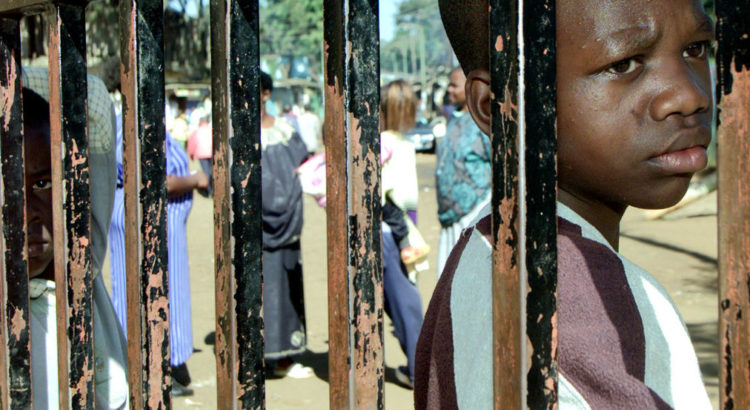
África Why Kenya’s electorate should be wary of bold education reform promises

África/Kenia/Julio del 2017/Noticias/https://theconversation.com


Kenyan voters are being fed a daily diet of grand promises in the lead up to the country’s national elections. If either of the two main coalitions win power in polls scheduled for August 8, 2017, citizens can look forward to free maternity services, free public secondary school, farm subsidies, lower food prices and much more.

For better or worse, the education sector has been the easy target of numerous campaign promises. Kenya’s two rival political coalitions are both promising free secondary school education if elected. It’s an attractive offer given that it could ease the financial burden of millions of vulnerable families.

The pledge is not without some controversy. The ruling Jubilee Party and the rival National Super Alliance can’t seem to agree over who gave birth to the idea. Each coalition also has its own implementation strategy.

The opposition alliance has the more ambitious goal of implementing free secondary education within a month of being elected. The incumbents on the other hand are bringing forward their timeline to 2018 rather than the initial 2019.

Kenyans are no strangers to education promises. At independence in 1963 the founding president Mzee Jomo Kenyatta promised – but didn’t deliver – free universal primary education. It wasn’t until 2003, four decades later, that the promise finally became a reality.

It’s clear from the pronouncements made by both parties that not a lot of thought preceded the promises they are making and Kenyans are likely to be disappointed. In retrospect, the implementation of free basic education Kenyans reminds us that haphazard decisions have serious ramifications on the education sector and vulnerable members of society.

Already school heads are sounding the alarm bells. They want adequate infrastructure and deployment of more teachers to be in place before there’s a major change in policy.

Free primary school education

Free primary education is thanks to the winning coalition’s 2002 election manifesto. Apart from entrenching primary education as a basic right, the policy is credited with boosting enrolments. But the initiative faced numerous challenges.

There was no time to prepare the schools for the influx of learners just days into Mwai Kibaki’s presidency. School infrastructure was over stretched and the teachers were overworked. In spite of the overall success, moreover, free primary education has yet to reach all school going children.

One immediate effect of the chaos was that some parents opted for low cost private schools, particularly in slum areas. Parents went out in search of smaller classes that are associated with individualised attention and quality education.

Free basic education ended up creating inequalities that are more pronounced for poor households that can’t afford private education.

The current pledge of free secondary education comes smack in the middle of another unfulfilled promise: a free laptop for each pupil joining primary school. Many are still waiting for the Jubilee government to deliver on its 2013 campaign pledge that over a million learners would get free laptops in 2014.

Among the challenges along the way included poor planning, procurement disputes and insecurity. There was also lack of preparedness of public schools in terms of infrastructure development and re-skilling of teachers.

As of 2016, 11,500 pupils had received laptops. But disparity between what has been delivered and the monumental amounts of money allocated or spent is worrying and worth digging into.

Secondary schooling in Kenya

A secondary education subsidy was introduced in 2008 under the national coalition government of President Kibaki and Prime Minister Raila Odinga. The stated aim was to curb high dropout rates by paying Sh10,265 (about USD$100) per student per year towards tuition fees. Parents would have to cater for boarding and uniform requirements.

The subsidy was further increased by about 25% to Sh12,870 in 2014 under President Uhuru Kenyatta. The president has intimated that the increase was in preparation for free secondary education resulting in annual subsidy allocation rising to Sh32 billion.

Kenya’s secondary schools has about 2.72 million learners. This is set to rise dramatically next year when, for the first time, the country plans to achieve 100% transition from primary to secondary school.

With these increasing numbers, making secondary education free at the rate proposed of Sh22,244 (about USD$215) per student per year means that the current budget will double to more than Sh60 billion.

The budget is still likely to increase further if costs related to uniform and lunch are included so as to make secondary education truly free as is being pledged.

Kenyans ought to be questioning whether the country is ready and able to offer free secondary education. In spite of the current subsidy many students are not attending school due to numerous hidden costs and fees associated with school uniform, materials, meals and administration. This is partly because the government has proved unable to enforceofficial school fee guidelines for public schools. The government has also struggled to remit the subsidy on time, making it harder for school managers to meet their obligations.

Planning for free education calls for sobriety to avoid a repeat of past mistakes. All stakeholders should be included in the planning of this major reform and leaders should be held accountable for the promises they make.

Fuente:

https://theconversation.com/why-kenyas-electorate-should-be-wary-of-bold-education-reform-promises-79950

Fuente Imagen:

https://lh3.googleusercontent.com/Bd3hwYglDizyahaRj6_1EZe99YmOS9VI2-NLB3vlAw7tcLA_87Iy4HMUhopObKRLOIPAHg=s85

Comparte este contenido:

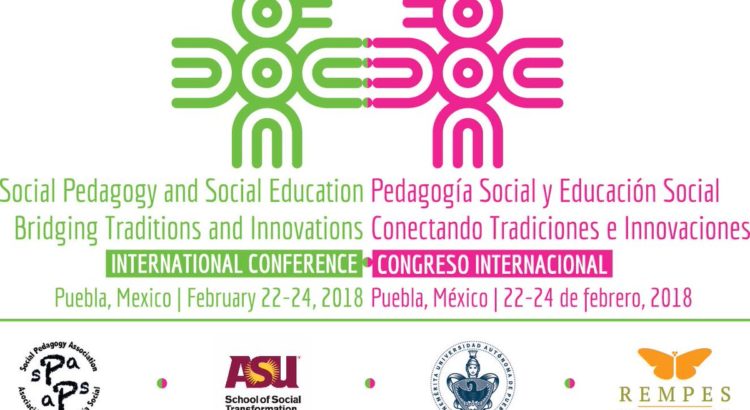
International Conference Social Pedagogy and Social Education: Bridging traditions and innovations

Estimados amigos,

La Asociación de Pedagogía Social, el Programa de Postgrado en Pedagogía Social y Cultural de la Universidad del Estado de Arizona, la Organización de Estudiantes de Pedagogía Social y Cultural, en colaboración con Procesos Educativos de la Facultad de Filosofía y Letras de la BUAP y la Red Mexicana de Pedagogía Social, se complace en anunciar el Congreso Internacional “Pedagogía social y educación social:  conectando tradiciones e innovaciones” que se llevará a cabo en la Universidad Autónoma de Puebla del 22 al 24 de febrero del 2018. 
Este congreso tiene como objetivo fortalecer tres conexiones. En primer lugar, congregará a académicos y educadores sociales para promover la conexión entre teoría y práctica. En segundo lugar se reconocerán las tradiciones de la pedagogía social y de la educación social, y al mismo tiempo se distinguirán iniciativas innovadoras en estos campos. En tercer lugar, al tener el inglés y el español como idiomas oficiales del congreso, se propiciará el diálogo entre pedagogos y educadores sociales de diferentes continentes.
Debajo encontrarán la convocatoria del evento y este es el sitio oficial: http://www.socialpedagogy.org/2018conference-573186.html
Reciban un cordial saludo desde Puebla, México.
Atentamente,
Dra. Karla Villaseñor Palma
Coordinadora del Colegio de Procesos Educativos | FFyL | BUAP
Coordinadora General de la Red Mexicana de Pedagogía Social | REMPES
Dr. Daniel Shugurensky
Coordinator of the M.A. program in Social and Cultural Pedagogy | Arizona State University
Fuente: https://sips-es.blogspot.com.es/2017/07/international-conference-social.html
Comparte este contenido:

Colombia: Nueva convocatoria para que profes de Bogotá cursen especializaciones, maestrías y doctorados

América del Sur/Colombia/Redacción Bogotá

El proceso, que se surtirá en cinco etapas, arranca el próximo 10 de julio con talleres para identificar los intereses de formación de maestros y directivos. Distrito financiará el 70% de la matrícula.

Con una inversión que asciende a $10 mil millones, la Secretaría de Educación de Bogotá abrió una nueva convocatoria para que los profesores de los colegios oficiales de la ciudad cursen estudios superiores, entre ellos especializaciones, maestrías y doctorados.

Según la administración distrital, se trata de una iniciativa orientada a potenciar la política de formación docente en el Distrito, con oferta en áreas de educación y disciplinas que complementan el saber de los maestros. La convocatoria prevé que la Secretaría de Educación financie el 70% de la matrícula, mientras que el docente o directivo asumirá el30% restante.

Etapas del proceso

1. 10 julio – 20 de agosto: Talleres con maestros y directivos para el levantamiento de necesidades e intereses de formación.

2. 20 agosto- 10 septiembre: Trabajo con las universidades para la definición de las rutas de formación que se ofrecerán, dando respuesta a los intereses identificados en los talleres con docentes y directivos.

3. Septiembre: Socialización de la oferta programas de formación trabajada en áreas de educación y disciplinas que complementen los saberes docentes.

4. Octubre: Recepción de postulaciones de docentes y directivos docentes para los programas.

5. Noviembre: publicación de beneficiarios y formalización de requisitos.

De acuerdo con la titular de la cartera, María Victoria Ángulo, la convocatoria hace parte del programa de reconocimiento, formación e innovación para los docentes de Bogotá, que cuenta con recursos por el orden de los $90 mil millones. La meta es beneficiar a más de 11.000 maestros.

“Se busca promover el acceso a programas de formación inicial y permanente, de cara a acompañar las trayectorias profesionales y fomentar la investigación y la innovación en el quehacer pedagógico, acorde con necesidades de los territorios, contextos y comunidades educativas”, explicó la administración.

Fuente: http://www.elespectador.com/noticias/bogota/nueva-convocatoria-para-que-profes-de-bogota-cursen-especializaciones-maestrias-y-doctorados-articulo-701732
Comparte este contenido:

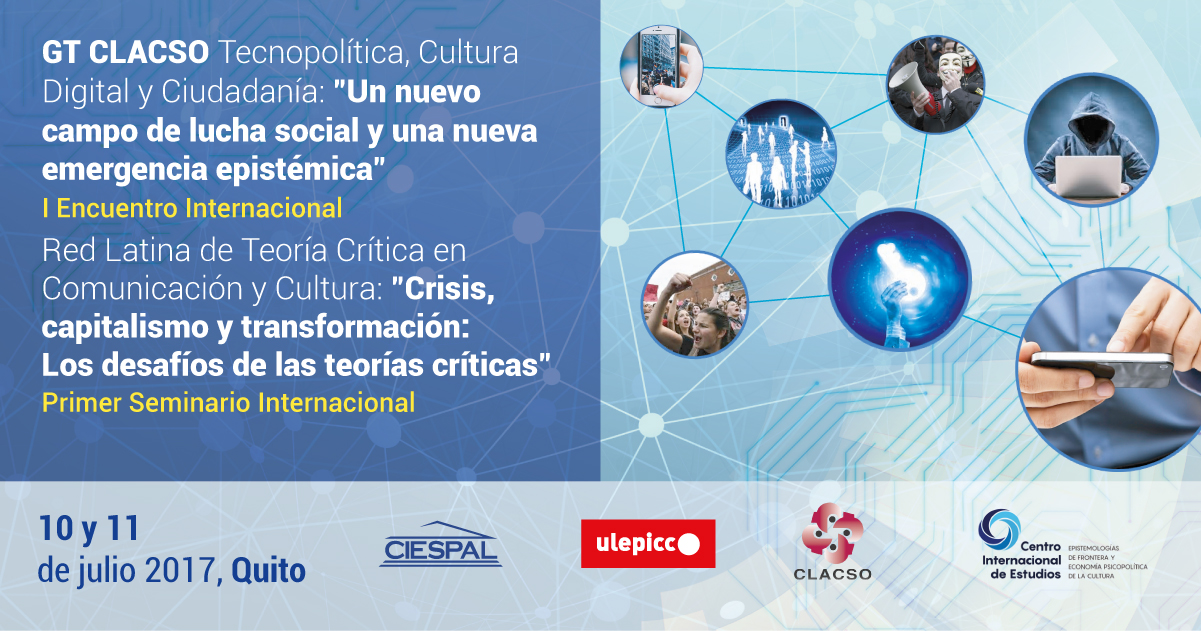
Quito: Reunión del Grupo de Trabajo de CLACSO «Tecnopolítica, Cultura Digital y Ciudadanía» 10 y 11 Julio

América del Sur/Perú/CIESPAL/GTCLACSO

INSCRIBIRSE

10 de Julio

Mañana (9am a 1pm)

Apertura

(9am a 9.30am)

  • Víctor SILVA (Universidad de Zaragoza, España)
  • Carlos DEL VALLE (Universidad de La Frontera, Chile)
  • Francisco SIERRA (Universidad de Sevilla, España)

Mesas-Paneles

(9.30am a 11am)

  1. Teorías críticas en contextos de crisis
  • Rodrigo BROWNE (Universidad Austral de Chile, Chile)
  • Germán LLORCA (Universidad de Valencia, España)
  • Susana MORALES (Universidad Nacional de Córdoba, Argentina)

Modera: Dr. Víctor SILVA (Universidad de Zaragoza, España)

(11.30am a 1pm)

  1. Narrativas y transformación sociocultural
  • María ANGULO (Universidad de Zaragoza, España)
  • Carlos DEL VALLE (Universidad de La Frontera, Chile)
  • Ramón ZALLO (Universidad del País Vasco, España)

Modera: Dr. Rodrigo BROWNE (Universidad Austral de Chile, Chile)

Tarde (3pm a 6pm)

Mesas-Paneles

(3pm a 4.30pm)

  1. Crítica en/desde América Latina
  • Víctor SILVA (Universidad de Zaragoza, España)
  • Felip GASCÓN (Universidad de Playa Ancha, Chile)
  • Luis ALBORNOZ

Modera: Dr. Carlos DEL VALLE (Universidad de La Frontera, Chile)

(5pm a 6pm)

Conferencia: Dr. Ricardo VISCARDI (Universidad de La república, Uruguay)

11 de Julio

Mesas-Paneles

(10am a 12am)

  1. Globalización y crítica frente al capitalismo: Políticas Culturales
    • Francisco SIERRA (Universidad de Sevilla, España)
    • Álvaro CUADRA (Universidad Central del Ecuador, Ecuador)
    • Francesco MANIGLIO (CIESPAL, Ecuador)

Modera: Dr. Víctor SILVA (Universidad de Zaragoza, España)

Grupo de Trabajo – CLACSO: “Tecnopolítica, Cultura Digital y Ciudadanía”

(3pm a 6pm)

  1. Un nuevo campo de lucha social y una nueva emergencia epistémica

Work session coordinada por F. SIERRA y J. MORENO

(6pm a 6.30pm)

Conferencia de cierre:

  • Dr. Roberto FOLLARI (Universidad Nacional de Cuyo, Argentina)
  • Dr. Francisco SIERRA (Coordinador GT CLACSO: “Tecnopolítica, Cultura Digital  y Ciudadanía”)

Conferencistas, panelistas y participantes confirmados:

  1. Ricardo VISCARDI (Universidad de La República, Uruguay)
  2. Roberto FOLLARI (U. Nacional de Cuyo, Argentina)
  3. Germán LLORCA (Universidad de Valencia, España)
  4. María ANGULO (Universidad de Zaragoza, España)
  5. Francisco SIERRA (Universidad de Sevilla, España)
  6. Carlos DEL VALLE (Universidad de La Frontera, Chile)
  7. Víctor SILVA (Universidad de Zaragoza, España)
  8. Rodrigo BROWNE (Universidad Austral de Chile, Chile)
  9. Felip GASCÓN (Universidad de Playa Ancha, Chile).
  10. Álvaro CUADRA (Universidad Central del Ecuador, Ecuador)
  11. Luis ALBORNOZ
  12. Ramón ZALLO (Universidad del País Vasco, España)
  13. Mariano ZAROWSKY
  14. Adrián TARIN
  15. Julio PEÑA y LILLO
  16. Francesco MANIGLIO (CIESPAL, Ecuador)
  17. Florence TOUSSAINT
  18. Javier MORENO
  19. Víctor DIAZ
  20. Silvia LAGO
  21. Fabio LOPEZ
  22. Daniela FAVARO (Universidad de Brasilia, Brasil)
  23. Susana MORALES (Universidad Nacional de Córdoba, Argentina)

Fuente:http://ciespal.org/event/primer-seminario-internacional-red-latinoamericana-de-teoria-critica-en-comunicacion-y-cultura-crisis-capitalismo-y-transformacion-los-desafios-de-las-teorias-criticas-y-i-encuentro-internacional-tecn/

Comparte este contenido:
Page 4090 of 6725
1 4.088 4.089 4.090 4.091 4.092 6.725