Page 5334 of 6825
1 5.332 5.333 5.334 5.335 5.336 6.825

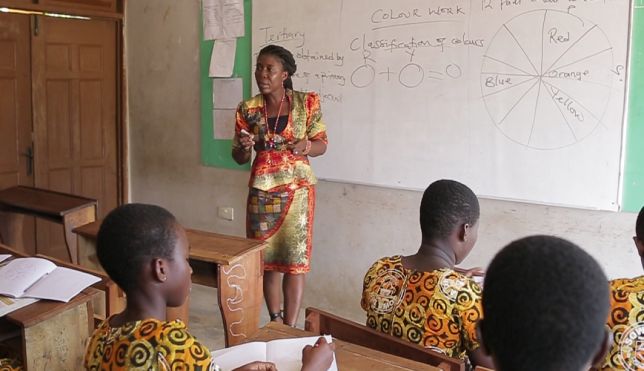
Pulse Ghana in conversation with 2016 National Best Teacher

África/Ghana/Noviembre de 2016/Fuente: Pulse.com

RESUMEN: ElReconocimiento al Mejor Maestro Nacional de este año ha sido otorgado a Rita Oppong, profesora de artes visuales de una escuela secundaria en la región de Greater Accra.Oppong, que ha sido una maestra durante 18 años, fue la ganadora  en una ceremonia en octubre en Sunyani a la que asistió el presidente John Mahama. Oppong es maestra en la escuela secundaria Nii Sowah Din 2 en el municipio de Adentan.La madre de cuatro niños asistió a la Agogo Presbyterian Training College y tiene una maestría en Artes y Cultura de la Universidad de Educación de Winneba.

Pulse: Congratulations Rita! Let’s start off with how you felt when your name was mentioned.

RO: It was a big surprise! Although we knew we are award winners, they will never tell you what award you have won or if you are the first runner up or second runner up. So I was excited when my name was mentioned. I shouted Awurade meda w’ase (Thank you God). I even thought it was for the vocational and technical category not knowing it was for the overall best teacher. I hugged my husband, who was just sitting by my side. Then I was taken up the stage to the president. I shook hand with the president and talked with him. I was just so happy.

Pulse: So what did President John Mahama say to you?

RO: The president asked me, ‘where is your school located’? I told him where he was. And then he said, ‘such as a small school with very good teachers.’ Then he said it was great that not only the big schools were winning awards, but a small school like mine could win such an award so we should keep it up. I also told him, I have recently been transferred to the new Frafraha community senior high school and he entreated me not to stop with what I have been doing and that I should do more things at my new school.

Pulse: Why did you become a teacher?

RO: I became a teacher because I wanted to impart on the next generation. I want them to acquire skills so that in future they may become professional men and women in order to help the nation and not to become a burden on society.

Pulse: Tell us about your first teaching experience?

RO: I have been teaching for 18 years. But my first teaching experience was in Akutuase, a village in the Eastern Region. I was married and my husband was in Accra. I had just had my irst child, Lois, too. So it was not easy for me at all. I had to shuffle between Accra and the village every weekend. The village had no social amenities; no electricity, treated water or tarred roads. I was there for three years before I went to further my education.

Pulse: So what does it take to be a national best teacher?

RO: This award means a lot to me. That is because I feel like the work I do has been recognised. One thing as teachers we ought to know is that, teaching does not end in the classroom. We should always extend it outside the class to people in the community.

For example, I organise unemployed people within my community and train them to acquire basic skills in beadwork. I also help those who cannot further their studies after junior high school, I try to give them skills in printing, Batik tie-dye so that they can get something doing and gather some capital to attend a vocational school.

Every teacher is a potential best teacher winner. If you bring out your best, treat the children that we teach as your own children and handle them well, in future you can also become like me. We should try to leave a legacy so make an impact in the school before you leave.

Pulse: What style of teaching does Rita Oppong have; strict or easy going?

RO: No. I would describe my style as democratic. You should not be too strict, because it will scare the children away from opening up and discussing issues affecting them with you. And don’t be too laissez-faire. So I have a mixed approach with the children I teach.

Pulse: Let’s go back to the award. What did you win?

RO: I received a 100,000 cedis and that money will be used to build the three bedroom house, to be built at an area of choice. I also got an insurance cover of 500,000 cedis, a laptop and a certificate.

Pulse: So where do you want the house to be located?

RO: I want my house to be built in Adenta or its environs. I have been transferred to the new community day senior high school. My family is already here so it will be a lot more convenient for me.

Pulse: Back in the class, one of the pupils told us you always encourage the girls to become achievers. Can you tell us about your work in that area?

RO: Yes I do. I am the girl child facilitator in the school. We normally meet on Thursday and we have role model conferences where we invite successful women in the society to share their views. We also discuss issues about teenage pregnancy, how to avoid getting involved with men at a young age and how to become professional women in future.

Fuente: http://pulse.com.gh/campus/education-in-ghana-pulse-ghana-in-conversation-with-2016-national-best-teacher-id5715389.html

Comparte este contenido:

Nueva Zelanda: Early childhood education centres need more funding – union

Oceanía/Nueva Zelanda/Noviembre de 2016/Fuente: Newshub

RESUMEN: Los centros de educación preescolar (ECE, por sus siglas en inglés) están luchando para llegar a fin de mes bajo lo que efectivamente es una congelación de fondos de seis años, dice el sindicato de educación más grande del país. Los centros preescolares se ven obligados a recortar el salario de los maestros, a confiar más en personal no capacitado, a reducir el tiempo calificado con los niños y pedir más dinero a los padres, todo lo cual es insostenible, dice el Instituto de Educación de Nueva Zelanda (NZEI) De más de 4500 ECEs. Ochenta y siete por ciento dijeron que tenían déficit en fondos gubernamentales, 70 por ciento aumentaron los honorarios a los padres y 83 por ciento cortaron servicios o instalaciones.

Early childhood education (ECE) centres are struggling to make ends meet under what is effectively a six-year funding freeze, the country’s largest education union says.

Pre-school centres are being forced to cut teacher pay, rely more on untrained staff, reduce qualified time with children and ask for more cash from parents, all of which is unsustainable, the New Zealand Education Institute (NZEI) says after it surveyed 264 out of more than 4500 ECEs.

Eighty-seven percent said they had shortfalls in government funding, 70 percent increased fees to parents and 83 percent had cut services or facilities.

The union blames the Government for, since 2010, only funding a maximum of 80 percent trained staff and wanting to increase ECE participation to 98 percent.

An extra $369 million in this year’s Budget (over four years) would be swallowed up by more children taking part, the union says.

«Instead of aiming for the best quality early childhood education possible, the Government has lowered teacher standards, and starved the sector of funding, as it focuses on driving as many children to participate as possible,» NZEI executive member Virginia Oakley said on Sunday.

But the Minister of Education says the survey is misleading and the Government is committed to ECE.

«There are around 25,000 staff working in early childhood services across the country,» says Hekia Parata. «Around 74.6 percent of those are qualified teachers, which has increased from around 61.1 percent in 2008. It is highly misleading to use a survey response made by 264 staff, which is around 1 percent of all ECE teachers, to characterise the whole sector.»

The union wants the Government to commit to having all fully trained staff in ECEs, fund them 100 percent of them and to increase per-child funding to 2010 levels, inflation adjusted.

It also wants to reduce class sizes and the teacher to child ratios. The ministry says New Zealand is in the top three countries worldwide for staff to children ratios.

The Government spends more than $1.6 billion on ECE each year – more than double what it was in 2007/2008.

«For every $1 parents contribute to ECE, the Government contributes $4.80,» says Ms Parata. «What’s more, per-child ECE funding in New Zealand is among the highest in the OECD.»

The Government recently announced a review into what was being taught at ECEs.

«The number of ECE services assessed by the Education Review Office as not well placed to deliver quality education has shown a significant decrease, from 28.8 percent in 2008 to just 2.6 percent in 2015,» says Ms Parata.

Fuente: http://www.newshub.co.nz/nznews/early-childhood-education-centres-need-more-funding—union-2016110610

Foto de archivo

Comparte este contenido:

Perú: Sigue en la cola respecto a calidad educativa a nivel mundial

América del Sur/Perú/Noviembre de 2016/Fuente: Gestión

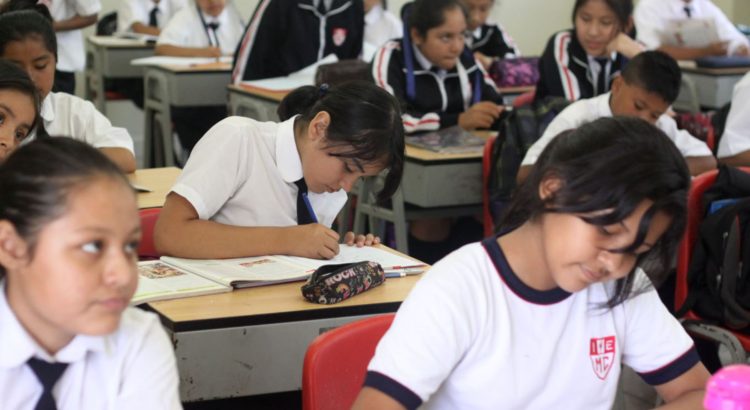
En educación primaria, Singapur y Nueva Zelanda lideran la región, México y Chile acompañan al Perú en los últimos lugares, al ocupar los puestos 114 y 111, respectivamente.

En el último reporte de competitividad elaborado por el Foro Económico Mundial (WEF, por sus siglas en inglés), Perú se ubica en la posición 127 de 138 economías a nivel mundial, en calidad del sistema educativo.

El ranking de competitividad del WEF, sobre educación, evalúa, además de la calidad del sistema educativo, diversos indicadores. Por ejemplo, en educación primaria, se toman en cuenta tanto la tasa de escolaridad como la calidad del servicio educativo.

La tasa de escolaridad del nivel primario actual es del 92.8%, lo que ubica al país la posición 89 del ranking general y en la 19 (de 21) del bloque de economías del APEC.

La región y el mundo son liderados por China y Singapur, países en los que la tasa de escolaridad en el nivel primario asciende al 100%.

En cuanto a calidad de la educación primaria, Perú se ubica en la posición 131 siendo uno de los últimos en la región Asia-Pacífico. Singapur y Nueva Zelanda lideran la región, y México y Chile acompañan al Perú en los últimos lugares, al ocupar los puestos 114 y 111, respectivamente.

En educación secundaria, Perú registra una tasa bruta de escolaridad del 95.6%, ocupando la posición 62 del ranking y en la 13 del APEC.

Por el lado de la educación terciaria o superior, tiene una tasa bruta de asistencia del 40.5%, y está en la posición 13 a nivel de la región Asia Pacífico, pero en la posición 67 a nivel mundial. Los líderes del APEC, en lo que a tasa de escolaridad secundaria se refiere, son Australia, Nueva Zelanda y Canadá, y en educación superior son Corea del Sur, EE.UU. y Chile.

Existe un indicador que mide la calidad de la educación en ciencias y matemáticas. En este, Perú está calificado como muy pobre, entre las peores del mundo en la posición 133 a nivel mundial ocupando el último lugar dentro de las economías miembros del APEC.

Singapur sigue liderando a nivel global, mientras que Chile y México, junto a Perú, son las economías con peor desempeño y ocupan los lugares 108 y 120 a nivel mundial, respectivamente.

Acerca de conectividad de las escuelas, un tema importante a tratar en las reuniones del APEC, existe un indicador que mide la extensión del uso de internet en las escuelas para propósitos de enseñanza. El Perú ocupa la posición 88, a nivel mundial siendo la última economía dentro de la región APEC.

Fuente: http://gestion.pe/economia/peru-sigue-cola-respecto-calidad-educativa-nivel-mundial-2173999

Comparte este contenido:

Costa Rica: Festival de la diáspora africana se lleva a cabo en Alajuela

Centroamérica/Costa Rica/Noviembre de 2016/Autora: Natalia Villalobos/Fuente: El País

Voces jóvenes centroamericanas se reúnen  desde este viernes y hasta el 6 de noviembre en una jornada, en Alajuela, para compartir sus reflexiones sobre temas concernientes a la Afrodescendencia.

Sus presentaciones en la jornada son el resultado de un proceso realizado en cinco países de la región (Guatemala, Honduras, Nicaragua, Panamá y Costa Rica), en el cual se prepararon para participar en el Concurso Internacional de Oratoria: Flores de la Diáspora Africana.

El concurso es abierto para estudiantes del sistema educativo de toda Centroamérica y participaron jóvenes entre 15 y 18 años de edad, en la inscripción que comenzó en el mes de junio.

Los ganadores de cada país disertarán, este 5 de noviembre, en el auditorio instalado en City Mall, de Alajuela, en Costa Rica. Los temas que serán abordados en cada una de las tres rondas del certamen son: El Decenio Internacional para los Pueblos Afrodescendientes, su importancia en un mundo diverso y la necesidad de lograr mayor equidad para todos los y las ciudadanos y ciudadanas.

Esta jornada es organizada por la Fundación Arte y Cultura para el Desarrollo, con el apoyo del Ministerio de la Presidencia, la Oficina del Comisionado Presidencial para Asuntos de la Afrodescendencia, Ministerio de Educación Pública, la Dirección Regional de Educación de Alajuela, la Coordinación Educativa, la Organización Internacional de las Migraciones y Cultural Centroamericana, SINART –Canal 13 y el Centro de Mujeres Afrocostarricenses.

Fuente: http://www.elpais.cr/2016/11/04/festival-de-la-diaspora-africana-se-lleva-a-cabo-en-alajuela/

Comparte este contenido:

China: A crackdown on international-style education could make it harder for students to study abroad

Asia/China/Noviembre de 2016/Fuente: Quartz

RESUMEN: China no sólo quiere librar la influencia extranjera de sus negocios, sino que también lo está sacando del salón de clases. La Comisión de Educación Municipal de Shanghai emitió el 19 de octubre un borrador de documento de política (enlace en chino) que obligaría a las escuelas primarias privadas y las escuelas intermedias a utilizar los currículos extranjeros para instituir grandes cambios, en nombre de la «soberanía educativa». «El desarrollo de las escuelas que utilizan los currículos internacionales ha salido de control, y atrajo la atención de las autoridades centrales superiores, [que] pide que las contramedidas lleven a cabo cambios», dice el documento. «Se prohíbe la importación completa de currículos internacionales», añade. El proyecto de propuesta no profundiza en detalles adicionales sobre qué tipos de materiales de enseñanza se verán afectados por las normas, si y cuando se aplican.

China doesn’t just want to rid foreign influence from its businesses—it’s kicking it out of the classroom, too.

 The Shanghai Municipal Education Commission on Oct.19 issued a draft policy document (link in Chinese) that would force private elementary schools and middle schools using overseas curriculums to institute big changes, in the name of upholding “education sovereignty.”

“The development of schools using international curriculums has gone out of control, and attracted the attention of upper central authorities, [which] calls for countermeasures to carry out changes,” the document states. “The complete importation of international curriculums is forbidden,” it adds.

The draft proposal does not delve into further specifics regarding what types of teaching materials will be affected by the rules, if and when they are implemented.

However, according to financial media outlet Caixin, one likely target (link in Chinese) would be the International Baccalaureate (IB), whose Primary Years Program for students aged three-to-twelve is required for all Chinese students hoping to attend high school in the UK. It is widely used in Shanghai’s private schools.

The draft law adds that elementary and middle schools must rid themselves of any foreign capital investment—a policy floated as early as 2004 (link in Chinese) in a law pertaining to foreign investment. Schools also must not be named after foreigners.

The proposed changes could throw a wrench into the aspirations of middle-class Chinese parents hoping to send their children to study overseas. As one of the cities with highest number of international schools (link in Chinese) in China, Shanghai is a popular transition destination (link in Chinese) for children looking to go abroad for high school and college.

China has been cracking down on “western values” in higher education since early 2015, with authorities pushing to revive Marxist education in schools (link in Chinese). Late last year, authorities in Beijing curbed programs (paywall) that help prepare children for overseas studies.

Chinese parents can spend between 60,000 yuan to 260,000 yuan ($8,850 to $38,350) on tuition fees for private schools that cater to families looking for Western-style education. Many of them are now worried that the regulations might “make the private schools like the free public ones,” according to Caixin (link in Chinese),

Wang Xiaodong, a commenter on China’s Twitter-esque Weibo platform, criticized the policy as a retrogression. “I used to think that I could put my child in China’s private international schools. Though pricey, it would be worth it if it prevents my child from being brainwashed. Now this single advantage is gone. Is the party pushing everyone to leave the nation?”

Fuente: http://qz.com/821667/a-crackdown-on-international-style-education-in-china-could-make-it-harder-for-students-to-study-abroad/

Comparte este contenido:

UNICEF Irak: 9.700 niños han tenido que huir de sus hogares desde el inicio de la operación en Mosul

Asia/Irak/Noviembre de 2016/Fuente: UNICEF

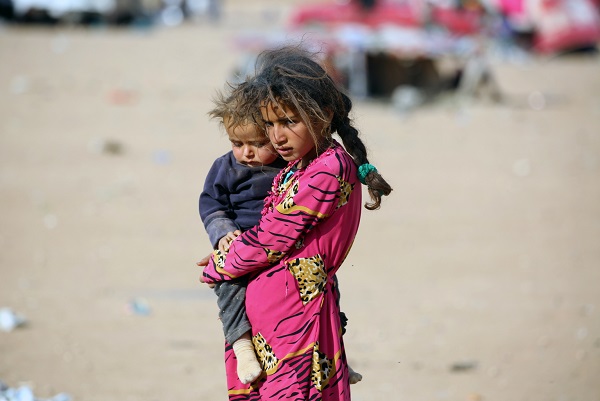
Al menos 20.700 personas se han tenido que desplazar de sus hogares desde que comenzó la operación para retomar Mosul el pasado 17 de octubre. UNICEF calcula que 9.700 de estas personas son niños que necesitan ayuda urgente. A medida que las familias y niños van llegando a los puestos de control, UNICEF está ahí para atenderlos.

“He conocido a madres e hijos que estaban tan aliviados de haber salido vivos; era evidente que habían sufrido tanto”, dijo Pernille Ironside, Jefe de Operaciones de UNICEF en Iraq, recién llegada de visitar el puesto de control en Nargizlia.

Muchos de ellos llegaban cubiertos de polvo, agotados, y se sentían inseguros sobre lo que iba a pasar después. Algunos iban descalzos. UNICEF se ha acercado a las familias para ver las condiciones en las que llegaban los niños y para saber si faltaba alguno de ellos.

A la llegada, las familias recibieron agua limpia para beber y alimentos con suplementos nutricionales para niños.

Un equipo de cuatro personas del gobierno local, apoyado por UNICEF, se ocupa de vacunar inmediatamente a los niños de entre 6 meses y 15 años de edad, contra la polio y el sarampión. Para muchos esta era la primera vez que eran vacunados desde hace dos años.

Las familias pueden quedarse hasta medio día en el punto de control antes de ser trasladados a un campamento de emergencia donde se les asigna a un albergue. Alli, UNICEF se asegura de que haya agua potable, duchas y letrinas limpias disponibles. UNICEF examina a los niños para conocer su estado de nutrición y que reciban el tratamiento adecuado. Un equipo móvil de UNICEF ofrece, además, atención psicosocial a los niños.

UNICEF además está preparando espacios temporales para la enseñanza y para que los niños puedan jugar en los campos. Muchas personas han huido y están en campos de desplazados, otras han decidido quedarse en sus pueblos que han sido retomados. UNICEF está adaptando su respuesta de emergencia para llegar a todas las poblaciones que necesitan ayuda.

En octubre, UNICEF entregó agua embotellada y suministros de higiene a más de 1.500 familias, y vacunó contra la polio a los niños en dos comunidades recién retomadas. Las condiciones de vida de las familias y los niños, tanto los desplazados como los que se han quedado en estas comunidades, son muy precarias. Las familias necesitan urgentemente agua potable y otros suministros esenciales.

“Mientras la situación continua extendiéndose, es importante que sigamos siendo muy ágiles y que adaptemos nuestra respuesta de forma que podamos ofrecer el mejor apoyo posible a las familias y niños que ya han sufrido tanto en estos últimos años”, concluyó Ironside.

Fuente: http://www.unicef.org/spanish/media/media_93028.html

Comparte este contenido:
Page 5334 of 6825
1 5.332 5.333 5.334 5.335 5.336 6.825