Page 6071 of 6820
1 6.069 6.070 6.071 6.072 6.073 6.820

Reino Unido: NUT strike, why are teachers set to strike on July 5?

Europa/Reino Unido/Julio 2016/Autor: Josie Gurney-Read / Fuente: telegraph.co.uk

Resumen:  El 5 de julio, los miembros de la Unión Nacional de Profesores (NUT) se movilizan en lo que será el primer día nacional de acción del sindicato desde el 2014. Los miembros votaron abrumadoramente a favor de la acción con el fin de hacer frente a la financiación de la escuela y reanudar las negociaciones sobre contratos de los maestros.

On July 5, members of the National Union of Teachers (NUT) will walk out in what will be the union’s first national day of action since 2014.

Members voted overwhelmingly in favour of action in order to address school funding and to resume negotiations on teacher contracts.

In the NUT’s ballot, 91.7 per cent voted in favour of strike action, with a 24.5 per cent turnout.

It will be the latest in a series of strikes that the union has called to tackle issues that have remained similar for many years.

But in a letter written to Nicky Morgan, the Education Secretary, on June 28, the NUT highlighted further reasons for striking, stating that the note was a «last appeal» before action was taken.

With strike action set to affect thousands of children across the UK, what reasons have teachers given for the decision?

Haven’t we been here before?

Yes and no. In July 2014, NUT members took part in a day of action alongside members of UNISON, UNITE, GMB, PCS and the FBU.

At the time, the NUT cited pay, pensions and workload as three key reasons for walking out. According to the union, pension contribution increases and pay restraint had meant that teachers had seen a 15 per cent fall in the value of their take home pay.

Performance related pay (PRP) was also a key issue, along with the oft-quoted 60 hour working week.

So what’s new?

Workload is still an issue, but the NUT focused on funding in their letter to the Education Secretary. Writing in June, Kevin Courtney, the acting general secretary of the National Union of Teachers, warned that the funding situation in schools could get «progressively worse».

He cited forecasts from the Institute for Fiscal Studies which predicted an 8 per cent cut in funding in real terms over the next few years.

The NUT argues that these funding cuts could have «negative implications» including; an increase in class sizes, fewer subject choices for children, and cuts in support and teaching staff. All of which could affect standards overall.

Anything else?

Yes, the «de-regulation of teacher terms and conditions». In plain English? Following the Government’s push to turn all schools into academies, decisions about pay and working conditions are increasingly being made at school level, rather than following a national standard.

The NUT’s concern is that there is little evidence that making decisions, for example, on sick pay and maternity leave at school level, leads to higher standards – in fact, the union suggests that this responsibility could distract school leaders from the important business of educating children.

But pay is still an issue?

Pay is definitely still a concern for unions. At the most basic level, the NUT have said that unless pay and working conditions improve, it is unlikely that the teacher recruitment and retention «crisis» will get better at any point soon.

In short, what are the NUT asking for?

In his letter to Nicky Morgan, Mr Courtney outlined three requests to avoid the strike action.

1.-Fund schools sufficiently to cover the increased staff costs you have imposed on them.
2.-Tell academies they must at least have regard to the national terms and conditions.
3.-Promise meaningful talks to look for a full resolution of the dispute.

What have the Department for Education (DfE) said?

A Department for Education spokesman said: «It is disappointing the National Union of Teachers has chosen to take unnecessary and damaging strike action, which less than a quarter of its members voted for. It is even more disappointing when we have offered and committed to formal talks between ministers and the unions to address their concerns about pay.

“Industrial action causes disruption to children’s education and parents who have to take time out of work to arrange childcare, we urge the NUT not to proceed with this strike and to resolve pay disputes at the negotiating table rather than playing politics with children’s futures.»

Fuente de la noticia: http://www.telegraph.co.uk/education/2016/06/29/nut-strike-why-are-teachers-threatening-to-strike-on-july-5/

Fuente de la imagen: http://www.telegraph.co.uk/content/dam/education/2016/06/23/NUT-large_trans++zPDZVAnxkOCx_pj0EK6q2ie_KZA7U11Z2fv3xK1bZa0.jpg
Comparte este contenido:

China: UN chief welcomes China joining the International Organization for Migration

Asia/China/02 Julio 2016/Noticias/Boletín de Beijin

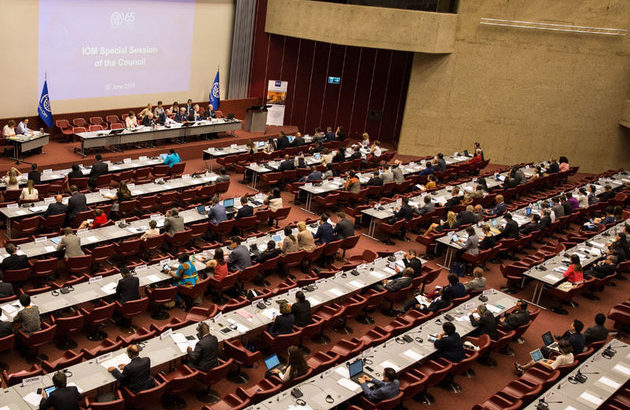
El 1 de julio de 2016 – El Secretario General Ban Ki-moon, ha celebrado la decisión de China para unirse a la Organización Internacional para las Migraciones (OIM), diciendo que el país hará una «valiosa contribución» a la OIM.

En un comunicado emitido ayer, el Secretario General señaló que el momento es «crucial» dadas las necesidades urgentes de los migrantes y refugiados.

El anuncio se produce un día antes de los Estados Miembros de la OIM decidió unirse al sistema de las Naciones Unidas como una organización relacionada.

«Hoy [30 de junio] ha sido un punto de inflexión en la vida de esta organización, que está celebrando su año número 65,» El Director General de la OIM William Lacy Swing, dijo en una reunión de su Consejo especial en Ginebra el jueves, en la que «los Estados miembros aprobaron el movimiento por el que la OIM se unirá al sistema de las Naciones Unidas «.

«Esperamos tener pronto un asiento y una voz en la mesa de la ONU y la ONU pronto tendremos una agencia para la migración dedicado», agregó.

Se espera que el Secretario General de la ONU para recibir la notificación oficial pronto. La decisión entonces será presentado a la Asamblea General de la ONU para su aprobación. Se espera que entre en vigor, tras la firma del acuerdo, durante una cumbre de la ONU sobre los migrantes y refugiados el 19 de septiembre.

Fuente: http://www.beijingbulletin.com/index.php/sid/245472375

Fuente Imagen :http://cdn.bignewsnetwork.com/uni1467394863.jpg

1 July 2016 — Secretary-General Ban Ki-moon has welcomed China’s decision to join the International Organization for Migration (IOM), saying that the country will make a «valuable contribution» to IOM.

In a statement issued yesterday, the Secretary-General noted that the timing is «crucial» given the urgent needs of migrants and refugees.

The announcement comes just one day before IOM member states decided to join the United Nations system as a related organization.

«Today [30 June] has been a watershed moment in the life of this organization, which is celebrating its 65th year,» IOM Director General William Lacy Swing told a meeting of its Special Council in Geneva on Thursday, in which «Member States approved the motion by which IOM will join the United Nations system.»

«We expect to soon have a seat and a voice at the UN table and the UN will soon have a dedicated migration agency,» he added.

The UN Secretary-General is expected to receive the official notification soon. The decision will then be submitted to the UN General Assembly for approval. It is expected to enter into force, upon signature of the agreement, during a UN Summit on migrants and refugees on 19 September.

Comparte este contenido:

Tanzania: How to Transform an Education System

África/Tanzania/Julio 2016/Autor: Jakaya Kikwete/ Fuente: project-syndicate.org/

Resumen:  Una semana más, se dice, es mucho tiempo en política. Ese fue el caso a finales del mes pasado, cuando, en un solo día, el Reino Unido votó a favor de abandonar la Unión Europea, su primer ministro, David Cameron, anunció su renuncia, y Gran Bretaña y Europa, por no hablar de los mercados globales, fueron arrojados en el caos. Cuando se trata de la educación, por el contrario, una semana puede ser un abrir y cerrar de ojos. El cambio ocurre durante años, si no décadas – y tal vez ni siquiera entonces. Pero, si tiene éxito, el establecimiento de un sistema educativo que funcione bien puede cambiar el rostro de un país – y volver a definir su destino.

A week, it is said, is a long time in politics. That was certainly the case at the end of last month, when, in a single day, the United Kingdom voted to leave the European Union, its prime minister, David Cameron, announced his resignation, and Britain and Europe, not to mention global markets, were thrown into turmoil.

When it comes to education, by contrast, a week can be the blink of an eye. Change happens over years, if not decades – and perhaps not even then. But, if successful, the establishment of a well-functioning education system can change a country’s face – and redefine its fate.

That is what happened in my country, Tanzania. From 2000 to 2009, primary-school enrollment rates in Tanzania more than doubled, from just over four million pupils to 8.5 million, or 96% of all primary-school-age children. In other words, at the primary level, Tanzania now boasts near-full enrollment.

Similar progress can be seen at the secondary level. Indeed, over the same nine-year period, the number of secondary schools in Tanzania more than quadrupled, from 927 to 4,102, and enrollment surged, from just over 250,000 students to nearly 1.5 million.

What changed? In short, Tanzania’s leaders, including me, recognized the vital importance of a strong education system – and we committed ourselves to building one.

Of course, few would argue that education is not important. But, when governments are working to provide more tangible basic necessities – say, ensuring that citizens have reliable access to clean drinking water or road links to markets and hospitals – educational reform can often fall by the wayside. Given education’s unmatched potential to enhance a country’s prospects, this is a mistake.

It is this understanding that impelled me, as President of Tanzania, to make education my number one priority. It was not an easy decision. I knew that some people would disagree with this approach, preferring to allocate more of Tanzania’s limited public budget to building wider highways or taller government buildings, or to expanding the military.

But I also knew that investing in education meant investing in my country’s future, so I decided that, rather than sinking a great deal of money, sometimes unproductively, into these other areas, we would commit 20% of the annual budget to education. Those funds were applied not just to building more schools, but also to building better schools, through investment in teachers, books, and technology. After all, simply enrolling more kids would mean little if they were not given all the tools they needed to succeed.

Tanzania can serve as a useful model for other countries seeking to upgrade their education systems. But, although we achieved success on a limited budget, the challenge that fiscal constraints can pose should not be underestimated – especially for the low- and middle-income countries, often in Africa, that face the biggest educational challenges today.

As a member of the International Commission on Financing Global Education Opportunity, I have seen firsthand how often governments’ desire to move education up their list of priorities is thwarted by fear of budgetary shortfalls and domestic pressure. As a result, promises to achieve universal primary education are consistently deferred.

When a government commits to improving education, it is betting that equipping its citizens for an unknowable future will yield broad-based, society-wide progress. This is good not only for the country itself, but also for its neighbors, for which a more stable and prosperous neighborhood can only be beneficial. In fact, given the interconnectedness of today’s global economy, better education in one country can bring benefits far beyond regional borders.

Clearly, the international community has an interest in supporting any government that makes the ostensibly obvious, yet practically difficult decision to place education at the forefront of its agenda. And, thanks to the visionary leadership of Norwegian Prime Minister Erna Solberg, this imperative is receiving the attention it deserves. Indeed, it will be a central theme at this week’s financing commission summit in Oslo.

Tanzania’s experience proves that transforming a country’s education system is possible, even if that country faces severe fiscal constraints. It is not quick or easy, and it often requires difficult trade-offs. But with a strong and sustained commitment to fulfill the promise of universal primary and secondary education – and a little international support – governments can ensure happier, more prosperous lives for their countries’ young people. One hopes that Tanzania is the first in a wave of countries putting education first.

Fuente de la noticia: https://www.project-syndicate.org/commentary/tanzania-education-commission-summit-oslo-by-jakaya-kikwete-2016-07

Fuente de la imagen: https://www.google.com/search?q=escuelas+tanzania&client=ubuntu&hs=K1n&channel=fs&source=lnms&tbm=isch&sa=X&ved=0ahUKEwiA8bibyNXNAhVMkh4KHVRmDygQ_AUICigD&biw=1301&bih=673#imgrc=RAj4W-0bi9jbkM%3A

Comparte este contenido:

Rusia: Project 5-100 doubles foreign students

Europa/Rusia/Julio 2016/Autor: Editor / Fuente: thepienews.com

ResumenTres años después de su lanzamiento, la iniciativa de la educación superior internacionalización insignia de Rusia, Proyecto 5-100, está empezando a ver los resultados, con números de estudiantes internacionales en el que casi los dobla entre 2012 y 2015.

Three years on from its launch, Russia’s flagship higher education internationalisation initiative, Project 5-100, is beginning to see results, with international student numbers nearly doubling between 2012 and 2015.

International student numbers across the project’s 21 universities reached 4,700 in 2015 – nearly twice the number there were in 2012, when the initiative was announced.

Speaking with The PIE News, the state-funded project’s deputy executive director, Nadezhda Polikhina, said the increase in international student numbers, along with an increase in joint degree programmes, international staff and faculty and foreign language-taught programmes, demonstrates the project is meeting its goals.

“We see the effect on the people in the universities; they have changed their attitude so they also develop with the universities,” she said.

The project was implemented in 2012, ostensibly with the goal of propelling five institutions into the top 100 ranked universities in the world, but its broader aim is to enhance the competitiveness of Russian higher education by strengthening areas such as international student and faculty numbers, international collaboration and research publications.

“[Rankings are] not the ultimate goal; the goal is to enhance competitiveness of the Russian universities around the globe, to improve the Russian educational system and to develop universities in Russia,” Polikhina said.

Since 2013, the project has supported universities with funding and training, as well as providing PR support and a national brand that is present at global events.

By 2015, universities had developed some 680 programmes in collaboration with foreign universities and research organisations, including double degree programmes and professional training, as well as more than 280 new study programmes taught in foreign languages, with the majority in English.

Internationalisation efforts have been supported by an increase in foreign faculty members, which have quadrupled on average across the universities since the start of the project.

The impact of support for research – including funding, training on publishing in English and guidance on how to identify quality journals to publish in – can also be clearly seen, Polikhina said, citing a tripling in the number of highly-cited publications by Project 5-100 faculty in journals which are among the top 1% and 10% of the most highly-cited publications in the world between 2012 and 2015.

“Part of the reason [Russian universities don’t tend to rank highly in league tables] is it is a big challenge to have publications in English, because historically Russian universities have publications only in Russian,” she commented. “Nobody knew the good results of the research.”

Fuente de la noticia: http://thepienews.com/news/russia-project-5-100-doubles-foreign-students/

Fuente de la imagen: http://d1pe6f90ru47yo.cloudfront.net/wp-content/uploads/2016/07/01123639/Screen-Shot-2016-07-01-at-13.35.43-860×375.png

Comparte este contenido:

Taiwan: Students arrive from US to take course in Tainan

Asia/Taiwan/Julio 2016/Autor: Sean Lin / Fuente: taipeitimes.com

Resumen:   Estudiantes de universidad y posgrado de los Estados Unidos llegaron a Taiwan para recibir cursos de dos meses de lengua china y cultura taiwanesa con una beca establecida conjuntamente por Taiwan-United States Sister Relations Alliance (TUSA) y el Ministerio de Educación.

US college and postgraduate students arrived in Taiwan on Thursday for a two-month Chinese-language and Taiwanese culture course on a scholarship jointly established by the Taiwan-United States Sister Relations Alliance (TUSA) and the Ministry of Education.

The ministry said it hopes to make Taiwan the top choice for foreigners to learn Chinese.

Department of International and Cross-strait Education counselor Chiu Yu-chan (邱玉蟾) said the 55 students were selected from 46 universities across 32 US states that have joined TUSA or signed memorandums of understanding with the Foundation for International Cooperation in Higher Education of Taiwan.

Students are from Cornell University and Columbia University in New York and Stanford University in California, among others.

Chiu said they are to attend Chinese-language classes at National Cheng Kung University in Tainan over the coming two months.

In addition to 120 hours of Chinese-language studies, the students will also be taught about Taiwanese film and pop culture, food, art, politics and economics, as well as cross-strait relations based on the National Cheng Kung University curricula, she said.

The students are also to tour the nation, traveling from the streets of Taipei to the beaches of Kenting (墾丁), she said, adding that 46 families have offered the students board.

The ministry hopes to achieve “meaningful” diplomacy through the program by fostering “Taiwan-friendly” individuals, she said.

Ministry official Lai Yi-fan (賴羿帆) said more than 250 US students have participated in the scholarship program since its inception.

The program has come a long way since it was established in 2005, with the number of US students covered by the scholarship increasing from just four to 55, while TUSA received more than 200 applications this year.

The US is an important ally to Taiwan, Lai said, adding that he hopes the ministry can continue to work with TUSA to expand the scholarship so that more US students can visit Taiwan.

Lai said the ministry is exploring the possibility of offering the scholarship at other universities.

Fuente de la noticia: http://www.taipeitimes.com/News/taiwan/archives/2016/07/02/2003650173

Fuente de la imagen: https://www.google.com/search?q=universidad+tainan&client=ubuntu&hs=BV7&channel=fs&source=lnms&tbm=isch&sa=X&ved=0ahUKEwiImeOft9XNAhXDXyYKHWrMCRQQ_AUICSgC&biw=1301&bih=673

Comparte este contenido:

Canadá espera hasta 50 mil mexicanos más tras eliminación de visas

Canadá espera hasta 50 mil mexicanos más tras eliminación de visas

América del Norte/Canada/02de julio 2016/  Noticias/Informador .mix

El embajador de Canadá en México afirma que no podría haber planeado mejor fiesta

CIUDAD DE MÉXICO (01/JUL/2016). El embajador de Canadá en México, Pierre Alarie, informó que luego de la eliminación de la visa para mexicanos el 1 de diciembre próximo, se espera que durante el primer año viajen entre 25 mil y 30 mil mexicanos, y desde el tercero 50 mil.
«Realmente no pudiéramos haber planeado una fiesta en un mejor momento entre las relaciones de Canadá y México. Qué tiempo tan emocionante», detalló durante el festejo por el Día de Canadá.
Agregó que «canadienses y mexicanos tenemos mucho que celebrar. Ha sido un año entero de logros».
El diplomático precisó que ambas naciones están comprometidas y sobre todo son «muy buenos amigos. Ahora más que nunca somos socios estratégicos».
Hizo ver la importancia de proteger la dignidad y los derechos humanos de todos los ciudadanos, por lo que ambos países firmaron un acuerdo de cooperación en el que se iniciará por los temas más relevantes, la comunidad indígena, la diversidad y la inclusión.
«Son piedras angulares de una sociedad realista y Canadá seguirá defendiendo los derechos de todos», abundó.
Alarie destacó que tras la reciente reunión de los líderes de México y Canadá, «vamos eliminando los obstáculos en el comercio y la movilidad», además de la promoción del desarrollo sustentable equitativo.
«Hoy estamos construyendo puentes y derribando muros. Estamos hablando de economías más competitivas y aún más integradas. Estamos mirando hacia el futuro», finalizó.
Este 2016 ambas naciones cumplen 72 dos años de relación diplomática, 42 dentro del Programa de Trabajadores Agrícolas Temporales, y 22 como socios del Tratado de Libre Comercio de América del Norte.
El intercambio comercial bilateral alcanzó los 34 mil millones de dólares en 2015, y se mantienen como el tercer socio comercial uno del otro, mientras que el país del norte es el cuarto mayor inversionista en México con más de 22 mil 780 millones de dólares entre 2000 y 2014.
Según cifras de Canadá, México tiene una balanza comercial favorable con mil 620 millones de dólares en abril de este año, cifra 7.64 por ciento más que la registrada en enero pasado cuando fue de mil 505 millones de dólares.


Fuente:http://www.informador.com.mx/internacional/2016/669972/6/canada-espera-hasta-50-mil-mexicanos-mas-tras-eliminacion-de-visas.htm

fuente Imagen:http://img.informador.com.mx/biblioteca/imagen/370×277/1328/1327054.jpg

Comparte este contenido:

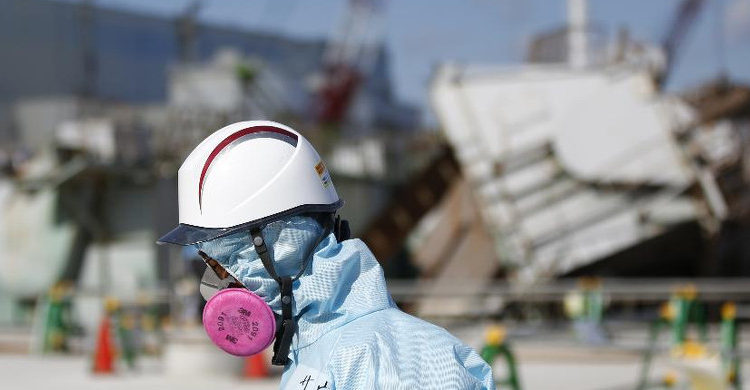
Japón: Scientists Find New Kind of Fukushima Fallout

Asia/Japón/Julio 2016/Autor: Sam Lemonick / Fuente: Forbes

Resumen:  Científicos han descubierto que parte del material radiactivo que escapó del reactor nuclear de Fukushima Daiichi en 2011 tomó una forma que nadie estaba buscando. Ahora tienen que averiguar lo que significa para Japón y para futuros desastres

Some of the radioactive material that escaped the Fukushima Daiichi nuclear reactor in 2011 took a form no one was looking for, scientists have discovered. Now they have to figure out what it means for Japan and for future disasters.

Radioactive cesium—specifically, cesium-137—is one of the waste products of nuclear power. It’s also one of the most dangerous substances in a nuclear disaster like Chernobyl or Fukushima.

One reason why is that the type of radiation it emits is particularly damaging to our bodies. Another is that cesium-137 dissolves in water. That means it can spread quickly through the environment and get into the plants, animal and water we consume.

Until now, scientists and disaster experts thought cesium-137 fallout from the Fukushima reactor meltdown was in this soluble form. That guided their cleanup efforts, like removing and washing topsoil, and helped them map where radiation might spread.

It turns out that wasn’t entirely true. Satoshi Utsunomiya, a geochemist at Kyushu University in Japan, announced over the weekend that he had found cesium-137 in a new form: trapped inside tiny glass particles that spewed from the damaged reactors. These particles are not water soluble, meaning we know very little about how they behave in the environment—or in our bodies. He found the particles in air filters placed around Tokyo at the time of the disaster.

According to Utsunomiya, high temperatures inside the malfunctioning reactors at the Fukushima plant melted and broke down the concrete and metal in the buildings. Silica, zinc, iron, oxygen and cesium-137 fused into millimeter-wide glass microparticles, each about the size of a pin’s head. Lifted into the atmosphere by the fires raging at the plant, they then blew about 240 kilometers southeast to Tokyo.

“As much as 89% of all of the cesium [in Tokyo] was in fact in these particles. It’s profound,” says Daniel Kaplan, a geochemist at Savannah River National Laboratory in South Carolina. He attended Utsunomiya’s lecture describing the findings at the ongoing Goldschmidt Conference in Yokohama, Japan.

Kaplan says similar particles were observed near the Chernobyl reactors after the explosion there in 1986. But they were only seen within about 30 kilometers; beyond that, cesium-137 was only observed in rain.

The discovery could change how we model fallout from nuclear disasters. Kaplan explains that it might add a new variable to the models we use to predict where radioactive particles will go and how long they’ll stay there. It might also change how we treat cesium-137 during cleanup and monitoring.

It is probably still too early to say what this means for people living in Tokyo or elsewhere in Japan. Kaplan thinks the amount of radiation they received probably hasn’t changed. Whether they got it from water-soluble cesium-137 or from these particles, the radiation dose was the same—and for Tokyo residents, that number was within the margin of safe exposure.

The bad thing about water-soluble cesium-137 is that it can easily get into our bodies from soil by way of plants and animals. This new discovery alleviates that concern. But it opens up a new possibility we know little about.

“If the particles are in the air—because that’s how they get to Tokyo—then when you are aspirating this air you should find them in some ways on your lungs,” says Bernd Grambow, who studies nuclear waste chemistry as head of the SUBATECH laboratory in France.

Water-soluble cesium-137 that makes it into our lungs passes into the bloodstream and is peed out within a few weeks. But Grambow says we really don’t know what happens to insoluble cesium-137-containing particles if they get in our lungs. Some of them are likely coughed out or removed by our lungs’ other normal processes. As for the rest, Grambow says we don’t know how long they might remain.

He cautions that any internal radiation from particles containing cesium-137 would be much less than the doses people got from external radiation, which would come from cesium-137 and other radioactive elements in the soil or the environment around them. “We don’t know very much, and my point is only that they should be studied,” Grambow says.

Utsunomiya’s next step is finding out how much of the cesium-137 that ended up in soils in Tokyo and elsewhere was in these glass particles. That way, researchers will be able to better understand how cesium made its way out of the reactor and into the environment.

Fuente de la noticia: http://readersupportednews.org/news-section2/318-66/37768-scientists-find-new-kind-of-fukushima-fallout

Fuente de la imagen: http://readersupportednews.org/images/stories/article_imgs21/021680-japan-070116.jpg

Comparte este contenido:
Page 6071 of 6820
1 6.069 6.070 6.071 6.072 6.073 6.820