Page 6496 of 6792
1 6.494 6.495 6.496 6.497 6.498 6.792

South Africa: ANC Congratulates PYA for Successes in Recent SRC Elections

Source: South Africa: ANC Congratulates PYA for Successes in Recent SRC Elections

Resumen: El Congreso Nacional Africano (ANC) felicita a la Alianza Progresista de Jóvenes (PYA) bajo la bandera de los Estados de África del Sur Congreso Estudiantes (Sasco) por su desempeño en el Consejo de Representantes de Estudiantes (SRC) Las elecciones celebradas recientemente en varios campus en todo el país. Los resultados han enviado un mensaje inequívoco de que los estudiantes se mantienen firmes en su apoyo al movimiento democrático de masas, y siguen teniendo confianza en el PYA y SASCO, en particular, para cumplir con sus aspiraciones expresadas muy vocalmente.

press release

The African National Congress (ANC) congratulates the Progressive Youth Alliance (PYA) under the banner of the South African Students Congress (SASCO) for their performance in the Student Representative Council (SRC) Elections recently held in various campuses throughout the country. The results have sent an unequivocal message that students remain unwavering in their support for the Mass Democratic Movement, and continue to have confidence in the PYA and SASCO in particular to deliver on their very vocally expressed aspirations.

While many laudable successes have been achieved by the PYA in numerous universities, the winning back of the Fort Hare University by SASCO, following a short stint of the opposition at the helm, is of particular significance. The ANC calls upon the PYA to not take these victories for granted but to redouble their efforts to service of the the student population, remaining grounded in their struggles and leading from the front in all matters affecting the student population. Now is the time to accelerate «unity for democracy in education» to realise the vision of a non-sexist, non-racial, working class biased and democratic education system.

Issued by

Zizi Kodwa

National Spokesperson

African National Congress

Enquiries

Khusela Sangoni 072 854 5707

Comparte este contenido:

Head of Accreditor for For-profit Colleges Leaves Amid Growing Scrutiny

América del Norte/EEUU/Abril 2016/Autor: Annie Waldman/ Fuente: ProPublica

Resumen: El jefe del organismo que vigila a las universidades con problemas de fines de lucro, Consejo de Acreditación para Colegios y Escuelas -ACICS-, renunció a su cargo, según la agencia el lunes en un comunicado. La renuncia de Albert Gray, que sirvió como presidente y CEO de ACICS durante los últimos siete años, llega en un momento precario para el ente acreditador. La semana pasada, una docena de abogados estatales hicieron llamados generales al Departamento de Educación para revocar el reconocimiento del acreditador. Sin el reconocimiento, los cientos de colegios, sobre todo con fines de lucro que supervisa el acreditador, podrían perder el acceso a la ayuda federal para estudiantes que constituye la mayor parte de sus ingresos.

The head of troubled for-profit college watchdog, Accrediting Council for Independent Colleges and Schools, has stepped down, the agency said Monday in a statement.

The resignation of Albert Gray, who served as ACICS’ president and chief executive officer for the past seven years, comes at a precarious time for the accreditor.

Last week, a dozen state attorneys general called on the Department of Education to revoke the accreditor’s recognition. Without recognition, the hundreds of mostly for-profit colleges that the accreditor oversees could lose access to the federal student aid that makes up the majority of their revenue.

Citing ProPublica’s reporting, the state attorneys general said that the actions of the agency had “ruined the lives of hundreds of thousands of vulnerable students whom it was charged to protect.” Our reporting found that students at colleges accredited by ACICS were far worse off than students at other schools.

The accreditor did not provide a specific reason for Gray’s departure.

During a Senate hearing last summer, Sen. Elizabeth Warren, D-Mass, slammed Gray for ACICS’ involvement in propping up for-profit college chain Corinthian Colleges amid widespread allegations of fraud, misrepresentation and predatory lending.

“How many federal and state agencies need to file lawsuits against one of your colleges before your organization takes a second look at whether that school should be eligible for accreditation, and most importantly, federal money?” she demanded.

Gray told the committee that the investigations into Corinthian were only allegations. “All of these investigations that you’ve mentioned are just that: investigations,” said Gray. “Without outcomes from these investigations, we don’t have any evidence to take any kind of action.”

In their letter last week, the state attorneys general also expressed concern about the composition of ACICS’ board and committees, saying that its leadership raised “serious questions about potential conflicts of interests and therefore ACICS’ ability to impartially evaluate those and other schools.”

As ProPublica has reported, at least two-thirds of ACICS’ commissioners since 2010 have worked as executives at for-profit colleges while sitting on the council. And at least one-third of the commissioners came from colleges that faced heightened scrutiny, including investigations by state attorneys general and federal financial monitoring.

“This Council takes the concerns raised by a variety of external stakeholders very seriously,” said Lawrence Leak, the chair of the board of directors, in a statement. “The assurance of quality and integrity of private post-secondary education by ACICS will become stronger and more effective in light of these concerns.”

A Department of Education committee is slated to review ACICS’ accrediting status in June.

Fuente de la noticia: http://readersupportednews.org/news-section2/318-66/36436-head-of-accreditor-for-for-profit-colleges-leaves-amid-growing-scrutiny

Fuente de la imagen: http://readersupportednews.org/images/stories/article_imgs20/020727-gray-042116.jpg

Comparte este contenido:

Vanuatu: Vt250 million Fee Exemption Paid

Vanuatu: Vt250 million Fee Exemption Paid
Vanuatu/abril de 2016/Vanuatu Daily Post

Resumen: Un total de VT250 millones ha sido transferido y compartido con las cuentas bancarias de todas las escuelas secundarias Algunas escuelas en Shefa, como Malapoa Colegio, Escuela de Epi y el Instituto de Tecnología de Vanuatu (VIT) confirmaron que recibieron su parte la semana pasada.
Este fondo restante cubre todo 2015 pendientes; 60% de plazo II, el 100% del término III y el 100% de 2016.

By Anita Roberts

A total of Vt250 million has been transferred and shared to the bank accounts of all secondary schools that were granted fee exemption.
Some schools in Shefa Province, like Malapoa College, Epi High School and the Vanuatu Institute of Technology (VIT) confirmed they received their share last week.
This remaining fund covers all 2015 outstanding; 60% of term II, 100% of term III and 100% of 2016 term one.
The fee exemption applies to schools badly affected on the islands of Merelave, Maewo, Pentecost, Paama, Ambrym, south and south east Malekula and every islands in the provinces of Tafea and Shefa.
It covers tuition fees and examination fees in all secondary schools and government institutions as the Vanuatu Institute of Technology, Vanuatu Institute of Teacher’s College and USP.
Following the declaration last year, the government was able to meet only 40% of the school’s tuition fees. The leftover 60% is now paid off.
With that, the Acting Principal Education Officer (PEO) at the Shefa Education Office, Jonathan Yona, is urging all schools to ensure that the funds are smoothly transferred to each students’ accounts.
He referred to students who enrolled in 2015 but are now transferred or selected to another school, for example, final year students.
This means that the school principals must work closely with the bursar to sort this out and must make sure that the money, in case of this year’s term one fees, reaches students in their new schools, said PEO Yonah.
Parents are also advised to approach the school authorities and ask if their children’s names are exempted from paying school fees or not.
The fee exemption initiative only targets children whose parents are farmers and do not have a means of regular income excluding those whose parents are working in the government or private sector.
The Ministry of Education and Training has clarified earlier this year that parents who have already paid fees will be reimbursed.
The Director of Education Services, Roy Obed, said schools are encouraged to work closely with parents to sort this out.
The Council of Ministers endorsed for the Department of Finance to release some money from the Tropical Cyclone Pam Recovery Fund towards the fee exemption.

Fuente: http://dailypost.vu/news/vt-million-fee-exemption-paid/article_3433b59f-c430-50c1-b76c-0776e71e2b71.html
Foto: http://bloximages.chicago2.vip.townnews.com/dailypost.vu/content/tncms/assets/v3/editorial/6/21/62185578-ce6f-5ae5-b70c-864de593346c/5717f73d20f19.image.jpg?resize=300%2C225

Comparte este contenido:

Filipinas: Revolución solidaria en la ropa deportiva

El 24 de abril de 2013 más de mil personas murieron en Bangladesh como consecuencia de las condiciones de esclavitud en la industria textil en Asia. Taller de Solidaridad es una ONG para el desarrollo que comercializa Ropa Hecha con Amor, una marca pionera en moda deportiva basada en criterios de comercio justo para cambiar esa situación.

Las trabajadoras de los talleres se benefician del empleo estable que respeta estrictamente la legalidad y ofrece un paso más con servicio de guardería, apoyo a vivienda, formación y subsidio mensual de arroz para la contribución de la cesta familiar.

«Me siento feliz porque aquí he experimentado en primera persona el valor de mi trabajo y mi dignidad como trabajadora. Es necesario apoyar el Comercio Justo para detener el trabajo infantil y el consumo irresponsable», asegura Mercy ButialSinangote, trabajadora textil en Filipinas.

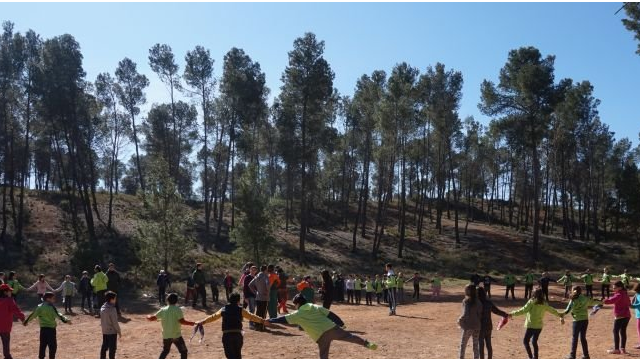
Seis centros educativos de Orense, Lugo, León, Alicante, Zamora y Jaén se han comprometido con el Comercio Justo a través de la adquisición de equipamiento deportivo para casi 600 estudiantes y la impartición de charlas educativas y de concienciación para 8 centros educativos. El compromiso del equipamiento de un centro educativo da empleo durante un mes a 25 mujeres del Taller de Mandaluyong. (Filipinas).

El Colegio Sagrada Familia de Alicante colabora con Ropa Deportiva Hecha con Amor.

El Colegio Sagrada Familia de Alicante colabora con Ropa Deportiva Hecha con Amor.

Otro de los ejemplos de que otro mundo textil es posible es lacooperativa de mujeres Sadnha, establecida en la India y que trabaja bajo condiciones de comercio justo para confeccionar complementos y ropa infantil a partir del patchwork.

Sadnha se creó en 1988 para proporcionar fuentes alternativas de ingresos para las mujeres en las zonas más empobrecidas de los entornos rurales, indígenas y urbanos de Udaipur. Con la idea de lograr una mayor independencia de la agricultura, se ofreció la artesanía como una alternativa de medio de vida para las mujeres.

Hoy en día esta cooperativa sigue ofreciendo formación continua a estas mujeres artesanas para mejorar sus habilidades en patchwork, aplicaciones de tejido y bordado. Esta cooperativa que hoy forma parte de la Feria de Foro- la India, Consejo de Promoción de Exportación de las Artesanías (EPCH) y WFTO ha supuesto una red de apoyo para estas mujeres y sus comunidades, y a ellas les ha permitido ocupar una posición respetable en su familia y en la sociedad de la que forman parte.

Fuente de la noticia: http://cadenaser.com/ser/2016/04/22/deportes/1461321568_007377.html

Imagen: http://cadenaser00.epimg.net/ser/imagenes/2016/04/22/deportes/1461321568_007377_1461323333_noticia_normal.jpg

Comparte este contenido:

EE.UU: Brutal, abusiva e incomprensible paliza de un maestro a un indefenso alumno

 RTNoticias/Publicado: 22 abril 2016 13:13 GMT

 El video captado por un alumno en plena clase de biología recoge una pelea entre un asistente del maestro y un alumno en una escuela en el estado de Wisconsin (EE.UU.).

El asistente de un maestro de la escuela secundaria Bay View High School, en la ciudad norteamericana de Milwaukee, Estado de Wisconsin, empujó violentamente a un alumno de 14 años, sujetándolo contra el suelo, durante una clase de biología, informa el periódico ‘The New York Daily News‘.

La enconada y desigual pelea, que fue grabada por un compañero de clase, estalló en medio de una discusión. En el video se aprecia cómo el alumno levanta una pierna, antes de ser empujado sobre las sillas por el asistente, de 39 años. Además, se puede oír cómo el hombre grita improperios al adolescente mientras lo agarra por el cuello.

 En el video no se ve lo que ocurrió antes de la pelea, aunque parece que la víctima habría podido hacer comentarios ofensivos en dirección al maestro.

Tras el inccidente, el funcionario fue detenido por abuso físico, mientras que el adolescente fue trasladado a un hospital para tratarse heridas leves, según la Policía de Milwaukee.

Fuente: https://actualidad.rt.com/actualidad/205494-eeuu-maestro-empujar-alumno-suelo

Comparte este contenido:

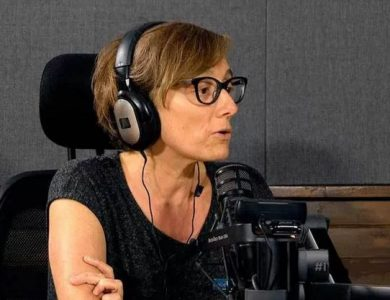
Colombia: «Se deben invertir más recursos en equidad»: Andreas Schleincher, director de Educación y Habilidades de la Ocde

Colombia/ 22/04/2016/ Fuente y Autor de la noticia Entorno Inteligente

El Heraldo / Luego de una evaluación al sistema de educación en Colombia, la Ocde comprobó que el mayor problema del país para el progreso de los jóvenes son las desigualdades sociales, que se evidencian desde la primera infancia.

La formación docente, el acceso y la calidad son los retos que estableció la organización, según contó Andreas Schleincher, director de Educación y Habilidades de la Ocde, en entrevista con EL HERALDO.

P  ¿Qué implicación tiene para Colombia hacer parte de los países de la Ocde? R   La Ocde compara las mejores políticas y prácticas a nivel mundial, y eso le sirve de espejo a Colombia para compararse con el resto de países, y aprender de los sistemas más avanzados. Colombia ha avanzado mucho pero aún tiene un largo camino que recorrer.

P ¿Cómo se realizó el análisis al sistema educativo colombiano? R   Lo primero que hicimos fue mirar qué dice la evidencia: los resultados del aprendizaje, la calidad de la enseñanza, el acceso a la educación, la capacidad docente, entre otros aspectos. Pero también visitamos varias ciudades para entender mejor las realidades. Analizamos desde la primera infancia hasta la formación universitaria, y eso dio un diagnóstico bastante completo.

P  ¿Cómo encontraron a Colombia en comparación con otros países de América Latina? R   Lo que muestran los datos es que Colombia tiene una de las tasas de progreso más altas de la región, tanto en cantidad como en calidad. Sin embargo, todavía se ve que los resultados de los estudiantes en las evaluaciones de calidad están muy estrechamente relacionados con su entorno socioeconómico, y que los estudiantes de entornos más favorecidos logran un desempeño mucho más alto que los más pobres.

P  ¿Cómo se puede superar esa situación? R   Lo primero es invertir los recursos de una manera más equitativa. Invertir en zonas donde pueden hacer una mayor diferencia, y atraer a los mejores docentes y rectores hacia esas escuelas más vulnerables. Lo segundo es formar a los docentes para aumentar su profesionalismo, que aprendan de experiencias destacadas para mejorar sus prácticas. Por ejemplo, un buen ejercicio es que los rectores evalúen el trabajo en el aula para implementar cambios positivos en los procesos educativos. Y lo tercero es recalcar la necesidad de hacer que la carrera de pedagogía sea intelectualmente estimulante, que los docentes tengan oportunidades para avanzar en sus carreras y que se logre combinar autonomía con una cultura más colaborativa.

P  ¿Cuál es la importancia de invertir en la educación desde la primera infancia? R   Los primeros años crean las bases para tener éxito a lo largo de la vida, porque es en la infancia cuando se desarrollan las capacidades cognitivas, sociales y emocionales. En esos años es cuando las personas pueden aprender a ser más tolerantes, a tener más empatía, más respeto, más curiosidad, cualidades necesarias para el futuro del país. Por eso la paz en Colombia se va a construir en los primeros años de aprendizaje.

«Se deben invertir más recursos en equidad»: Andreas Schleincher, director de Educación y Habilidades de la Ocde

Con Información de El Heraldo

Fuente de la noticia: http://www.entornointeligente.com/articulo/8285034/Se-deben-invertir-mas-recursos-en-equidad-Andreas-Schleincher-director-de-Educacion-y-Habilidades-de-la-Ocde-22042016

Imagen: http://cdn.elheraldo.co/sites/default/files/styles/home_destacada_395x240/public/2016/04/22/articulo/foro_educacion_giovanny_7.jpg

Comparte este contenido:

Samoa: Walking the talk and making a difference

Samoa: Walking the talk and making a difference

Samoa/ Abril de 2016/Samoa Observer

Resumen; Algunas personas encuentran molestos los vendedores ambulantes que deambulan por Samoa. Pero a los 14 años de edad, Quenjule Slaven de Moamoa no los ve de esa manera. Ella los ve como futuros líderes, hombres y mujeres jóvenes que sólo necesitan tener la oportunidad de aprender, es por esto que realizo un programa para ayudarlos, de allí comenta que «Estas personas son la columna vertebral y el corazón del programa y las cosas serían muy difícil sin ellos.»

Some people find street vendors annoying.
As the faces of hardship and poverty in Samoa, they are often ridiculed and frowned upon.
But 14-year-old Quenjule Slaven from Moamoa does not see them that way. She sees them as future leaders, young men and women who only need to be given an opportunity to learn.
So 11 weeks ago, Quenjule initiated a programme with the intention of teaching street vendors how to read. The programme started with a couple of children but it now has close to 20 children, many of them who don’t have the opportunity to study.
When Samoa Observer visited the programme, Quenjule was busy, pouring her heart out to the children.
Her passion is quite obvious. Asked for an interview, she politely said: “One minute please, I want to finish teaching my students first.”
So how did it start?
“It all started when I was in town and I would always see child vendors everywhere instead of being in school getting an education for a brighter future,” she said.
“I saw them at McDonald’s and Sunrise restaurant; I asked my mom ‘mom why aren’t they in school?’ and she said because their parents can’t afford it and these kids support and provide for their families.”
Not knowing the question she just posed was a germinating Good Samaritan seed, she continued on with life.
“After I participated in the human rights poster competition sponsored by the Ombudsman I realized that these kids also have human rights,” she said.
“The right to an education, the right to have a voice on the issues in their lives; and so my parents helped me, they were my inspiration.
“Once we decided what to do we came here and asked the manager of the library if we could use their facilities and once they approved we began the following Monday.”
Programme attendance began small but Quenjule was happy nevertheless.
“At first there were about five kids who showed up and were eager to learn, now we have many more” she said. “The kids didn’t know their dates of birth, they didn’t know how to spell their name, they didn’t know the alphabet but after just two weeks, they started to gain that sense of trust in us and so the fun began.
“Our main goal is to make reading fun for them so that they will continue to read and then in the end they would have that chance at a brighter future.
“We want to pull them off the streets so that when they grow up they know the value of education leading to them putting their future children in school which will break the chain of child vendors in Samoa.” When asked about the progress of her students Quenjule replied.
“They are doing very well; we just started up again yesterday because we had a 2 week holiday and there are about 16-18 children on average who attended before the break,” she said.
“A girl named Sulu was not ok with reading, she was shy and lacked confidence but now she shows so much enthusiasm when reading and she even took the initiative to learn her full A, B, C’s over the weekend.”
Quenjule continued with a message for the many people who complain about street vendors rather than try help.
“I feel that it is important to walk the talk; we shouldn’t get drawn in to only speaking about the problem but instead we need to act on fixing it,” she said.
“Martin Luther King once said ‘faith is taking the first step even when you don’t see the whole staircase’ it’s not about how bad the situation is; it’s what we do about it that matters most.
“I know that these children have a hard time on the streets, but I believe we all have the ability to turn each and every one of their lives around.”
Each of the children gather at certain locations where volunteers Fana and Soli pick them up and bring them to the Nelson Library, after each lesson they are given some food and juice before being dropped off home.
According to Quenjule none of this would have been possible without help from some special volunteers.
“I want to thank the following people who have volunteered their time to help this programme grow to what it is today: My supportive parents Juliann and Christian Slaven, Fana Lee Zumba, Soli, Lomia, Maima, Tanya and her daughter Amelia, Judge Vui and his wife for financial donations and great advice for the programme, Lorraine Williams, Stella M, Maiava Iulai Toma and the Ombudsman Staff,” she said,
“These people are the backbone and heart of the programme and things would be really hard without them.”
The programme runs every Mondays and Tuesdays at around 3:30pm at the Nelson Memorial Public Library.
Fuente: http://www.samoaobserver.ws/en/21_04_2016/local/5201/Walking-the-talk-and–making-a-difference.htm
Foto: http://www.samoaobserver.ws/images/cache/600×400/crop/images%7Ccms-image-000006013.jpg

Comparte este contenido:
Page 6496 of 6792
1 6.494 6.495 6.496 6.497 6.498 6.792