Page 6563 of 6725
1 6.561 6.562 6.563 6.564 6.565 6.725

Australia will have to face the consequences of its education gap

Oceanía/Australia/Abril 2016/Fuente: http://www.theage.com.au/Autor: Matt Wade

Resumen: La brecha existente entre la educación formal y el «know-how» en Australia se perfila como un desafío económico y político significativo. Eso debería brillar la luz sobre la eficacia de nuestros sistemas educativos: desde la primera infancia a través de las universidades.

As the ups and downs of the mining boom stole the headlines Australia was experiencing a less celebrated economic transformation: a know-how boom.
Since the middle of last decade the share of adults with an advanced post-school qualification has swelled dramatically.
In 2005 the proportion of Australians aged between 20 and 64 with a Certificate III qualification or higher has jumped from 47 per cent to 60 per cent (Certificate III level recognises advanced technical skills and knowledge, such as a tradesman). In that period the share of 20- to 64-year-olds with a bachelor degree or higher has climbed from about 21 per cent to nearly 30 per cent.
The trend for school students to stay in class longer is similar. Over the past decade the national year 12 student retention rate has climbed from 74.7 per cent to 87 per cent.
Government policies have played a role in boosting the number of adults with university degrees and technical qualifications but the main driver towards obtaining those qualifications is a perception among individuals that know-how has become a modern necessity. It’s a reflection of a momentous economic shift towards knowledge-based employment. Those with higher qualifications are more likely to be employed, to earn more when they are employed, to increase the productivity of their co-workers, to increase innovation and technical change and increase employers’ profits.
The immense value of all those new university degrees and technical skills is largely overlooked by traditional economic measures. But it is captured by the quarterly Fairfax-Lateral Economics wellbeing index, which puts a dollar figure on our collective know-how.
The index shows that the adult education boom has added thousands of billions of dollars to what economists call our «human capital» over the past decade. Last year alone Australia’s stock of human capital grew by an impressive $365 billion the index shows. And the benefits are shared around – according to the wellbeing index each degree or higher trade qualification is worth almost $1 million in wellbeing for the community.
The proportion of adults with a higher qualification is set to keep rising.
That’s good news, overall. But the know-how boom has also exacerbated a hazardous political fault line.
Despite all those new qualifications, a big portion of voters still have little or no post-school education. And that leaves them increasingly vulnerable to economic change.
Employment in high-skill, high-value knowledge industries has tended to grow more quickly than other sectors, especially in big cities. Low-skill workers are likely to face growing competition from new migrants, offshoring and even robots.
«It’s pretty Darwinian out there in the labour market these days,» says Dr Nicholas Gruen, the economist who authors the Wellbeing Index. «If you don’t have a post-school qualification the odds are stacked against you.»
That’s an obvious recipe for discontent. You don’t have to look far to see the strife this growing educational-cultural divide can fuel.
In the US, Donald Trump’s unsavoury campaign for President has been underpinned by poorly educated voters angry about how society is changing. His candidacy has exposed a deep fissure in US politics: class and education. Analysts note that the single best predictor of support for Trump during the Republican Party primaries has been the absence of a college degree.
Meanwhile, well-educated commentators, horrified by the erratic bluster of Trump’s candidacy, have forecast great damage should he become President. Alan Blinder, a professor of economics at Princeton University and former vice-chairman of the Federal Reserve, warned last month that policies promoted by Trump including rising tariffs and the deportation of workers could spark a global depression.
In Britain, the educational-cultural divide is a factor in the campaign to exit the European Union, known as «Brexit.
The Economist magazine points out those without tertiary qualifications are much more likely to favour «Brexit» than graduates. It argues that «Britain’s great European divide is really about education and class». Britain is scheduled to hold a referendum in June asking voters whether they want Britain to remain in the 28-nation economic block. The latest opinion polls show the «Leave Europe» camp with a solid lead.
Should Britain vote to leave the EU the uncertainty would shake global financial markets and probably take a toll on the global economy.
Australian politics isn’t plagued by Trumpism or Brexit but it would be folly to assume politics here is immune to the educational-cultural divisions on show in English-speaking democracies with whom we often compare ourselves.
«It’s a big new divide all right,» says Gruen. «We’ve seen it before with Pauline Hanson and to some extent the National Party. It’s a pretty toxic situation.»
The know-how gap in Australia looms as a significant economic and political challenge. That should shine the spotlight on the effectiveness of our education systems: from early childhood through to universities.

Fuente de la noticia: http://www.theage.com.au/comment/australia-will-have-to-face-the-consequences-of-its-education-gap-20160405-gnyrq6.html

Fuente de la imagen: http://www.theage.com.au/content/dam/images/g/n/z/5/w/j/image.related.articleLeadwide.620×349.gnyrq6.png/1459867966106.jpg
Comparte este contenido:

Combatir la alta deserción escolar en secundaria: desafío educativo en América Latina

Colombia/ 4 de abril de 2016 / Autor: Agencia EFE / Fuente: http://www.elespectador.com

Emiliana Vegas, jefa de Educación del BID, sostiene que uno de cada dos jóvenes está abandonando las aulas «antes de culminar doce años de educación».

El gran desafío educativo en América Latina es combatir la alta deserción escolar en secundaria, cercana al 50 % ; a la vez que reforzar la baja calidad en el sistema educativo, que se encuentra a la cola del último informe PISA, afirmó a Efe Emiliana Vegas, jefa de Educación del BID.

«La región ha hecho muchos avances en términos de acceso a la educación, hoy en día casi todos los chicos en educación básica están matriculados. Donde tenemos un desafío es en retenerlos en la educación secundaria«, explicó Vegas en una entrevista en su oficina en la sede del Banco Interamericano de Desarrollo (BID) en Washington.

Vegas subrayó que «un 50% de los jóvenes están abandonando la educación secundaria en América Latina antes de culminar doce años de educación».

 Además, apuntó la baja calidad del sistema educativo regional como quedó refrendada en el último informe PISA de 2012, en el que, de los 65 países participantes, «los ocho países latinoamericanos incluidos estuvieron en los últimos 14 puestos».

En el primer puesto de la región figuraba Chile, en el 51; seguido de México, en el 53; Uruguay, en el 55; Costa Rica, en el 56; Brasil, en el 58; Argentina, en el 59; Colombia, en el 62; y Perú, en el 65.

Hay, sin embargo, un elemento positivo, a juicio de la experta venezolana, en este listado.

Al participar en estas encuestas internacionales hay «una conciencia de que este es un problema», como Perú, que estaba en el último lugar en 2012, o en Brasil.

«Han hecho reformas y se ven mejoras», remarcó Vegas, quien se mostró esperanzada de que se queden registradas en el informe PISA del próximo año.

«Aunque estamos muy rezagados aún, sí que estamos en el camino de mejora, algo prometedor», insistió.

Los datos demuestran que el problema de la deserción escolar es muy alto en toda la región, no solo en los de menores ingresos.

Vargas señaló, como ejemplo, que es «muy alta en países que sorprende como Uruguay y Argentina, que son países de mediano ingreso; y donde los sistemas educativos están más establecidos históricamente. Ocurre algo parecido en México».

En Argentina, la tasa de graduación de educación secundaria superior es de apenas el 43 %; en México, del 48 %; y, algo mejor, en Brasil, con el 61 %.

Como excepción, situó a Chile, el país con la tasa de graduación de secundaria superior más alta de la región, con el 82 %.

En Chile, subrayó, se han llevado «numerosas reformas en las últimas dos décadas», que han elevado el nivel educativo, como el diseño de las ayudas ligadas «a la asistencia no solo la matriculación».

Asimismo, la deserción escolar es aún más elevada entre estudiantes desfavorecidos.

En la región, el 53 % de los estudiantes del quintil más pobre concluye la secundaria, mientras que el 82 % del quintil más rico lo hace.

La funcionaria del BID subrayó que en las encuestas realizadas por el organismo los estudiantes latinoamericanos indican, como principal causa de este elevado abandono de los estudios antes de completar la educación secundaria, «la falta de interés y de relevancia de la escuela».

«Pareciera tener ver con que los métodos son muy tradicionales, demasiadas materias, un currículo demasiado ambicioso que pocas veces se cubre y poco relevante», sostuvo Vargas.

Por género, esta tendencia es similar en toda la región, aunque se aprecia que es especialmente alta «entre los chicos en el Caribe, y entre las chicas en México y Centroamérica, principalmente por cuestiones de embarazo adolescente».

Se espera que el tema educativo se aborde en la próxima asamblea del BID, que se celebrará en la capital de Bahamas, Nassau, entre los próximos 7 y 10 de abril.

Fuente de la noticia:

http://www.elespectador.com/noticias/educacion/mitad-de-los-estudiantes-de-latinoamerica-no-acaba-educ-articulo-625301

Foto: Archivo El Espectador

Comparte este contenido:

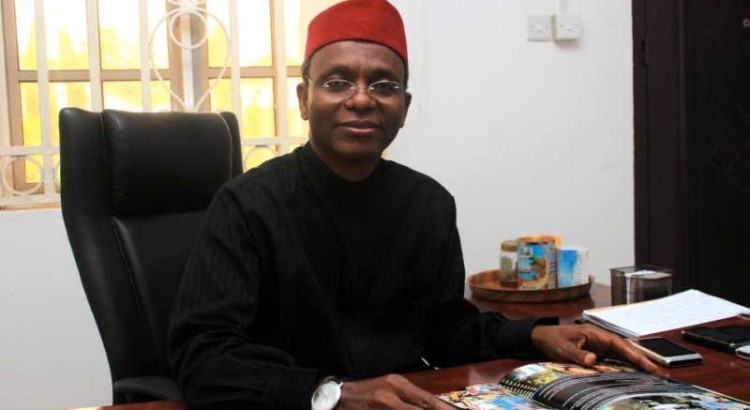
Nigeria: Kaduna to regulate operations of private schools

África/Nigeria/Abril 2016/Fuente:The Guardian /Autor: NAN

Resumen: El Gobierno del Estado de Kaduna Nasir Rufai señala que va a regular las operaciones de las escuelas privadas que operan en el estado, para garantizar la entrega de una educación de calidad a los estudiantes.

The Kaduna State Government says it will sanitise the operations of the private schools operating in the state, to ensure delivery of quality education to students.

The state’s Commissioner for Education, Science and Technology, Dr Shehu Adamu, stated this while briefing newsmen in Kaduna on Monday.

«We have just concluded a survey of all private schools in the state and what we discovered is that quite a number of them are not operating within the minimum standard.

«Some of the schools are operating in areas where a school is not supposed to operate; some are operating in rented apartments and others in just a single room.

«This is not acceptable. We are going to take strict measures on all private schools operating below minimum standard, » Adamu said.

While admitting that private schools are part of the programme of any education sector, Adamu, however, said that the schools must comply to set standard.

The commissioned warned that any school that failed to meet the government’s minimum standard would be shut down.

He said that the ministry would assign its officials in schools to monitor WAEC and NECO examinations, to checking against examination malpractice.

He said the monitoring would «particularly be on schools suspected to be operating as miracle centres.

«Our findings revealed that some private schools may have only 20 students in SS III, but will end up registering over 300 students for WAEC or NECO.

«Such schools could be operating as miracle centres, where the students pay huge amount of money for answers to be written on the black boards for them to copy during examinations.

«We will keep an eye on them and ensure that all schools and students write WAEC and NECO examinations with strict compliance to laid down rules and regulations.

«I assure you that in the next one or two years, miracle centres will fold up in Kaduna state, » the commissioner said.

Fuente de la noticia: http://guardian.ng/news/kaduna-to-regulate-operations-of-private-schools/

Fuente de la imagen: http://cdn.guardian.ng/wp-content/uploads/2016/04/El-Rufai-1.jpg

Comparte este contenido:

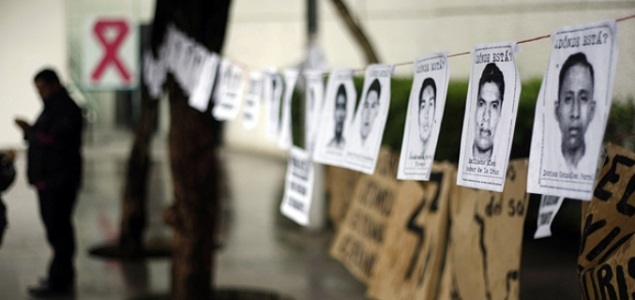
Reportan otro desaparecido cercano al caso de Ayotzinapa

En los últimos reportes del caso se sumó una persona desaparecida en Ayotzinapa, hecho que sucedió cercano al caso de los normalistas

México/05 de Abril de 2016/economiahoy.mx

Ayotzinapa-Reuters_635

Un nuevo desaparecido se sumaría a la investigación del caso de los 43 normalistas de Ayotzinapa, de acuerdo a una investigación del equipo de Ciro Gómez Leyva.

El reporte de un hojalatero de 28 años desaparecido horas antes de la noche del 26 de septiembre del 2014 estaría ligado al caso de los estudiantes. Esta información ha surgido tras el hallazgo de un rastro de una mancha de sangre en una casa de Cocula hecho por los peritos de la Procuraduría General de la República.

El rastro de sangre ha llevado a identificar a una persona no fue un estudiante, sino un hojalatero de nombre Joel Mauro Galicia, desaparecido cerca de la medianoche del 25 de septiembre de 2014, se reportó en el programa de Grupo Fórmula.

Miriam Moreno, colaboradora del noticiero «Ciro Gómez Leyva por la mañana», agregó que además de las denuncias de los padres de los normalistas existen casos abiertos de otros desaparecidos horas antes de la noche del 26 de septiembre de 2014.

Fuente: http://www.economiahoy.mx/nacional-eAm-mx/noticias/7469304/04/16/Reportan-otro-desaparecido-cercano-al-caso-de-Ayotzinapa.html


Comparte este contenido:

Desde los siete años, los alumnos del Reino Unido envían mensajes sexuales

Reino Unido/ Abril 2016/ Autor: Agence France-Presse AFP / Fuente: Semana

Un 63% de los profesores dicen que tienen alumnos de 14 años que utilizan las redes sociales para enviar mensajes y fotos sexuales.

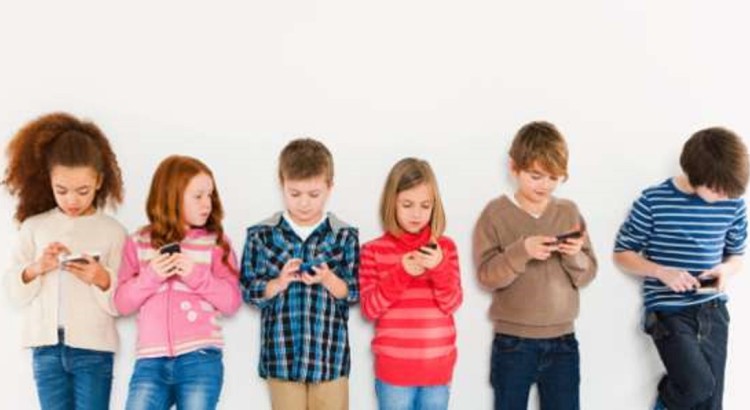
Enviar mensajes y fotos de corte sexual es un fenómeno común en los adolescentes de hoy. Sin embargo, un estudio indicó que los más pequeños también están incurriendo en esas prácticas.

Los adolescentes e, incluso, niños de siete años comparten mensajes o fotos de carácter sexual en las redes sociales, según un sondeo del sindicato de profesores difundido el viernes.

Un 63% de los profesores dicen que tienen alumnos de 14 años que utilizan las redes sociales para enviar mensajes y fotos sexuales, según el sondeo del sindicato NASUWT efectuado ante 1.300 profesionales de la enseñanza.

Un 45% de los profesores dan cuenta de alumnos de 13 años que envían mensajes sexuales y 25% menciona a muchachos de once años.

Lo más sorprendente es que una minoría de profesores mencionó en la encuesta que niños de nueve, ocho e incluso siete años suelen enviar mensajes sexuales.

Otro dato de la encuesta es que la mitad de los profesores interrogados dan cuenta de que muchos alumnos utilizan la red para mensajes sexistas o racistas e insultar a camaradas de clase.

Además muchos profesores constatan que los alumnos utilizan las redes sociales para insultarlos, burlarse de ellos o formular falsas acusaciones.

«Durante los tres años en que la NASUWT efectuó la encuesta la situación se agravó», declaró  Chris Keates, secretario general del sindicato.

Fuente de la Noticia:

http://www.semana.com/vida-moderna/articulo/jovenes-envian-mensajes-sexuales-desde-los-siete-anos-en-reino-unido/466743

Fuente de la Foto: http://point.com.ar/wp-content/uploads/2015/08/chicoscelular1.jpg

Socializado por: Diana Milagros Rueda de Aranguren; Directora General de la Emisora Radial: Frenesí 107.9 FM – (Venezuela); Doctoranda en Ciencias de la Educación –ULAC- Magister en Educación Integral; Especialista en Gerencia Educativa; Licenciada en Educación Especial; Psicopedagoga, Mención RM.


Comparte este contenido:

Crece acceso a la educación en Bolivia

La Paz/ 01 de abril de 2016 / Autor: Prensa Latina / Fuente: http://www.prensa-latina.cu

El 87,3 por ciento de la población boliviana de seis a 19 años de edad asiste a una unidad educativa, informó hoy el Instituto Nacional de Estadística (INE).

Según un boletín de la entidad, esa cifra muestra un aumento de ocho puntos respecto al Censo 2001, cuando se tenía un 79,7 por ciento.

Con relación a la tasa de escolaridad de la población femenina de seis a 19 años de edad, la fuente sostuvo que se registra un incremento de nueve puntos porcentuales.

Oruro es el departamento boliviano de mayor tasa de escolaridad de las mujeres, con 90,1 por ciento.

También se evidencia una disminución en el apartado de ningún nivel de instrucción, principalmente de la población femenina, que se redujo de 19,9 por ciento en 2001, a 11,4.

Cada 1 de abril se conmemora el Día Mundial de la Educación, en el cual se considera a ese derecho como uno de los aspectos más relevantes para un Estado.

Recientementte el presidente de Bolivia, Evo Morales, aseguró que el gobierno mantendrá como prioridad el desarrollo de la educación, por ser un sector estratégico de la nación suramericana.

Morales subrayó que es necesario hacer más planteles pero con laboratorios y talleres, porque la instrucción es una forma de liberación.

Vamos cambiando los conceptos en el sector y es necesario escuchar las demandas y preocupaciones de los actores, indicó el jefe de Estado.

Destacó que cada día son menos los colegios privados en el país, donde las escuelas públicas ganan protagonismo por ser mejores, y es obligación de todos nosotros perfeccionar la educación con la profesionalidad de los claustros.

Fuente de la noticia:

http://www.prensa-latina.cu/index.php?option=com_content&task=view&id=4749941&Itemid=11

Fuente de imagen principal:

Bolivia segundo lugar en educación en Sudamérica

Comparte este contenido:

Pollster says old-fashioned press conferences and media lines don’t work in transparency-focused

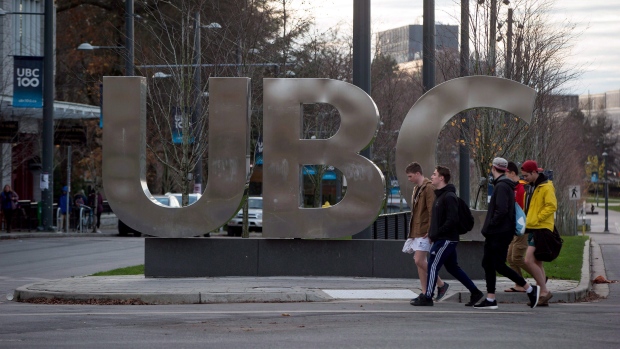
While it celebrates its centennial, bad news has forced the university's public relations team on the defensive.

Canadá/CBCNews-BritishColumbia/2 de abril de 2016/Autor: Jason Proctor

Resumen: La Universidad Británica de Columbia es una de las universidades
públicas más importantes de Canadá y actualmente se encuentra sumergida en
una crisis generada por problemas de diversas índole, los cuales van desde
asaltos sexuales a motines en algunas facultades. Dado a una disputa entre
el personal rector de la Universidad en los campus de Vancouver y Okanagan,
se ha generado comentarios en los medios sociales propiciado por los
estudiantes, donde se exhibe la información de los eventos en los campus
que han generado grandes sumas de dinero; los estudiantes han pedido
transparencia a las autoridades. Por otro lado, la UBC ha tenido que hacer
frente a la votación de la Asociación de Profesores de no confianza en el
consejo de administración, en tanto, los críticos se han quejado de que la
junta está tratando a la universidad como una corporación.

Noticia:

Pollster says old-fashioned press conferences and media lines don’t work
in transparency-focused era

As the University of British Columbia stumbles from crisis to crisis,
smiling officials have attempted to put a brave face on problems ranging
from sexual assaults to faculty mutiny.

It’s understandable that one of Canada’s most revered public institutions
would want to protect its reputation. But at what point does the obsession
with good public relations become a problem in and of itself?

Amplifying the damage?

There’s a telling point in Madam Justice Lynn Smith’s review of the fiasco
that resulted in former board of governors’ chairman John Montalbano’s
resignation last October.

One that speaks to PR issues which continue to dog the university.

If you haven’t been following the soap opera intrigue inside UBC’s hallowed
halls, Montalbano stepped down in November after Smith found UBC failed to
protect the academic freedom of Jennifer Berdahl.

She’s the professor who blogged about her suspicion suddenly
departed former president Arvind Gupta lost a «masculinity contest» with
school leadership.

UBC professor Jennifer Berdahl wrote a blog suggesting former president
Arvind Gupta had lost a masculinity contest with school leadership.
(Twitter)

Never mind that copies of emails between Montalbano and Gupta leaked months
later appeared to back up that claim; not for the first or last time,
UBC’s PR-centric approach to a situation only served to amplify the damage.

The judge didn’t find Montalbano broke any policies himself, but said
nobody stopped him from making an «unprecedented and unwise» direct call to
Berdhahl to tell her how unhappy he was with her musings.

Instead, the office of the dean of the Sauder School of Business appears to
have been worried about potential fallout from the posting on a blog
which — realistically — most people might never have heard of had the whole
situation not been handled so spectacularly badly.

«Concerned about Mr. Montalbano, Sauder’s reputation and future fundraising
prospects, the dean’s office conveyed a message about those concerns to Dr.
Berdahl,» Smith wrote.

«At the same time, it failed to elicit her point of view or state support
for her in the exercise of her academic freedom.»

Transparency demanded

In case you missed that — essentially — the university was more worried
about looking good than acting well.

It’s an approach veteran pollster Mario Canseco says appears to be typical
of the way UBC handles problems — one stuck in an era when crisis
communication meant a press conference and an apology.

«The era of holding press conferences is coming to an end,» says Canseco,
vice-president of Insights West.

«If you don’t engage people using the tools that they’re communicating
with, it’s going to be very difficult to try to turn the tide and change
perceptions they have of you and your brand.»

With 60,000 students and 15,000 staff split between its Vancouver and
Okanagan campuses, Canseco says UBC is effectively a small community. One
that would rank somewhere between Prince George and Nanaimo in scale.

Given the youth of the student population, he says it’s impossible not to
expect social media buzz around major events on campus to outstrip official
proclamations. And what’s demanded is transparency.

Former UBC president Arvid Gupta abruptly relinquished his post last
August. The university has struggled to explain why ever since. (UBC)

This week, UBC has had to deal with the faculty association’s vote of no
confidence in the board of governors, continued fallout from the Gupta
affair and the search for a new president.

The university’s vice-president of external relations has called the vote a
«healthy internal discussion» which is good to have in a place full of «big
personalities and big egos».

But critics have complained the board is treating the university like a
corporation, as opposed to the open marketplace of ideas, dissent and
democratic principles that you might hope for from a post-secondary
institution.

Cardinal rules for risk communication

In 1988, a pair of American researchers laid out what are still considered
the seven «cardinal rules» for risk communication.

Chief among them: «be honest, frank and open»; «speak clearly and with
compassion»; and «accept and involve the public as a legitimate partner.»

Granted, what’s happening on campus may not rise to the level of health,
safety or environmental threat risk communication is usually meant to
convey, but good public relations borrows from the same principles.

Canseco says these are lessons he learned himself after the dramatically
wrong predictions pollsters made about B.C.’s 2013 election.

«I’ve done 35 elections in my life. In the 34 that went well, nobody called
me,» he says.

«You need to be able to face all of the controversy that comes when
something goes wrong and the best way to do it is be open and say, ‘this is
what happened,and this is why it will never happen again.'»

The facts about Gupta’s departure have gradually emerged through access to
information requests, leaks, and the former president’s decision to break
his own non-disclosure agreement.

But the process has left UBC looking like it is being dragged into the
light instead of leading the charge.

There’s another telling moment, this one from the *massive FOI dump*
the university released almost half a year after Gupta’s sudden resignation.

It’s a four-page summary of the «various chatter around social media»
prepared by a communications officer for UBC managing director of public
affairs Susan Danard on the day Gupta’s departure was first announced in
August 2015.

«Arvind Gupta» was trending in Vancouver by 1:15 p.m. with an average of
«400 people at any given moment reading the Arvind article» on the
university’s website.

The memo lists four «main themes of tweets» including «what’s the real
story?»

We’re still waiting.

Fuente:
www.cbc.ca/news/canada/british-columbia/has-ubc-s-obsession-with-good-pr-made-image-problems-worse-1.3512971


Comparte este contenido:
Page 6563 of 6725
1 6.561 6.562 6.563 6.564 6.565 6.725