Page 932 of 6819
1 930 931 932 933 934 6.819

India – Coronavirus live updates: Maharashtra reports 63,729 new Covid cases, Delhi over 19,486 in record surge

Coronavirus live updates: Maharashtra reports 63,729 new Covid cases, Delhi over 19,486 in record surge

The cumulative number of Covid-19 vaccine doses administered in the country crossed 11.72 crores on Friday as part of the world’s largest vaccination drive, the Union health ministry has informed. According to the ministry, cumulatively, 11,72,23,509 vaccine doses have been administered through 17,37,539 sessions, as per the provisional report till 7 am on Friday. Stay here for all live updates

Order of 90,000 Remdesivir injections has been placed, 2000 to be received in 2 days and another 28000 within in a week. Thereafter, we will receive 30000 injections per week. Soon, shortage of Remdesivir injections will be met.

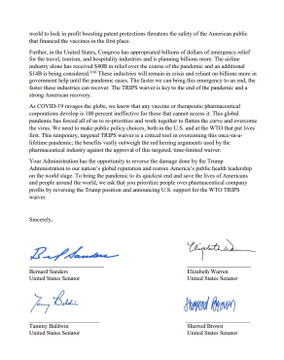
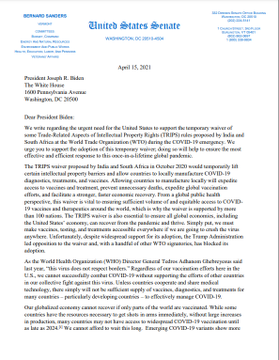
US senators including Bernie Sanders & Elizabeth Warren write to President Biden to accept India and South Africa’s proposal for Trade-Related Aspects of Intellectual Property Rights (TRIPS) waiver for Covid.

Image

Image

Image

Image

Jharkhand reports 3,843 new Covid-19 cases and 56 deaths; case tally at 1,55,115 death toll at 1,376 (ANI)

00:12 (IST) Apr 17

Amid surge in Covid cases, routine OPD and OT services to be suspended from April 17 till further order.Trauma and Emergency services, Labour and Emergency OT services to continue.Telemedicine service to be available for patients. 30 beds added in Covid-19 ward, says AIIMS Raipur (ANI)

Fuente de la Información: https://timesofindia.indiatimes.com/india/coronavirus-lockdown-in-india-covid-19-vaccine-cases-live-updates-16-april-2021/liveblog/82093883.cms


Comparte este contenido:

Russia: Police searches at student magazine are a new low for press freedom

Russia: Police searches at student magazine are a new low for press freedo

Responding to a wave of raids and searches in the office of Russian student magazine DOXA and in the apartments of its staff, Natalia Zviagina, Amnesty International’s Moscow Office Director, said:

“Today the authorities have stooped to a new low as they tighten their grip on media perceived to be disloyal to the Kremlin. From slowly suffocating these outlets with economic penalties or forcing their owners to self-censorship, they have moved to an all-out attack on journalists and other media workers. Silencing those brave enough to speak up – including students – shuts down the future of press freedom in Russia.

From slowly suffocating these outlets with economic penalties or forcing their owners to self-censorship, [the Russian authorities] have moved to an all-out attack on journalists and other media workers

“A few days ago, police broke into the apartment of Roman Anin, one of the country’s leading investigative journalists, and interrogated him overnight. Now, they’ve knocked down the doors to the apartments of journalists of a student magazine and moved to prosecute them. The brazen targeting of the DOXA journalists and Roman Anin is clearly politically motivated and a chilling reminder of the broader crackdown on freedom of expression in Russia.

“The Russian authorities’ intention is transparent. Investigations into corruption will not be tolerated, mobilizing youth to actively and peacefully participate in society will be prosecuted, and those journalists and media outlets who receive foreign funding will be ostracized and labelled as ‘foreign agents.”

The Russian authorities’ intention is transparent. Investigations into corruption will not be tolerated, mobilizing youth to actively and peacefully participate in society will be prosecuted

Background

On the morning of 14 April, security officers conducted searches at the office of the student online magazine DOXA, in the apartments of four of its staff, and in the homes of parents of two of the journalists. According to their lawyer, the basis for the searches was a video message from DOXA staff members posted on 23 January ahead of protests against the imprisonment of Aleksei Navalny. In the video, the journalists called on the authorities to stop intimidating students who take part in the protests. They also encouraged young people to defend their right to peaceful assembly, join human rights groups and organize with fellow students.

The DOXA editor-in-chief, Armen Aramyan, and three journalists, Alla Gutnikova, Vladimir Metelkin, and Natalia Tyshkevich, were later charged with “involvement of minors in the commission of acts that pose a danger to the minor’s life” (Article 151.2 of the Criminal Code). It carries a maximum penalty of three years’ imprisonment. The court has been requested to place them under house arrest, prohibit them from using the internet and communicate with anyone other than family members and lawyers.

On 9 April, Roman Anin, the editor-in-chief of Vazhnye Istorii, an investigative site, was searched and interrogated for seven hours overnight in connection with a criminal case under Article 137(2) of the Criminal Code (“violation of privacy”). Anin was later summoned for another interrogation on 13 April. The case was opened at the request of the then-wife of the head of the state-run oil company Rosneft, Igor Sechin, who, according to an article Anin wrote, had links to a yacht valued at US$100 million.

Fuente de la Información: https://www.amnesty.org/en/latest/news/2021/04/russia-police-searches-at-student-magazine-are-a-new-low-for-press-freedom/


Comparte este contenido:

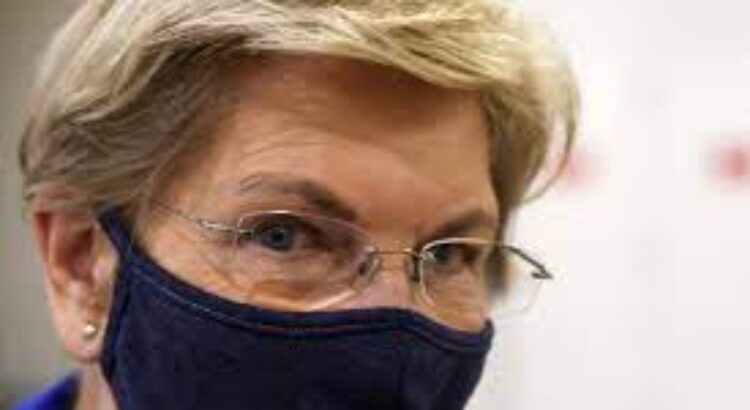
Estados Unidos: Yahoo Finance Senator Elizabeth Warren breaks down America’s ‘broken student loan system’

Senator Elizabeth Warren (D-MA) grilled two student loan servicers and hosted experts at a student loan hearing on Tuesday before sitting down with Yahoo Finance to describe her argument for President Biden to unilaterally cancel $50,000 in federally-backed student loans for tens of millions of Americans.

«Overall, in this hearing, it was perfectly clear [that] we have a broken student loan system,» Warren, chairwoman of the Subcommittee on Economic Policy at the Senate Committee on Banking, Housing, and Urban Affairs, told Yahoo Finance Presents .

«We’ve got these middlemen, these student loan debt servicers that were with us today, who can’t seem to keep straight,» she said, adding that issues with servicers are «just one more example of the United States government is running a massive student loan program that is really putting a burden on tens of millions of people around this country. That makes no sense.»

Senator Elizabeth Warren. (screenshot/Yahoo Finance)

Warren said that the testimonies and responses provided by two of the student loan servicers who attended the hearing, Navient and the Pennsylvania Higher Education Assistance Agency (PHEAA), solidified her position on the servicers’ roles in creating the crisis.

«The federal government should absolutely fire Navient,» Warren told Jack Remondi, the company’s CEO, during the hearing. «And because this happened under your leadership, Navient should fire you.» She also called on the U.S. government to stop working with PHEAA.

«It just seems pretty straightforward to me on that,» Warren told Yahoo Finance. «These student loan debt servicers, they’re making buckets of money to help their bottom line, but not to help the students who are really in trouble trying to repay their loans.»

In response to Warren’s statements, an ED Spokeswoman Kelly Leon told Yahoo Finance that the agency is mindful of the burden of student loans and realizes that it’s «critically important that we take a thorough look at our entire borrowing and repayment system, including the companies hired to assist us.»

Fuente de la Información: https://finance.yahoo.com/news/senator-warren-student-loans-153037171.html?guccounter=1


Comparte este contenido:

Canadá: Ontario offers eligible front-line workers free child care for elementary-aged children

Ontario offers eligible front-line workers free child care for elementary-aged children

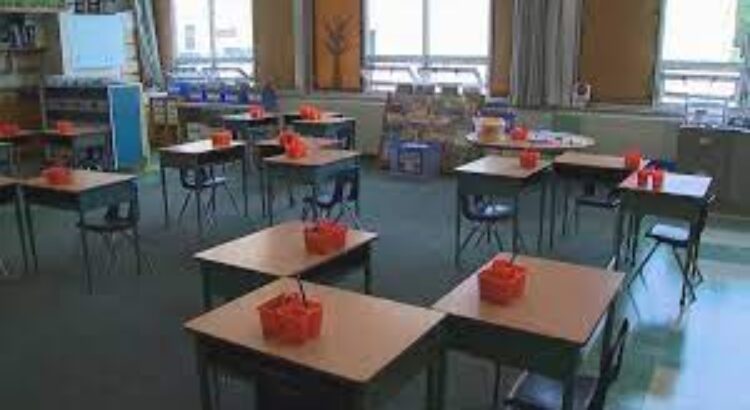
The Ontario government announced it is providing eligible health-care and other front-line workers with free emergency child care for elementary school-aged children starting April 19 amid surging COVID-19 cases.

The announcement comes amid extended school closures as elementary and secondary students wrap up the April break week. Students will move to remote learning starting Monday, indefinitely.

The government said the emergency child care will be provided at “no cost” during the remote learning period.

Officials also said the service is intended for workers with school-aged children who cannot work from home and perform “critical duties in the province’s fight against COVID-19.”

The province said those parents who are eligible should contact their local service system manager for information on availability, program locations and registration.

As of Thursday, data shows there are 479 child-care centres out of 5,283 with a confirmed case of COVID-19, about nine per cent. There were 96 new cases Thursday among centres, 65 child cases and 31 staff cases.

“Our government is once again stepping up to provide health care and other frontline workers with access to emergency child care as they continue to work around the clock in our fight against COVID-19,” said Ontario’s Minister of Education Stephen Lecce.

“Doing so will allow these frontline workers to perform their duties knowing that their children are safe and in good hands.”

Ontario reported a record-breaking 4,736 new COVID-19 cases on Thursday and 29 more virus-related deaths. Hospitalizations and patients in intensive care units battling the virus continue to soar.

The government provided this list of those eligible for free emergency child care:

  • Health care workers, including but not limited to doctors, nurses, health care providers and those who work in long-term care and retirement homes, as well as individuals who manufacture or distribute medical/pharmaceutical supplies.
  • Individuals performing work in relation to the administration, distribution or manufacturing of COVID-19 vaccines.
  • Child care workers, including those staffing the emergency child care programs.
  • Grocery store and pharmacy workers.
  • Public safety (police, fire, paramedics, provincial inspection/enforcement), justice/court and correctional system workers.
  • Frontline staff in Children’s Aid Societies and residential services.
  • Individuals working in developmental services, violence against women services, victims’ services, anti-human trafficking and those engaged in interpreting or intervenor services for persons who are deaf or deaf-blind.
  • Individuals working in a homeless shelter or providing services to homeless persons.
  • Food safety inspectors and individuals working in the processing, manufacturing or distribution of food and beverages.
  • OPS staff employed in Radiation Protection Services.
  • OPS staff performing critical tasks related to environmental monitoring, reporting and laboratory services.
  • Certain federal employees, including RCMP, Canada Border Services, Canadian Armed Forces and Canada Post.
  • Power workers.
  • Non-municipal water and wastewater workers.
  • Workers involved in the collecting, transporting, storing, processing, disposing or recycling of any type of waste.
  • Education staff who are required to attend schools to provide in-person instruction and support to students with special education needs who cannot be accommodated through remote learning.
  • Employees of a hotel or motel that is acting as an isolation centre, health care centre, vaccine clinic or housing essential workers.
  • Truck drivers and transit workers.
  • Construction workers.
  • Any individual whose child was registered in an emergency child care program delivered by a Consolidated Municipal Service Manager or District Social Service Administration Board during the time period beginning on April 6, 2021 and ending on April 16, 2021.

Fuente de la Información: https://globalnews.ca/news/7757249/ontario-free-child-care-eligible-front-line-workers-elementary-covid/
Comparte este contenido:

Líderes indígenas de la Amazonía dicen que sus comunidades sufren una muerte cada dos días y exigen garantías

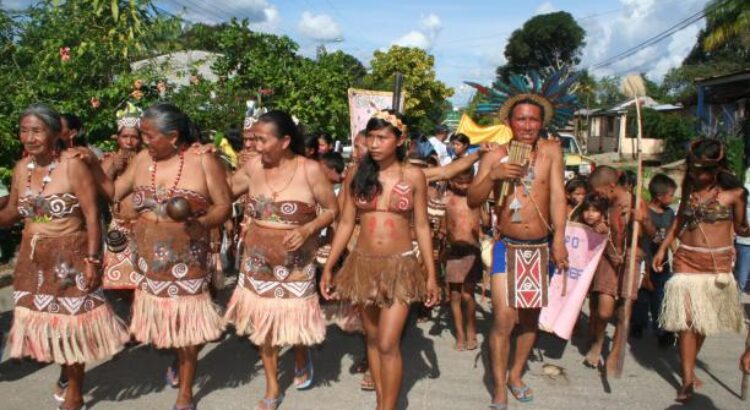
Los líderes indígenas de la cuenca amazónica (Brasil, Perú, Colombia, Venezuela, Bolivia, Ecuador, Guyana y Surinam) exigieron este miércoles 14 de abril del 2021 a los Gobiernos de sus países y a multilaterales garantías para la vida de los miembros de sus comunidades tras sufrir un asesinato cada dos días en 2020 y más de 600 desde 2014. «Que haya un plan de vida para la Amazonía, no hay un plan de vida para la Amazonía, que haya un plan de acción urgente para defender la vida de nuestros hermanos y hermanas», dijo el coordinador general de las Organizaciones Indígenas de la Cuenca Amazónica, José Gregorio Díaz Mirabal, en una rueda de prensa. Aseguró que desde 2014 hasta este año se contabilizan «más de 630 hermanos asesinados», 202 de ellos en 2020, uno cada dos días, 67% más que el año anterior, según agregó en un comunicado de la organización amazónica. «El dramático aumento de asesinatos en el marco de la pandemia ha puesto en peligro a los defensores indígenas y sus comunidades, al tiempo que pone en riesgo la selva tropical más grande del mundo y la biodiversidad que protegemos», se lamentó Díaz Mirabal. Y esta tendencia al alza, lamentablemente, parece no detenerse ya que tan solo en el primer trimestre de 2021 se reportaron, al menos, 16 asesinatos de indígenas en el territorio amazónico de Colombia y Perú. Díaz Mirabal Indicó que el llamado es a la Organización de Naciones Unidas (ONU), a la Organización de Estados Americanos (OEA), a la Corte Interamericana de Derechos Humanos (CIDH), pero «sobre todo» a los Gobiernos de sus países. «Por supuesto, no van a conseguir datos en ningún país, no van a conseguir datos en ningún Ministerio de Salud, de Educación, de Justicia, por eso hacemos un llamado a todas las instituciones globales que tienen que defender nuestros derechos», sostuvo. Señaló que hasta el momento no hay un mecanismo «veraz» y «efectivo» que les permita defender sus derechos. «No hay un sistema de información sobre lo que está pasando con los pueblos indígenas», agregó. Por su parte, el presidente de la Organización Regional AIDESEP Ucayali – ORAU, del pueblo Ashaninka de Perú, Jiribati Ashaninka, sostuvo que desde 2013 han sido asesinados nueve líderes indígenas y especificó que los dos últimos asesinatos ocurrieron porque los hoy fallecidos estaban defendiendo su territorio. Jiribati afirmó que él mismo ha recibido amenazas de muerte, aunque no especificó por parte de quién. «Necesitamos que se investiguen todos los casos de asesinato de la Amazonía que están impunes (…) necesitamos, urgente, un plan de titulación de nuestros territorios», agregó al tiempo que destacó que la importancia de que les respeten sus leyes de origen. El coordinador de derechos humanos de la Organización de Pueblos Indígenas de la Amazonía Colombiana – OPIAC, Óscar Daza, también denunció que en su país en lo que va de año se han registrado 46 asesinatos y de ellos 16 son de indígenas. «Es una situación grave (…) Nosotros no podemos seguir siendo víctimas por aquellos que quieren activar o impulsar el narcotráfico», dijo Daza, quien apuntó que el Estado colombiano no les está dando garantías a los pueblos indígenas. «Detrás de los asesinatos a defensoras y defensores indígenas de derechos humanos y la madre naturaleza, existen problemas estructurales vinculados directamente con el avance de las actividades extractivas que responden a intereses de las corporaciones con acuerdos estatales, que atentan contra la integridad física y cultural de nuestros pueblos», agregó. Los líderes señalaron que sus comunidades se ven afectadas por el narcotráfico, la deforestación, la presencia de militares «regulares e irregulares», la minería ilegal y la pandemia.

Fuente: https://www.elcomercio.com/actualidad/lideres-indigenas-amazonia-asesinatos-comunidades.html

Comparte este contenido:

Mundo: Casi la mitad de las mujeres y niñas del mundo se siente incapaz de decidir sobre su cuerpo

Así lo recoge el informe ‘Mi cuerpo me pertenece’ del Fondo de Población de Naciones Unidas (UNFPA)

Casi la mitad de las mujeres y niñas del mundo, un 45%, no se sienten capaces de decidir sobre su cuerpo, esto es, para determinar si debe tomar anticonceptivos, tener hijos, negarse a sufrir una mutilación genital o para mantener relaciones sexuales.

Así lo recoge el informe ‘Mi cuerpo me pertenece’ del Fondo de Población de Naciones Unidas (UNFPA). El estudio se ha centrado en dos indicadores de los Objetivos de Desarrollo Sostenible (ODS) de la Agenda 2030: el que mide el poder de las mujeres para tomar decisiones autónomas sobre el cuidado de la salud, la anticoncepción y las relaciones sexuales, y el que evalúa las leyes y políticas de los países sobre este mismo tema.

A través de estos análisis y el testimonio de mujeres y niñas de entre 15 y 49 años de todo el mundo, se han recogido datos que, para uno de los investigadores del estudio, Jaume Nadal, son «alarmantes» y «preocupantes».

Empezando, ha explicado, por el hecho de que «casi la mitad» de las encuestadas no se siente con la capacidad necesaria para decidir sobre su cuerpo. Además, ha precisado, en su mayoría es porque no conoce que tiene el derecho a decidir sobre su cuerpo y porque en su comunidad existen leyes o prácticas culturales muy arraigadas.

Así, cuanto Nadal se ha referido, en rueda de prensa recogida por EP, a los factores que impiden que esas mujeres adopten decisiones autónomas sobre su cuerpo, se ha referido a leyes que permiten o arraigan «la desigualdad de género, como el matrimonio infantil, la negación de la educación afectivo-sexual, la mutilación femenina, el examen anal forzado, las violaciones homófobas y tránsfobas, los asesinatos por honor o la violencia machista dentro del matrimonio».

En retroceso por la pandemia

También se ha referido a normas que obligan a las mujeres violadas a casarse con su agresor o las pruebas de virginidad a las mujeres. «Son prácticas que vulneran los derechos humanos más fundamentales y que aún siguen presentes en muchas sociedades», ha indicado.

Además, ha advertido, con la irrupción de la crisis sanitaria generada por el Covid-19, esta situación se ha agravado y, en algunos casos, ha supuesto un «retroceso» en prácticas que habían acercado a un país a la igualdad de género.

Como ejemplo, el estudio recoge el incremento en 4 millones de casos, a escala mundial, de mujeres sometidas a mutilación genital como consecuencia del confinamiento y aislamiento de las mismas. «Los poderes públicos no pudieron intervenir para prevenir en esta situación», ha lamentado el experto.

En relación al segundo indicador que ha analizado el estudio, el que se refiere a la legislación de los países, Nadal ve «claras contradicciones» entre la información que dan los estados y la realidad de la población.

Contradicciones entre leyes

Así, el informe recoge que el 80% de los países aseguran tener leyes favorables a la salud y al bienestar sexual; un 75% señala que tienen leyes que garantizan el pleno acceso e igualitario a los métodos anticonceptivos y el 56% indica que sus normas apoyan la educación afectivo-sexual integral. Para Nadal, estas cifras no son compatibles con que un 45% de las mujeres no se vean capaces de decidir sobre su cuerpo.

En la práctica, ha denunciado el investigador, hay países que determinan por ley la edad de consentimiento para mantener relaciones sexuales en los 14-16 años, pero no legislan a favor de que los menores tengan acceso a la educación afectivo sexual o no permiten el acceso a los métodos anticonceptivos hasta la mayoría de edad.

Esta situación, explica, está «privando» a los jóvenes a partir de los 14 años, que sí pueden mantener relaciones consentidas, de información para evitar embarazos no deseados, Enfermedades de Transmisión Sexual (ETS) o a gozar de una vida sexual plena.

Sobre las recomendaciones del informe para cambiar esta situación y lograr «la autonomía personal universal», UNFPA llama a reformular normas, a promover la educación y hacer un seguimiento del progreso de implementación de los programas que promuevan la información de este derecho.

Fuente: https://www.abc.es/familia/mujeres/abci-casi-mitad-mujeres-y-ninas-mundo-siente-incapaz-decidir-sobre-cuerpo-202104160050_noticia.html

Comparte este contenido:

Vacunas cubanas casi listas para inmunizar a toda Cuba

Redacción de Desinformémonos

Las vacunas cubanas Soberana 02 y Abdala están en la última fase de ensayos clínicos y se espera que antes del verano puedan usarse para inmunizar a toda la población de la isla contra el Covid-19, según científicos de Cuba.

Cuba, el primer país latinoamericano en desarrollar su propia vacuna, se conduce a lograr una vacunación voluntaria total de su población en el año 2021, “algo imposible para muchas naciones en sus condiciones actuales”, afirmó el doctor Luis Herrera Martínez, asesor científico de BioCubaFarma.

El logro se explica porque “el sector biotecnológico de Cuba es único: libre de intereses privados, la innovación satisface las necesidades de la salud pública”, afirmaron expertos en economía. La pandemia ratifica que las necesidades de atención médica pública no pueden satisfacerse con un sistema basado en la búsqueda de beneficios, explicaron, por lo que “la respuesta por parte de Cuba se basa en la ausencia de afán de lucro capitalista”.

“Ha sido una de las debilidades a nivel mundial en esta emergencia sanitaria la desinversión o inversión insuficiente en los sistemas de salud públicos, el acceso desigual a los servicios y el deficiente gasto en la atención primaria”, declaró el director del Centro de Inmunología Molecular (CIM) en la Habana, el inmunólogo Agustín Lage Dávila.

Con información de Cuba Debate.

Fuente e imagen: desinformemonos

Comparte este contenido:
Page 932 of 6819
1 930 931 932 933 934 6.819