Page 2 of 5
1 2 3 4 5

Fiji: Science education

Oceanía/Fiji/Octubre de 2016/Autor: Mere Naleba/Fuente: The Fiji Times

RESUMEN: El Ministerio de Educación está tratando de promover la participación de las mujeres en las materias científicas y a su vez ver a más mujeres en la ingeniería y el comercio. De este modo, el Ministerio ha puesto en marcha el primer concurso nacional de la física que dicen que ha sido un éxito en términos de participación de las mujeres. El Ministerio de servicios de asesoramiento del plan de estudios director de educación, Vimlesh Chand dijo que la idea detrás de la creación de competiciones nacionales como tal para las escuelas secundarias del país era generar interés por parte de los estudiantes, sino que es más importante para las mujeres. La otra cosa buena acerca de este concurso es que tuvimos un montón de participación de las mujeres en matemáticas, temas de física y ciencias y queremos promover la participación de las mujeres», dijo Chand.

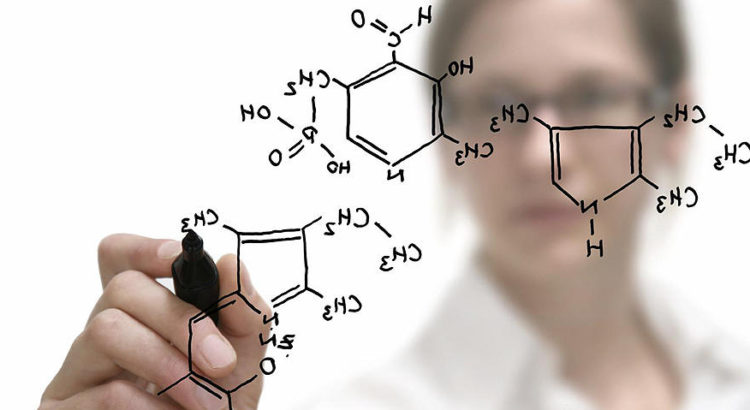
THE Ministry of Education is trying to promote women’s participation in science subjects which will in turn see more women in the engineering, and trade skilled employment.

In doing so, the ministry has set up the first national physics competition which they say has been a success in terms of women’s participation.

Ministry of Education director curriculum advisory services Vimlesh Chand said the idea behind setting up national competitions as such for secondary schools in the country was to generate interest from students but most importantly for women.

«The other good thing about this competition is that we had a lot of female participation in maths, physics and science subjects and we want to promote female participation,» Mr Chand said. «We want more girls to take up this subject; this will be a stepping stone for them in the sense that it is generating interest in the long term for them for their career in trade classification.»

Mr Chand said there was hope that quizzes at national level would also be arranged for other subjects.

«We want to make this an annual event, we also want to make it for the other subject areas, and we want to make it much wider for next year. This has been a very successful event, organised at the national scale,» Mr Chand said.

Fuente: http://www.fijitimes.com/story.aspx?id=374213

Imagen: http://www.elconfidencial.com/tecnologia/2014-03-13/las-diez-mujeres-mas-influyentes-en-la-historia-de-la-ciencia_101069/
Comparte este contenido:

Fiji: Students’ sacrifice

Oceanía/Fiji/Octubre de 2016/Autor: Luke Rawalai/Fuente: The Fiji Times on Line

RESUMEN: Algunos estudiantes en Fiji, se encuentran haciendo sacrificios para estudiar tales como los de la Escuela Distrito Kubulau en Bua. Esta semana, los estudiantes en el año 4 y 5 negocian sus aulas por tiendas de campaña para que los alumnos de los años 6 y 8 puedan sentarse para presentar sus exámenes nacionales.La escuela fue uno de los gravemente dañados por el severo ciclón tropical  Winston. Sin embargo, los estudiantes han regresado a sus aulas y sólo utilizan las tiendas de campaña para las asambleas escolares y reuniones. Ayer, los estudiantes desafiaron las condiciones calientes y húmedas, pero se consolaron con la promesa de que sus maestros  no permanecerían en las tiendas de campaña durante mucho tiempo. El administrador de la escuela, Tevita Malai afirmo: «Estamos esperando la ayuda del Gobierno y esperamos que se realice algo acerca de los trimestres escolares pronto»

MAKING sacrifices are what some students in Fiji, such as those in Kubulau District School in Bua are used to.

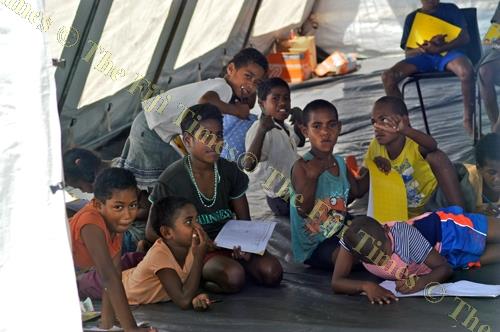
This week, students in Year 4 and 5 traded their classrooms for tents to allow students in Years 6 and 8 to sit for their national exams.

School manager Tevita Malai said they had to move the classes out to the tents to allow Years 8 and 6 students a proper environment to sit their examinations.

Mr Malai said the initial plans were to have the students remain in tents and sit for their exams, but the younger students and teachers agreed to sacrifice their classrooms to study in tents.

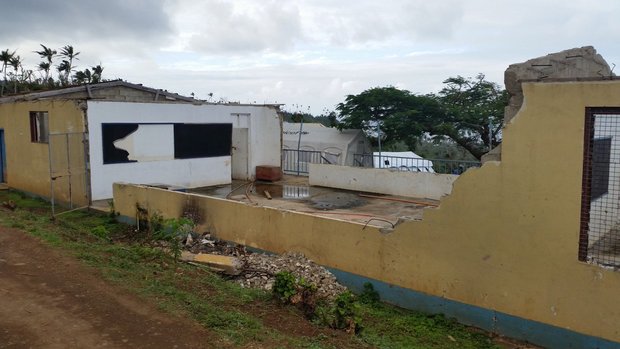
The school was one of those badly damaged by Severe Tropical Cyclone Winston. However, students have returned to their classrooms and only use the tents for school assemblies and gatherings.

Yesterday, students braved the hot and humid condition, but were comforted with their teachers’ promise they would not remain in the tents for long.

«Most of our teachers and their families continue to live in tents after they were moved out of the Kubulau Government Station where they stayed for a brief while after TC Winston,» Mr Malai said.

Mr Malai said he often felt for teachers and their families who had to spend the heat of the day and cold nights in the tents.

«We are awaiting Government assistance and we hope that something will be done about the school quarters soon,» he said.

During lunch, parents, teachers and students had a feast of fish and chicken.

Minister for Education Doctor Mahendra Reddy revealed a total of 4484 students were still studying under tents in schools around the country post-Severe TC Winston.

He also said the Severe TC Winston rehabilitation budget allocation would greatly assist in rebuilding and restoring essential services in the education sector.

Fuente: http://www.fijitimes.com/story.aspx?id=373495

Comparte este contenido:

Winston to lower Fiji school exam results, – teacher union

Oceanía/Fiji/Octubre de 2016/Fuente: RNZ

RESUMEN: El Secretario General FTU, Agni Deo Singh ha dado la noticia como consecuencias del ciclón que golpeó a Winston que  era de esperarse las clases interrumpidas y las aulas improvisadas. Singh dijo que puede haber alguna reducción en el porcentaje de pase. Se estima que unos 60.000 niños, tanto a nivel de la escuela primaria y secundaria se vieron afectados por el ciclón Winston con más de 200 escuelas que sufren algún daño. El ministro de Educación Mahendra Reddy ha pedido a los maestros, padres y tutores para apoyar a los estudiantes durante este periodo de exámenes.

FTU General Secretary Agni Deo Singh has told FBC News that this was to be expected given the disrupted classes and makeshift classrooms in the aftermath of Cyclone Winston which struck in February.

Mr Singh said there won’t be the quality of passes that would have been expected otherwise and there may be some reduction in the percentage pass.

An estimated 60,000 children at both the primary and secondary school level were affected by Cyclone Winston with over 200 schools experiencing some damage.

The education minister Mahendra Reddy has called on teachers, parents and guardians to support students during this exam period.

Fuente: http://www.radionz.co.nz/international/pacific-news/315018/winston-to-lower-fiji-school-exam-results,-teacher-union

Comparte este contenido:

Fiji: New salary rate for Early Childhood Education Teachers confirmed

Oceanía/Fiji/Septiembre de 2016/Autor: Semy Turaga/Fuente: Fijivillage.com

RESUMEN: La nueva tasa de salario para los docentes de Educación Infantil ha sido confirmada por el Ministerio de Educación. Esta nueva tasa de salario se basa en la calificación de los docentes y se divide en cuatro categorías. Categoría 1 incluye los maestros con una Licenciatura y esto tiene una tasa de salario de $ 14 por hora, mientras que la categoría 2 se refiere a los maestros que tienen un diploma y consiguen una tasa de salario de $ 11 por hora. La categoría 3 comprende los maestros que tienen un Certificado de Educación Superior o de un certificado. Los primeros maestros de Educación Infantil que tienen un Certificado de Educación Superior obtienen una tasa de salario de $ 9.30 por hora, mientras que los maestros con un certificado recibe $ 7 por hora.Los maestros que tienen una formación básica están cubiertos en la categoría 4 y consiguen una tasa de salario de $ 5 por hora. Esta nueva estructura salarial entró en vigor desde el 1 de agosto de este año. Es la primera vez que el gobierno está pagando los salarios completos de todos los maestros de Educación Infantil.

The new salary rate for Early Childhood Education Teachers has now been confirmed by the Ministry of Education.

This new salary rate is based on the qualification of Early Childhood Education Teachers and it is divided into four categories.

Category 1 includes teachers with a Bachelor’s Degree and this has a salary rate of $14 an hour while Category 2 covers teachers who have a diploma and they get a salary rate of $11 per hour.

Category 3 comprises of teachers who have a Higher Education Certificate or a Certificate.

Early Childhood Education Teachers who have a Higher Education Certificate get a salary rate of $9.30 an hour while teachers with a certificate get $7 per hour.

Teachers that have basic training are covered in Category 4 and they get a salary rate of $5 an hour.

This new salary structure came into effect from the 1st of August this year.

It is the first time the government is paying the full salaries of all Early Childhood Education teachers.

Fuente: http://fijivillage.com/news/New-salary-rate-for-Early-Childhood-Education-Teachers-confirmed-2rs59k/

Comparte este contenido:

Fiji: Civic education for 25 teachers

Oceanía/Fiji/16 de Septiembre de 2016/Autor: Serafina Silaitoga/Fuente: The Fijis Times On Line

RESUMEN:  Ayer en el taller de Educación Parlamentaria en Labasa, 25 maestros de todo el norte se les enseñó las diferentes maneras que podían entender fácilmente los estudiantes sobre el papel del Parlamento. Vatimosi Delailovu, Gerente de Educación Cívica del Parlamento, dijo que  uno de los módulos era tener dramas o juegos de rol de un Parlamento. Añadió que esto podría hacerse en las aulas para que los estudiantes entendieran mejor el proceso. Los módulos pronto estarán disponibles para que los maestros los utilicen en la enseñanza de los estudiantes sobre las funciones y operaciones del Parlamento.

Modules will soon be available for teachers to use while teaching students about the roles and operations of Parliament.

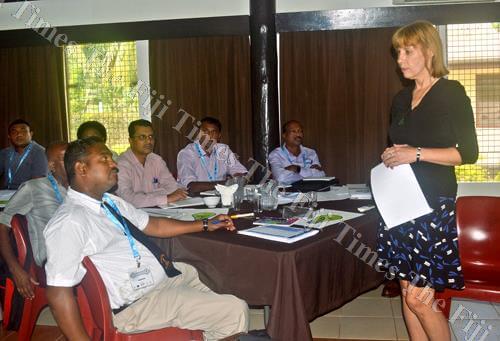
At the Parliamentary Education workshop in Labasa yesterday, 25 teachers from around the North were taught the different ways students could easily understand the roles of Parliament.

Parliament’s civic education manager Vatimosi Delailovu said one of the modules was to have dramas or role plays of a Parliament sitting.

He added this could be done in classrooms for students to better understand the process.

«So when students are watching parliament sitting on television, they have an idea of what is happening because they have been taught in schools through the modules we are preparing.

«This workshop is a parliamentary initiative program known as ‘Our Say Program’.»

The workshop, which is the second to be organised at national level is aimed at training educators to effectively approach Parliament Education with students.

Fuente: http://www.fijitimes.com/story.aspx?id=370760

Comparte este contenido:

Fiji: Tablets for students

Oceanía/Fiji/09 de Septiembre de 2016/Autora: Litia Cava/Fuente: The Fiji Times

RESUMEN: Los libros de texto de impresión del año pasado estan plagados de desafíos. El Ministerio de Educación tiene una alternativa para los alumnos del año 12 y 13  a partir del próximo año: Tabletas. El Ministro de Educación Dr. Mahendra Reddy dijo que su ministerio introducira el uso de Tabletas para reemplazar los libros de texto «grandes»  llevadas por los estudiantes a la escuela. Esta nueva herramienta de educación es al parecer parte del programa de alfabetización digital del ministerio, lo que permitiría a los estudiantes el acceso a las noticias en todo el mundo y materiales educativos en Internet, el Dr. Reddy añadió. El ministerio cargara todo el material didáctico en las tabletas y el costo total del proyecto sería de alrededor de $ 250.000. Dijo que mientras que las tabletas se otorga a estudiantes acceso a la Internet, algunos sitios web que tendrían impactos negativos serían bloqueadas.

PLAGUED with challenges of printing textbooks last year, the Ministry of Education has an alternative for Year 12 and 13 students from next year — tablets.

Education Minister Dr Mahendra Reddy said his ministry would introduce the use of tablets to replace the «big textbooks» students carried to school.

This new education tool is apparently part of the ministry’s digital literacy program, which would allow students access to news around the world and educational materials on the internet, Dr Reddy added.

The ministry will load all learning materials in the tablets and the total project cost would be about $250,000.

He said while the tablets would give students access to the internet, certain websites that would have negative impacts would be blocked off.

Dr Reddy said the ministry was still in talks with information technology (IT) experts on how to block websites that would have a negative impact on the children.

He said they were also in talks with IT experts to ensure that the blocked websites were not in any way unlocked.

«We cannot ignore the various developments in the IT sector otherwise we will become irrelevant and we do not want our children to be irrelevant and therefore, we will look at how we can develop from the IT,» Dr Reddy said.

He said the ministry was also looking at ways of providing data for the tablets, however, once implemented, parents would also be able to top-up the data on their children’s tablets.

Dr Reddy said the accessibility and use of the tablet should not be a problem as about 90 per cent had access to electricity.

He said students who were out of network coverage areas would not have problems as their devices would be preinstalled and programmed with textbooks, exam papers and solutions.

But Dr Reddy said students would have to replace the tablets if they were damaged.

National Federation Party leader Professor Biman Prasad said after the one laptop per child policy to the one learning device per child, the ministry now wanted to introduce tablets.

«A few days ago, the minister announced that school texts will now be available on mobile technology in the near future, replacing textbooks.

«And the minister chose the launch of National Library Week to make this announcement.

«This means that the minister doesn’t believe in books and libraries.»

Opposition spokesman for education, Mikaele Leawere, aired serious concern over the announcement as well.

He said the Government should focus on reconstructing cyclone-affected schools instead of introducing tablets.

Fuente: http://www.fijitimes.com/story.aspx?id=369864

Comparte este contenido:

Fiji: PM stresses importance of education

Oceanía/Fiji/02 de Septiembre de 2016/Autora: Serafina Silaitoga/Fuente: The Fiji Times

RESUMEN: El Primer Ministro Voreqe Bainimarama, dice que la nación ahora está viviendo en la edad de oro del éxito porque todos los jóvenes se están facultando para lograr un futuro mejor. En la apertura de la escuela técnica Ratu Epeli Ravoka en Nawaca, Bua,  el Sr. Bainimarama dijo que los jóvenes se está dando una oportunidad de que sus padres y abuelos no llegaron. «Le estamos empoderando de forma que sus padres y abuelos sólo podían soñar», dijo. «Estamos fortaleciendo a nuestro país de una manera que los fijianos de las generaciones anteriores nunca se podría haber imaginado. «Para nuestros estudiantes, si trabajan duro y completan estos cursos se van a transformar sus perspectivas de ganar una vida sostenible decente.» El Sr. Bainimarama dijo que los títulos obtenidos de planteles técnicos establecidos por el Gobierno serían reconocidos a nivel nacional. «Estamos ampliando su horizonte para ganarse la vida, no sólo aquí en el Norte, sino más allá», dijo. «En el sentido más amplio, estamos estableciendo una visión para nuestro pueblo de una nación calificada y una nación educada en el que se impide que ninguna persona joven que quiere trabajar duro y mejorar sus vidas pueda hacerlo.«Es una nación en la que nadie se quede atrás.»

PRIME Minister Voreqe Bainimarama says the nation is now living in the golden age of success because every young person is being empowered to achieve a better future.

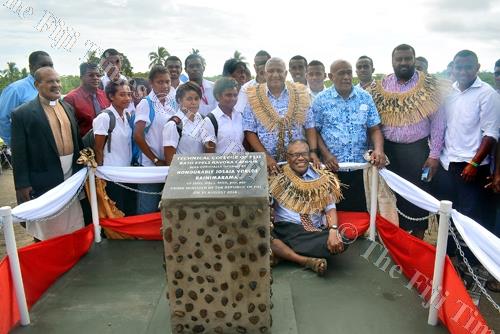
In opening the Ratu Epeli Ravoka technical campus at Nawaca, Bua, yesterday, Mr Bainimarama said young people were being given an opportunity that their grandparents and parents did not get.

«We are empowering you in a way that your parents and grandparents could only dream of,» he said.

«We are empowering our nation in a way that Fijians of previous generations could never have imagined.

«To our students, if you work hard and complete these courses it will transform your prospects of earning a decent sustainable living.»

Mr Bainimarama said the formal qualifications obtained from technical campuses set up by Government around the country would be nationally recognised.

«We are broadening your horizon and giving you what you need to earn a living not only here in the North but Fiji and beyond,» he said.

«In the wider sense, we are laying out a vision for our people of a skilled nation and an educated nation in which no young person who wants to work hard and improve their lives is prevented from doing so.

«It is a nation in which no one is left behind. When you eventually get your certificates, you will be part of an army of tradespeople Fiji is creating to take our nation forward.»

Mr Bainimarama told the parents of Bua that they no longer needed to send their children to Labasa or Viti Levu for such tertiary courses.

He said it was always best for children to be under the wings of their parents while being educated.

Fuente: http://www.fijitimes.com/story.aspx?id=369052

Comparte este contenido:
Page 2 of 5
1 2 3 4 5