Page 3 of 5
1 2 3 4 5

Fiji: The Magic Of Education

Oceanía/Fiji/12 de Agosto de 2016/Autor: Nemani Delaibatiki/Fuente: Fiji Sun

RESUMEN: Cuando se tiene en cuenta que más de 10.000 personas se han graduado con certificados en varias disciplinas, las implicaciones son significativas. Significa que tenemos una fuerza cada vez mayor de personas cualificadas que serán útiles en cualquier desarrollo. FTP (Técnico de Formación Profesional de Educación) para FNU ha aumentado en popularidad debido a que está haciendo una diferencia en la vida de muchas personas. Se elimina el factor de los viajes y el costo que ha sido un obstáculo para acceder a la formación antes sólo estaban disponibles en ciudades y pueblos. Ahora FNU ha tomado el programa a las zonas habitadas. Los beneficios para las personas y el impacto económico son mayores que el costo de FNU y de Gobierno.Cuando las vidas se transforman y las personas están facultadas para obtener puestos de trabajo y participar en las actividades económicas, sabemos que el programa es eficaz. Ahora que tienen los certificados de la responsabilidad está en los graduados para utilizarlos. Eso significa que van a ser proactivo en busca de trabajo o para continuar su educación.

You have to see it to believe it. The facial expressions, the smiles, the hugs, kisses and high fives say it all. The euphoria was electrifying.

In two weeks more than 500 people between 15 years of age and 85 years  went through an extraordinary transformation from no qualification to a certificate holder.

This is the magic of education. It’s empowering impact is life-changing.

A  20-year-old  who dropped out of secondary school has found a new lease of life in a certificate in basic carpentry.

He believes the certificate is a passport to getting a job in the building industry. He is even contemplating further education towards a diploma. Why not, he is still young and he now has a clear pathway and options to go with it.

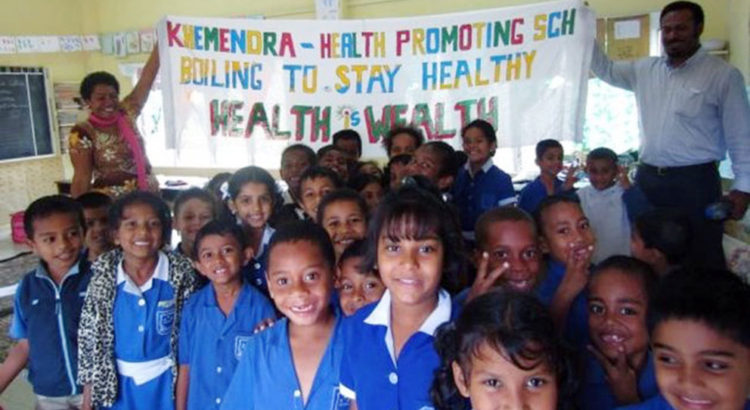
He was one of the more than 500 students who graduated with certificates in vocational subjects after a two-week training organised by the Fiji National University at Vutia, Rewa. The students came from the Rewa delta and outside of Rewa from as far as Nadroga. The unprecedented interest in this programme is evidence of its success as it snakes its way into rural areas. More graduates are finding jobs, starting their own business, and becoming more productive citizens.

The unmistakable sparkle in the eyes of many graduates on Friday spoke volumes of the sensational feelings going through them.

A father of three young children in his 30s who has hardly had any formal education now has a certificate to repair an outboard engine. He could not contain his joy. He feels proud and empowered knowing that he has a qualification that can provide opportunities for him to earn money for his young family.

And then you have this 85-year-old woman, the oldest graduate, who is an inspiration to everyone. She enrolled because she wanted to learn bread-making skills before she dies. Her message to all: “You are never too old to learn. You keep learning until your time is up on this earth.”

In a rural setting a variety of skills is needed to survive whether it is for home needs or commercial purposes.

After the graduation, Vutia, for example would have no problems finding qualified people to repair outboard engines, carry out fiberglass boat maintenance, bake bread, buns, pies and a wide range of cakes and pastries, fix electricity faults, repair water pipes, build houses, make coffins, do screen printing, sew clothes and a host of other vocational work.

When you consider that more than 10,000 people have graduated with certificates in several disciplines, the implications are significant. It means we have a growing force of skilled people who will be useful in any development.

TVET (Technical Vocational Education Training) for FNU has risen in popularity because it is making a difference in the lives of many people. It eliminates the travel and cost factor which has been a hindrance to accessing training previously available only in cities and towns.

Now FNU has taken the programme to where people live.  The  benefits to the people and the economic impact outweigh the cost to FNU and Government.

When lives are transformed and people are empowered to get jobs and participate in economic activities, we know that the programme is effective.

Now that they have the certificates the onus is on the graduates to use them. That means they will be proactive to look for work or to further their education.

Fuente: http://fijisun.com.fj/2016/08/08/the-magic-of-education/

Fuente de la imagen: http://mapasandmaps.blogspot.com/2014/06/bandera-de-fiyi.html
Comparte este contenido:

Fiji: Quality science education

Oceania/Fiji/29 de Julio de 2016/Autora: Ana Madigibuli/Fuente: The Fiji Times

RESUMEN: La Universidad (USP) del Pacífico Sur de Ciencia, Tecnología y Medio Ambiente (FSTE) ha sido el proveedor de la educación de primera calidad para los estudiantes de ciencias en la región del Pacífico Sur. Los nuevos programas de FSTE atienden las necesidades de la región y tienen perspectivas de trabajo atractivas de todo el mundo, junto con la acreditación internacional como prueba de su calidad. Recientemente, cuatro programas de licenciatura a saber, la de Net Centric computación (BNC), Licenciado en Ingeniería de Software (EEB), Licenciado en Ingeniería – Mecánica (BEM) y eléctrico (BEE) han recibido la acreditación internacional. Para Open Day 2016, las pantallas serán de las diferentes escuelas. Los estudiantes pueden esperar exhibiciones en vivo, estado de los instrumentos de la técnica utilizados en experimentos científicos, competiciones de diferentes escuelas y premios instantáneos que se ganó. El personal estará a disposición para responder preguntas relacionadas con los programas que se ofrecen. Una característica interesante, sin embargo será el uso de teléfonos móviles para responder a las preguntas de retroalimentación. Además habrá demostraciones sobre el uso de la e-tutoría, una nueva herramienta para el aprendizaje a distancia, entre otros.

The University of the South Pacific’s (USP) Faculty of Science, Technology and Environment (FSTE) has been the provider of premium quality education for science students in the South Pacific region ever since the establishment of the university.

FSTE’s new programs address the needs of the region and have attractive job prospects all over the world, coupled with international accreditation as evidence of their quality.

The Faculty has five schools including the:

· School of Biological and Chemical Sciences;

· School of Engineering and Physics;

· School of Marine Sciences;

· School of Geography, Environment and Earth Sciences; and

· School of Computing, Information and Mathematical Sciences.

Undergraduate and Postgraduate Degrees in the respective disciplines are offered through the different schools.

Recently, four programs namely the Bachelor of Net Centric computing (BNC), Bachelor of Software Engineering (BSE), Bachelor of Engineering — Mechanical (BEM) and Electrical (BEE) have received international accreditation.

BSE and BNC have been accredited by the Australian Computer Society (ACS) while the BE programs by Institute of Professional Engineers (IPENZ).

In addition, the program, Bachelor of Geospatial Science has also been registered by the Fiji Higher Education Commission (FHEC) together with recognition from the Australian Body. It is anticipated the quality programs offered in FSTE will attract more students. In addition, over the last couple of years there has been a steady increase in the postgraduate enrolment.

Some of the new initiatives the faculty have taken on board is the development of on-line learning (Mobile learning), the inclusion of SMS in the learning and teaching and the on-line Mathematic Diagnostic Tool.

Recently, the School of Computing Science launched the «Microsoft Accelerator Program» where University students are trained on the different Microsoft programs. Certification from Microsoft is provided after successfully passing the test. All these services are free if one is a student of USP.

For Open Day 2016, the displays will be from the different schools. Students can expect live displays, state of the art instruments used in science experiments, competitions by different schools and instant prizes to be won.

Staff will be at hand to answer questions related to the programs offered. An interesting feature though will be the use of mobile phones to answer feedback questions. In addition there will be demonstrations on the use of e-mentoring, a new tool for distance learning, among others.

Fuente: http://www.fijitimes.com/story.aspx?id=364142


Comparte este contenido:

Indonesian minister ends Fiji visit

Oceania/Fiji/24 de Julio de 2016/Autora: Matilda Simmons/Fuente: The Fiji Times

RESUMEN: La ministra indonesia de capacitación de las mujeres y la protección infantil, Yohana Susana Yembise, concluyó su visita oficial de ayer después de asistir al Grupo de trabajo técnico conjunto en la 2ª acogida por el Gobierno de Fiji. El evento es parte de un memorando de entendimiento firmado entre Fiji e Indonesia para colaborar en las áreas de capacitación de las mujeres, la igualdad de género y la protección de los niños. «En Indonesia tenemos 250 millones de personas para cuidar, la mitad de la población son mujeres y 87 millones son niños. No es lo mismo aquí. Ustedes tienen la igualdad ya, no tenemos la igualdad todavía. sin embargo, hemos aprendido mucho de Fiji. La calidad del servicio que aquí está muy bien organizado «, dijo. La ministra es una de las pocas mujeres de Papúa que han alcanzado los niveles más altos de educación en Indonesia. Ella tiene una maestría de la Universidad Simon Fraser en Canadá, así como un doctorado de la Universidad de Newcastle en Australia.

THE Indonesian Minister of Women Empowerment and Children Protection, Yohana Susana Yembise, says she learnt a lot from Fiji after her two-day visit.

The minister ended her official visit yesterday after attending the 2nd Joint Technical Working Group hosted by the Fiji Government.

The event is part of an MOU signed between Fiji and Indonesia to collaborate in the areas of women empowerment, gender equality and child protection.

The MOU was to strengthen partnership between the two countries to share information and resources for development opportunities.

«In Indonesia we have 250 million people to look after, half of the population are women and 87 million are children. The country is so vast so it is a challenge working under my portfolio. It’s not the same here. You have equality already, we don’t have equality yet. However, we have learnt a lot from Fiji. The quality of service here is well organised,»she said.

The minister is one of a few Papuan women who have achieved the high echelons of education in Indonesia. She holds a Master’s degree from Simon Fraser University in Canada as well as a doctorate from the University of Newcastle in Australia.

«Under my ministry I look after the women and children in West Papua. I want to get more Papuan women to receive the same high level of education,» said the Papua-born minister.

The minister declined to talk on the issue for autonomy by her fellow Papuans.

«I am here to do my work, to better the standards of women and children in my country,» she said.

Mrs Yembise visited Queen Victoria School on Tuesday as well as Navutukea Village in Naitasiri during her trip. She was accompanied by the Minister for Women, Children and Poverty Alleviation, Rosy Akbar.

Fuente: http://fijitimes.com/story.aspx?id=363106

Fuente de la imagen: http://www.thejetnewspaper.com/2016/07/20/indonesian-delegation-visit-qvs/

Comparte este contenido:

Fiji: Climate Change Adaption and Education

Oceania/Fiji/22 de Julio de 2016/Fuente: Fiji Sun Online

RESUMEN: La conferencia sobre Actualización del Pacífico en la Universidad del Pacífico Sur (USP) en Laucala dedicó una sesión para discutir la Adaptación del  Cambio Climático y la  Educación. El Dr. Tess Martin habló sobre la Enseñanza Técnica en la Unión Europea y el  Proyecto de Formación del Pacífico (UE PacTVET). El propósito del proyecto es la ampliación de la  capacidad regional y nacional y la experiencia técnica para responder  al Cambio Climático (CCA) y los desafíos de la energía sostenible (SE). Al explicar la razón de ser del proyecto, el Dr. Martin dijo que había una necesidad de incluir el cambio climático y la energía sostenible en el plan de estudios de la FTP y construir sistemas de educación y formación sostenibles. «En la actualidad existen proyectos o programas para incluir el cambio climático, la gestión del riesgo de desastres y la energía sostenible en los programas escolares de primaria y secundaria,» dijo.

The 2016 Pacific Update conference at The University of the South Pacific (USP) in Laucala dedicated a session to discuss Climate Change Adaptation and Education.

USP senior lecturer, Dr Tess Martin talked about the European Union Pacific Technical Vocational Education and Training (EU PacTVET) project, while speaking on Quality Assured TVET Qualifications in Resilience for the Pacific Islands Region.

The purpose of the project is to create regional and national capacity and technical expertise to respond to Climate Change Adaptation (CCA) and Sustainable Energy (SE) challenges.

While explaining the project rationale, Dr Martin said there was a need to include climate change and sustainable energy in TVET curriculum and build sustainable education and training systems.

“At present there are projects or programmes to include climate change, disaster risk management and sustainable energy in primary and secondary school curricula,” she said.

“There are also university programmes on climate change, disaster risk management and sustainable energy in the region.”

Head of Department of Crop Production at the Fiji National University, Hirdesh Sachan who spoke on Information Needs for Climate Change Adaptation among Farmers in Fiji, said agriculture was referred to as the backbone of Fiji, however, the sector was not immune to obscurity and faced many challenges.

Two such challenges, he said, were the lack of agricultural information being disseminated to farmers and traditional negative stereotype towards agriculture and adapting to climate change.

“Climate change poses a direct and growing threat to the livelihoods of people in agriculture.

“Poor rural households, whose livelihood depend predominantly on agriculture and natural resources, will bear a disproportionate burden of adverse impacts of climate change and thus should be adaptations in interventions,” Mr Sachan said.

He said that the Pacific islands were the most vulnerable to climate change due to its geographical remoteness and size.

Other topics discussed included building future climate leaders and policy initiatives to promote climate smart production systems.

Fuente: http://fijisun.com.fj/2016/07/22/climate-change-adaption-and-education/

Comparte este contenido:

Fiji: Primary School Gets $10K In Furniture

Oceania/Fiji/03 de Julio de 2016/Autora: Kathrin Krishna, Rakiraki/Fuente: FijiSun

RESUMEN: La escuela primaria Penang Sangam recibió un total de $ 10,000 en muebles de la Iglesia de Jesucristo de los Santos. En su intervención en la entrega, el Director de Bienestar SUD País para Tuvalu y Fiji, Frank Stanford, animó a los estudiantes a trabajar duro. «La educación se puede tomar desde donde estás a lo que quiere llegar a ser, por tanto, todos ustedes tienen que trabajar duro y sacar el máximo provecho de los recursos que se proporcionan al Cliente», dijo Stanford. «Me gustaría dar las gracias a los miembros de la Iglesia SUD tanto de Fiji y en el extranjero por su generosa ayuda en la donación de un contenedor lleno de 280 sillas y mesas, tres pizarras inteligentes, dos mesas y 30 sillas giratorias a nuestra escuela», dijo Kumar. «Penang escuela primaria Sangam había perdido el 95 por ciento de sus pertenencias y nunca será olvidado esta ayuda.»

Penang Sangam Primary School received a total of $10,000 worth of furniture from Church of Jesus Christ of Latter Day Saints Church on Friday.

Speaking at the handover, the LDS Country Welfare Manager for Tuvalu and Fiji, Frank Stanford, encouraged the students to work hard.

“Education can take you from where you are to what you want to become therefore all of you need to work hard and make the most of the resources which are provided to you,” Mr Stanford said.

He said that the Latter Day Saints Church was happy they could help schools which were affected by the Cyclone.

“I am glad we LDS could help this school in such time of need,” he said.

“The chairs, desks and other things have all been donated by ‘Furniture for Schools’ in Australia.”

Head Teacher of the school Rajesh Kumar thanked the church for the assistance provided and said the students would definitely benefit from the aid.

“I would like to thank the members of LDS Church both from Fiji and abroad for their generous assistance in donating a container full of 280 chairs and desks, three smart boards, two tables and 30 swivel chairs to our school,” Mr Kumar said.

“Penang Sangam Primary School had lost 95 per cent of its belongings and this assistance will never be forgotten.”

Chief guest, Assistant Minister for Health and Medical Services Veena Bhatnagar also thanked the church saying such initiative from organisations was definitely helping the people to move forward.

“Organisations like LDS Charities will continue to support and my Government will continue to assist our Fijians in every possible way to rebuild Fiji,” Ms Bhatnagar said.

The Church of Jesus Christ of Latter Day Saints has provided charities to over 900 families with hygiene kits, provided 6,000 hygiene kits to students in Koro, Vanuabalavu, Bua, Rakiraki, Taveuni, distributed $250,000 worth of food and other essentials to those affected by the cyclone and provided 19 tanker loads of water to South Taveuni after Cyclone Winston.

Fuente: http://fijisun.com.fj/2016/07/03/primary-school-gets-10k-in-furniture/

Fuente de la imagen: http://planoinformativo.com/nota/id/445328/noticia/fiji-reabre-escuelas-a-mas-de-una-semana-del-paso-del-ciclon-winston.html


Comparte este contenido:

Fiji: Initiative to improve education for Pacific children

Oceanía/Fiji/Junio 2016/Autor: Editor / Fuente: matangitonga.to

ResumenUna iniciativa de hace tres años, que envuelve a los ministerios de educación en Papua Nueva Guinea, Samoa y las Islas Salomón, para mejorar la calidad de la educación mediante el aumento de los niveles de alfabetización y aritmética de los estudiantes en la región del Pacífico, fue discutido cuando los líderes de educación de los tres países se reunieron en Fiji esta semana.

A three-year initiative, involving education ministries in Papua New Guinea, Samoa and Solomon Islands, to improve education quality by increasing literacy and numeracy levels of students in the Pacific region, was discussed when education leaders from the three countries met in Fiji this week.

The initiative involved developing and using tools to inform and identify policy and interventions that will improve learning outcomes.

Counsellor for Regional Health, Education and Gender at Australia’s Department of Foreign Affairs and Trade, Sheona McKenna, said the Pacific Benchmarking for Education Results (PaBER) pilot project was funded by the Australian Government and supported at the national and regional levels.

“PaBER has provided countries with the opportunity to benchmark their own systems and policies against a regional standard, share information, and learn about successful ideas and approaches from each other.”

The PaBER project results comprise of 500 findings, 270 recommendations and 47 reports across five policy domains for countries to improve learning for Pacific children. The five policy domains are: Teacher Quality; Assessment Systems; Curriculum and Materials; School Governance and Management; and Education Management Information Systems.

PaBER is already having an impact in PNG as Dr Eliakim Apelis from the PNG Department of Education confirmed that the pilot assisted them to review and audit all its policies to assess their relevancy and currency with educational development so that there is consistency with government policies, including the PNG Vision 2050.

The project was implemented by the Educational Quality and Assessment Programme (EQAP) of the Pacific Community (SPC) in partnership with the Australian Government.

Fuente de la noticia: http://matangitonga.to/2016/06/24/quality-education-pacific-children-improve-through-initiative

Fuente de la imagen: https://www.google.co.ve/search?q=educacion+fiji&client=ubuntu&hs=JdC&channel=fs&source=lnms&tbm=isch&sa=X&ved=0ahUKEwi87qiawcPNAhXEXD4KHdK5DwwQ_AUICCgB&biw=1366&bih=671

Comparte este contenido:

PM welcomed to rebuilt Fijian high school

Prime Minister John Key has been welcomed at Naiyala High School in Fiji, flattened by cyclone Winston, to see the rebuilding work first-hand.

Home.nzcity.co.nz/10 June 2016

Resumen: Este viernes por la tarde, el primer ministro, John Key de Nueva Zelanda, fue recibido en Naiyala High School de Fiji para ver el trabajo de reconstrucción de primera mano requerido después de los destrozos causados por la tormenta categoría cinco, con la que se vio afectada hace tres meses  dejando 44 muertos y un rastro de destrucción de gran parte de la infraestructura escolar su paso.  El ministro de Educación de Fiji, Mahendra Reddy rindió un homenaje a la contribución de Nueva Zelanda, pais que ha ofrecido y concretado una gran ayuda para reconstruir una serie de escuelas de Fiji. Dijo que mientras que todavía están luchando para restaurar un sentido de normalidad en algunas áreas, la generosidad de Nueva Zelanda sería recordada en los años venideros. la contribución total de la ayuda de Nueva Zelandia a Fiji ha superado los $ 15 millones.

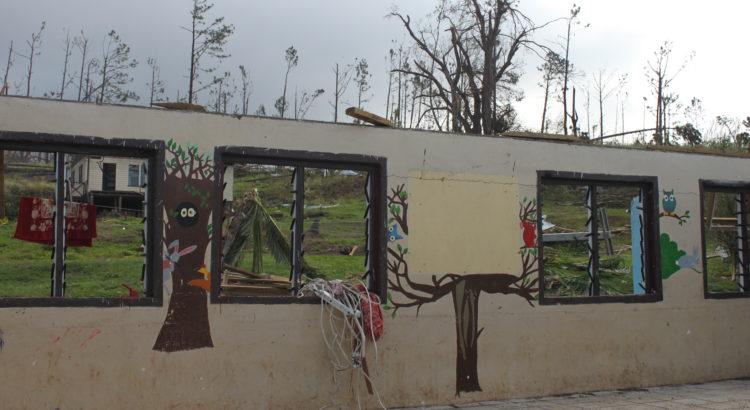
The village of Naiyala, about an hour’s drive on winding, hilly roads from Fiji’s capital Suva, was almost completely destroyed by tropical cyclone Winston.

The category five storm smashed into Fiji just a little over three months ago, leaving 44 people dead and a trail of destruction in its wake.

Roofs were torn from buildings by winds of up to 300km/h, essential infrastructure suffered critical damage, and many Fijians found themselves homeless and sheltering in evacuation centres.

When Winston hit, New Zealand was among the first of Fiji’s neighbours to respond, sending both financial aid and practical help.

It was one of the first major tests of the renewed relationship between the two countries.

More than 500 defence force personnel were deployed to Fiji in the immediate aftermath of the disaster to help pick up the pieces and begin the rebuild.

Major General Tim Gall, who headed up the defence force’s Operation Pacific Relief, said one of the things the Fijian government was determined to do in the days and weeks after the cyclone was create a sense of normality for the people.

That meant the priority was on getting schools, health clinics and community facilities rebuilt and back up and running.

«Once the kids were back at school the parents could then get on cleaning up their crops or rebuilding their house,» Maj Gen Gall told NZ Newswire.

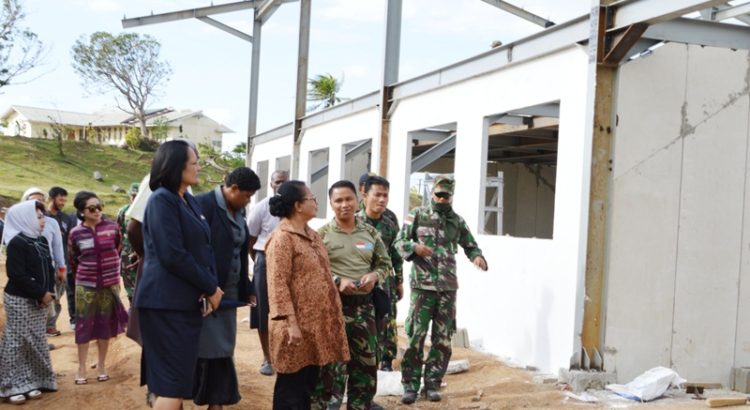
In Naiyala that meant Kiwi soldiers were tasked with helping the Fijian authorities put a roof back on the local high school.

«The main effort was rebuilding the school, the kindergarten and the health clinic,» Maj Gen Gall said.

«This village was almost completely destroyed and those were the priorities the Fijian government had.»

On Friday afternoon, Prime Minister John Key was welcomed to Naiyala High School to see the rebuilding work first-hand.

Students waving Fijian and New Zealand flags lined the driveway down to the school’s main buildings.

Children sang the New Zealand national anthem and Mr Key received a traditional sevusevu before being shown around some of the rebuilt classrooms.

Fiji’s Education Minister Mahendra Reddy paid tribute to the contribution New Zealand made in helping to rebuild a number of Fiji’s schools.

He said while they are still struggling to restore a sense of normality in some areas, the generosity of New Zealand would be remembered for years to come.

New Zealand’s total aid contribution to Fiji has topped $15 million.

Fuente: http://home.nzcity.co.nz/news/article.aspx?id=227888&cat=978&fm=newsmain%2Cnarts

Imagen de uso público tomada de: https://upload.wikimedia.org/wikipedia/commons/7/71/School_destroyed_by_Cyclone_Winston_in_Tailevu,_Fiji.jpg

Comparte este contenido:
Page 3 of 5
1 2 3 4 5