Page 42 of 102
1 40 41 42 43 44 102

Nueva Zelanda: Wellington’s Blue Dragon book fair helps kids and families in Vietnam’s capital

Nueva Zelanda/Mayo de 2017/Autor: Chelsea McLaughin/Fuente: The Dominion Post

Resumen: La feria del libro Blue Dragon, en Ngaio Town Hall  es una recaudación de fondos anual en Nueva Zelanda para el Blue Dragon Children’s Education Center. El dragón azul fue establecido en Hanoi por el profesor australiano Michael Brosowski en 2004 para ayudar a niños de la calle, niños víctimas de la trata y familias en crisis. En Nueva Zelanda,  la organización Blue Dragon Children’s Trust, fue establecida por seis mujeres Wellington en 2010 para apoyar el centro de Hanoi Brosowski. Una historia de Dominion Post en 2009 sobre el Centro de Educación para Niños de Blue Dragon en Vietnam ayudó a llevar a Chinh Van Do a Nueva Zelanda a vivir. Cuando el Centro de Lengua y Educación al Aire Libre de Taupo leyó el artículo, se puso en contacto con Blue Dragon y ofreció una beca de tres meses a uno de sus estudiantes.

Buying a book in Wellington next weekend can help a Vietnamese child in need.

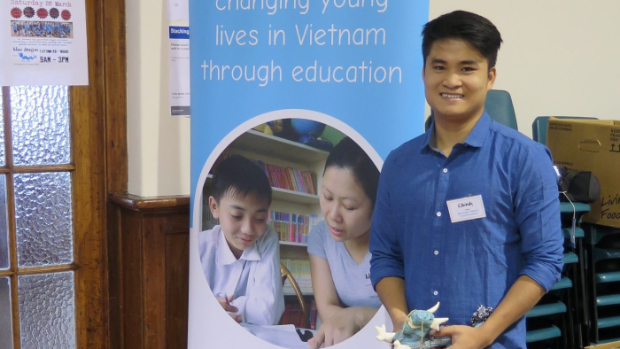
The Blue Dragon book fair, in Ngaio Town Hall next Saturday, is an annual fundraiser in New Zealand for the Blue Dragon Children’s Education Centre.

Blue Dragon was set up in Hanoi by Australian teacher Michael Brosowski​ in 2004 to give kids a better chance at life. It helps street kids, trafficked children and families in crisis.

Blue Dragon supports rural children from poor families to stay in school. The Blue Dragon book fair in Wellington raises ...


Blue Dragon supports rural children from poor families to stay in school. The Blue Dragon book fair in Wellington raises money to help continue its work in Hanoi.

The New Zealand leg of the organisation, Blue Dragon Children’s Trust, was established by six Wellington women in 2010 to support Brosowski’s Hanoi centre.

A Dominion Post story in 2009 about the Blue Dragon Children’s Education Centre in Vietnam helped bring Chinh​ Van Do to New Zealand to live.

Blue Dragon also supports poor children with disabilities in its Step Ahead programme.


Blue Dragon also supports poor children with disabilities in its Step Ahead programme.

When the Taupo Language and Outdoor Education Centre read the article, it contacted Blue Dragon and offered a three-month scholarship to one of its students.

Van Do, a former street kid shining shoes on the streets of Hanoi, was selected to come to Taupo and has been studying and working in New Zealand ever since.

The 28-year-old has studied both English language skills and IT in Taupo and Auckland, and recently moved to Tauranga for an electrical apprenticeship.

Blue Dragon Children's Foundation has played more than 2200 games of soccer. Pictured are its gaelic football champions.


Blue Dragon Children’s Foundation has played more than 2200 games of soccer. Pictured are its gaelic football champions.

For the fifth year in a row, he plans to travel to Wellington to help at the Blue Dragon Book Fair.

Describing the children’s education centre as a «home of hope», he says he always visits Blue Dragon on trips to Vietnam.

«They always make me feel so welcome. I try to help them out by playing soccer with the kids and helping them with their schoolwork.»

The work Blue Dragon does is important. «They are helping the kids and giving chances and creating opportunities for them.

«It’s like home for the kids.»

All proceeds of the book fair go to the Vietnamese organisation.

Fuente: http://www.stuff.co.nz/dominion-post/news/wellington/92419053/wellingtons-blue-dragon-book-fair-helps-kids-and-families-in-vietnams-capital

 

Comparte este contenido:

New Zealand’s biggest education reform in decades passes final reading

Nueva Zelanda/Mayo de 2017/Fuente: Xinhuanet

Resumen: Una ley de educación, considerada como la reforma más grande de Nueva Zelanda a la educación en casi 30 años, fue aprobada el jueves, proporcionando la flexibilidad para responder a las necesidades actuales y futuras de los jóvenes. La aprobación de la tercera y última lectura del Proyecto de Ley de Enmienda de la Educación fue un «hito significativo para nuestro sistema educativo», dijo el ministro de Educación, Nikki Kaye. El proyecto de ley establece una dirección estratégica clara para los servicios y escuelas de la primera infancia, centrándose en el logro educativo y el aprendizaje de los niños y los jóvenes. «Estas prioridades harán más claro a nuestros educadores qué éxito tiene para los estudiantes, para que el sistema educativo no entregue la educación, sino que se concentre en aumentar el rendimiento de los estudiantes con claras responsabilidades para todos», dijo Kaye.

An education bill, considered as New Zealand’s biggest reform to education in nearly 30 years, was passed on Thursday, providing the flexibility to respond to young people’s current and future needs.

The passing of the third and final reading of the Education (Update) Amendment Bill was «a significant milestone for our education system,» said Education Minister Nikki Kaye.

The Bill establishes a clear strategic direction for early childhood services and schools, focusing on the educational achievement and learning of children and young people.

«These priorities will make it clearer to our educators what success for students looks like. To move the education system from delivering education, to one focused on raising student achievement with clear accountabilities for all,» said Kaye.

A new framework for online learning was included in the bill, reflecting the impact of digital technology on delivery of education and increasing education options available, she said.

An important amendment to the Bill prohibits the use of seclusion in schools and early childhood services, and creates a legislative framework for the appropriate use of physical restraint in schools, reassuring parents that education services are safe and inclusive, said Kaye.

One of the flexibilities that the Bill provides for is the choice for schools to introduce a policy for new entrants to start in a group at the beginning of each term, with some schools already encouraging children to start as part of a cohort on set days during the year.

«These schools believe cohort entry enables them to support better transitions to school, simplifies school and classroom planning, and minimizes disruption for existing students,» she said, adding that parents will still have the option of not starting their child in school until their sixth birthday.

New Zealand’s current system allows children to start on their 5th birthday, and requires consistent attendance only from the age of 6.

Fuente: http://news.xinhuanet.com/english/2017-05/11/c_136274925.htm

Comparte este contenido:

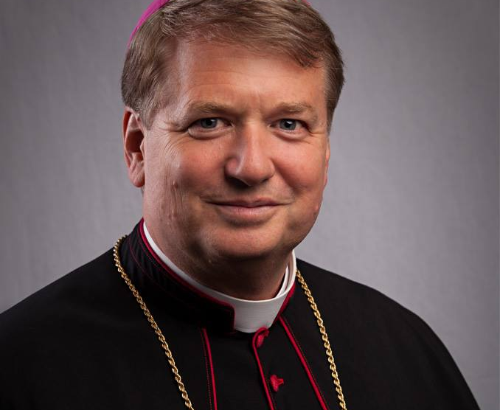
Arzobispo de Sídney, Australia: Las escuelas católicas sólo piden un trato justo

Australia/09 de mayo 2017/Fuente: http://es.gaudiumpress.org

El Arzobispo de Sídney, Australia, Mons. Anthony Fisher, escribió un artículo de opinión para el diario Australian Financial Review para exponer la posición de la Arquidiócesis en el debate actual sobre financiamiento público de la educación. En el texto, el prelado negó que la Iglesia busque privilegios para las escuelas católicas. En su lugar, todo lo que pide es un trato justo para estas instituciones.

«Permítanme ser tan claro como puedo serlo», expresó el Arzobispo. «no existe un ‘trato especial’ con el sector de educación católico y yo no lo defendería». El prelado refutó las críticas a las supuestas «escuelas de élite» que se beneficiarían y advirtió que la limitación de recursos públicos anunciado en un nuevo modelo de educación afectaría a las escuelas católicas ordinarias que «cargan las tarifas más bajas posibles para que las familias más pobres puedan asistir».

Por este motivo, Mons. Fisher declaró: «El sector católico no pide un trato especial: está pidiendo un trato justo». El Arzobispo recordó que los gobiernos australianos han reconocido desde hace mucho tiempo que el sistema de escuelas católicas cumple una función similar al de las escuelas públicas y que por ese motivo merece un apoyo similar. De hecho, los alumnos de las escuelas católicas gastan menos recursos públicos que los de las escuelas públicas, lo que significa una optimización de los recursos. «Y ahora, de la nada y sin absolutamente nada de consulta con el sector católico, el gobierno Turnbull ha decidido que la brecha se hará cada vez mayor con el tiempo», denunció.

Las afirmaciones de las autoridades sobre un aumento de la inversión en educación del 3.7 por ciento no se verían reflejadas en la realidad de las escuelas católicas, según expuso el Arzobispo: «Lo que ya es aparente es que la nueva ‘fórmula de la capacidad de pago’ del gobierno forzará un incremento de tarifas de más de $1000 para un número muy significativo de escuelas católicas – al menos 78 – en sólo Sídney». El aumento de tarifas sería de más del doble para algunas instituciones.

La Iglesia realiza un notable aporte en la educación, asumiendo compromisos como la atención de alumnos con necesidades especiales, refugiados y estudiantes avanzados. El servicio se extiende a escuelas rurales y nuevas comunidades urbanas carentes de oferta educativa. «Permitir que aquellos en el terreno en cada estado y comunidad respondan de una manera ágil a las necesidades a medida que aparecen, asegurar el flujo de la burocracia en apoyo de las escuelas y garantizar un acceso equitativo y asequible a las familias no es una especie oscura de ‘trato especial'», aclaró Mons. Fisher. «Los sistemas de gobierno gozan de esta misma libertad».

Pretender aplicar una solución a todas las escuelas «parece justo a primera vista pero en un examen más cercano trae desventajas serias a las escuelas del sistema católico con bajas tarifas. Y esto significa que golpeará a algunas de las familias más vulnerables que desean acceder a la educación católica», comentó. El prelado pidió que todos los estudiantes y todas las familias reciban las mejores oportunidades, sin privilegiar un sistema educativo por encima de otro, de forma que el interés esté puesto en los mejores resultados para cada niño.

Con información de Arquidiócesis de Sídney.

Fuente de la Noticia:

Contenido publicado en es.gaudiumpress.org, en el enlace http://es.gaudiumpress.org/content/87101-Arzobispo-de-Sidney–Australia–Las-escuelas-catolicas-solo-piden-un-trato-justo#ixzz4gYHnR4l6

Comparte este contenido:

Nueva Zelanda: New challenge to bible teaching and ‘religious bias’ in state schools

Nueva Zelanda/Mayo de 2017/Autora: Adele Redmun/Fuente: Stuff

Resumen: Una larga batalla por las lecciones bíblicas en las escuelas será resucitada en la corte en un esfuerzo por hacer que las escuelas estatales sean «completamente seculares». La Secular Education Network (SEN) presentó una demanda legal contra la instrucción religiosa en las escuelas con el Tribunal de Derechos Humanos, alegando que los niños estaban siendo intimidados por la decisión de sus padres de no participar en las lecciones bíblicas. Si bien los casos anteriores se han centrado en escuelas o programas individuales, este nuevo caso apunta al «sesgo religioso» en las escuelas estatales y posibles conflictos con la Ley de Declaración de Derechos.

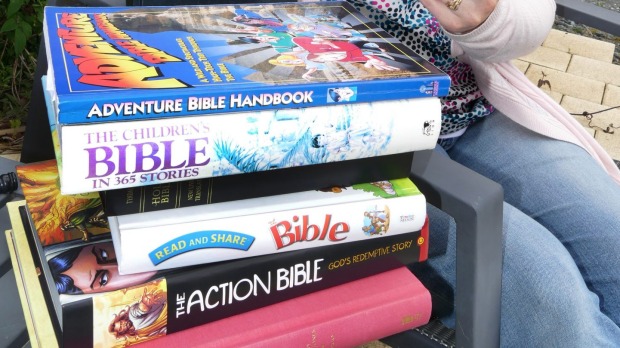
A long-running battle over bible lessons in schools will be resurrected in court in an effort to make state schools «completely secular».

The Secular Education Network (SEN) filed a legal challenge against religious instruction in schools with the Human Rights Review Tribunal, claiming children were being bullied over their parents’ decision to opt out of bible lessons.

While previous cases have centred on individual schools or programmes, this new case takes aim at «religious bias» in state schools and potential conflicts with the Bill of Rights Act.

The Churches Education Commission (CEC), which provides Christian values education to 600 New Zealand schools a week, countered that SEN’s case restricts their freedom of religion under the act. CEC will be a non-interested party to the case.

SEN argued the Ministry of Education was unable to ensure section 78 of the Education Act 1964 – which allows for an hour of religious instruction a week outside school hours – did not adversely impact children who were opted out.

Ministry deputy secretary Katrina Casey said schools were made aware of «the differences between religious instruction and religious education» when parents complained but were also responsible for addressing bullying.

Twenty-six witnesses, including 13 families whose children had been mistreated, would present evidence in the case.

Witness and SEN co-leader Tanya Jacob said her son’s mistreatment at a Christchurch school «started emerging with kids saying ‘you’re going to hell’.»

Jacob said she initially had a «cruisy attitude» towards bible lessons in schools and simply withdrew her children. She later learned they were being placed back in the class, sent to the new entrants’ room, or made to wash dishes instead.

«They [other children] wouldn’t share with him because he doesn’t believe in God, it’s really toxic,» she said.

«There are similar things happening throughout the country where kids are isolated and made to do demeaning tasks because they have opted out.

«You’re splitting up the kids by faith and saying ‘these are the accepted kids, they are the kingdom kids’ . . . then the others are pushed out of the classroom.»

Teachers could also face discrimination if they opposed religious instruction and current legislation did not provide guidelines for chaplains or faith-based youth work, she said.

CEC school engagement manager Tracy Kirkley said a «blanket ban» on religious instruction was similarly unfair on the 2500 volunteers who delivered Bibles in Schools-style programmes.

«What we are doing backs up and supports the values of the schools. Yes, we use the Bible . . . but we are there when the schools want us.»

Kirkley said she was concerned if children were being bullied for withdrawing from religious instruction but «it’s not attributable to the half hour a week we have with them».

«Parents can opt out and schools can have them opt in rather than opt out, there are lots of ways you can handle it.»

SEN co-leader David Hines said the legal bid to make state schools «completely secular» could cost up to $50,000. More than $13,000 has been raised through a crowd funding venture.

The network’s challenge builds on a 2016 case by Auckland man Jeff McLintock, whose daughter Violet was placed in bible classes without his permission.

The case was thrown out over a missed deadline and Hines said he was hopeful the new case would succeed.

«There’s no neutral teaching about religion in state schools and a lack of political will to get into a debate about this.»

Fuente: http://www.stuff.co.nz/national/education/92161973/new-challenge-to-bible-teaching-and-religious-bias-in-state-schools

Comparte este contenido:

CLADE: Sindicatos piden al Banco Mundial que cese las inversiones en escuelas privadas de bajo costo

CLADE/06 de mayo de 2017/

Dirigentes sindicales y defensores de la educación se unieron el 21 de abril ante el Banco Mundial en protesta por su continuo apoyo a las agencias de educación con fines de lucro en general, y en concreto a Bridge International Academies (BIA).

En una carta conjunta a Jim Yong Kim, presidente del Banco Mundial, los dirigentes de varios sindicatos de profesores internacionales y sindicatos mundiales solicitaron al Banco Mundial para que cese inmediatamente su apoyo a escuelas privadas de bajo costo como BIA. En la misma señalan que el acceso a la educación es un derecho humano fundamental y no debe basarse en la capacidad de pago de una familia.

Al apoyar la expansión de la educación privada de bajo costo y otras prácticas competitivas, el Banco Mundial contribuye a que un gran número de los/as niños/as más vulnerables del mundo no tengan esperanza de una educación de calidad, y creemos que una educación pública de alta calidad debe ser reconocida como un bien público y que la educación es una responsabilidad primordial de los gobiernos y no de las empresas y los empresarios.

“Debemos recordar al banco cuáles deben ser sus prioridades: apoyar la educación pública, no privatizar las escuelas que crean unos cuantos ganadores a expensas de millones de niños”, expresó Lorretta Johnson, secretaria-tesorera de la AFT.

Afirman que el apoyo continuo del Banco Mundial a BIA es imposible de entender a la luz de las recientes decisiones judiciales que confirman la mala trayectoria de Bridge.

Fuente de la Noticia:

http://privatizacion.campanaderechoeducacion.org/sindicatos-piden-al-banco-mundial-que-cese-las-inversiones-en-escuelas-privadas-de-bajo-costo/

Comparte este contenido:

Australia: Space bling: ‘jewelled’ LAGEOS satellites help us to measure the Earth

Oceanía/Australia/Mayo del 2017/Noticias/https://theconversation.com

Could this be one of the most beautiful satellites ever made? In fact it is one of twins, as there are two of these jewelled spheres orbiting Earth.

And one of them carries a message for deep into the future, if there is anyone around to decipher it (but more on that later).

The space bling twins are the LAGEOS satellites (LAGEOS stands for LAser GEOdynamic Satellite). LAGEOS-1 was launched by the United States on May 4, 1976, and LAGEOS-2, made by the Italian Space Agency, was launched in 1992.

So this year, the original 60cm sphere – its design harking back to the spherical satellites of the early space age, such as Sputnik, Vanguard and Echo – will notch up 41 years in orbit. It’s a veteran of space science.

The surface of LAGEOS is dotted with 426 cube-corner prisms to reflect laser pulses transmitted from ground stations on Earth. NASA’s Goddard Space Flight Center

The interior of each satellite is a solid brass cylinder, covered in a thick aluminium shell studded with 422 “jewels” made of fused silica, and four made from germanium.

Fused silica is made without the common ingredients of everyday glass, such as lime and soda. It has a much higher melting point and won’t crack from the extremes of temperature experienced in orbit.

This is important because the LAGEOS satellites are essentially used as inert reflectors, off which lasers can be bounced.

Space lasers

The two satellites travel at around 6,000km from Earth in a circular polar orbit.

Every day, 35 satellite laser ranging stations across the world send laser pulses up to intercept the LAGEOS satellites. Two of these stations are located in Australia, at Mt Stromlo in the ACT and Yarragadee in WA. The Mt Stromlo facility is also used to track space junk.

Laser ranging stations across the world. International Laser Ranging Service

The process works like this. A telescope emits a laser beam aimed at the satellite, which strikes the glass eyes and is deflected back towards the Earth, where the telescope receives it.

The length of time taken for the two-way roundtrip indicates how far away the satellite is. Once the time is recorded and corrected, we know the distance to the satellite at that moment to centimetre accuracy.

The changes in this distance over time relate to variations in the Earth’s gravitational field and rotation, as well as environmental factors in orbital space.

The LAGEOS satellites (although the most beautiful) are not the only targets of the laser ranging network. Other satellites equipped with retroreflectors include the Russian BLITS (Ball Lens in Space) and ETALON 1 and 2, and the student-run Starshine satellites.

There are also retroreflectors on the Moon – at the Apollo 11, 14 and 15 landing sites, and on the Russian Lunokhod 1 and 2 rovers.

The measurements are coordinated and disseminated by the International Laser Ranging Service.

Reflective satellites bounce back laser beams to Earth.

Defining the Eart

The information provided by LAGEOS 1 and 2 has contributed to new perspectives of the Earth, as former project scientist David E. Smith explains:

Today, we see Earth as one system, with the planet’s shape, rotation, atmosphere, gravitational field and the motions of the continents all connected. We take it for granted now, but LAGEOS helped us arrive at that view.

We tend to think of the Earth as a perfect sphere, but the distribution of mass within it is actually rather lumpy, which means gravitational force is not equally distributed.

Variations in the satellites’ positions have helped scientists to accurately map this distribution to increase our knowledge of the invisible geoid under the surface.

The geoid is the surface of equal gravitational potential of a hypothetical ocean at rest and serves as the classical reference for all topographical features. ESA

The geoid is a representation of the Earth if you remove the influence of tidal and atmospheric forces and imagine sea levels where they would lie according to gravity alone.

Even more importantly, the two LAGEOS satellites define the centre point, based on the Earth’s centre of mass, for the International Terrestrial Reference System used in navigation.

Another purpose is to measure the speed and direction of tectonic plate movement, which causes continental drift.

Message to the future

Both LAGEOS satellites are completely passive with no instruments, and no fuel and batteries to run out, which means they could outlast humanity. Their orbits may be stable for about 8.4 million years, according to the original prediction.

LAGEOS-1 is the bearer of one of Carl Sagan‘s time-travelling interspecies communications.

The LAGEOS-1 plaque. At the top, the numbers one through ten are written in binary notation, and Earth is shown orbiting the Sun. The three lower panels depict maps of Earth at different epochs. NASA’s Goddard Space Flight Center

He conceived a design – drawn by Jon Lomberg who also worked with him on the Voyager Golden Records – depicting continental drift at three points in time: 268 million years ago when there was only the supercontinent Pangaea, 1976 when the satellite was launched, and a projection 8.4 million years into the future. The maps are engraved on a thin steel plate that was wrapped around the brass cylinder core.

You’d have to crack the satellite open like an egg, though, to get at the message.

It’s precisely the sort of alien mystery object that science fiction writers imagine falling to a planet and catalysing personal and social revelations, even when the object is impenetrable.

Who knows who or what might find it in 8.4 million years, if it lasts that long. Will it melt in reentry, fall into the ocean unnoticed and unmourned, or slam into what remains of Australia like Skylab, to lie under the stars for another few million years?

Fuente

https://theconversation.com/space-bling-jewelled-lageos-satellites-help-us-to-measure-the-earth-76948

Fuente imagen:

https://lh3.googleusercontent.com/0N_2U3oaJCwqVXubLvpRYya6XWqd-ZNP4JypvvmLAU0vzhd78zre0GpB45MPyTNTA4ywWA=s85

Comparte este contenido:

Propuestas para las políticas de adaptación al cambio climático

Mayo del 2017/Ecologístas en accción /https://www.ecologistasenaccion.org/

Alianza por el Clima [1], en la que participa Ecologistas en Acción, presenta sus propuestas para la parte de adaptación en la ley de Cambio Climático en España. Esta ley se está diseñando a través de un proceso que insistimos en que debería ser participativo e inclusivo. Dicho proceso debe ser transparente y equilibrado, y garantizar que la voz de todos los agentes sociales esté suficientemente representada y se recojan las aspiraciones e inquietudes de todos ellos.

La adaptación es clave porque ya estamos sufriendo los impactos del cambio climático. La Ley de Cambio Climático y Transición Energética deberá contemplar el marco legislativo adecuado para fomentar medidas encaminadas a la adaptación de los distintos sectores; transporte, agua, industria y energía, edificación, biodiversidad, agricultura, finanzas… a la realidad del cambio climático.
Particularmente Alianza por el Clima propone implementar medidas como:

  • Actualizar el Plan Nacional de Adaptación al Cambio Climático y desarrollar planes o programas más específicos para ciertos ámbitos (salud humana, zonas costeras, sector agrario, sector turístico, de concienciación social ante el riesgo de emergencias y catástrofes…)
  • Destinar suficientes recursos a las medidas de adaptación.
  • Considerar la adaptación en todas las políticas sectoriales (urbanismo, turismo, agricultura, forestal…)
  • Mejorar la coordinación de todas las administraciones para desarrollar estas políticas.
  • Articular la participación ciudadana y de los sectores concernidos para diseñar y aplicar las políticas de adaptación.

Constatamos que el cambio climático es una realidad en España, y además somos uno de los países más vulnerables dentro de nuestro entorno, por lo que estas medidas son urgentes y necesarias.

El trabajo realizado para la elaboración del documento nos ha llevado a una serie de conclusiones:

  • Invertir en adaptación ahorra dinero. Efectivamente, las medidas de adaptación evitan en muchos casos daños que tienen un coste económico, social y ambiental, muy elevado.
  • Es necesario un análisis sectorial para diseñar medidas de apoyo y reforma de los sectores más afectados.
  • Estamos ante un desafío complejo y multisectorial. Es necesario tomar medidas en varios frentes a la vez para obtener resultados apreciables.
  • Es necesario poner especial atención a la coherencia de políticas, precisamente por el carácter multisectorial y transversal que supone el cambio climático.

El cambio climático afecta más a las personas en situación de pobreza, a los emigrantes y a la población infantil y amenaza el rico patrimonio natural de nuestro país. Es por tanto un problema social, ambiental y económico. Las organizaciones de Alianza Por el Clima reclamamos una ley de Cambio Climático que sea capaz de dinamizar la sociedad española, a través de los incentivos adecuados para adaptarnos a esta nueva realidad.

El cambio climático es una amenaza para los derechos humanos. Los derechos a la salud, al medio ambiente, al agua y a la alimentación están comprometidos. El cambio climático nos exige reformas que no deben dejar a nadie atrás, y deben ser coherentes con nuestro compromiso con las generaciones futuras.

Fuente:

https://www.ecologistasenaccion.org/article34223.html

Fuente imagen:

https://lh3.googleusercontent.com/1qLv8hEVj4A57J-L25Oqm3HbLLjG6wD7e326a5Cv6THvMcYKD6LVV8RmT5T0Il18kTT5aw=s85

Comparte este contenido:
Page 42 of 102
1 40 41 42 43 44 102