Page 2399 of 2546
1 2.397 2.398 2.399 2.400 2.401 2.546

En Extremadura-España: abren el registro sobre antecedentes sexuales de trabajadores del ámbito educativo y deportivo

Unos 20.000 trabajadores del ámbito educativo y deportivo deberán acreditar que carecen de antecedentes por delitos sexuales contra menores

23 marzo 2016 | EUROPA PRESS EXTREMADURA

Unos 20.000 trabajadores del ámbito educativo y deportivo dependientes de la Junta de Extremadura deberán acreditar que carecen de antecedentes por delitos sexuales contra menores antes del 30 de abril.

Los centros educativos públicos y concertados, las escuelas infantiles, las escuelas de idiomas, los conservatorios y los centros deportivos dependientes de la Junta de Extremadura, entre otros, han recibido ya la instrucción de la Consejería de Educación y Empleo que especifica que, desde ahora y hasta el 30 de abril, todo el personal del ámbito educativo y deportivo que tenga contacto con menores debe acreditar no tener antecedentes por delitos sexuales contra los menores de edad.

Este requisito, que «da cumplimiento a una ley estatal que protege los derechos de los menores de edad», es aplicable a todo el personal docente, ya sea funcionario o laboral, a los monitores de actividades formativas complementarias, al personal de la administración de los centros educativos y a todas las personas que trabajen prestando una función asistencial en el ámbito educativo, como por ejemplo las encargadas de los comedores escolares.

Asimismo, también deberán presentar el certificado que acredite no tener antecedentes por delitos sexuales todo el personal de los centros deportivos de la región dependientes de la Junta y cualquier otro empleado que, en el desarrollo de actividades deportivas, tenga contacto directo con menores.

La consejería calcula que tendrán que presentar dicho certificado más de 20.000 personas, según señala la Junta de Extremadura en nota de prensa.

Según señala, las personas afectadas pueden solicitar ese documento directamente al Registro Central de Delincuentes Sexuales, o bien permitir que la Administración pueda solicitar dicho certificado, con una autorización expresa del afectado.

Para agilizar la contestación por parte del registro, la consejería recomienda que «se opte por autorizar a dicho organismo para que haga la consulta y, así, se obtenga el resultado en tiempo real». Los certificados que tramiten los propios interesados no conllevarán coste alguno.

NUEVAS INCORPORACIONES Y CONTRATACIONES

A partir de ahora, señala el Ejecutivo extremeño que todo el personal que ingrese de nuevo en el ámbito educativo o deportivo, ya sea temporal o definitivamente, no puede haber sido condenado por sentencia firme por algún delito contra la libertad sexual, de explotación sexual o pornografía contra menores de edad.

Esta obligación se incorporará en la convocatoria de oposiciones al Cuerpo de Maestros que esta consejería llevará a cabo este año y se está añadiendo, en cláusulas específicas, en todos los nuevos pliegos de contrataciones de servicios que se prestan desde la consejería.

La Consejería de Educación y Empleo ha advertido de que actuará «con responsabilidad y firmeza» si comprueba que hay algún trabajador que está incluido en el Registro Central de Delincuentes Sexuales.

En el caso de que se trate de trabajadores interinos, o laborales temporales, cesará a esa persona por considerar que los menores de edad corren riesgo. Si se tratara de funcionarios de carrera, o trabajadores laborales fijos, se actuará conforme a lo que se disponga por los órganos competentes en materia de función pública.

En la instrucción que la Consejería de Educación y Empleo ha mandado a sus diferentes organismos dependientes que están afectados, se han tenido en cuenta algunas aportaciones de las organizaciones sindicales y, a su vez, se ha primado resolver este proceso con celeridad por ser una de las consejerías que, directa o indirectamente, más contacto tiene con menores en Extremadura.

Fuente de la noticia: http://www.hoy.es/extremadura/201603/23/educacion-abre-registro-sobre-20160323122226.html

Comparte este contenido:

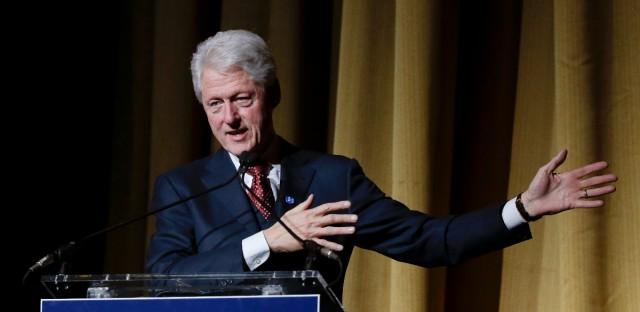
Bill Clinton speechifies on Hillary Clinton’s plans for debt-free public college

InsideHigherEd/March 25, 2016/Por: Paul Fain
Resumen: Bill Clinton esta semana ha tocado el tema de la asequibilidad a la universidad al criticar la falta de fondos del estado para la educación pública superior. Las opiniones del ex-presidente se hicieron eco al ver la posibilidad de que fuese electo miembro del gabinete educativo de ganar las elecciones Hillary Clinton. El discurso centrado en la reducción drástica de la deuda del estudiante presionando a los Estado a detener la desinversión en educación pública, es el fuerte que tanto Bill como la candidata han mantenido. Cabe destacar que,el ex presidente es en la actualidad rector honorario de una empresa con fines de lucro de una universidad en Washington, y describe las propuestas de asequibilidad de deben tener las universidades, de enseñanza gratuita a las personas de ingresos medios y bajos. Por otro lado, el discurso de Bill desafía la campaña de Sanders quien se inclina por una agenda con epicentro en una educación de matriculas libres y el rescate de las escuelas públicas desde los colegios hasta las universidades. Recordó, de su administración el sistema de becas y créditos de impuestos Lifetime Learning. En la noticia también se destaca la financiación de los colegios públicos durante el periodo de mandato de Bill, dando lugar a la proliferación de escuelas privadas que en muchos casos los jóvenes matriculados no podían pagar.La propuesta concreta de los esposo Clinton consiste en un sistema en el que cada joven se pueda graduar completamente libre de deuda de cualquier institución pública de educación superior en este país, es decir, si eres de clase media o por debajo de usted puede obtener la matrícula gratuita. Y si usted es menor ingreso, se puede obtener más ayuda.

The U.S. Constitution prevents Bill Clinton from being president again. But constitutional scholars believe the former president, who served for two terms, could be eligible to serve as a member of Hillary Clinton’s cabinet, should the former U.S. secretary of state and current favorite for the Democratic presidential nomination ascend to the Oval Office.

In this speculative scenario, education secretary appears to be a possibility for Bill Clinton, at least if his speechifying this week is any indication. (And Inside Higher Ed would be at least partially responsible for starting this rumor.)

A key piece of Hillary Clinton’s plan to drastically reduce student debt is to pressure and incentivize states to “halt disinvestment” in public higher education. So this week Bill Clinton twice took to the dais to ram home that message.

The former president — and, more recently, honorary chancellor of a for-profit college company — described his wife’s college affordability proposals during wide-ranging speeches Monday at two college campuses in Washington State: Spokane Falls Community College and Clark College. (Hat tip to the «Millennial Memo» from Young Invincibles.)

However, his message was somewhat obscured in resulting news media coverage of the speeches. That’s because Bill Clinton appeared to take a swipe at the Obama administration during his talk in Spokane, referring to the “awful legacy of the last eight years.”

Below are excerpts of Clinton’s comments on higher education, as well as a video of the speech at Clark.

Taking on Sanders

During the Spokane speech, Clinton challenged the plan from Senator Bernie Sanders, the Vermont Independent who is seeking the Democratic presidential nomination, to make an education at all public colleges and universities tuition-free.

“We’ve got to make college affordable for everyone,” Clinton said, according to The Spokesman-Review. “Tuition’s been going through the roof so it makes it appealing to say, ‘Let’s give tuition to everybody.’ Hillary thinks that’s not the best choice. … We should give free tuition to people from middle incomes and below who really need it.”

Clinton also said his wife’s broad plans for higher education include a “beefing up” of federal Pell Grants and giving “everybody the chance to earn 10 hours a week of work-study money.”

Those proposals would be paid for with new taxes on wealthy people. “She believes that we should raise taxes on the highest-income people because, after all, they’re the only people that have benefited since the crash,” Clinton said. “Not all those people are bad people, but they do have more money.”

Revisiting the ’90s

At Clark, which is located in Vancouver, Wash., Clinton began his riff on college affordability by alluding to his administration’s creation of HOPE Scholarships and Lifetime Learning tax credits. (Click here for an archived link to the Clinton White House website, which describes the program amid a list of accomplishments.)

“When I was president, we gave aid to 10 million more people. I met a woman this morning who introduced me to her daughter and said, ‘I got a degree because of that college aid program you passed.’ Unfortunately, a lot of it was taken away after I left. Then President Obama got back in, [and] when the Democrats had Congress, they passed a bigger aid program.»

However, some critics have argued that the two Clinton-era tax credits are not as well targeted as Pell and often go to students and families who do not need them — a similar take to the Clintons’ on the Sanders plan.

State Disinvestment

Clinton then transitioned to criticizing state governments for inadequate fiscal support of public colleges.

“But the cost of college kept going up, especially in states where legislators, mostly Republican, had less money after the crash. They wanted to give tax cuts. They had to fund the public schools, so they started underfunding the public colleges,” he said.

“So the colleges started behaving like private colleges, raising tuition. And that meant more and more young people wound up borrowing money — not from the good federal programs but outside that system. So they got regular bank loans, at high interest rates they couldn’t repay.”

The Clinton Plan

“So here’s what Hillary proposes. We should have a system where every young person can graduate completely debt-free from any public institution of higher education in this country. Debt free,” Clinton said.

“If you’re middle class or below you can get free tuition. And if you’re lower income, you can get more help. She wants a big increase in the Pell Grant so we can pay for supplies, living expenses. … She wants everybody to be able to work 10 hours a week on a work-study grant, which will hold down college costs, not increase it. That won’t kill anybody, but it will give them more money. It will be the first thing we’ve done in a long time to hold down college costs. She believes that upper-income people should pay their kids’ and their grandkids’ tuition.

“This may be the most important thing of all: for people that already have debt, from any source, she thinks they should be able to consolidate their loans. And, first, if they’re at a high interest rate, refinance them. Did you know that college loans are the only loans in America you can’t refinance. … If you let every student in this country with a debt refinance it, at current interest rates tomorrow, overnight 25 million young Americans would save an average of $2,000.”

Clinton said more, and ended up devoting a large chunk of his 45-minute address to higher education.

Fuente:

https://www.insidehighered.com/news/2016/03/25/bill-clinton-speechifies-hillary-clintons-plans-debt-free-public-college

youtube https://www.youtube.com/watch?v=21nhIQU4zYQ]

On the StumpEditorial Tags: Election 2016Federal policyFinancial aid

Comparte este contenido:

Rwanda: School Life – Why Observing Uniformity is Very Crucial

Foto tomada por: Catherine Reiland

África/Rwanda/Marzo 2016/Fuente: AllAfrica.com.Autor: Salomon Asaba

resumen: el articulo abre el debate sobre el uso del cabello  y las escuelas que prohíben a los estudiantes mantener su  cabello largo,  igualmente opinan los expertos  que la falta de uniformidad es lo que causa este tipo de demandas innecesarias por los estudiantes, argumentando que la restricción de pelo largo es una necesidad en las escuelas.

It’s a debate that educationists have not come to a conclusive agreement about. Some say there is a link between keeping long hair at school and academic performance, while others argue that there is no link whatsoever.

In the past, it was a taboo to go to school with hair slightly an inch longer for girls. In fact if a learner had hair that was more than an inch long, she or he was not allowed into the school.

Schools which prohibit learners from keeping their hair long while in school, argue that it is time wasting and costly, which affects performance and mutual respect between students and teachers.

For instance, a few months ago, it was reported that a student at a school in Kanombe refused to go to school until her father provided money for plaiting hair after seeing the other girls in the school with treated hair. The father succumbed to pressure and gave her money to treat and maintain her hair.

Experts say lack of uniformity is what causes such unnecessary demands by learners, arguing that restricting long hair is a necessity in schools.

«Keeping uniformity helps the students to feel like one family despite the different backgrounds. If you have some students with treated long hair while others can’t afford the same, it will cause segregation among the learners and subsequently you will get such scenarios like the Kanombe parent,» says a senior teacher in a city school.

Schools in Rwanda have restrictions on long hair especially in the public schools. But the situation is different; in private and international schools- girls come to school with long hair in all shapes and styles.

Moses Katufu, a teacher of Entrepreneurship at King David Academy, says long hair is allowed in the school but it should not be tinted. And for boys weird hairstyles are not allowed.

The school principal, Annet Batamuriza, echoes Katufu’s views, but points out that tinted hair is forbidden for girls.

«Much as good hair enhances the pride of women, we don’t allow tinted hair at school,» says Batamuriza.

Students need to adhere to school regulations.

Most parents and educators have argued that the culture of hairstyles in schools should receive some kind of regulation.

At King David Academy, for instance, boys who report to school with long hair have their heads shaved.

«Boys should keep their hair trimmed to at least 2 inches long, otherwise those who report with long hair are punished to serve as examples to the rest,» adds Katufu.

In extreme circumstances, some schools will chose to suspend students until they shave their heads.

But Simon Ntwari, a parent in Kimihura, considers regulating students’ hairstyles inappropriate and a waste of valuable time.

«Hair should not be a big deal as long as the student has put on the appropriate school uniform. I don’t think hair should be a distraction in school whether for boys or girls,» says the father of two.

Georgina Mukeshimana, a parent in Remera, however thinks regulation of hairstyles should be left at the discretion of school authorities.

«But once you become complacent with all hairstyles, students will bring everything to school. Students should be made to understand that rules are there and have to be followed,» she asserts.

For Thomas Mugarura, a parent in Nyamirambo, hairstyles should be the last thing for schools to worry about.

«I really don’t understand why schools do not put efforts on better practices of teaching and learning instead of non issues like hairstyles. We pay for the hair and that should only be a concern on our side,» he explains, wondering how hair is connected to academic performance.

Fuente de la Noticia: http://allafrica.com/stories/201603230062.htmlFuente de la fotografía: http://badgersabroad.wisc.edu/blog/wp-content/uploads/2009/07/rwandan-children-300×200.jpg

Socializado por: Editores África

Comparte este contenido:

Asignará SEP cursos para maestros sin licitación


califcan evaluación docente_opt

Por: Redacción | Profelandia 25 marzo, 2016

Los primeros 72 cursos de formación continua que serán impartidos a más de 15 mil maestros y directores de prescolar, primaria y secundaria que obtuvieron un resultado insuficiente en la evaluación del desempeño, serán asignados mediante contratos “por invitación”, y no por licitación, reconoció el Subsecretario de Educación Básica, Javier Treviño Cantú.

“Este primer proceso es por invitación, y luego, ya para todos los demás, viene por licitación”, destacó el funcionario federal.

Lo anterior debido a que la Secretaría de Educación Pública (SEP), busca tener una oferta inmediata para atender la necesidades de los maestros.

“…lo que queríamos era tener inmediatamente una oferta. Hay un proceso que se está llevando a cabo por invitación a diferentes instituciones de educación superior para que puedan participar en esta primera etapa”, abundó.

Cabe señalar que el pasado 7 de marzo, Aurelio Nuño, titular de la SEP, presentó la Estrategia de Formación Continua de Profesores de Educación Básica y Media Superior, en donde detalló que la dependencia a su cargo invertirá un total de mil 809 millones de pesos para atender las necesidades de formación continua de los maestros, en base a las evaluaciones en el marco de la reforma educativa.

Puntualizó que los cursos que se ofertarán a los maestros serán impartidos  por prestigiadas Universidades tanto públicas y privadas, previa licitación de dicho cursos.

Con información de La Jornada

Comparte este contenido:

Planean incluir educación en redes en curricula escolar de Bolivia

El ministro de Educación, Roberto Aguilar, explicó que el tema de la educación en redes sociales será incluido en la curricula escolar, con el objetivo de orientar a los estudiantes sobre los peligros de estos medios y lograr un buen uso de los mismos.

Aunque no especificó el tiempo en que esta posibilidad sea concretizada, la autoridad explicó que este contenido será incluido en la materia de Ciencias Sociales.

«Cuando se trata de ciencias sociales, se incorporará la educación en redes, para detectar los peligros, aspectos positivos y negativos de las redes, como también el uso adecuado de estos medios (…) En realidad se trata de incorporar este contenido desde los primeros cursos para que se utilice de manera adecuada, no puede ser otra materia, porque tendríamos que sacar a otra, va a ir en la curricula como contenido», dijo Aguilar en conferencia de prensa.

Asimismo explicó que hay páginas en Facebook como «Profesores de Bolivia» o «Directores de Bolivia» que son utilizadas por los educadores, obteniendo grandes beneficios por los datos informativos que se comparten en estas páginas. Además dijo que incluso el wathsapp puede ser utilizado de manera adecuada, si se direcciona bien los objetivos.

«Es el caso de algunos estudiantes y padres de familia que forman grupos de wathsapp para compartir información, actividades del colegio y hasta las tareas que deben verificar si sus hijos las realizan», acotó.
Para lograr el objetivo de incluir la educación en redes sociales en la curricula escolar, se capacitarán a los maestros y se incorporarán contenidos de cursos vía on line. Por otro lado, dijo que para la preparación de este nuevo tema en la materia de redes sociales, se gestan reuniones con psicológicos y pedagogos.

«Lo que plantea es educar, lo que sucede es que con el factor del anonimato se han ido generando situaciones de delito, de violaciones, de acoso y de bullyng, entonces es necesario el tema de la educación en redes», agregó.

Fuente: Fuente: http://www.eldeber.com.bo/bolivia/planean-incluir-educacion-redes-curricula.html
Comparte este contenido:

Costa Rica: primer laboratorio móvil de fabricación digital en Centroamérica

es uno de los proyectos enfocados a la tecnología, innovación y emprendedores de la Universidad Veritas.

Costa Rica/ 23 de Marzo de 2016/La República


201603231206341.FAB

El primer laboratorio móvil de fabricación digital ya está en el país y además sería el primero de la región.

El laboratorio es conocido como Fab Lab Móvil y permitirá plasmar prototipos de proyectos o ideas.

Este es uno de los proyectos enfocados a la tecnología, innovación y emprendedores de la Universidad Veritas.

Este laboratorio cuenta con máquinas y procesos de fabricación digital, tales como: corte láser, electrónica y programación, escáner e impresoras  3D.   Para ello, el Fab Lab Móvil contará con facilitadores que le brindarán su apoyo para plasmar esa idea que usted tiene, comentó Robert Garita, director del centro de Investigación para la innovación de la Universidad Veritas.

El proyecto además busca tener un mayor impacto a nivel social, llegando a instituciones educativas, emprendedores y otros con poco acceso a la tecnología digital.

El Fab Lab Móvil podrá estar en las comunidades, industrias y los colegios que así lo deseen.  Para gestionarlo pueden llamar al teleléfono 2246-4661 o escribir al correo rogarita@veritas.cr

Fuente:  https://www.larepublica.net/noticia/costa_rica_tiene_primer_laboratorio_movil_de_fabricacion_digital_en_centroamerica_2016-03-23/

Comparte este contenido:

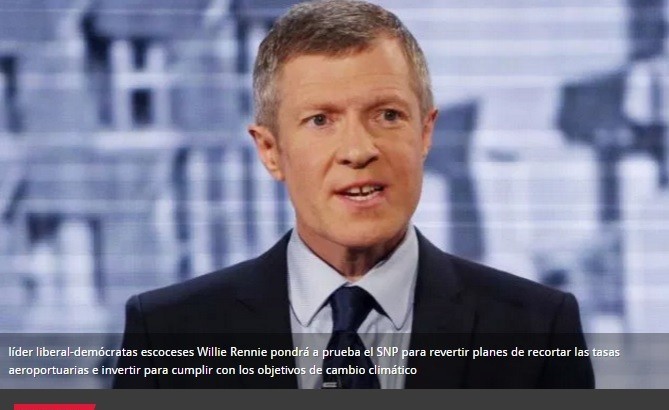
Escocia: Education, environment and devolution on election campaign agenda


EveningExpress/Por: ByPressAssociation/26 mar 2016

Resumen: La educación y el medio ambiente forman parte de la campaña electoral del líder liberal-demócratas escoceses Willie Rennie, quien lo dará a conocer durante su visita a Deep Sea World en North Queensferry. El medio ambiente, la educación y las competencias transferidas de Escocia se encuentran entre los temas de los líderes políticos a resaltar en el primer fin de semana de la campaña electoral de Holyrood, así lo dio a conocer el diario Evening Express este sábado 26 de marzo. Se espera que el SNP implemente planes de recortar las tasas aeroportuarias e invertir para cumplir con los objetivos de cambio climático de Escocia enfrenta. Rennie dijo: «Este no es momento para la timidez en el medio ambiente. Conservadores en Westminster han recortado los presupuestos verdes y el SNP están tomando sus órdenes de marcha de las aerolíneas en un recorte de las tasas aeroportuarias que significaría un gran aumento en las emisiones». La secretaria escocesa de Trabajo Ian Murray dijo que su partido va a invertir en la educación y no va a recortar al personal vital. Se ha afirmado que cerca de 1.000 puestos de trabajo han pasado a las escuelas primarias de Escocia desde 2013, incluyendo más de 800 necesidades de apoyo adicionales de los trabajadores y cerca de 90 enfermeras de vivero. Por su parte, Murray, que estará en la campaña electoral en Edimburgo, dijo: «La educación es la inversión económica más importante que un gobierno puede hacer, deberíamos estar invirtiendo en estos puestos de trabajo, no el desguace de ellos. Es por eso que los laboristas escoceses introduciría una tasa de impuesto para el 1% más rico de nuestro país e invertirlo en las escuelas».

Scottish Liberal Democrats leader Willie Rennie will challenge the SNP to reverse plans to slash air passenger duty and invest to meet climate change targets

The environment, education and Scotland’s devolved powers are among the topics political leaders will be highlighting on the first weekend on the Holyrood election campaign trail.

The SNP, Conservatives and Greens will focus their main vote-winning efforts on Glasgow, while Labour and the Liberal Democrats will be promoting their key messages on the other side of the country.

Scottish Liberal Democrat leader Willie Rennie will put the environment at the top of the agenda when he visits Deep Sea World in North Queensferry, Fife.

He is expected to challenge the SNP to reverse plans to slash air passenger duty and invest to meet Scotland’s climate change targets.

Mr Rennie said: “This is no time for timidity on the environment. Tories in Westminster have slashed green budgets and the SNP are taking their marching orders from the airlines on an air passenger duty cut that would mean big increases in emissions.”

Labour’s shadow Scottish secretary Ian Murray is arguing that his party will invest in education and not cut vital staff.

He has claimed that nearly 1,000 jobs have gone from Scotland’s primary schools since 2013, including more than 800 additional support needs workers and nearly 90 nursery nurses.

Mr Murray, who will be on the campaign trail in Edinburgh, said: “Education is the single most important economic investment a government can make, we should be investing in these jobs, not scrapping them. That’s why Scottish Labour would introduce a 50p tax rate for the richest 1% in our country and invest it in schools.”

First Minister Nicola Sturgeon will campaign in Pollok with local candidate Humza Yousaf.

The SNP leader will visit the Village Storytelling Centre in the constituency and lead a storytelling session with local children.

She will say: “A re-elected SNP government will not just protect the gains of devolution, we will use our new powers to go further, ensuring taxpayers across Scotland receive the benefit of their contribution to Scotland’s future.”

Scottish Conservative leader Ruth Davidson will make a speech in Glasgow on Saturday, while Scottish Greens co-convener Patrick Harvie will also join campaigners in the city.

Socializar: José Eduardo Hermoso Q.
Fuente y foto:
https://www.eveningexpress.co.uk/pipe/news/scotland/education-environment-and-devolution-on-election-campaign-agenda/

Comparte este contenido:
Page 2399 of 2546
1 2.397 2.398 2.399 2.400 2.401 2.546